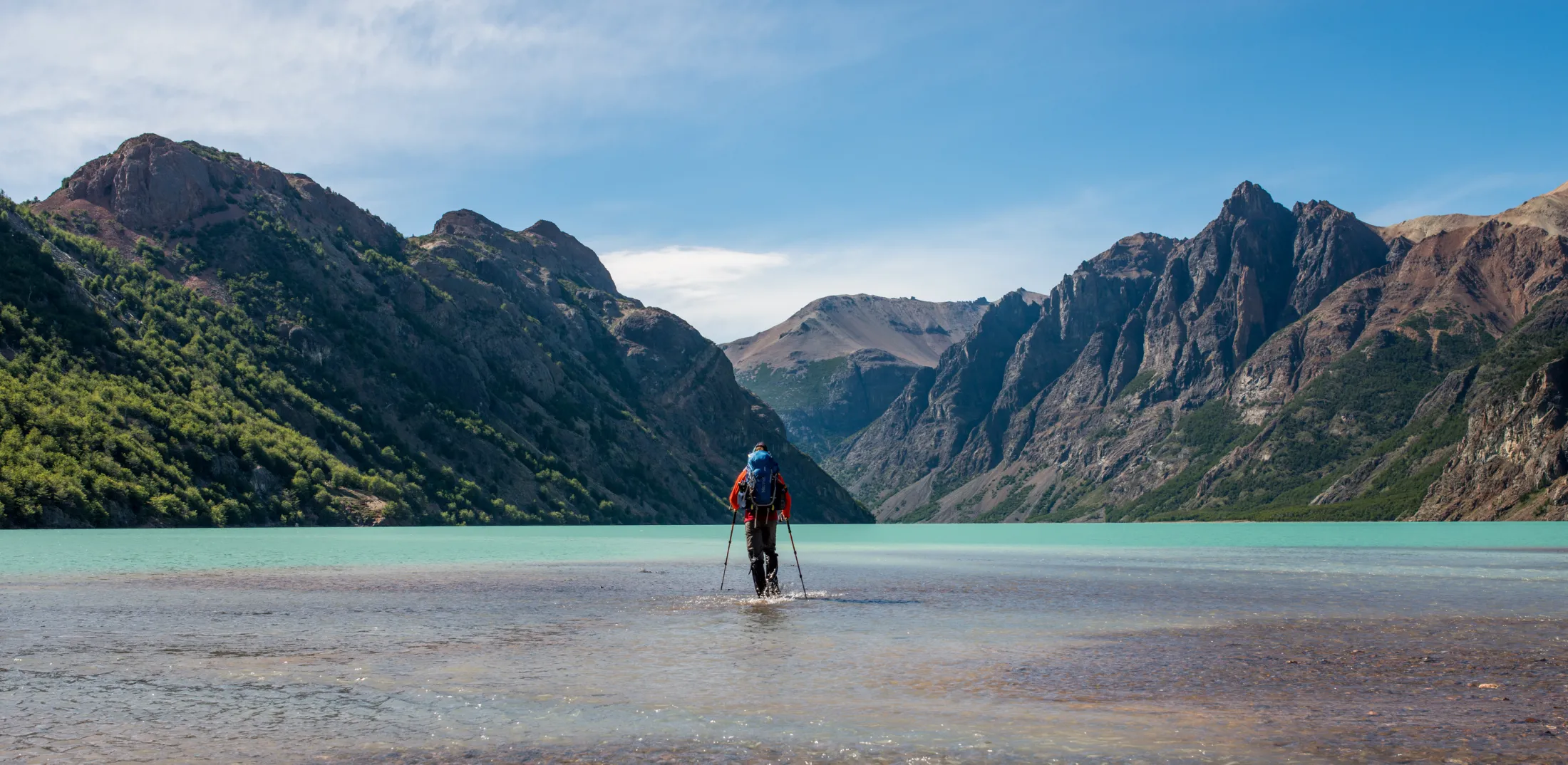
Person walking in a lake in mountains.
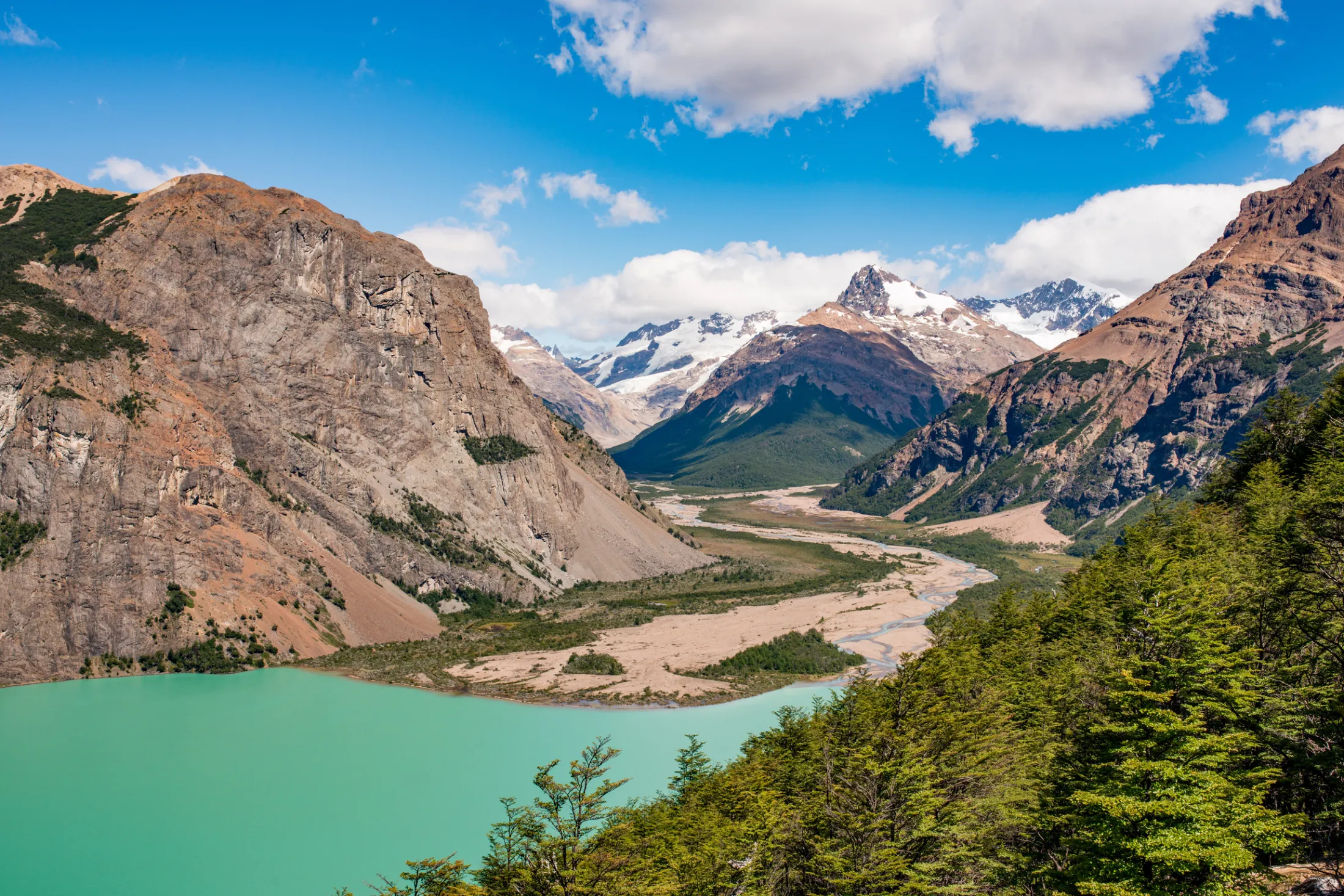
A view of a valley and a turquoise lake.
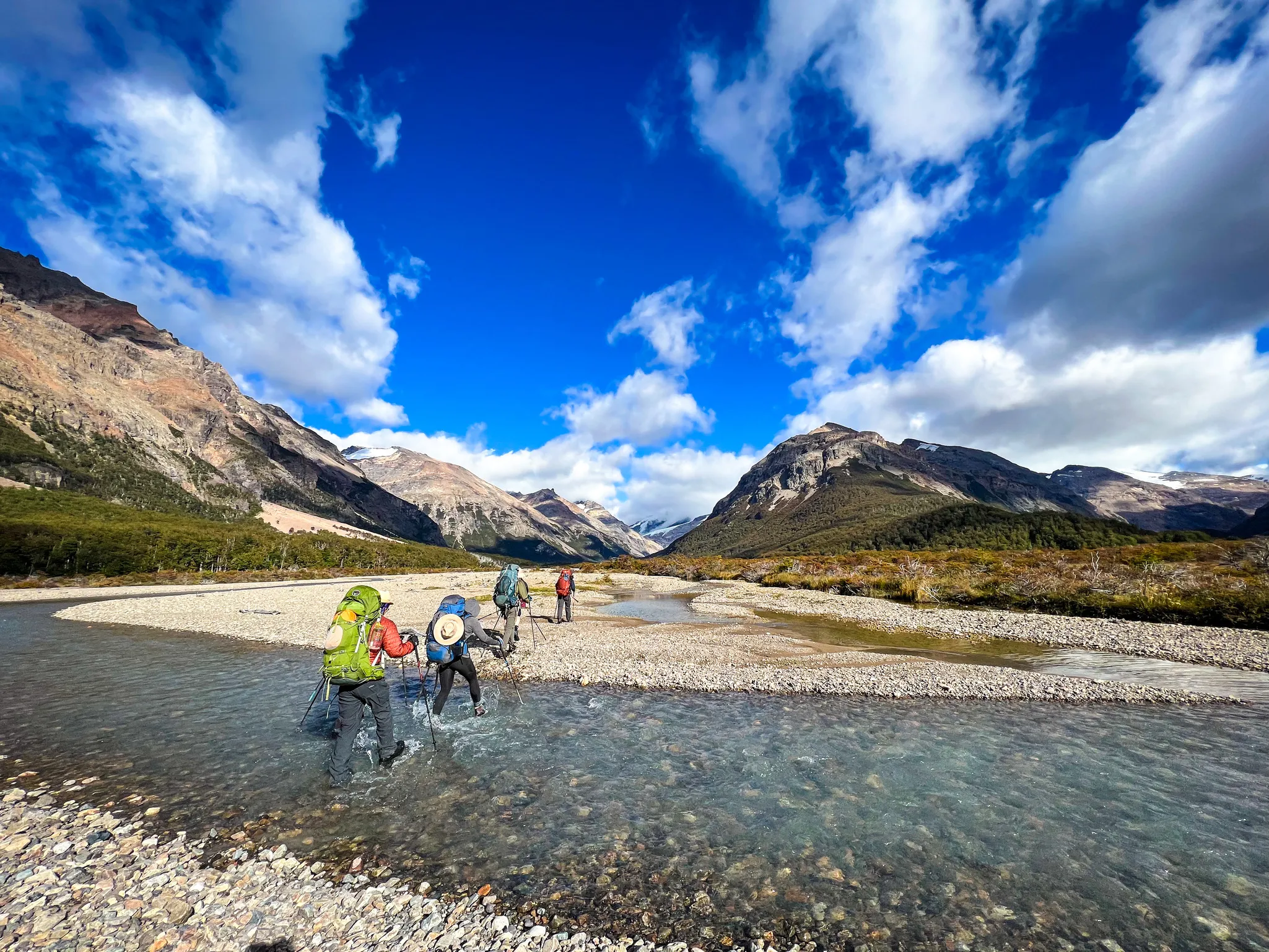
A group of hikers in the mountains crossing a stream.
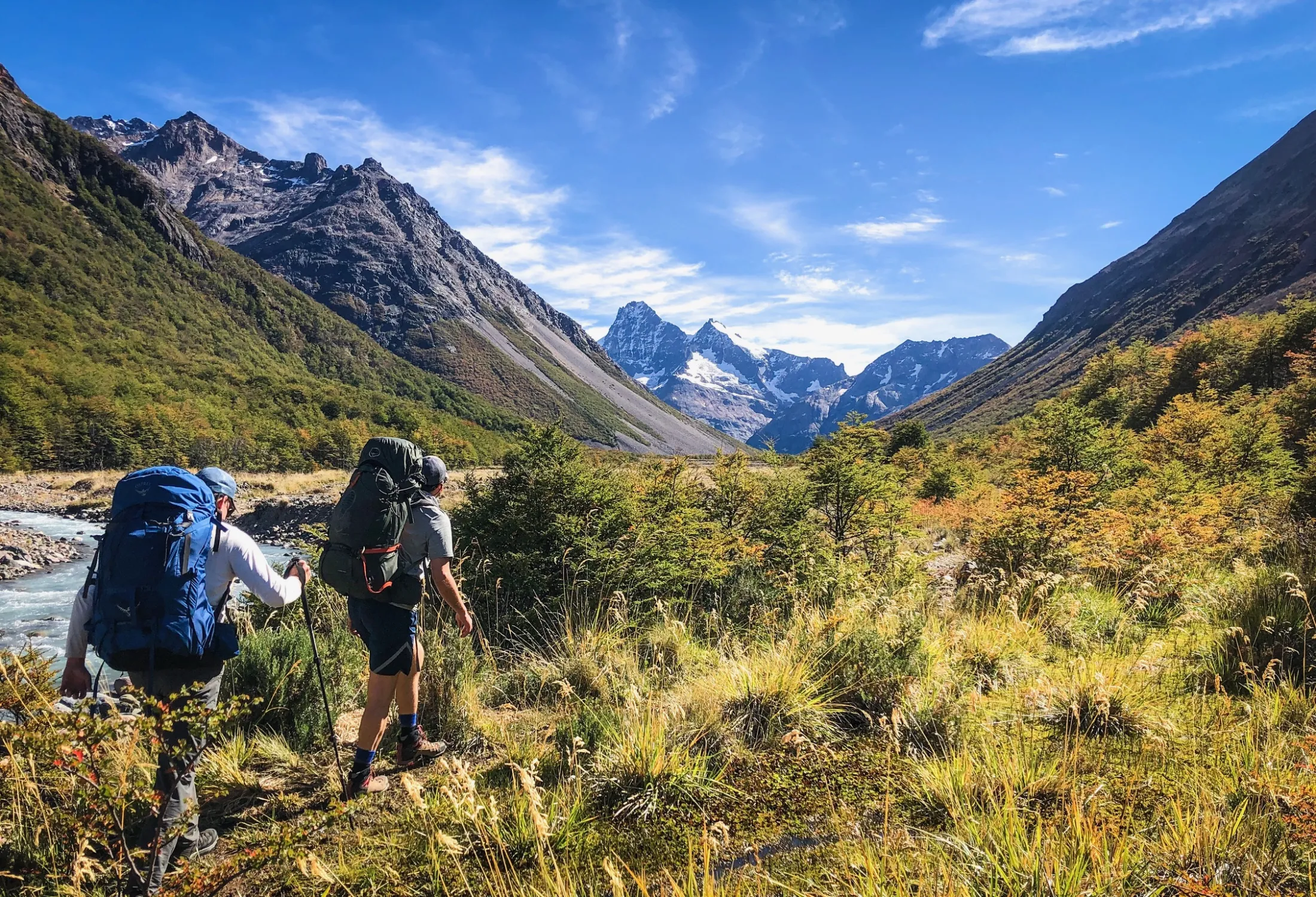
Two people hiking in a valley surrounded by mountains.

Traversing Patagonia National Park

A wild back country adventure

Traversing Patagonia National Park

A wild back country adventure

From USD 4620

Experience an incredible trekking journey through Patagonia National Park, traversing its stunning landscapes from end to end.  Comprising 750,000 acres of some of Chile’s most diverse and ecologically vibrant landscapes, Patagonia National Park gives wilderness travelers a wild, immersive experience in landscapes that remain quiet and relatively unexplored. This adventure takes you deep into the heart of Patagonia, where you’ll explore breathtaking scenery and learn about the region’s rich natural and cultural history. Along the way, the wilderness offers a unique opportunity for reflection, connection, and personal growth, making this a truly immersive experience in one of the world’s most remarkable natural areas.

Highlights

  • Spectacular and wild landscape
  • Camping under the star filled sky
  • Encountering Patagonias indigenous wildlife
  • Rich human and natural history

This one-of-a-kind expedition blends on-trail and off-trail hiking, featuring glacial river crossings, steep terrain, and dynamic weather that add to the adventure. Participants play an active role in the adventure, carrying their personal gear along with 3-5 days of group food and cooking supplies. With no porters, the group works together to set up camp, pack gear, and prepare shared meals, fostering a strong sense of teamwork and community. The journey is designed to combine the camaraderie of traveling with friends and the structure of an organized expedition, creating meaningful opportunities for learning new skills, reflection, and connection.

11

9-16

NO/EN

3/6

1/6

3/6

Dates and booking

Tue 16. February - Fri 26. February 2027

USD 4620

Flight not included

Available

Book

Can't find a date? We'll notify you when new trips open!

Plan it your way

Want this trip just for your group? Or got something different in mind? We've got you.

Make this a private trip

Opening hours Phone
Mon-Fri : 08-20
Sat-Sun : 14-17
Opening hours Chat
Mon-Fri : 07-23
Sat : 10-18
Sun : 13-21
CET

Day by day

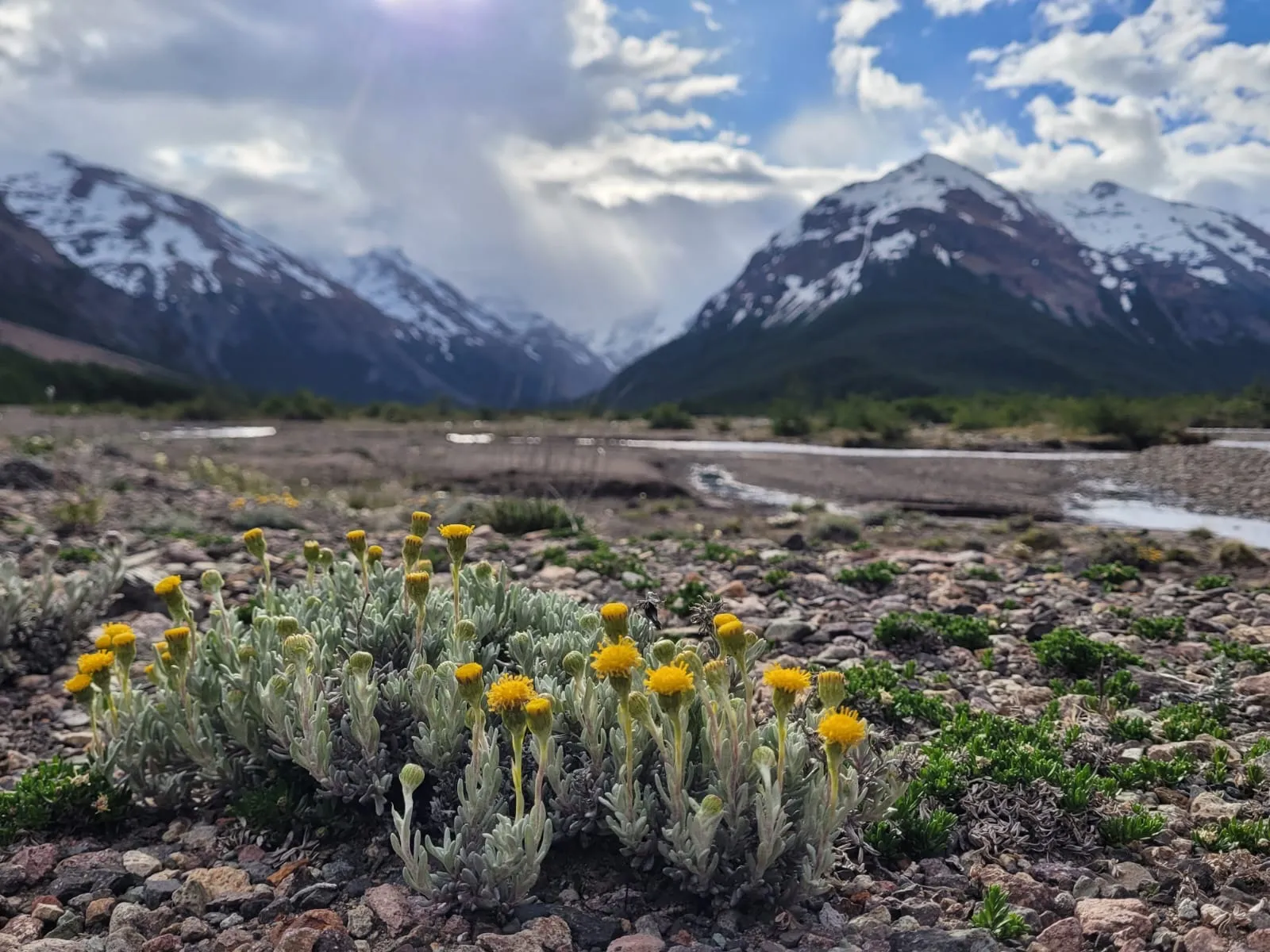
Small yellow wildflowers in the foreground with a wide valley and snow-capped mountains in the background under a cloudy sky.

Day 1:Welcome to Patagonia

The flight tickets are not included in the price, so you are responsible for arranging transportation to and from Balmaceda Airport (BBA) in Chile. We recommend that you arrive in Balmaceda no later than the early afternoon. For those arriving on the night flight to Chile, there are several alternative departures that fit well. One of our guides will meet you at the arrival gate. Once everyone is gathered, we head south toward Puerto Guadal, a 4-5 hour drive. Here we check in to our cozy accommodation, relax, and get to know the other participants. In the evening, we meet for a welcome dinner followed by an orientation from the expedition leaders to prepare us for the exciting days ahead.
The flight tickets are not included in the price, so you are responsible for arranging transportation to and from Balmaceda Airport (BBA) in Chile. We recommend that you arrive in Balmaceda no later than the early afternoon. For those arriving on the night flight to Chile, there are several alternative departures that fit well. One of our guides will meet you at the arrival gate. Once everyone is gathered, we head south toward Puerto Guadal, a 4-5 hour drive. Here we check in to our cozy accommodation, relax, and get to know the other participants. In the evening, we meet for a welcome dinner followed by an orientation from the expedition leaders to prepare us for the exciting days ahead.
Ranch cabin

-,-,D

4-5 hours

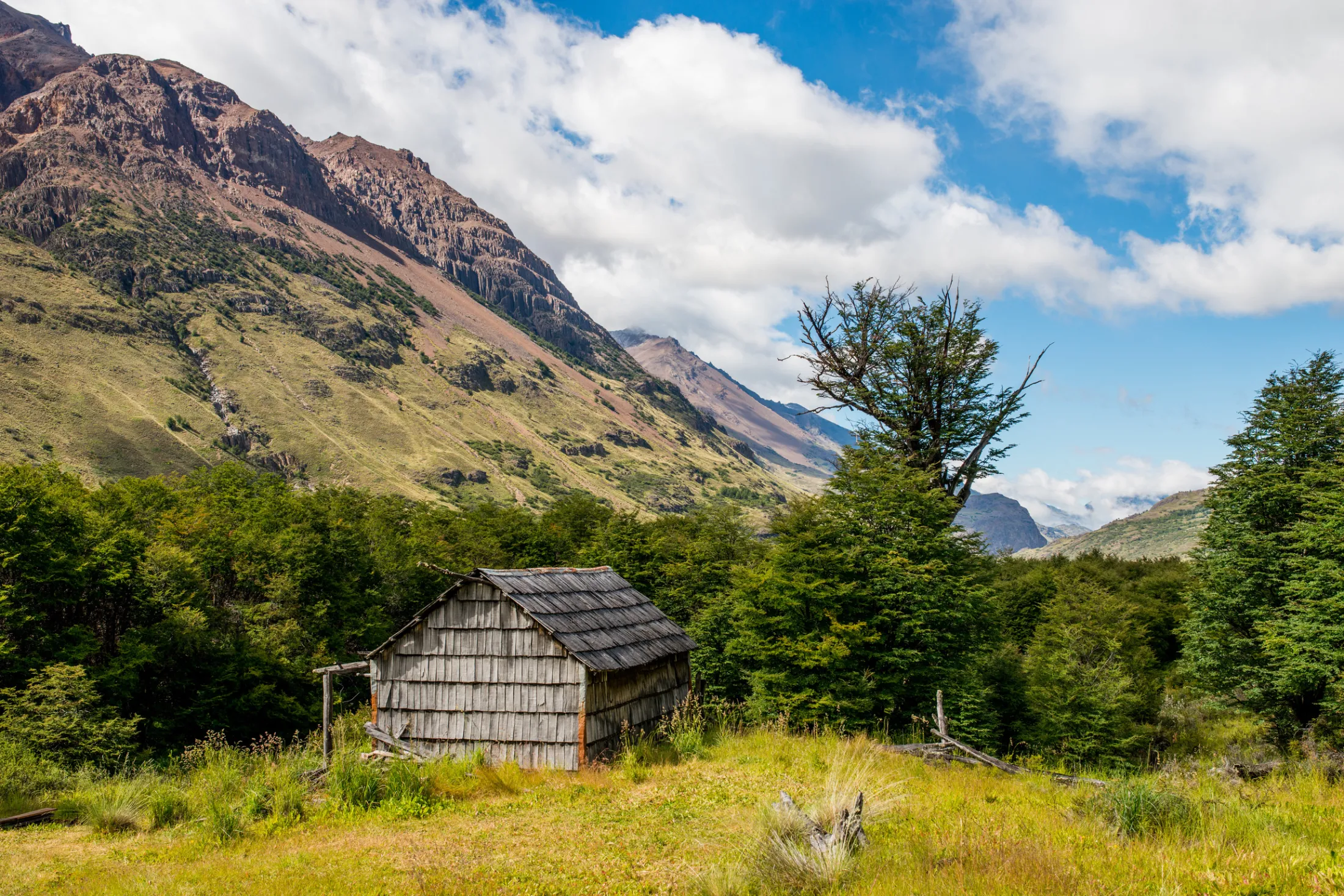
A small wooden cabin stands in a grassy valley, backed by steep green mountains under a cloudy sky.

Day 2:Life on the ranch

We spend the first day in this beautiful region getting acquainted with the culture and history. We visit a cozy, family-run ranch with cabins, walk nice hiking trails, and learn about life in Patagonia. The highlight of the day will be a traditional asado al palo - a juicy lamb steak grilled over an open fire. For those who want to relax, it is possible to enjoy a warm soak in a wood-fired hot tub, perfect for enjoying the surroundings and recharging for the trek that awaits us.

We spend the first day in this beautiful region getting acquainted with the culture and history. We visit a cozy, family-run ranch with cabins, walk nice hiking trails, and learn about life in Patagonia. The highlight of the day will be a traditional asado al palo - a juicy lamb steak grilled over an open fire. For those who want to relax, it is possible to enjoy a warm soak in a wood-fired hot tub, perfect for enjoying the surroundings and recharging for the trek that awaits us.

Ranch cabin

B,L,D

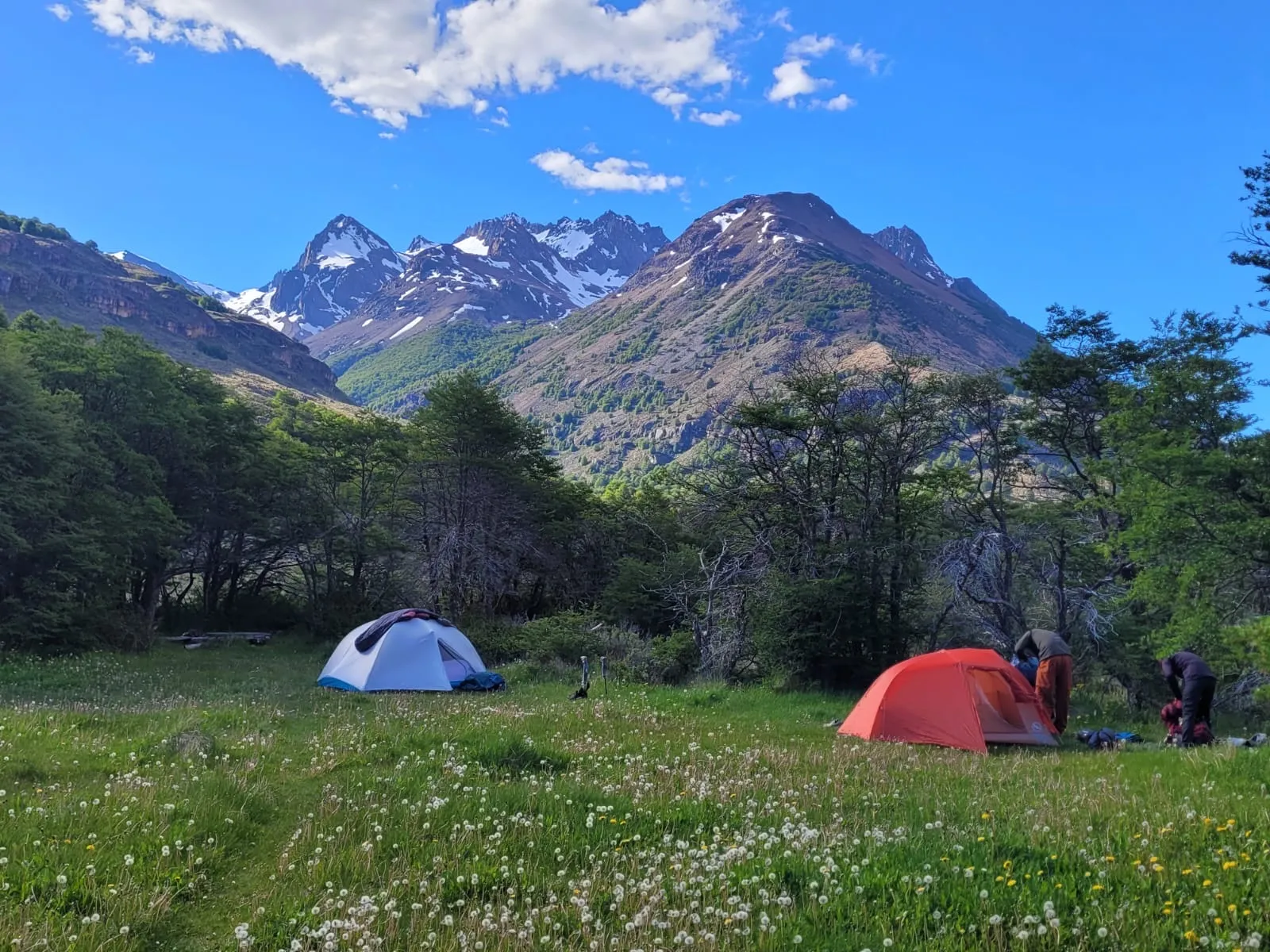
Two tents pitched in a grassy clearing with majestic mountains in the background under a blue sky.

Day 3:Out into the wilderness

At breakfast, we go over today's hiking route and receive guidance on how to pack our gear, including group equipment and food. We start with a bus ride headed toward the remote Jeinimeni trail in Patagonia National Park. We drive the historic mountain pass Paso de las Llaves, which is considered a heritage trail of great historical significance. Before the road opened in the 1990s, this was the only route for local pioneer families transporting livestock to market and fetching supplies, a journey that could take several days. We also drive through Chile Chico, a small town located on the shores of Lago General Carrera. The town is known for its mild microclimate and is an important gateway to Patagonia National Park. The drive takes about 3.5 hours. The hike itself starts along the shores of Lago Jeinimeni, where we follow a trail once used by gauchos driving livestock to market. The lake is situated in a beautiful valley surrounded by red and green mountains, showcasing the area's fascinating geology. Toward the end of the day, we arrive at the wonderful Camp Raleigh on the shores of Lago Verde. We set up tents and the kitchen together, share tips, and learn practical tricks. After preparing and enjoying our first dinner as a group, we gather to share personal goals and discuss how we can best support each other on the trip.

At breakfast, we go over today's hiking route and receive guidance on how to pack our gear, including group equipment and food. We start with a bus ride headed toward the remote Jeinimeni trail in Patagonia National Park. We drive the historic mountain pass Paso de las Llaves, which is considered a heritage trail of great historical significance. Before the road opened in the 1990s, this was the only route for local pioneer families transporting livestock to market and fetching supplies, a journey that could take several days. We also drive through Chile Chico, a small town located on the shores of Lago General Carrera. The town is known for its mild microclimate and is an important gateway to Patagonia National Park. The drive takes about 3.5 hours. The hike itself starts along the shores of Lago Jeinimeni, where we follow a trail once used by gauchos driving livestock to market. The lake is situated in a beautiful valley surrounded by red and green mountains, showcasing the area's fascinating geology. Toward the end of the day, we arrive at the wonderful Camp Raleigh on the shores of Lago Verde. We set up tents and the kitchen together, share tips, and learn practical tricks. After preparing and enjoying our first dinner as a group, we gather to share personal goals and discuss how we can best support each other on the trip.

Tent

B,L,D

3,5 hours

+45m

8 km

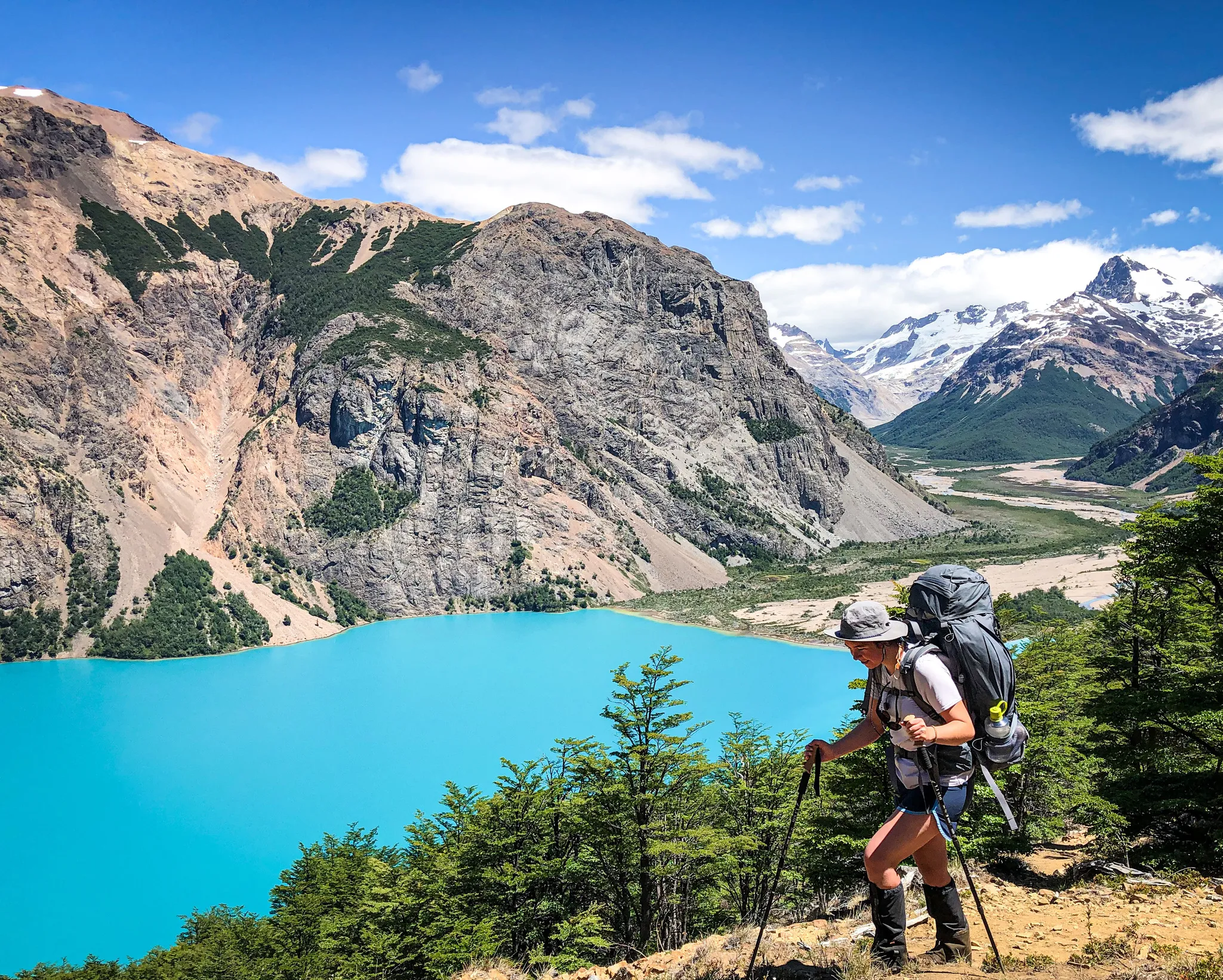
A hiker with a large backpack and trekking poles walks along a trail overlooking a bright turquoise lake surrounded by mountains and trees.

Day 4:Adapting to the terrain

The second day on the trip offers both challenges and variety as we cross two mountain passes and move through diverse landscapes. We start the day with an early climb to a pass with great views of Lago Verde and Valle Hermoso – one of the park's most famous areas. This is followed by a gentle but steep descent before we cross Valle Hermoso and encounter the trip's first major rivers, where we learn and practice river-crossing techniques. Further on, we head west through Valle Hermoso, cross several rivers, and approach the impressive glaciers in the valley. Eventually, we make our way up a low pass and into the Aviles Valley, an important north-south valley leading toward the Chacabuco Valley. We set up camp in a forested area, and in the evening we gather to hear the history of the Aviles Valley and how Patagonia National Park came to be.

The second day on the trip offers both challenges and variety as we cross two mountain passes and move through diverse landscapes. We start the day with an early climb to a pass with great views of Lago Verde and Valle Hermoso – one of the park's most famous areas. This is followed by a gentle but steep descent before we cross Valle Hermoso and encounter the trip's first major rivers, where we learn and practice river-crossing techniques. Further on, we head west through Valle Hermoso, cross several rivers, and approach the impressive glaciers in the valley. Eventually, we make our way up a low pass and into the Aviles Valley, an important north-south valley leading toward the Chacabuco Valley. We set up camp in a forested area, and in the evening we gather to hear the history of the Aviles Valley and how Patagonia National Park came to be.

Tent

B,L,D

760m

16 km

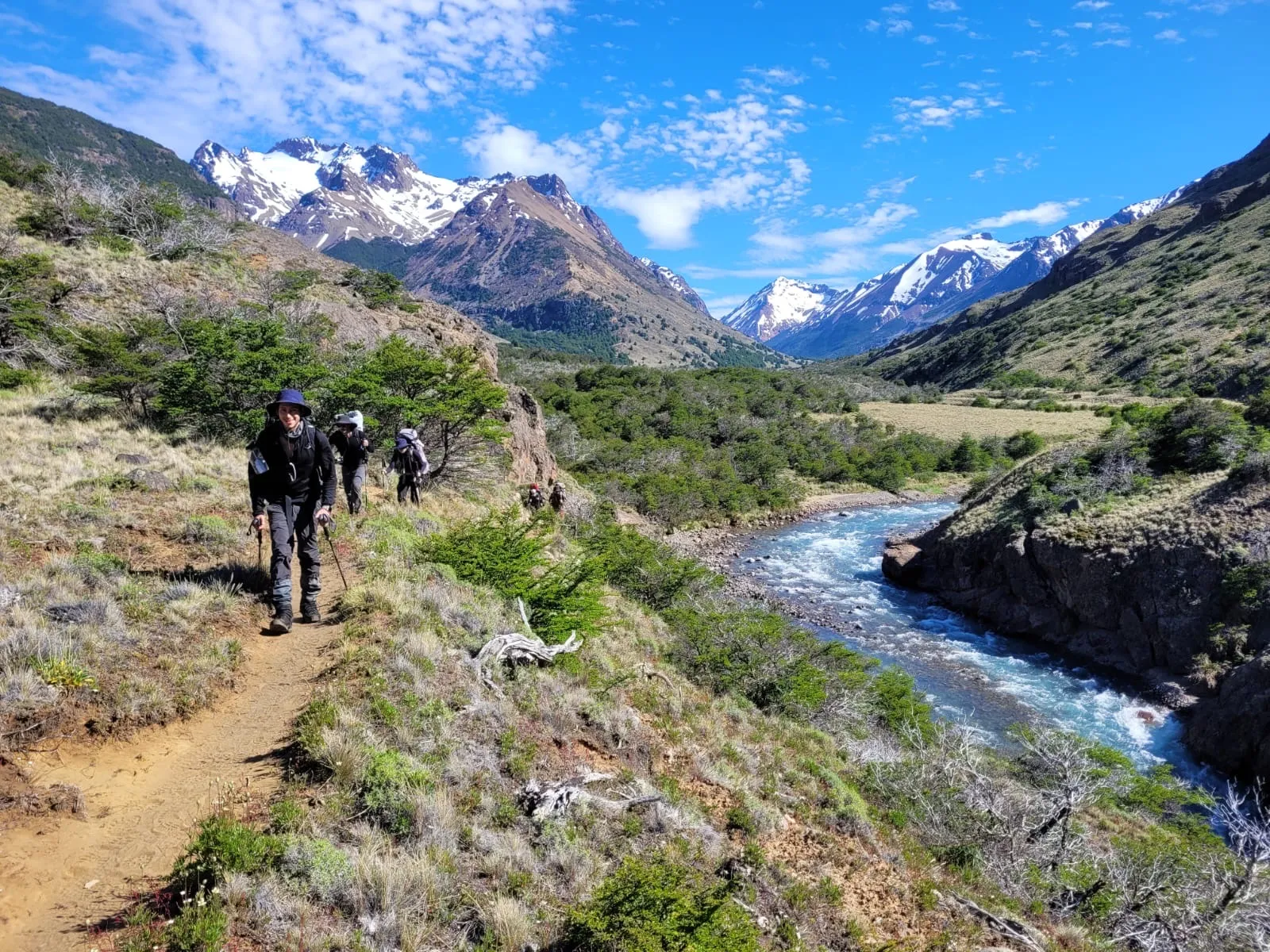
Hikers walking along a dirt trail beside a rushing river in a mountainous landscape with snow-capped peaks in the background.

Day 5:Through the Aviles Valley

The hiking route in the Aviles Valley takes you through lush areas with dense vegetation, open grasslands, and crystal-clear rivers winding through the valley. It is wonderful to walk on the trail that runs along the base of mountain ranges with views of the magnificent landscape. We hike all day in the valley to about the halfway point, where we set up camp. The open grasslands around the campsite provide us with a perfect place to relax and enjoy the surroundings. In the evening, we share a communal meal and use the time to get to know each other better.

The hiking route in the Aviles Valley takes you through lush areas with dense vegetation, open grasslands, and crystal-clear rivers winding through the valley. It is wonderful to walk on the trail that runs along the base of mountain ranges with views of the magnificent landscape. We hike all day in the valley to about the halfway point, where we set up camp. The open grasslands around the campsite provide us with a perfect place to relax and enjoy the surroundings. In the evening, we share a communal meal and use the time to get to know each other better.

Tent

B,L,D

91m

14 km

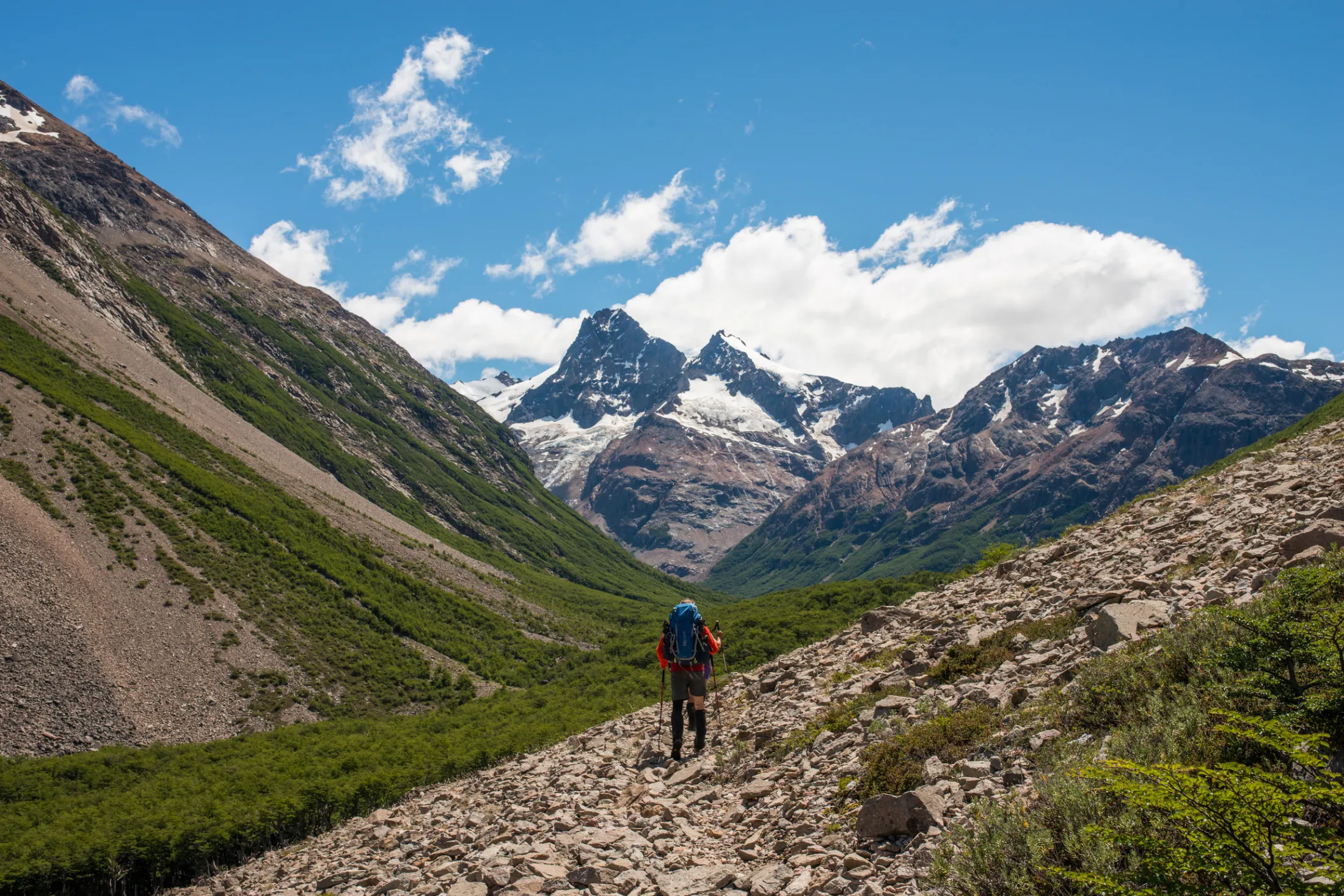
A lone hiker walking on a rocky mountain path towards snowy peaks under a blue sky.

Day 6:On the way through varying landscapes

This morning we head further down the Aviles Valley and hike through landscapes that are constantly changing. The forested upper part of the valley opens up, and rugged gorges appear. One of the day's highlights is crossing a high suspension bridge before we continue into the Chacabuco Valley. We arrive at the historic campsite Casa Piedra, which was formerly a ranch. This marks the end of the first part of the trip, which started on the shores of Lago Jeinimeni and has taken us through both the Jeinimeni Valley and the Aviles Valley. Now we have the opportunity to reflect on the trip as a group. How has the first part of the trip gone?

This morning we head further down the Aviles Valley and hike through landscapes that are constantly changing. The forested upper part of the valley opens up, and rugged gorges appear. One of the day's highlights is crossing a high suspension bridge before we continue into the Chacabuco Valley. We arrive at the historic campsite Casa Piedra, which was formerly a ranch. This marks the end of the first part of the trip, which started on the shores of Lago Jeinimeni and has taken us through both the Jeinimeni Valley and the Aviles Valley. Now we have the opportunity to reflect on the trip as a group. How has the first part of the trip gone?

Tent

B,L,D

215m

16 km

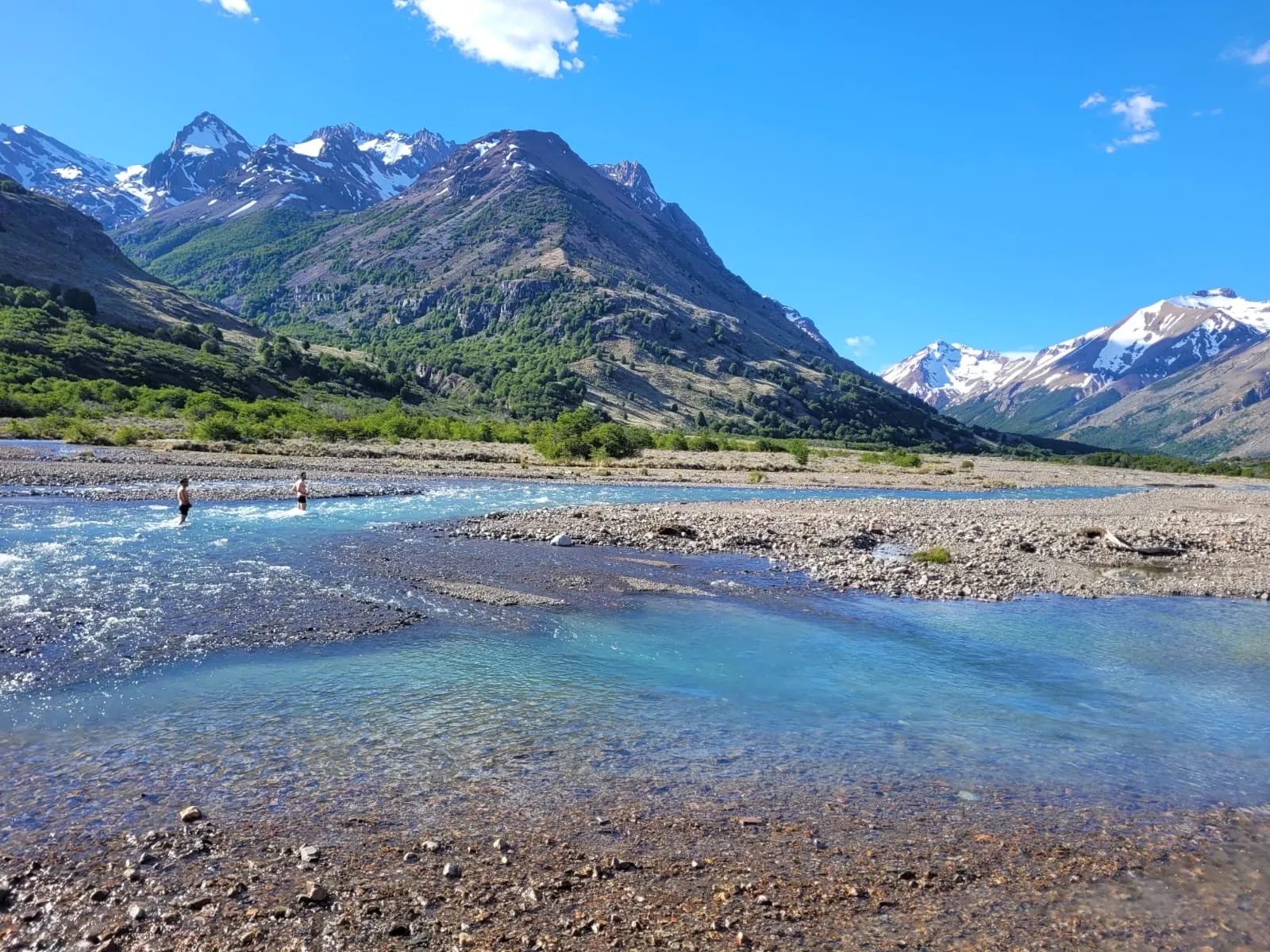
Clear turquoise river with pebble banks and snow-capped mountains under a blue sky.

Day 7:Rest day at the camp by Casa Piedra

Today we take a well-deserved break, giving our tired legs time to recover while we enjoy the Patagonian nature. We can have a relaxed morning with a cup of coffee without thinking about packing camp. We can take a dip in the river, lie in the grass, go for a short walk, or simply enjoy the nature around us. We get a resupply of provisions and get ready for the final part of the hike, which spans three days on the Siete Lagunas route. The route takes us through an area with several lakes, hence the name "Siete Lagunas," which means "seven lakes."

Today we take a well-deserved break, giving our tired legs time to recover while we enjoy the Patagonian nature. We can have a relaxed morning with a cup of coffee without thinking about packing camp. We can take a dip in the river, lie in the grass, go for a short walk, or simply enjoy the nature around us. We get a resupply of provisions and get ready for the final part of the hike, which spans three days on the Siete Lagunas route. The route takes us through an area with several lakes, hence the name "Siete Lagunas," which means "seven lakes."

Tent

B,L,D

A hiker with a large backpack and trekking poles walks along a trail overlooking a bright turquoise lake surrounded by mountains and trees.

Day 8:The route through Siete Lagunas

It was nice to have a rest day, because today we face the longest and most challenging day of the trip. We start by hiking along the cliffs around Laguna Gutierrez, before continuing upward toward a high pass through the Cordon Chacabuco mountain range. The hard effort is rewarded with fantastic views. There is a steady climb all day, and the limited access to water makes this leg extra demanding. Eventually, we arrive at Laguna la Guagua, where we pitch our tents by the peaceful lake and rest after a tough but rewarding leg.

It was nice to have a rest day, because today we face the longest and most challenging day of the trip. We start by hiking along the cliffs around Laguna Gutierrez, before continuing upward toward a high pass through the Cordon Chacabuco mountain range. The hard effort is rewarded with fantastic views. There is a steady climb all day, and the limited access to water makes this leg extra demanding. Eventually, we arrive at Laguna la Guagua, where we pitch our tents by the peaceful lake and rest after a tough but rewarding leg.

Tent

B,L,D

760m

19 km

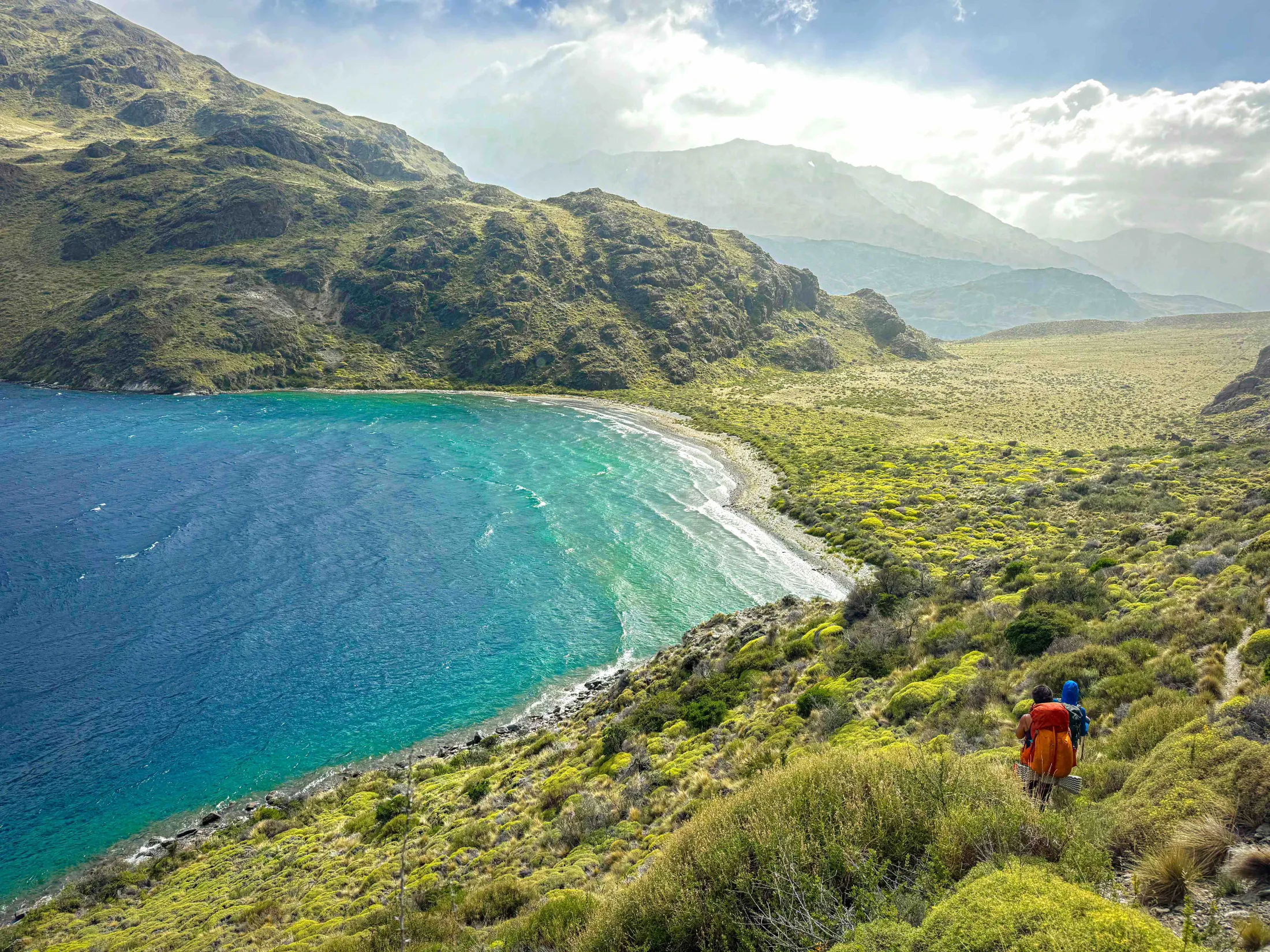
A hiker walking on a coastal path overlooking a turquoise lake and mountains.

Day 9:The blue lakes

Today's hike takes us through a landscape characterized by countless lakes, both large and small. The trail winds through varied terrain featuring grasslands, wetlands, and southern beech forests dominated by Patagonian beech. The day ends at a campsite on the shores of Laguna La Pepa, where the tranquil atmosphere may give us the chance to spot the rare and endangered huemul deer. This deer is one of the rarest and most fragile deer species in the world and is known for its distinctive appearance with a powerfully built body, short dark coat, and smaller antlers than other deer species.

Today's hike takes us through a landscape characterized by countless lakes, both large and small. The trail winds through varied terrain featuring grasslands, wetlands, and southern beech forests dominated by Patagonian beech. The day ends at a campsite on the shores of Laguna La Pepa, where the tranquil atmosphere may give us the chance to spot the rare and endangered huemul deer. This deer is one of the rarest and most fragile deer species in the world and is known for its distinctive appearance with a powerfully built body, short dark coat, and smaller antlers than other deer species.

Tent

B,L,D

600m

12 km

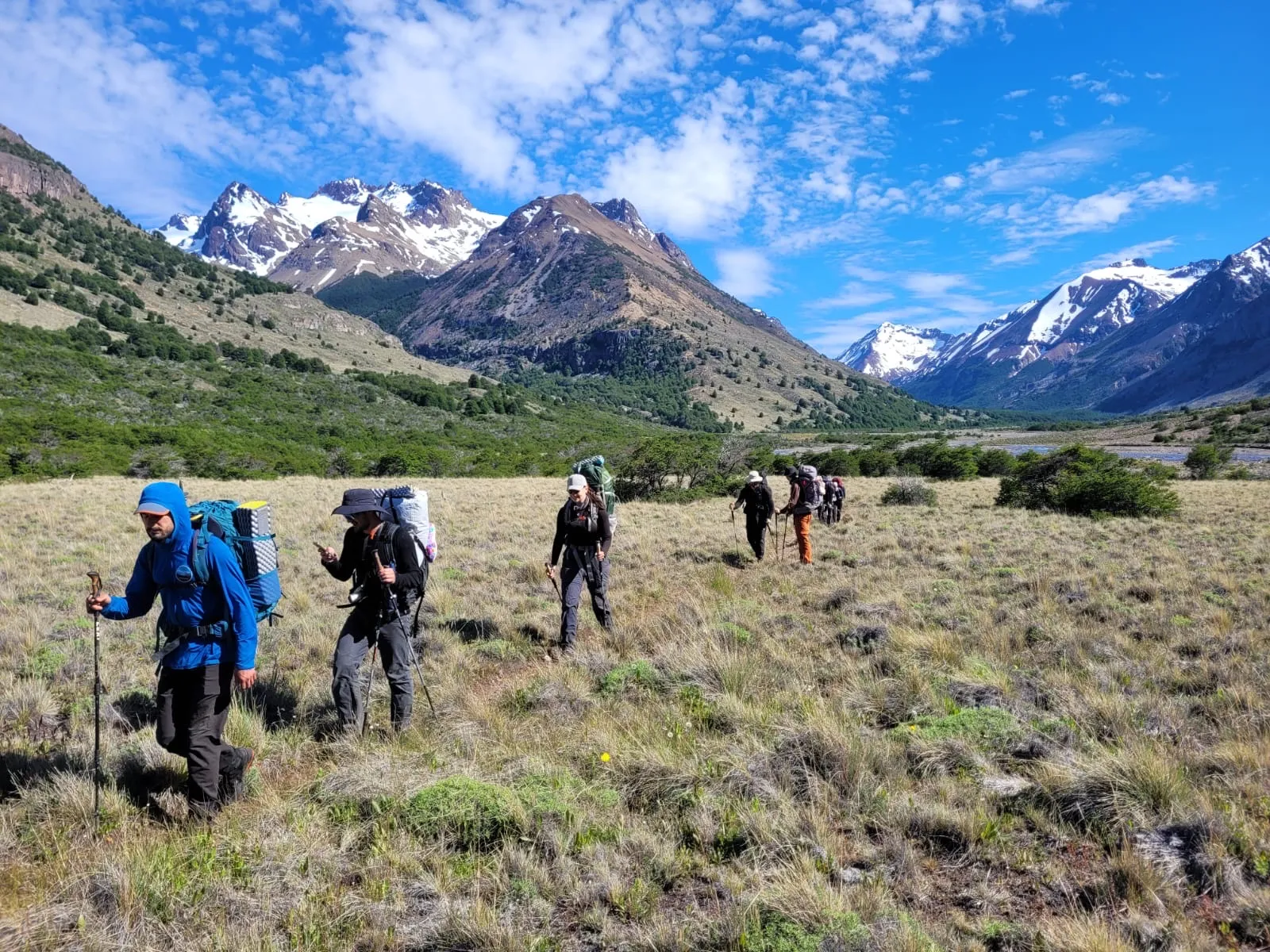
A group of hikers with backpacks walking across a grassy plain toward snow-capped mountains under a blue sky.

Day 10:Last hiking day in the national park

On the final day of the Siete Lagunas route, we follow the classic Lagunas Altas day route that leads us to the national park center. There we get the opportunity to visit the park's museum, which gives us a fascinating insight into the national park's history and conservation work. In the afternoon, we get a ride back to Puerto Guadal, where a hotel room with a shower and a bed now awaits us. We gather for a closing dinner in the evening. Together with new friends, we share memories, experiences, and the moments we have experienced on the trip.

On the final day of the Siete Lagunas route, we follow the classic Lagunas Altas day route that leads us to the national park center. There we get the opportunity to visit the park's museum, which gives us a fascinating insight into the national park's history and conservation work. In the afternoon, we get a ride back to Puerto Guadal, where a hotel room with a shower and a bed now awaits us. We gather for a closing dinner in the evening. Together with new friends, we share memories, experiences, and the moments we have experienced on the trip.

Hotel

B,L,D

180m

11 km

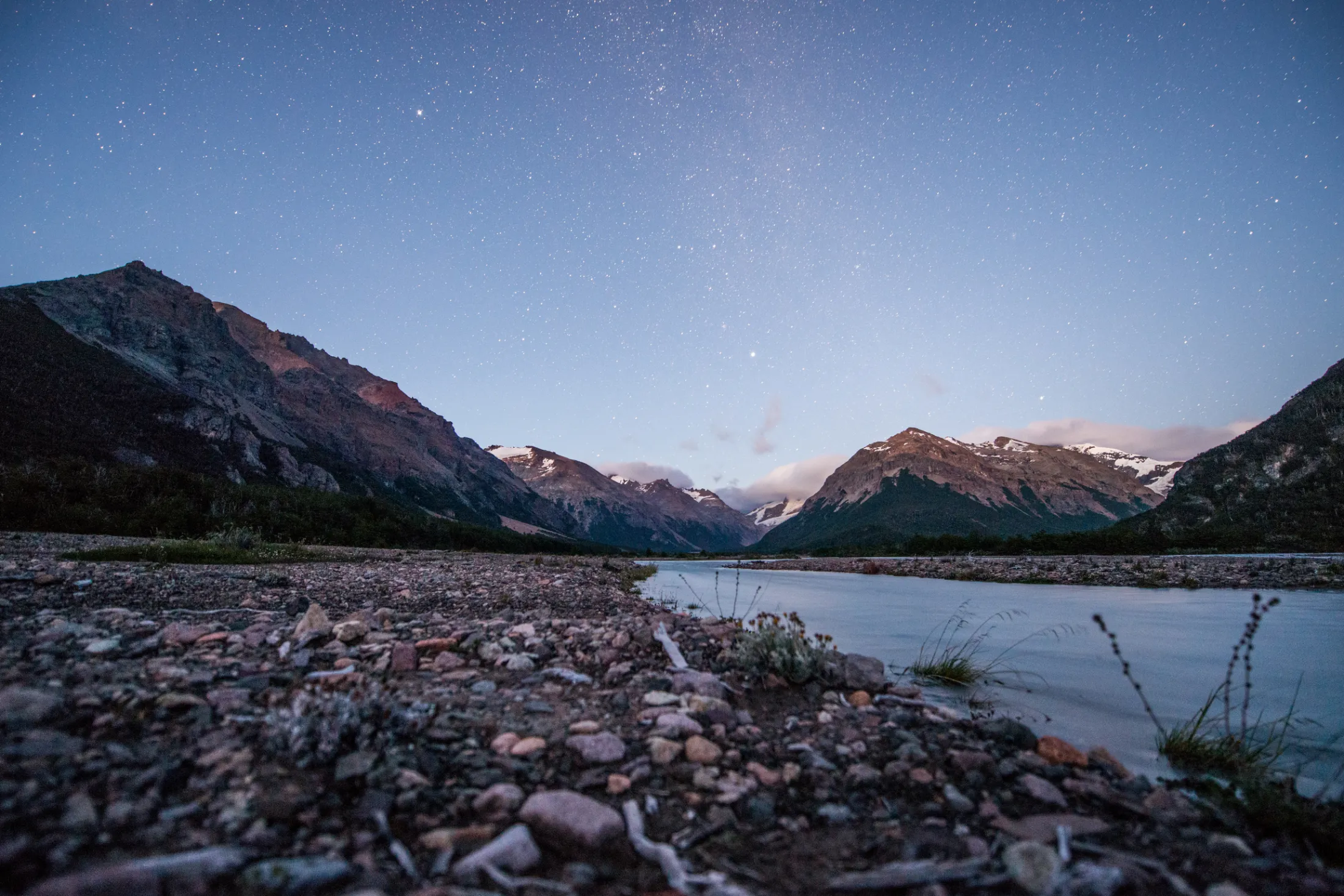
A river flowing through a rocky valley beneath a starry night sky and towering mountains.

Day 11:Farewell Patagonia

After a good night's sleep in a bed, we pack up and head north by bus. The route runs along the Carretera Austral, often described as one of the world's most iconic stretches of road. The road was built in the 1970s and has been important for access to the remote and often inaccessible areas in Chile. The trip takes us along the west side of Lake General Carrera, through lush rainforests and into the valley where the Rio Ibanez flows. Here we get a good view of Cerro Castillo, an impressive mountain in the region. In the afternoon we arrive at Balmaceda Airport for the flights home, thus concluding this incredible adventure in Patagonia. If you are not quite ready to travel home we can help you with extension programs in both Peru (Inka Trail or Lake Titicaca), and Ecuador (Amazon or Galapagos). Feel free to contact us for more information.

After a good night's sleep in a bed, we pack up and head north by bus. The route runs along the Carretera Austral, often described as one of the world's most iconic stretches of road. The road was built in the 1970s and has been important for access to the remote and often inaccessible areas in Chile. The trip takes us along the west side of Lake General Carrera, through lush rainforests and into the valley where the Rio Ibanez flows. Here we get a good view of Cerro Castillo, an impressive mountain in the region. In the afternoon we arrive at Balmaceda Airport for the flights home, thus concluding this incredible adventure in Patagonia. If you are not quite ready to travel home we can help you with extension programs in both Peru (Inka Trail or Lake Titicaca), and Ecuador (Amazon or Galapagos). Feel free to contact us for more information.

B,-,-

3-4 hours

The flight tickets are not included in the price, so you are responsible for arranging transportation to and from Balmaceda Airport (BBA) in Chile. We recommend that you arrive in Balmaceda no later than the early afternoon. For those arriving on the night flight to Chile, there are several alternative departures that fit well. One of our guides will meet you at the arrival gate. Once everyone is gathered, we head south toward Puerto Guadal, a 4-5 hour drive. Here we check in to our cozy accommodation, relax, and get to know the other participants. In the evening, we meet for a welcome dinner followed by an orientation from the expedition leaders to prepare us for the exciting days ahead.
Ranch cabin

-,-,D

4-5 hours

We spend the first day in this beautiful region getting acquainted with the culture and history. We visit a cozy, family-run ranch with cabins, walk nice hiking trails, and learn about life in Patagonia. The highlight of the day will be a traditional asado al palo - a juicy lamb steak grilled over an open fire. For those who want to relax, it is possible to enjoy a warm soak in a wood-fired hot tub, perfect for enjoying the surroundings and recharging for the trek that awaits us.

Ranch cabin

B,L,D

At breakfast, we go over today's hiking route and receive guidance on how to pack our gear, including group equipment and food. We start with a bus ride headed toward the remote Jeinimeni trail in Patagonia National Park. We drive the historic mountain pass Paso de las Llaves, which is considered a heritage trail of great historical significance. Before the road opened in the 1990s, this was the only route for local pioneer families transporting livestock to market and fetching supplies, a journey that could take several days. We also drive through Chile Chico, a small town located on the shores of Lago General Carrera. The town is known for its mild microclimate and is an important gateway to Patagonia National Park. The drive takes about 3.5 hours. The hike itself starts along the shores of Lago Jeinimeni, where we follow a trail once used by gauchos driving livestock to market. The lake is situated in a beautiful valley surrounded by red and green mountains, showcasing the area's fascinating geology. Toward the end of the day, we arrive at the wonderful Camp Raleigh on the shores of Lago Verde. We set up tents and the kitchen together, share tips, and learn practical tricks. After preparing and enjoying our first dinner as a group, we gather to share personal goals and discuss how we can best support each other on the trip.

Tent

B,L,D

3,5 hours

+45m

8 km

The second day on the trip offers both challenges and variety as we cross two mountain passes and move through diverse landscapes. We start the day with an early climb to a pass with great views of Lago Verde and Valle Hermoso – one of the park's most famous areas. This is followed by a gentle but steep descent before we cross Valle Hermoso and encounter the trip's first major rivers, where we learn and practice river-crossing techniques. Further on, we head west through Valle Hermoso, cross several rivers, and approach the impressive glaciers in the valley. Eventually, we make our way up a low pass and into the Aviles Valley, an important north-south valley leading toward the Chacabuco Valley. We set up camp in a forested area, and in the evening we gather to hear the history of the Aviles Valley and how Patagonia National Park came to be.

Tent

B,L,D

760m

16 km

The hiking route in the Aviles Valley takes you through lush areas with dense vegetation, open grasslands, and crystal-clear rivers winding through the valley. It is wonderful to walk on the trail that runs along the base of mountain ranges with views of the magnificent landscape. We hike all day in the valley to about the halfway point, where we set up camp. The open grasslands around the campsite provide us with a perfect place to relax and enjoy the surroundings. In the evening, we share a communal meal and use the time to get to know each other better.

Tent

B,L,D

91m

14 km

This morning we head further down the Aviles Valley and hike through landscapes that are constantly changing. The forested upper part of the valley opens up, and rugged gorges appear. One of the day's highlights is crossing a high suspension bridge before we continue into the Chacabuco Valley. We arrive at the historic campsite Casa Piedra, which was formerly a ranch. This marks the end of the first part of the trip, which started on the shores of Lago Jeinimeni and has taken us through both the Jeinimeni Valley and the Aviles Valley. Now we have the opportunity to reflect on the trip as a group. How has the first part of the trip gone?

Tent

B,L,D

215m

16 km

Today we take a well-deserved break, giving our tired legs time to recover while we enjoy the Patagonian nature. We can have a relaxed morning with a cup of coffee without thinking about packing camp. We can take a dip in the river, lie in the grass, go for a short walk, or simply enjoy the nature around us. We get a resupply of provisions and get ready for the final part of the hike, which spans three days on the Siete Lagunas route. The route takes us through an area with several lakes, hence the name "Siete Lagunas," which means "seven lakes."

Tent

B,L,D

It was nice to have a rest day, because today we face the longest and most challenging day of the trip. We start by hiking along the cliffs around Laguna Gutierrez, before continuing upward toward a high pass through the Cordon Chacabuco mountain range. The hard effort is rewarded with fantastic views. There is a steady climb all day, and the limited access to water makes this leg extra demanding. Eventually, we arrive at Laguna la Guagua, where we pitch our tents by the peaceful lake and rest after a tough but rewarding leg.

Tent

B,L,D

760m

19 km

Today's hike takes us through a landscape characterized by countless lakes, both large and small. The trail winds through varied terrain featuring grasslands, wetlands, and southern beech forests dominated by Patagonian beech. The day ends at a campsite on the shores of Laguna La Pepa, where the tranquil atmosphere may give us the chance to spot the rare and endangered huemul deer. This deer is one of the rarest and most fragile deer species in the world and is known for its distinctive appearance with a powerfully built body, short dark coat, and smaller antlers than other deer species.

Tent

B,L,D

600m

12 km

On the final day of the Siete Lagunas route, we follow the classic Lagunas Altas day route that leads us to the national park center. There we get the opportunity to visit the park's museum, which gives us a fascinating insight into the national park's history and conservation work. In the afternoon, we get a ride back to Puerto Guadal, where a hotel room with a shower and a bed now awaits us. We gather for a closing dinner in the evening. Together with new friends, we share memories, experiences, and the moments we have experienced on the trip.

Hotel

B,L,D

180m

11 km

After a good night's sleep in a bed, we pack up and head north by bus. The route runs along the Carretera Austral, often described as one of the world's most iconic stretches of road. The road was built in the 1970s and has been important for access to the remote and often inaccessible areas in Chile. The trip takes us along the west side of Lake General Carrera, through lush rainforests and into the valley where the Rio Ibanez flows. Here we get a good view of Cerro Castillo, an impressive mountain in the region. In the afternoon we arrive at Balmaceda Airport for the flights home, thus concluding this incredible adventure in Patagonia. If you are not quite ready to travel home we can help you with extension programs in both Peru (Inka Trail or Lake Titicaca), and Ecuador (Amazon or Galapagos). Feel free to contact us for more information.

B,-,-

3-4 hours

What's included in the price

Included

Norwegian-speaking guide on programs with Norwegian language.

English-speaking local guide.

All transportation as specified in the program.

In shared twin rooms and two-man tents.

Meals as specified in the program.

Tent, cooking equipment.

Not included

For trips where flights are not included, please check our website to confirm that the departure is guaranteed before booking your own plane tickets. For each trip, we require a minimum number of confirmed participants before the departure can be guaranteed.

To local guides and assistants. Tips are a common and expected part of being a tourist in many of the destinations we visit. These are given in cash during the trip and therefore cannot be included in the trip price.

Available upon request, limited quantities.

In addition to those provided during included meals.

Terms and Conditions 

We reserve the right to change prices. The day by day program is indicative and changes may occur. We also refer to our general travel conditions.

Travel Insurance

On all our trips, we require you to have full travel and accident insurance, which must also cover potential medical repatriation. Read more about travel insurance.

Highlights

Reviews

Rated
-
- reviews
(-)
(-)
(-)
(-)
(-)

Safety & Grading

Read more

For departures with Norrøna Adventure guides:

  • 24-hour emergency response
  • Guides trained in first aid in the field
  • Basic first aid equipment available
  • Cooperation with Turlegen.no for medical advice

On our trips, it is important to understand that we often will be traveling far off the beaten track. We will, of course, do everything we can to assist if anything should happen, but a potential rescue operation can be demanding. It is therefore extremely important that all participants arrive well-prepared and ready to handle unforeseen situations.

Physical level

3/6 Physical

Some segments of the journey may prove challenging. It's essential to possess a solid level of fitness prior to departure. Persistence will be required in reaching the trip's goal.

Comfort level

1/6 Comfort

We overnight in tents. On these trips, the participants take part in camp routines such as setting up camp and cooking meals.

Risk level

3/6 Risk

Activities/trips with some risk. Certain incidents may occur, and they may be of such a nature that they may require professional help.

Training and Preparation 

This trip is designed for the adventurous and resilient, featuring multiple long stages and the potential for challenging wind and weather conditions. Over the course of 9 days, we will hike while carrying all our gear in backpacks weighing up to 15kg. The first half of the journey involves on-trail hiking with some sections venturing off-trail, while the second half is predominantly off-trail.

Although the trek is not technically demanding and requires no prior experience, participants should be prepared to navigate glacial river crossings, steep terrain, and unpredictable weather.

Be prepared to carry extra equipment of around 5 kg in addition to your own luggage, such as group food and some shared kitchen equipment.

Parts of the trip will be physically challenging: we have to set up our own tent, clean up camp and carry a backpack, sometimes in bright sunshine, sometimes in rain and wind. It can be mentally and emotionally tough when we are out of touch with the outside world for the entire trip and we are far from modern facilities. All these challenges are natural elements of a true wilderness experience, and it's an amazing feeling and experience to be torn out of the safety of everyday life.

You must be in good physical shape and be used to walking with a backpack.There are some days where we have many meters of altitude to climb, so poles are recommended. 

We recommend preparing for this trip by taking long hikes in the mountains and doing multiple overnight backcountry camping trips. Feel free to contact us for additional advice and preparation tips to help you get ready for the adventure.

Visas, Vaccinations and Health

Before embarking on our journey together, we kindly remind all trip participants to check their respective country's visa status and vaccination requirements. Ensuring your travel documents are in order is a crucial step in guaranteeing a smooth and hassle-free adventure. 

Participants need a valid passport (normally valid for at least 6 months after the date of return). Norwegian citizens do not need a visa to enter Chile for stays of less than 90 days. See also the current entry and visa regulations on the Ministry of Foreign Affairs' country pages, or check for your country's current visa rules.

If you are over 67 years old, you should have a thorough medical check-up before your trip. Make your doctor aware that this is a trip involving physical exertion and moving off the beaten track.

It is important that you complete all parts of the registration form (especially where we ask for information about health and allergies), and let us know if there is anything we need to be aware of prior to and during the trip. Relevant health information that may affect the trip should also be communicated to the guide at the start of the trip. *Note* - If you are on regular medication, have known allergies or anything similar, you must always bring your personal medication with you.

See the overview on FHI´s pages on travel health advice. For vaccination and guidance, please contact Sentrum Reisemedisin: Reisemedisin.no.

Additional Information 

Flights are not included on this trip so it is important to check whether the departure is guaranteed or not before booking your flights for the trip. On each departure, we must have a minimum number of confirmed participants before we can guarantee the departure.

Plan to arrive to Balmaceda, Chile (BBA) by early afternoon at latest (there are numerous flights a day, late morning or early afternoon flights will work well for those arriving to Chile on an overnight flight). We’ll coordinate pick-up details closer to expedition start date. Please contact us if you need assistance booking flights. 

We'll be living in tents for much of the trip. We travel and live together as a group. Although there will be plenty of time to find your own space, we will spend most time as a group and it is important to be open and positive.

On the trek itself, we bring freeze-dried food and other dry food that is easy to carry with you. Before and after the trek, you will have the opportunity to taste Argentinean beef, wine and other specialties.

It is not always easy to get hold of gluten-free wholemeal bread, lactose-free alternatives or to accommodate other food preferences. If you have any allergies, please let us know in the registration form and we will try to accommodate you as best we can. However, we would still recommend that anyone with special dietary needs bring some alternatives in the form of, for example, a packet of crispbread, energy bars or similar that you know you can eat.

Guides

Equipment list

This list is intended as a guideline, so that we have what we need regardless of the weather we get on the trip. Remember that you can also get used outdoor equipment that works perfectly. Get in touch if you have any questions. TIP: We recommend that you have the most important equipment in your hand luggage, for example hiking boots and gore-tex jacket/trousers.

Obligatory

Clothing

We recommend wool underwear for both men and women. Wool sportstop is recommended for women.

2 sets of top and bottom. Not too thick, instead use multiple layers.

Wool, 2-3 paris.

2-3 pairs. Wool or synthetic material.

Fleece or wool. 

Down or synthetic insulation, medium thickness.

Gore-Tex or similar. Must have a decent hood, and hold out wind and rain. Should have space for midlayers underneath. Ventilation under the arms is recommended. 

Gore-Tex or similar. Must hold out wind and rain. Ventilation zippers along the legs is recommended.

Warm hat for cold days.

Footwear

Bring waterproof shoes/boots that you are familiar with.

Equipment

Comfort temperature down to -10 degrees (C).

Waterproof pack bags to keep your clothes and gear dry, organized, and help reduce volume. It is especially important to have dedicated waterproof bags for essential equipment on your trip, such as your sleeping bag, down jacket, and electronics.

They can be used in your backpack while hiking or skiing, in your sled bag on ski expeditions, or in your duffel bag on trips where the bag is carried by porters, mules, or similar.

Remember new/extra batteries.

Personal medicines and, for example, band-aids, blister plaster, sports tape, throat lozenges, nasal drops, Paracetamol/Ibuprofen, stomach regulators, etc.
We need to know about all medicines you are taking, in case something happens. 

Tooth brush, tooth paste, small towel, ear plugs, wet wipes, biodegradable soap, etc.

Toilet paper, antibac, and waste bags for the paper. Remember leave no trace.

You should be able to bring 2-3 litres of water.

Compact and light.

Preferably a spoon with a long handle if you are going to eat freeze dried food.

High SPF, 30-50. Remember chapstick for lips and nose. 

Passport, tickets, bank card, proof of vaccination andproof of insurance. Remember to have a copy of important documents on your phone and/or somewhere in your bag. 

Light and compact.

Recommended

Clothing

We recommend thin wool.

For evenings and leasure days.

Footwear

Slippers, crocs, sandals or similar.

Equipment

To increase the comfort temperature in your sleeping bag.

Light. Have to be foldable or telescope.

As light at possible. 

Resorb, electrolytes, isotonic drink etc. For energy, fluid balance and taste.

Packing tips

Packing smart is key! Stick to the essentials listed—everything marked is necessary, and there’s no opportunity to buy gear once you arrive. Focus on getting your hiking boots, rain gear, and sleeping bag just right. Keep your pack light, aiming for no more than 15% of your body weight, and avoid extras like unnecessary toiletries or duplicate clothing.

Any additional equipment you pack for the trip we can resupply halfway through the trek, you’ll have a chance to swap out dirty items and restock without overloading your pack.

Recommended trips