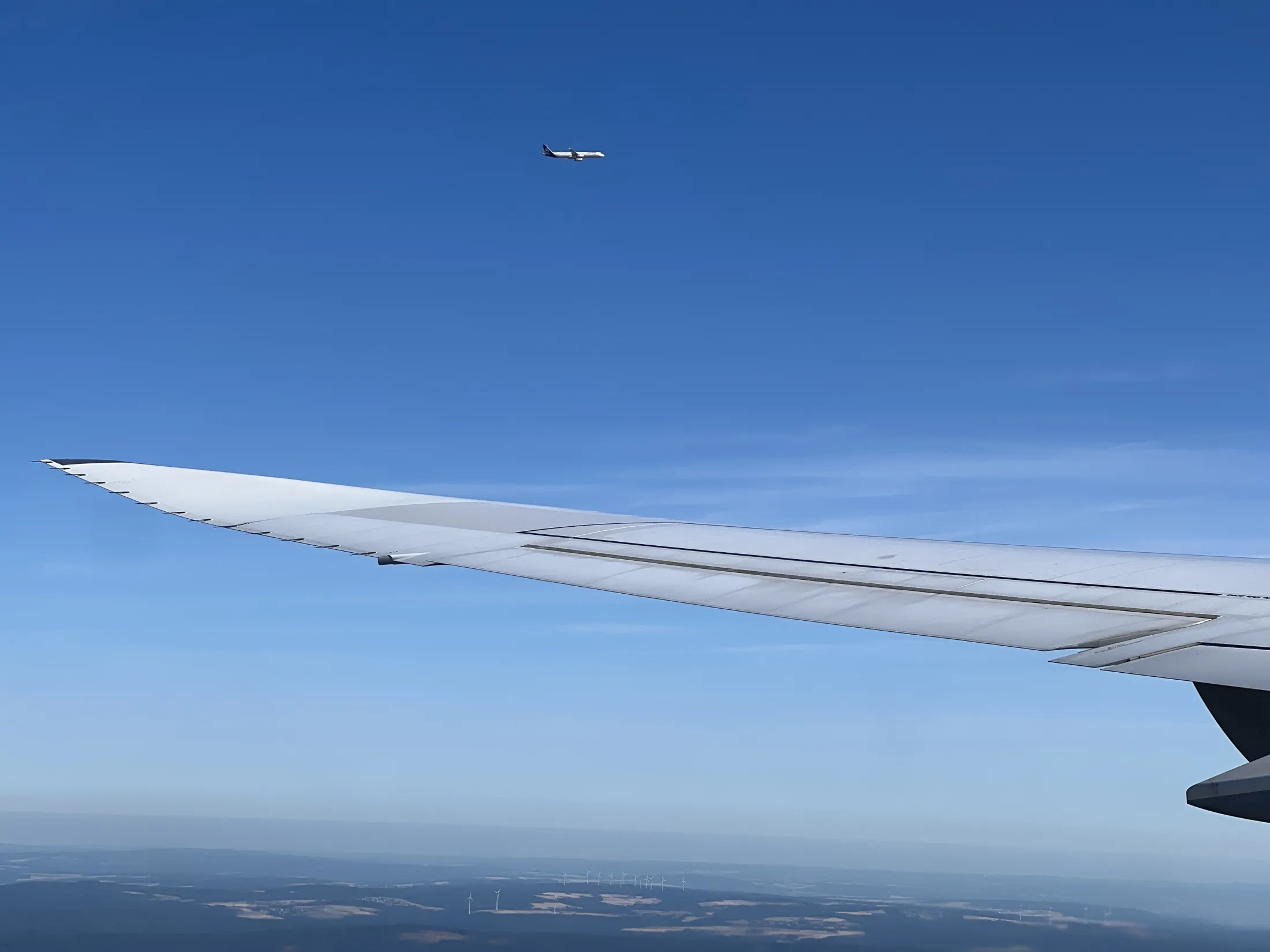
Day 1:Departure
We are leaving Oslo today, flying together to Nepal.
We are leaving Oslo today, flying together to Nepal.
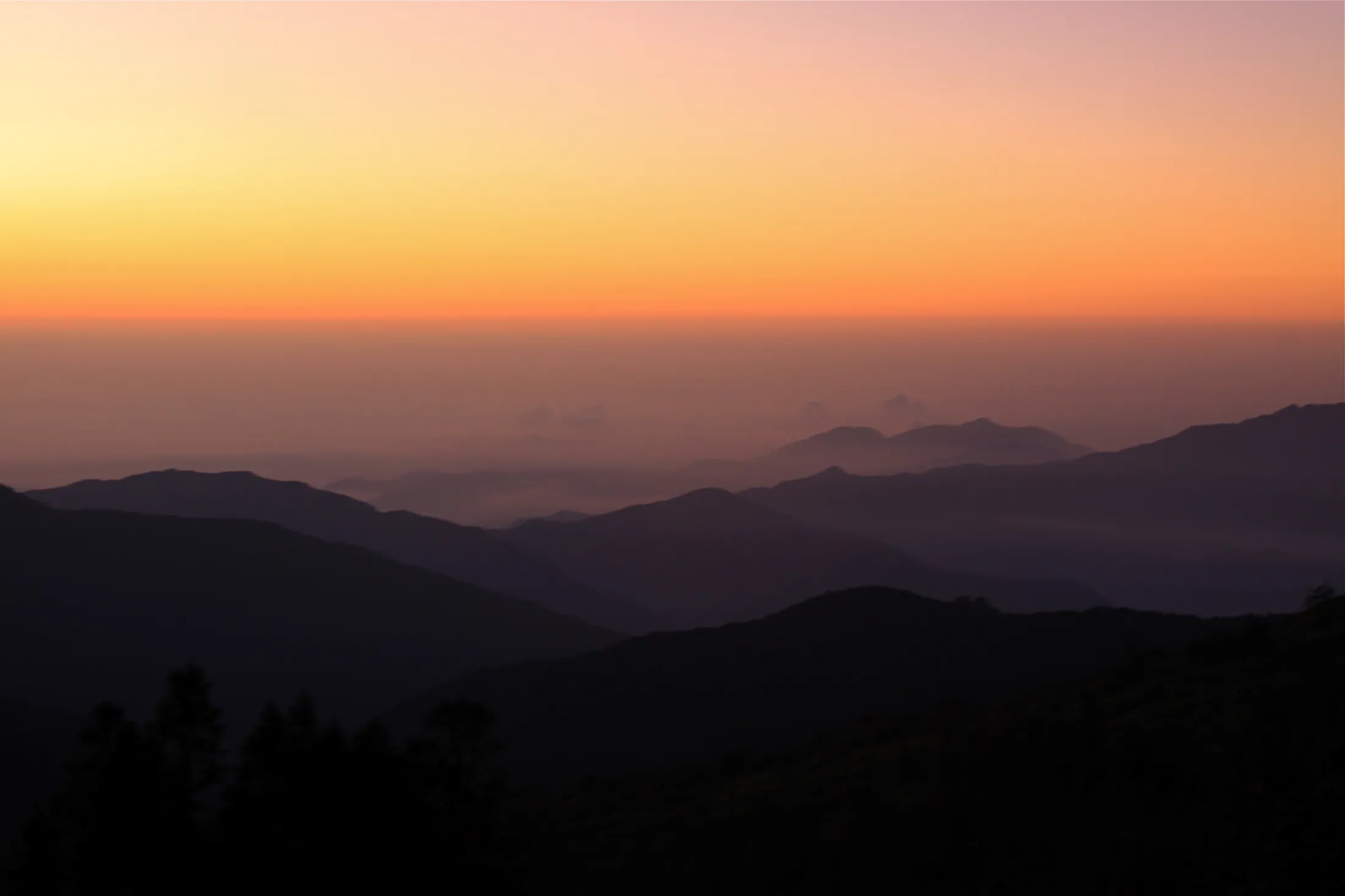
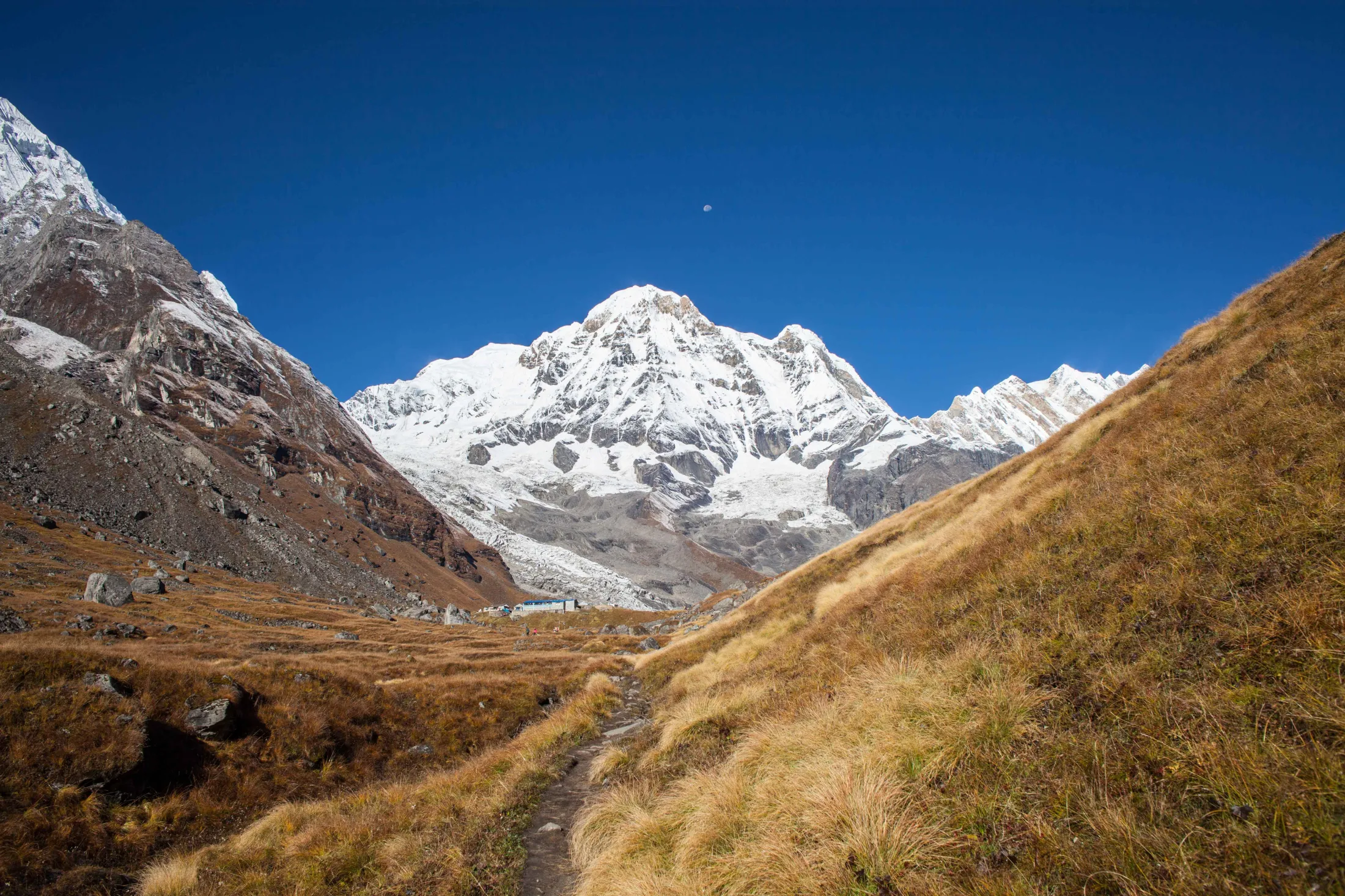
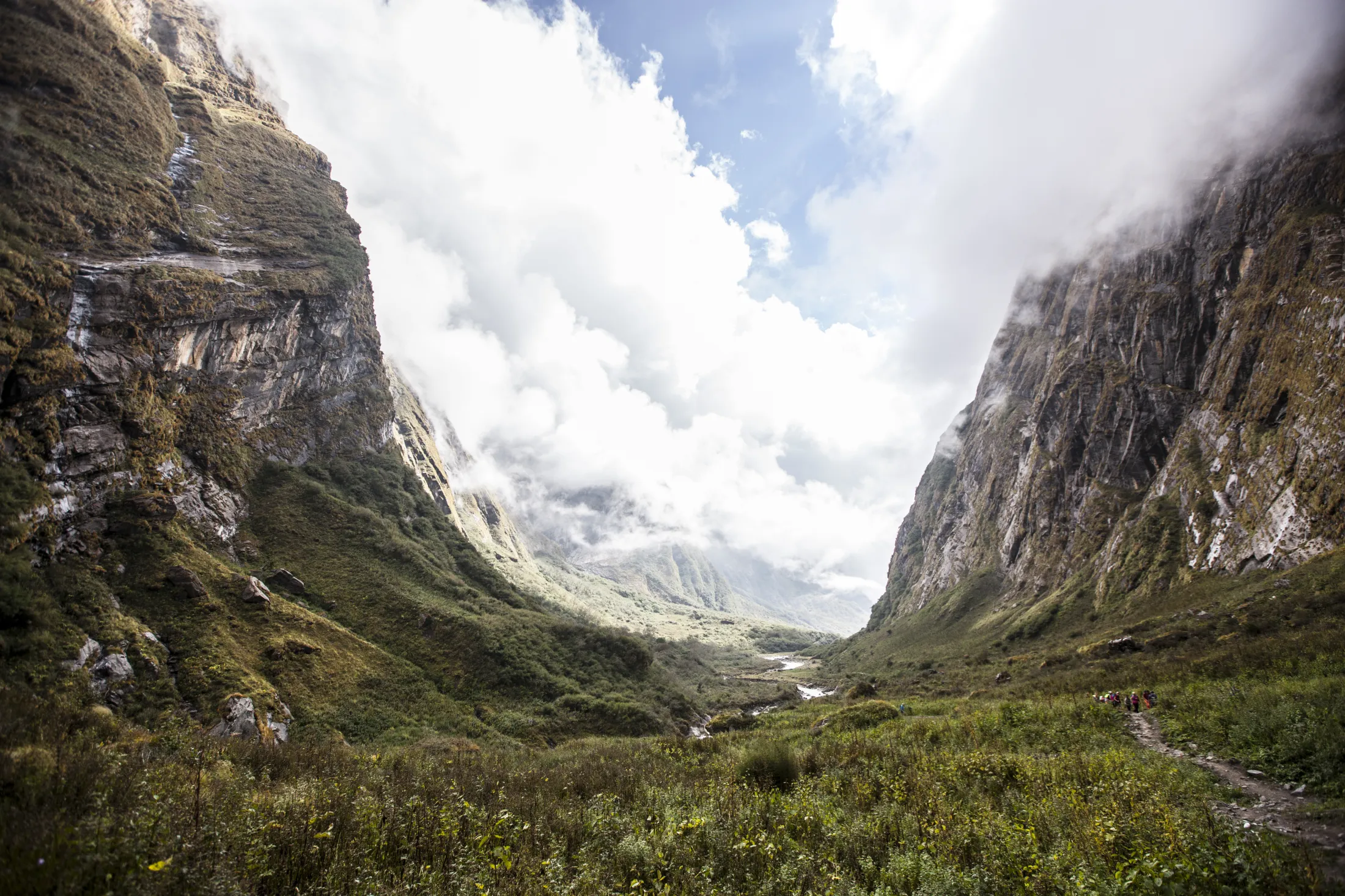
The hike around Mount Annapurna in Nepal has been named one of the world's most beautiful treks! We spend much of the trek walking through small villages surrounded by lush and beautiful nature. We also get sneak peaks of the majestic snow-capped mountain peaks around us when we are at the highest point. We'll encounter vibrant culture and history, and not least great and welcoming people.
The morning hike to Poon Hill is one of the highlights of the trip and offers a spectacular sunrise! After several days of great experiences in low-lying villages, we head towards The Sanctuary - where mountain peaks of around 8000 meters surround us and we pay a visit to Machhapucchhare and Annapurna basecamp.
Plan it your way
Want this trip just for your group? Or got something different in mind? We've got you.
We are leaving Oslo today, flying together to Nepal.
We are leaving Oslo today, flying together to Nepal.
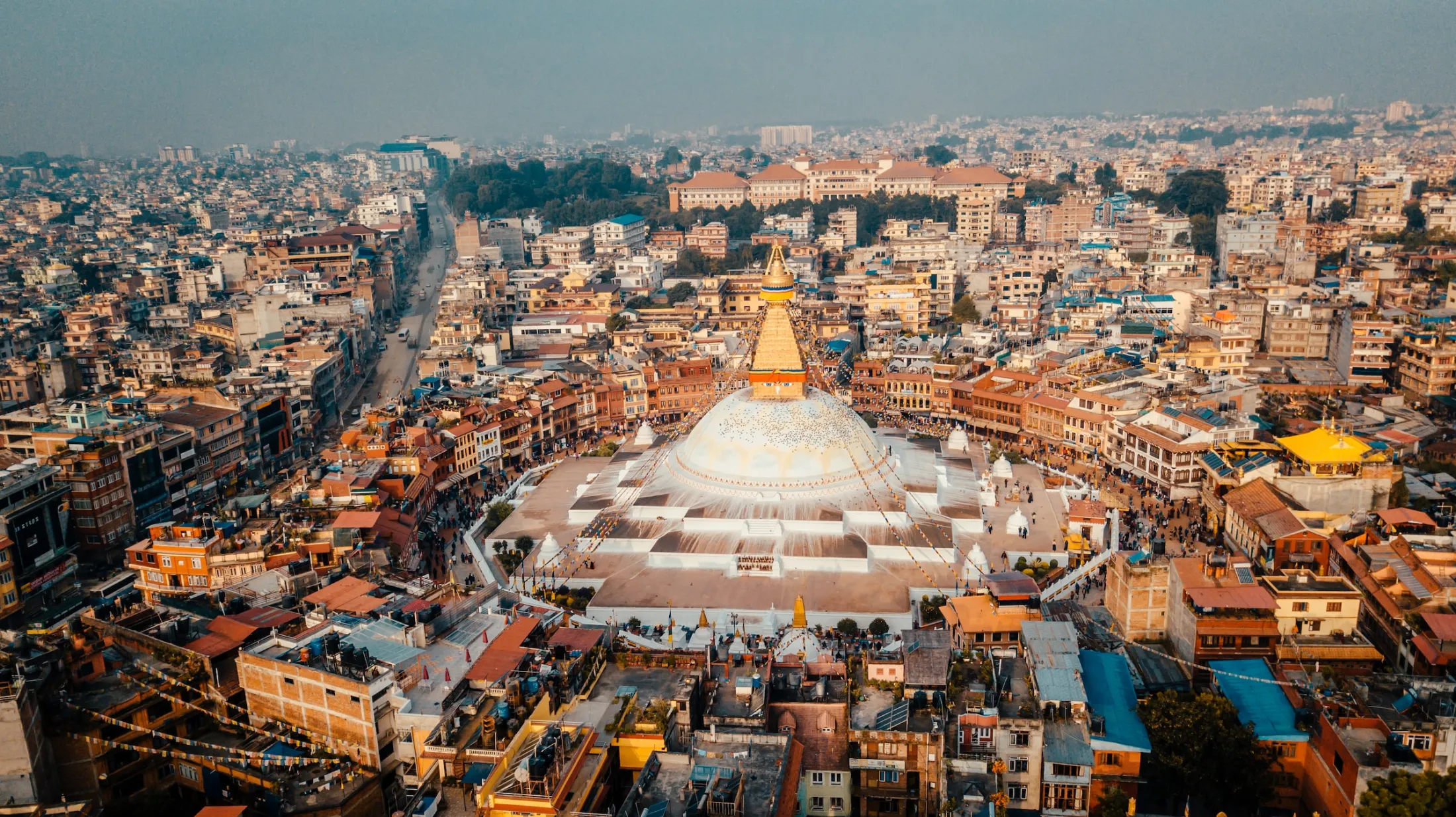
Once we arrive in Kathmandu, we’ll meet our local partners and take a short bus ride to our hotel in the Thamel district. We can also stroll around the city and get a feel for this bustling, exotic city.
Once we arrive in Kathmandu, we’ll meet our local partners and take a short bus ride to our hotel in the Thamel district. We can also stroll around the city and get a feel for this bustling, exotic city.
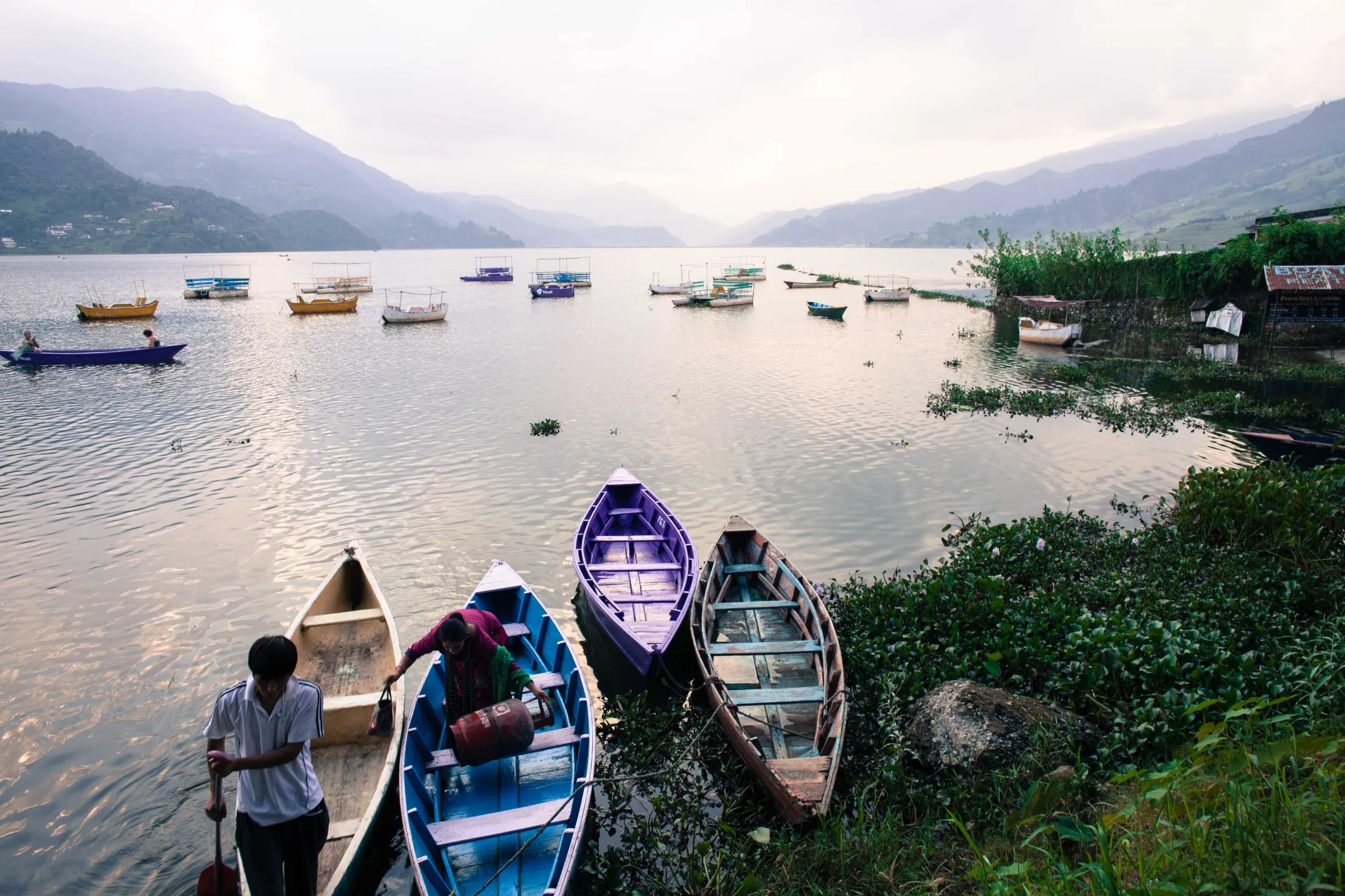
After breakfast, we head back to the airport for a half-hour flight to Pokhara. The flight offers stunning views of the Himalayas. We have almost the entire day to spend in Pokhara. We’ll take it easy, stroll around town a bit, and maybe take a boat ride on Lake Phewa. Alternatively, we can rent bikes or visit the local vegetable market in town. In the evening, we can stop by a cozy pub by the lake.
After breakfast, we head back to the airport for a half-hour flight to Pokhara. The flight offers stunning views of the Himalayas. We have almost the entire day to spend in Pokhara. We’ll take it easy, stroll around town a bit, and maybe take a boat ride on Lake Phewa. Alternatively, we can rent bikes or visit the local vegetable market in town. In the evening, we can stop by a cozy pub by the lake.
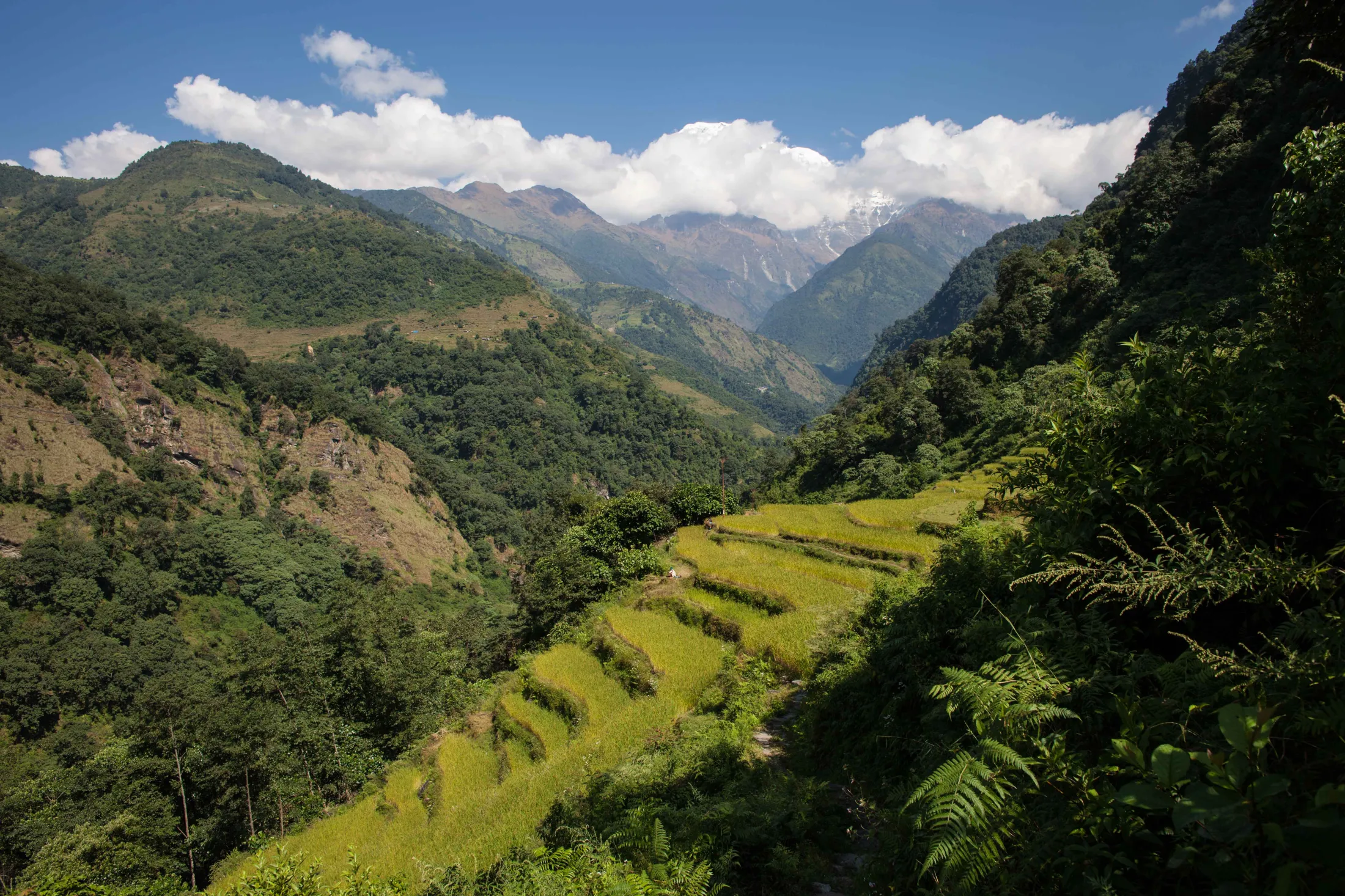
After breakfast, a spectacular bus ride through green valleys awaits us, taking us to Naya Pul/Birethanti. Here begins our adventurous trek to one of the world’s most famous and beautiful mountain ranges—Annapurna. We hike along a cart track through tropical forest, up the valley, passing several small, idyllic villages. Tirkhedhunga is a small village with steep slopes. Approx. 7 hours of hiking with lunch along the way.
After breakfast, a spectacular bus ride through green valleys awaits us, taking us to Naya Pul/Birethanti. Here begins our adventurous trek to one of the world’s most famous and beautiful mountain ranges—Annapurna. We hike along a cart track through tropical forest, up the valley, passing several small, idyllic villages. Tirkhedhunga is a small village with steep slopes. Approx. 7 hours of hiking with lunch along the way.
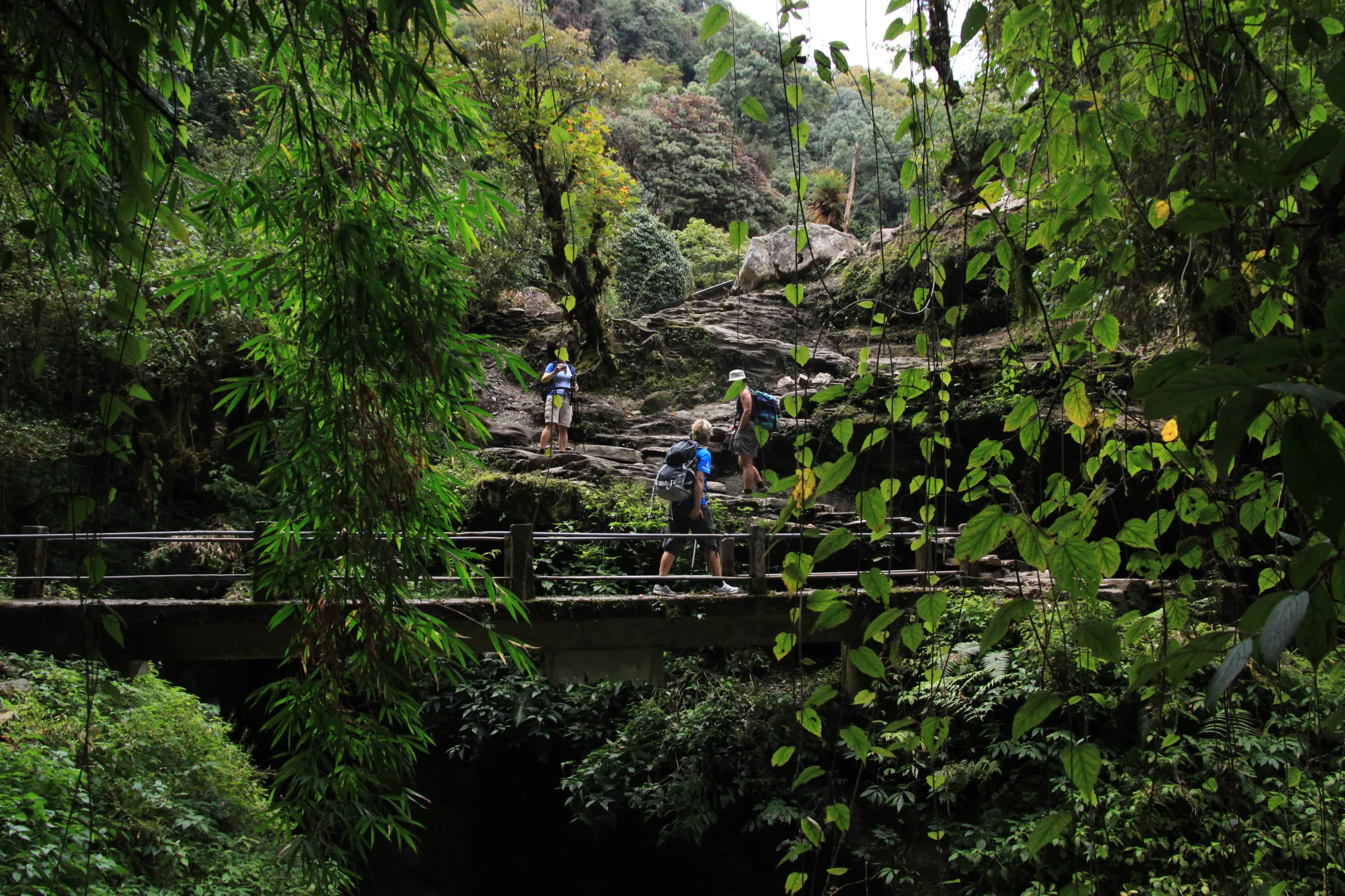
Today we continue our steep ascent to Ulleri. Already here, we have a direct view of the south face of Annapurna South (7219 m). We pass through small, idyllic villages once again and make steady progress up the valley through rhododendron and bamboo forests, passing small waterfalls along the way. Up in Ghorepani, a beautiful view awaits us. Approx. 7–8 hours of hiking with lunch along the way.
Today we continue our steep ascent to Ulleri. Already here, we have a direct view of the south face of Annapurna South (7219 m). We pass through small, idyllic villages once again and make steady progress up the valley through rhododendron and bamboo forests, passing small waterfalls along the way. Up in Ghorepani, a beautiful view awaits us. Approx. 7–8 hours of hiking with lunch along the way.
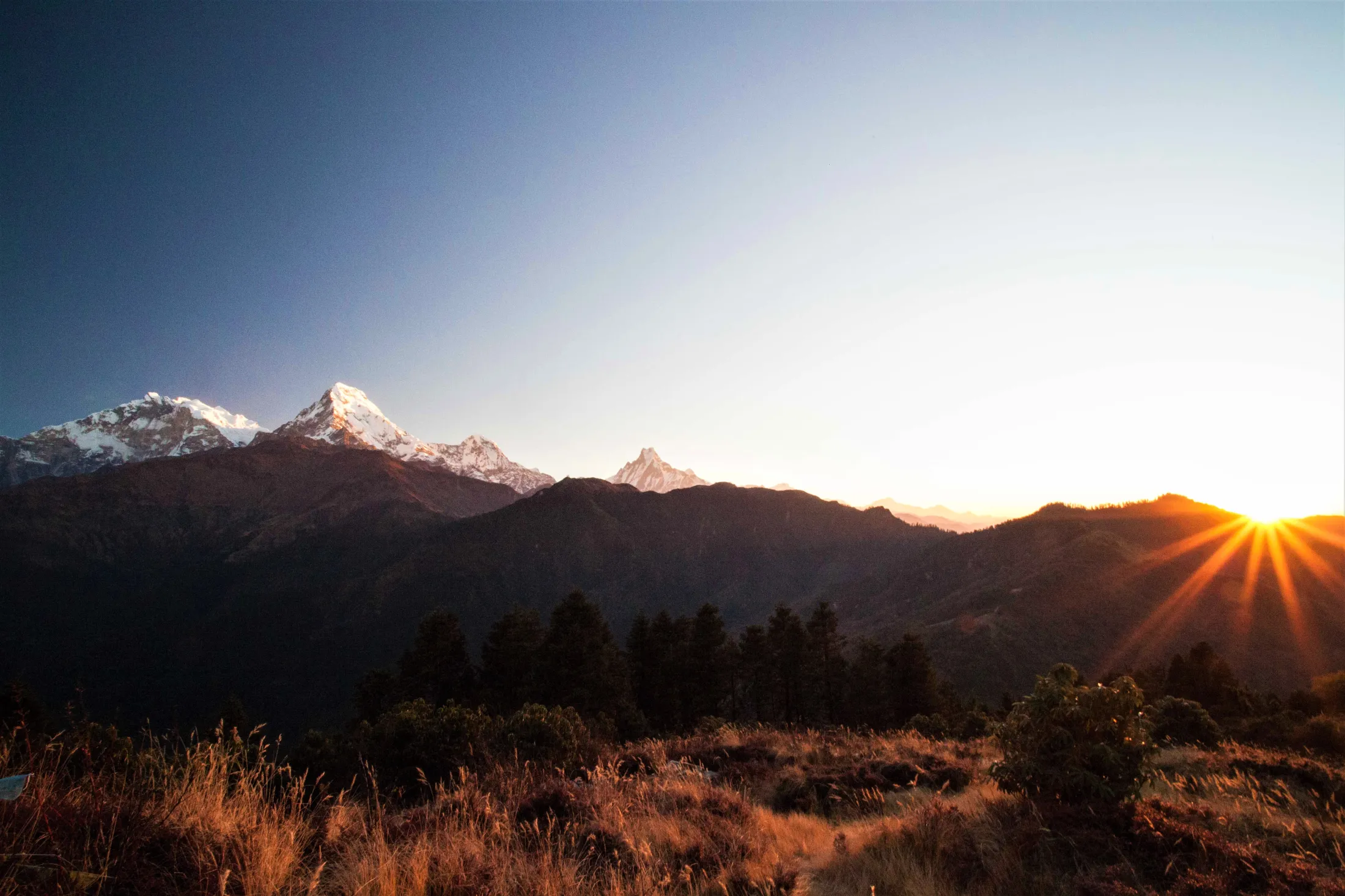
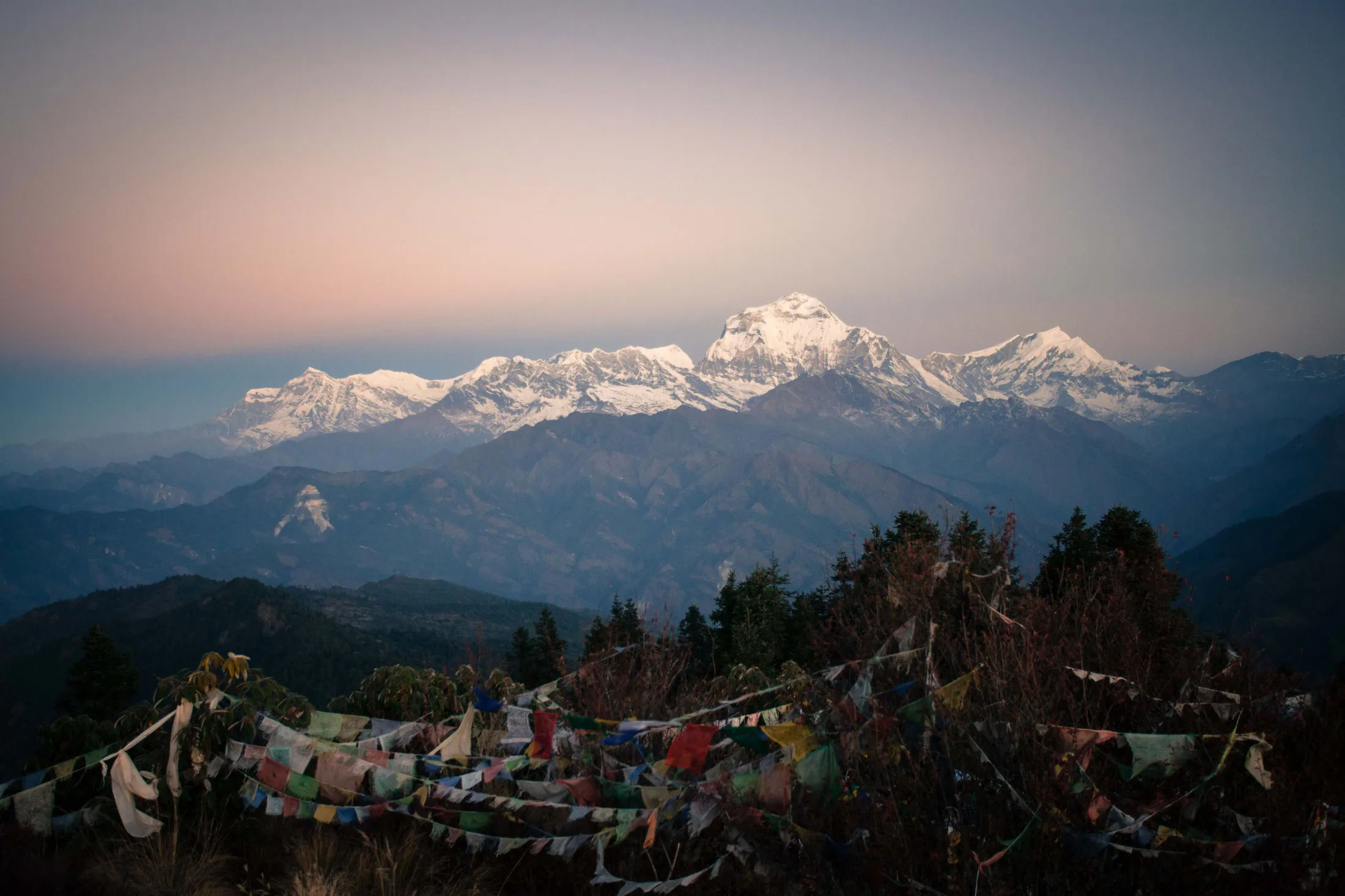
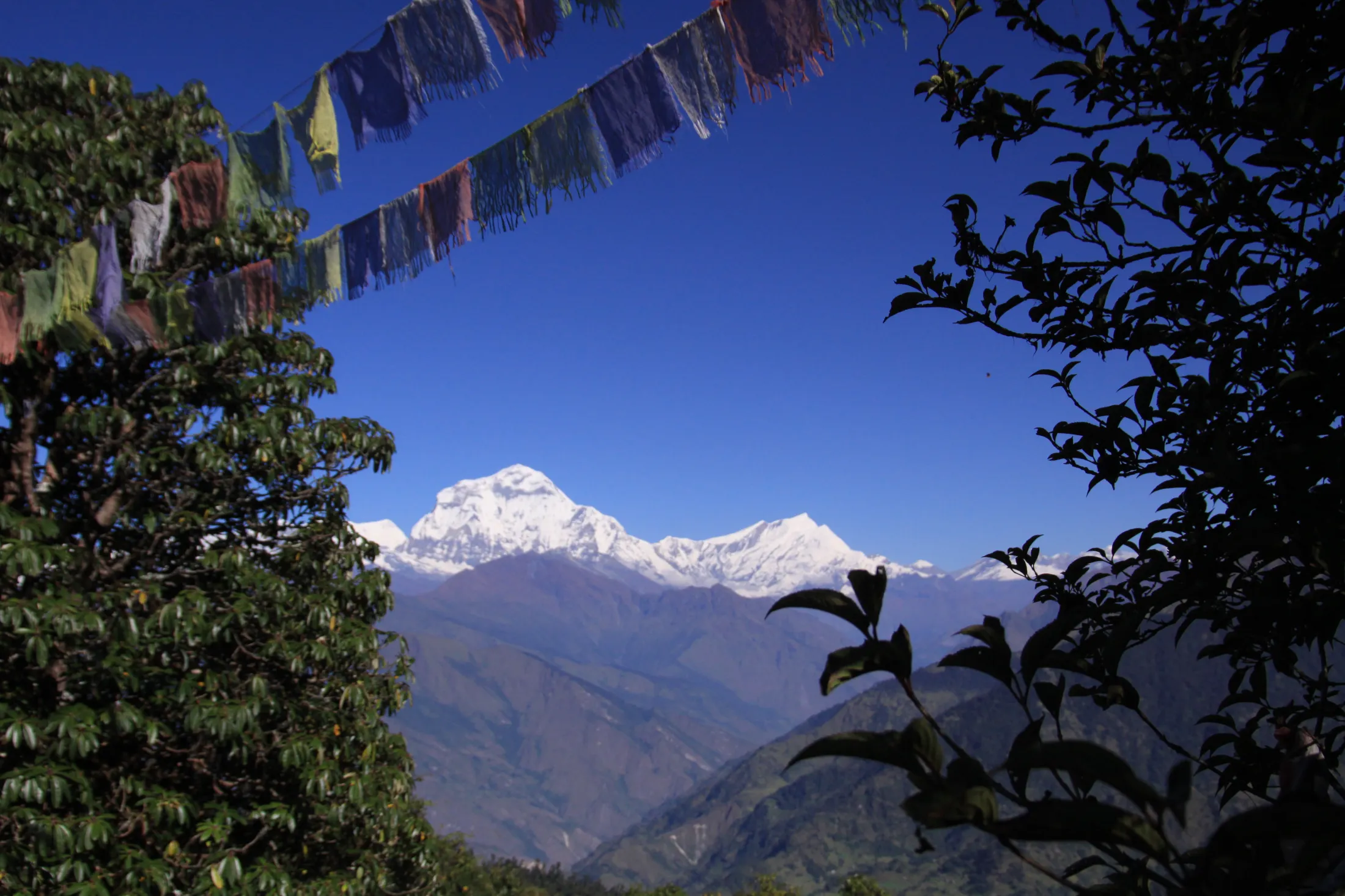
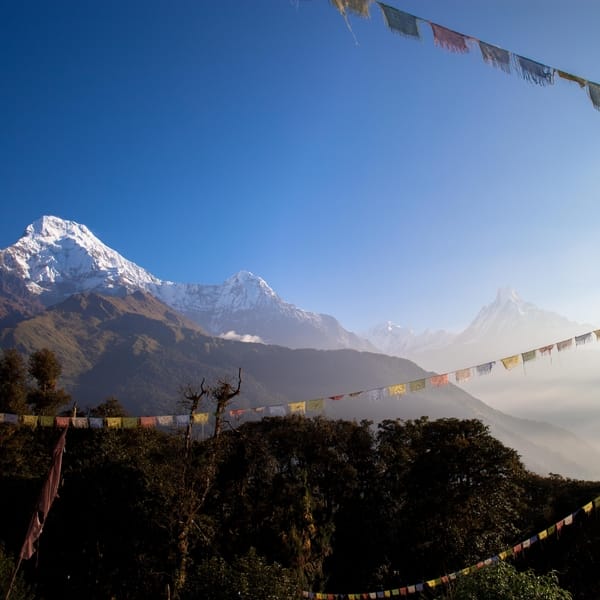
We’ll wake up early and set off for one of the world’s most beautiful viewpoints, Poon Hill. From here, we’ll see Dhaulagiri I, Nilgiri South, Annapurna I, Annapurna South, Hiunchuli, Annapurna III, and Macchapucchare - a stunning, distinctive mountain shaped like a fishtail. You’ll never forget this sunrise, so make sure your camera is ready! We head back down to the lodge for breakfast. Then we hike through wild and varied terrain, with stunning views of Annapurna. In the spring, you can see beautiful rhododendron flowers everywhere. We pass through authentic villages and follow steep trails into the heart of the Annapurna massif. A 7-hour hike with lunch along the way.
We’ll wake up early and set off for one of the world’s most beautiful viewpoints, Poon Hill. From here, we’ll see Dhaulagiri I, Nilgiri South, Annapurna I, Annapurna South, Hiunchuli, Annapurna III, and Macchapucchare - a stunning, distinctive mountain shaped like a fishtail. You’ll never forget this sunrise, so make sure your camera is ready! We head back down to the lodge for breakfast. Then we hike through wild and varied terrain, with stunning views of Annapurna. In the spring, you can see beautiful rhododendron flowers everywhere. We pass through authentic villages and follow steep trails into the heart of the Annapurna massif. A 7-hour hike with lunch along the way.
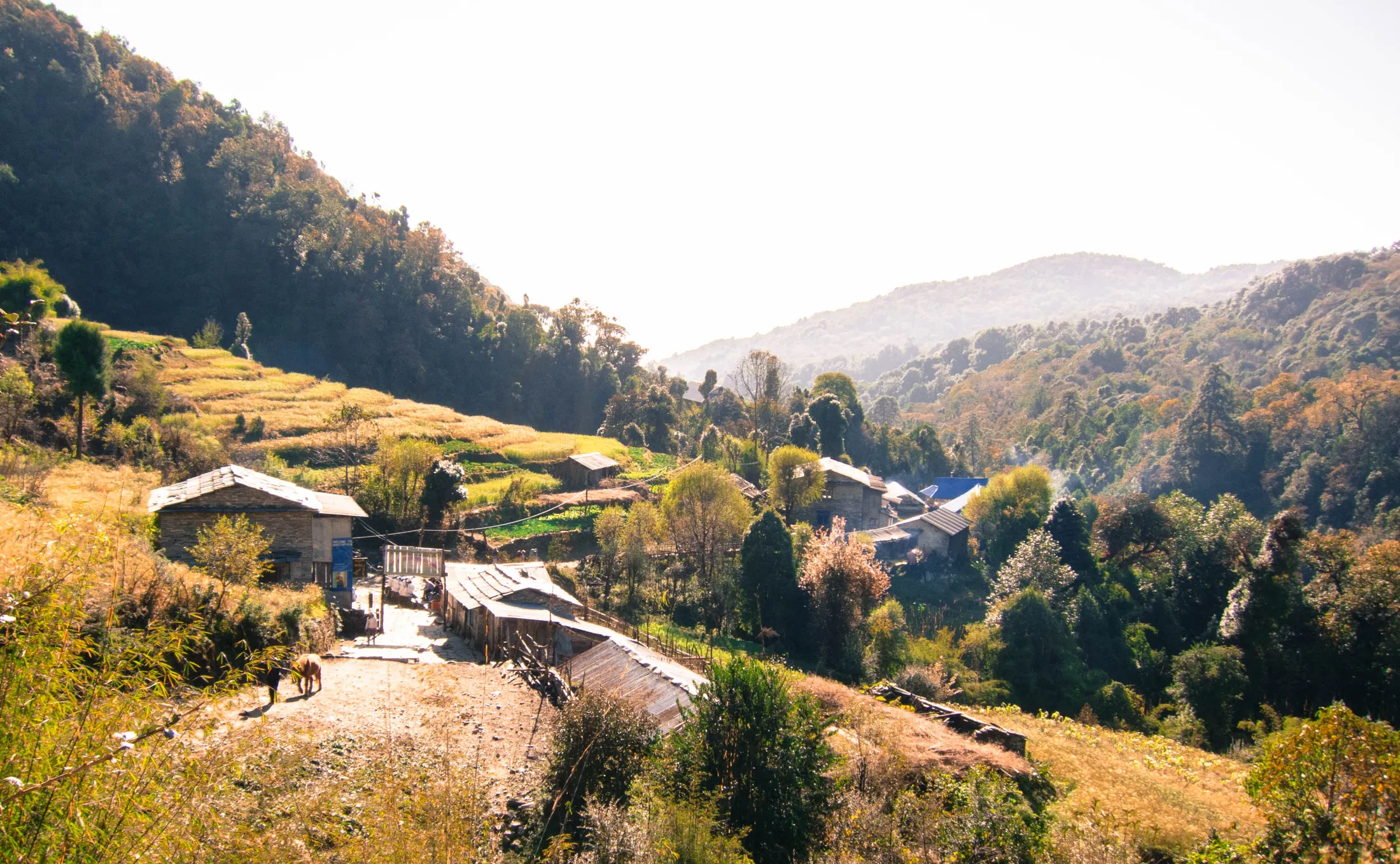
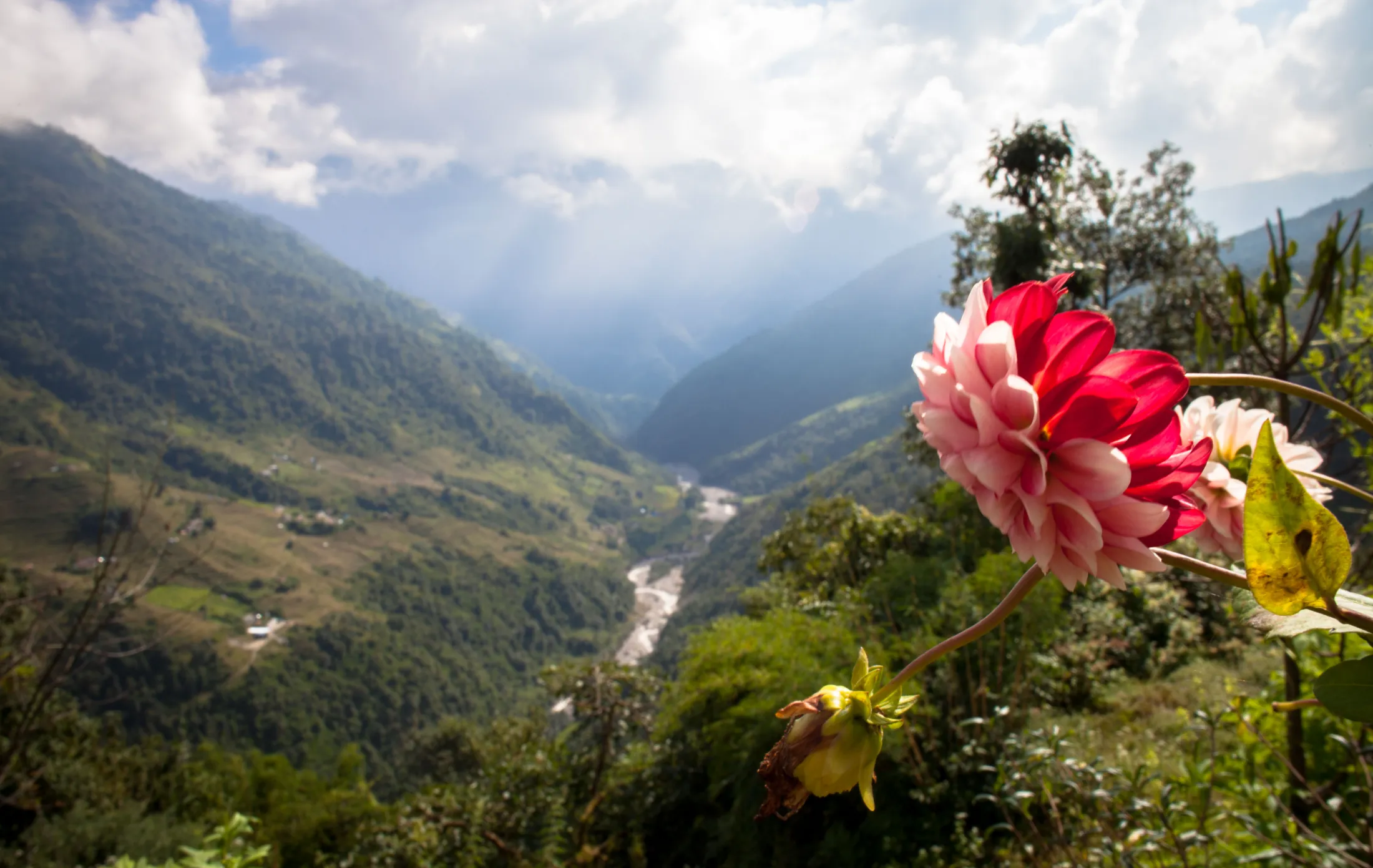
After breakfast, we follow the steep ridge down to the next valley, Green Valley. We pass small farms that grow crops such as corn, rice, and grains. Now we’re really out in the countryside! From here on, the only water available for purchase is filtered through a ceramic filter. We hike up and down steep trails through the beautiful cultural landscape. Once we arrive in Chhomrong, we look straight into the valley that leads us to the Annapurna Sanctuary itself. A 6-hour hike with lunch along the way.
After breakfast, we follow the steep ridge down to the next valley, Green Valley. We pass small farms that grow crops such as corn, rice, and grains. Now we’re really out in the countryside! From here on, the only water available for purchase is filtered through a ceramic filter. We hike up and down steep trails through the beautiful cultural landscape. Once we arrive in Chhomrong, we look straight into the valley that leads us to the Annapurna Sanctuary itself. A 6-hour hike with lunch along the way.
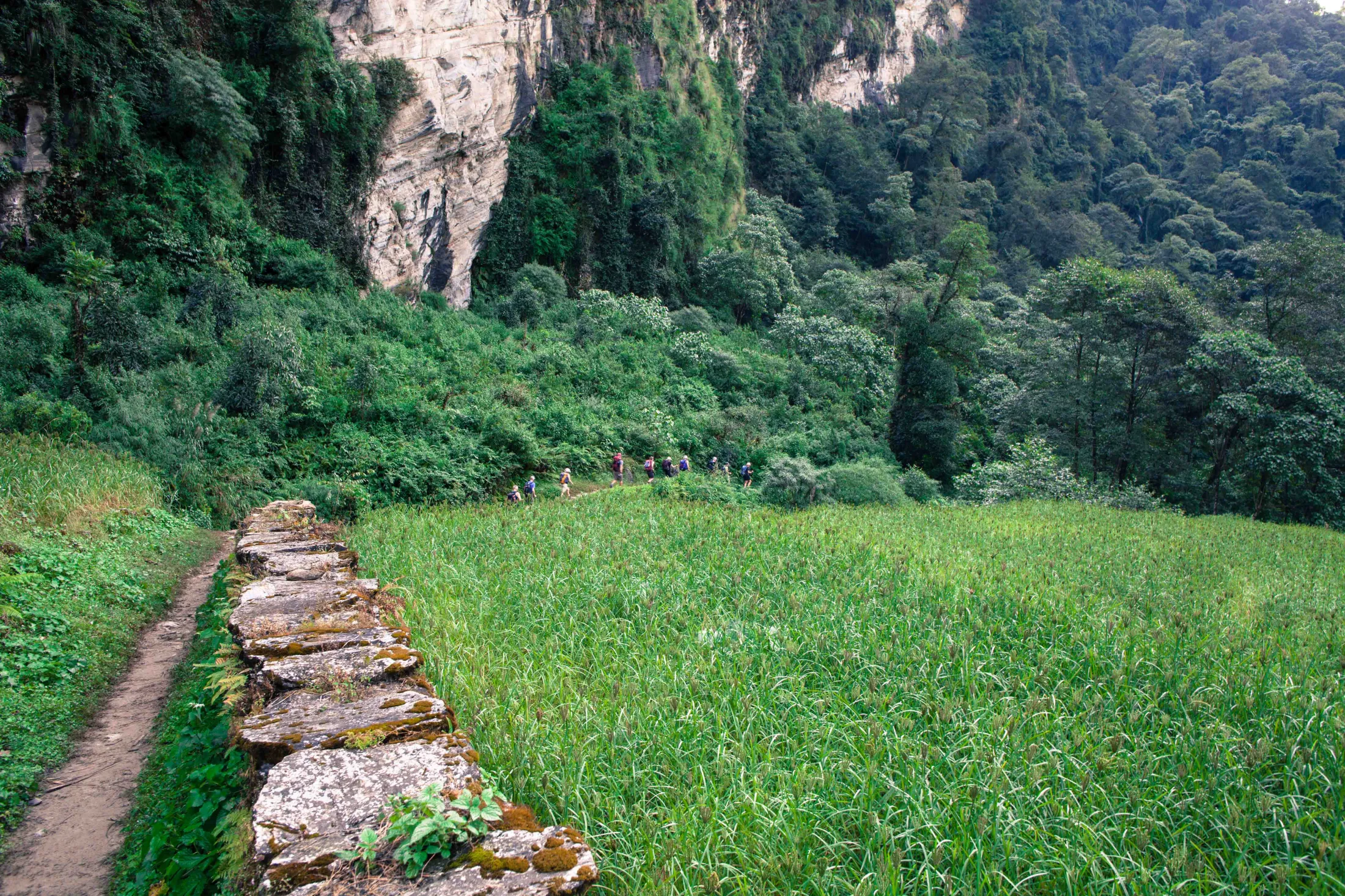
We start the day with a descent of 2064 steps down to the river. On the other side, the climb back up to Sinuwa is just as steep. We continue our hike through tropical forest with steep slopes on both sides. Once we arrive in Dovan, we are in the middle of the valley between Chomrong and Machhapuchhre Base Camp. A 7-hour hike with lunch along the way.
We start the day with a descent of 2064 steps down to the river. On the other side, the climb back up to Sinuwa is just as steep. We continue our hike through tropical forest with steep slopes on both sides. Once we arrive in Dovan, we are in the middle of the valley between Chomrong and Machhapuchhre Base Camp. A 7-hour hike with lunch along the way.
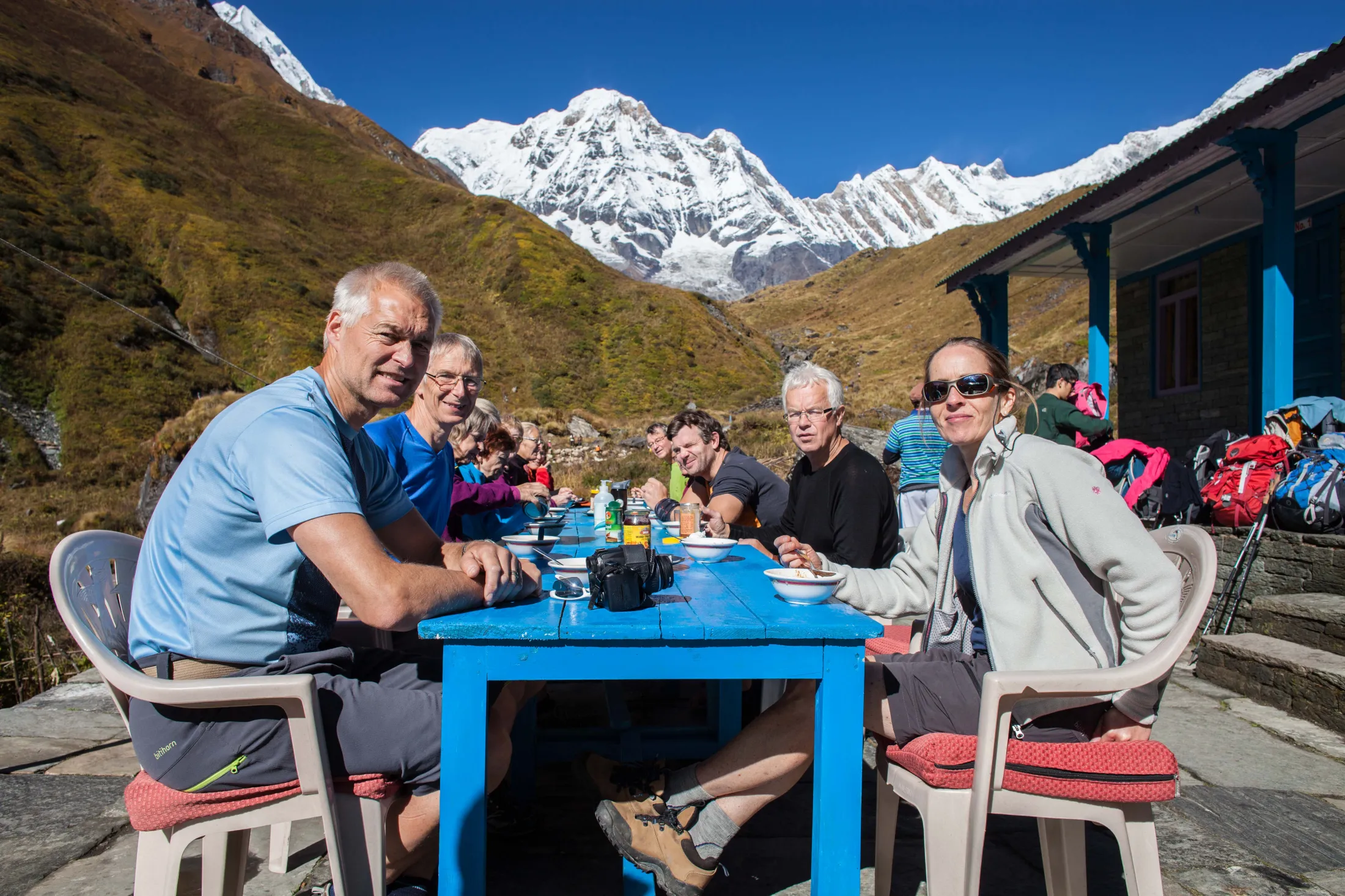
We start the day with a descent of 2,064 steps down to the river. On the other side, the climb back up to Sinuwa is just as steep. We continue our hike through tropical forest with steep slopes on both sides. Once we arrive in Dovan, we are in the middle of the valley between Chomrong and Machhapuchhre Base Camp. A 7-hour hike with lunch along the way.
We start the day with a descent of 2,064 steps down to the river. On the other side, the climb back up to Sinuwa is just as steep. We continue our hike through tropical forest with steep slopes on both sides. Once we arrive in Dovan, we are in the middle of the valley between Chomrong and Machhapuchhre Base Camp. A 7-hour hike with lunch along the way.
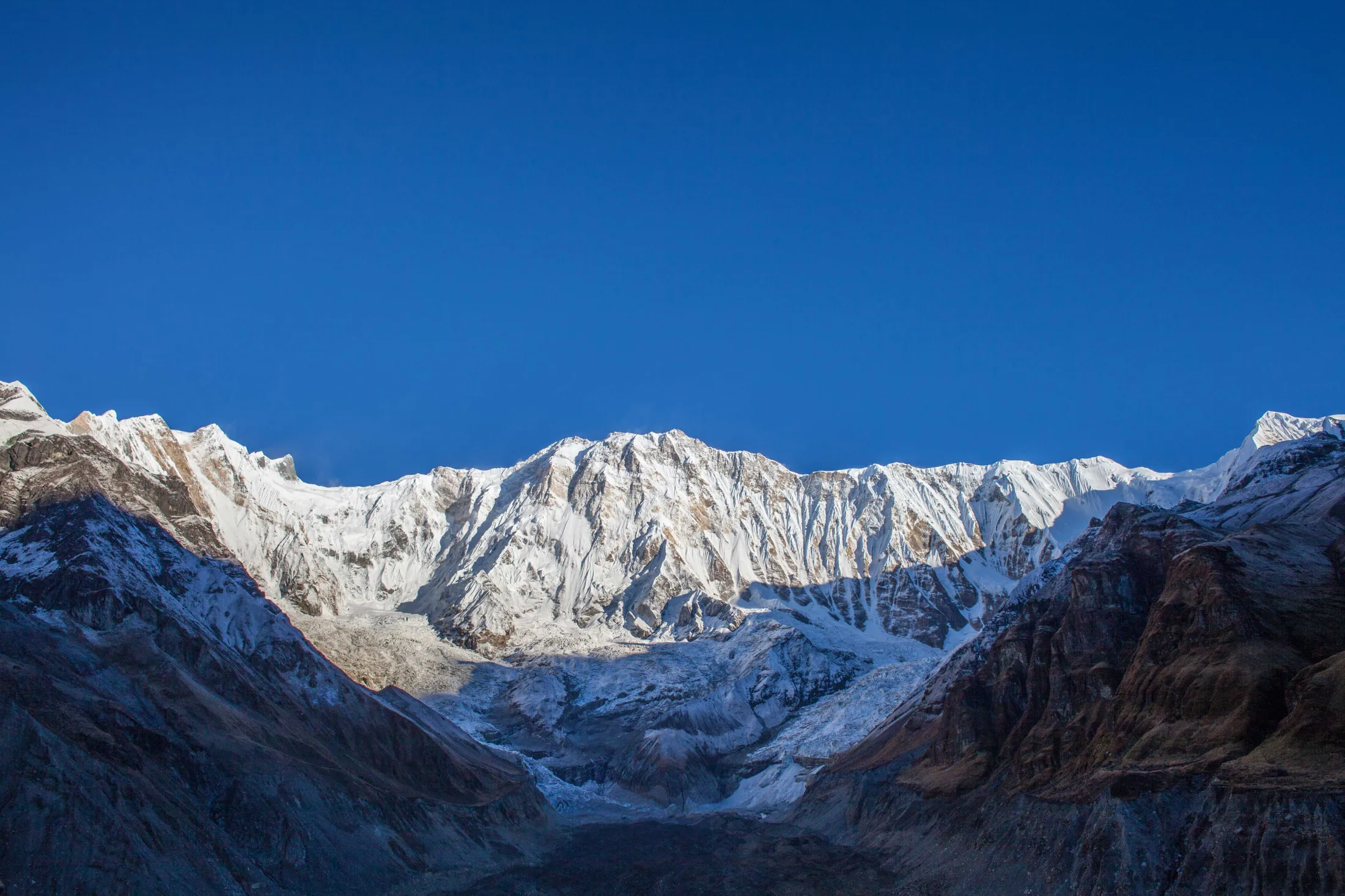
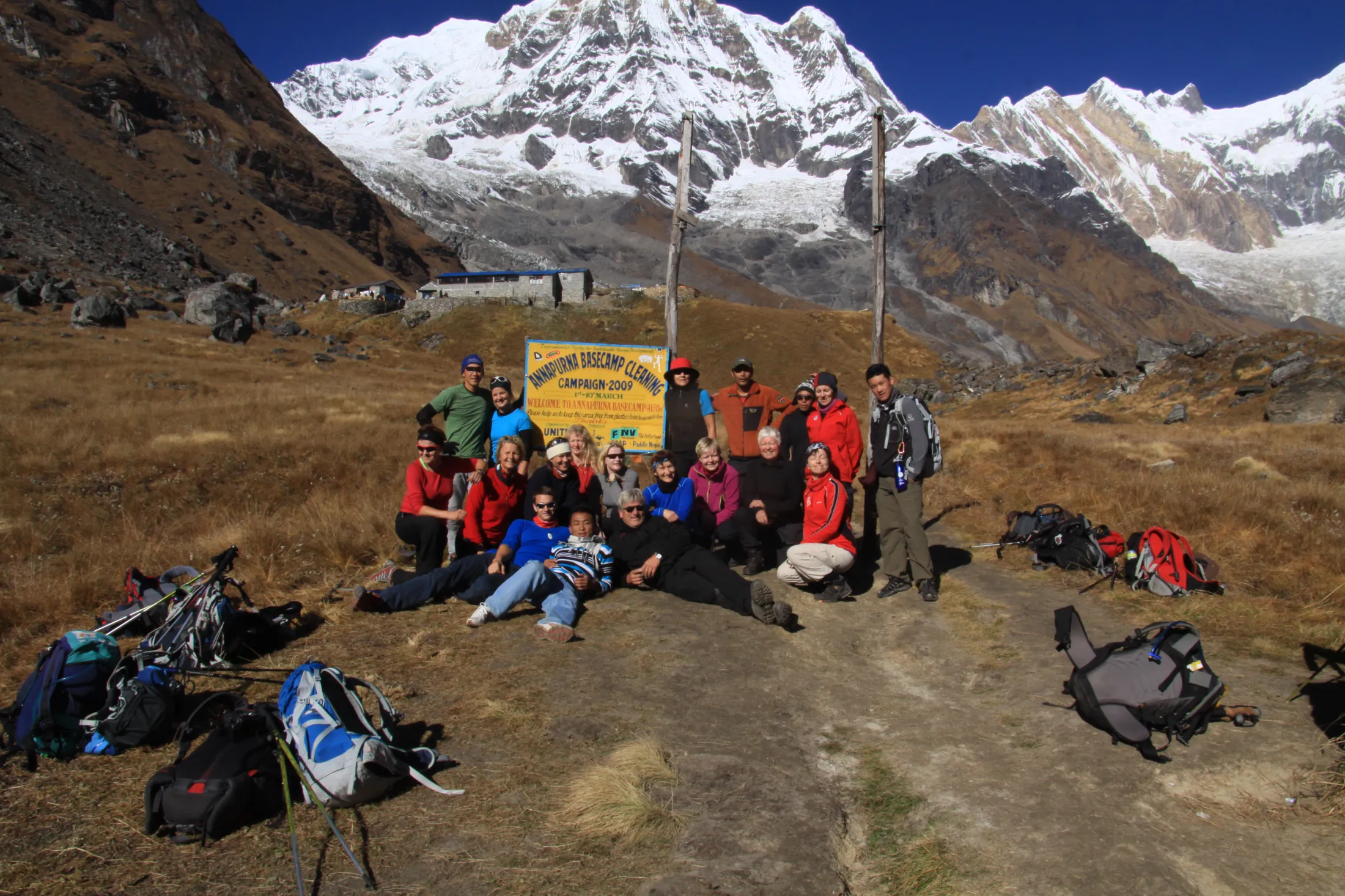
We set out early from MBC, and after a couple of hours of hiking and plenty of photography, we arrive at Annapurna Base Camp. Towering directly above us are Annapurna I and Annapurna South. After some intense photography and a cup of tea at ABC, we head back down to MBC for a hearty breakfast on the terrace. Here we pick up our backpacks and gear and pass through Deurali on our way to Bamboo. This will be a big day for all of us! An 8-hour hike with lunch along the way and dinner in Bamboo.
We set out early from MBC, and after a couple of hours of hiking and plenty of photography, we arrive at Annapurna Base Camp. Towering directly above us are Annapurna I and Annapurna South. After some intense photography and a cup of tea at ABC, we head back down to MBC for a hearty breakfast on the terrace. Here we pick up our backpacks and gear and pass through Deurali on our way to Bamboo. This will be a big day for all of us! An 8-hour hike with lunch along the way and dinner in Bamboo.
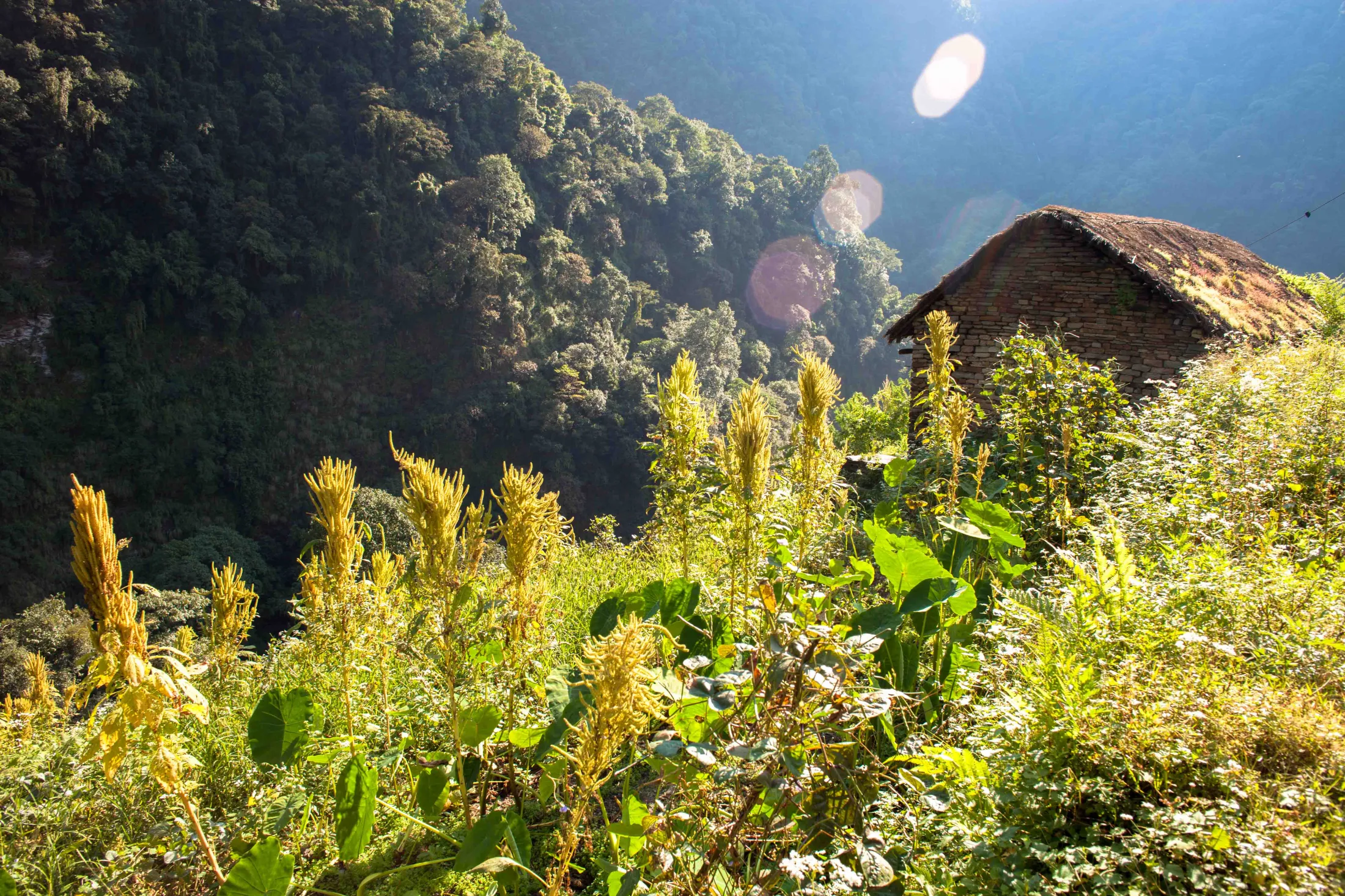
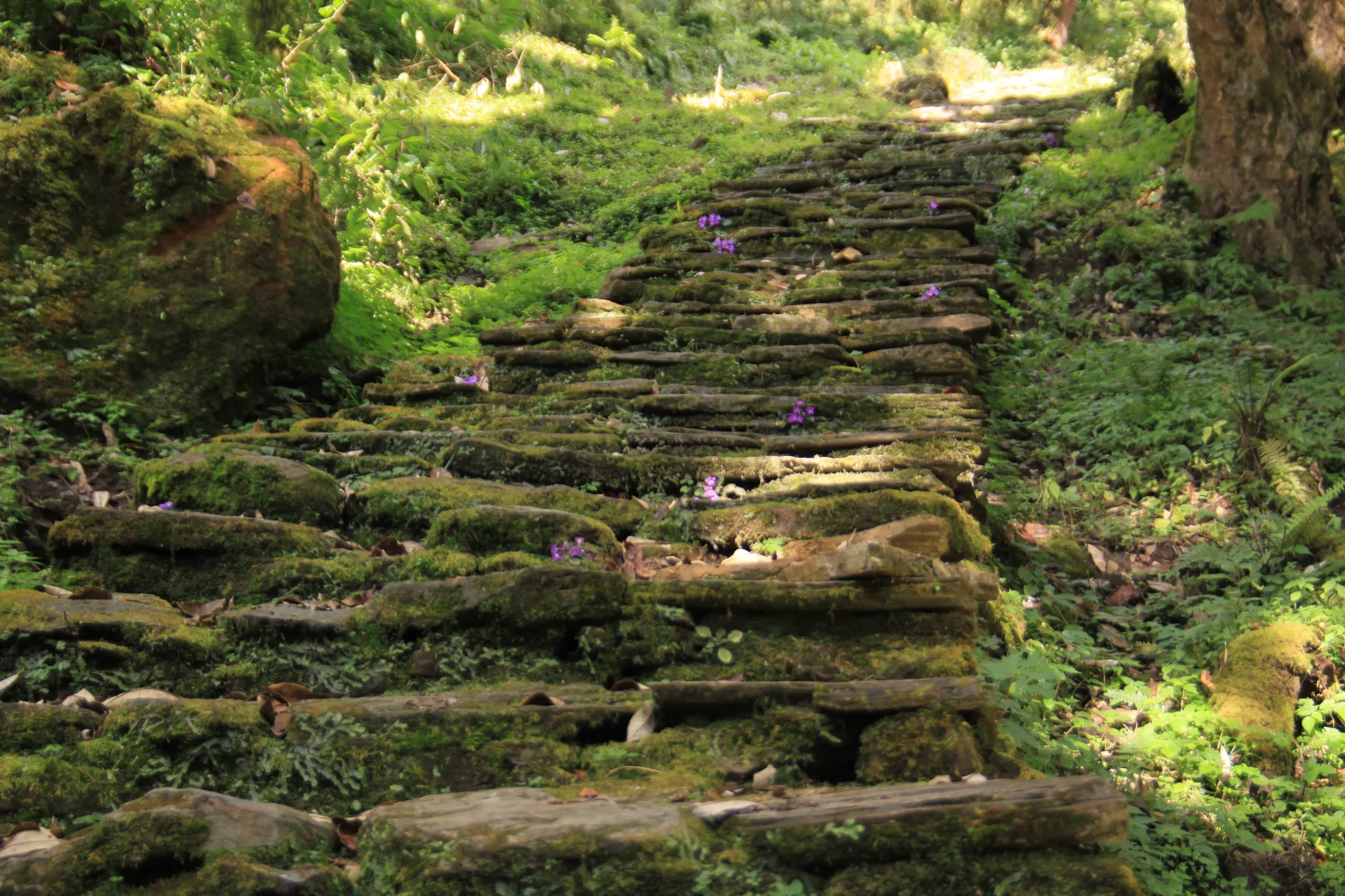
We continue through the valley via tropical forest and pass Khuldhigar. We descend steeply to the river and tackle the 2064 grueling steps up to Chomrong. If you’re interested and feeling energetic, feel free to join the Chomrong International Challenge, our in-house stair race. Once at the top, we’ll enjoy a well-deserved lunch. Now we follow a new trail that will eventually lead us out of the mountains. After another steep descent, we arrive at an incredible, fascinating little village called Jhinu Danda - which means “hot water.” From here, there are fantastic views in every direction, and you can take a dip in the hot springs the town is named after - highly recommended! A 6-hour hike with lunch along the way.
We continue through the valley via tropical forest and pass Khuldhigar. We descend steeply to the river and tackle the 2064 grueling steps up to Chomrong. If you’re interested and feeling energetic, feel free to join the Chomrong International Challenge, our in-house stair race. Once at the top, we’ll enjoy a well-deserved lunch. Now we follow a new trail that will eventually lead us out of the mountains. After another steep descent, we arrive at an incredible, fascinating little village called Jhinu Danda - which means “hot water.” From here, there are fantastic views in every direction, and you can take a dip in the hot springs the town is named after - highly recommended! A 6-hour hike with lunch along the way.
We’ll continue down a steep slope toward the river before following a new valley further on. We’ll pass Nayapul (New Bridge) and eventually arrive at Landruk, a larger village. Along the way, we’ll experience everyday Nepalese village life. After lunch in Tolka, we tackle the trek’s final long uphill stretch before the trail levels out again and we arrive in Deurali. From here, we have a magnificent view down toward Pokhara, and behind us we can still see one of the world’s highest mountains - Dhaulagiri. Then it’s all downhill to today’s final destination - Dhampus. A 7-hour hike with lunch along the way.
We’ll continue down a steep slope toward the river before following a new valley further on. We’ll pass Nayapul (New Bridge) and eventually arrive at Landruk, a larger village. Along the way, we’ll experience everyday Nepalese village life. After lunch in Tolka, we tackle the trek’s final long uphill stretch before the trail levels out again and we arrive in Deurali. From here, we have a magnificent view down toward Pokhara, and behind us we can still see one of the world’s highest mountains - Dhaulagiri. Then it’s all downhill to today’s final destination - Dhampus. A 7-hour hike with lunch along the way.
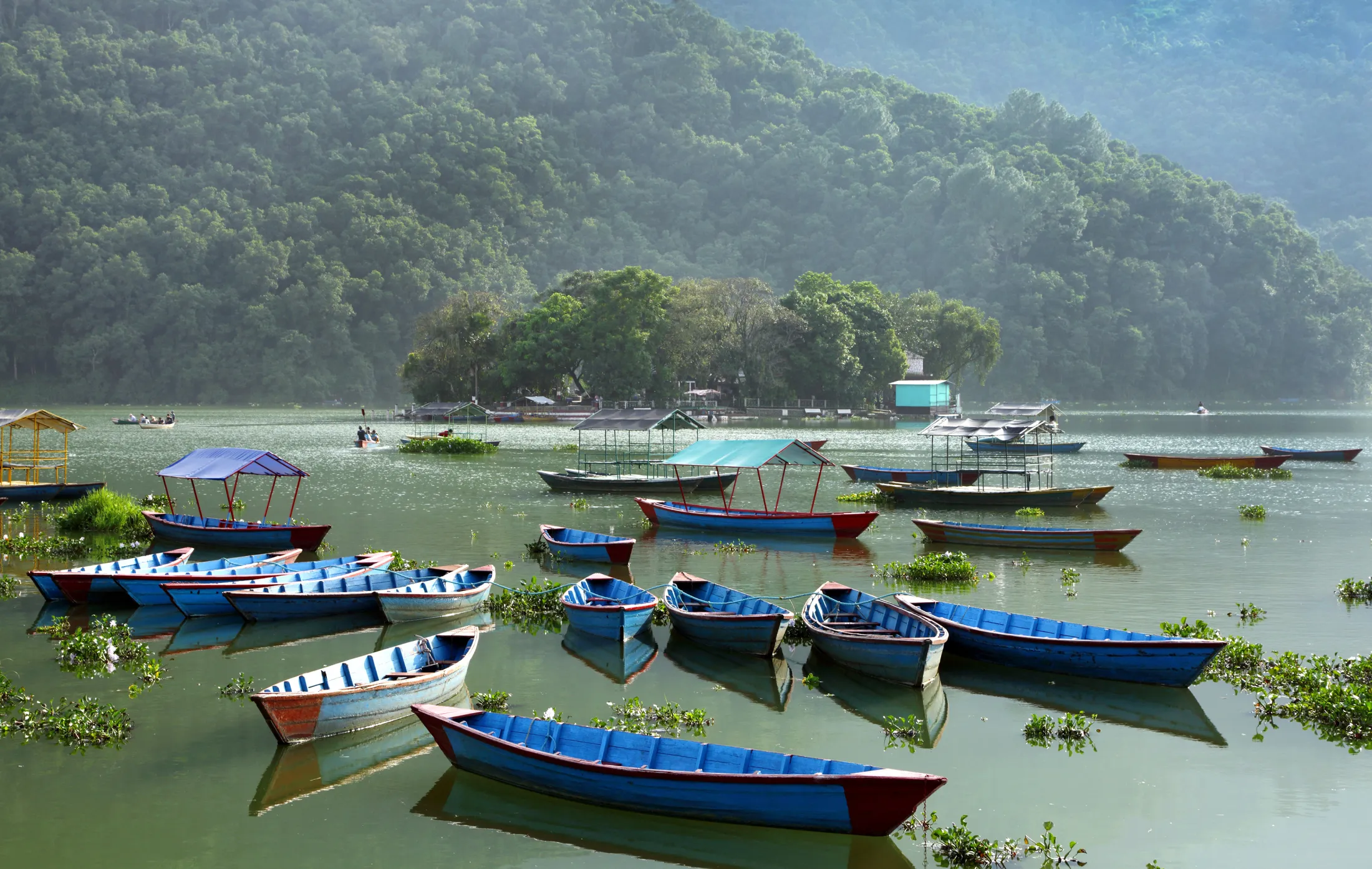
We can now tell that the hike is coming to an end and that we’re getting closer to “civilization.” After breakfast, we follow a sort of tractor path out of Dhamphus before tackling the final steep descent toward Phedi (1130 m). We’ll take a ride the last stretch into Pokhara—where showers and other “luxuries” await. We’ll also have lunch in Pokhara. For those who wish, it’s possible to go paragliding from one of the hills around the city (must be booked in advance). Here you can take some truly beautiful photos, all while feeling butterflies in your stomach! Or you can relax, get a massage, go shopping, take a boat ride, or go for a bike ride. In the evening, we’ll have dinner together.
We can now tell that the hike is coming to an end and that we’re getting closer to “civilization.” After breakfast, we follow a sort of tractor path out of Dhamphus before tackling the final steep descent toward Phedi (1130 m). We’ll take a ride the last stretch into Pokhara—where showers and other “luxuries” await. We’ll also have lunch in Pokhara. For those who wish, it’s possible to go paragliding from one of the hills around the city (must be booked in advance). Here you can take some truly beautiful photos, all while feeling butterflies in your stomach! Or you can relax, get a massage, go shopping, take a boat ride, or go for a bike ride. In the evening, we’ll have dinner together.
After an early hotel breakfast, we leave Pokhara and fly back to Kathmandu. Here, we have the rest of the day to explore the city on our own. Kathmandu is a wonderful city to wander around in. Here, you can soak up the sights, smells, and mystique to your heart’s content.
After an early hotel breakfast, we leave Pokhara and fly back to Kathmandu. Here, we have the rest of the day to explore the city on our own. Kathmandu is a wonderful city to wander around in. Here, you can soak up the sights, smells, and mystique to your heart’s content.
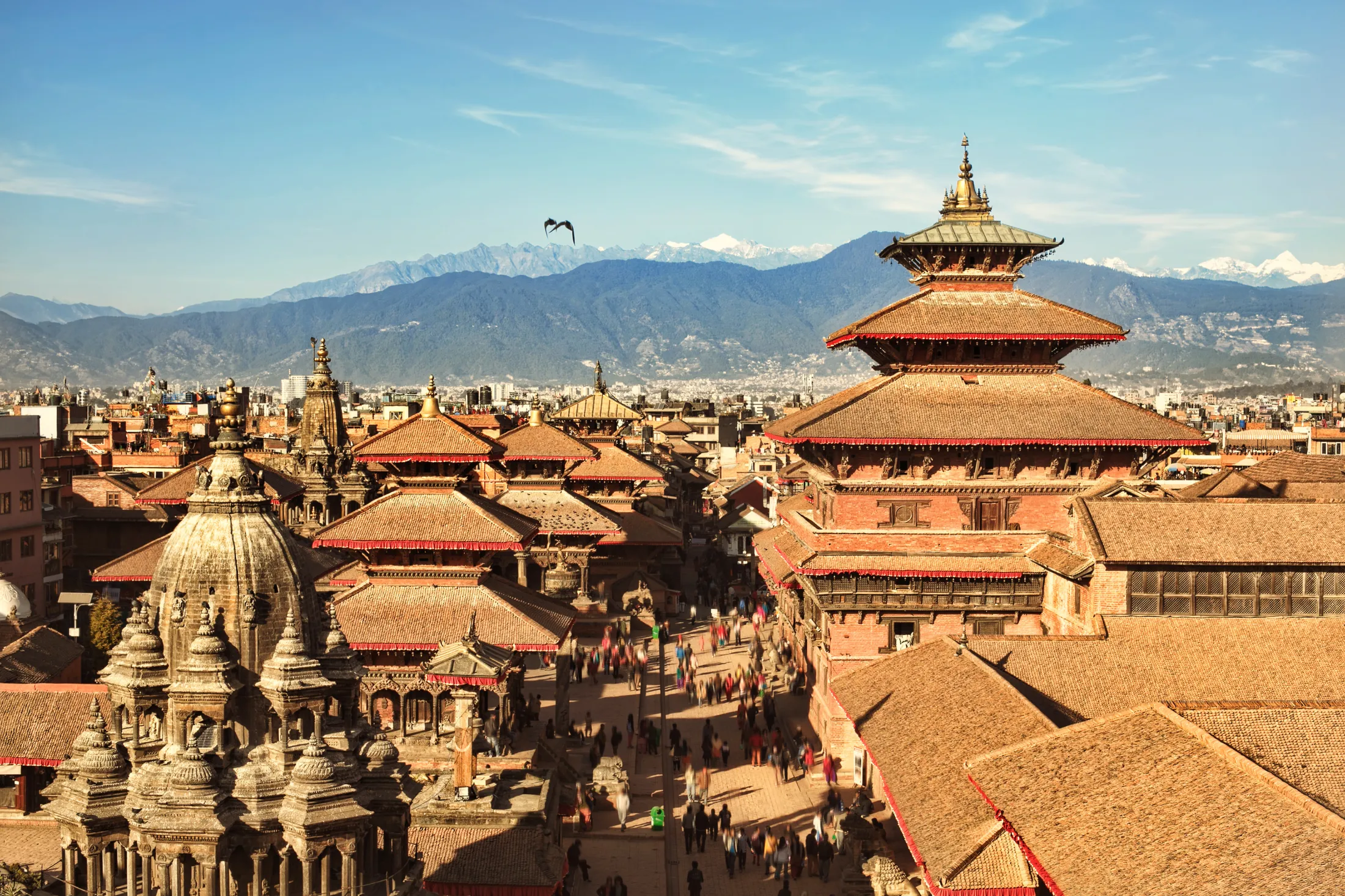
A lazy day, serious shopping, or sightseeing? It is up to you. A sightseeing tour is arranged to the Boudhanath stupa, the Pashupatinath temple, and Durbar Square with a local guide. We will have a nice farewell dinner together this evening.
A lazy day, serious shopping, or sightseeing? It is up to you. A sightseeing tour is arranged to the Boudhanath stupa, the Pashupatinath temple, and Durbar Square with a local guide. We will have a nice farewell dinner together this evening.
We fly from Kathmandu early in the morning and land at Oslo Airport Gardermoen the same evening. All adventures must come to an end, but the memories are etched in our minds, and our love for Nepal will always remain strong. Sooner or later, we will have to return.
We fly from Kathmandu early in the morning and land at Oslo Airport Gardermoen the same evening. All adventures must come to an end, but the memories are etched in our minds, and our love for Nepal will always remain strong. Sooner or later, we will have to return.
We are leaving Oslo today, flying together to Nepal.
Once we arrive in Kathmandu, we’ll meet our local partners and take a short bus ride to our hotel in the Thamel district. We can also stroll around the city and get a feel for this bustling, exotic city.
After breakfast, we head back to the airport for a half-hour flight to Pokhara. The flight offers stunning views of the Himalayas. We have almost the entire day to spend in Pokhara. We’ll take it easy, stroll around town a bit, and maybe take a boat ride on Lake Phewa. Alternatively, we can rent bikes or visit the local vegetable market in town. In the evening, we can stop by a cozy pub by the lake.
After breakfast, a spectacular bus ride through green valleys awaits us, taking us to Naya Pul/Birethanti. Here begins our adventurous trek to one of the world’s most famous and beautiful mountain ranges—Annapurna. We hike along a cart track through tropical forest, up the valley, passing several small, idyllic villages. Tirkhedhunga is a small village with steep slopes. Approx. 7 hours of hiking with lunch along the way.
Today we continue our steep ascent to Ulleri. Already here, we have a direct view of the south face of Annapurna South (7219 m). We pass through small, idyllic villages once again and make steady progress up the valley through rhododendron and bamboo forests, passing small waterfalls along the way. Up in Ghorepani, a beautiful view awaits us. Approx. 7–8 hours of hiking with lunch along the way.
We’ll wake up early and set off for one of the world’s most beautiful viewpoints, Poon Hill. From here, we’ll see Dhaulagiri I, Nilgiri South, Annapurna I, Annapurna South, Hiunchuli, Annapurna III, and Macchapucchare - a stunning, distinctive mountain shaped like a fishtail. You’ll never forget this sunrise, so make sure your camera is ready! We head back down to the lodge for breakfast. Then we hike through wild and varied terrain, with stunning views of Annapurna. In the spring, you can see beautiful rhododendron flowers everywhere. We pass through authentic villages and follow steep trails into the heart of the Annapurna massif. A 7-hour hike with lunch along the way.
After breakfast, we follow the steep ridge down to the next valley, Green Valley. We pass small farms that grow crops such as corn, rice, and grains. Now we’re really out in the countryside! From here on, the only water available for purchase is filtered through a ceramic filter. We hike up and down steep trails through the beautiful cultural landscape. Once we arrive in Chhomrong, we look straight into the valley that leads us to the Annapurna Sanctuary itself. A 6-hour hike with lunch along the way.
We start the day with a descent of 2064 steps down to the river. On the other side, the climb back up to Sinuwa is just as steep. We continue our hike through tropical forest with steep slopes on both sides. Once we arrive in Dovan, we are in the middle of the valley between Chomrong and Machhapuchhre Base Camp. A 7-hour hike with lunch along the way.
We start the day with a descent of 2,064 steps down to the river. On the other side, the climb back up to Sinuwa is just as steep. We continue our hike through tropical forest with steep slopes on both sides. Once we arrive in Dovan, we are in the middle of the valley between Chomrong and Machhapuchhre Base Camp. A 7-hour hike with lunch along the way.
We set out early from MBC, and after a couple of hours of hiking and plenty of photography, we arrive at Annapurna Base Camp. Towering directly above us are Annapurna I and Annapurna South. After some intense photography and a cup of tea at ABC, we head back down to MBC for a hearty breakfast on the terrace. Here we pick up our backpacks and gear and pass through Deurali on our way to Bamboo. This will be a big day for all of us! An 8-hour hike with lunch along the way and dinner in Bamboo.
We continue through the valley via tropical forest and pass Khuldhigar. We descend steeply to the river and tackle the 2064 grueling steps up to Chomrong. If you’re interested and feeling energetic, feel free to join the Chomrong International Challenge, our in-house stair race. Once at the top, we’ll enjoy a well-deserved lunch. Now we follow a new trail that will eventually lead us out of the mountains. After another steep descent, we arrive at an incredible, fascinating little village called Jhinu Danda - which means “hot water.” From here, there are fantastic views in every direction, and you can take a dip in the hot springs the town is named after - highly recommended! A 6-hour hike with lunch along the way.
We’ll continue down a steep slope toward the river before following a new valley further on. We’ll pass Nayapul (New Bridge) and eventually arrive at Landruk, a larger village. Along the way, we’ll experience everyday Nepalese village life. After lunch in Tolka, we tackle the trek’s final long uphill stretch before the trail levels out again and we arrive in Deurali. From here, we have a magnificent view down toward Pokhara, and behind us we can still see one of the world’s highest mountains - Dhaulagiri. Then it’s all downhill to today’s final destination - Dhampus. A 7-hour hike with lunch along the way.
We can now tell that the hike is coming to an end and that we’re getting closer to “civilization.” After breakfast, we follow a sort of tractor path out of Dhamphus before tackling the final steep descent toward Phedi (1130 m). We’ll take a ride the last stretch into Pokhara—where showers and other “luxuries” await. We’ll also have lunch in Pokhara. For those who wish, it’s possible to go paragliding from one of the hills around the city (must be booked in advance). Here you can take some truly beautiful photos, all while feeling butterflies in your stomach! Or you can relax, get a massage, go shopping, take a boat ride, or go for a bike ride. In the evening, we’ll have dinner together.
After an early hotel breakfast, we leave Pokhara and fly back to Kathmandu. Here, we have the rest of the day to explore the city on our own. Kathmandu is a wonderful city to wander around in. Here, you can soak up the sights, smells, and mystique to your heart’s content.
A lazy day, serious shopping, or sightseeing? It is up to you. A sightseeing tour is arranged to the Boudhanath stupa, the Pashupatinath temple, and Durbar Square with a local guide. We will have a nice farewell dinner together this evening.
We fly from Kathmandu early in the morning and land at Oslo Airport Gardermoen the same evening. All adventures must come to an end, but the memories are etched in our minds, and our love for Nepal will always remain strong. Sooner or later, we will have to return.
Round-trip Oslo–Kathmandu and round-trip Kathmandu–Pokhara
English-speaking local Sirdar, local guides, cooks, and crew.
All transportation as specified in the program.
Accommodation in shared double rooms at hotels in Kathmandu and Pokhara, and double or shared rooms in the mountains.
Meals as specified in the program.
Remember to bring two passport photos for the hiking permit.
For trips where flights are not included, please check our website to confirm that the departure is guaranteed before booking your own plane tickets. For each trip, we require a minimum number of confirmed participants before the departure can be guaranteed.
Visas for Nepal must be booked online in advance. However, payment for the visa must be made at the airport in Kathmandu and must be paid in cash. Please have the exact amount ready upon arrival.
To local guides and assistants. Tips are a common and expected part of being a tourist in many of the destinations we visit. These are given in cash during the trip and therefore cannot be included in the tour price.
Available upon request, limited quantities. Only available in Kathmandu.
This includes bottled water, soft drinks, and snacks while hiking. Budget approximately 35 000 – 40 000 NPR.
Request quotes from other cities in Norway.
Any additional activities not included in the specified itinerary, in Pokhara and Kathmandu. If you’d like to go sightseeing in Kathmandu, this can be booked through our local partner in Kathmandu for an additional fee. You’ll also need to pay any entrance fees and a small tip for the guide.
We reserve the right to change prices. The day by day program is indicative and changes may occur. We also refer to our general travel conditions.


For departures with Norrøna Adventure guides:
On this trip, it is important to understand that we will be traveling far off the beaten track. We will of course do everything we can to assist if anything should happen, but any rescue operation could take longer than on other trips we organize. It is therefore extremely important that all participants are well prepared and ready to deal with unforeseen situations.
Some segments of the journey may prove challenging. It's essential to possess a solid level of fitness prior to departure. Persistence will be required in reaching the trip's goal.
Simple accommodations, such as cabins or guesthouses, often with multi-bed rooms. Sometimes with bunk beds and often with a shared bathroom.
Activities/trips with some risk. Certain incidents may occur, and they may be of such a nature that they may require professional help.
It is an advantage to have hiked in the mountains before. You should also practice walking with a light daypack a couple of weeks before departure. It's important to have fun on a trip. We recommend that you read a little about the country and the trip you're going on before you leave.
Do you love travel literature? Here are some titles you can try to get your hands on:
Annapurna Sanctuary is a fairly tough hike. We are on our feet for 10 consecutive days, and have daily stages of approx. 6 hours. We spend much of the trip in tropical jungle and cultural landscapes at around 2000-2500 meters above sea level. Poon Hill is just over 3000 meters above sea level and Annapurna Basecamp at just over 4000 meters. But there's a lot of uphill and downhill walking on trails, and we'll be climbing a lot of stairs, so good form and good knees are a prerequisite. We only carry light daypacks ourselves.
We cross several suspension bridges along the way, and some of them go over airy gorges. This is good to be prepared for if you are afraid of heights.
Many people wonder what it takes to go on a trip with Norrøna Adventure to high mountains. Here's an introduction to hiking at altitude - what to expect and how to prepare with the right clothing, equipment and training.
Before embarking on our journey together, we kindly remind all tour participants to check their respective country's visa status and vaccination requirements. Ensuring your travel documents are in order is a crucial step in guaranteeing a smooth and hassle-free adventure.
Norwegian citizens need a passport valid for at least 6 months after the return date and a visa. See also the current entry and visa regulations on the Ministry of Foreign Affairs' country pages.
Norwegians book a visa online before departure, it currently costs 50 USD and is paid in cash on arrival in Kathmandu. We send out information about visas with a link to the application a few weeks before departure. There is no point in applying for a visa to Nepal before this, as the application is only valid for 15 days.
You will need 1 passport photo for the trekking permit, and you must bring the passport photos from home.
If you are over 67, you should have a thorough medical check-up before your trip. Make your doctor aware that this is a trip involving physical exertion and moving off the beaten track.
It is important that you complete all parts of the registration form (especially where we ask for information about health and allergies), and let us know if there is anything we need to be aware of prior to and during the tour. Relevant health information that may affect the tour should also be communicated to the guide at the start of the tour. *Note* - If you are on regular medication, have known allergies or anything similar, you must always bring your personal medication with you.
See the overview on FHI´s pages on travel health advice. For vaccination and guidance, please contact Sentrum Reisemedisin: Reisemedisin.no.
For trips where flights are not included, please check our website to confirm that the departure is guaranteed before booking your own plane tickets. For each trip, we require a minimum number of confirmed participants before the departure can be guaranteed.
We stay in good hotels in Kathmandu and in Pokhara. On the trek we stay in simple teahouses/lodges. The standard decreases at the highest lodges. We strive to place as many people as possible in double rooms in the mountains, but at some of the teahouses you will be placed in 3- and 4-person rooms because they have nothing else to offer, this is especially true in Donovan and in Bamboo.
Climatic conditions are crucial for when you want to visit Nepal.
Late September to November, the start of the dry season, and February to April, the end of the dry season, are the best times to go. However, temperatures can vary from +30 to -10, so warm clothing is important even if we're not going to the highest altitude. The rest of the year is generally too hot and dusty to be comfortable, and the monsoon from late May to mid-September covers the mountains with clouds and turns the dry roads into mud holes.
It is not always easy to get hold of gluten-free wholemeal bread, lactose-free alternatives or to accommodate other food preferences. If you have any allergies, please let us know in the registration form and we will try to accommodate you as best we can. However, we would still recommend that anyone with special dietary needs bring some alternatives in the form of, for example, a packet of crispbread, energy bars or similar that you know you can eat.
Drinks and snacks in the mountains are not included in the price. We recommend withdrawing between 35 000 - 40 000 NPR for this purpose. Consumption is individual and depends on how much soft drinks and snacks you want to buy in addition to water.
Please note that domestic airlines in Nepal do not meet EU requirements for airlines allowed to land in the EU.
This list is intended as a guideline, so that we have what we need regardless of the weather we get on the trip. Remember that you can also get used outdoor equipment that works perfectly. Get in touch if you have any questions. TIP: We recommend that you have the most important equipment in your hand luggage, for example hiking boots and gore-tex jacket/trousers.
We recommend wool underwear for both men and women. Wool sportstop is recommended for women. A boxershorts with windstopper is recommended for cold days.
2 sets of top and bottom. Not too thick, instead use multiple layers.
Wool, 2-3 paris.
2-3 pairs. Wool or synthetic material.
We recommend thin wool.
Fleece or wool.
Down or synthetic insulation, featuring a hood and ideally long enough to cover the butt.
Gore-Tex or similar. Must have a decent hood, and hold out wind and rain. Should have space for midlayers underneath. Ventilation under the arms is recommended.
Gore-Tex or similar. Must hold out wind and rain. Ventilation zippers along the legs is recommended.
Warm hat for cold days.
Warm mittens/gloves.
Bring waterproof shoes/boots that you are familiar with.
Solid, with a solid sole. Such as approaches shoes.
Avoid bringing a suitcase, they are more difficult to transport between hotels.
Needs to have space for everything you want to bring on the hikes.
Comfort temperature down to -10 degrees (C).
Remember new/extra batteries.
A solid pair, with dark glass.
Personal medicines and, for example, band-aids, blister plaster, sports tape, throat lozenges, nasal drops, Paracetamol/Ibuprofen, stomach regulators, etc.
We need to know about all medicines you are taking, in case something happens.
Tooth brush, tooth paste, small towel, ear plugs, wet wipes, biodegradable soap, etc.
High SPF, 30-50. Remember chapstick for lips and nose.
Toilet paper, antibac, and waste bags for the paper. Remember leave no trace.
2-3 litre bottles, with an insulation cover, so they dont freeze. For example Nalgene bottles with wide mouth. They can handle hot water, so you can use them to keep warm in the sleeping bag.
Passport, tickets, bank card, proof of vaccination andproof of insurance. Remember to have a copy of important documents on your phone and/or somewhere in your bag.
In case of a short rain shower.
Inflatable, for extra comfort.
Light. Have to be foldable or telescope.
As light at possible.
It can get cold inside the teahouses at night so remember a good jacket/fleece in the evenings. We can have anything from +30 to -10 degrees during the trip, so keep this in mind when packing.
Good off-road shoes are sufficient for this trip. Alternatively, lightweight mountain boots with ankle support if you prefer.
Some people prefer to bring their own inflatable sleeping mat for extra comfort in the beds at the teahouses. This is not necessary, but we add it to the list as some people prefer this.
On this tour we walk a lot of stairs, walking poles are therefore highly recommended to relieve the knees.
Pack sensibly, and keep in mind that your luggage will be carried up the mountain by the local team.
Annapurna—an experience of a lifetime
– Trond, 2021