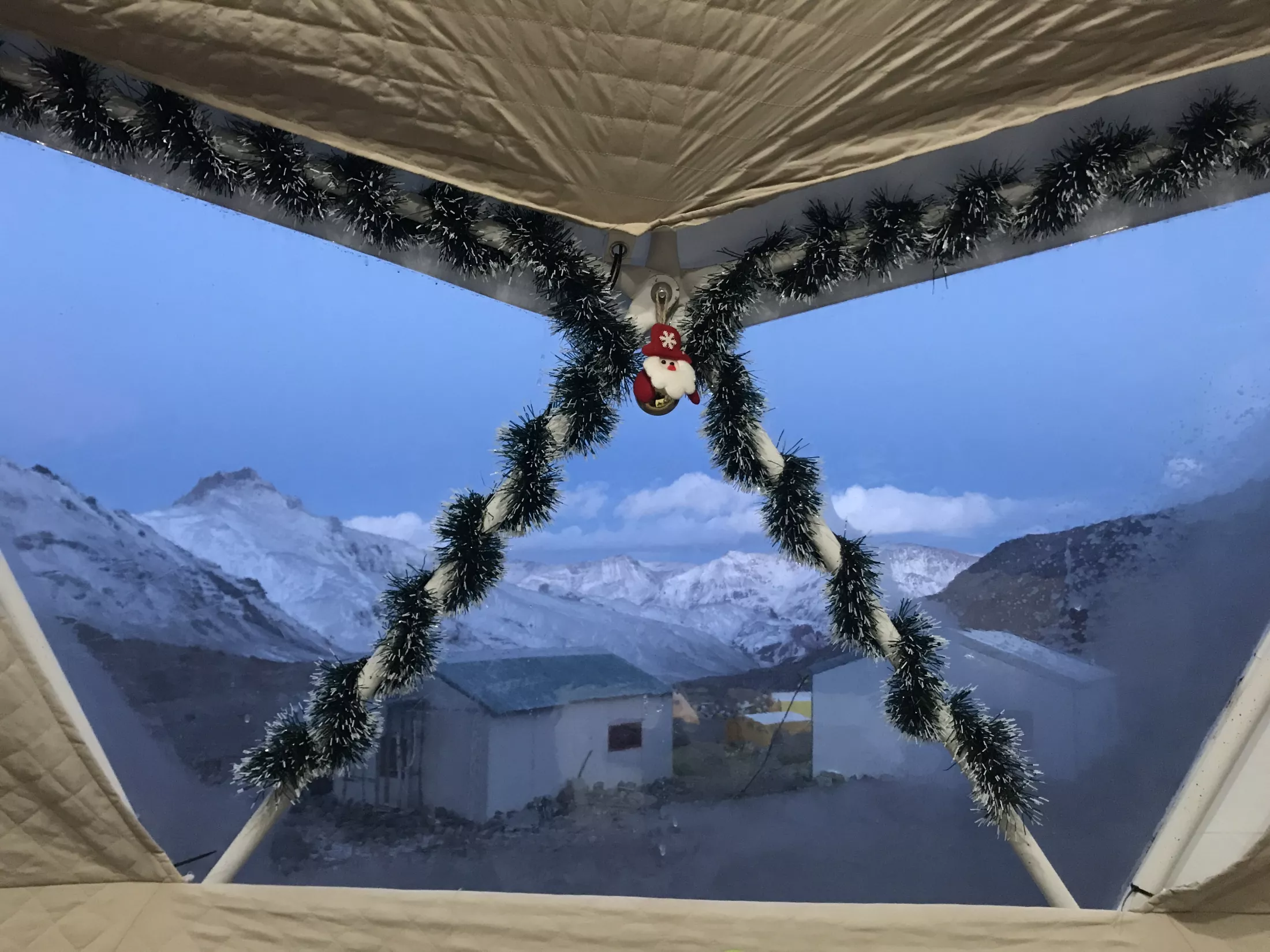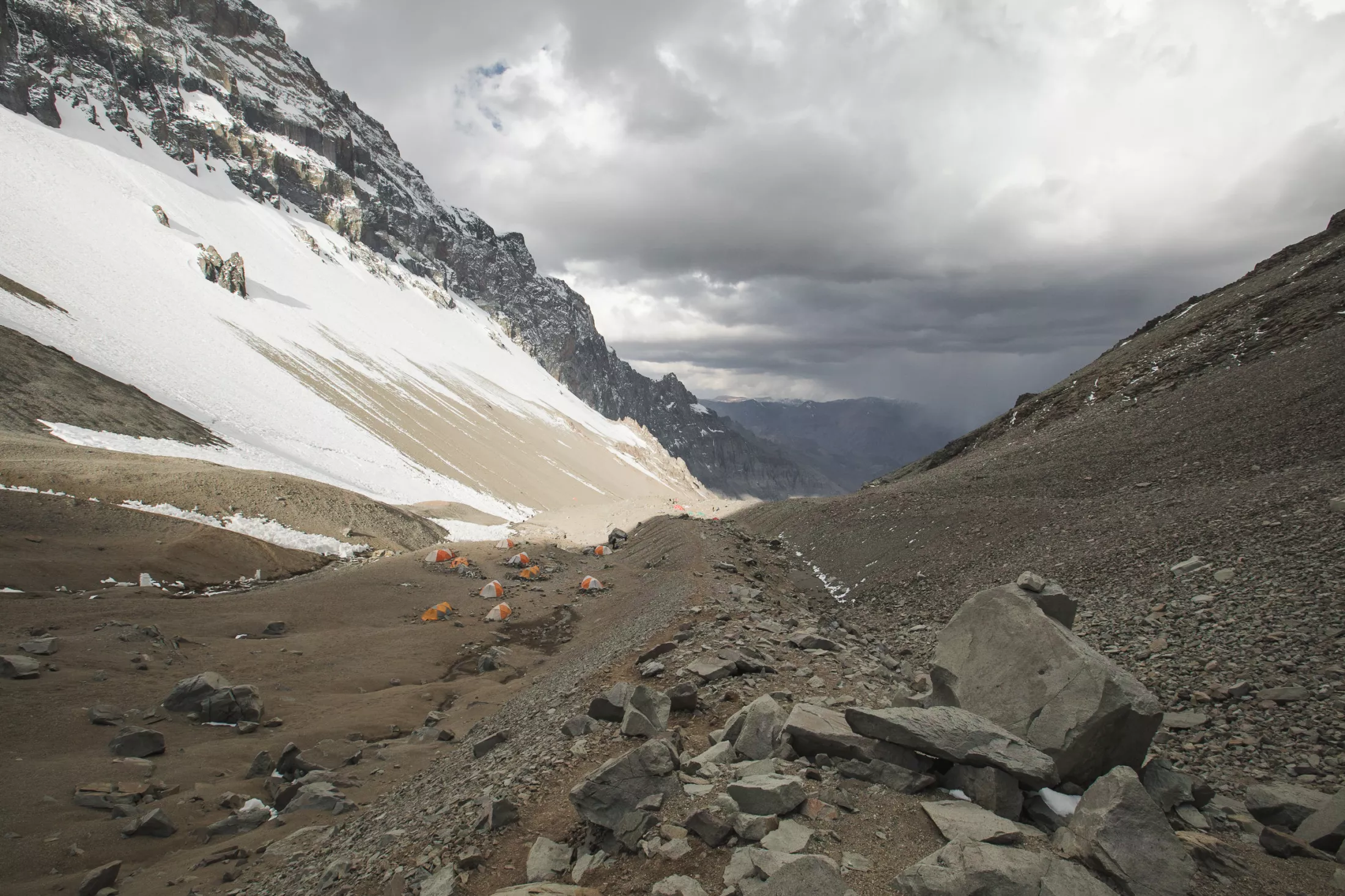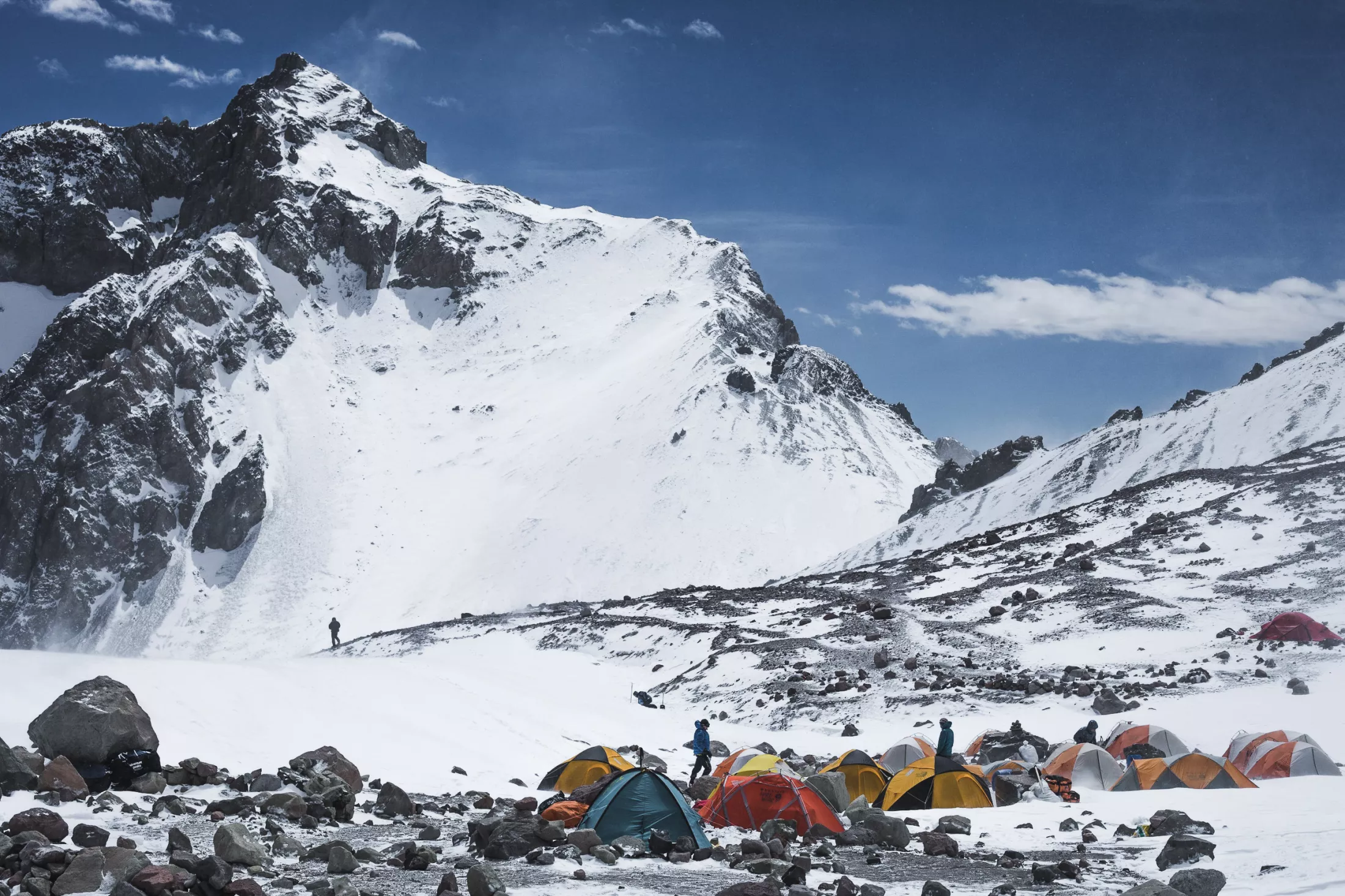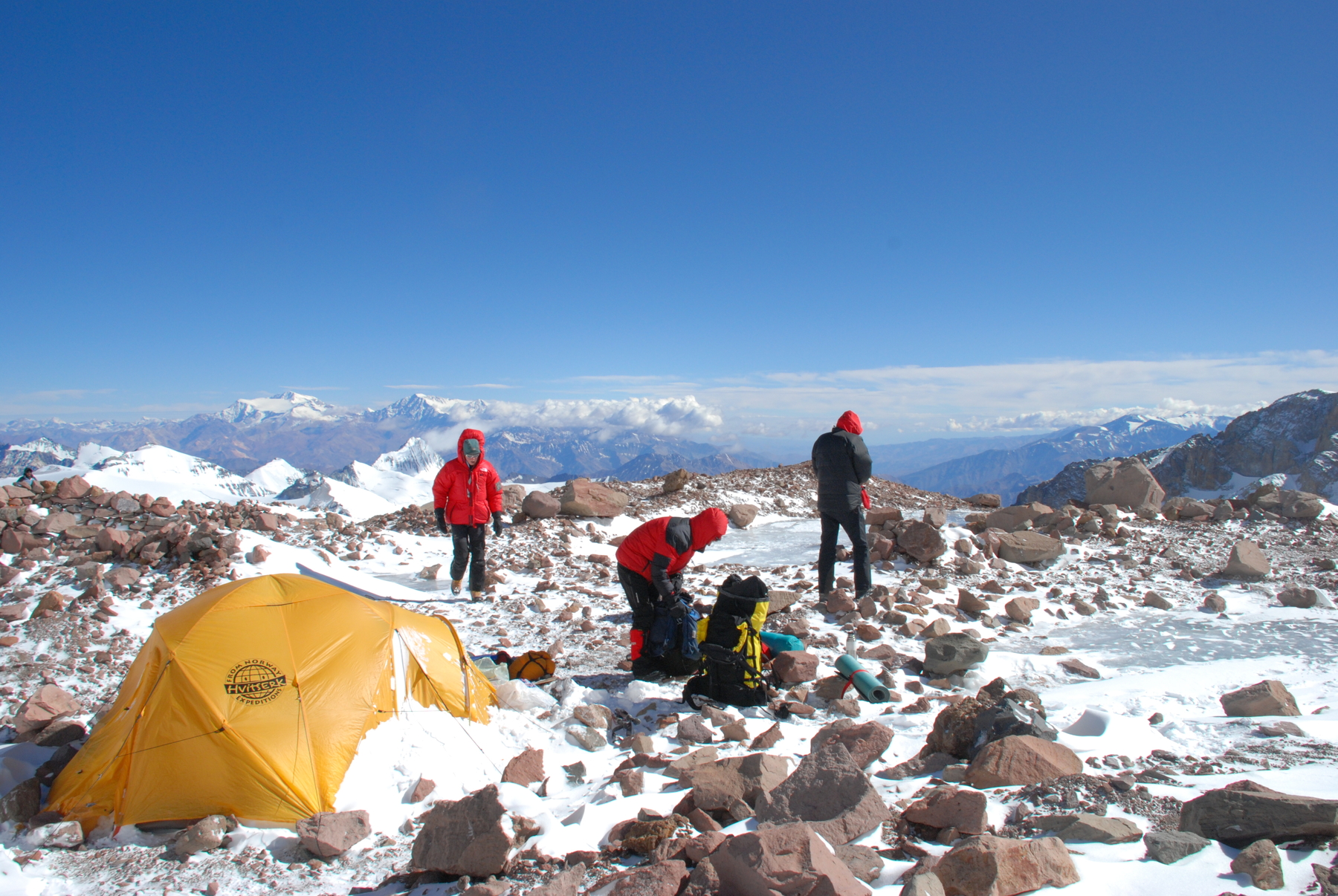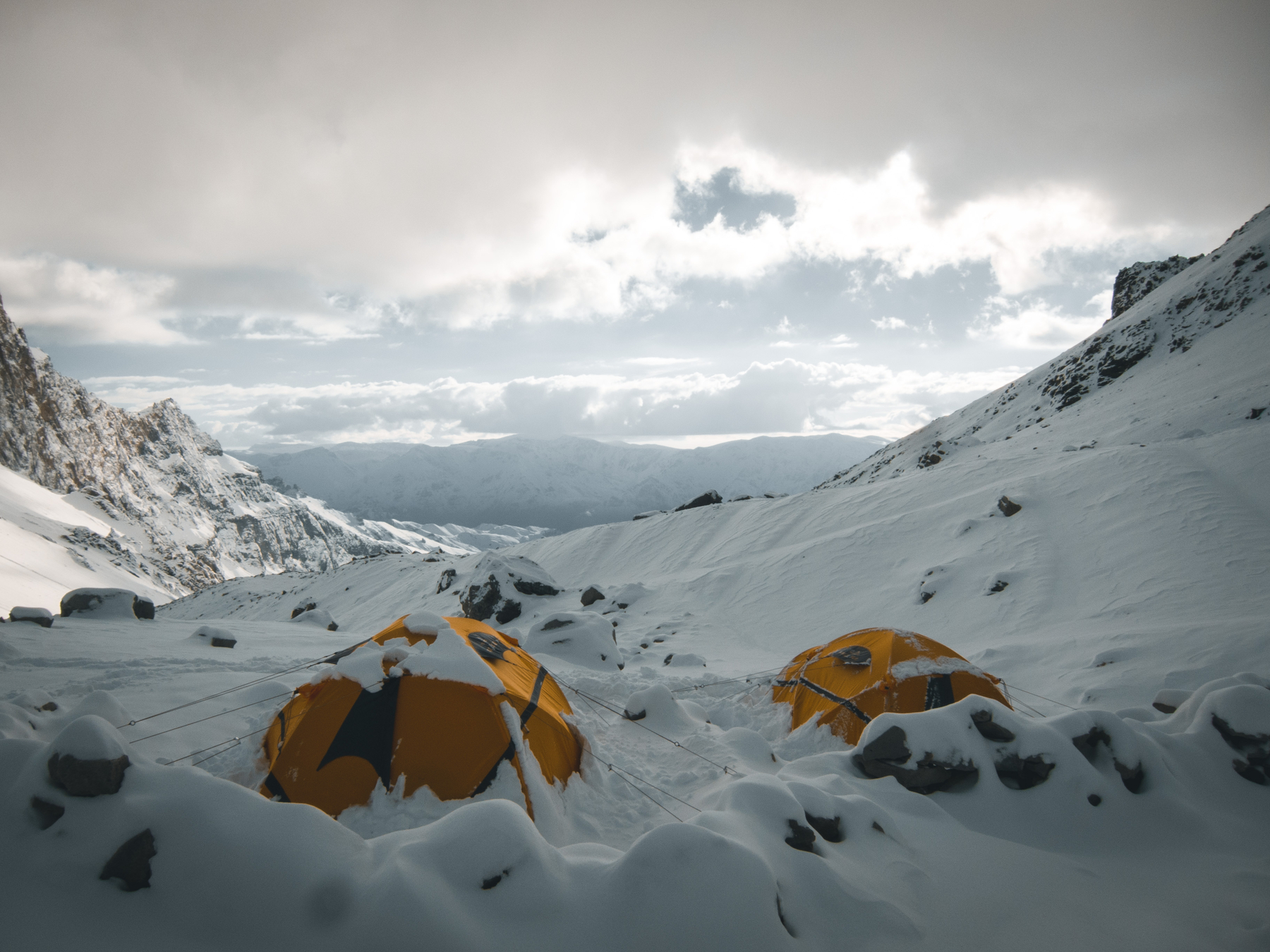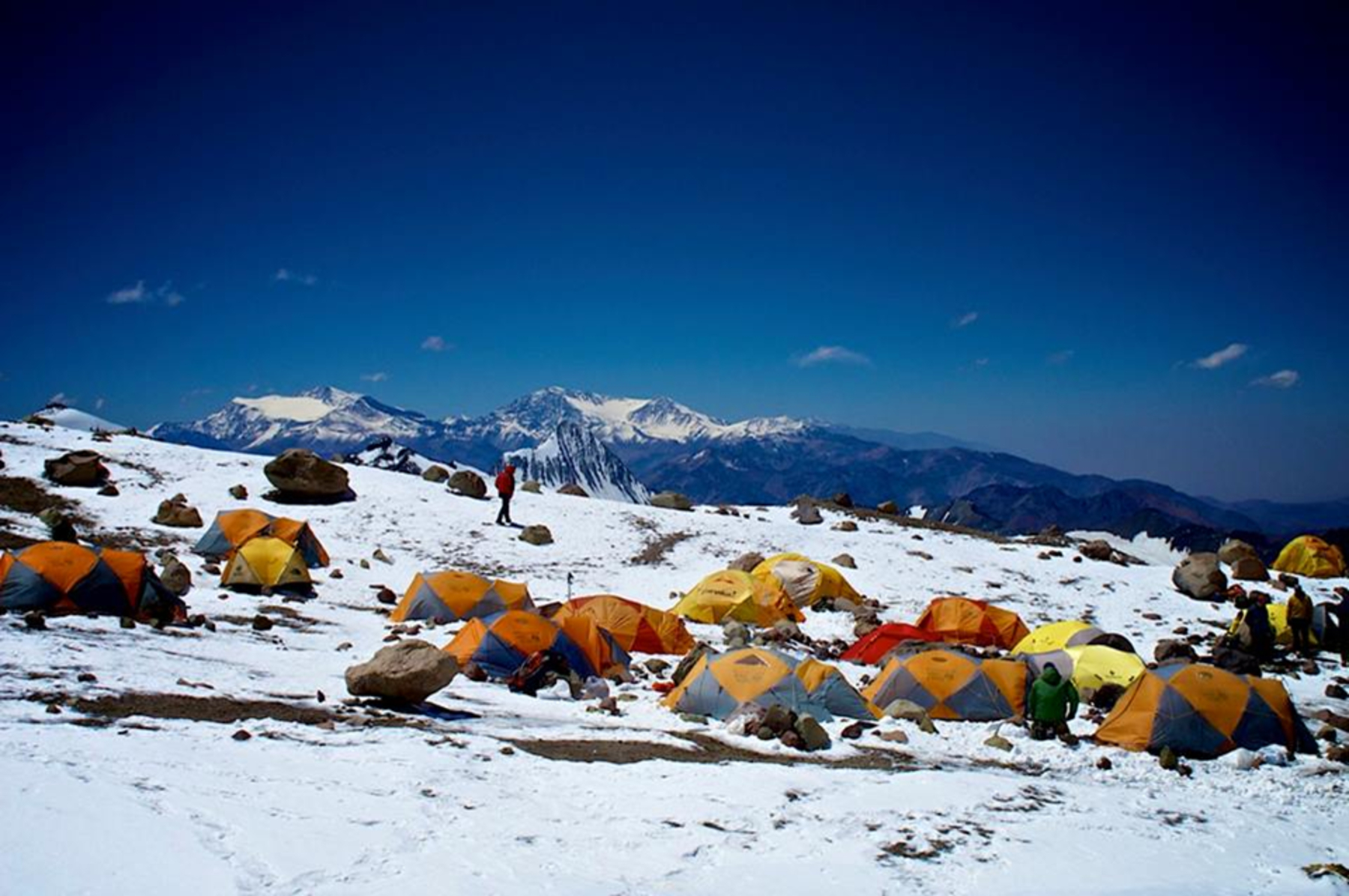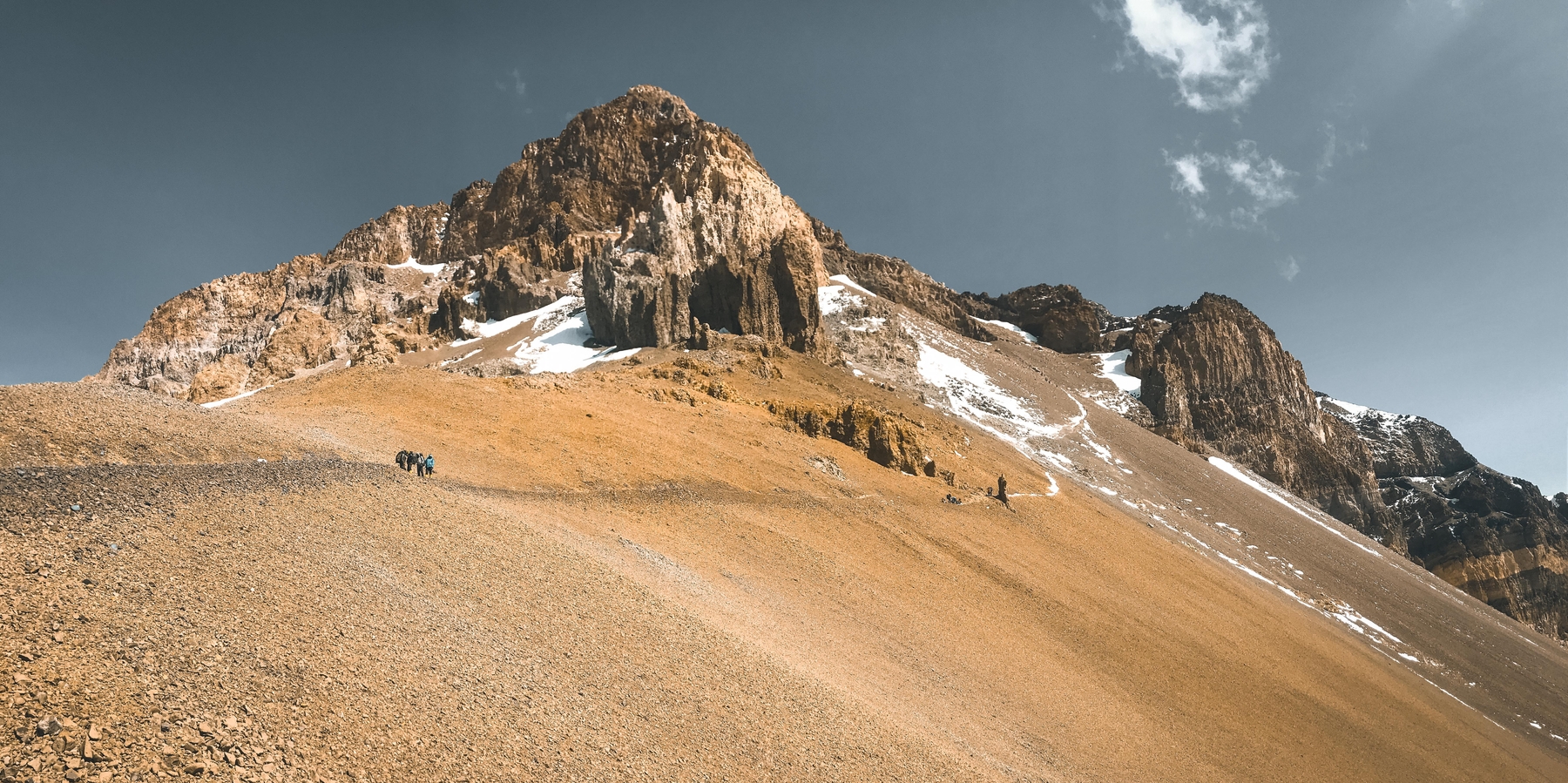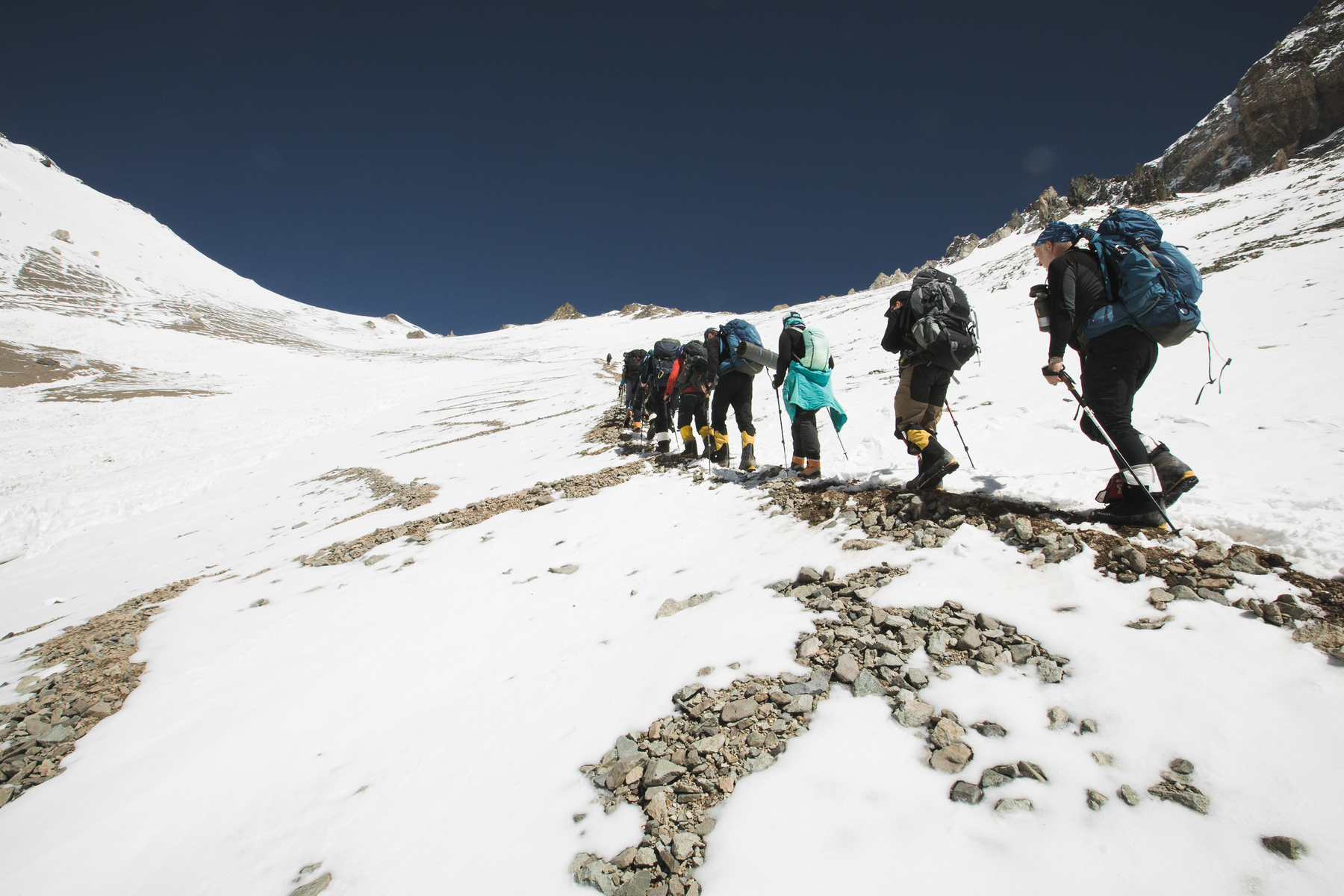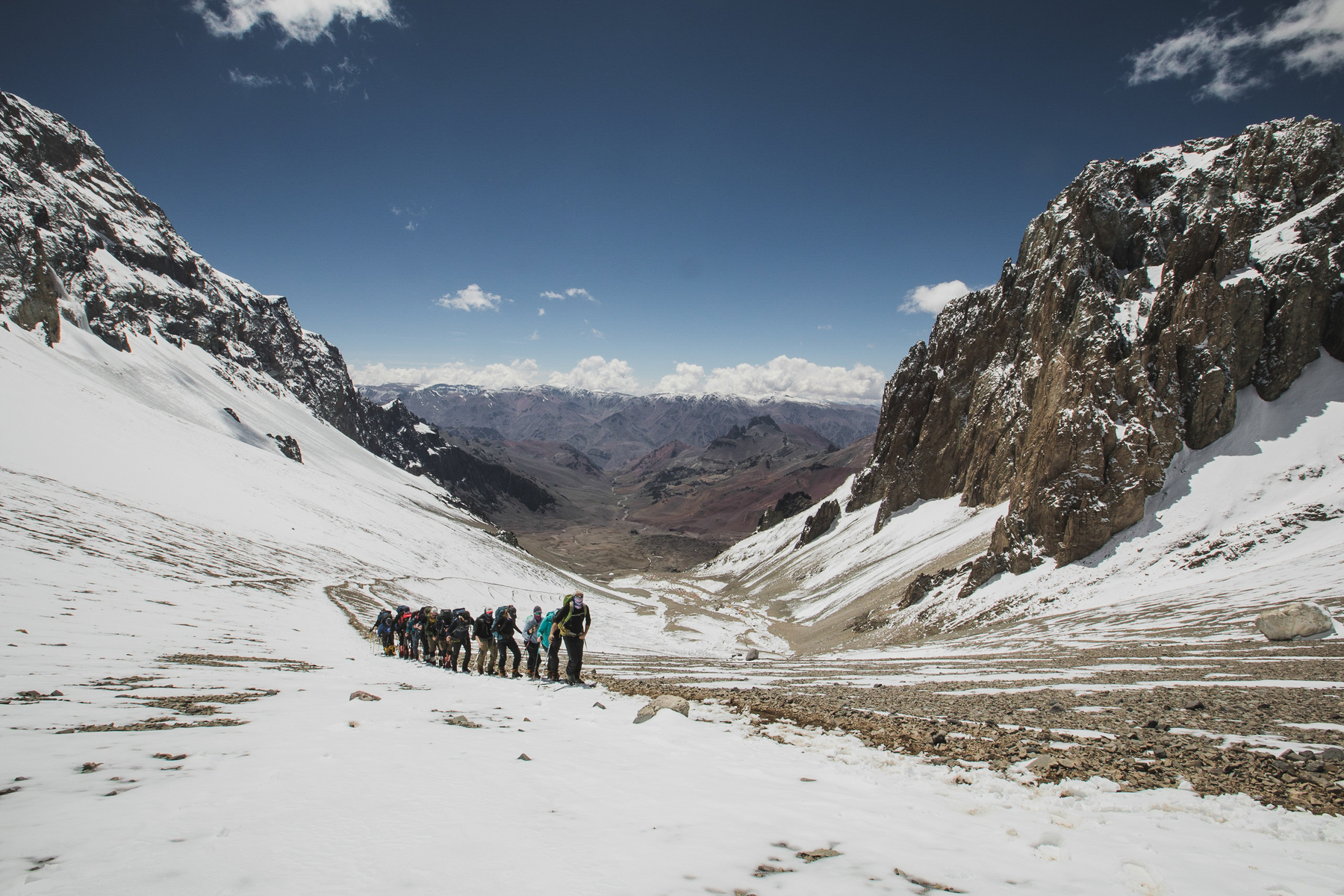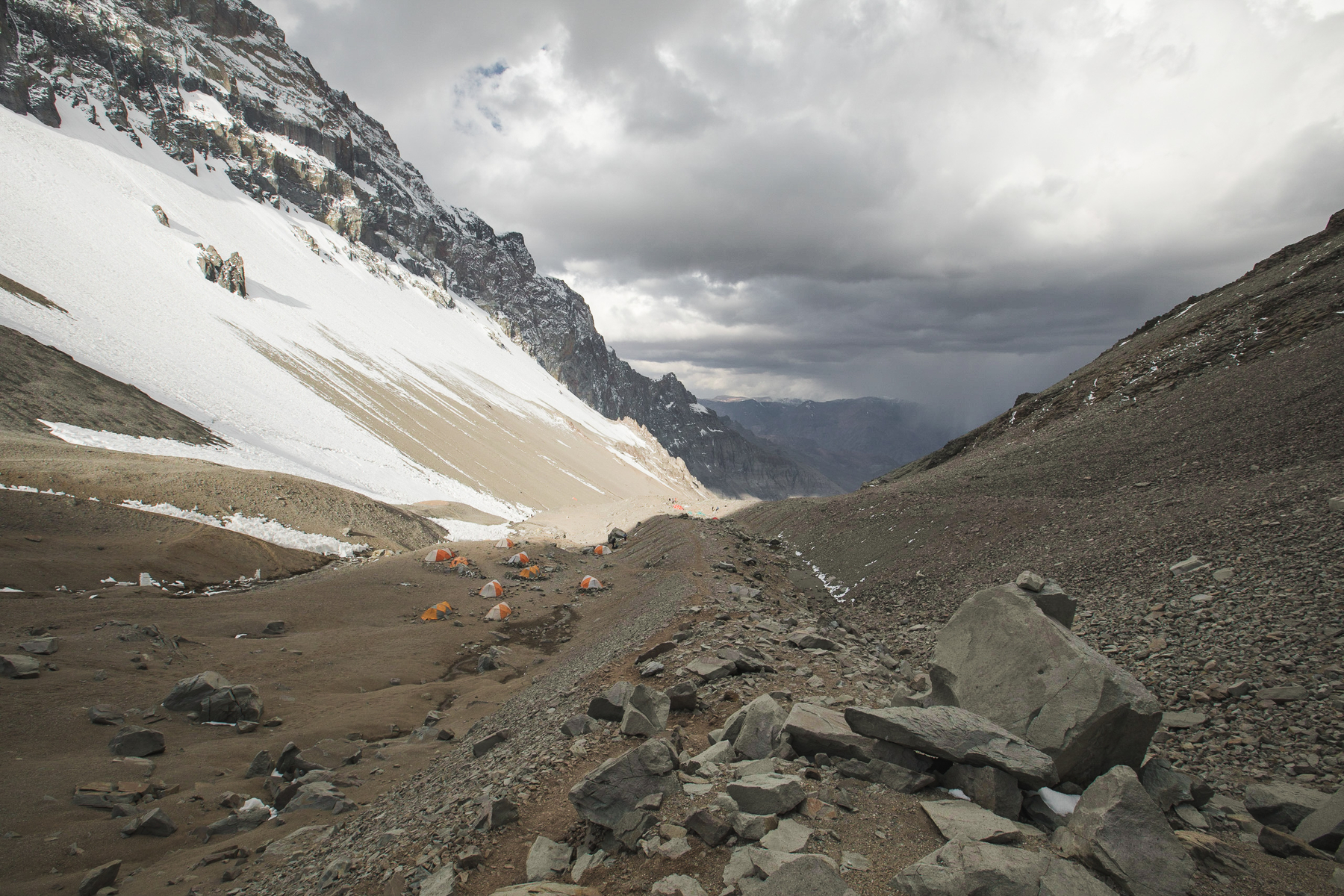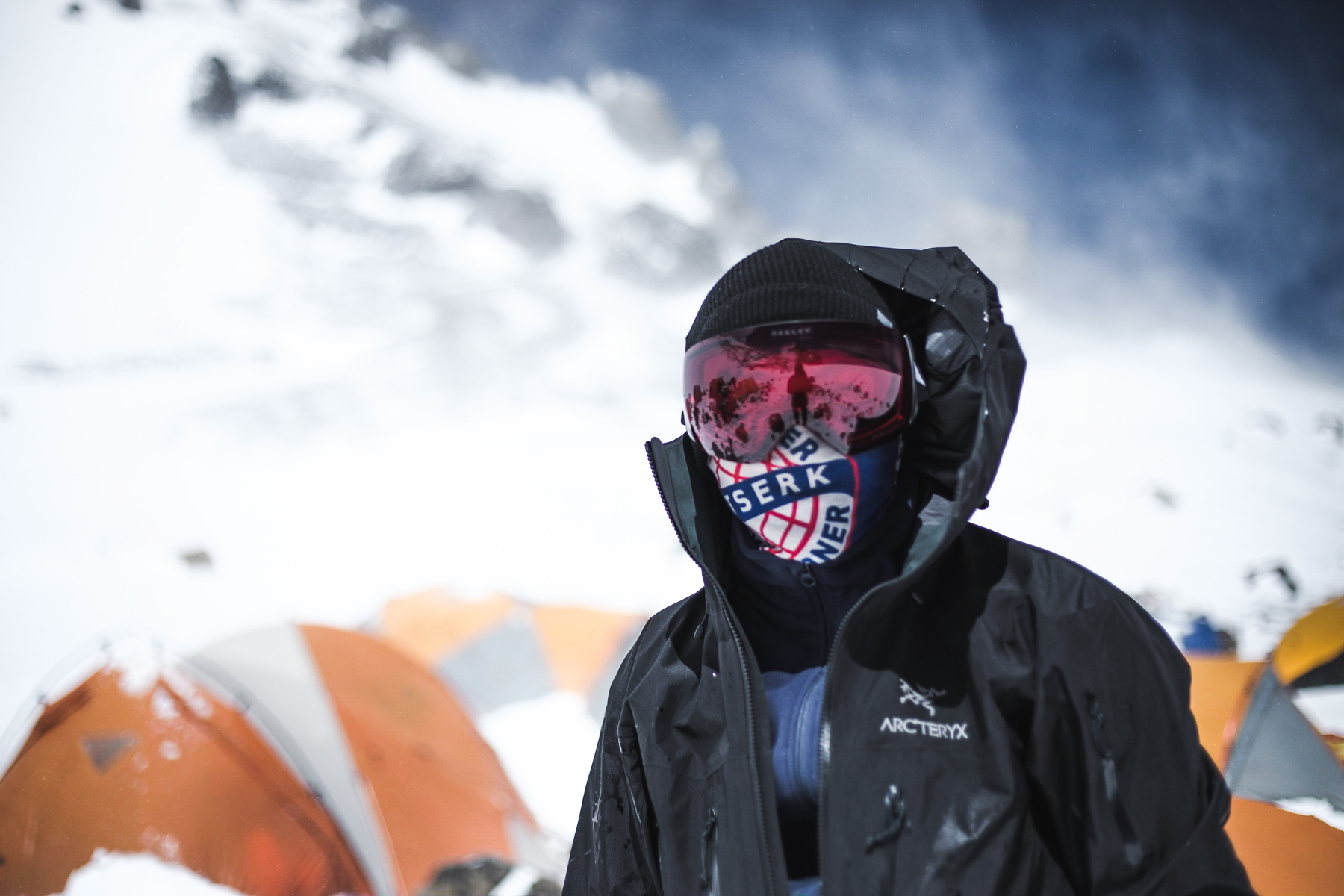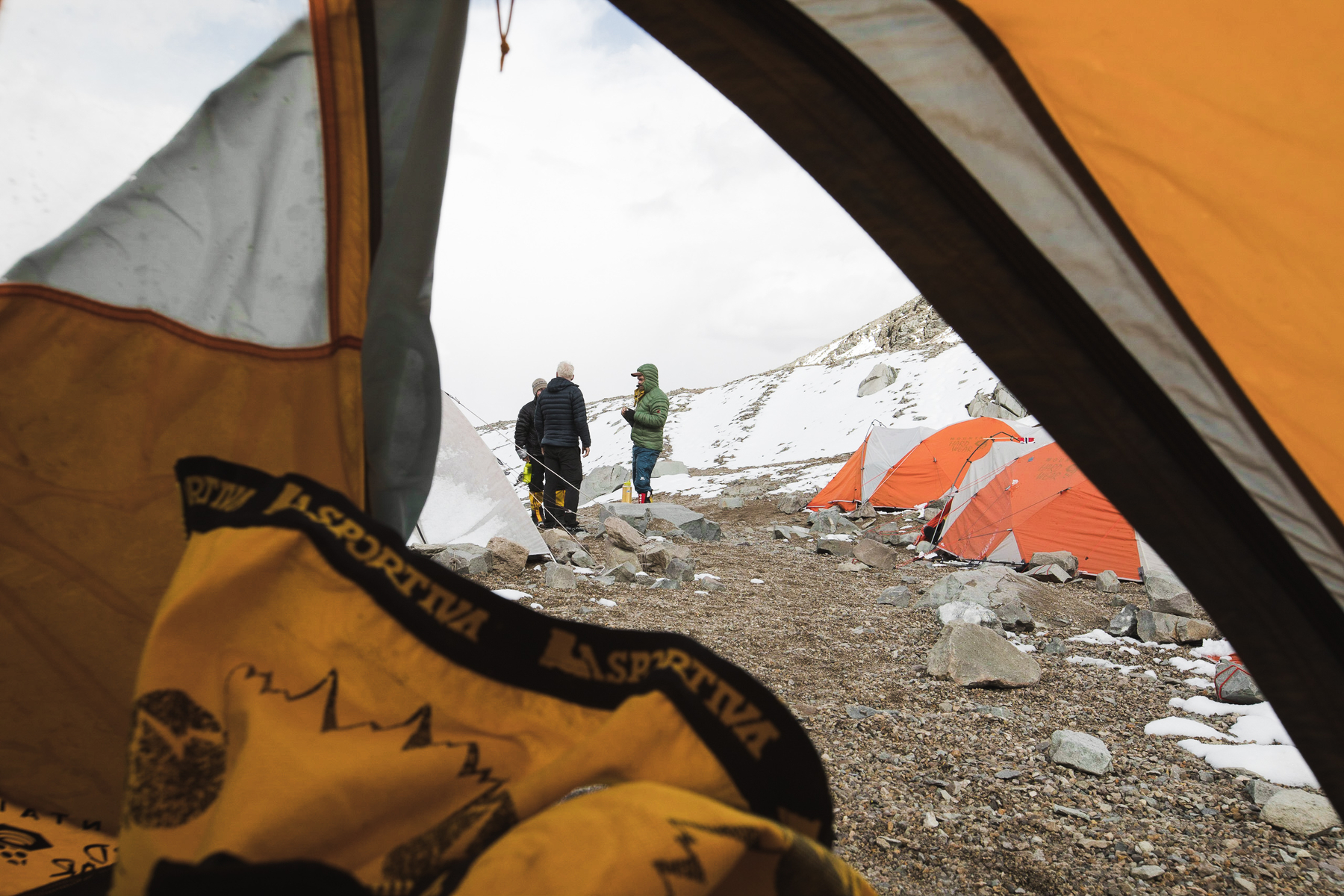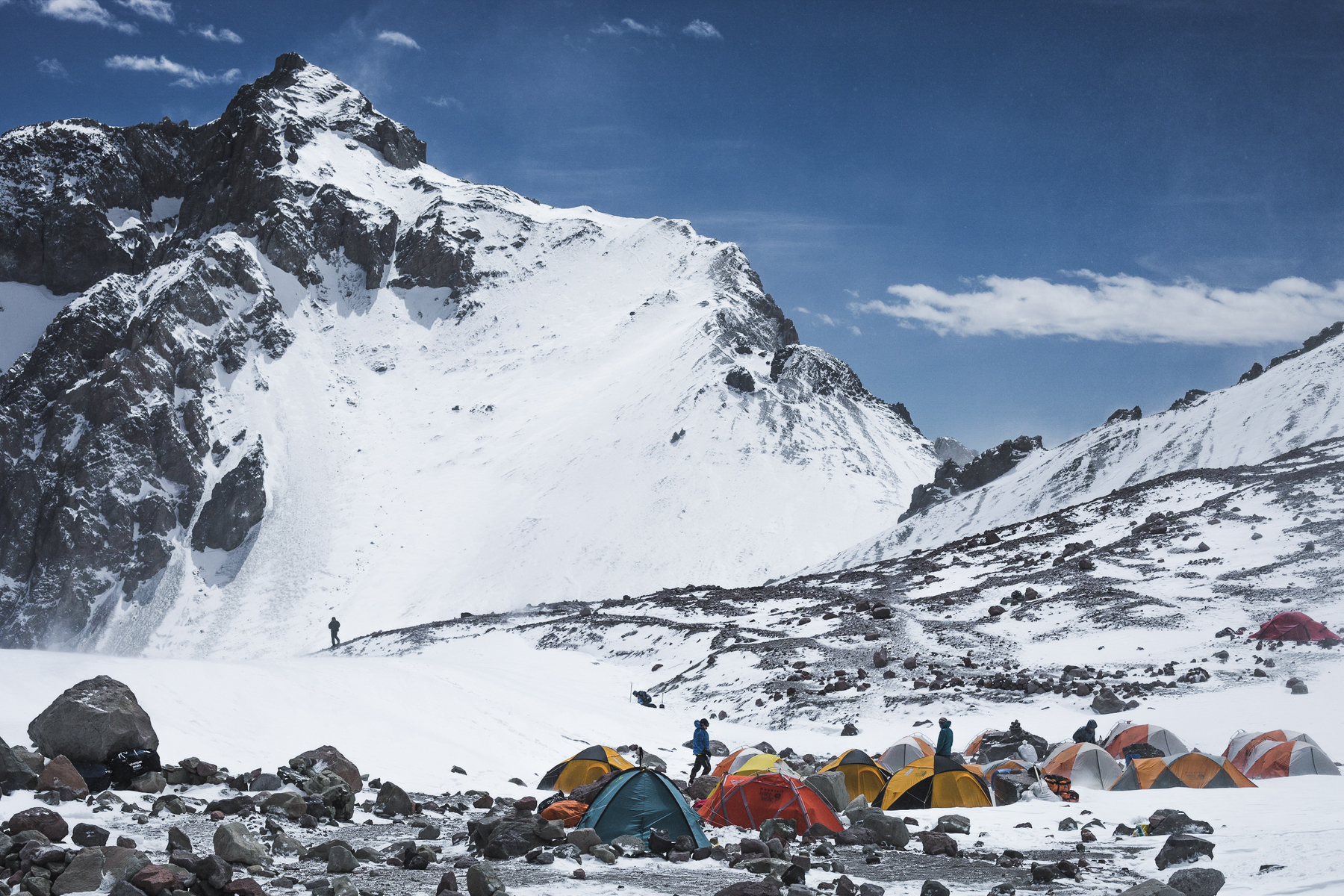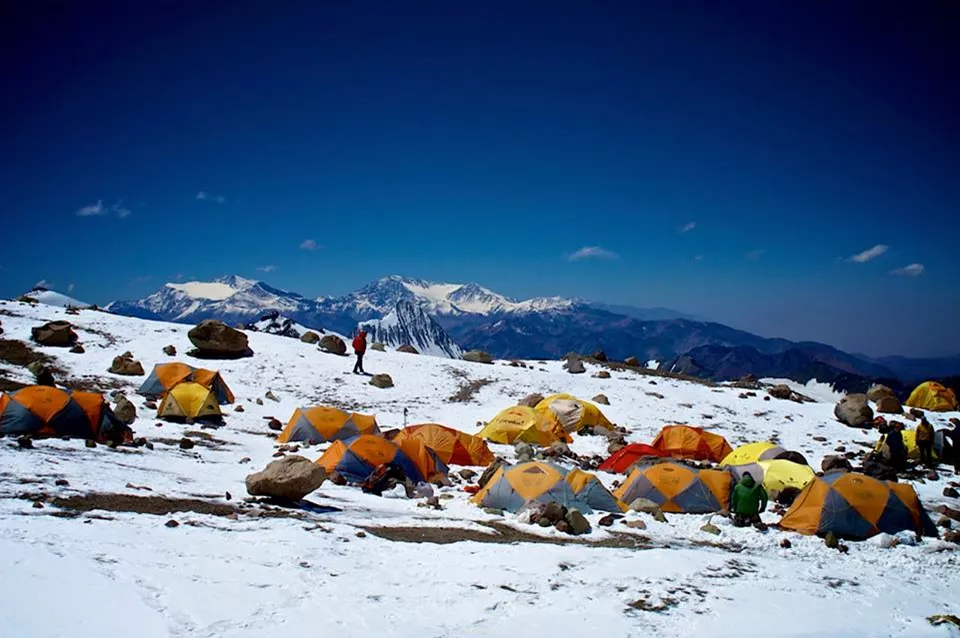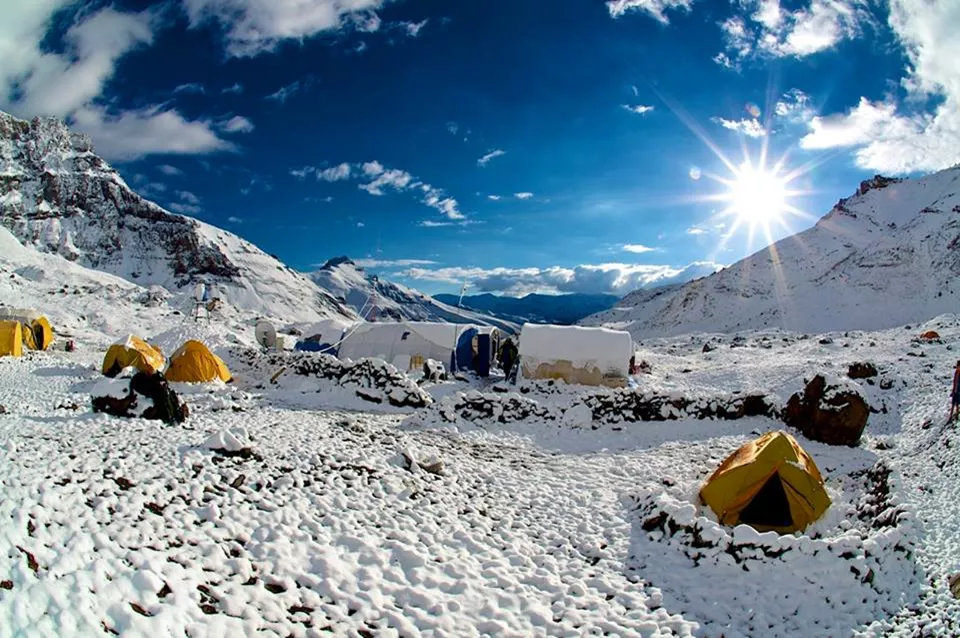
Tents in the snow on the mountain
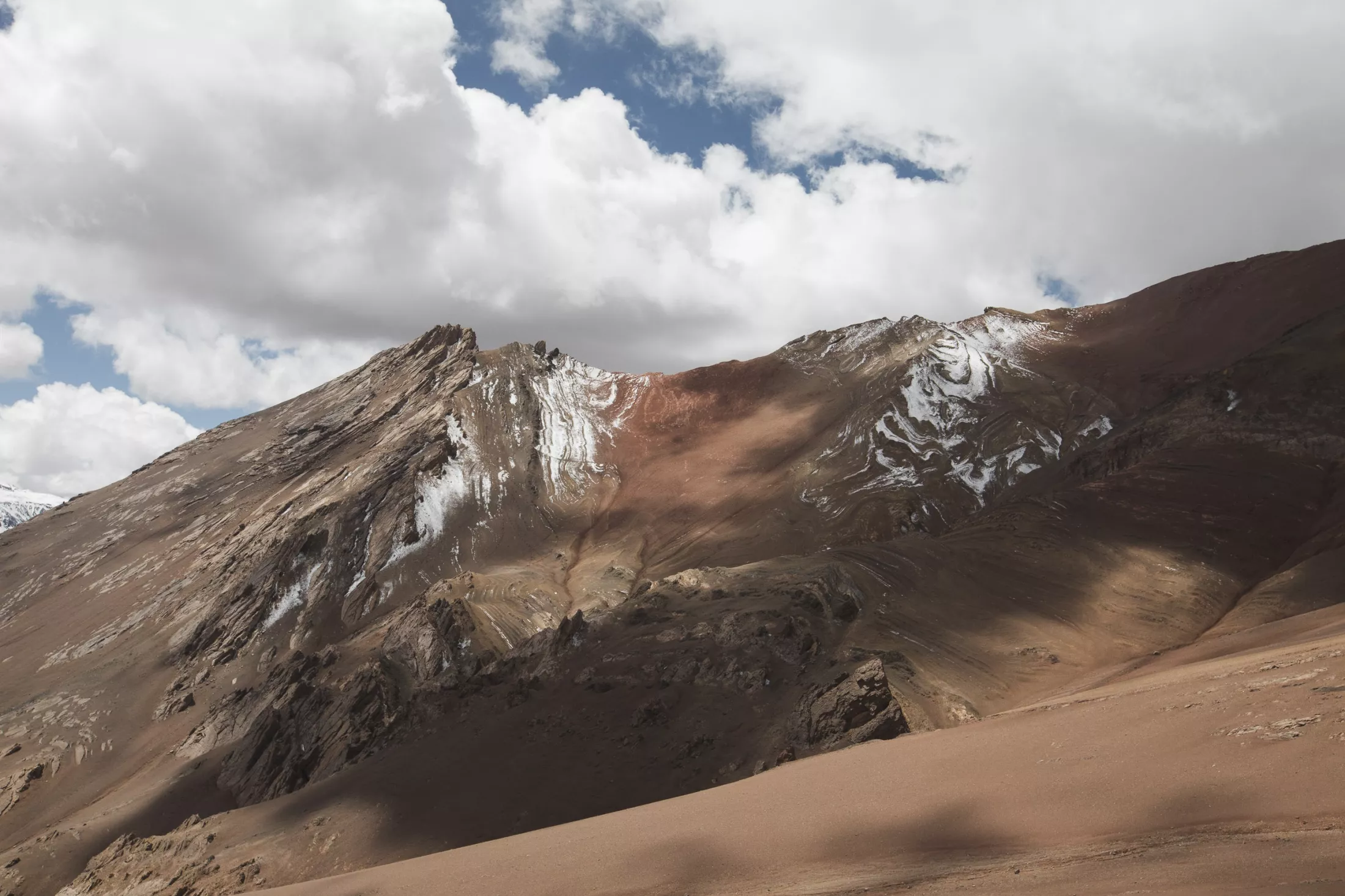
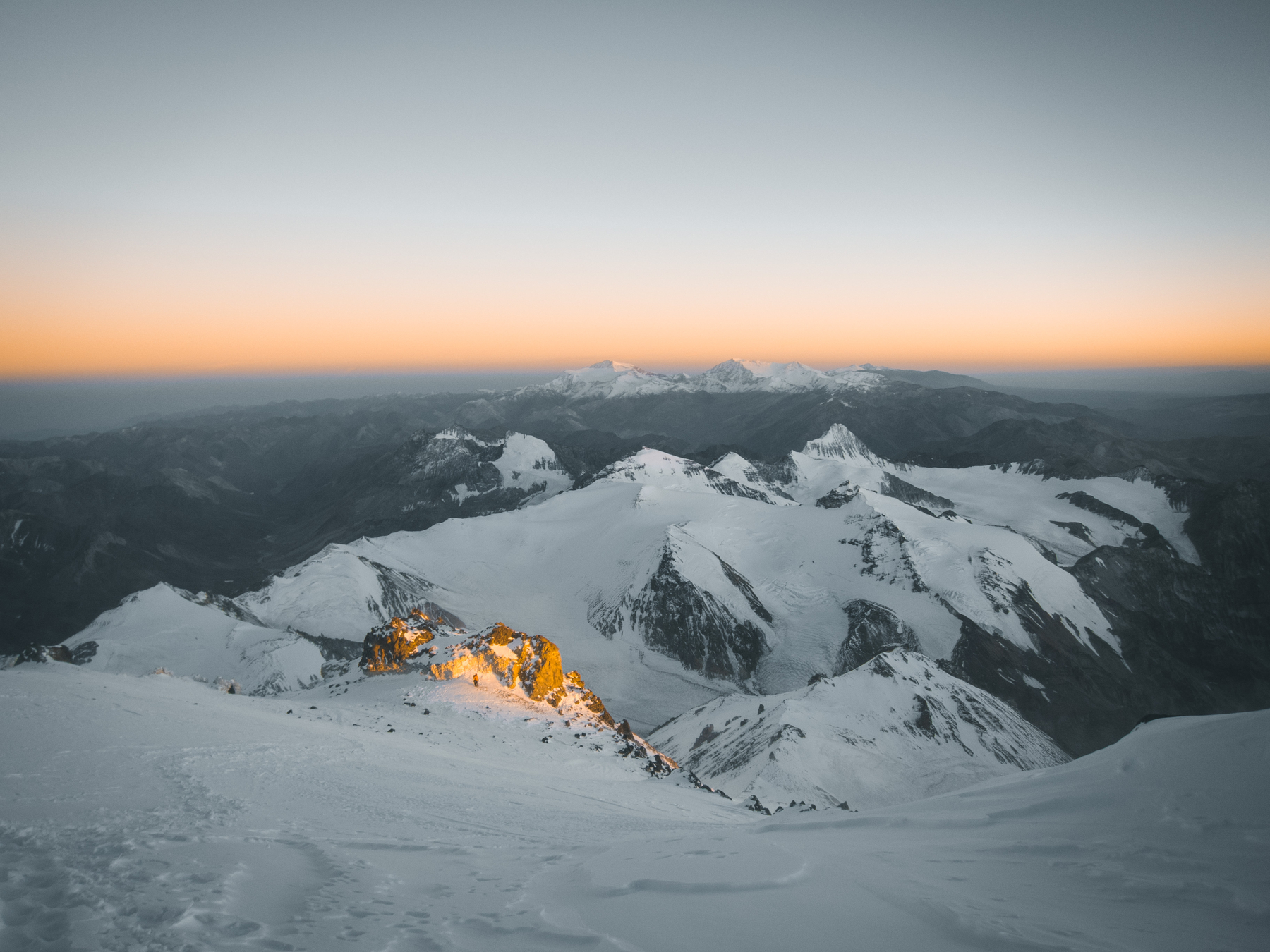
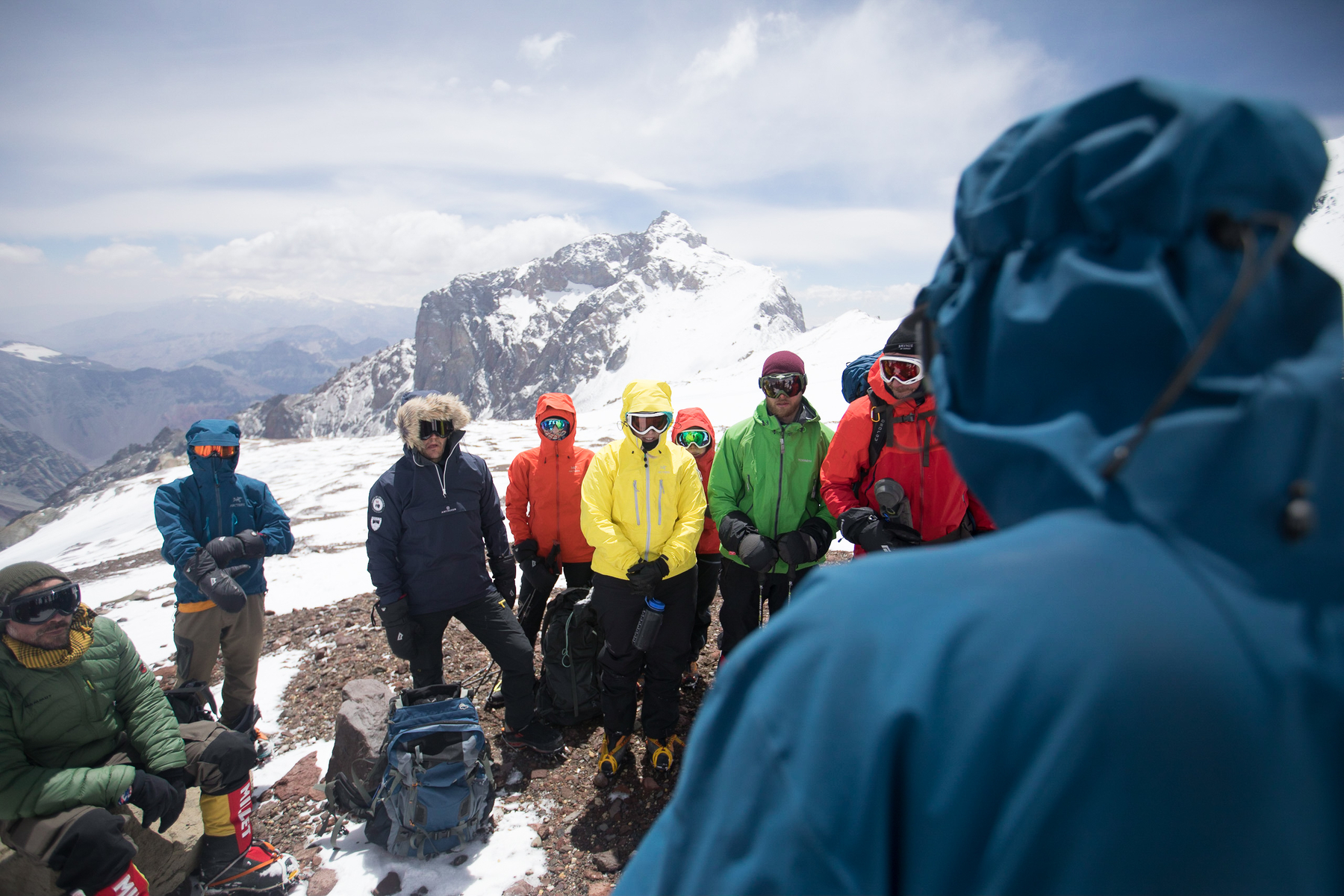
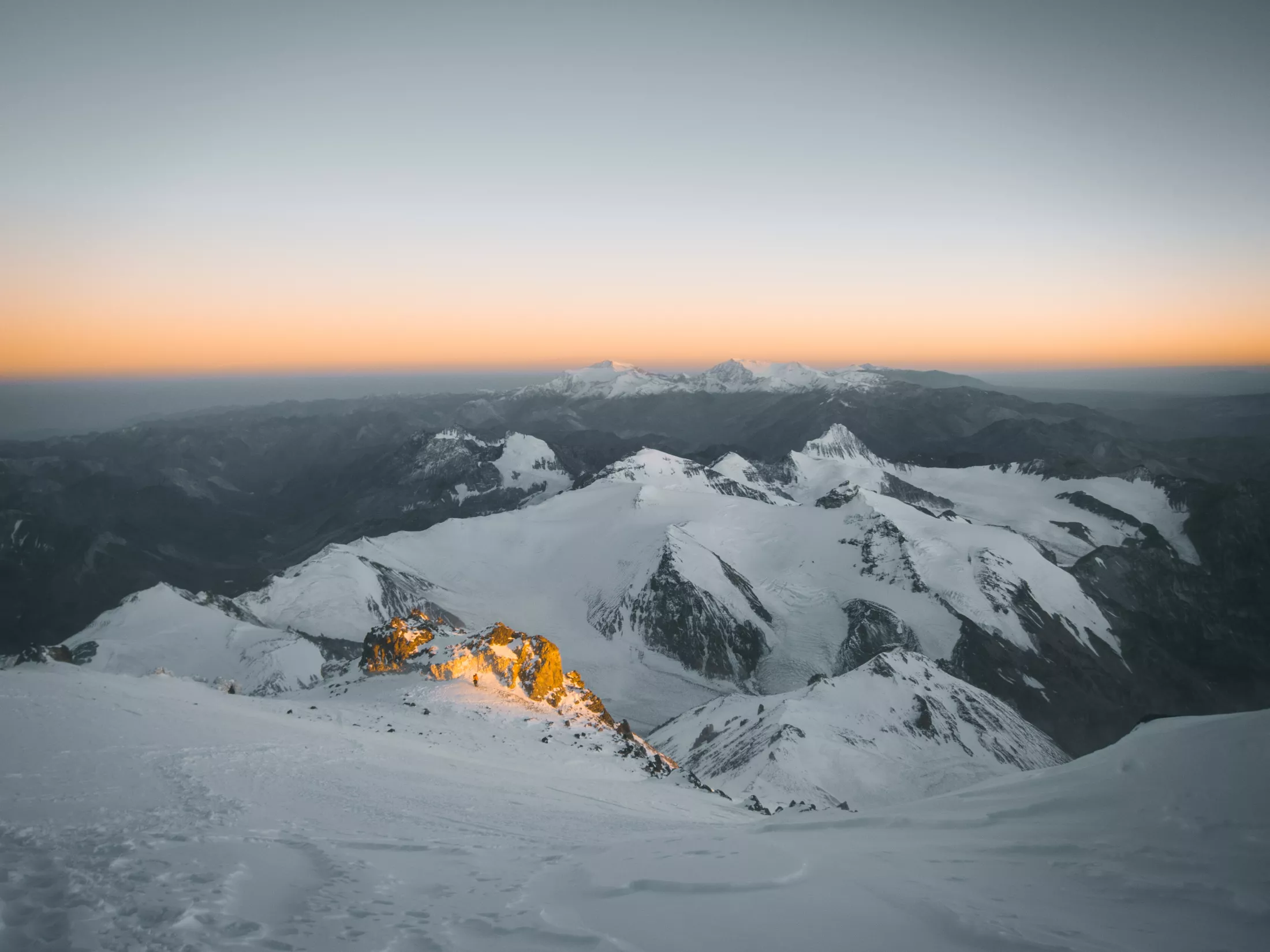
Sunrise from the summit of a snow covered mountain
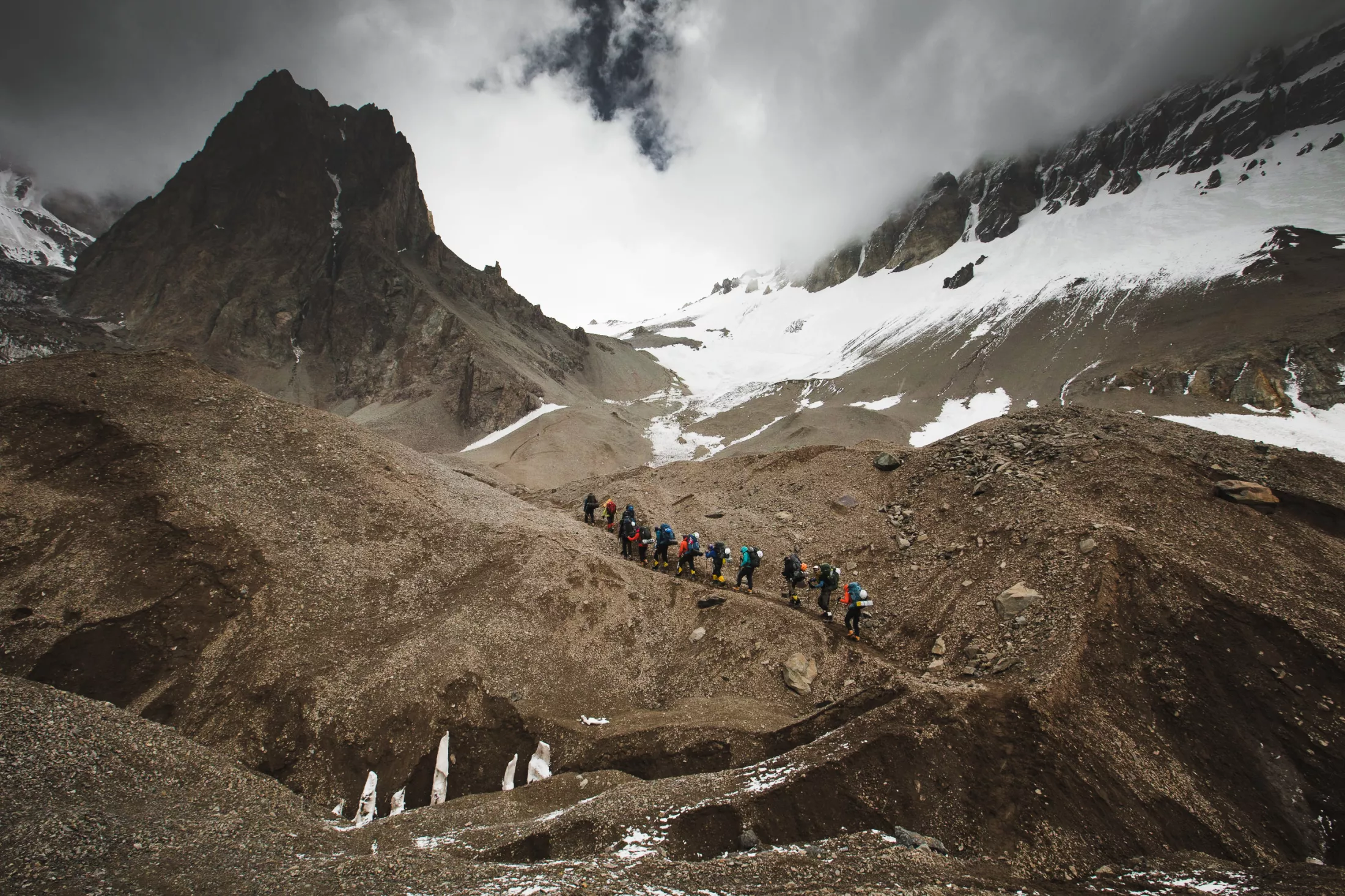
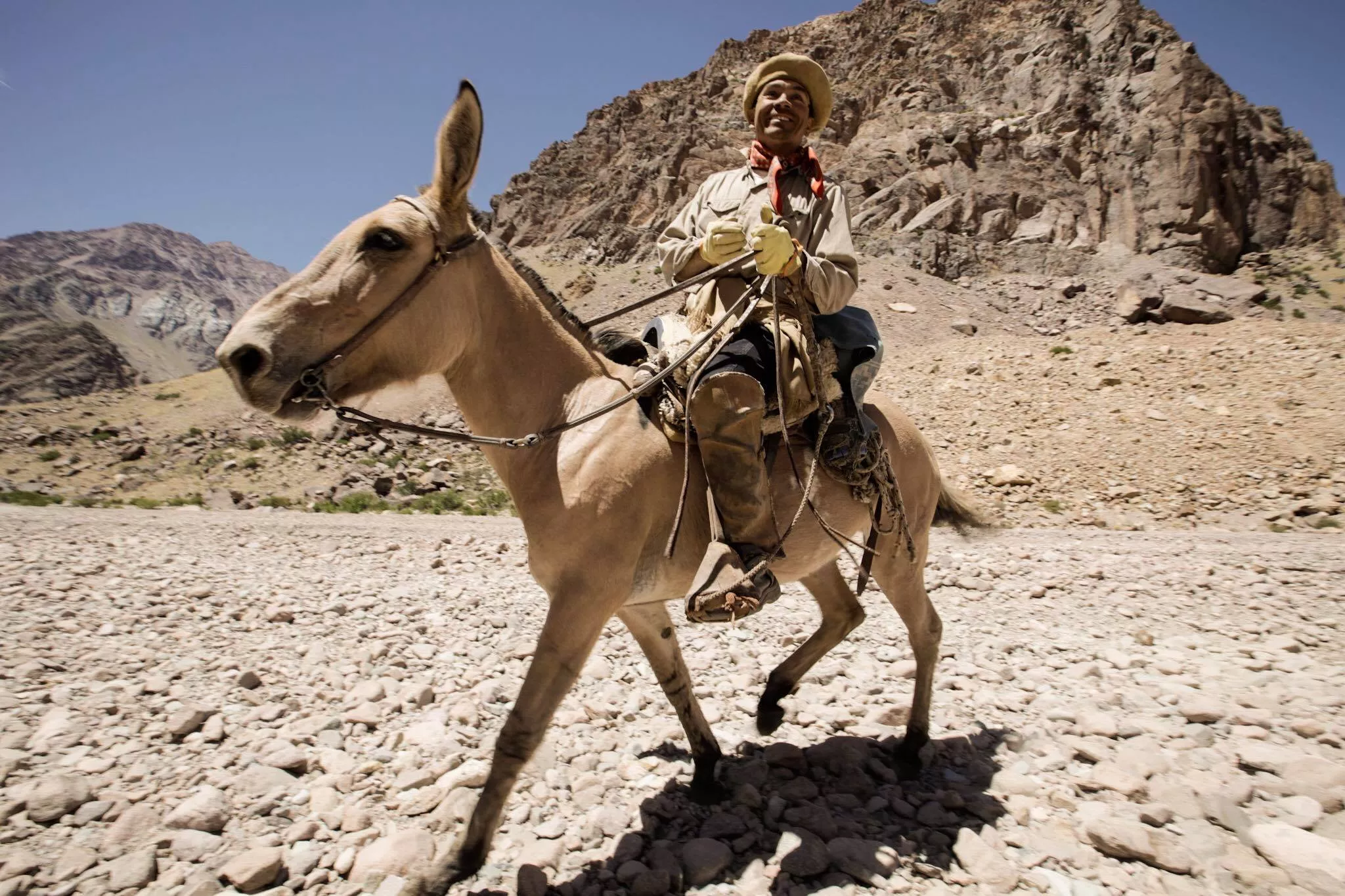
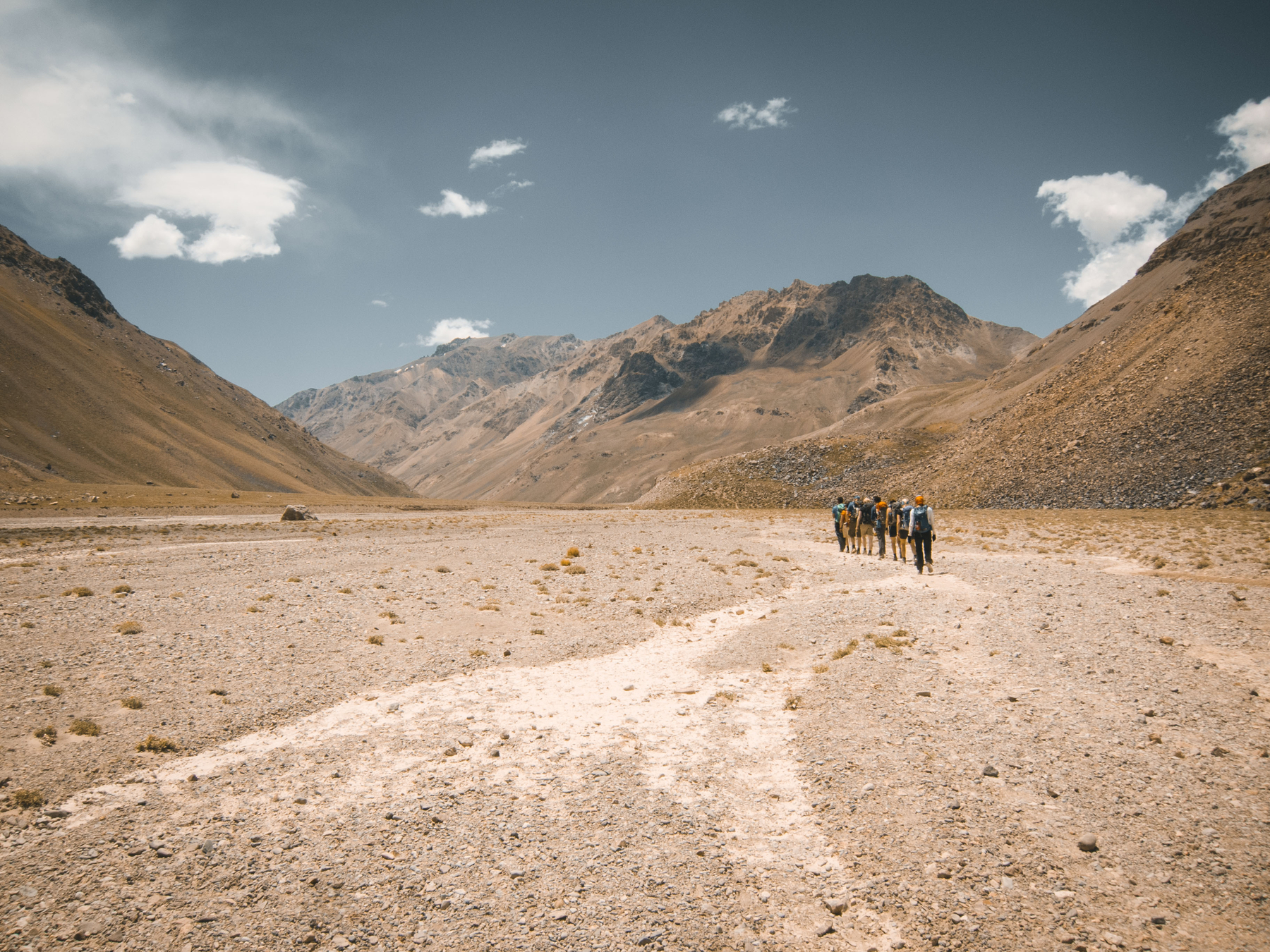
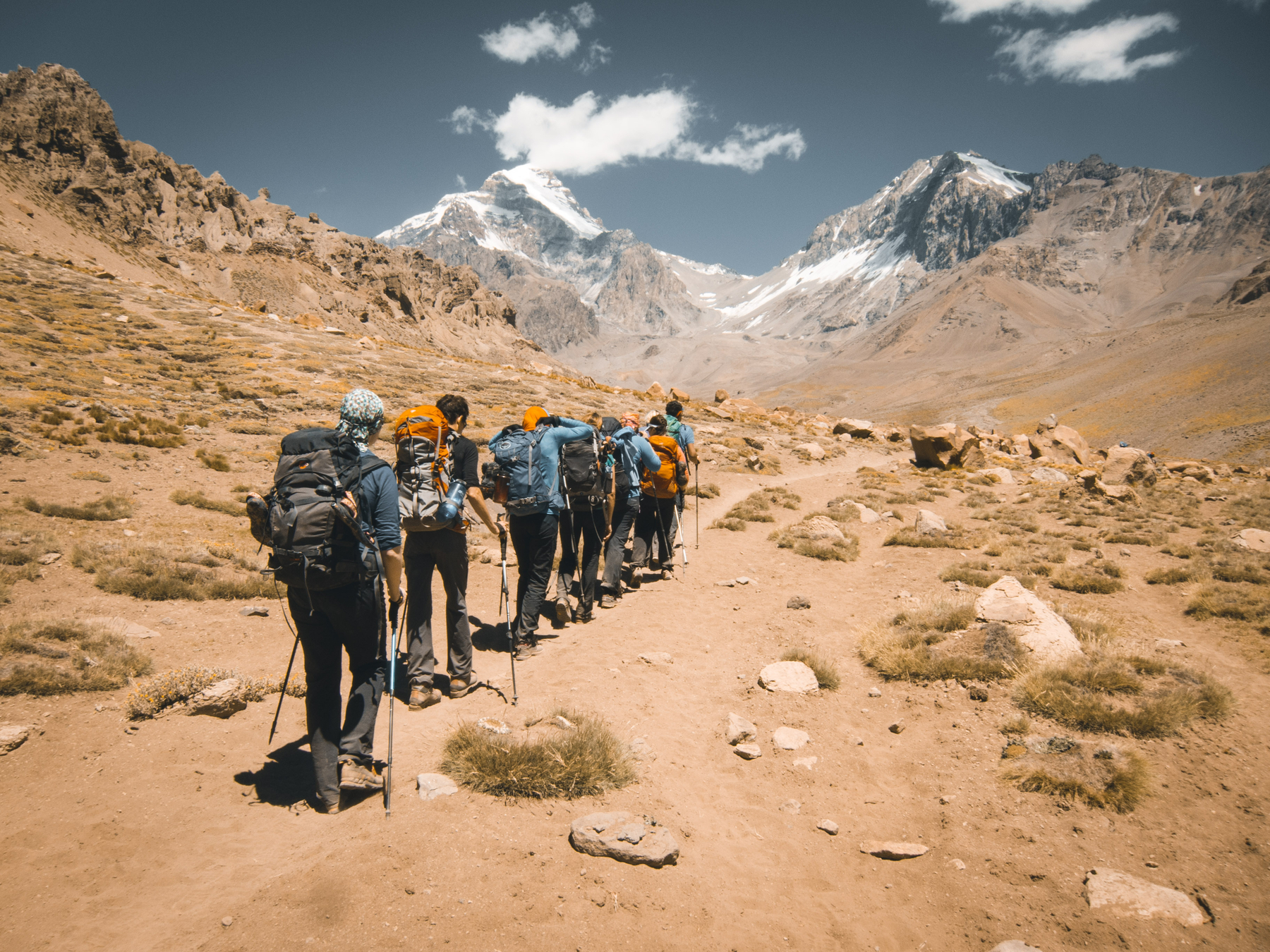
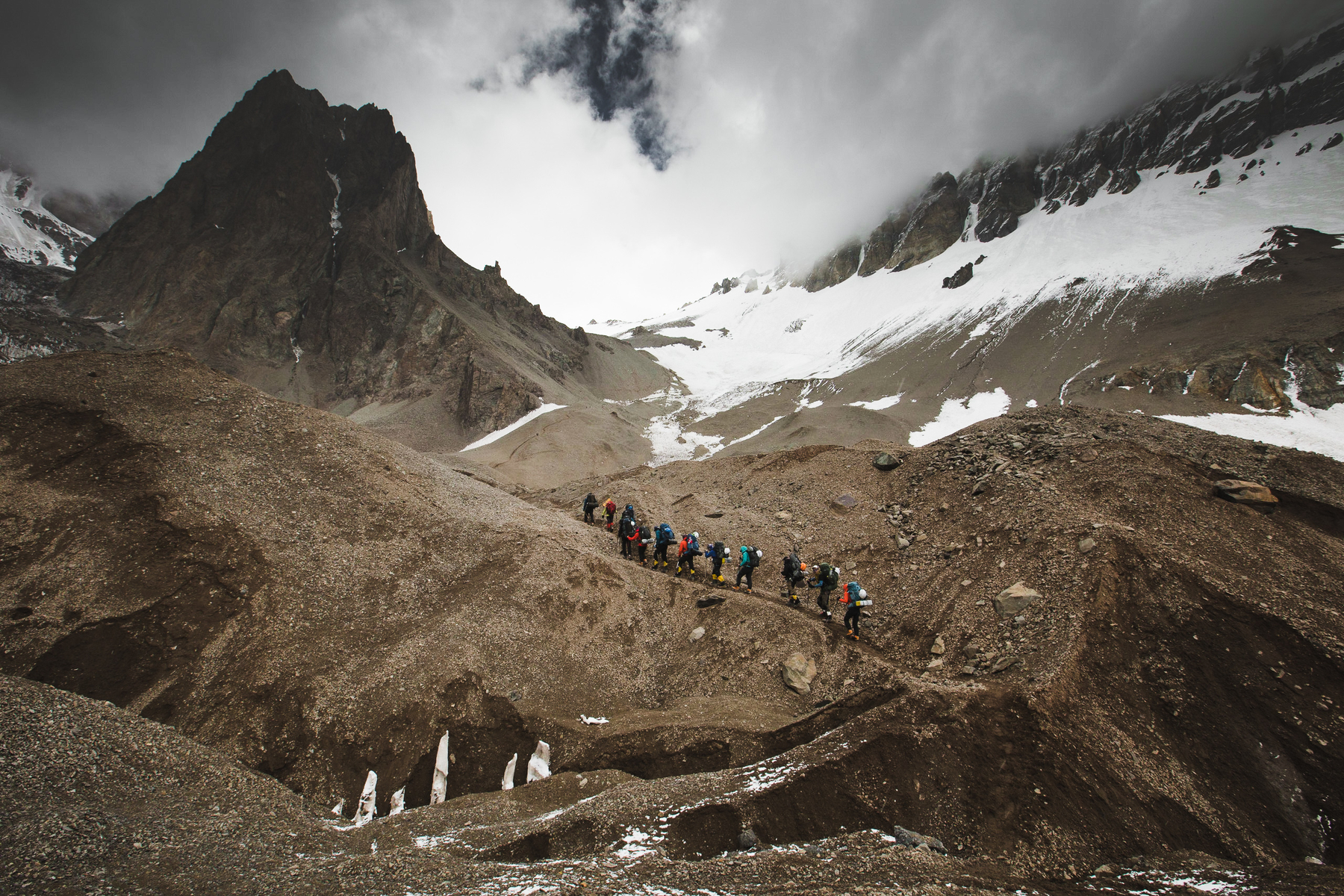
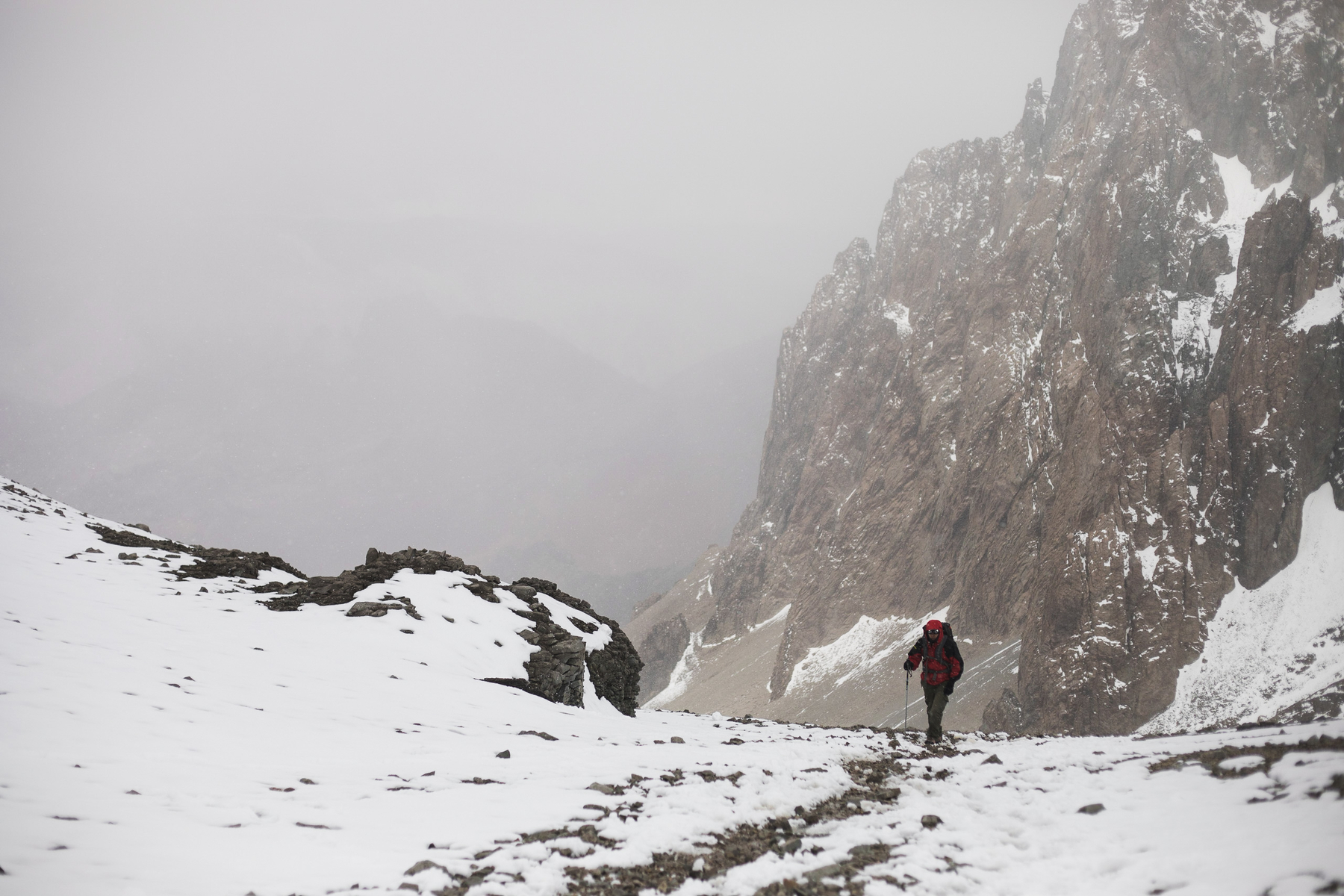
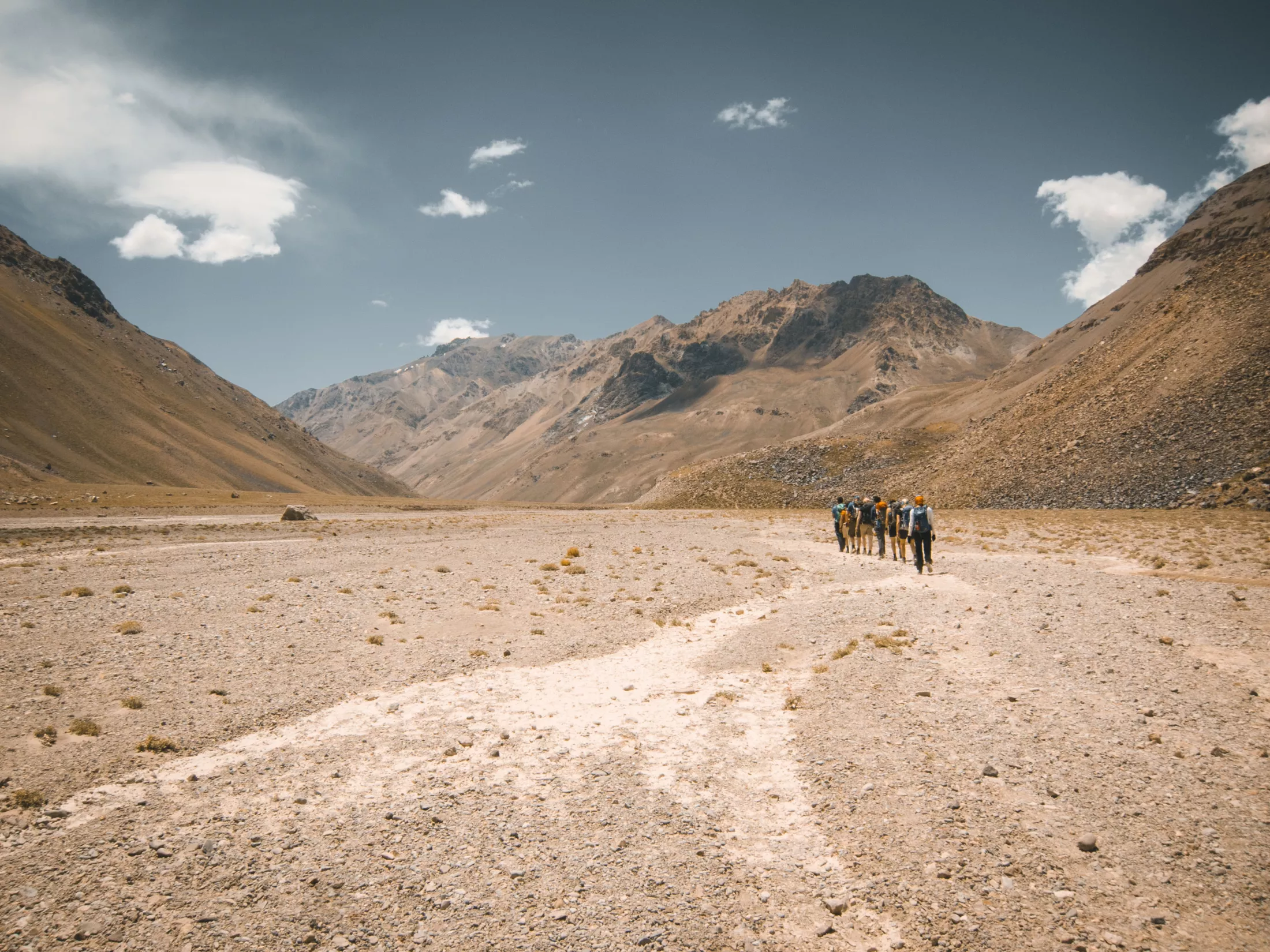
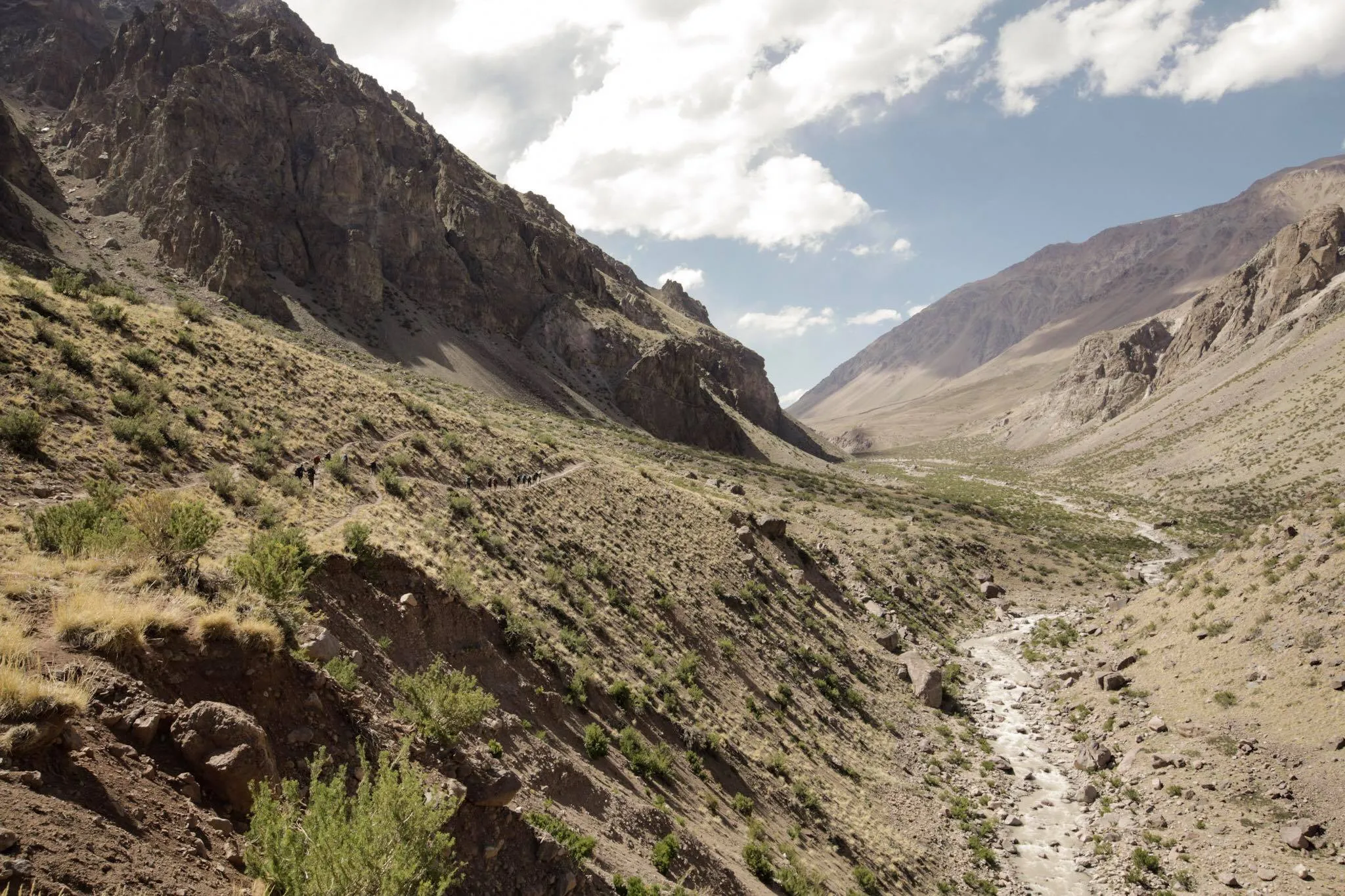
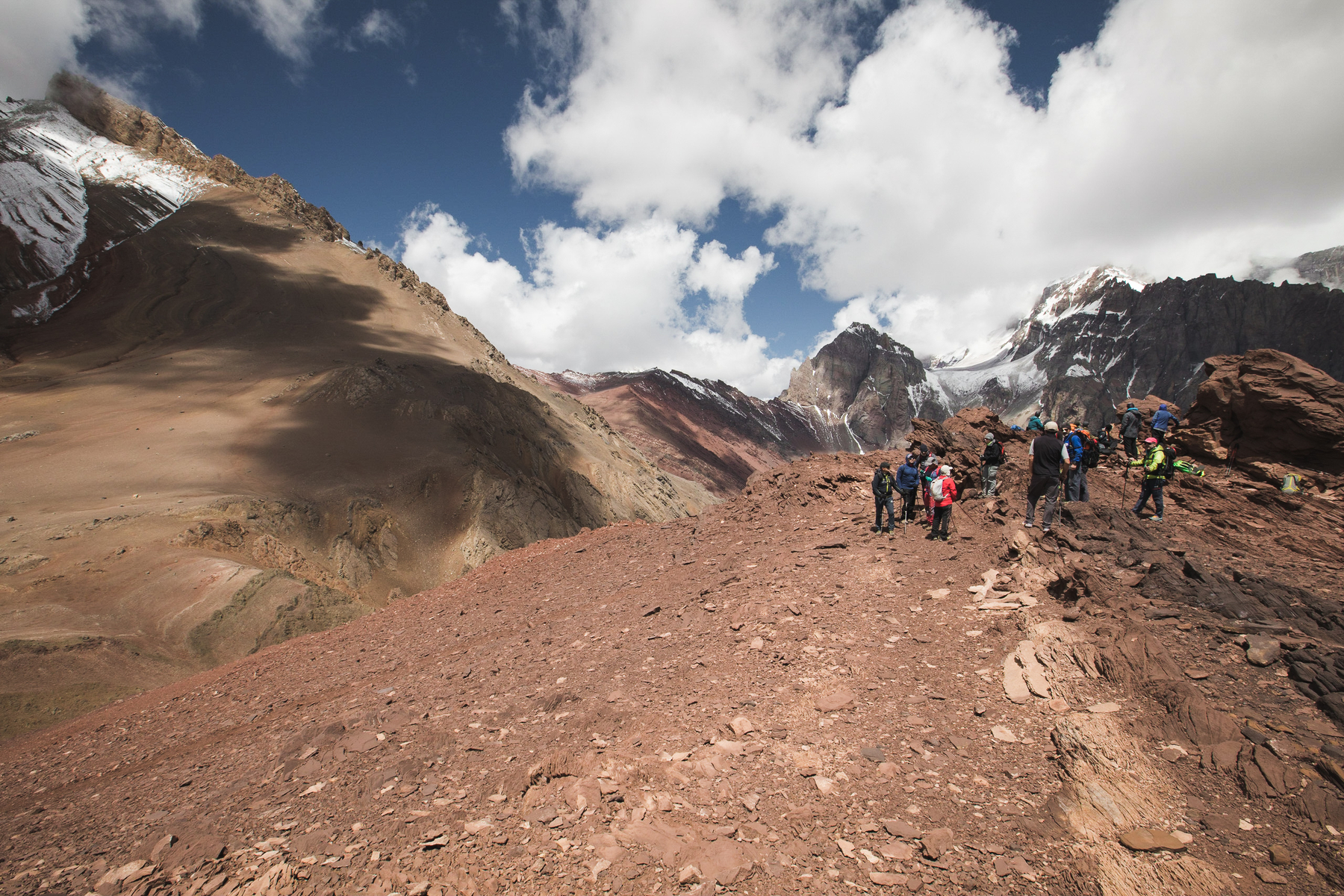
Group of people walking through a dried out river bed in a valley
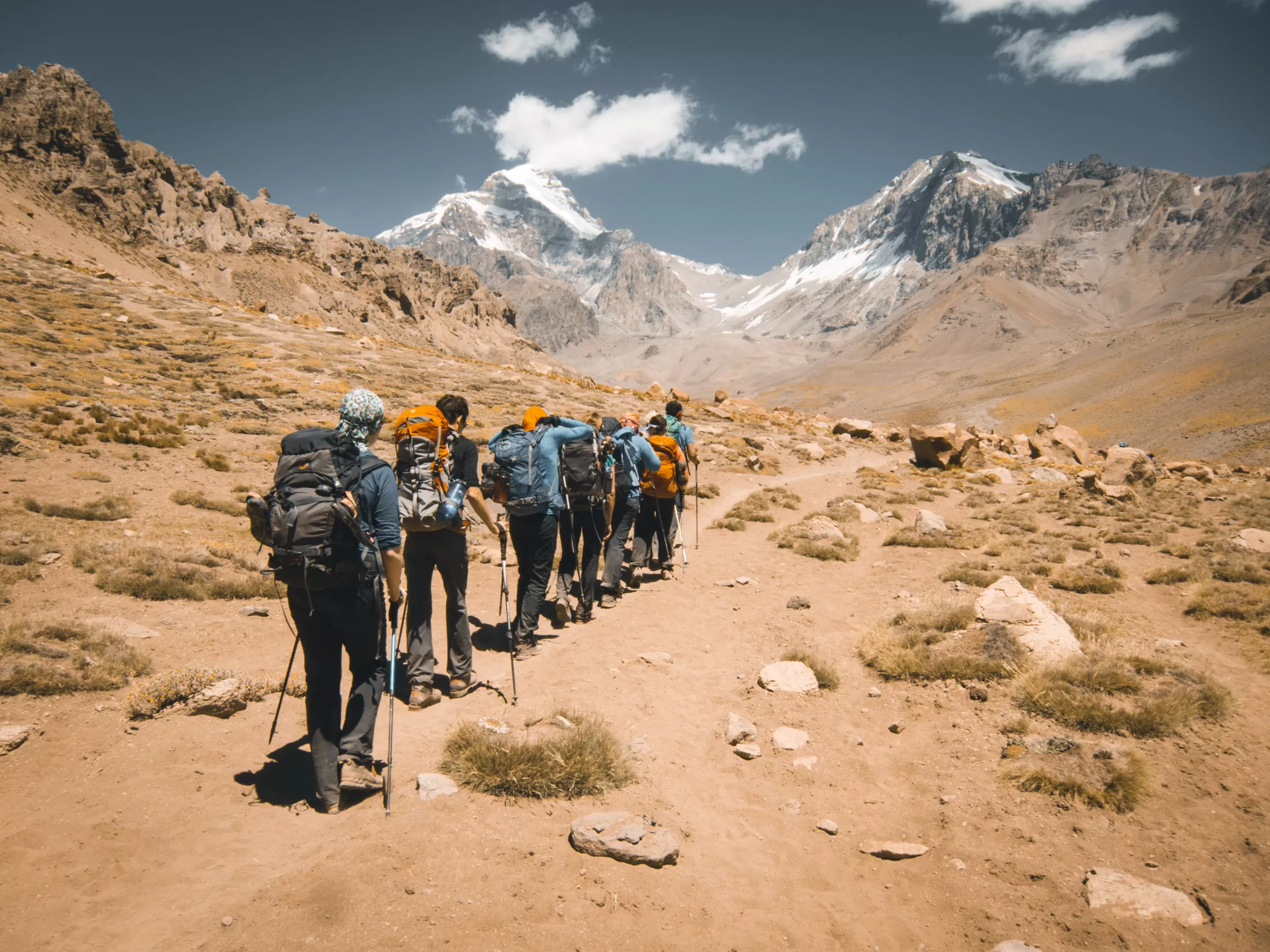
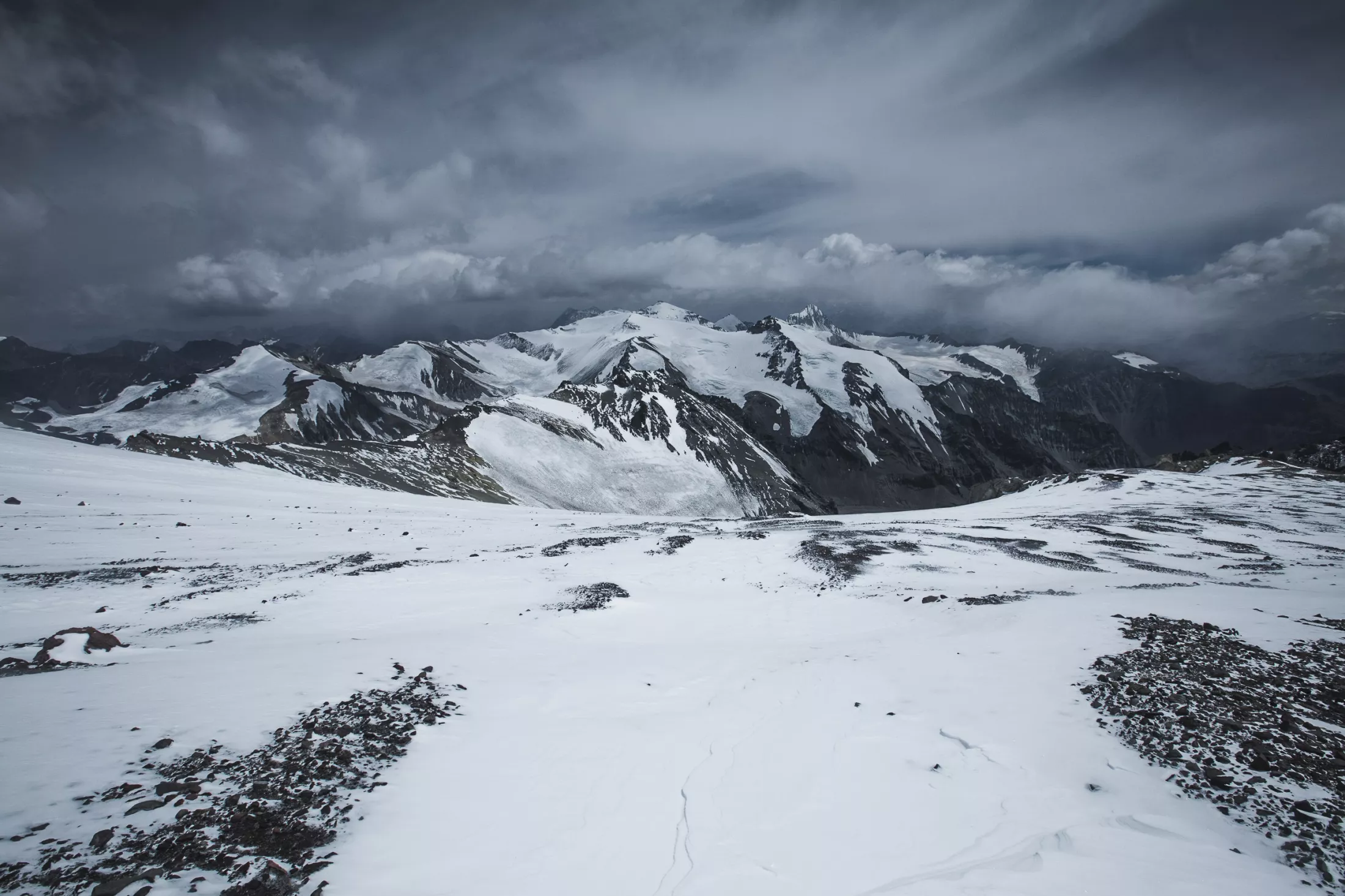
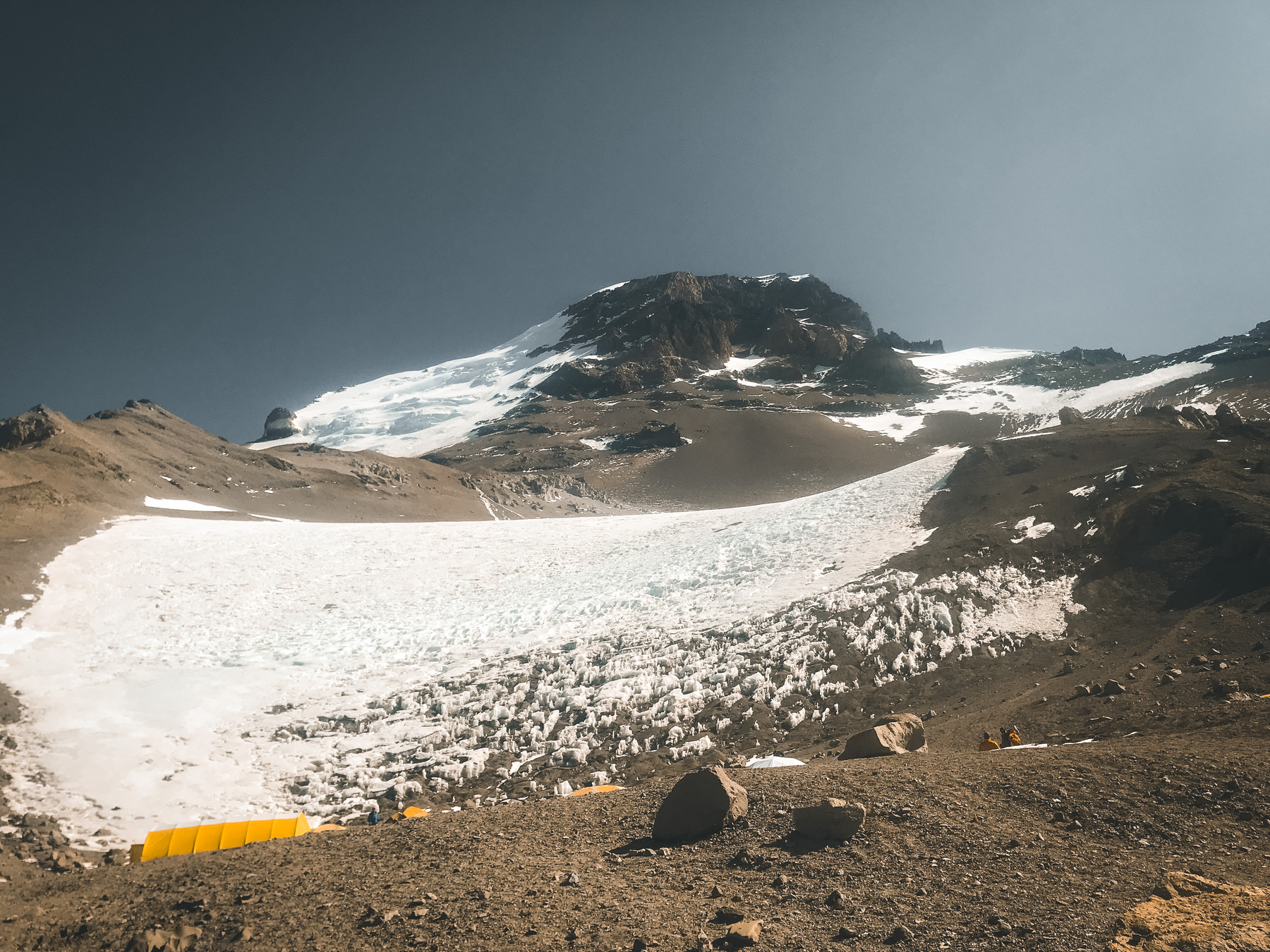
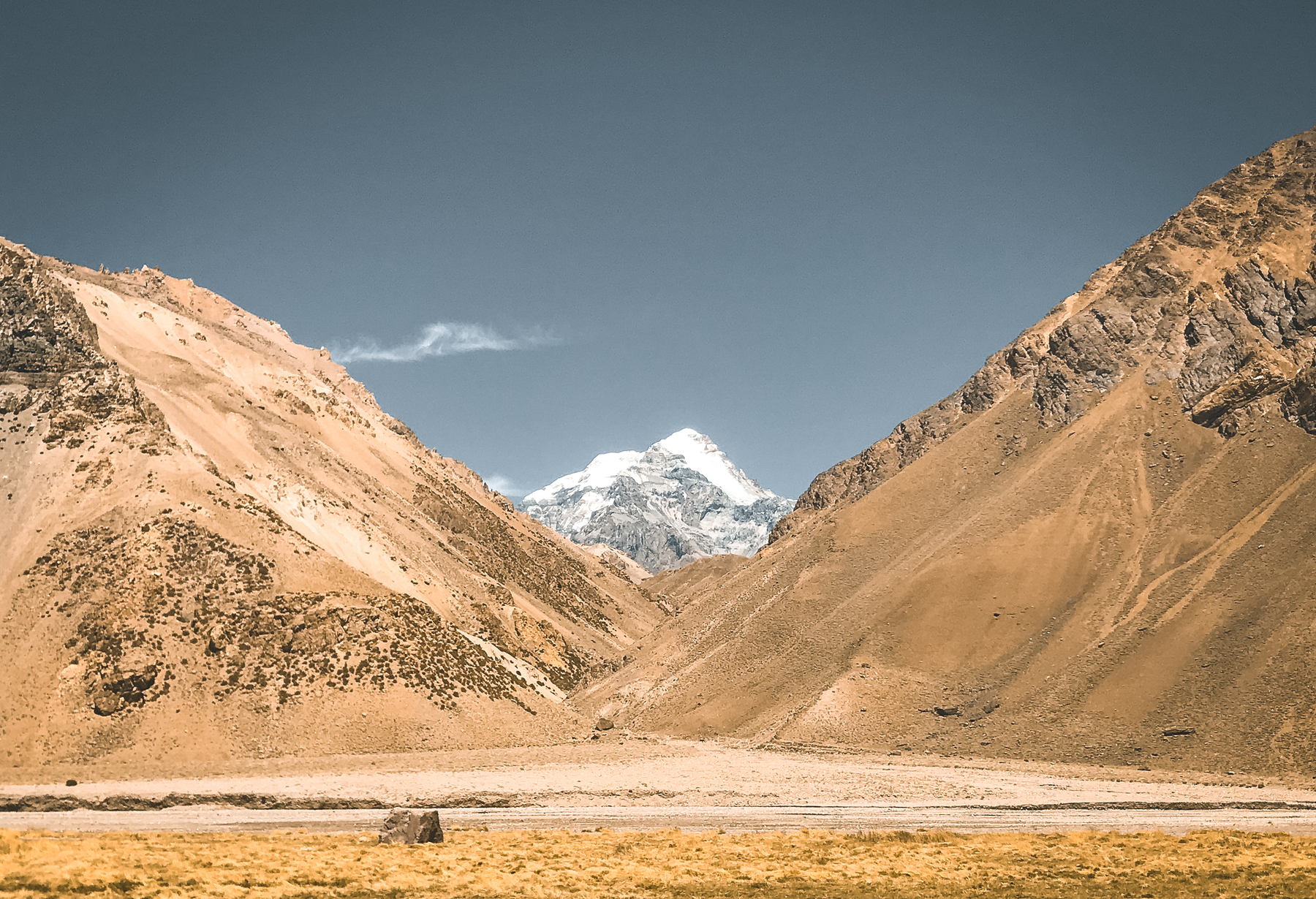
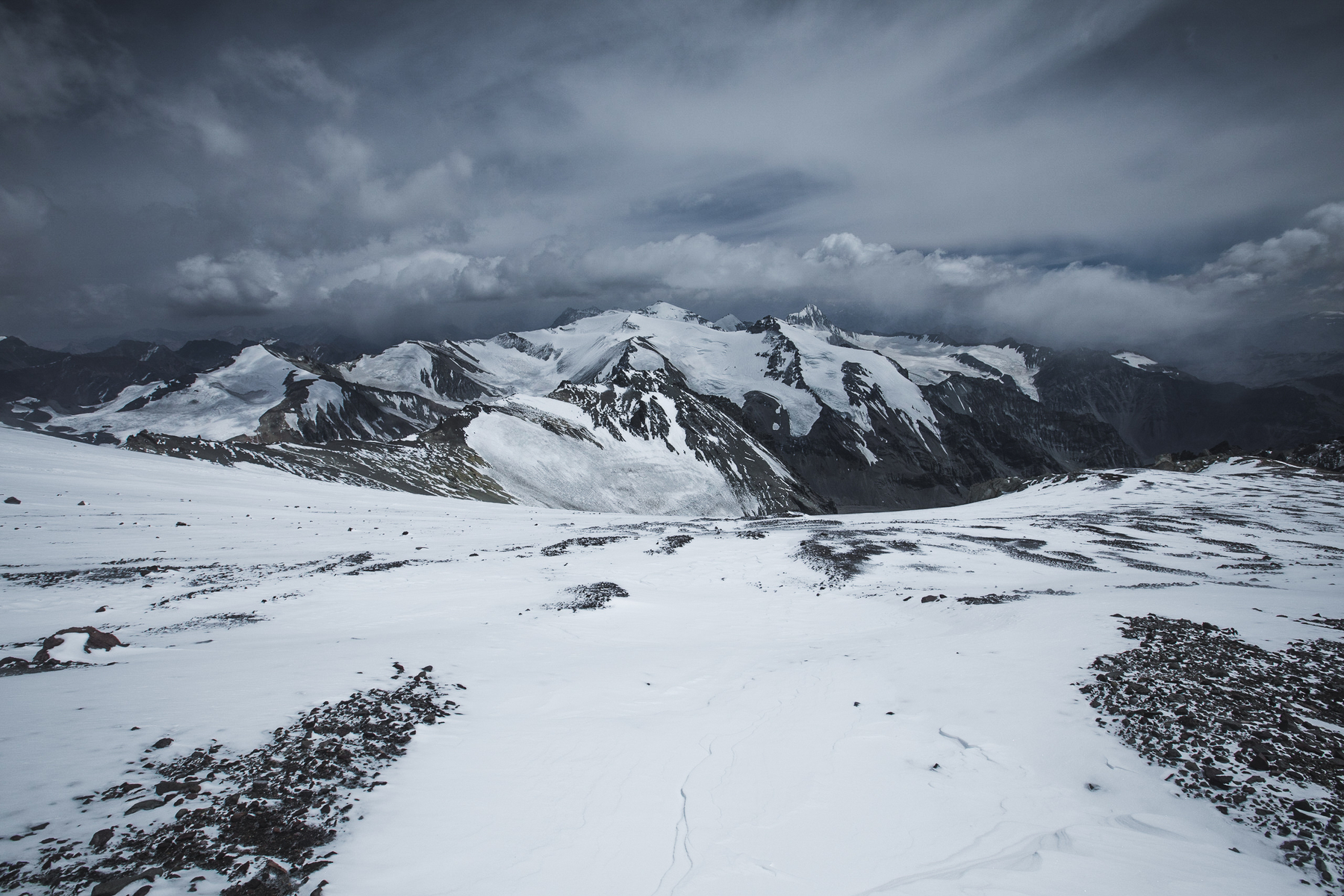
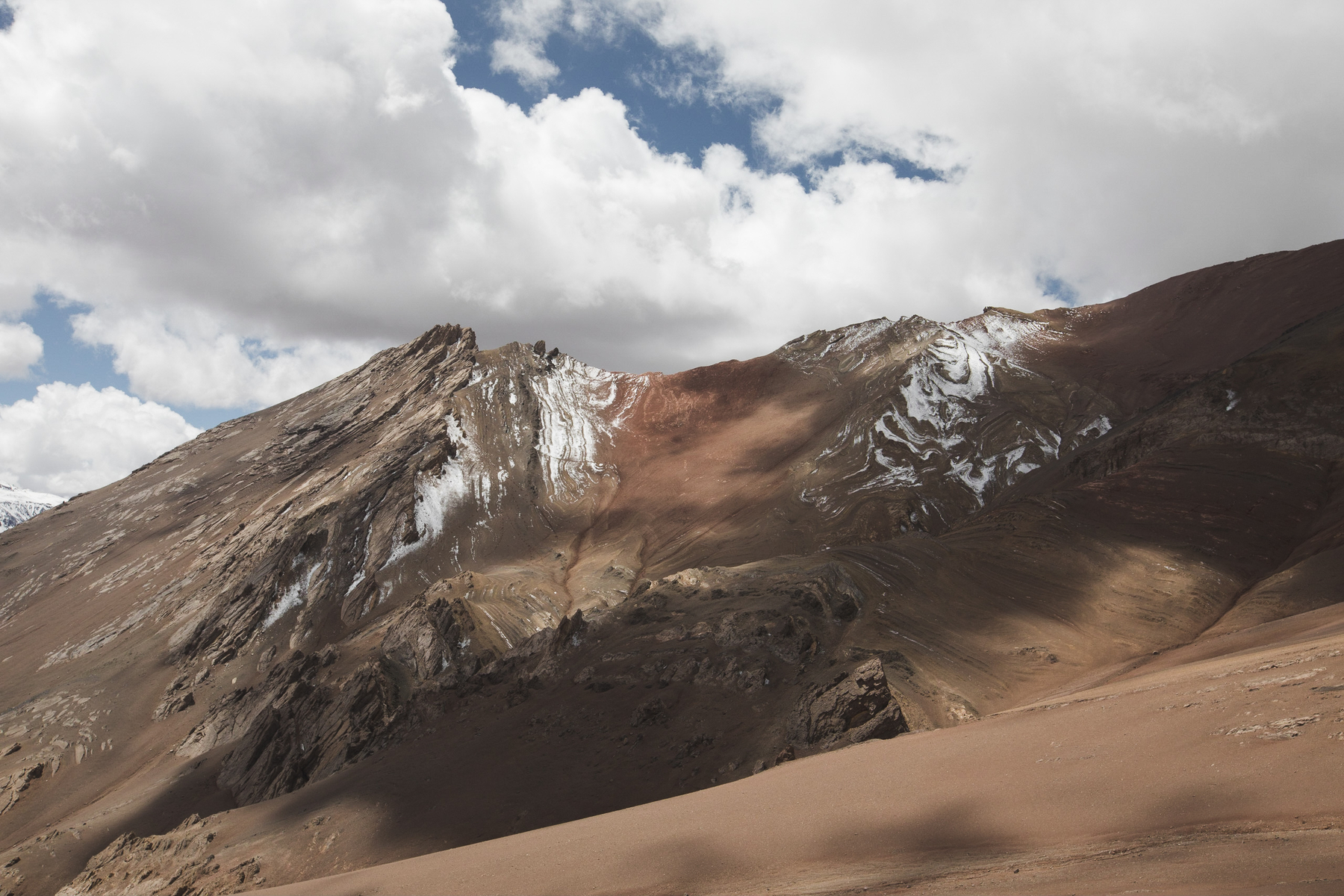
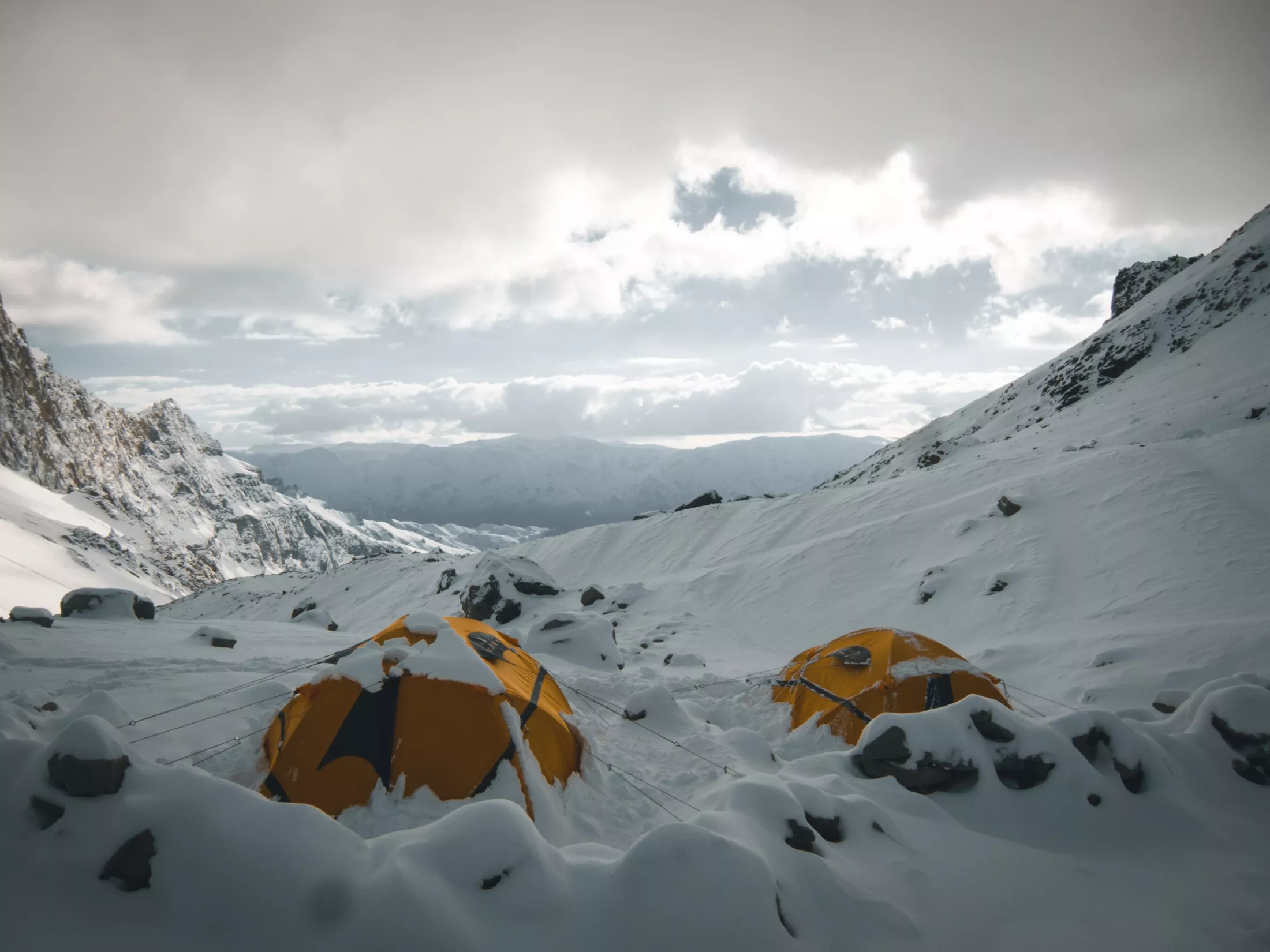
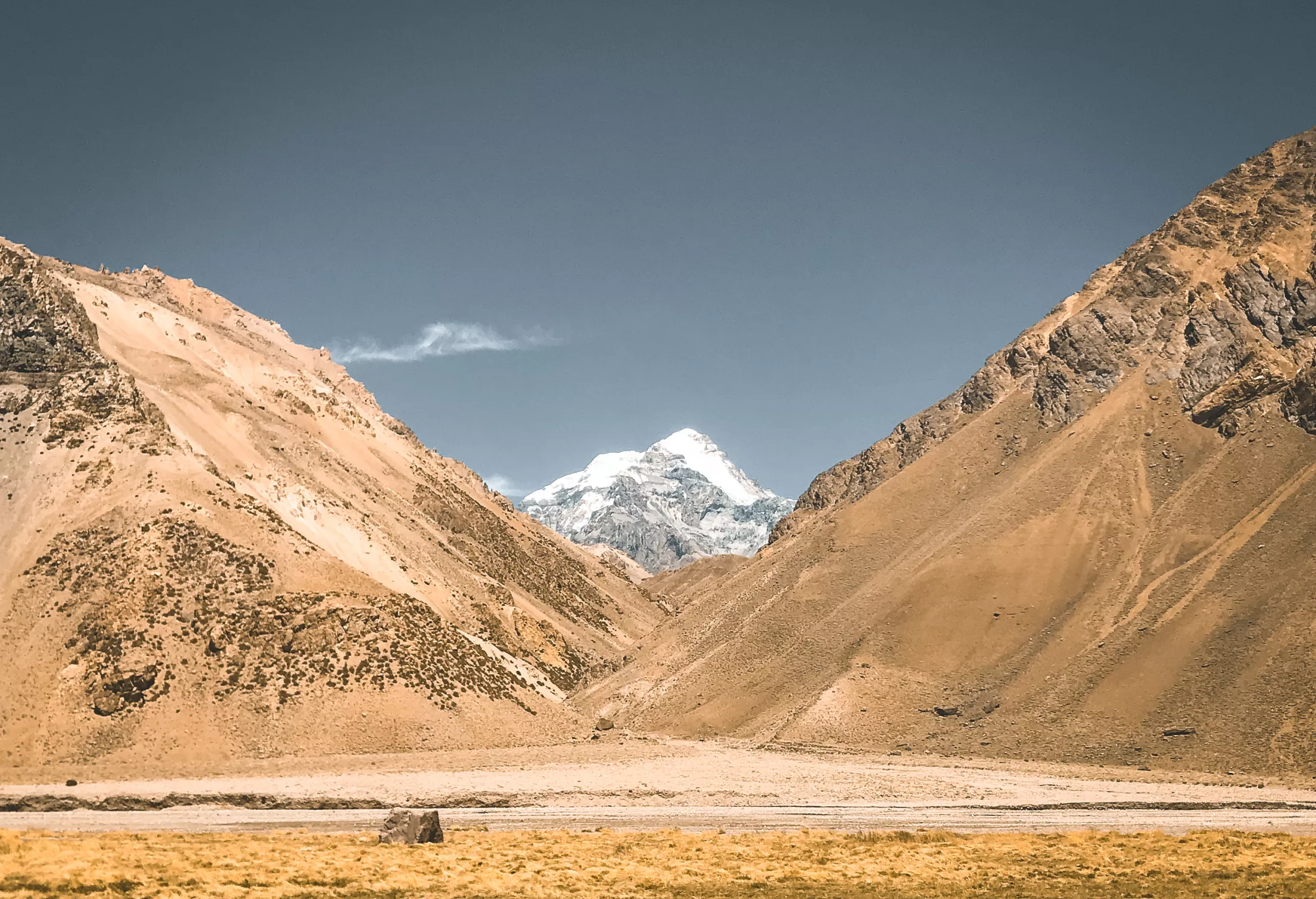
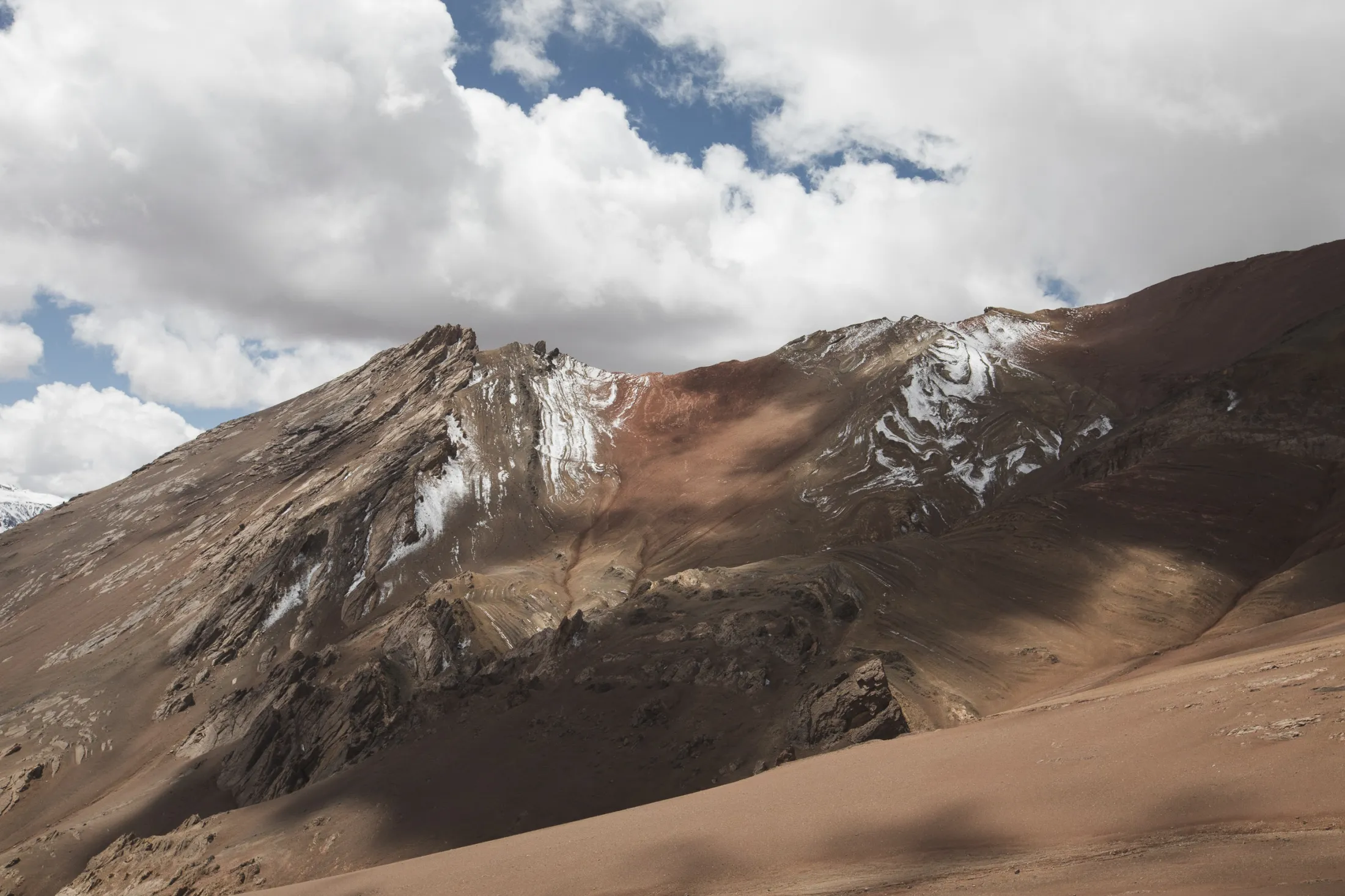
View towards the summit of a snow covered mountain between two other mountains in the foreground

Aconcagua - The Vacas Valley (6962 m)

High mountain expedition to the “Queen of the Andes”

Aconcagua - The Vacas Valley (6962 m)

High mountain expedition to the “Queen of the Andes”

From USD 11689

There is a good chance that Aconcagua will be the most strenuous, demanding, and rugged nature experience you will ever have. On this trip, challenges and experiences await you at every turn, and at 6,962 meters above sea level, this is a real expedition.

Highlights

  • The queen of the Andes
  • A real expedition
  • The challenge of your life?
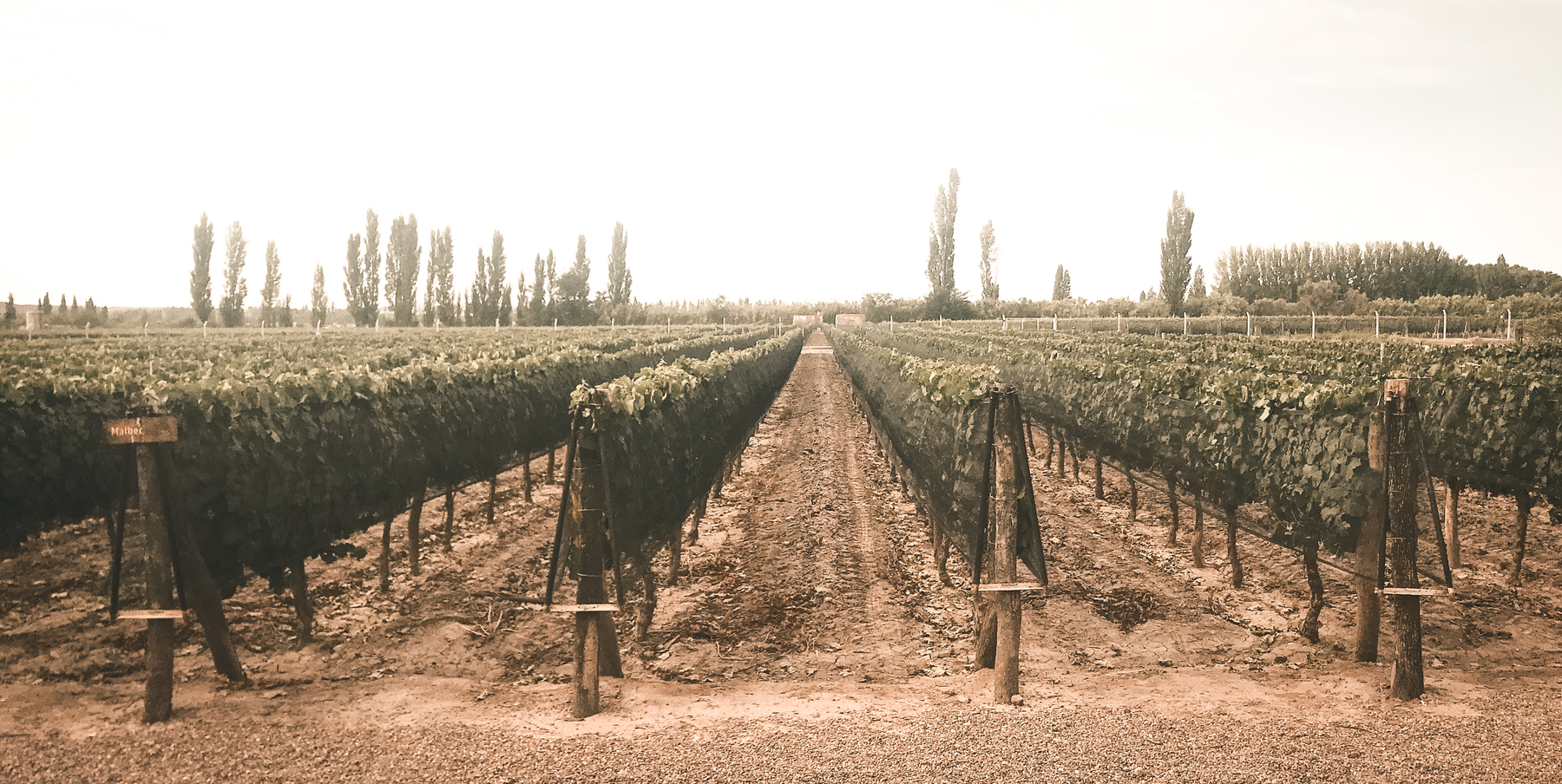
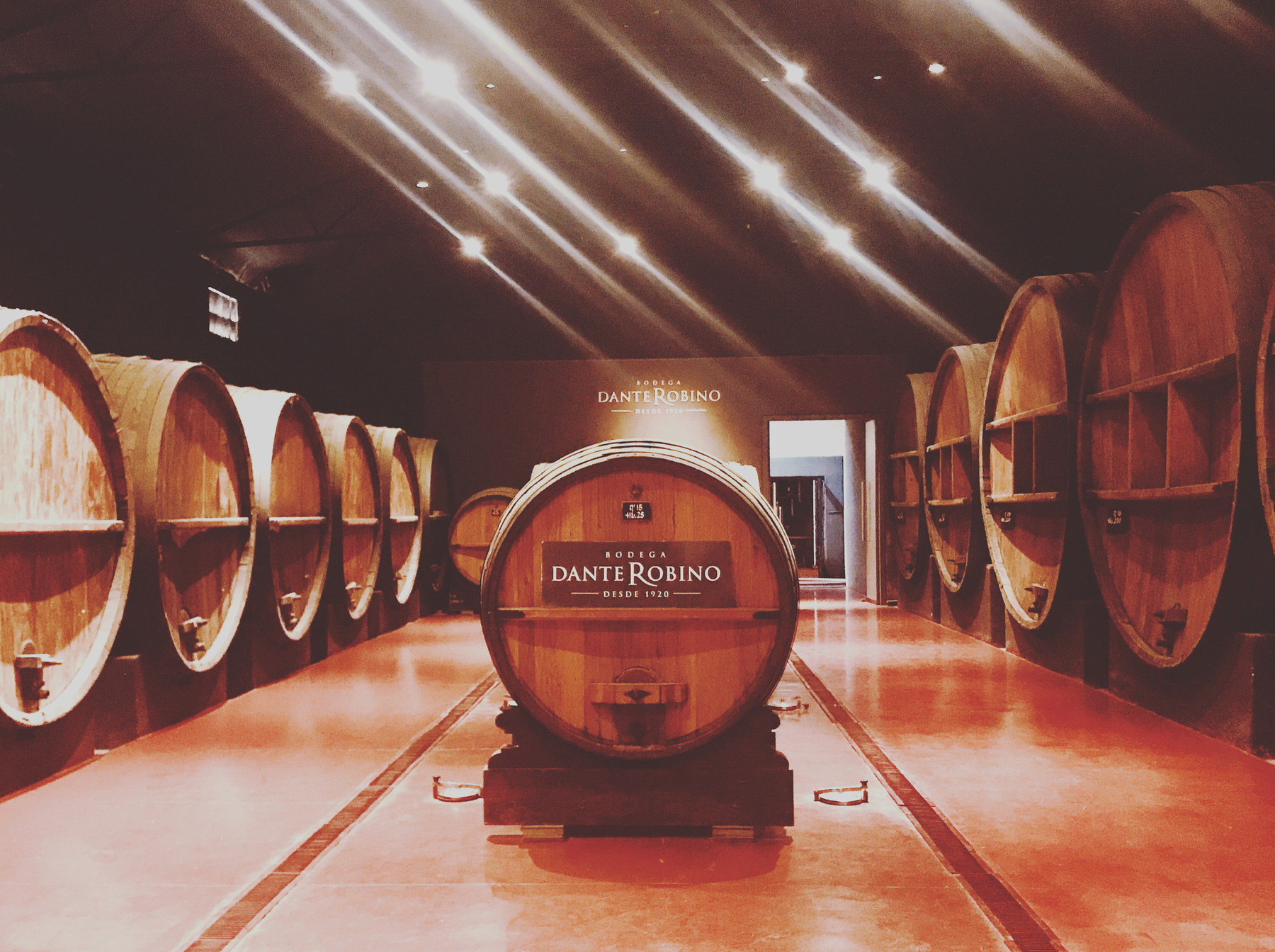
  • Steak and Malbec

This is the highest mountain in the world outside the Himalayas, and although the climb is not technically challenging, it is a long, hard, and demanding trip. You will be involved in planning food purchases and preparations for the mountain trip, and you will have to carry a large backpack weighing up to 20-25 kg to move all the equipment between the camps. This is a real expedition. The area is exposed to the weather, and the wind will be our biggest obstacle on the way to the summit. We have included several spare days to give us a better chance of reaching the summit, but we have no guarantee of hitting an ideal weather window. Patience will therefore be our most important asset as we slowly but surely work our way up towards our goal.

23

8-12

NO/EN

5/6

1/6

5/6

Dates and booking
There are no departures on this trip.
Can't find a date? We'll notify you when new trips open!
Opening hours Phone
Mon-Fri : 08-20
Sat-Sun : 14-17
Opening hours Chat
Mon-Fri : 07-23
Sat : 10-18
Sun : 13-21
CET

Day by day

Day 1:Travel day

Fly to Mendoza. Flights are not included, but if you want us to help you with flight bookings, please contact us. Meet up is in Mendoza on Day 2. Here you will meet your guide and the rest of the group.
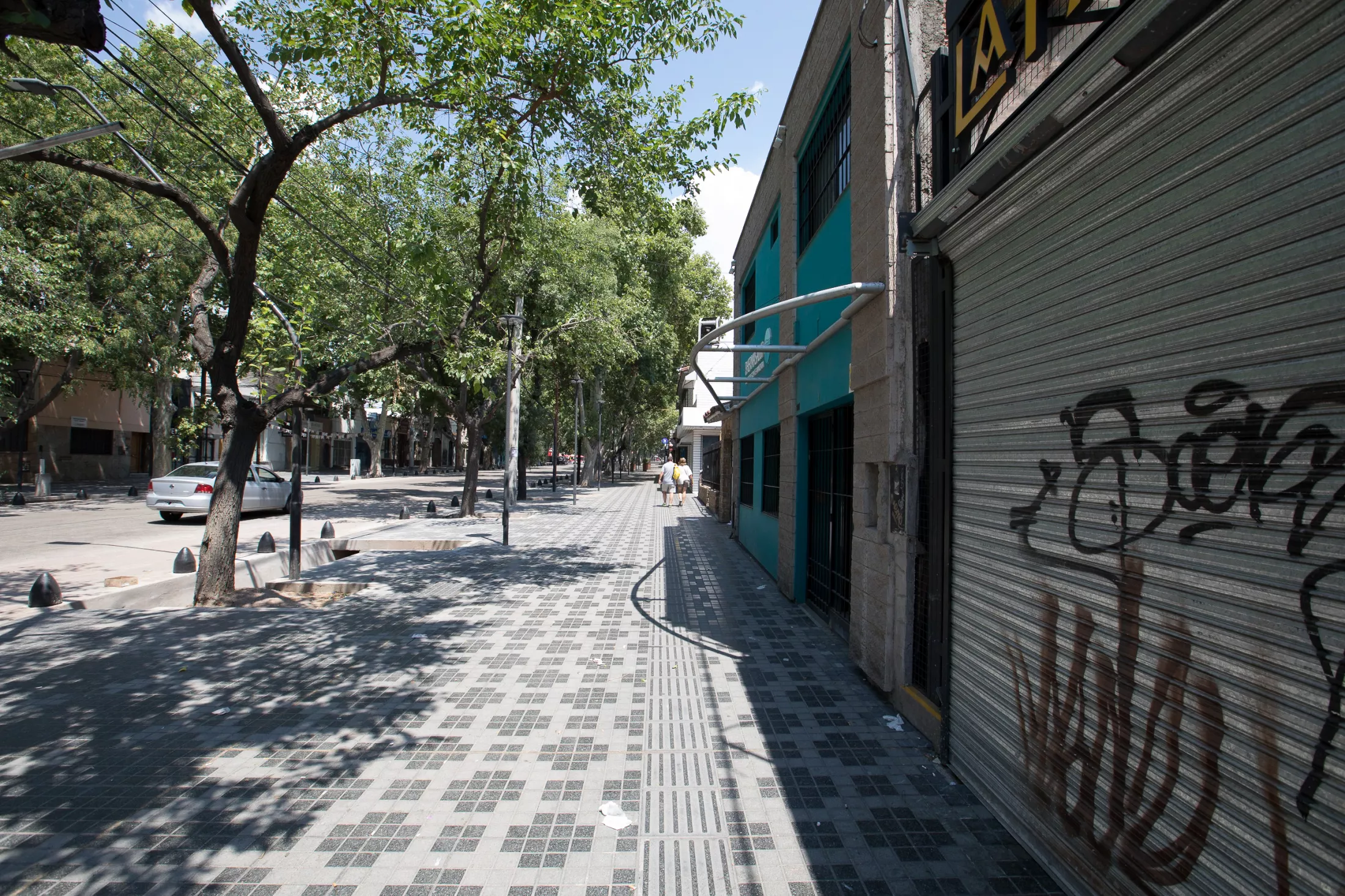
Fly to Mendoza. Flights are not included, but if you want us to help you with flight bookings, please contact us. Meet up is in Mendoza on Day 2. Here you will meet your guide and the rest of the group.
Day 2:Arrival and meet up in Mendoza

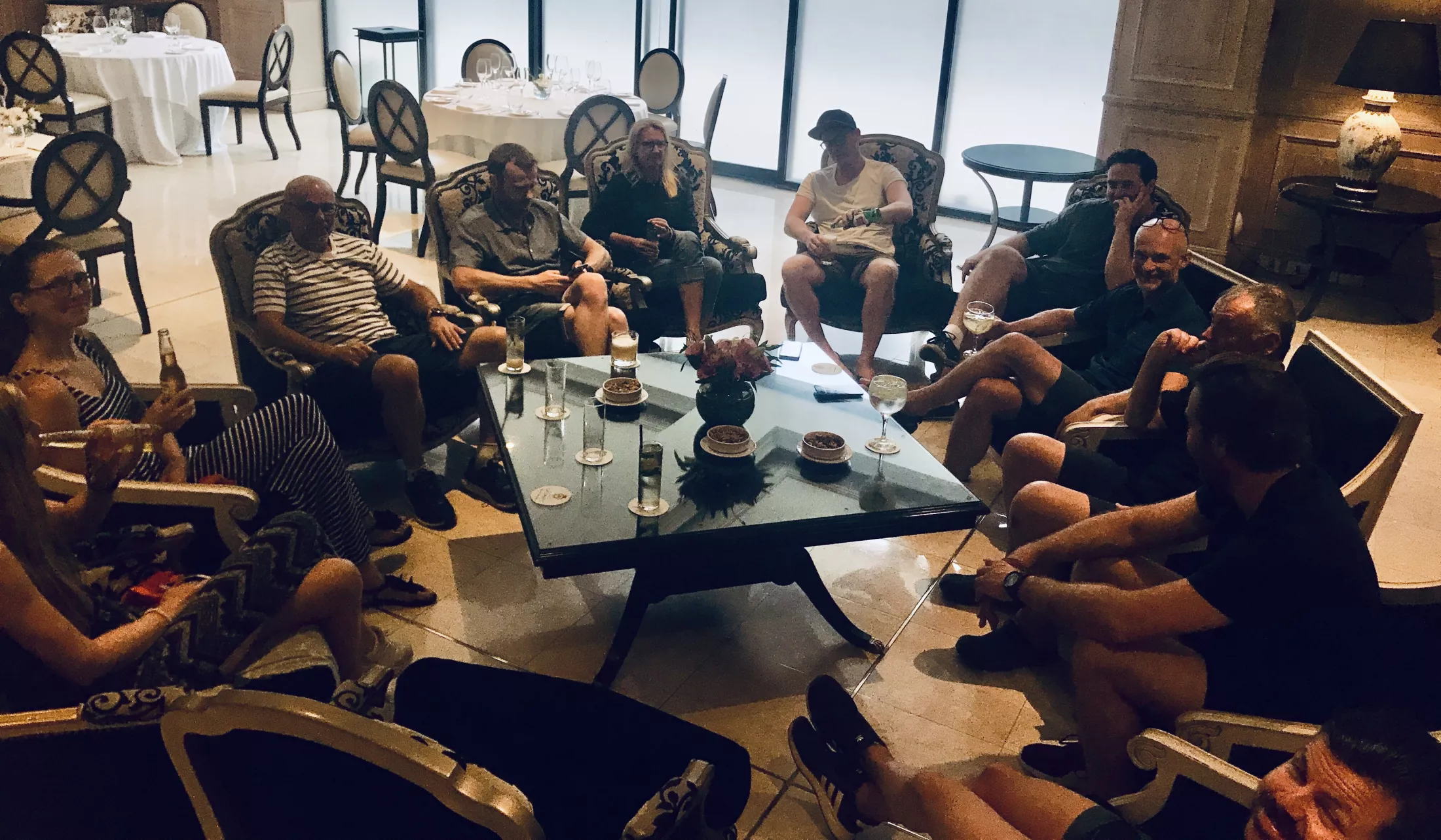
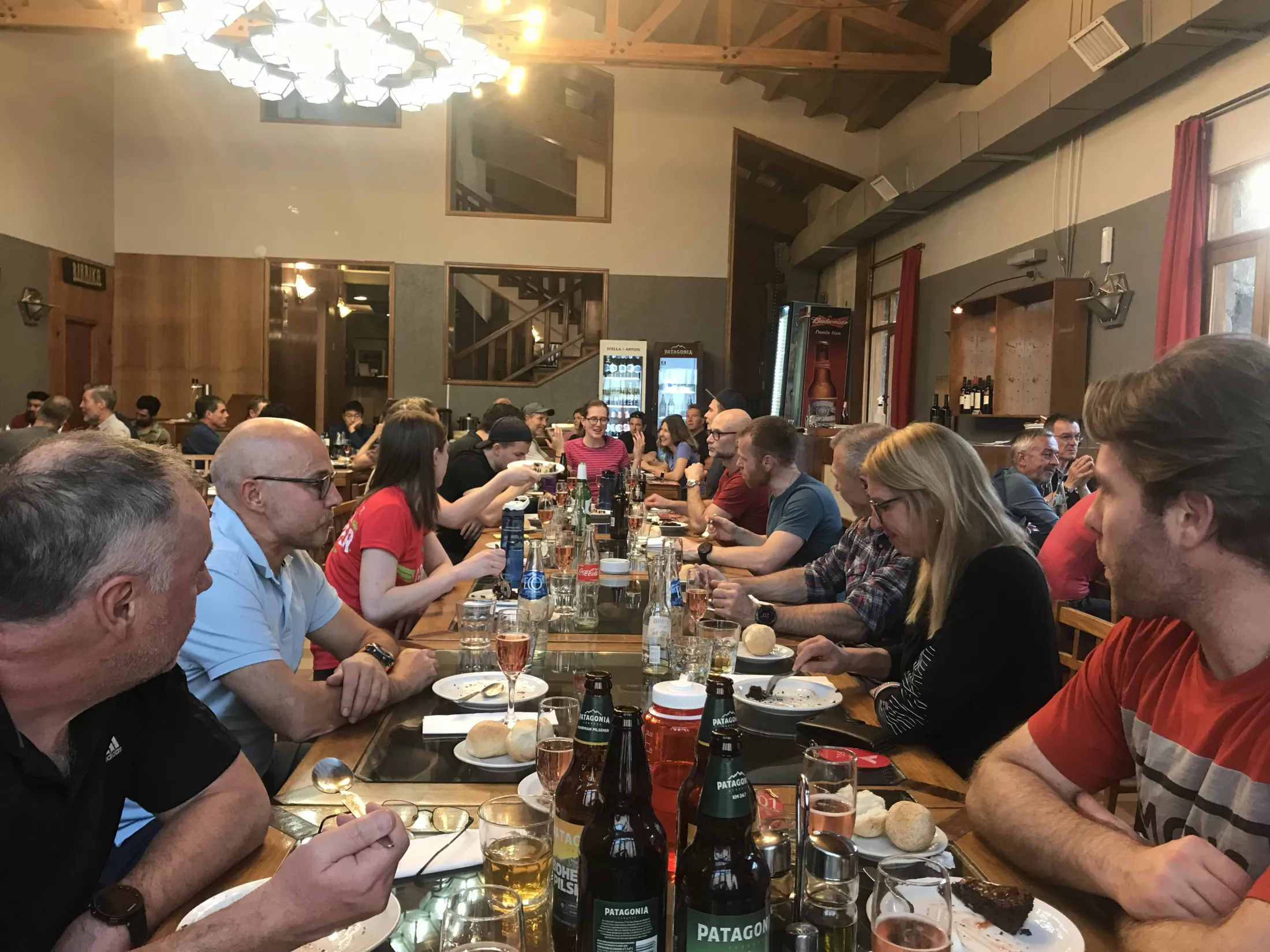
Once you arrive in Mendoza, you will be picked up at the airport by our local partner and they will take you to our hotel in Mendoza. Once at the hotel, you will meet your guide and the rest of the group. Mendoza is a very pleasant city, offering good wine and the most tender steak you can imagine. Depending on how tired we are, we can go out for dinner and explore Mendoza or go to bed. Although the next few days will be spent planning the upcoming expedition, we will also have time to enjoy Mendoza.

Once you arrive in Mendoza, you will be picked up at the airport by our local partner and they will take you to our hotel in Mendoza. Once at the hotel, you will meet your guide and the rest of the group. Mendoza is a very pleasant city, offering good wine and the most tender steak you can imagine. Depending on how tired we are, we can go out for dinner and explore Mendoza or go to bed. Although the next few days will be spent planning the upcoming expedition, we will also have time to enjoy Mendoza.

Hotel

-,-,-

Day 3:Permits, packing and final purchases

Today we will arrange national park permits, check all our gear, pack and make any final purchases. If there is time, we can take a walk around Mendoza and enjoy city life. Mendoza has that distinct atmosphere of being the last stop before the mountains. You're bound to run into fellow climbers who have already been up there and are happy to share their stories and tips.

Today we will arrange national park permits, check all our gear, pack and make any final purchases. If there is time, we can take a walk around Mendoza and enjoy city life. Mendoza has that distinct atmosphere of being the last stop before the mountains. You're bound to run into fellow climbers who have already been up there and are happy to share their stories and tips.

Hotel

F,-,-

Day 4:The expedition begins - Pampa de Leñas (2950 m)

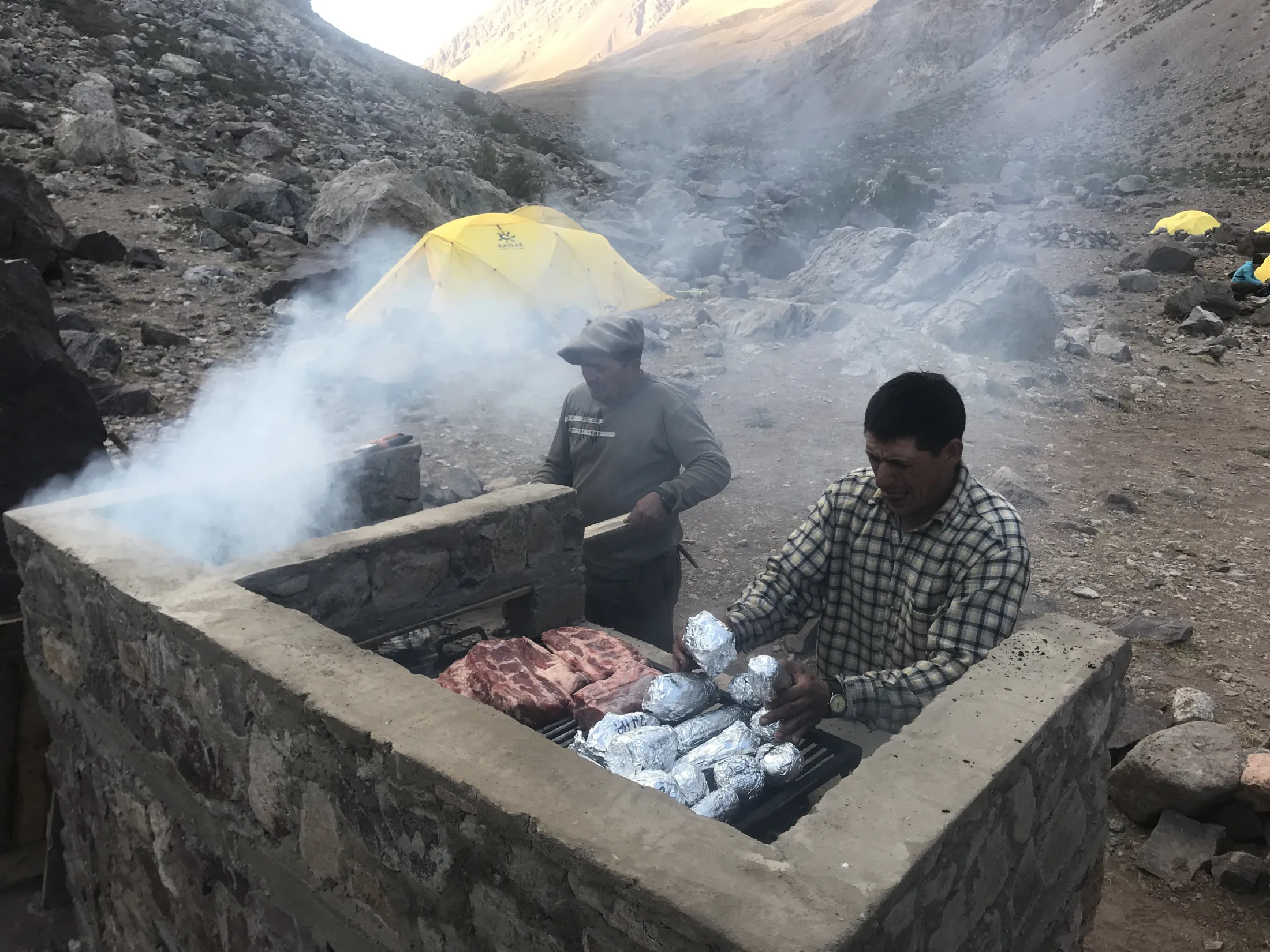
After breakfast, we depart from Mendoza by bus. Our first stop is Penitentes, where we will prepare our large duffel bags for transport by mules. From there, we head to Punta de Vacas (2400 m), the starting point of our trek. After a quick check-in with the park rangers, we begin our hike into the Vacas Valley. Today’s trek follows the Vacas River up to our first camp, Pampa de Leñas (2,950 m). You will only carry a daypack, as the mules transport the rest of the gear. Upon arrival, we’ll be served an authentic asado criollo—a traditional barbecue prepared by the Gauchos. The adventure has officially begun!

After breakfast, we depart from Mendoza by bus. Our first stop is Penitentes, where we will prepare our large duffel bags for transport by mules. From there, we head to Punta de Vacas (2400 m), the starting point of our trek. After a quick check-in with the park rangers, we begin our hike into the Vacas Valley. Today’s trek follows the Vacas River up to our first camp, Pampa de Leñas (2,950 m). You will only carry a daypack, as the mules transport the rest of the gear. Upon arrival, we’ll be served an authentic asado criollo—a traditional barbecue prepared by the Gauchos. The adventure has officially begun!

Tent

B,L,D

3 hours

5 hours

Day 5:Pampa de Lenas - Casa de Piedra (3240 m)

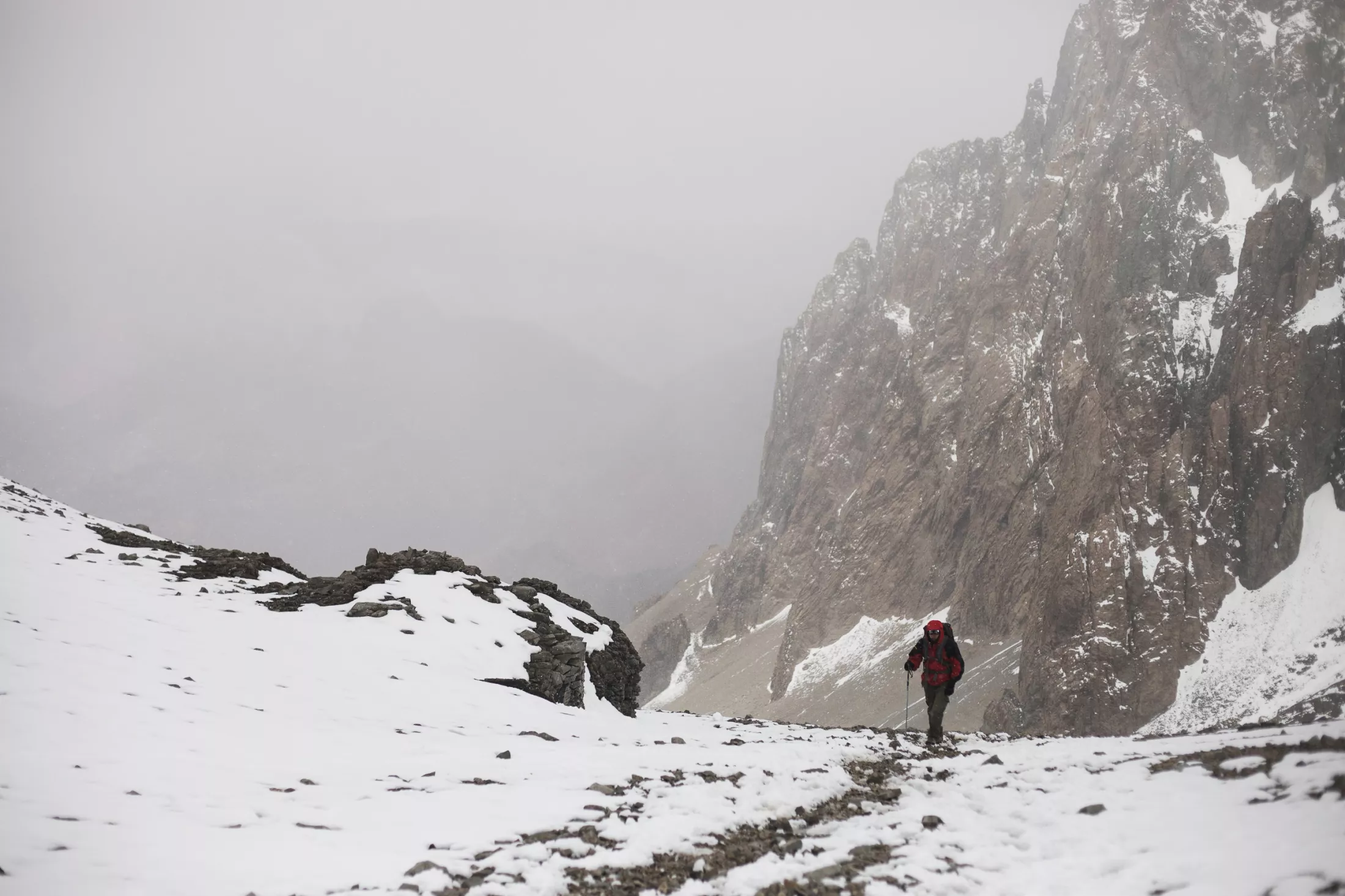
Today we are going to Casa De Piedra at 3,240 meters above sea level. This is a slightly longer hike of about 7 hours. It is a great day's walk and it is exciting to finally see the top of our mountain in the distance! We will have lunch along the way. Another festive dinner from the arrieros awaits! Casa De Piedra is a great camp where we can relax and look forward to tomorrow's river crossing. We will be walking on rocks a lot, so good hiking boots are important.

Today we are going to Casa De Piedra at 3,240 meters above sea level. This is a slightly longer hike of about 7 hours. It is a great day's walk and it is exciting to finally see the top of our mountain in the distance! We will have lunch along the way. Another festive dinner from the arrieros awaits! Casa De Piedra is a great camp where we can relax and look forward to tomorrow's river crossing. We will be walking on rocks a lot, so good hiking boots are important.

Tent

B,L,D

7 hours

Day 6:Basecamp: Plaza Argentina (4200 m)

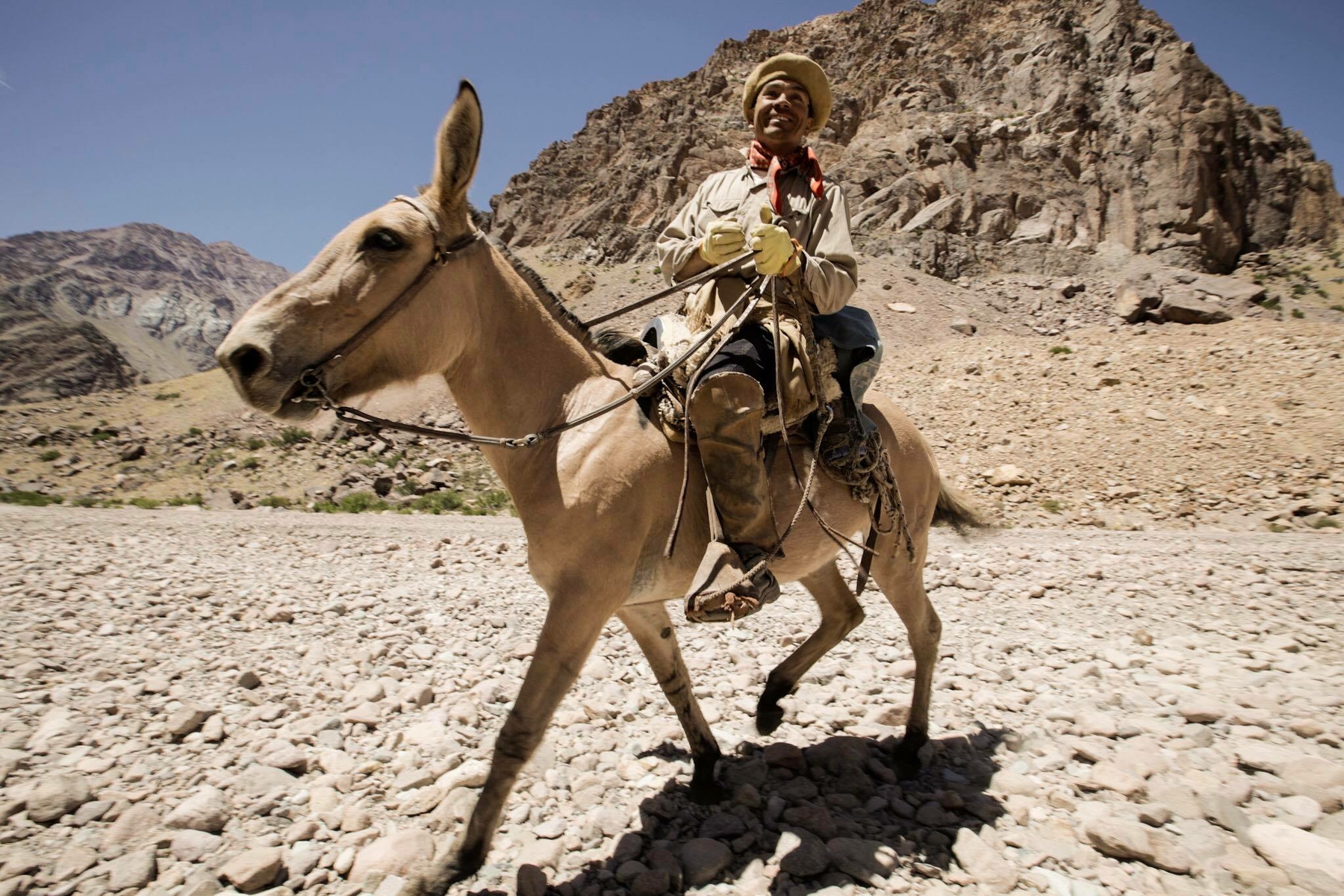
Today we reach Plaza Argentina. We enjoy a delicious lunch along the way. Salted snacks, crackers, and chocolate taste amazing. Plaza Argentina is the base camp on the east side of the mountain, located right at the foot of the mountain. On the way there, we have to cross a river, and if the water level is high, we get a little horseback ride thrown in for free. It takes us about 8 hours to reach base camp, so it's nice to get into the dome tent upon arrival. Here we are served a 3-course dinner with a steaming cup of tea or coffee. Afterwards, we crawl into our sleeping bags and enjoy the clear mountain air. From this day on, the program may be adjusted day by day depending on the weather and how we cope with the altitude.

Today we reach Plaza Argentina. We enjoy a delicious lunch along the way. Salted snacks, crackers, and chocolate taste amazing. Plaza Argentina is the base camp on the east side of the mountain, located right at the foot of the mountain. On the way there, we have to cross a river, and if the water level is high, we get a little horseback ride thrown in for free. It takes us about 8 hours to reach base camp, so it's nice to get into the dome tent upon arrival. Here we are served a 3-course dinner with a steaming cup of tea or coffee. Afterwards, we crawl into our sleeping bags and enjoy the clear mountain air. From this day on, the program may be adjusted day by day depending on the weather and how we cope with the altitude.

Tent

B,L,D

8 hours

+1000m

Day 7:Rest and acclimatization day at base camp

Acclimatization day with lots of rest and relaxation. We relax at Base Camp, read books, and enjoy life. We also make preparations for tomorrow—i.e., packing equipment to be transported up to Camp 1. A short hike up the slope is also a good idea, considering tomorrow's new heights.

Acclimatization day with lots of rest and relaxation. We relax at Base Camp, read books, and enjoy life. We also make preparations for tomorrow—i.e., packing equipment to be transported up to Camp 1. A short hike up the slope is also a good idea, considering tomorrow's new heights.

Tent

B,L,D

Day 8:Carry day to camp 1 (4800 m)

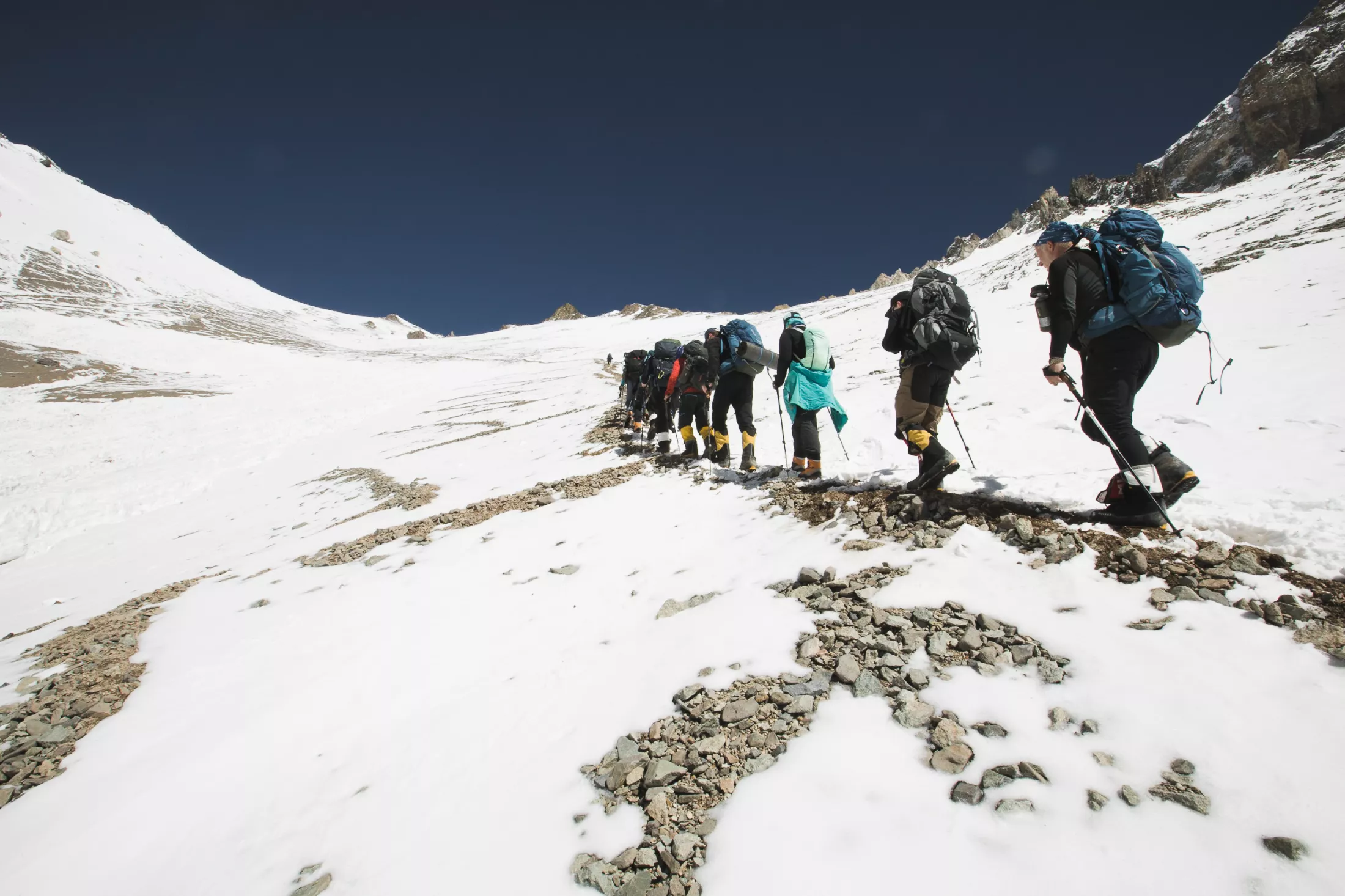
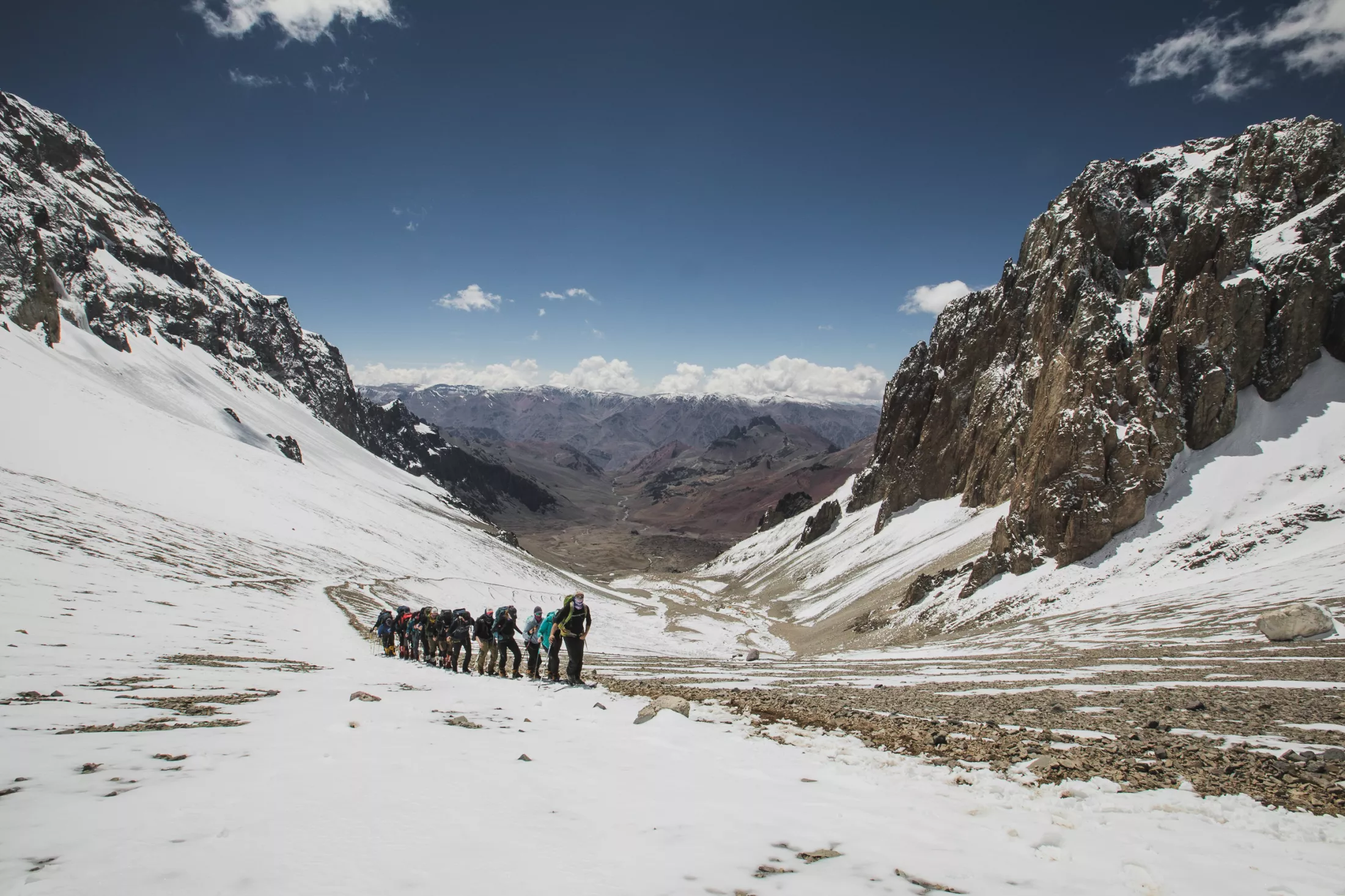
There is a lot of equipment to carry for a large group with a healthy appetite. Tents, stoves, food, and personal equipment that we need higher up in the mountains. We walk slowly, because we are now high up and the air is thin, and we feel the weight we are carrying. We will walk up at a snail's pace so that our bodies can gradually acclimatize to the altitude and the extreme conditions. Once we reach 4,800 meters above sea level, we set up Camp 1. We eat our lunch and breathe in the thin air before returning to Base Camp for the night. All in all, the trip up and down takes about 8 hours. Once back down, dinner and our sleeping bags await us.

There is a lot of equipment to carry for a large group with a healthy appetite. Tents, stoves, food, and personal equipment that we need higher up in the mountains. We walk slowly, because we are now high up and the air is thin, and we feel the weight we are carrying. We will walk up at a snail's pace so that our bodies can gradually acclimatize to the altitude and the extreme conditions. Once we reach 4,800 meters above sea level, we set up Camp 1. We eat our lunch and breathe in the thin air before returning to Base Camp for the night. All in all, the trip up and down takes about 8 hours. Once back down, dinner and our sleeping bags await us.

Tent

B,L,D

8 hours

600m/600m

Day 9:Rest day at base camp

A real day of rest at base camp. We will eat three meals and pack our personal equipment for tomorrow's move. Otherwise, we will sunbathe, read books, engage in lively conversations, and mentally prepare for life above base camp, which will be simpler than our luxurious life here.

A real day of rest at base camp. We will eat three meals and pack our personal equipment for tomorrow's move. Otherwise, we will sunbathe, read books, engage in lively conversations, and mentally prepare for life above base camp, which will be simpler than our luxurious life here.

Tent

B,L,D

Day 10:Move to Camp 1 (4800 m)

We leave behind the mess tent, three-course dinners, and the luxury's of base camp life. Now we have to carry everything we need higher up, and the backpacks get heavy. We will sleep in thinner air and set up camp at Camp 1. The climb up is tough enough in itself, but we have been here before. Fortunately, we have acclimatized well to the altitude after several days of following the “walk high, sleep low” principle. It will be an early evening after catching our breath and re-hydrating.

We leave behind the mess tent, three-course dinners, and the luxury's of base camp life. Now we have to carry everything we need higher up, and the backpacks get heavy. We will sleep in thinner air and set up camp at Camp 1. The climb up is tough enough in itself, but we have been here before. Fortunately, we have acclimatized well to the altitude after several days of following the “walk high, sleep low” principle. It will be an early evening after catching our breath and re-hydrating.

Tent

B,L,D

+600m

Day 11:Carrying day to Camp Guanacos (5480 m)

Carrying day to Camp Guanacos. This is a tough day and we spend about 5-6 hours going up and down. We eat lunch at Camp Guanacos – and try to endure the thinner air for a little while – it feels good when we get back down to Camp 1. Dinner at Camp 1.

Carrying day to Camp Guanacos. This is a tough day and we spend about 5-6 hours going up and down. We eat lunch at Camp Guanacos – and try to endure the thinner air for a little while – it feels good when we get back down to Camp 1. Dinner at Camp 1.

Tent

B,L,D

600m/600m

Day 12:Rest day at camp 1

A rest day combined with just a little movement keeps us in the necessary shape for the summit. Deck of cards, sleeping mats, and good food make this a great and relaxing day. We analyze the weather forecasts and plan our strategy for the coming days. The rest day may be canceled if the good weather window is slipping away, or we might get another rest day down here if we are waiting for better conditions.

A rest day combined with just a little movement keeps us in the necessary shape for the summit. Deck of cards, sleeping mats, and good food make this a great and relaxing day. We analyze the weather forecasts and plan our strategy for the coming days. The rest day may be canceled if the good weather window is slipping away, or we might get another rest day down here if we are waiting for better conditions.

Tent

B,L,D

Day 13:Camp Guanacos (5480 m)

Moving day up to Camp Guanacos. We eat breakfast and lunch at Camp 1 and linger a while before moving on. The move takes 3-4 hours. We eat dinner at the new camp. Now the weather reports are becoming crucial – go or no go...

Moving day up to Camp Guanacos. We eat breakfast and lunch at Camp 1 and linger a while before moving on. The move takes 3-4 hours. We eat dinner at the new camp. Now the weather reports are becoming crucial – go or no go...

Tent

B,L,D

+600m

Day 14:Rest day at camp 2

After yesterdays move to new heights, we take a new rest day to ensure we gather energy for the upcoming summit push. We eat, drink and move a little around camp. If the weather window is closing in, this rest day might be cancelled. We will then move to higher grounds to get ourselfs in position for the summit.

After yesterdays move to new heights, we take a new rest day to ensure we gather energy for the upcoming summit push. We eat, drink and move a little around camp. If the weather window is closing in, this rest day might be cancelled. We will then move to higher grounds to get ourselfs in position for the summit.

Tent

B,L,D

Day 15:Camp Colera (6000 m)

We eat breakfast at the Guanacos camp and linger here for a while. The move takes 3-4 hours, depending on the weather and our fitness. Now we feel that the summit is calling us! We set up camp, eat lunch, and crawl into our sleeping bags. After that, we make our final preparations before the summit night—packing and getting our equipment ready. We don't get much sleep here, because now we are excited.

We eat breakfast at the Guanacos camp and linger here for a while. The move takes 3-4 hours, depending on the weather and our fitness. Now we feel that the summit is calling us! We set up camp, eat lunch, and crawl into our sleeping bags. After that, we make our final preparations before the summit night—packing and getting our equipment ready. We don't get much sleep here, because now we are excited.

Tent

B,L,D

+600m

Day 16:Summit push! (6962 m)

This is a tough day! If the weather permits an attempt on the summit, we will set off early in the morning. This is a hard session, so we will take it easy and have regular breaks on the way up. We will use crampons if conditions require it, but it is not a technical trip. The summit push has many milestones on the way up: Independencia and the windswept hut, the really tough and long traverse, and not least the steep and tough canaleta. We have to fight for every step and every meter up, but the struggle is rewarded with happiness and a view you will never forget! From the summit, it takes about 3-4 hours to descend to Camp Colera. It will be a good night's sleep. We have set aside three days for the summit attempt to give you the best possible chance of reaching the top of South America's highest mountain.

This is a tough day! If the weather permits an attempt on the summit, we will set off early in the morning. This is a hard session, so we will take it easy and have regular breaks on the way up. We will use crampons if conditions require it, but it is not a technical trip. The summit push has many milestones on the way up: Independencia and the windswept hut, the really tough and long traverse, and not least the steep and tough canaleta. We have to fight for every step and every meter up, but the struggle is rewarded with happiness and a view you will never forget! From the summit, it takes about 3-4 hours to descend to Camp Colera. It will be a good night's sleep. We have set aside three days for the summit attempt to give you the best possible chance of reaching the top of South America's highest mountain.

Tent

B,L,D

1000m/1000m

Day 17:Down to base camp (Back up summit day)

If we have reached the summit, we will start the descent to Base Camp in the morning. We will have breakfast at Camp Colera and save lunch for Camp 1 or possibly Base Camp. We will need to clear away and carry down all the equipment we have at Camp Colera, Guanacos, and Camp 1. It will be hard work, but we will make it down. The descent to Base Camp takes 5-6 hours.

If we have reached the summit, we will start the descent to Base Camp in the morning. We will have breakfast at Camp Colera and save lunch for Camp 1 or possibly Base Camp. We will need to clear away and carry down all the equipment we have at Camp Colera, Guanacos, and Camp 1. It will be hard work, but we will make it down. The descent to Base Camp takes 5-6 hours.

Tent

B,L,D

-1700m

Day 18:Pampa de Leñas (Back up day / Down to base camp)

If we reached the summit on the first night, we will begin our journey out of the mountains today! Where we spent three days on the way in, we will now spend a day and a half on the way out. A beautiful but hard day. We eat breakfast at Base Camp and set off when it is light. We walk about 30 kilometers to Pampa de Lenas, the first camp we stayed at on the way in. We treat our blisters and enjoy the fantastic view and the fact that we are almost alone in the valley. The last night in the tent will be good, and now we are looking forward to a proper bed, red wine, and a proper steak dinner.

If we reached the summit on the first night, we will begin our journey out of the mountains today! Where we spent three days on the way in, we will now spend a day and a half on the way out. A beautiful but hard day. We eat breakfast at Base Camp and set off when it is light. We walk about 30 kilometers to Pampa de Lenas, the first camp we stayed at on the way in. We treat our blisters and enjoy the fantastic view and the fact that we are almost alone in the valley. The last night in the tent will be good, and now we are looking forward to a proper bed, red wine, and a proper steak dinner.

Tent

B,L,D

-1400m

30 km

Day 19:Mendoza (Down to base camp / Pampa de Lenas)

If we reached the summit on the first night, we will leave the Andes today. We will eat breakfast at the camp before cleaning up and walking the last mile out of the mountains. At the warehouse in Penitentes we re-organize our gear before we head back to Mendoza. The official program ends after we return to Mendoza.

If we reached the summit on the first night, we will leave the Andes today. We will eat breakfast at the camp before cleaning up and walking the last mile out of the mountains. At the warehouse in Penitentes we re-organize our gear before we head back to Mendoza. The official program ends after we return to Mendoza.

Hotel

B,L,-

3 hours

Day 20:Mendoza (Pampa de Lenas)

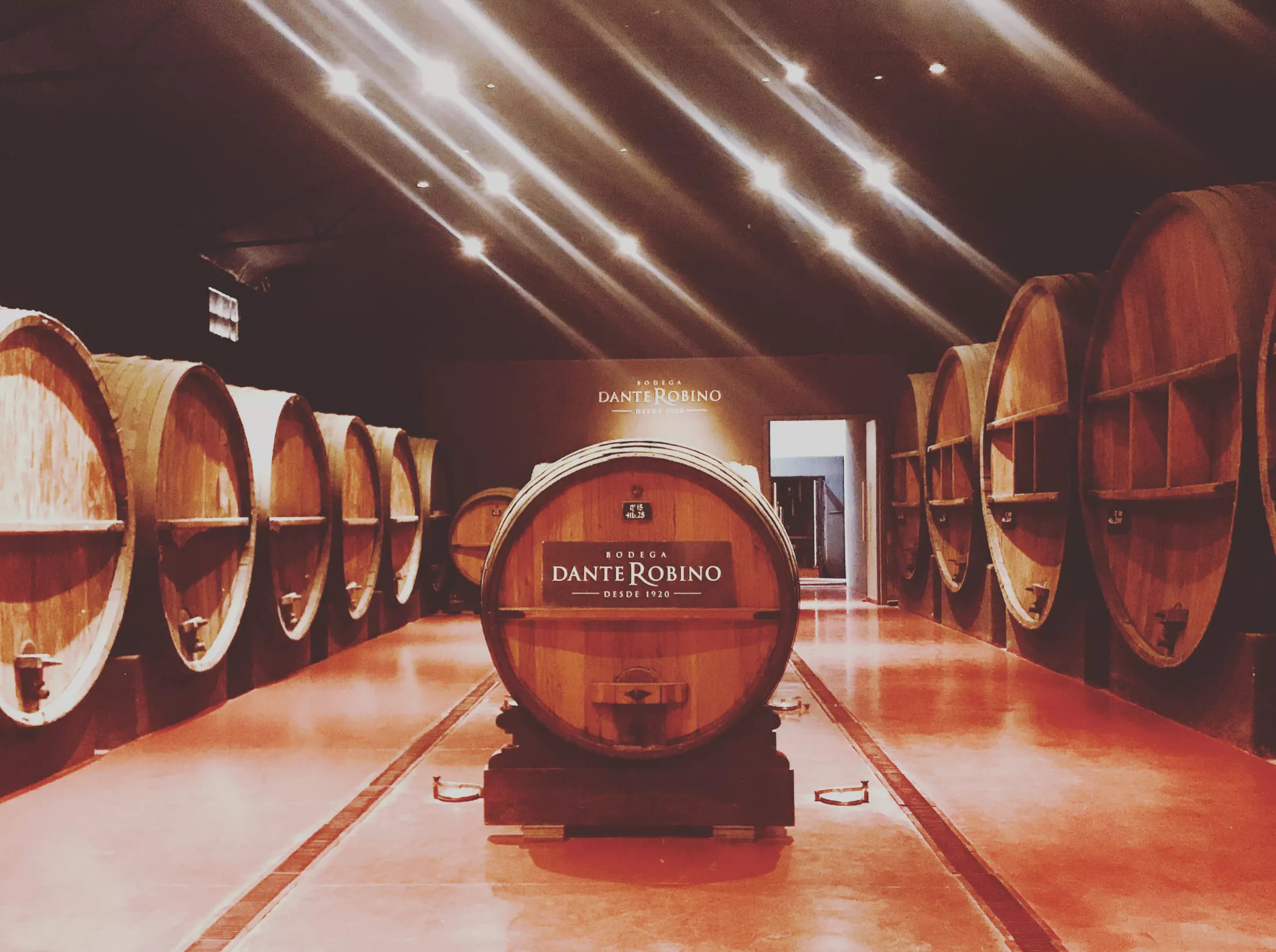
It's good to eat good food and enjoy the warmth again. Perhaps a visit to a vineyard or spa is tempting.

It's good to eat good food and enjoy the warmth again. Perhaps a visit to a vineyard or spa is tempting.

Hotel

-,-,-

Day 21:Quiet days in Mendoza

If we reached the summit on the first night, we have this day to relax, go shopping, eat good food, and drink good drinks. Mendoza is a very pleasant city, and it's just a matter of enjoying our time here and gathering our strength after a fantastic expedition.

If we reached the summit on the first night, we have this day to relax, go shopping, eat good food, and drink good drinks. Mendoza is a very pleasant city, and it's just a matter of enjoying our time here and gathering our strength after a fantastic expedition.

Hotel

-,-,-

Day 22:Departure from Mendoza

Day 23:Oslo

Fly to Mendoza. Flights are not included, but if you want us to help you with flight bookings, please contact us. Meet up is in Mendoza on Day 2. Here you will meet your guide and the rest of the group.
Once you arrive in Mendoza, you will be picked up at the airport by our local partner and they will take you to our hotel in Mendoza. Once at the hotel, you will meet your guide and the rest of the group. Mendoza is a very pleasant city, offering good wine and the most tender steak you can imagine. Depending on how tired we are, we can go out for dinner and explore Mendoza or go to bed. Although the next few days will be spent planning the upcoming expedition, we will also have time to enjoy Mendoza.
Hotel

-,-,-

Today we will arrange national park permits, check all our gear, pack and make any final purchases. If there is time, we can take a walk around Mendoza and enjoy city life. Mendoza has that distinct atmosphere of being the last stop before the mountains. You're bound to run into fellow climbers who have already been up there and are happy to share their stories and tips.

Hotel

F,-,-

After breakfast, we depart from Mendoza by bus. Our first stop is Penitentes, where we will prepare our large duffel bags for transport by mules. From there, we head to Punta de Vacas (2400 m), the starting point of our trek. After a quick check-in with the park rangers, we begin our hike into the Vacas Valley. Today’s trek follows the Vacas River up to our first camp, Pampa de Leñas (2,950 m). You will only carry a daypack, as the mules transport the rest of the gear. Upon arrival, we’ll be served an authentic asado criollo—a traditional barbecue prepared by the Gauchos. The adventure has officially begun!

Tent

B,L,D

3 hours

5 hours

Today we are going to Casa De Piedra at 3,240 meters above sea level. This is a slightly longer hike of about 7 hours. It is a great day's walk and it is exciting to finally see the top of our mountain in the distance! We will have lunch along the way. Another festive dinner from the arrieros awaits! Casa De Piedra is a great camp where we can relax and look forward to tomorrow's river crossing. We will be walking on rocks a lot, so good hiking boots are important.

Tent

B,L,D

7 hours

Today we reach Plaza Argentina. We enjoy a delicious lunch along the way. Salted snacks, crackers, and chocolate taste amazing. Plaza Argentina is the base camp on the east side of the mountain, located right at the foot of the mountain. On the way there, we have to cross a river, and if the water level is high, we get a little horseback ride thrown in for free. It takes us about 8 hours to reach base camp, so it's nice to get into the dome tent upon arrival. Here we are served a 3-course dinner with a steaming cup of tea or coffee. Afterwards, we crawl into our sleeping bags and enjoy the clear mountain air. From this day on, the program may be adjusted day by day depending on the weather and how we cope with the altitude.

Tent

B,L,D

8 hours

+1000m

Acclimatization day with lots of rest and relaxation. We relax at Base Camp, read books, and enjoy life. We also make preparations for tomorrow—i.e., packing equipment to be transported up to Camp 1. A short hike up the slope is also a good idea, considering tomorrow's new heights.

Tent

B,L,D

There is a lot of equipment to carry for a large group with a healthy appetite. Tents, stoves, food, and personal equipment that we need higher up in the mountains. We walk slowly, because we are now high up and the air is thin, and we feel the weight we are carrying. We will walk up at a snail's pace so that our bodies can gradually acclimatize to the altitude and the extreme conditions. Once we reach 4,800 meters above sea level, we set up Camp 1. We eat our lunch and breathe in the thin air before returning to Base Camp for the night. All in all, the trip up and down takes about 8 hours. Once back down, dinner and our sleeping bags await us.

Tent

B,L,D

8 hours

600m/600m

A real day of rest at base camp. We will eat three meals and pack our personal equipment for tomorrow's move. Otherwise, we will sunbathe, read books, engage in lively conversations, and mentally prepare for life above base camp, which will be simpler than our luxurious life here.

Tent

B,L,D

We leave behind the mess tent, three-course dinners, and the luxury's of base camp life. Now we have to carry everything we need higher up, and the backpacks get heavy. We will sleep in thinner air and set up camp at Camp 1. The climb up is tough enough in itself, but we have been here before. Fortunately, we have acclimatized well to the altitude after several days of following the “walk high, sleep low” principle. It will be an early evening after catching our breath and re-hydrating.

Tent

B,L,D

+600m

Carrying day to Camp Guanacos. This is a tough day and we spend about 5-6 hours going up and down. We eat lunch at Camp Guanacos – and try to endure the thinner air for a little while – it feels good when we get back down to Camp 1. Dinner at Camp 1.

Tent

B,L,D

600m/600m

A rest day combined with just a little movement keeps us in the necessary shape for the summit. Deck of cards, sleeping mats, and good food make this a great and relaxing day. We analyze the weather forecasts and plan our strategy for the coming days. The rest day may be canceled if the good weather window is slipping away, or we might get another rest day down here if we are waiting for better conditions.

Tent

B,L,D

Moving day up to Camp Guanacos. We eat breakfast and lunch at Camp 1 and linger a while before moving on. The move takes 3-4 hours. We eat dinner at the new camp. Now the weather reports are becoming crucial – go or no go...

Tent

B,L,D

+600m

After yesterdays move to new heights, we take a new rest day to ensure we gather energy for the upcoming summit push. We eat, drink and move a little around camp. If the weather window is closing in, this rest day might be cancelled. We will then move to higher grounds to get ourselfs in position for the summit.

Tent

B,L,D

We eat breakfast at the Guanacos camp and linger here for a while. The move takes 3-4 hours, depending on the weather and our fitness. Now we feel that the summit is calling us! We set up camp, eat lunch, and crawl into our sleeping bags. After that, we make our final preparations before the summit night—packing and getting our equipment ready. We don't get much sleep here, because now we are excited.

Tent

B,L,D

+600m

This is a tough day! If the weather permits an attempt on the summit, we will set off early in the morning. This is a hard session, so we will take it easy and have regular breaks on the way up. We will use crampons if conditions require it, but it is not a technical trip. The summit push has many milestones on the way up: Independencia and the windswept hut, the really tough and long traverse, and not least the steep and tough canaleta. We have to fight for every step and every meter up, but the struggle is rewarded with happiness and a view you will never forget! From the summit, it takes about 3-4 hours to descend to Camp Colera. It will be a good night's sleep. We have set aside three days for the summit attempt to give you the best possible chance of reaching the top of South America's highest mountain.
Tent

B,L,D

1000m/1000m

If we have reached the summit, we will start the descent to Base Camp in the morning. We will have breakfast at Camp Colera and save lunch for Camp 1 or possibly Base Camp. We will need to clear away and carry down all the equipment we have at Camp Colera, Guanacos, and Camp 1. It will be hard work, but we will make it down. The descent to Base Camp takes 5-6 hours.

Tent

B,L,D

-1700m

If we reached the summit on the first night, we will begin our journey out of the mountains today! Where we spent three days on the way in, we will now spend a day and a half on the way out. A beautiful but hard day. We eat breakfast at Base Camp and set off when it is light. We walk about 30 kilometers to Pampa de Lenas, the first camp we stayed at on the way in. We treat our blisters and enjoy the fantastic view and the fact that we are almost alone in the valley. The last night in the tent will be good, and now we are looking forward to a proper bed, red wine, and a proper steak dinner.

Tent

B,L,D

-1400m

30 km

If we reached the summit on the first night, we will leave the Andes today. We will eat breakfast at the camp before cleaning up and walking the last mile out of the mountains. At the warehouse in Penitentes we re-organize our gear before we head back to Mendoza. The official program ends after we return to Mendoza.

Hotel

B,L,-

3 hours

It's good to eat good food and enjoy the warmth again. Perhaps a visit to a vineyard or spa is tempting.

Hotel

-,-,-

If we reached the summit on the first night, we have this day to relax, go shopping, eat good food, and drink good drinks. Mendoza is a very pleasant city, and it's just a matter of enjoying our time here and gathering our strength after a fantastic expedition.

Hotel

-,-,-

What's included in the price

Included

 2 nights before we head into the mountains, and 1 night upon arrival back in Mendoza after the mountains. 

Round trip Mendoza - Aconcagua National Park

A daily journal on our website

1 porter pr. 4 participants, for carrying common gear like tents, stoves and fuel.

Not included

Flights to and from Mendoza is not included.

Must be booked directly with the airline after the ticket has been issued, or purchased directly at the airport. Prices vary from airline to airline.

Meals beyond what is specified in the program

Accommodation in Mendoza after the mountain, approx. USD 170 per person/per night in a double room. (Max. 3 nights if we reach the summit on the first possible summit day) If you for what ever reason return to Mendoza before the scheduled program, any cost for extra accomodation is covered by the participant.

Approximately USD 1000 - 1400 (must be paid in cash in Mendoza)

Tips for cooks/assistants at base camp, local guides, muleteers, etc. Approx. 200 USD. 

Calculate approx. USD 400 as a minimum (for various shared equipment).

USD 2115 (Cost includes: 20 kg from BC to Camp 1 / 20 kg from Camp 1 to Camp 2 / 20 kg from Camp 2 to Camp 3 / 20 kg from Camp 3 to BC)


In addition, it is a good idea to bring extra USD in cash beyond what is summarized above. Everything in the mountains is paid for in cash!

Unforeseen expenses due to delays caused by weather or safety assessments. See our travel conditions.

Other Information

Bring all your USD from Norway. Feel free to order this at Gardermoen in advance, so that you can be sure to get what you need. 

Terms and conditions

We reserve the right to change prices. The day by day program is indicative and changes may occur. We also refer to our general travel conditions.

Travel insurance

On all our trips, we require you to have full health and accident insurance which will also cover any transport home. read more about travel insurance.

Highlights

Reviews

Rated
-
- reviews
(-)
(-)
(-)
(-)
(-)

Safety & Grading

Read more

For departures with Norrøna Adventure guides:

  • 24-hour emergency response
  • Guides trained in first aid in the field
  • Basic first aid equipment available
  • Cooperation with Turlegen.no for medical advice

On this trip, it is important to understand that we will be traveling far off the beaten track. We will of course do everything we can to assist if anything should happen, but any rescue operation could take longer than on other trips we organize. It is therefore extremely important that all participants are well prepared and ready to deal with unforeseen situations. 

Physical level

5/6 Physical

These tours are our most rigorous. Be prepared for multiple days of intense effort to achieve the objective. They demand both physical and mental stamina, necessitating thorough preparation for participation. The trips often go to colder areas and/or at high altitudes, and you have to carry or pull heavy loads. The equipment plays an important role, and the trip places great demands on you as a participant. The guide is responsible for carrying out the tour, but you as a participant are responsible for being sufficiently prepared so that you can take responsibility for yourself along the way.

Comfort level

1/6 Comfort

We overnight in tents. On these trips, the participants take part in camp routines such as setting up camp and cooking meals.

Risk level

5/6 Risk

Activities/trips with a high risk. Incidents occur, and they can entail the risk of serious injury. The availability of professional help is often limited.

Training and Preparations 

This is a tough trip, but manageable if you prepare well. You must have experience from trips in high mountains, such as Kilimanjaro, Island Peak, Elbrus, or other expedition experience. If you are unsure about your own experience, please contact us. Few places will have you struggle as much as in the loose gravel up to Camp 1, or in the infamous Canaleta towards the summit. This is a major challenge!

We transport most of the luggage to base camp on mules, but from base camp and up the mountain we have to carry food and equipment ourselves. It is therefore important that everyone is prepared and trained to walk with a large backpack weighing up to 20-25 kg.

In good weather, we normally have a good chance of reaching the summit. However, when the weather turns bad, we also have trips where no one reaches the summit. The weather is the main reason why people do not reach the top. If you sign up for such an expedition, you must understand that safety comes first.

Much of your training should consist of carrying a backpack for several hours and exercising at a relatively high heart rate. In addition, strength training will build a solid foundation for the heavy loads. You must have spent a lot of time hiking in the mountains in bad weather and over several days. To succeed, you must have control over the following:

  • Altitude, previous experience required.
  • Good physical condition, training with a heavy backpack is important.
  • Enjoy sleeping in a tent for long periods, even in bad weather.
  • Have fun on the trip.
  • Be sensible, walk calmly, follow the guides' advice along the way.

Group Meeting

Well in advance of departure, we gather all participants for a review of the trip at a group meeting in Oslo. Attendance is not mandatory, but it is highly recommended that everyone take the time to attend. We go through the equipment list and discuss the itinerary, altitude, and safety. 

Visas, Vaccinations and Health

Before embarking on our journey together, we kindly remind all tour participants to check their respective country's visa status and vaccination requirements. Ensuring your travel documents are in order is a crucial step in guaranteeing a smooth and hassle-free adventure.

Participants need a valid passport (normally valid for at least 6 months after the date of return). Check for your country's current visa rules

If you are over 67, you should have a thorough medical check-up before your trip. Make your doctor aware that this is a trip involving physical exertion and moving off the beaten track.

It is important that you complete all parts of the registration form (especially where we ask for information about health and allergies), and let us know if there is anything we need to be aware of prior to and during the tour. Relevant health information that may affect the tour should also be communicated to the guide at the start of the tour. *Note* - If you are on regular medication, have known allergies or anything similar, you must always bring your personal medication with you.

See the overview on FHI's pages on travel vaccines. For vaccination and guidance, please contact Sentrum Reisemedisin: www.reisemedisin.no.

Additional Information

Flights are not included on this trip so it is important to check whether the departure is guaranteed or not before booking your flights for the trip. On each departure, we must have a minimum number of confirmed participants before we can guarantee the departure.

During this trip we stay in shared twin rooms at hotels and mountain lodges of good standard. Private rooms are availble on request. It is recommended that all participants bring their own personal climbing equipment for this trip, but it is possible to rent equipment such as a climbing harness, helmet, crampons and ice axe in advance in Mendoza. 

It is not always easy to get hold of gluten-free wholemeal bread, lactose-free alternatives or to accommodate other food preferences. If you have any allergies, please let us know in the registration form and we will try to accommodate you as best we can. However, we would still recommend that anyone with special dietary needs bring some alternatives in the form of, for example, a packet of crispbread, energy bars or similar that you know you can eat.

Equipment list

This list is intended as a guideline, so that we have what we need regardless of the weather we get on the trip. Remember that you can also get used outdoor equipment that works perfectly. Get in touch if you have any questions. TIP: We recommend that you have the most important equipment in your hand luggage, for example hiking boots and gore-tex jacket/trousers.

Obligatory

Clothing

We recommend wool underwear for both men and women. Wool sportstop is recommended for women.

Two layers for extra cold conditions: for example, combining wool or synthetic mesh next to the skin, with regular wool underwear on top.

We recommend bringing several pairs of wool socks in different thicknesses. Be sure to have a thick, clean pair for the summit night.

The thicker the better, with good "resilience", which means that they should not have gone flat. Around 80% wool.

We recommend thin wool.

Thin fleece for the days before base camp + a thicker one for the days above BC. Possibly a thin fleece + thin down/primaloft jacket.

Warm, light, and long - down is strongly preferred. It should be big enough to fit over everything else, have a hood (preferably helmet-compatible), and cover the butt.


Gore-Tex or equivalent. Must withstand wind, rain and snow, and have a decent hood with room for the climbing helmet.

Gore-Tex or similar. Must hold out wind and rain. Ventilation zippers along the legs is recommended.

Warm hat for cold days.

Thick, warm, large mittens are important. Make sure you have plenty of room inside and that they are long. There are several good expedition gloves in down/primaloft.

Warm ski mittens/gloves.

Footwear

Large, warm boots with removable inner boot, for example Millet Everest or La Sportiva Olympus Mons. If you know for sure that your feet don't freeze easily, the Scarpa Phantom 6000, La sportiva G2, or Kayland 6001 can also work. In any case, the boot should be roomy so there is room for thick socks.

Solid, with a solid sole. Such as approaches shoes.

Equipment

Osprey's Airporter or Fjällräven's flight bag can be smart to cover your big backpack, both on the flight and back to base camp on the mules. NB: Check that it fits your bag! Alternatively, you can send the bag as it is, or pack everything in a large duffel bag.

Needs to have space for everything you want to bring on the hikes.

Good, warm sleeping bag that can withstand -30°C in comfort temperature. We recommend down. They are lighter, and become smaller in package volume. 

2 pcs. One light and comfortable inflatable, and one small and light made of cellular plastic. Ex: Thermarest Z-lite, and Thermarest NeoAir.

Waterproof pack bags to keep your clothes and gear dry, organized, and help reduce volume. It is especially important to have dedicated waterproof bags for essential equipment on your trip, such as your sleeping bag, down jacket, and electronics.

They can be used in your backpack while hiking or skiing, in your sled bag on ski expeditions, or in your duffel bag on trips where the bag is carried by porters, mules, or similar.

Tooth brush, tooth paste, small towel, ear plugs, wet wipes, biodegradable soap, etc.

Toilet paper, antibac, and waste bags for the paper. Remember leave no trace.

2-3 litre bottles, with an insulation cover, so they dont freeze. For example Nalgene bottles with wide mouth. They can handle hot water, so you can use them to keep warm in the sleeping bag.

Compact and light.

Preferably a spoon with a long handle if you are going to eat freeze dried food.

High SPF, 30-50. Remember chapstick for lips and nose. 

Good sunglasses with dark lenses, that do not let light in between the frame and the face. Grade 4 glass.

Passport, tickets, bank card, proof of vaccination andproof of insurance. Remember to have a copy of important documents on your phone and/or somewhere in your bag. 

Alpine snow glasses. To protect your face and eyes in snow, wind and cold conditions.

Check that they fit the boots. NB: Choose steel - aluminum crampons break easily when we walk on stone/gravel with heavy equipment.

Should be light, and have room for a thick hat underneath. It should also be possible to attach a headlamp to the helmet.

Recommended

Clothing

Down or synthetic insulation.

Down or synthetic insulation. Should be roomy, making them easy to wear over shell pants, preferably with a full-length side zipper. 

Thin, ultra light.

Bring a hat that protects you well from the sun! Preferably with neck protection and extra wide brim.

Thick, wool.

Can also be used inside the down mittens.

Footwear

For warmer days, camping, and crossing rivers (recommend a full coat so they don't disappear in the river).

Equipment

Personal medicines and, for example, band-aids, blister plaster, sports tape, throat lozenges, nasal drops, Paracetamol/Ibuprofen, stomach regulators, etc.
We need to know about all medicines you are taking, in case something happens. 

As light at possible. 

Chocolate, nuts, raisins, etc. It might be a good idea to make yourself a small bag with something good you really like for the summit day. 250-300g is enough!

Choose a knife with some tools. A light Leatherman, etc. Everyone do not need to bring this. Feel free to discuss internally in the group before departure.

Should hold 1-1.5 litres. Nalgene water bottles work well, in a screaming color so you recognize it. For girls, a pee funnel is recommended, see for example www.freshette.com. Can be bought in some sports shops and pharmacies. Practice at home in the shower before the trip!

Recommended trips

Testimonial

Reaching the summit of Aconcagua was an unforgettable experience, but what I will remember most is the sum of all the wonderful experiences and impressions from the entire trip. 

– Gaute, 2020

Testimonial

An absolutely unforgettable trip where everything was perfect down to the smallest detail, from the guides' ability to come up with a new plan to make a top attempt despite the weather not being on our side, to the delicious hot dogs at the barbecue in the last camp.

– Stephanie, 2020

Testimonial

Fantastic trip. An amazing experience!

– Stian, 2020