08.12.2026
We offer several different trips to Nepal. Here, we explain a little about what you can experience in terms of mountains, nature, and culture on the various trips.
Annapurna Sanctuary
The Annapurna Circuit used to be one of Nepal's most popular trekking routes. Today, road development has made the circuit less appealing to hikers, and the Annapurna Sanctuary has taken over as the most visited trip in this part of Nepal. This is a ten-day trek from Naya Pul to Phedi, via the Poon Hill viewpoint and the base camp of Annapurna 1 (8,091 m above sea level).
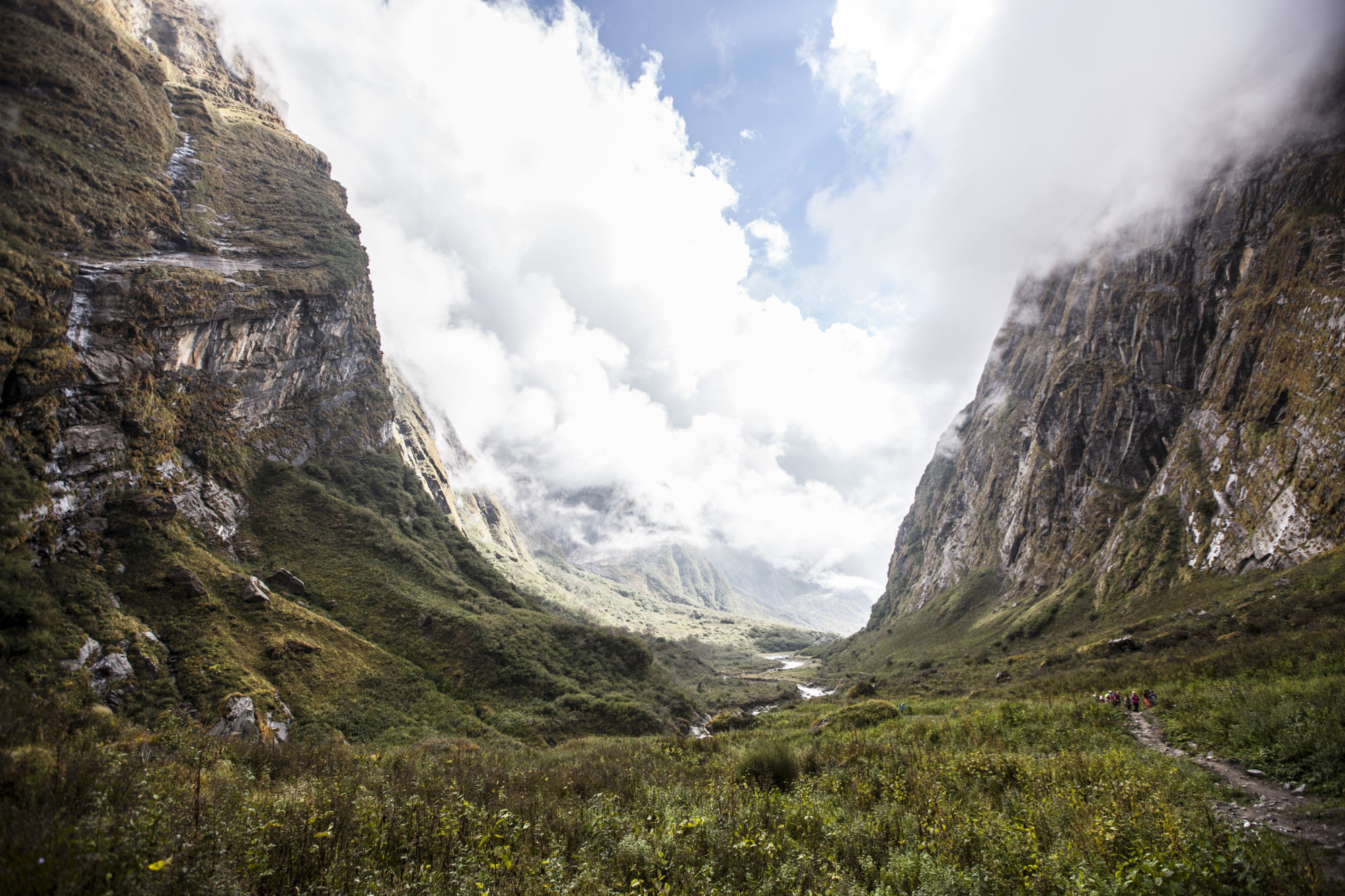
The Annapurna Sanctuary has been named the world's most beautiful treks on multiple occasions, and it can be hiked every spring (late March to early May) and autumn (late September to late November). In the spring, you can experience fantastic rhododendron blooms. The daily stages last up to eight hours at a leisurely pace. The terrain is hilly, but because time is taken to acclimatize properly and you rarely go much higher than 4,000 meters above sea level (Annapurna Base Camp sits at 4,130 m), few people experience issues with the altitude on this trip. In addition to being a great nature experience, this is also a cultural journey—along the way, you come close to the small local communities along the route.
Everest Base Camp – With or Without Lobuche (6,119 m)
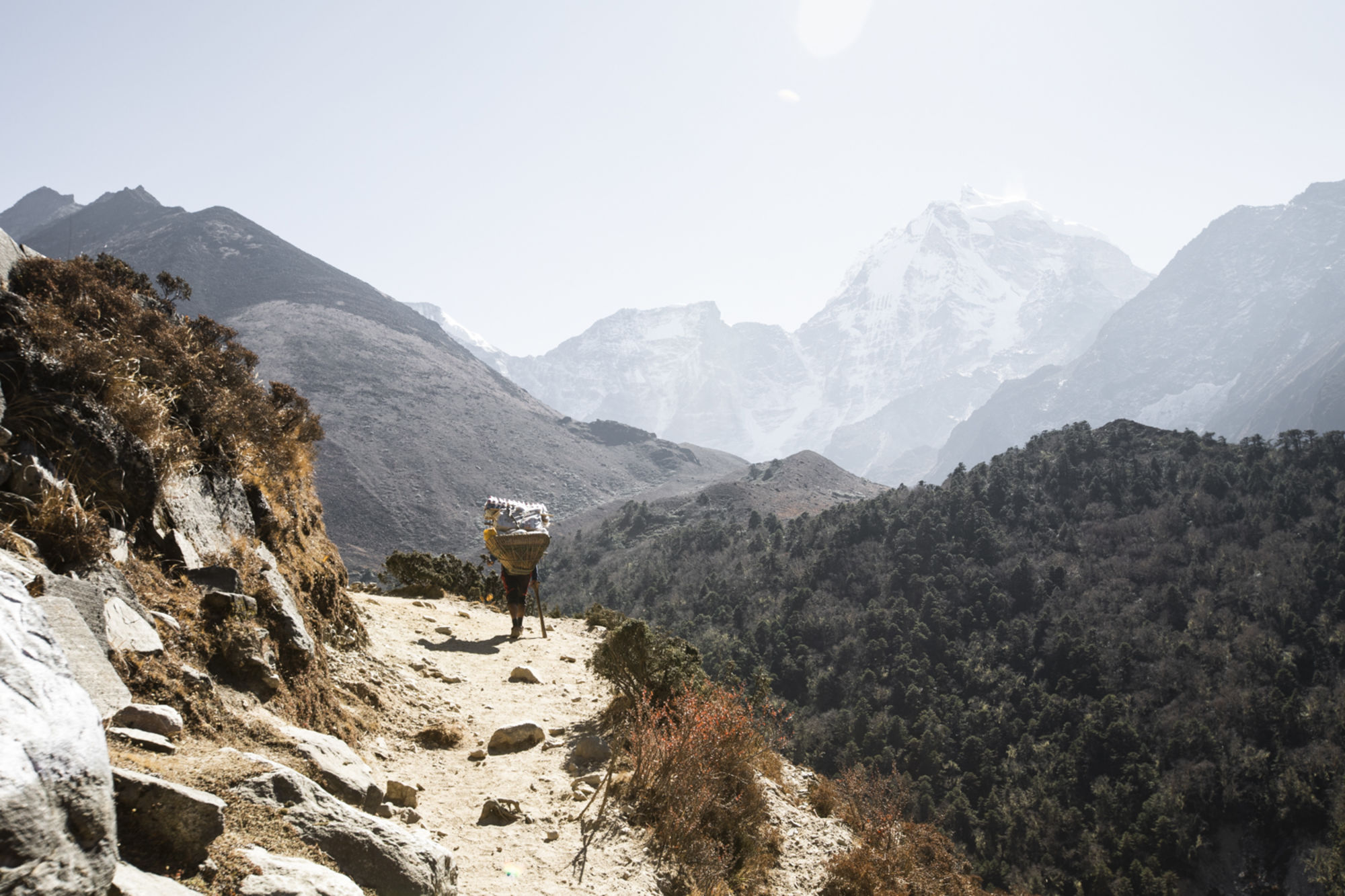
This trek is world-famous - and well-visited! The trek into Everest Base Camp is in many ways one of the grandest things you can do with hiking boots on your feet. On this nearly two-week-long mountain trek, you get truly up close to several of the world's highest peaks, including Mt. Everest (8,848 m), Lhotse (8,516 m), and Nuptse (7,861 m), while experiencing Sherpa culture firsthand. Along the way, the route passes monasteries, spectacular suspension bridges, small villages, beautiful valleys, and leads to Everest Base Camp at the foot of the mighty icefall beneath the world's highest mountain.
The trek takes place at a relatively high altitude (Everest Base Camp lies at roughly 5,300 m), so take your time heading up the Khumbu Valley, and consider adding a rest day or two along the way.
Spring is the only climbing season for Mt. Everest from the Nepalese base camp, so if you want to experience the expedition culture in Everest BC, you must travel in March, April, or May. Otherwise, the season is roughly the same as for the Annapurna Sanctuary. Here too, there are beautiful rhododendron blooms in the spring, but because the air is often clear with better visibility after the summer monsoon, many prefer to do the trek in the autumn.
The vast majority of people trekking to Everest Base Camp also include a visit to Kala Pattar (5,545 m), which many consider the world's most beautiful viewpoint. If you have a bit more time and want to climb a "real" Himalayan peak, the 6,119-meter-high Lobuche East is a natural side trip. Summiting a peak over 6,000 meters is demanding and naturally makes the journey longer and tougher. If none of our scheduled departures fit your plans, get in touch and we will help you organize a private departure whenever you wish to travel.
Manaslu Circuit – For Those Seeking the True, Untouched Himalayas
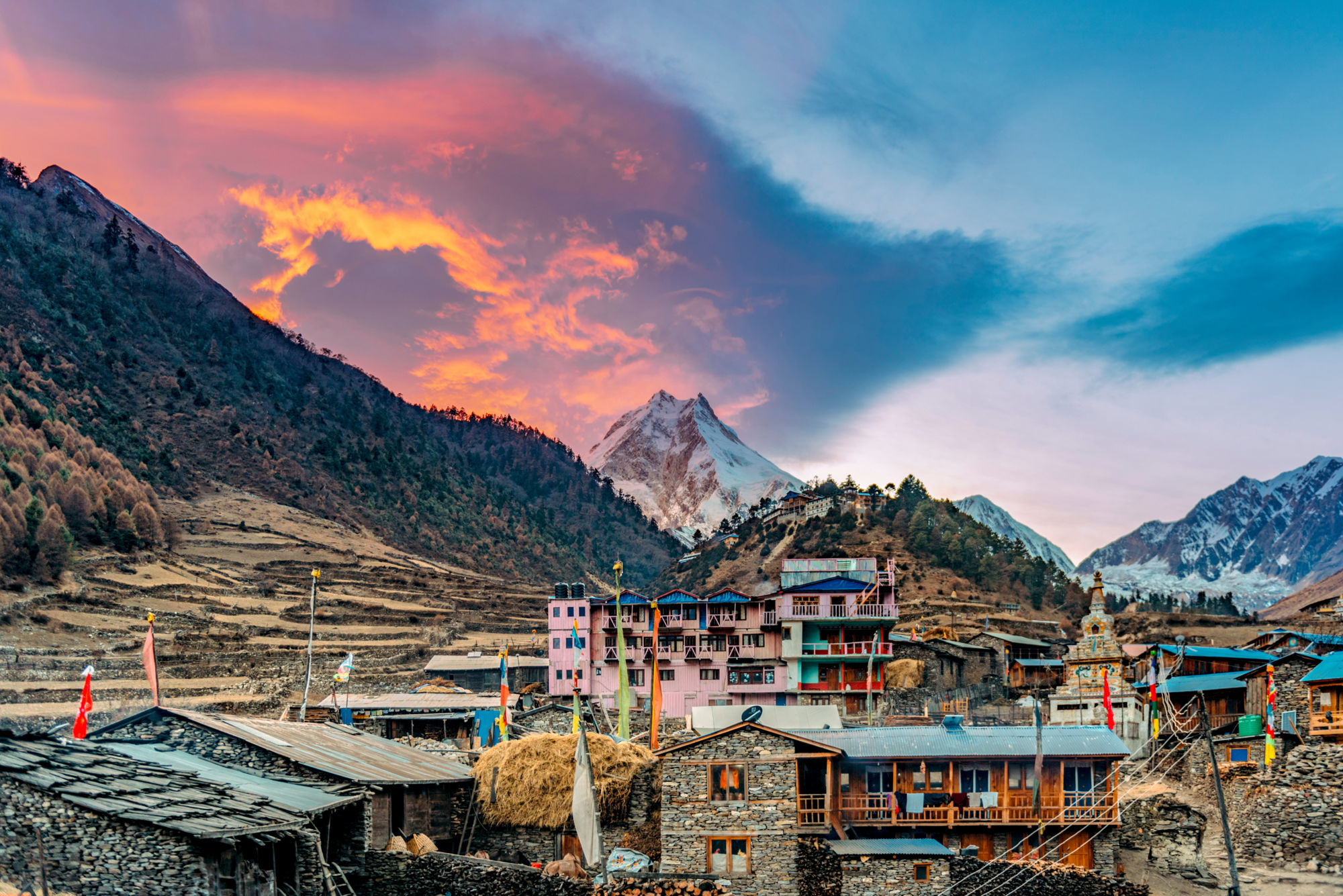
If you dream of towering peaks but want to avoid the crowds, the trek around Manaslu - the world’s eighth-highest mountain at 8,163 meters - is an absolute gem in Nepal. Located just east of the more famous Annapurna region, Manaslu offers a completely different sense of serenity. Because the area is tightly regulated, far fewer hikers venture here, preserving its wild, authentic, and undiscovered feel.
Your journey begins down in lush, narrow river gorges alongside the rushing Budhi Gandaki River. Along the way, you’ll cross spectacular suspension bridges and wander through dense pine forests before the landscape opens up into a stark, dramatic high-alpine terrain.
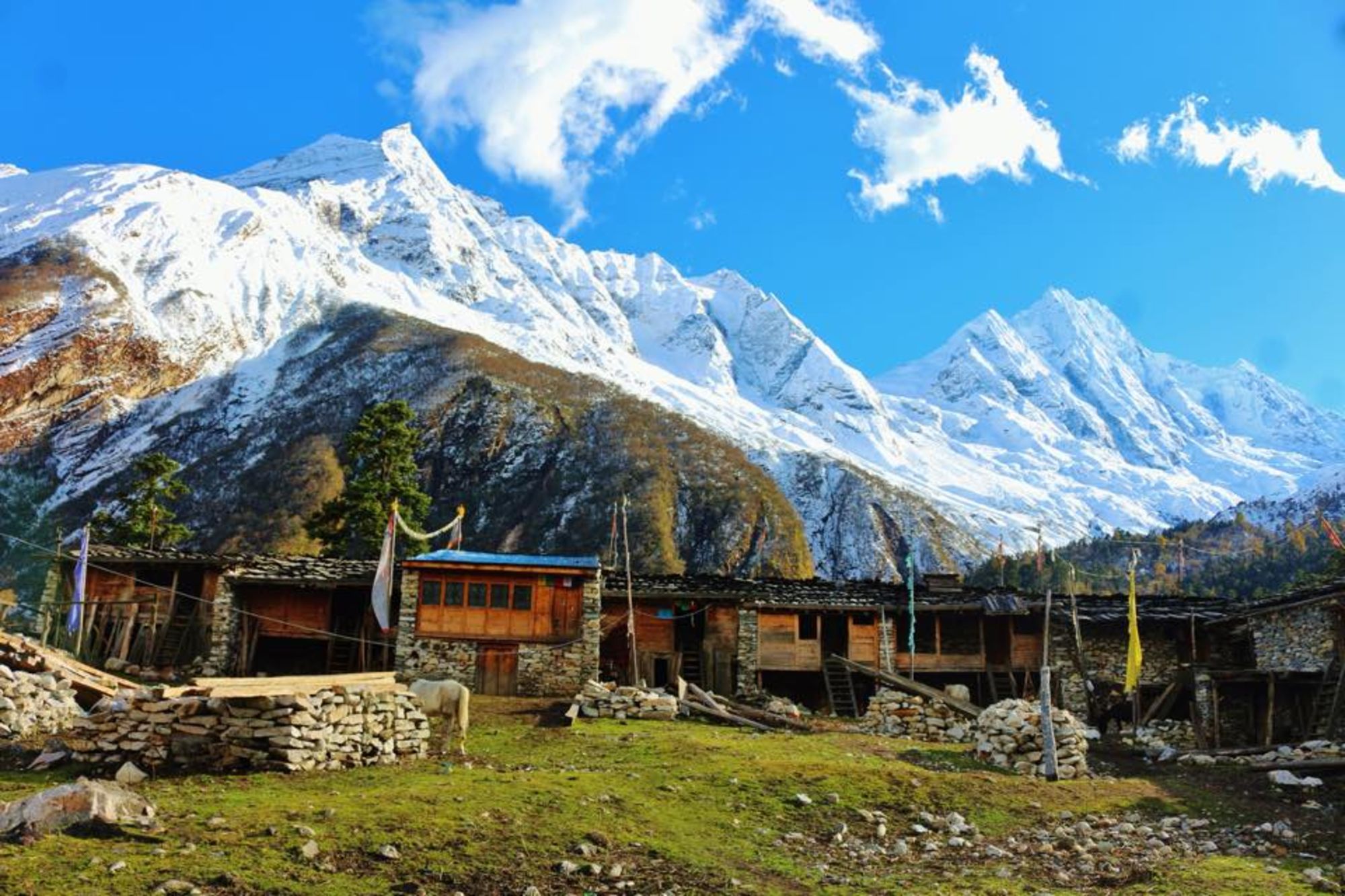
What makes this trek truly special is the rich culture you experience along the path. As you approach the Tibetan border, you get up close to isolated villages where time has seemingly stood still. You’ll pass ancient Buddhist monasteries, prayer flags fluttering in the wind, and colorful stupas, spending your nights in charming local teahouses that offer a genuine look into daily life in the Himalayas.
The ultimate highlight, both physically and visually, is crossing the mighty Larkya La Pass at 5,106 meters. As you stand at the top surrounded by towering, snow-capped giants like Himlung Himal and Annapurna II, you’ll quickly realize why this is considered one of the world’s most beautiful circuit treks.
This is the perfect trip if you are looking for a rewarding physical challenge, breathtaking scenery, and a genuine desire to experience the real Nepal just as it used to be.
Climbing Expedition to Ama Dablam
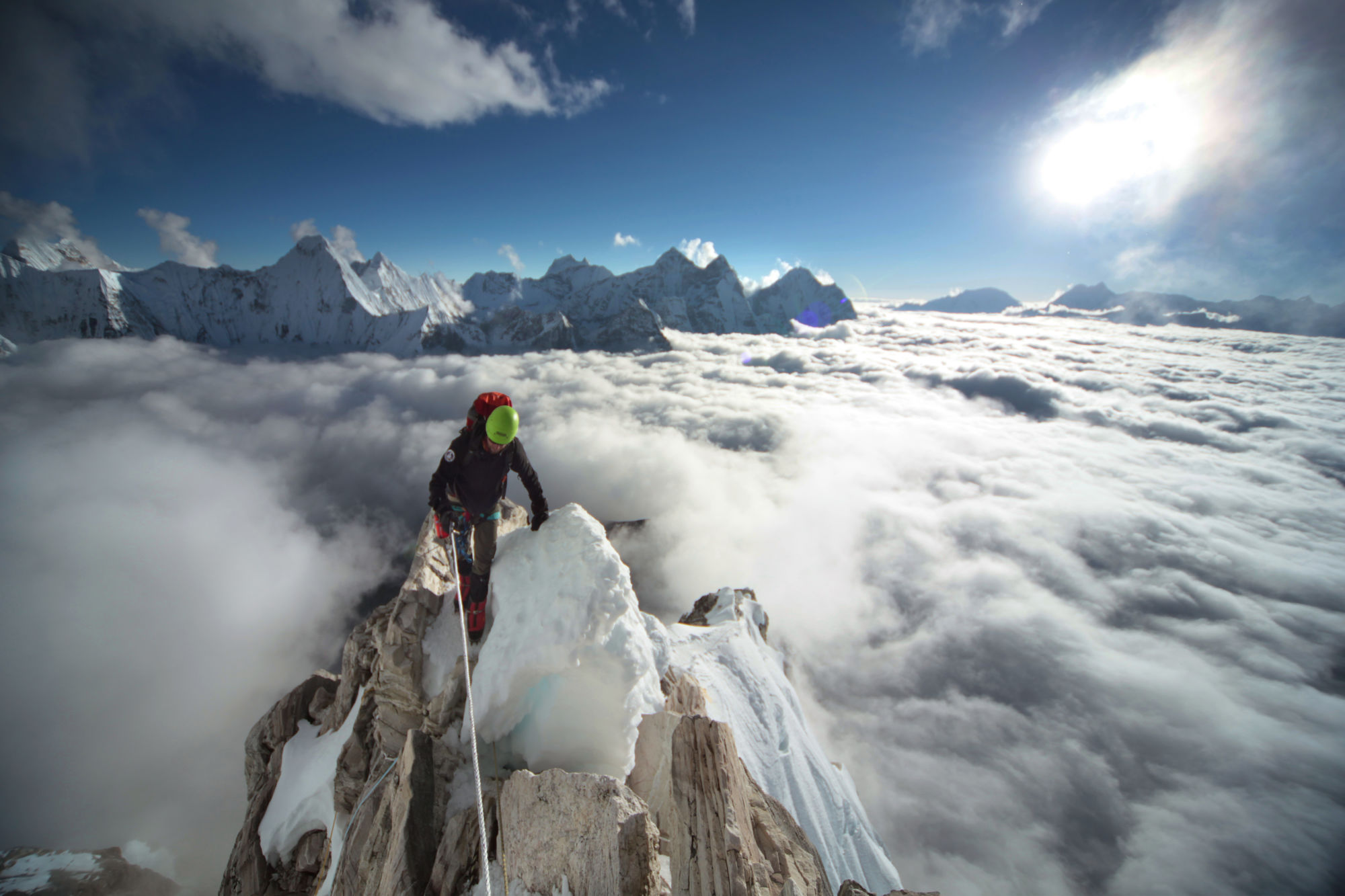
Ama Dablam is referred to by many as the world's most beautiful mountain, and that is no exaggeration. Anyone visiting the Khumbu region of Nepal is inspired simply by the sight of it. It is a high, technical peak featuring a mix of rock and ice climbing. The view from the summit of Ama Dablam, at 6,856 m above sea level, is truly unique. Surrounded by Mount Everest, Lhotse, Nuptse, Thamserku, Lobuche, and endless other 6,000-to-8,000-meter peaks, it is a formidable sight.
The world's most beautiful mountain is also a technically demanding peak at high altitude. This is an expedition that requires careful preparation—technically, physically, and mentally. You must be comfortable with significant exposure and moving through steep, high-altitude terrain.
Trek to Gokyo Ri
The glittering turquoise-blue lakes at Gokyo are a sight to behold! The lakes make up the highest freshwater system in the world at this altitude (5,000 m). On this wonderful circuit, we avoid the Everest crowds and enjoy great, varied views along the way. We will go on a summit hike, experience the Himalayas' largest glacier, trek through the Sherpa village of Khumjung, and gain insight into how people live here. We are constantly surrounded by 8,000-meter peaks towering above us. This is a great trek for those who want to test themselves at altitude for the first time.