06.05.2026
I was lucky enough to guide Norrøna Adventures pioneering trip to Ecuador in November 2019, with the Amazon rainforest and the mythical Galápagos Islands as highlights. A trip that was good to have in the memory book on days when our freedom of movement was severely restricted in what must have been the world's greatest volunteer effort!
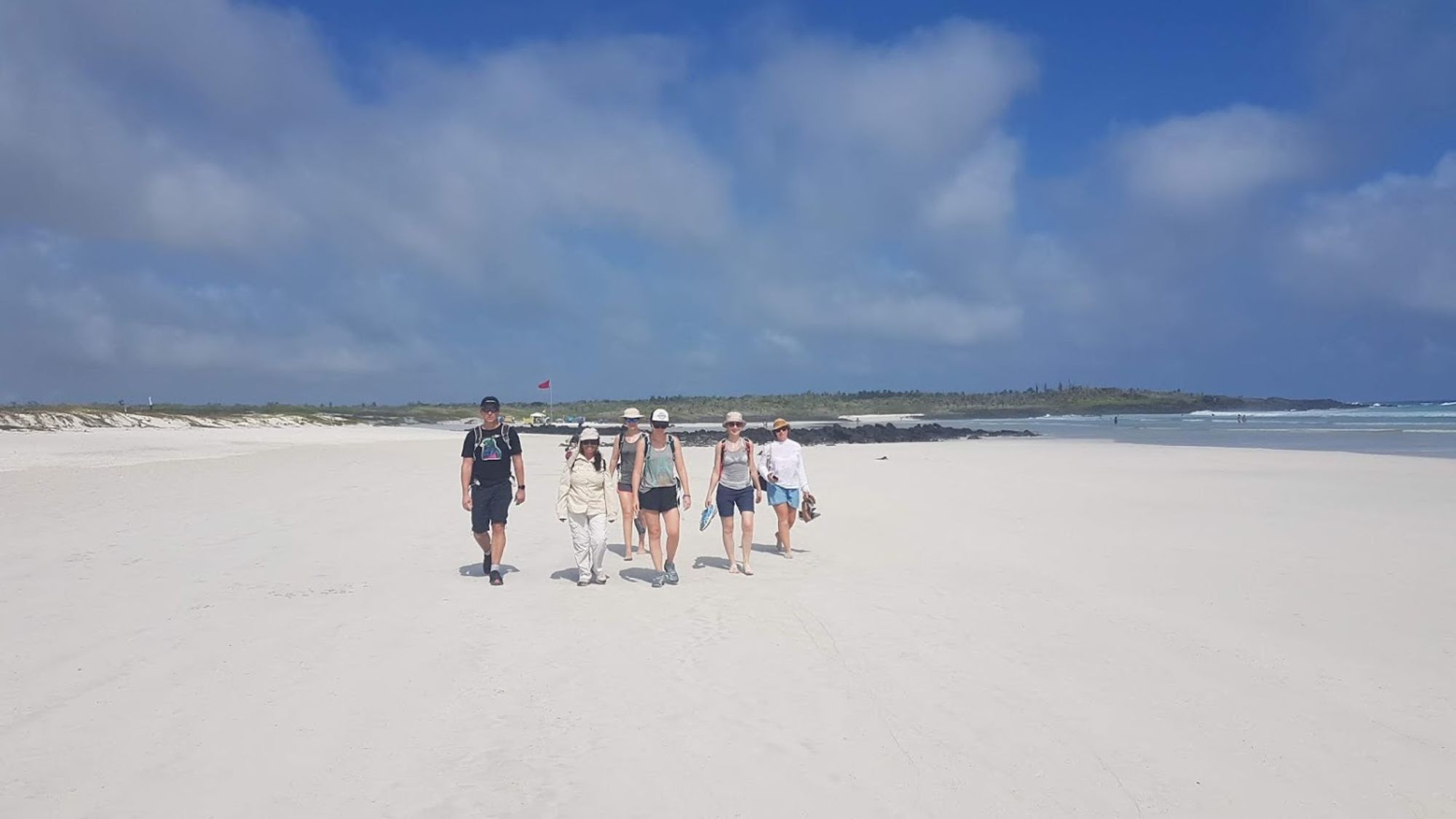
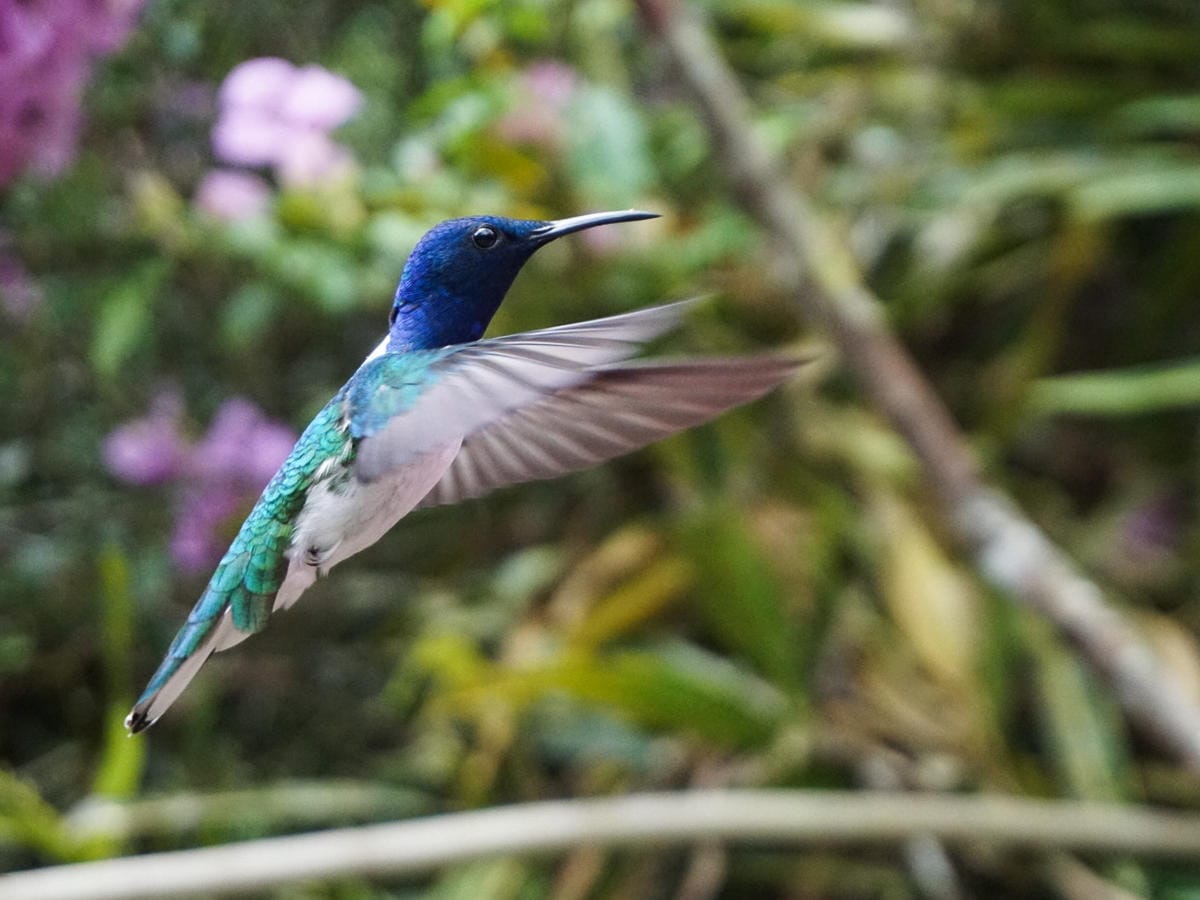
Can you imagine the smell of the humid Amazon forest and the taste of new and exotic fruits? Listen to the characteristic sound of the hummingbird bird that has up to 80 wing beats per second and the chorus of the playful sea lions on the island of Isabela. Feel the warmth of geothermal spring water on body and soul and the extremely fine-grained white sand between your toes, while imagining the sun setting into the sea in the Galápagos…
We were a group of excited northerners who met in Quito, the second highest capital city in the world at 2,850 m above sea level. The city is located at the foot of the active volcano Pichincha (4,784 m above sea level) and you can see both the Andes and the fantastically beautiful volcano Cotopaxi in the distance. Here the sun is usually high in the sky throughout the day, while the cold comes creeping in at night. The thin down jacket from the flight came in handy and was used extensively after nightfall.
In Quito we stayed at an incredibly beautiful art hotel, and the group with their hiking boots and down jackets were actually quite excited about how nice the rooms were. All the rooms were different and there was a lot of eagerness to rush between the floors, to see the wall art, secret balconies and other details.
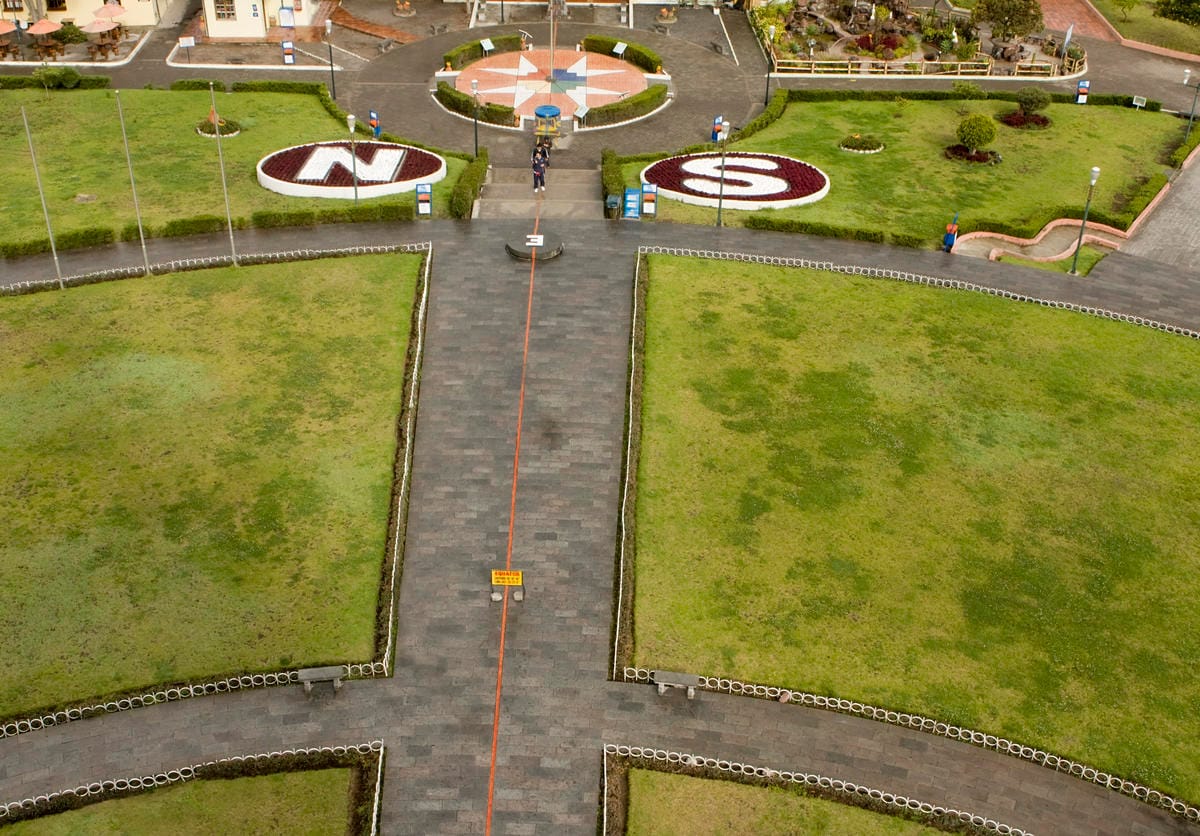
After a good night, we were ready for sightseeing in Quito, Ecuador's capital and the country's fastest growing city. Urban planning is unable to keep up with the increase in population, which now numbers 2.6 million people, and challenges regarding both transportation and housing are great. We got used to standing and stomping in traffic a bit, but it was nice to see everyday life in a completely unknown city and culture from the bus window. Patricio, our local guide, told and explained with great enthusiasm and we were happy to see "El Panecillo", which is a great viewpoint and where the statue of the saint of Quito is enthroned, a walk in the Old Town, which is on the UNESCO World Heritage List, and finally the equator itself - "La Mitad del mundo" - the middle of the world - which is actually Ecuador's most visited tourist attraction. The equator is the imaginary line that separates the northern and southern hemispheres. This line runs through Ecuador (hence the name of the country), and I think every single one of us got a picture of ourselves standing with one foot on each side of the equator - of course!
Big contrasts
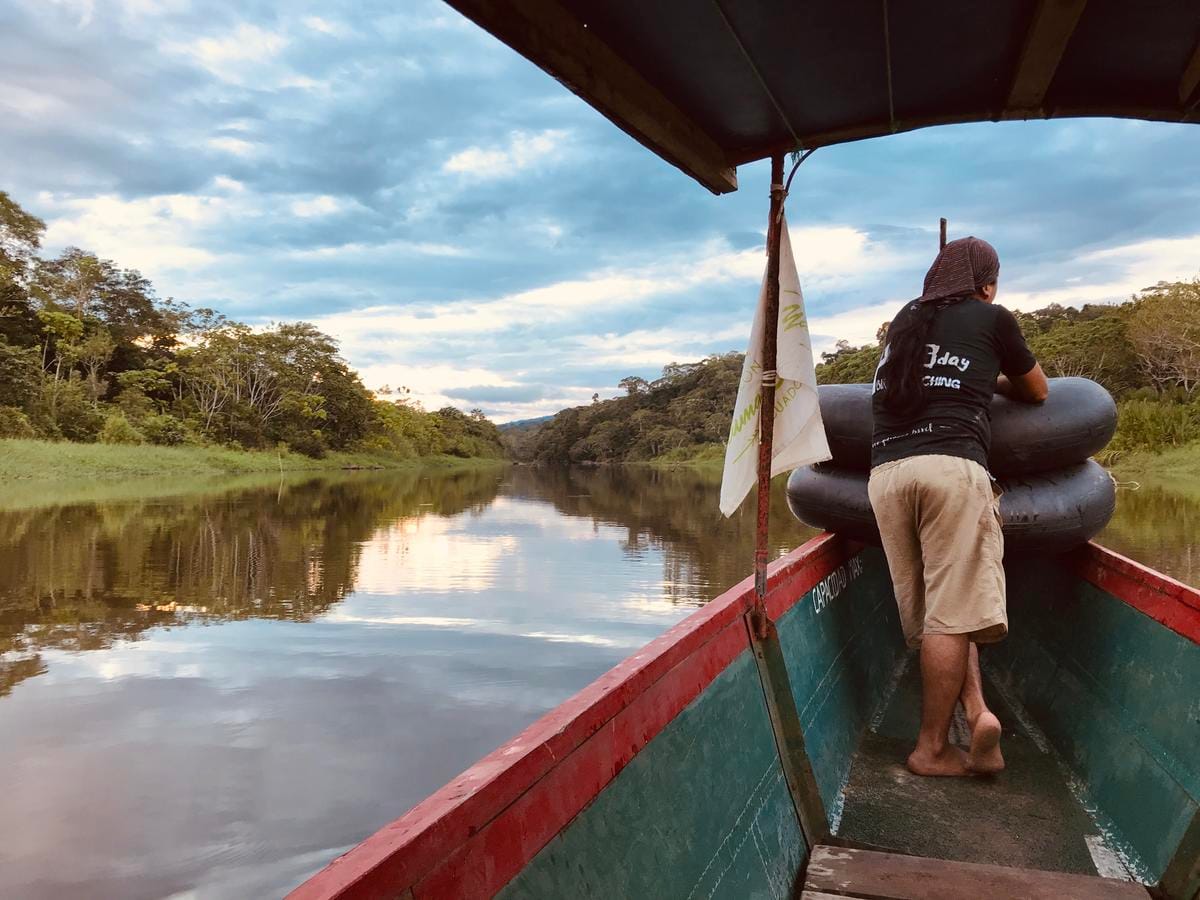
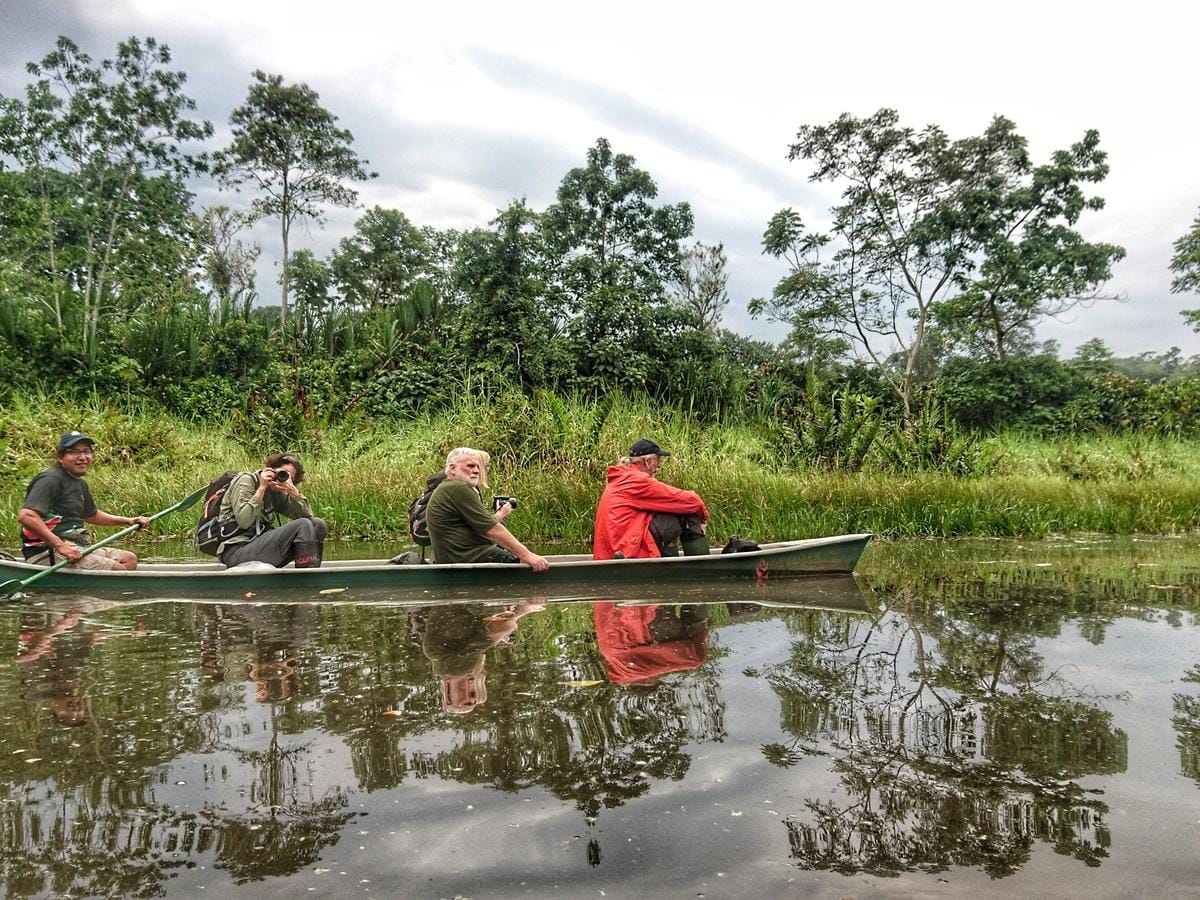
From Quito we drive east towards the border with neighboring Peru. It will be a day of enormous contrasts from art hotels and modern city life in Quito, via the mountains with small farms and poor farmers to rainforest and indigenous people. We reached the riverbank just before sunset and the heat and humidity hit us when we got off the bus. Twilight, the weak sunlight after the sun itself is below the horizon, does not exist in Ecuador as the country is located on the equator. The darkness caught up with us in record time! But with headlamps we were able to unload both luggage and Hvitserkere into small motorized canoes. We sat together, mouse-quiet, and listened to the incredible sounds of the jungle while the local guys navigated the canoes steadily, both upstream and downstream. It was both scary and exciting to do this trip in the dark, and once in port everyone realized that they would not have done without this particular journey on the Amazon itself in the twilight. What a start to our stay in the Amazon – it doesn’t get more Indiana Jones than this!
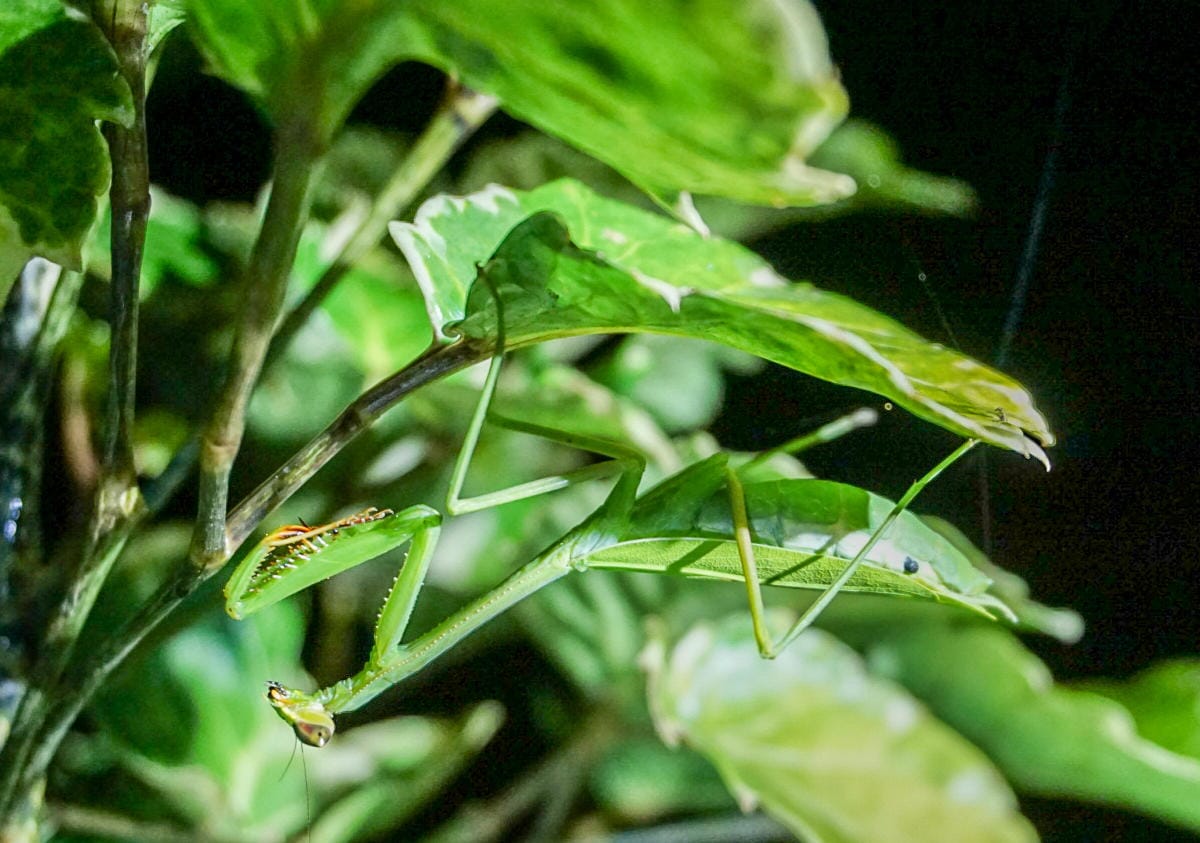
The Amazon is the world's largest rainforest and makes up over half of the world's remaining rainforests. The climate is extremely hot and humid, and it is precisely this climate that provides the basis for the very diverse flora and fauna. The Amazon rainforest has developed continuously for 15 million years, which means that each plant finds its niche adapted to small variations in temperature, light and humidity.
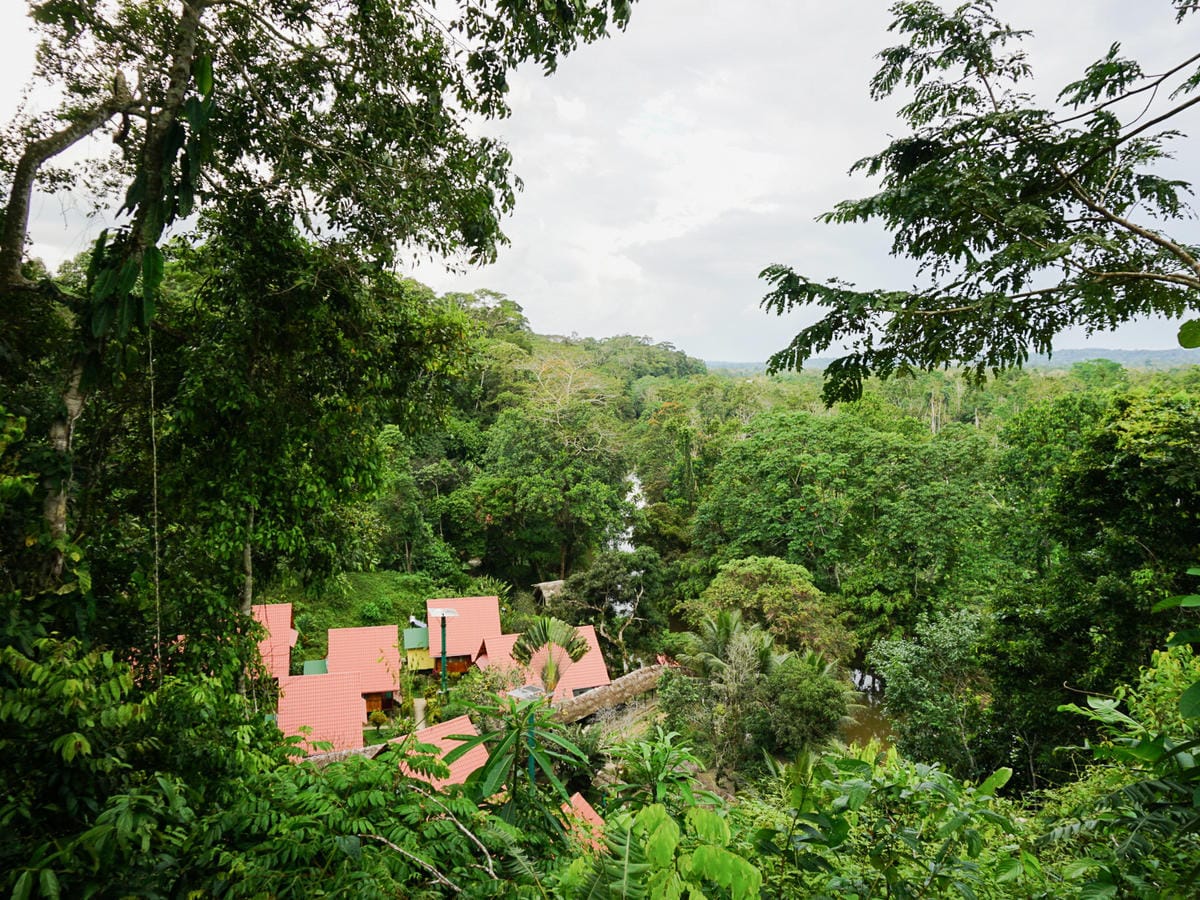
Norrøna Adventure lives at an ecolodge on the Napo River, which is a tributary of the Amazon, the world's second longest river. The ecolodge was built on the initiative of the local indigenous Kichwa people, and it is the Kichwa people who run the lodge today in the most sustainable way possible. Here they offer various day trips where we learn from the people who live off the rainforest, and as a visitor you are impressed and humbled by all the knowledge and history that can be found here.
The natives follow the sun, and so do the Whites, for when I climbed a hill opposite the lodge early one morning to watch the day come to life, I was far from alone. Together we watched the sun rise over the majestic Amazon with colorful hummingbirds gathering nectar from the flowers around us and the large Montezuma oropendola gathering biological material to build its characteristic nests that hang like enormous pendulums from the tallest trees. Mornings truly have gold in their mouths – even in the tropics!
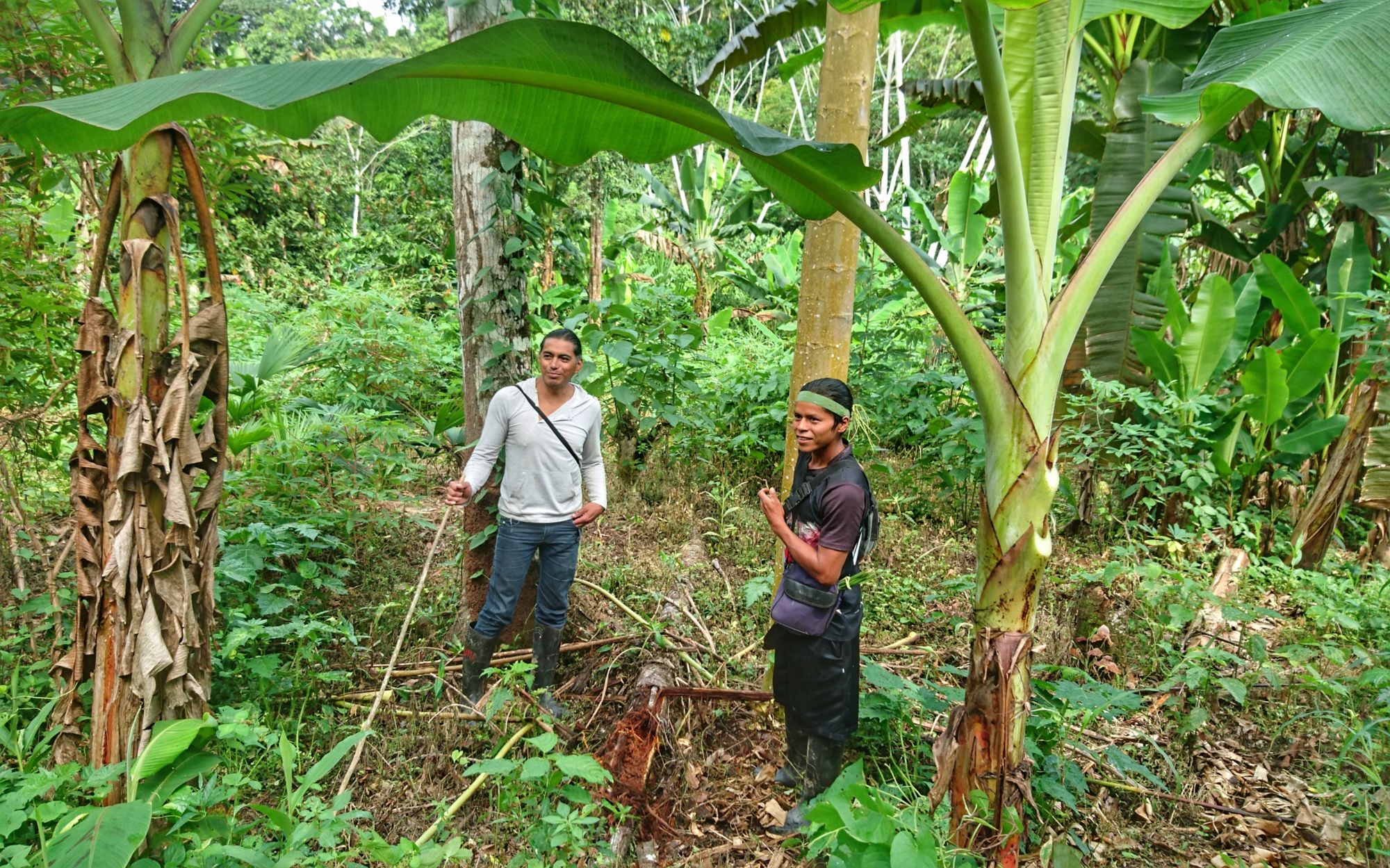
During our days in the Amazon, we had Orlando as our guide and teacher. Orlando is Kichwa and grew up in the rainforest. He has an enormous knowledge of trees, plants and fruits and kindly taught us how the forest is both their food and medicine, and not least the importance of preserving biodiversity. We were impressed by all of Orlando's knowledge, and he charmed us greatly as he elegantly and barefoot guided us through the rainforest, while we came trudging behind wearing high rubber boots and in a whiff of artificial mosquito spray.
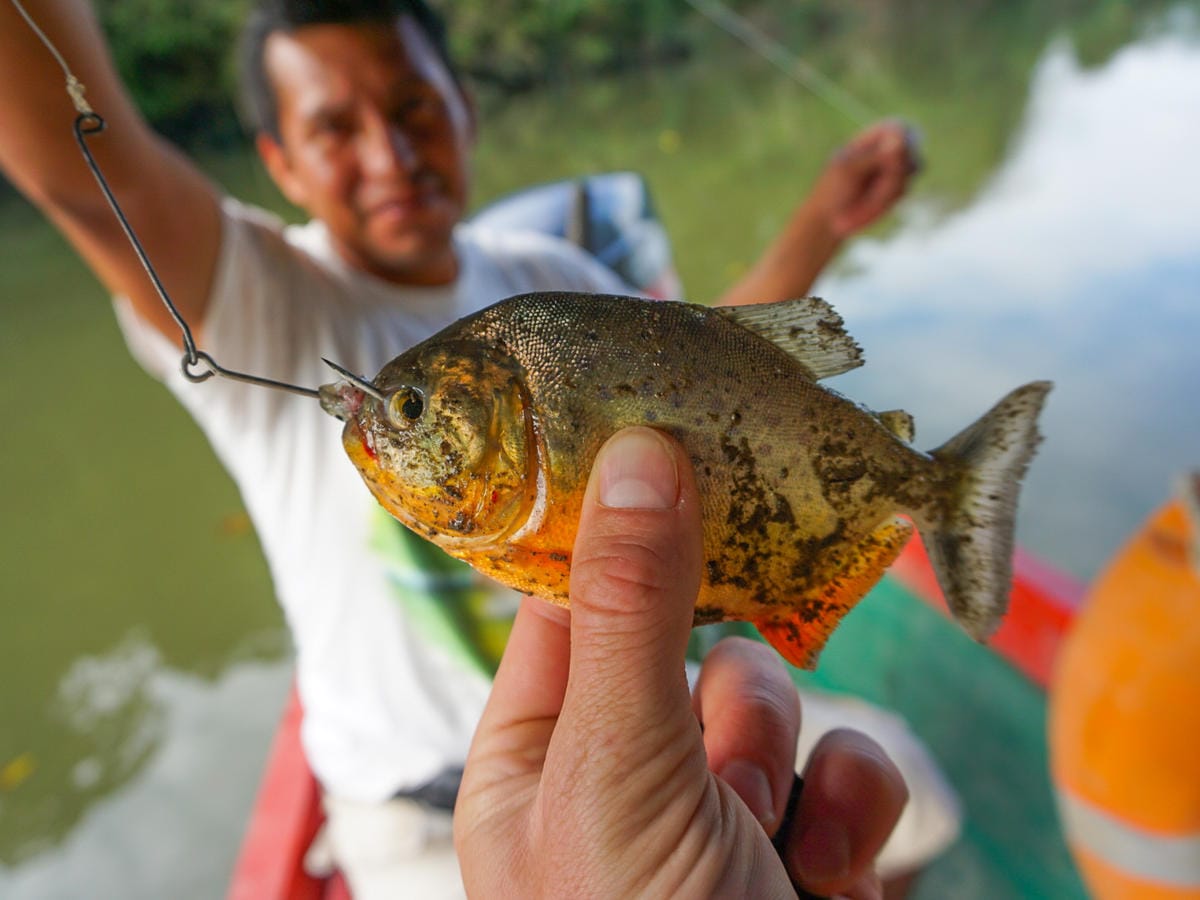
Orlando also took us to a local settlement where we got to see how the Kichwa people live today, what they live on and what they eat. Caterpillars are an important source of protein among the indigenous people and the toughest of us ate live caterpillars, while most preferred to wait until they were fried. We made chocolate from dried cocoa beans, tried our hand at hunting with arrows and blowpipes, piranha fishing, gold panning, visited a local school and more. And in between visits and experiences there was plenty of time to be able to ask curious questions both directly to Orlando but also to the people we visited when Orlando could translate for us. And you wonder a lot when you get so close to a people and a life so distant from our own – and you also like to reflect a little about your own lifestyle, consumption and what is really needed to have a good life…
The days in the Amazon were packed with impressions and experiences from morning to night and I still have a brilliant image on my retina of a group of euphoric Norwegians who, each in their own "swimming ring", floated down the Napo River in the blue hour, surrounded by the rainforest on both sides with its sounds and smells. The happiness was complete and the experiences and all the learning in the Amazon came true!
Galapagos
We were ready for the second part of the adventure trip and there was probably an extra lot of excitement, myths, childhood dreams and expectations for the Galápagos Islands. This "enchanted" archipelago in the Pacific Ocean, about 972 kilometers west of Ecuador, where large parts of both flora and fauna are unique to the islands. It was on these islands that Charles Darwin drew much of his inspiration and documentation for the modern theory of evolution.
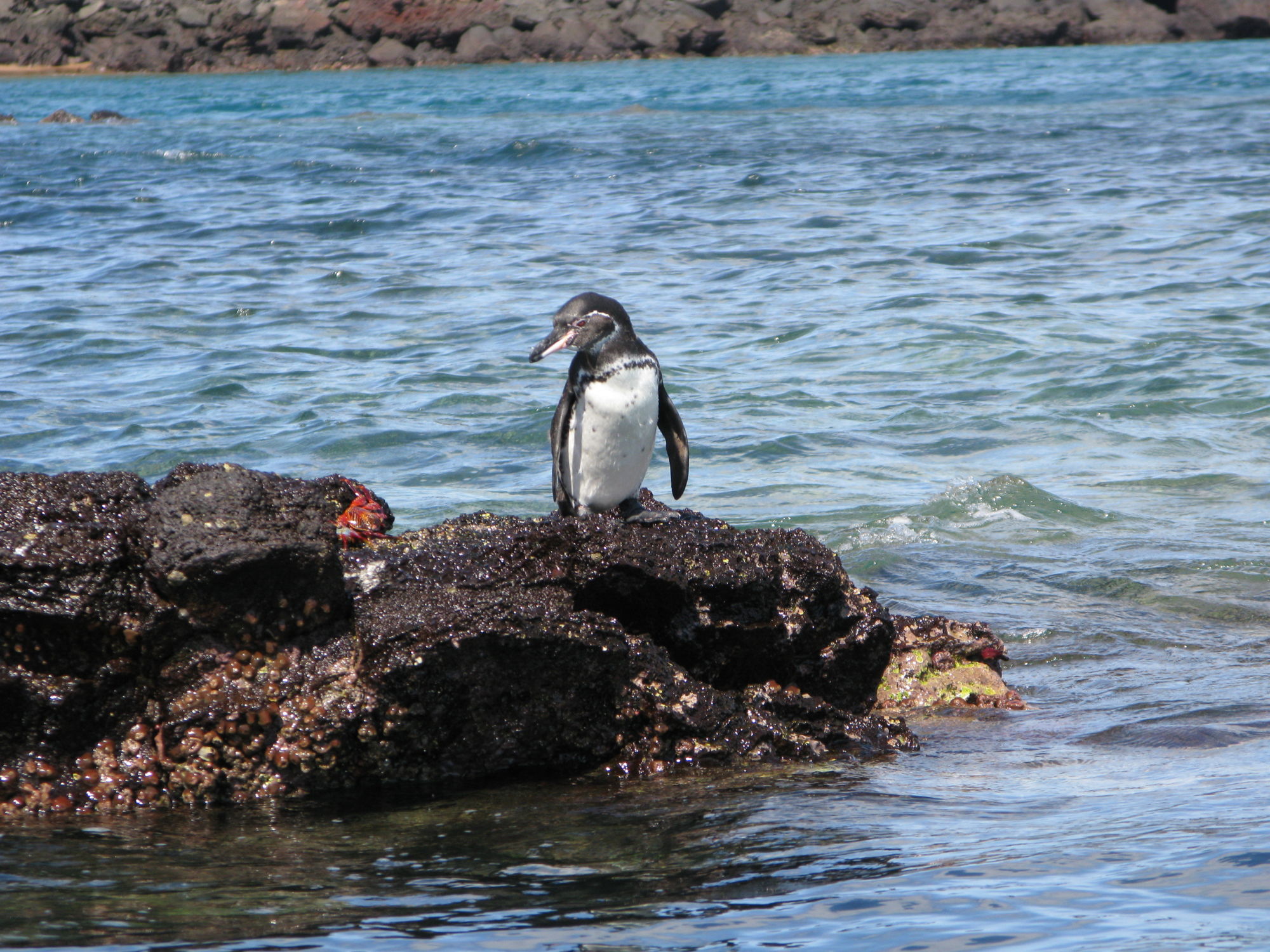
On the flight from Quito, via the port city of Guayaquil, to the island of Baltra in the Galápagos, there was lively conversation about all the myths surrounding the archipelago. The unique bird and animal life that many were looking forward to seeing, ideas about how people lived out here and what they lived on. Darwin's finches, cactus trees, elephant tortoises, Haviguana and Galápagos penguins. Several people recalled black-and-white NRK documentaries from the 60s about this exotic archipelago in the Pacific Ocean that we were now about to experience for ourselves.
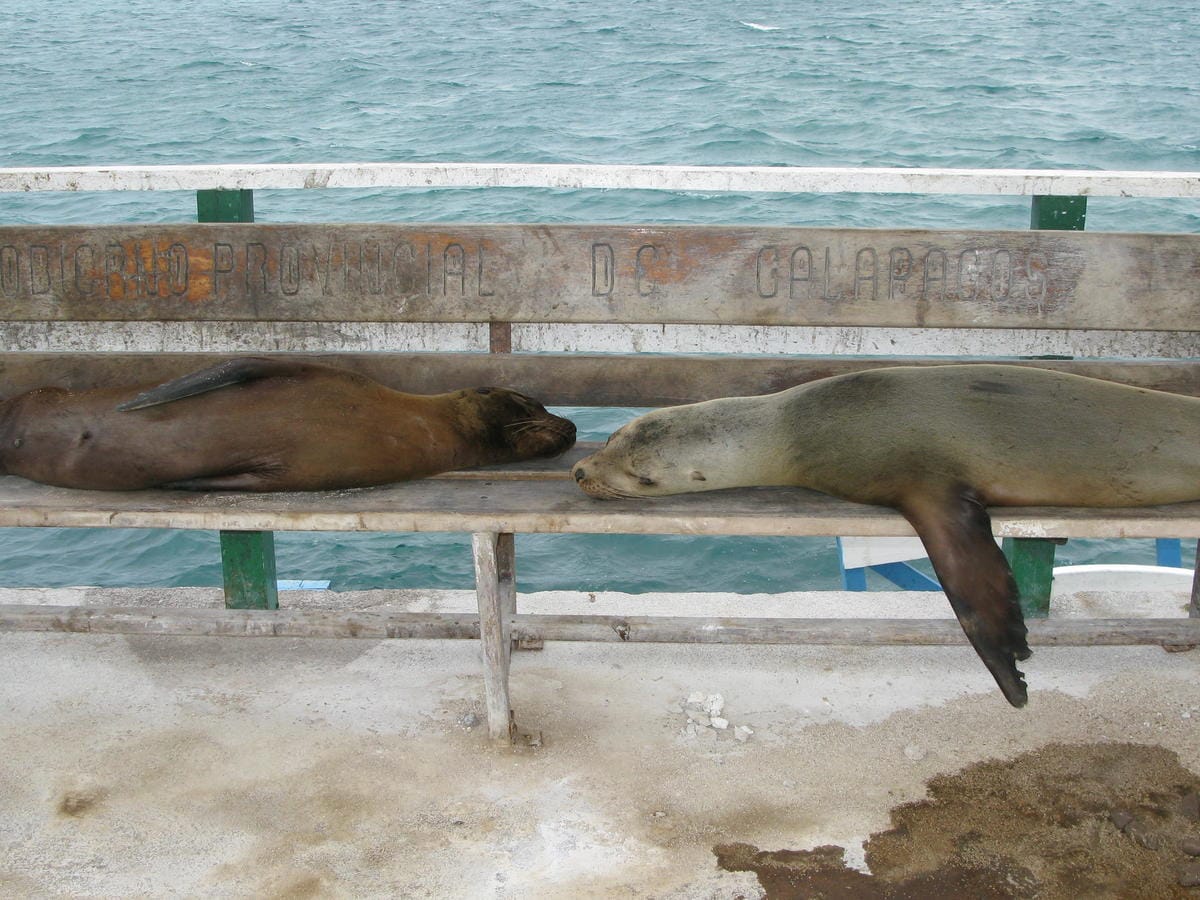
Landing on the Galápagos is like arriving in another world. The climate, the vegetation, the barren and volcanic terrain, the smell of salty sea, the strong sun and the leisurely sea lions that find their way wherever there is shade, completely unaffected by a bunch of people who want to pass by. "What a fairyland" was the first thing that came to mind, and you really get the feeling that here we humans are visiting the animal kingdom.
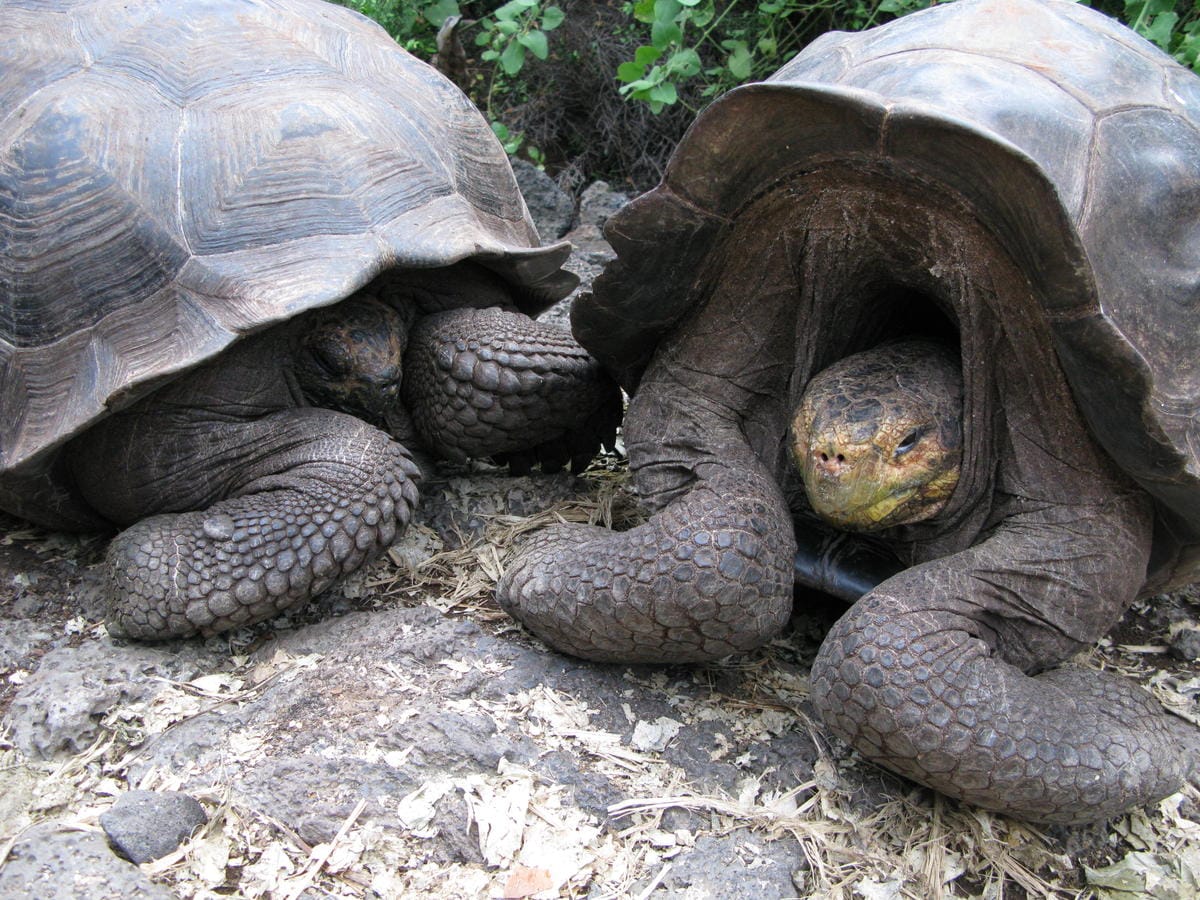
On the way from the airport to Puerto Ayora on the island of Santa Cruz we passed a lot of elephant tortoises. They have no natural enemies here and are found in large numbers. They roamed freely and grazed between dairy cows and other livestock – surprising to most of us and a wonderful symbiosis to witness. The nature is incredible!
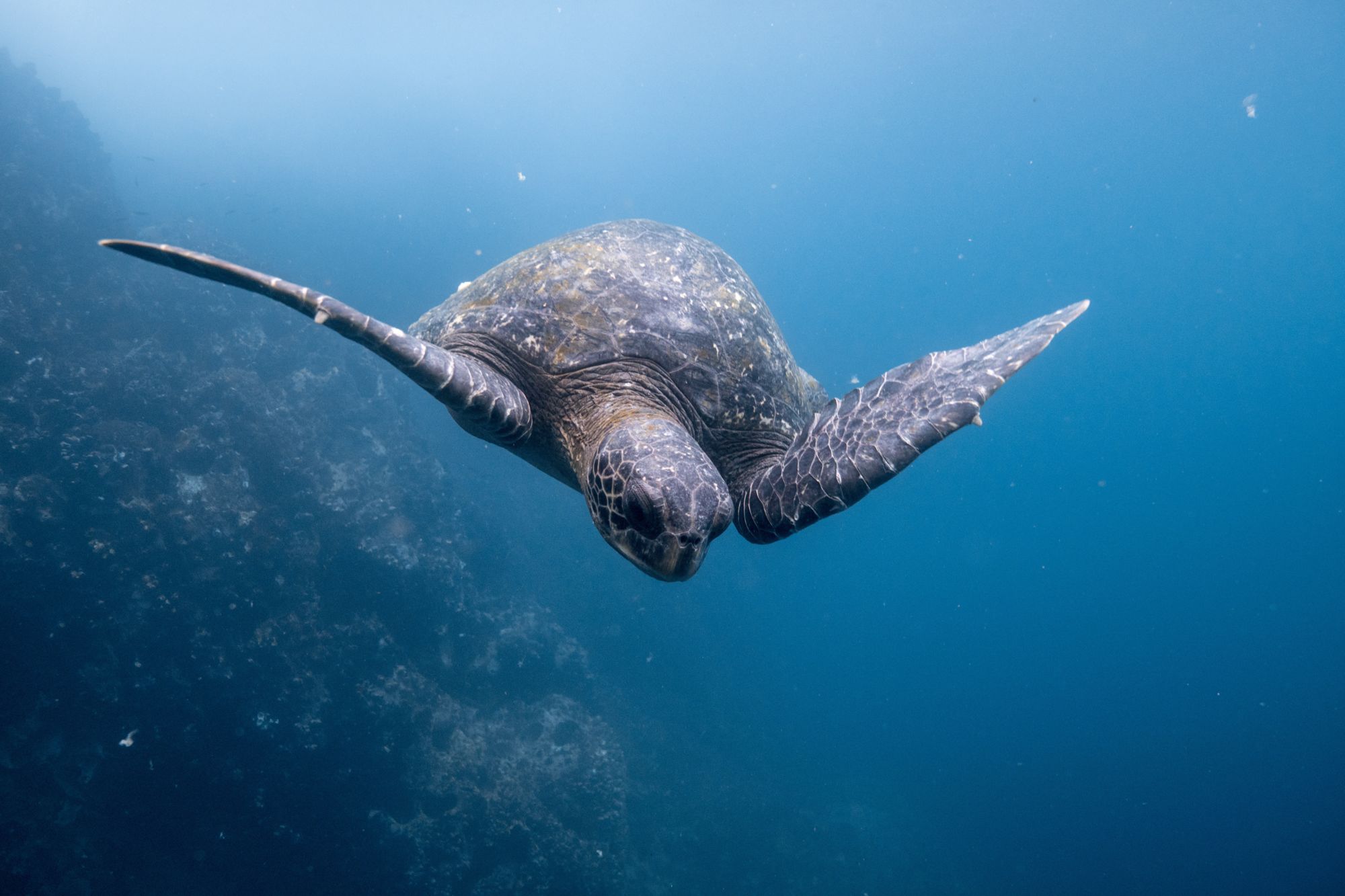
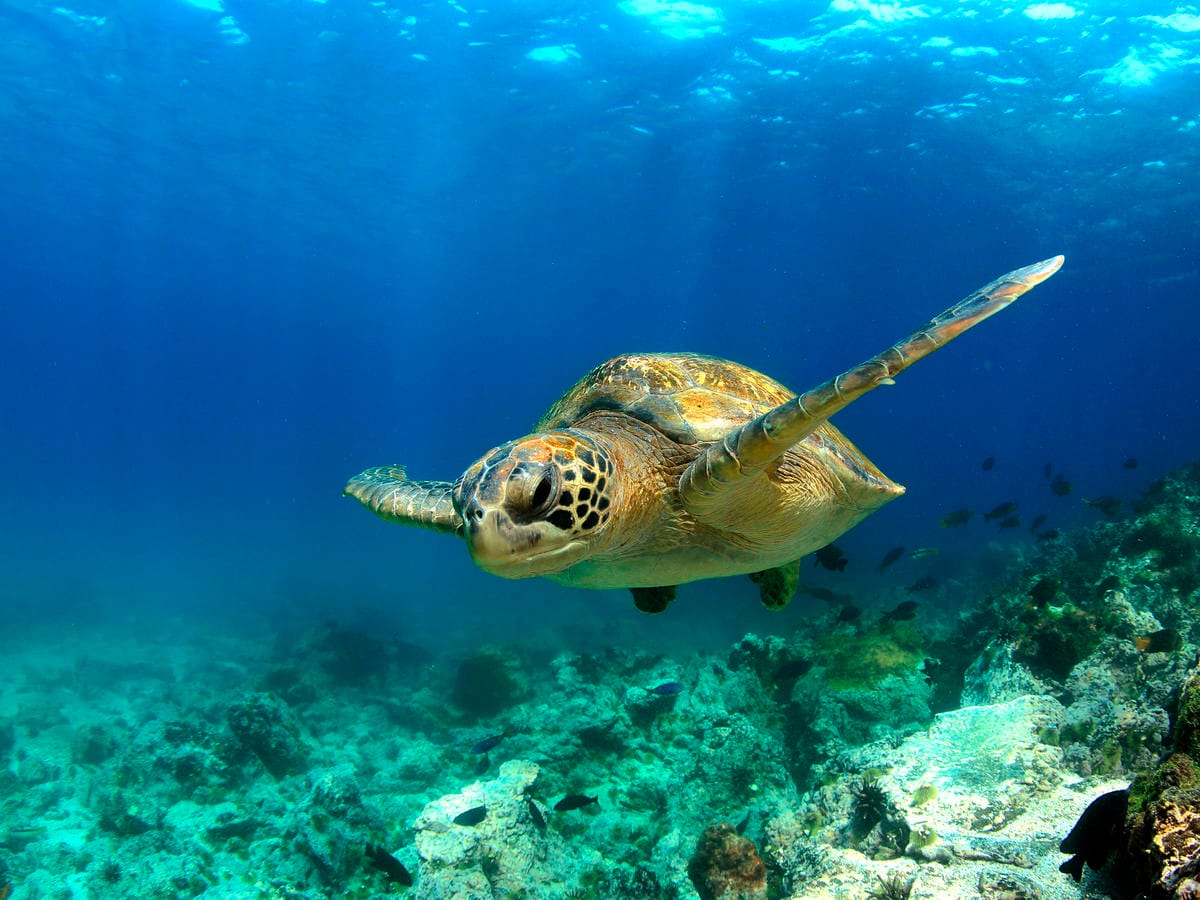
The Galápagos Islands were included in the UNESCO World Heritage List as early as 1978, and in 2001 the maritime reserve was also included in the World Heritage List, and for good reason. Approximately 70% of the flora and fauna of the Galápagos is underwater, and the time we spent with a mask and snorkel underwater was magical. Turtles, sea lions, coral and colorful fish galore. Lava tunnels and spectacular underwater formations, haviguanas, sharks and penguins. The water is relatively cool and very clear, and with a wetsuit it was a pleasure.
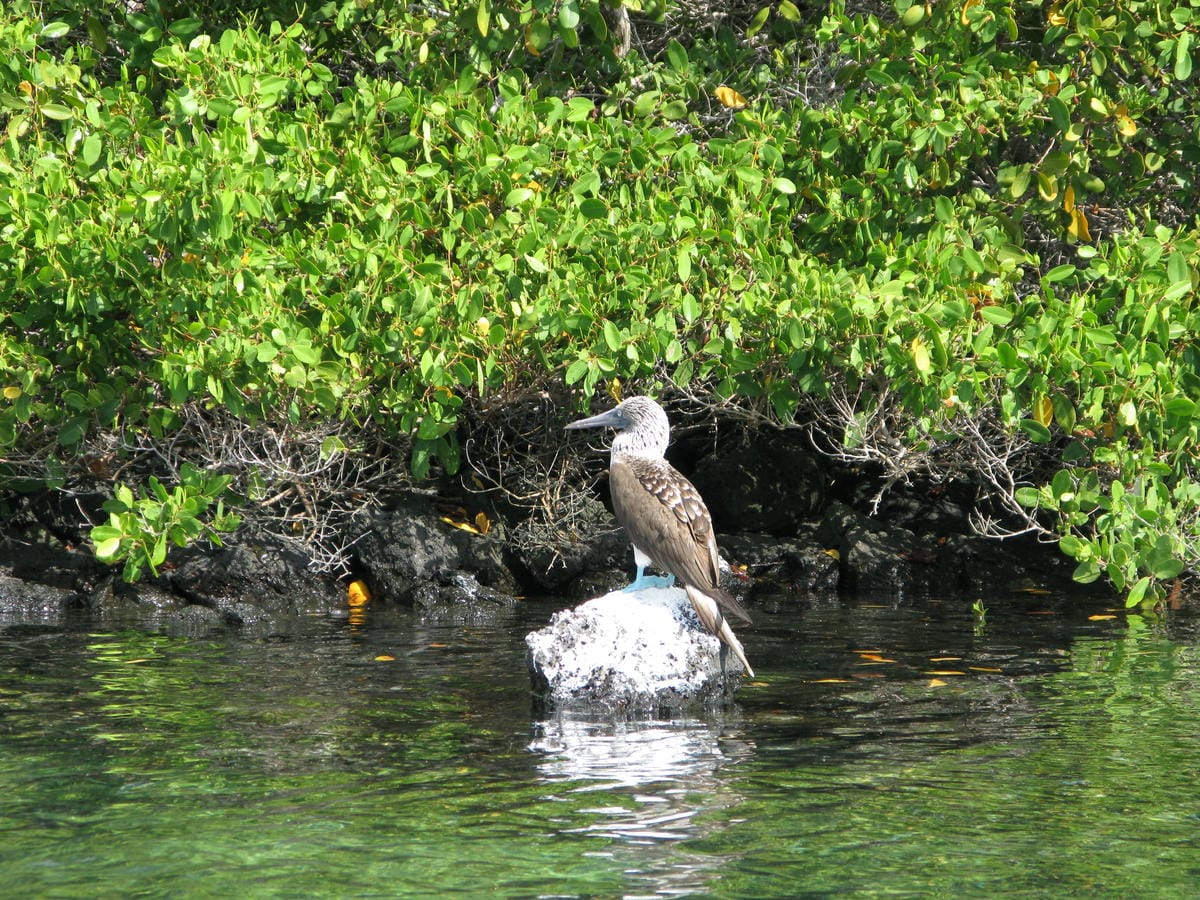
Above the ocean surface we witnessed a very special birdlife, and what is special about the Galápagos is that of the approximately 60 bird species found here, half are endemic species. They are found only here in the world! I won't brag that we were a bunch of ornithologists from Norrøna Adventure, but I dare say that everyone was impressed by the colorful birds. I think most of us took home a picture, fridge magnet, bath towel, teddy bear or another variation of a blue-footed booby as a souvenir back to Norway.
Already on the day of our arrival in the Galápagos, several local Galapagos commented that we were Norwegians. They told us that one of the first settlements on the archipelago came from Norway, and that in the 1920s there was a small colony of Norwegians seeking adventure and a better life in the Galápagos.
This was a chapter in Norwegian history that few of us knew about, and I became curious to find out more about the Norwegian presence in the Galápagos. Imaginative reports in the Norwegian press had lured with free land and a carefree life in a tropical paradise, and around 200 people left Norway on four different ships. The happiness was short-lived for the fortune hunters from the north, and after three years there were only nine Norwegians left. The Galápagos was not the green paradise the Norwegians dreamed of…
Today, several Norwegian descendants live on the Galápagos, and the milk outlet on the outskirts of Puerto Ayora is called "La Noruega." Not because it is Norwegian-run, but because the first person to start dairy production on the island was Thorvald Kastdalen from Askim.
The Galápagos are “a little world within itself” as Charles Darwin described it, and I couldn’t agree more. A place so unlike anything else, with an ecosystem so valuable yet vulnerable to human presence. Tourism is the lifeblood of the Galápagos today and is absolutely necessary to finance nature conservation and research. The local guides on the archipelago have an enormous knowledge of their unique nature, and in addition to communicating, they are engaged in important education and dissemination of this very knowledge.
Due to the current situation with Covid-19, the Galápagos have lost all their income base overnight. Nature probably appreciates a break and respite, but on an archipelago almost 1,000 km from the mainland where it is strictly forbidden to harvest from nature, many families are now having a really tough time. Approximately 30,000 people live on the archipelago and actually live off of us coming to visit to be excited and learn from the nature that they live to take care of.
It is not the strongest of the species that survives, nor the most intelligent that survives. It is the one most adaptable to change!
Charles Darwin
Ann Elin Norddal :)