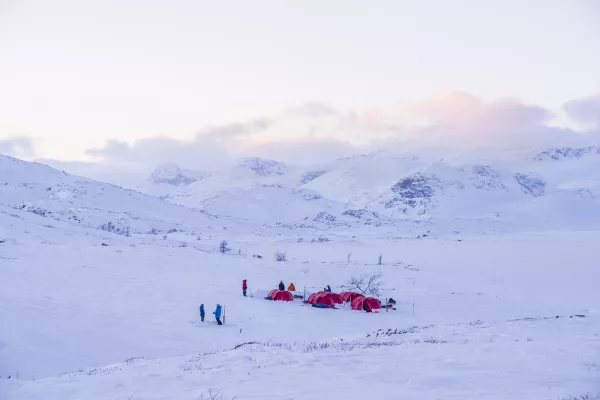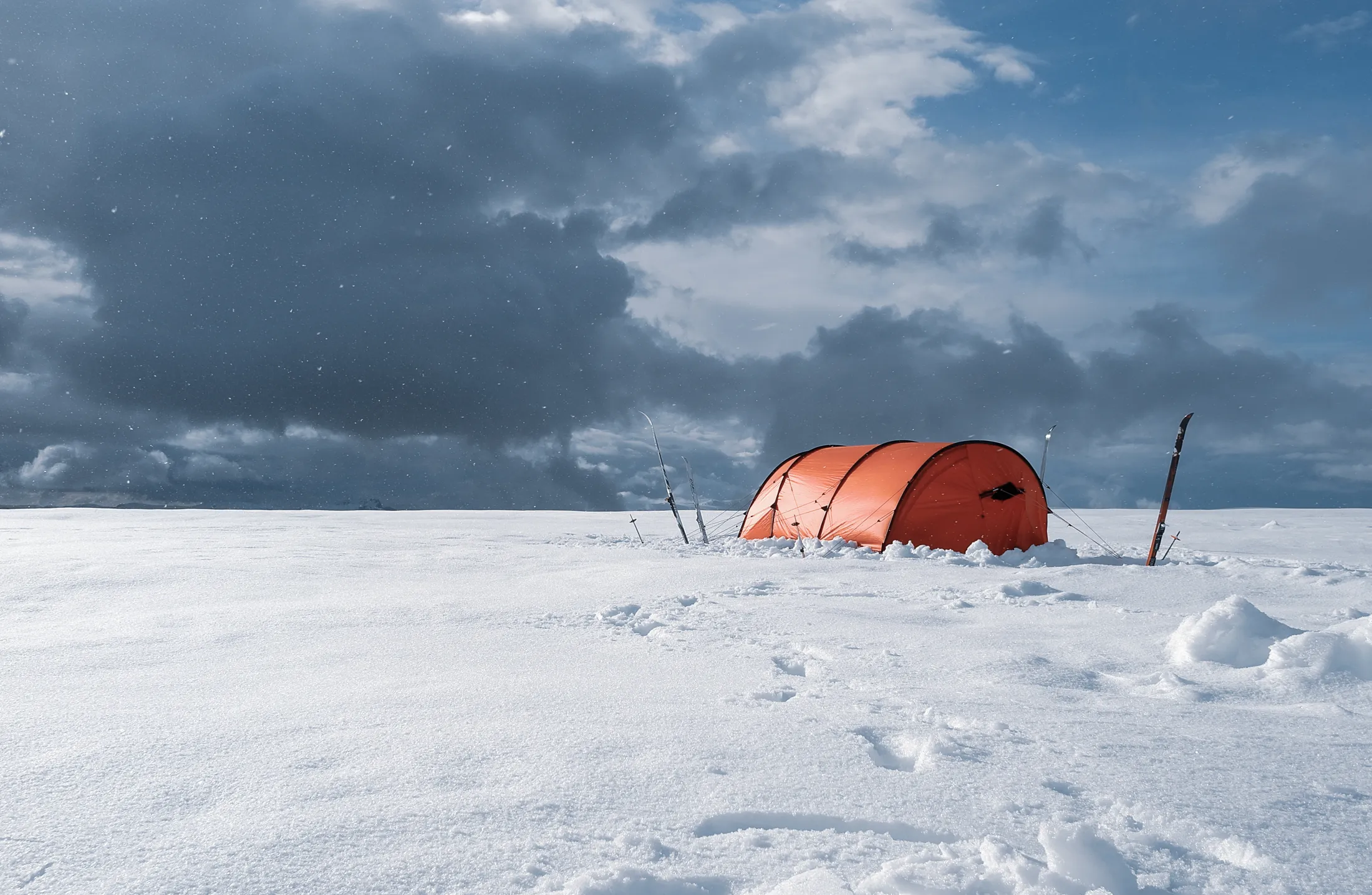
An orange tent pitched on a vast snowy landscape under a dramatic cloudy sky.

Crossing Josten, North to South

Spring classics!

Crossing Josten, North to South

Spring classics!

From USD 884

NOTE: Prices vary depending on group size. The price shown is per person for a group of six participants.

The Josten End-to-End is one of Norway’s greatest spring skiing classics, and there are many good reasons for that! A backcountry hike, ski trip, summit hike, and camping trip all in one. May is the perfect time for a spring ski trip across the largest glacier on the European mainland, from north to south.

We’ll meet in the valley below Flatbrehytta, where we’ll also end our trip in a few days. Shared transportation will take us into Jostedalen, so we can ascend the glacier from the northeast. We’ll hike into the valley and set up camp so we have a good base for the next few days. If conditions are good, we can take side trips during the trip to peaks such as Brenibba (2,018 m), Kjenndalskruna (1,830 m), Høgste Breakulen (1,957 m), and Supphellenipa (1,731 m). We’ll spend two nights in tents on the glacier.

Highlights

  • Skiing on mainland Europe’s largest glacier
  • Views of green valleys and beautiful fjord landscapes
  • Three nights in tents
  • Epic, wild nature

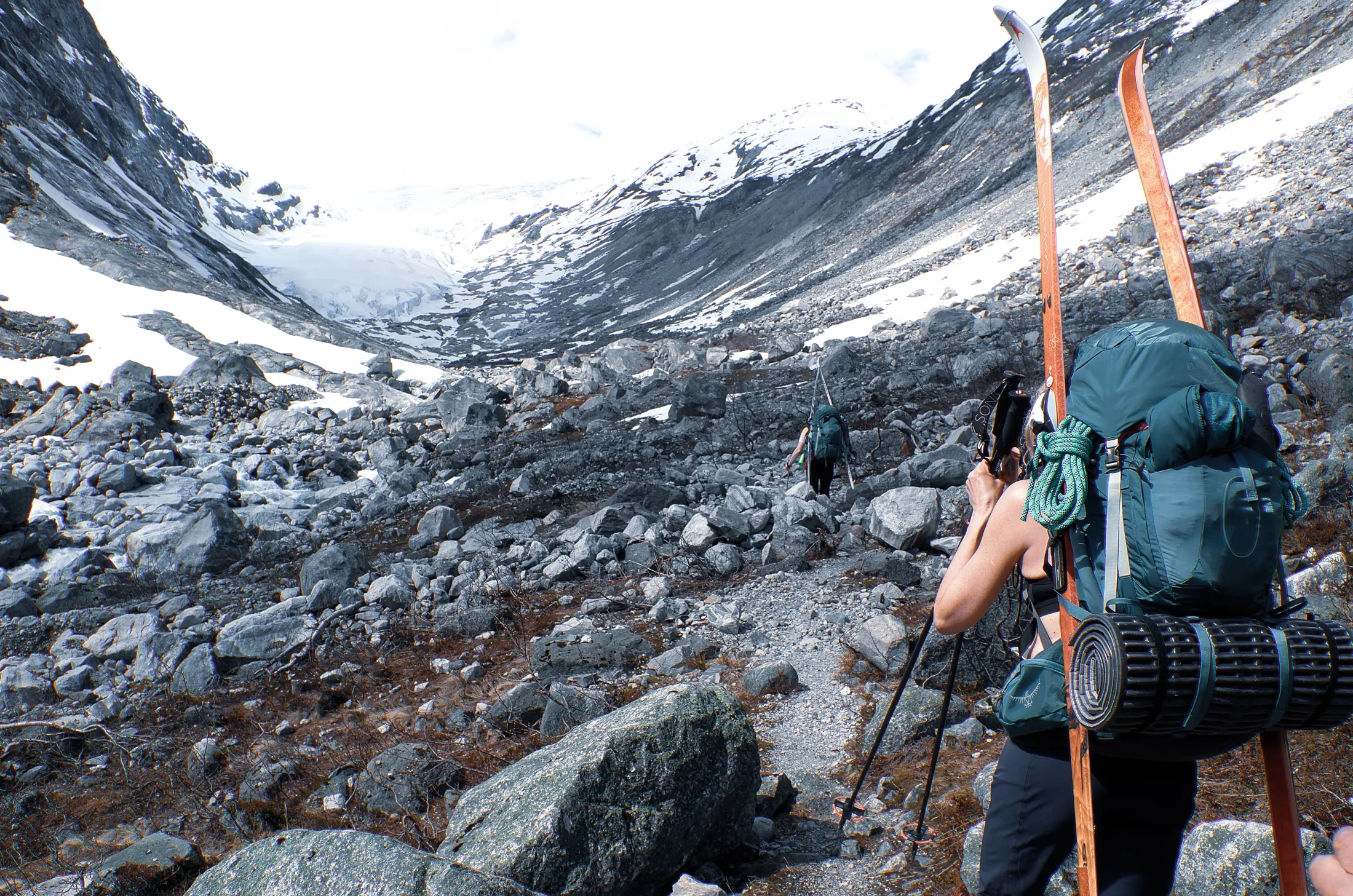
The Josten Trail is a challenging but very beautiful ski trip, with daily stages of about 20 km. During the trip, the weather is likely to change rapidly, and it’s not uncommon to experience both full-blown winter conditions and hot, blazing sun during the days spent crossing the glacier. We’ll descend from the glacier at Flatbrehytta in Fjærland on the afternoon of Day 4. On the way up and down the glacier itself, parts of the trip are done on foot with skis strapped to our backpacks.

4

6-12

NO/EN

4/6

1/6

3/6

Private tour only

This trip is only offered as a private tour. Order by contacting us through the form.

Request private tour
Opening hours Phone
Mon-Fri : 08-20
Sat-Sun : 14-17
Opening hours Chat
Mon-Fri : 07-23
Sat : 10-18
Sun : 13-21
CET

Day by day

A hiker with a backpack and skis strapped to it walks through a rocky landscape with snowy mountains in the background.

Day 1:Meeting point by the fjord - Jostedalen

At Flatbrehytta Parking at 16:00. We leave the cars and things we don't need behind since our trip ends here, and group transport takes us around into Jostedalen. We establish camp in the valley where we get a natural review of tent routines and use of stoves before we eat dinner and plan the next few days together.
At Flatbrehytta Parking at 16:00. We leave the cars and things we don't need behind since our trip ends here, and group transport takes us around into Jostedalen. We establish camp in the valley where we get a natural review of tent routines and use of stoves before we eat dinner and plan the next few days together.
Tent

-,-,D

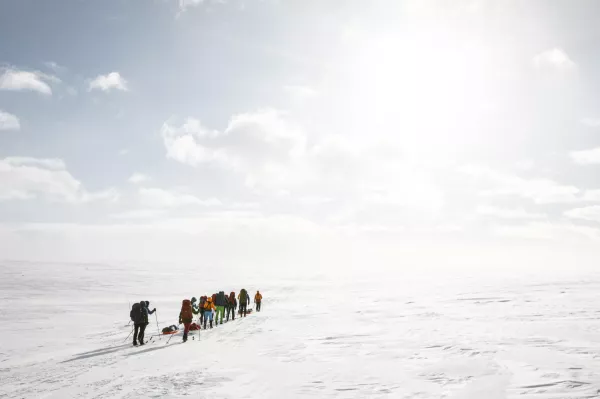
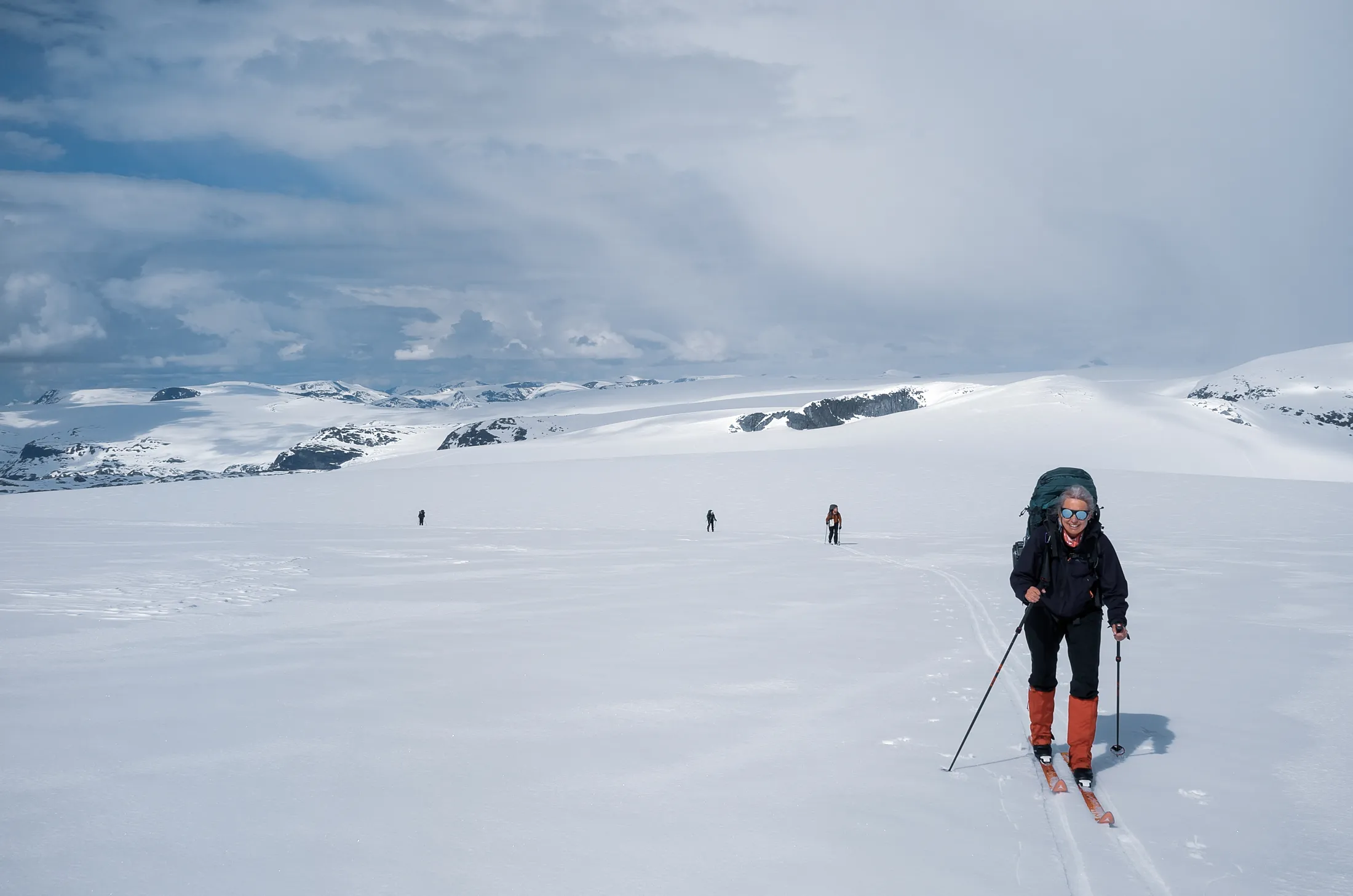
Skiers crossing Jostedalen Glacier in sunny weather

Day 2:Up to the glacier plateau

We take an early start with coffee and breakfast before we start the trip and eventually make our way onto the glacier. We gain elevation steadily, it is a long climb so it is important to find a good pace. We cover topics and equipment use on the glacier as it becomes natural. Up on the glacier plateau we establish a tent camp. Depending on the weather, snow conditions and the wishes of the group we see if we take an evening trip to a nice viewpoint.

We take an early start with coffee and breakfast before we start the trip and eventually make our way onto the glacier. We gain elevation steadily, it is a long climb so it is important to find a good pace. We cover topics and equipment use on the glacier as it becomes natural. Up on the glacier plateau we establish a tent camp. Depending on the weather, snow conditions and the wishes of the group we see if we take an evening trip to a nice viewpoint.

Tent

B,L,D

8-10 hours

+1200m

18-20 km

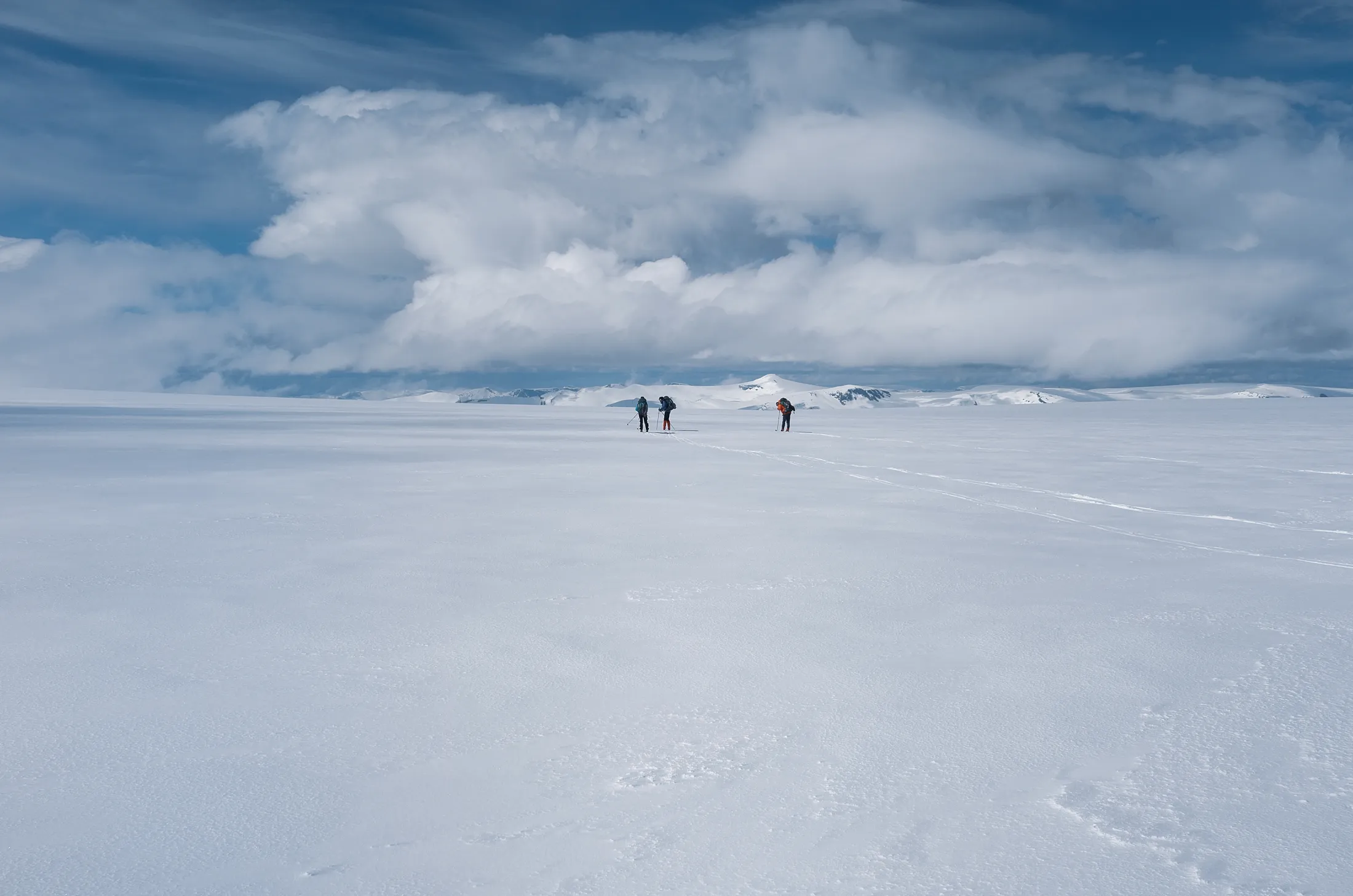
Skiers having a short break on the top of Jostedalen Glacier

Day 3:Over the glacier crest and to Bings gryte

If we did not go up one of the surrounding peaks the night before, we see if we do it today. We continue on skis up on the glacier plateau with magnificent peaks on all sides. If the body feels good we route our trip via Høgste Breakulen (1957 m) and enjoy the view of the beautiful Western Norway scenery! In the area around Bings Gryte we establish the trip's second tent camp on glacier, eat dinner and look forward to another night in the sleeping bag after a good day on skis.

If we did not go up one of the surrounding peaks the night before, we see if we do it today. We continue on skis up on the glacier plateau with magnificent peaks on all sides. If the body feels good we route our trip via Høgste Breakulen (1957 m) and enjoy the view of the beautiful Western Norway scenery! In the area around Bings Gryte we establish the trip's second tent camp on glacier, eat dinner and look forward to another night in the sleeping bag after a good day on skis.

Tent

B,L,D

12-14 hours

200m/1450m

20-24 km

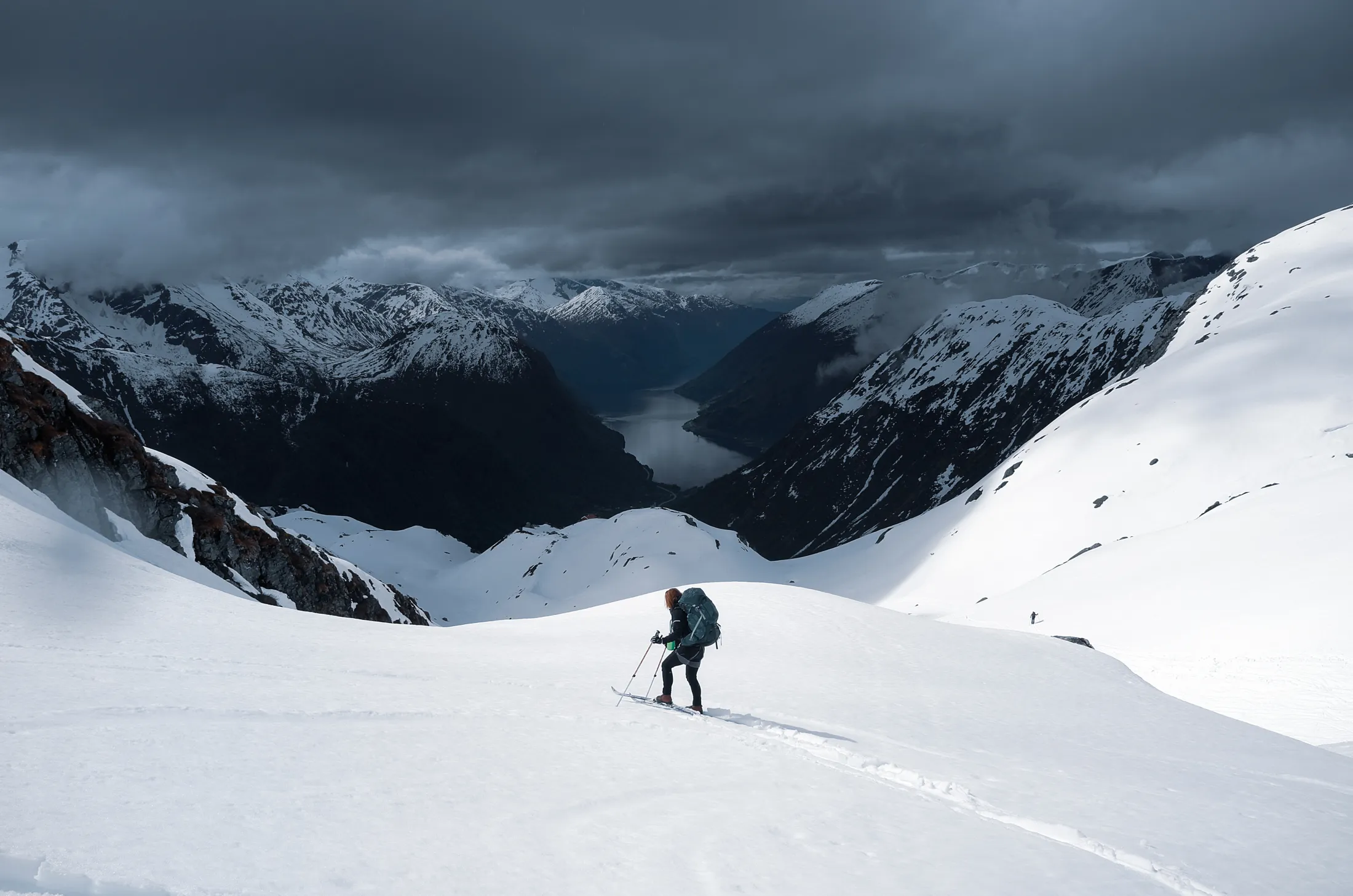
A skier looking at the descent going down from Jostedalen Glacier

Day 4:To Flatbrehytta and down from the glacier

This is the last day on the glacier and after morning coffee by the tent we head down toward Supphellebreen and Flatbreen. We take it easy on the way down because we all know how unusual it is to ski downhill with a heavy pack. If you want, there is nothing wrong with taking off your skis on the steepest part. We stop at Flatbrehytta with perhaps Norway's finest view, and look toward spring along Fjærlandsfjorden. From the cabin we continue on skis or on foot - depending on snow conditions - to the bottom of the valley where perhaps a swim in the fjord is tempting? We get down to the valley where the cars are ready. Did anyone remember to leave some snacks here? Here we thank each other for the trip and company and say "drive safely" and until we meet again!

This is the last day on the glacier and after morning coffee by the tent we head down toward Supphellebreen and Flatbreen. We take it easy on the way down because we all know how unusual it is to ski downhill with a heavy pack. If you want, there is nothing wrong with taking off your skis on the steepest part. We stop at Flatbrehytta with perhaps Norway's finest view, and look toward spring along Fjærlandsfjorden. From the cabin we continue on skis or on foot - depending on snow conditions - to the bottom of the valley where perhaps a swim in the fjord is tempting? We get down to the valley where the cars are ready. Did anyone remember to leave some snacks here? Here we thank each other for the trip and company and say "drive safely" and until we meet again!

B,L,-

At Flatbrehytta Parking at 16:00. We leave the cars and things we don't need behind since our trip ends here, and group transport takes us around into Jostedalen. We establish camp in the valley where we get a natural review of tent routines and use of stoves before we eat dinner and plan the next few days together.

Tent

-,-,D

We take an early start with coffee and breakfast before we start the trip and eventually make our way onto the glacier. We gain elevation steadily, it is a long climb so it is important to find a good pace. We cover topics and equipment use on the glacier as it becomes natural. Up on the glacier plateau we establish a tent camp. Depending on the weather, snow conditions and the wishes of the group we see if we take an evening trip to a nice viewpoint.

Tent

B,L,D

8-10 hours

+1200m

18-20 km

If we did not go up one of the surrounding peaks the night before, we see if we do it today. We continue on skis up on the glacier plateau with magnificent peaks on all sides. If the body feels good we route our trip via Høgste Breakulen (1957 m) and enjoy the view of the beautiful Western Norway scenery! In the area around Bings Gryte we establish the trip's second tent camp on glacier, eat dinner and look forward to another night in the sleeping bag after a good day on skis.

Tent

B,L,D

12-14 hours

200m/1450m

20-24 km

This is the last day on the glacier and after morning coffee by the tent we head down toward Supphellebreen and Flatbreen. We take it easy on the way down because we all know how unusual it is to ski downhill with a heavy pack. If you want, there is nothing wrong with taking off your skis on the steepest part. We stop at Flatbrehytta with perhaps Norway's finest view, and look toward spring along Fjærlandsfjorden. From the cabin we continue on skis or on foot - depending on snow conditions - to the bottom of the valley where perhaps a swim in the fjord is tempting? We get down to the valley where the cars are ready. Did anyone remember to leave some snacks here? Here we thank each other for the trip and company and say "drive safely" and until we meet again!

B,L,-

What's included in the price

Included

All transportation as specified in the program, like the minibus from the meeting point to where the starting point of the trip.

All accommodation during the trip, in a tent. 

Meals as specified in the program.

Tents, stoves, cooking equipment, fuel, and ice axes.

Not included

To the parking lot below Flatbrehytta. Please check our website to confirm that the departure is guaranteed before booking your own tickets. For each trip, we require a minimum number of confirmed participants before the departure can be guaranteed.

Drinks and snacks.

Terms and Conditions 

We reserve the right to change prices. The day by day program is indicative and changes may occur. We also refer to our general travel conditions.

Travel Insurance

On all our trips, we require you to have full health and accident insurance which will also cover any transport home. Read more about travel insurance.

Highlights

Reviews

Rated
-
- reviews
(-)
(-)
(-)
(-)
(-)

Safety & Grading

Read more

For departures with Norrøna Adventure guides:

  • 24-hour emergency response
  • Guides trained in first aid in the field
  • Basic first aid equipment available
  • Cooperation with Turlegen.no for medical advice

On our trips, it is important to understand that we often will be traveling far off the beaten track. We will, of course, do everything we can to assist if anything should happen, but a potential rescue operation can be demanding. It is therefore extremely important that all participants arrive well-prepared and ready to handle unforeseen situations.

Physical level

4/6 Physical

Here you have to be ready for a real challenge! The trips are often longer than at lower levels. Along the way, it will be both physically and mentally demanding, and that requires you to be prepared for this. You should engage in targeted training well in advance of departure, and you must prepare well.

Comfort level

1/6 Comfort

We overnight in tents. On these trips, the participants take part in camp routines such as setting up camp and cooking meals.

Risk level

3/6 Risk

Activities/trips with some risk. Certain incidents may occur, and they may be of such a nature that they may require professional help.

Training and Preparations

This is a relatively challenging ski trip, where we’ll be carrying heavy packs and skiing through terrain that is steep in places. The Josten Trail is a ski trip best suited for people who enjoy long-distance skiing.

The daily stages are long and demanding. We recommend that you have been actively skiing earlier in the season and, ideally, have experience with other multi-day ski tours.

Accommodation and Food

On this ski trip across the Jostedal Glacier, 2–3 people will share comfortable tents. We’ll have porridge for breakfast, vacuum-packed freeze-dried trail food for lunch and dinner, and drinks (coffee, tea, or juice).

You'll probably want some chocolate, nuts, or other snacks along the way, so feel free to bring your own. A toddy, hot cocoa, or just a cup of coffee can also be nice.

Additional Information

Transportation to the meeting point for the tour is not included. The most flexible option is to arrive in your own car, park it, and then take a taxi back to where it is parked at the end of the tour.

If you have any allergies, please let us know in the registration form and we will try to accommodate you as best we can. However, we would still recommend that anyone with special dietary needs bring some alternatives in the form of, for example, a packet of crispbread, energy bars or similar that you know you can eat.

Related content

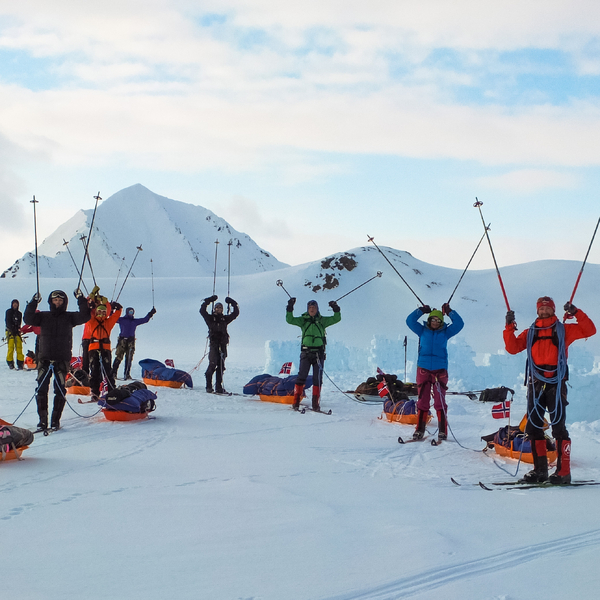
A bunch of skiers standing in front of the camera with their poles in the air

Winter Expedition Clothing and Gear

Read more

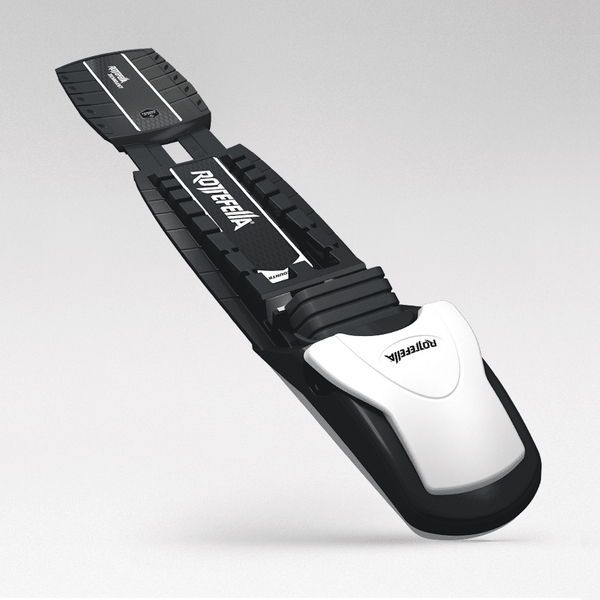
Ski bindings from Rottefella

Nordic Backcountry Ski Bindings

Read more

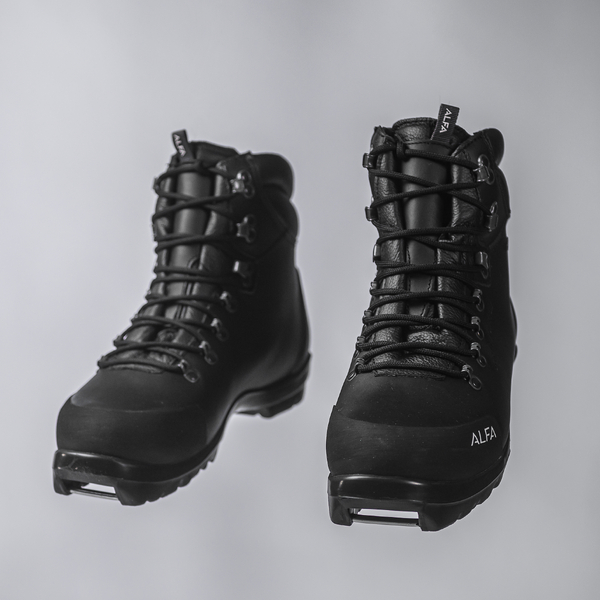
Backcountry Ski Boots from Alfa

Nordic Backcountry Ski Boots

Read more

Equipment list

This list is intended as a guideline, so that we have what we need regardless of the weather we get on the trip. Remember that you can also get used outdoor equipment that works perfectly. Get in touch if you have any questions. TIP: We recommend that you have the most important equipment in your hand luggage, for example hiking boots and gore-tex jacket/trousers.

Obligatory

Clothing

We recommend wool underwear for both men and women. Wool sportstop is recommended for women.

2 sets of top and bottom. Not too thick, instead use multiple layers.

Wool, 2-3 paris.

2-3 pairs. Wool or synthetic material.

Fleece or wool. 

Big and warm! Big enough that it fits over everything else. It must have a hood and cover the butt. Down is recommended.


Gore-Tex or similar. Must have a decent hood, and hold out wind and rain. Should have space for midlayers underneath. Ventilation under the arms is recommended. 

Gore-Tex or similar. Must be waterproof and windproof,  zips for ventilation are recommended.

Warm hat for cold days.

The overmittens should be roomy and extend well up the forearm. They should be windproof and ideally handle some moisture. They need to provide a good grip, even with the inner mittens inside. The inner mittens should be thick and warm, preferably made of wool.

Footwear

Warm ski boots for binding type BC (with manual closure), 75mm/3-pin, or Xplore. Slightly large, so that there is room for thick socks (or even two pairs). The shoes must be well used to avoid blisters. May have integrated gaiters. Make sure that your bindings and boots are compatible.

Equipment

50-60 liter capacity.

Comfort temperature rating of at least -20°C. Both down and synthetic are fine, remember to pack it in a waterproof bag. A liner can increase the comfort temperature.

For winter use. For example Exped down mat or Thermarest NeoAir. Used together with the flat sleeping mat.

Flat type made of closed-cell foam, e.g., Therm-a-Rest Z-Lite. Designed to be used underneath an inflatable sleeping mat.

Remember new/extra batteries.

A solid pair, with dark glass. 

Personal medicines and, for example, band-aids, blister plaster, sports tape, throat lozenges, nasal drops, Paracetamol/Ibuprofen, stomach regulators, etc.
We need to know about all medicines you are taking, in case something happens. 

Toilet paper, antibac, and waste bags for the paper. Remember leave no trace.

2-3 litre bottles, with an insulation cover, so they dont freeze. For example Nalgene bottles with wide mouth. They can handle hot water, so you can use them to keep warm in the sleeping bag.

Compact and light.

Preferably a spoon with a long handle if you are going to eat freeze dried food.

Alpine snow glasses. To protect your face and eyes in snow, wind and cold conditions.

Nordic backcountry skis, preferably with steel edges. The binding type can be BC with manual closure, 75mm/3-pin, or Xplore. Make sure that your bindings and boots are compatible. The poles should have large baskets.

We mostly use short skins, but should we be unlucky with the conditions (hard and icy or lots of powder snow), long skins often work best.

Usually blue kick wax rating. Skins also work well, we recommend short skins.
 

With new batteries.

Small, light and in aluminum (not plastic).

1 pc 130-150 cm, 5-6 mm static climbing rope (before tying the knot)

We recommend a small and light alpine harness. For example Petzl Altitude or Tour or Black Diamond Colouir.

2 pcs. screw carabiners and 1 regular carabiner. 

One sling, 120 cm

0,5-1,0 liter

For use in the backpack to keep your equipment dry during rain. 

Recommended

Clothing

We recommend long shorts or 3/4-length pants with down insulation. A skirt can also work. They should be warm, and roomy enough to wear over shell pants, and preferably feature a full-length side zipper.

Thin, ultra light.

High gaiters for protection against wind, snow, moisture, and icing on boots and laces. Mandatory if you don’t have ski boots or pants with integrated gaiters.

Equipment

Tooth brush, tooth paste, small towel, ear plugs, wet wipes, biodegradable soap, etc.

Nuts, chocolate, energy bars, etc.

Choose a knife with some tools. A light Leatherman, etc. Everyone do not need to bring this. Feel free to discuss internally in the group before departure.

To attach skis to backpack if necessary.

Light and compact.

Such as hot chocolate, hot lemonade or berry drinks etc.

Packing Tips

Since you’ll be carrying your own backpack, we recommend packing as efficiently as possible so you don’t end up carrying too many kilos. This is very important for a successful trip. Use a backpack that you’ve used on a hike before and that has a good hip belt.

We’ll provide ropes and other safety equipment for a safe crossing of the Jostedal Glacier. Each participant must bring their own personal equipment, such as a harness, sling, and carabiners. Please contact us as early as possible if you need to rent equipment.

It is important that you pack your clothes and sleeping bag in 100% waterproof bags. Even if you already have a sleeping bag cover, it’s important to pack it in a waterproof stuff sack as well.

Read more about how to pack and prepare.

Recommended trips