Day 1:Departure Oslo - Kiruna
We fly from Oslo to Kiruna via Stockholm.
We fly from Oslo to Kiruna via Stockholm.
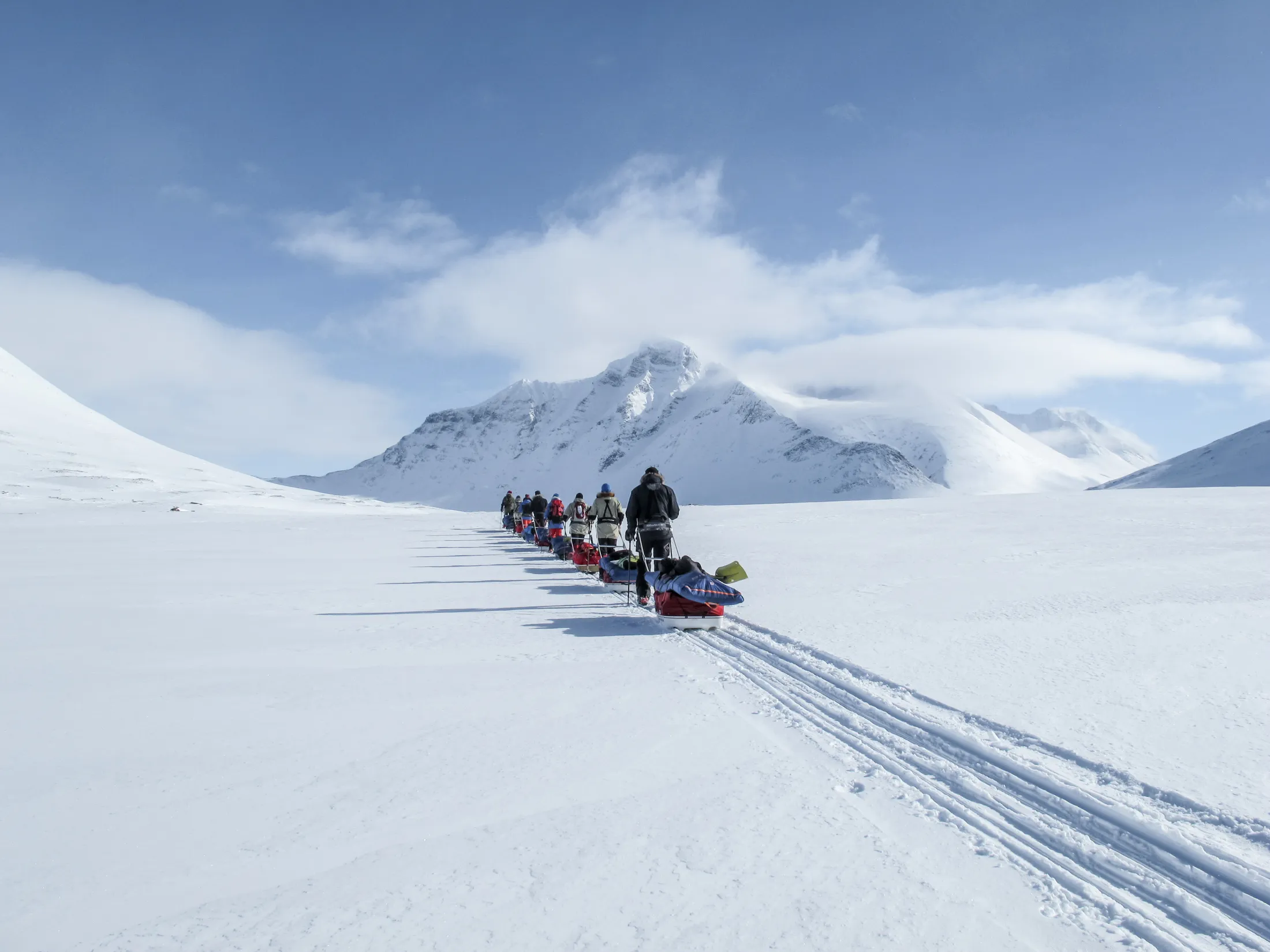
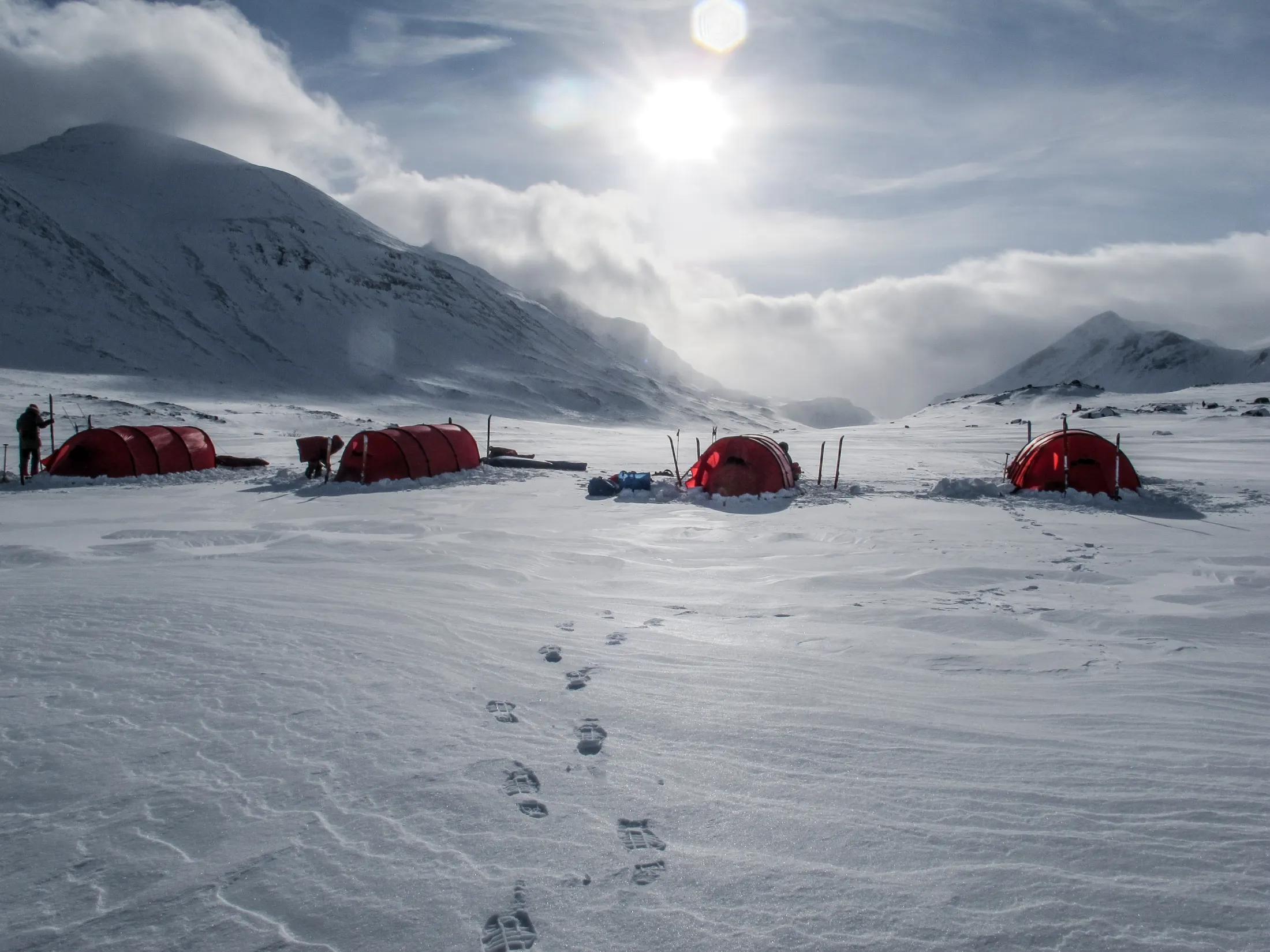
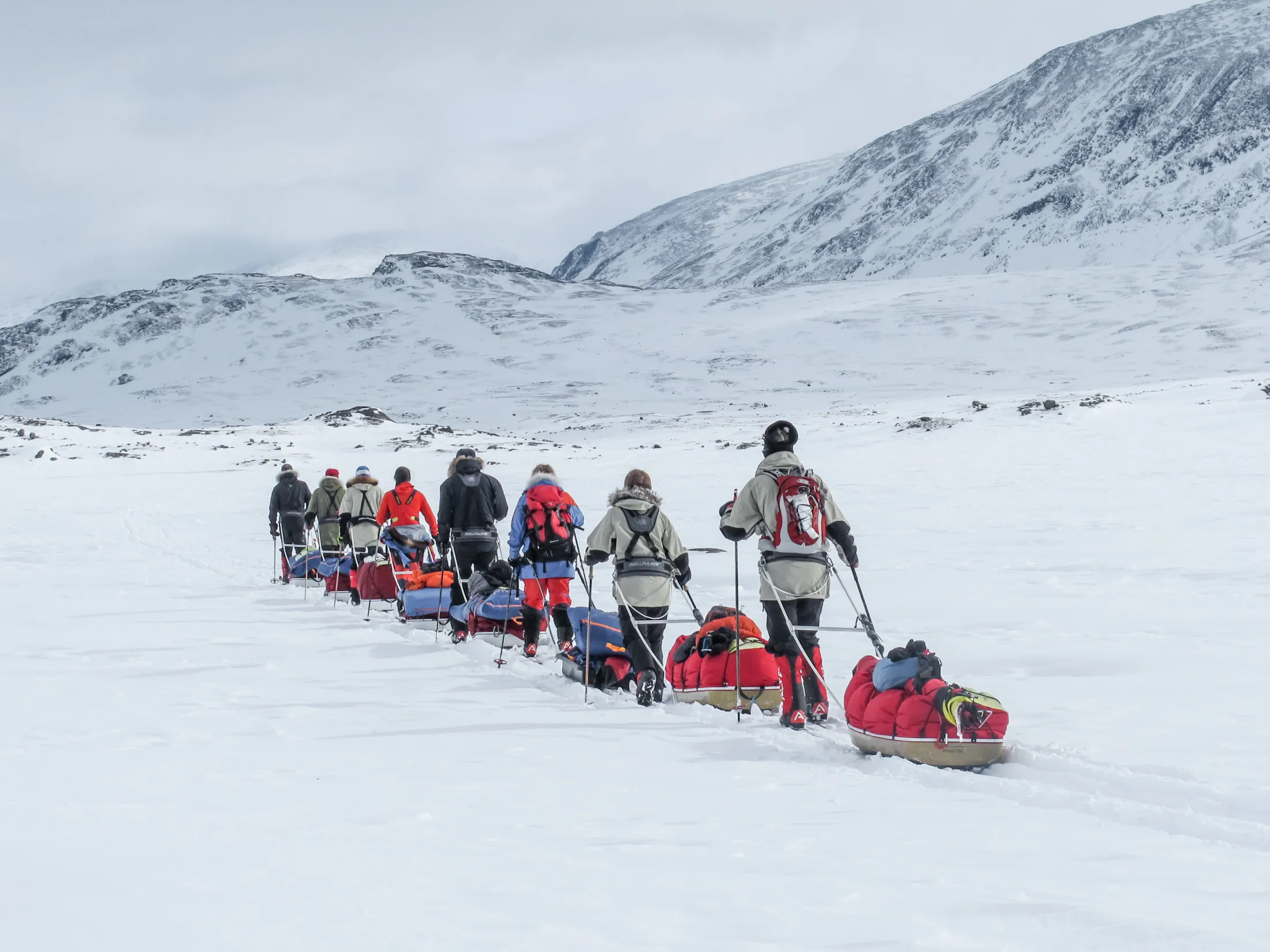
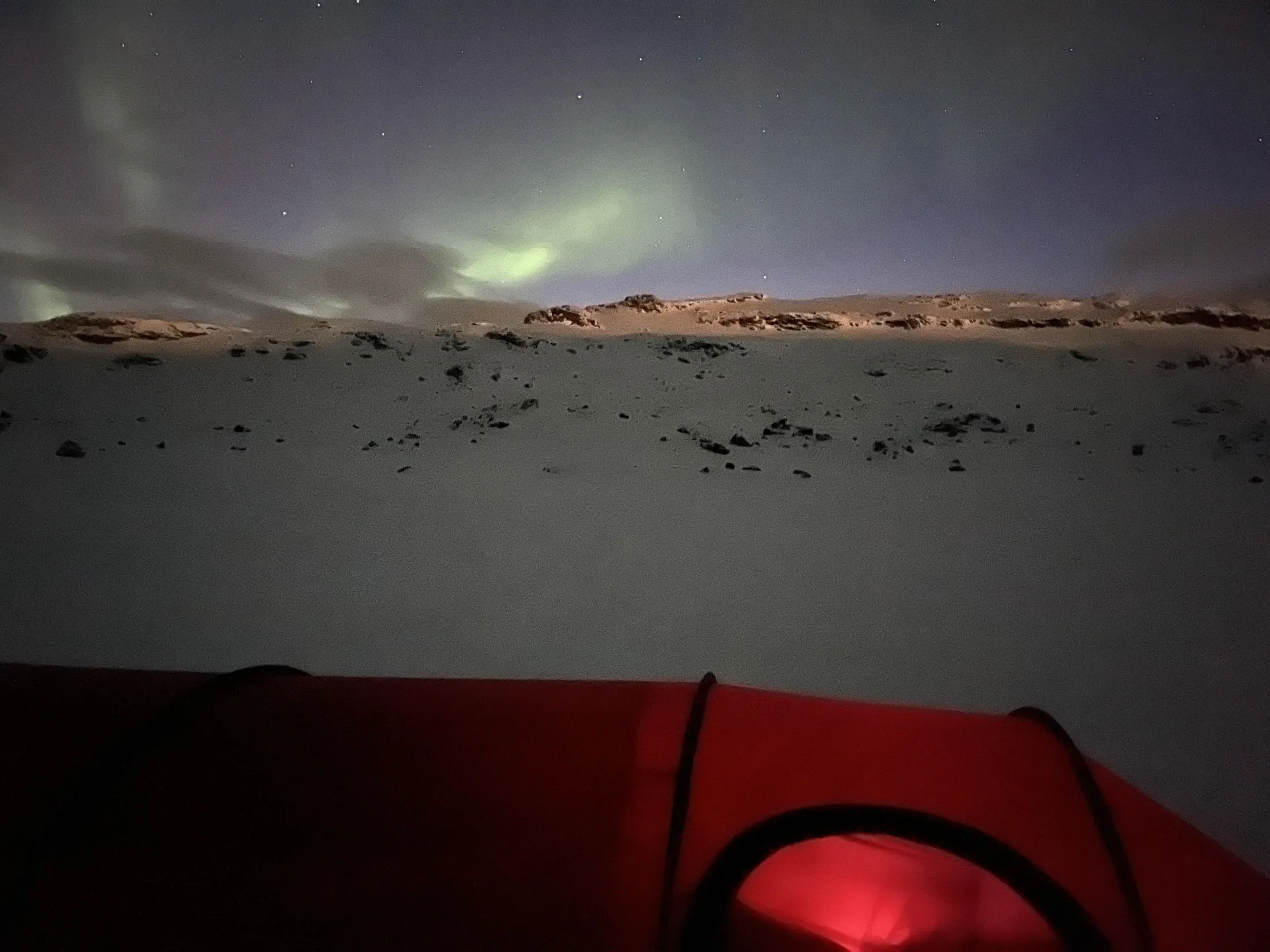
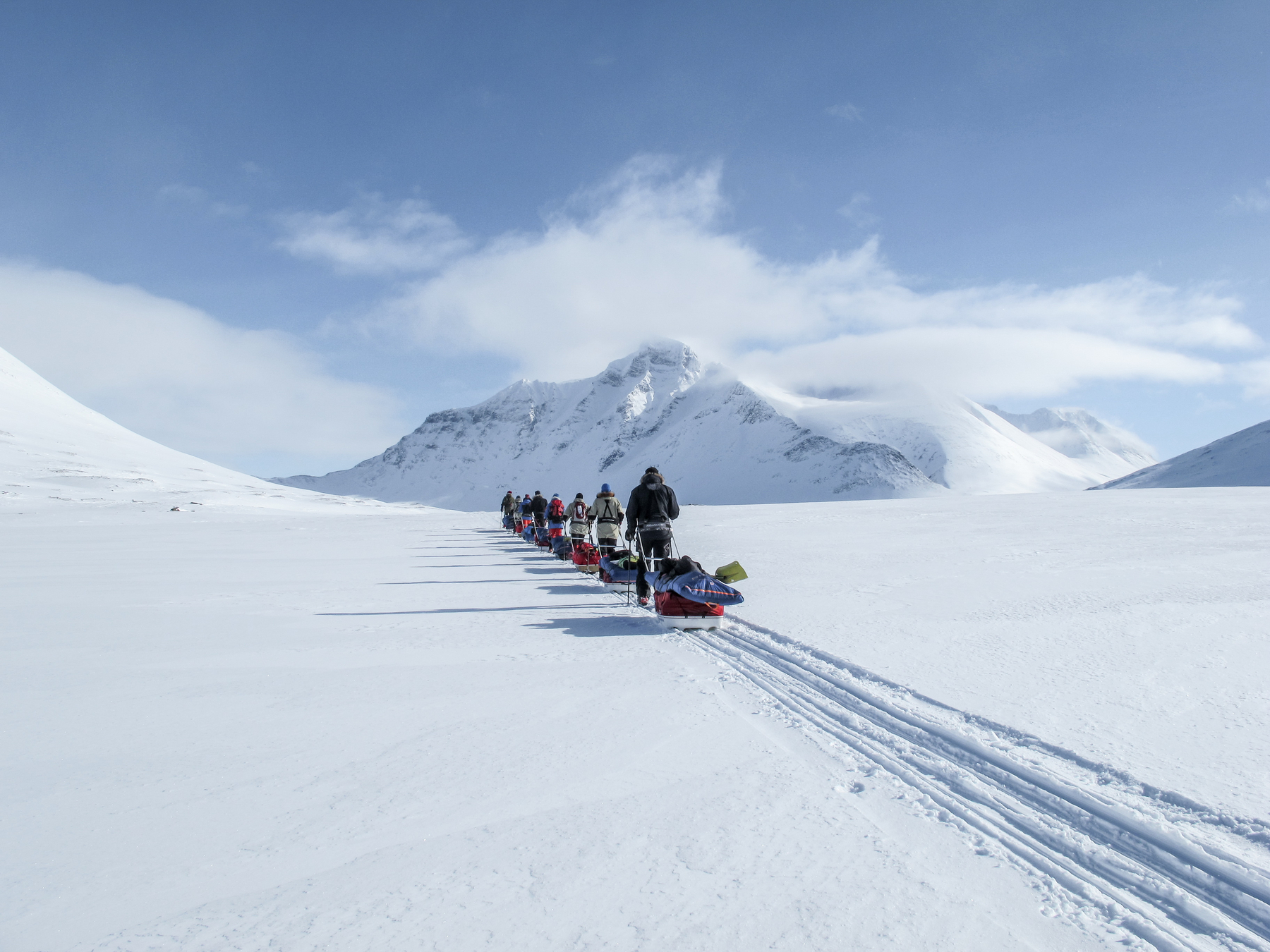
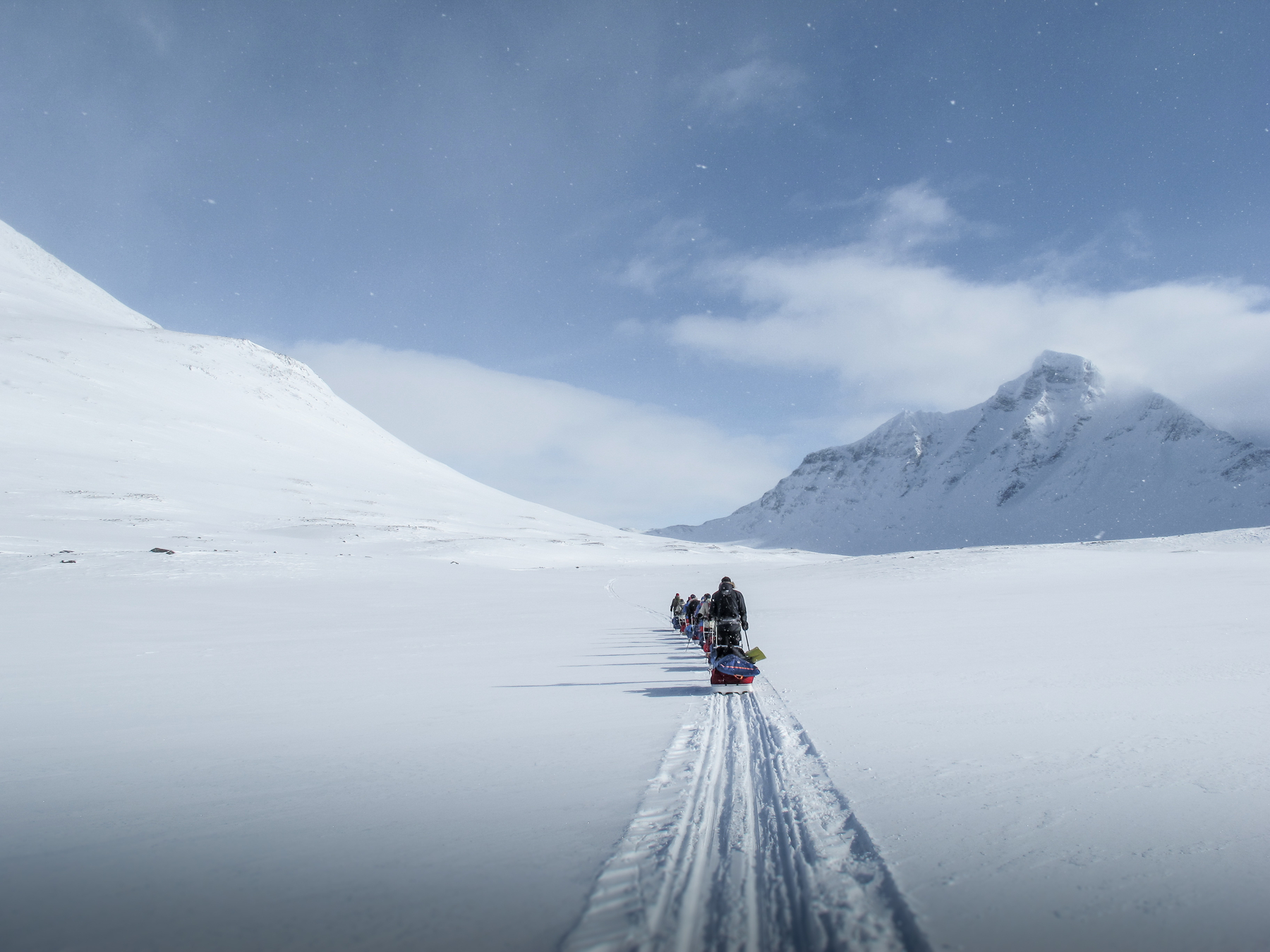
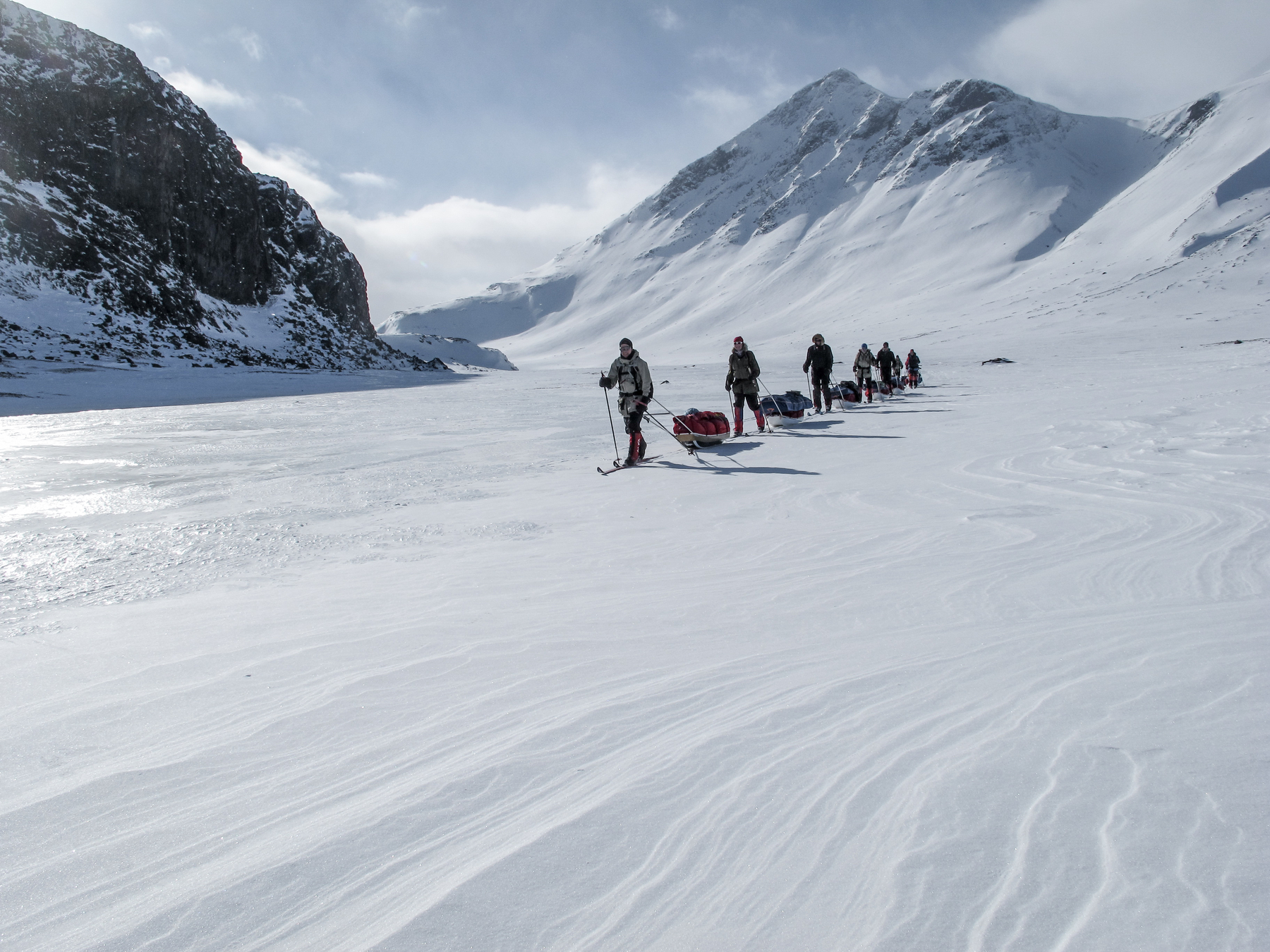
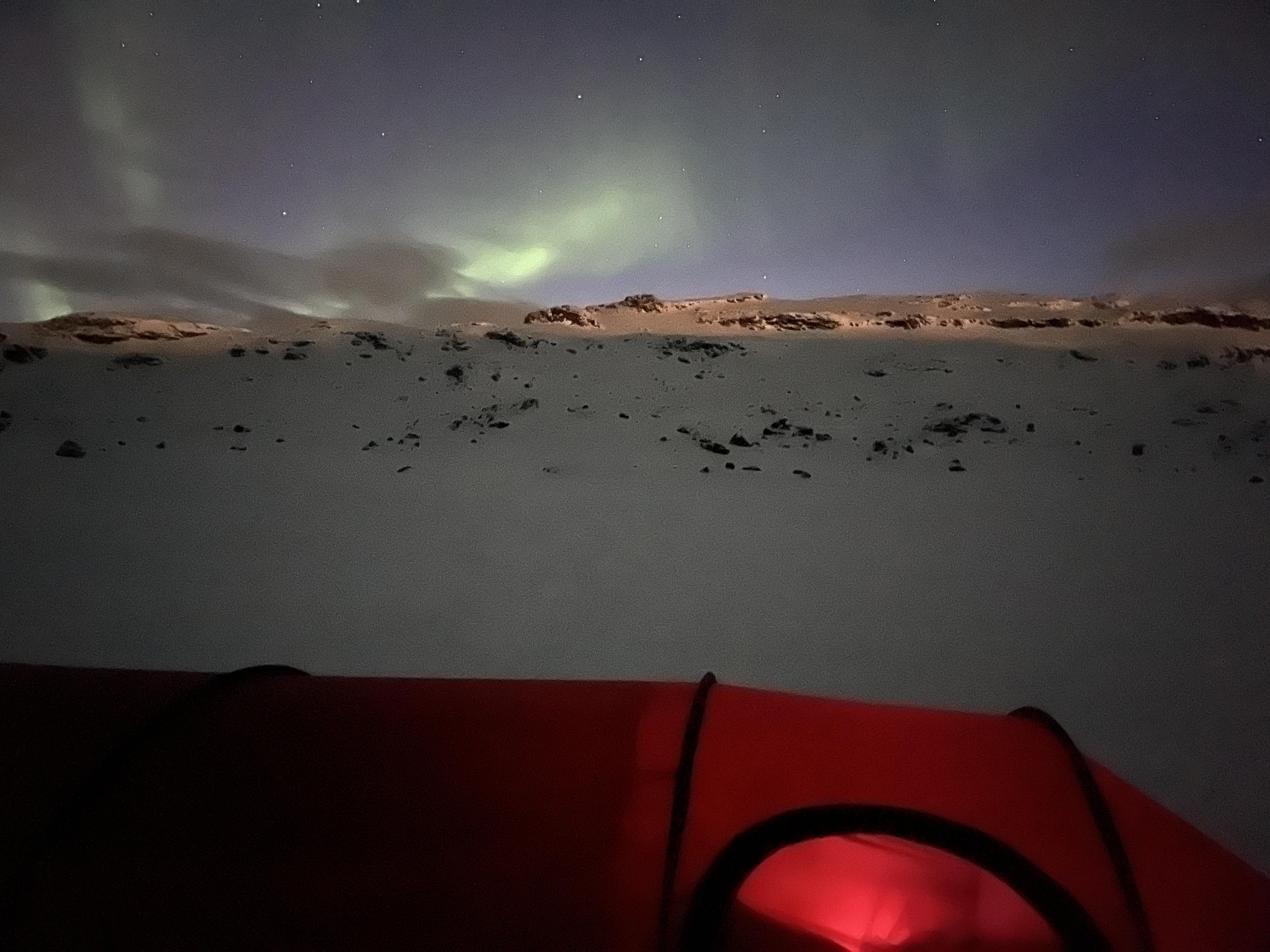
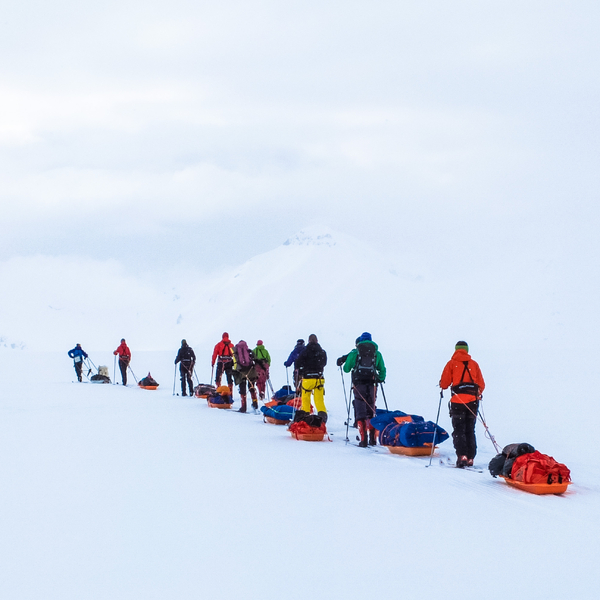
Pack your tent, strap on your skis, and attach the sled harness—a ski expedition over the Cap of the North awaits! We’ll traverse endless expanses, pass beneath majestic peaks, and cross vast lakes. We’ll pass through sheltered birch forests and up through stunning valleys; we might encounter storms and bitter cold, but also the Northern Lights, sunshine, and Easter-like weather. We might find ourselves wading through snow up to our thighs, or we might encounter the best-quality crusted snow. The landscape is varied and breathtakingly beautiful, and the wildlife is abundant.
You can follow the trips through diaries along the way. In the link, you’ll also find old trip journals. There’s plenty of inspiration here!
Far to the north lies the Cap of the North, also called North Calotte. In short, the Cap of the North is the Arctic region comprising parts of Norway, Sweden, Finland, and the northwestern regions of Russia. Here you’ll find some of the most beautiful national parks we have to offer. We begin our journey through Sarek, with its majestic valleys and 2000-meter peaks. The landscape here is breathtaking. From there, we head north toward the Abisko Mountains and on across endless expanses toward Finland. The final leg takes us past Treriksrøysa before we head down to Tromsø and wrap up with a well-deserved celebratory dinner. The entire trip is approximately 500 kilometers long.
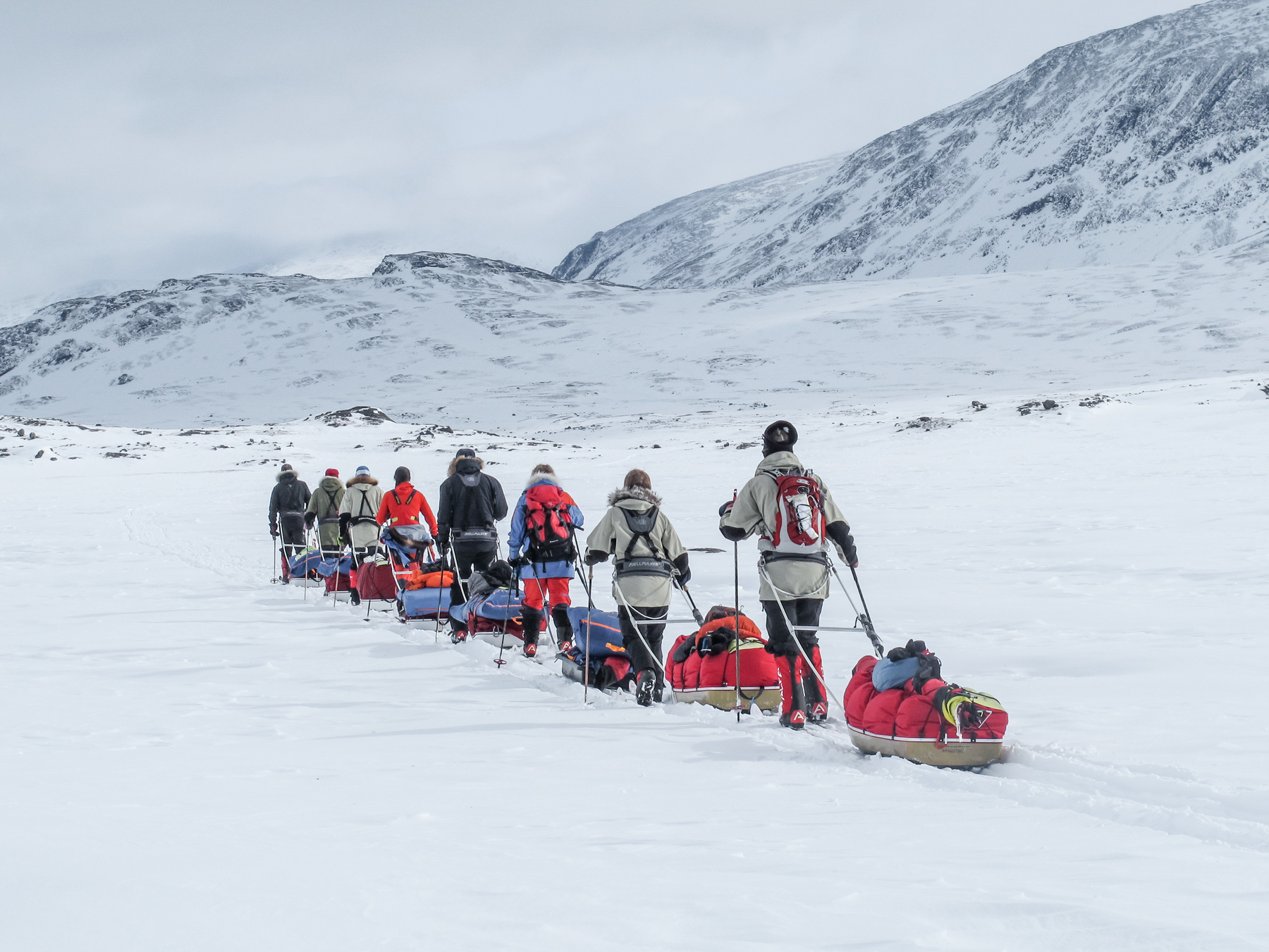
The trip is long, and the terrain is very varied. Our priority is to enjoy ourselves on the trip, but make no mistake: this trip is physically demanding and requires thorough preparation. The sled weighs 40–50 kilograms, and every day for nearly a month, we’ll be on skis for 7–10 hours a day, pulling the sled.
Plan it your way
Want this trip just for your group? Or got something different in mind? We've got you.
We fly from Oslo to Kiruna via Stockholm.
We fly from Oslo to Kiruna via Stockholm.
In Kiruna we spend the day packing food, fuel and all other equipment that will be brought on the trip, and get the pulks ready.
In Kiruna we spend the day packing food, fuel and all other equipment that will be brought on the trip, and get the pulks ready.
We are driven to Kvikkjokk before we strap on skis and pulks and set a course for Rapadalen. We are underway!
We are driven to Kvikkjokk before we strap on skis and pulks and set a course for Rapadalen. We are underway!
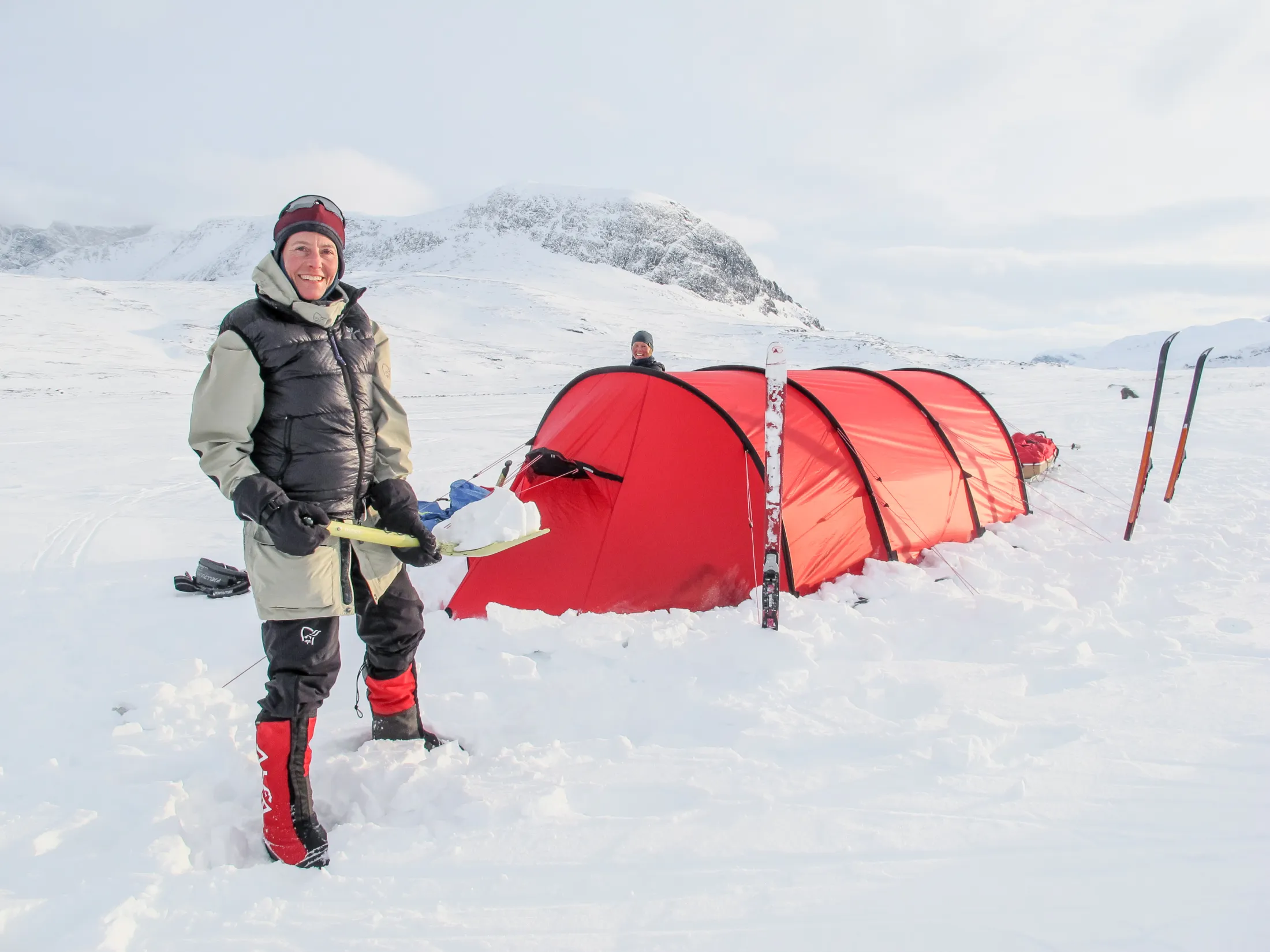
After a few days we move up into the heights, among Sarek's majestic 2000 m peaks. Surrounded by mountains on all sides we enjoy high mountain camps you will have to search long for. Sarek can be weather-beaten and it is a long way to civilization, but in the team and the pulk we have everything we need to manage. On our way to Ritsem we visit no less than three national parks: Sarek, Stora Sjöfallet and Padjelanta. Each one more fantastic than the last. This leg ends with a turn around the peerless Akkha massif and a 10 km walk over the ice on Akkajaure to Ritsem. In Ritsem we have our first depot. Here we fill up the pulks with new goodies before the trip we continue toward the north. First leg always starts easy. It is important for the body to get used to life in front of the pulk. With a calm pace and relatively short daily legs we lay the foundation for a successful trip. If we manage 10 days without blisters we will likely manage 30 as well.
After a few days we move up into the heights, among Sarek's majestic 2000 m peaks. Surrounded by mountains on all sides we enjoy high mountain camps you will have to search long for. Sarek can be weather-beaten and it is a long way to civilization, but in the team and the pulk we have everything we need to manage. On our way to Ritsem we visit no less than three national parks: Sarek, Stora Sjöfallet and Padjelanta. Each one more fantastic than the last. This leg ends with a turn around the peerless Akkha massif and a 10 km walk over the ice on Akkajaure to Ritsem. In Ritsem we have our first depot. Here we fill up the pulks with new goodies before the trip we continue toward the north. First leg always starts easy. It is important for the body to get used to life in front of the pulk. With a calm pace and relatively short daily legs we lay the foundation for a successful trip. If we manage 10 days without blisters we will likely manage 30 as well.
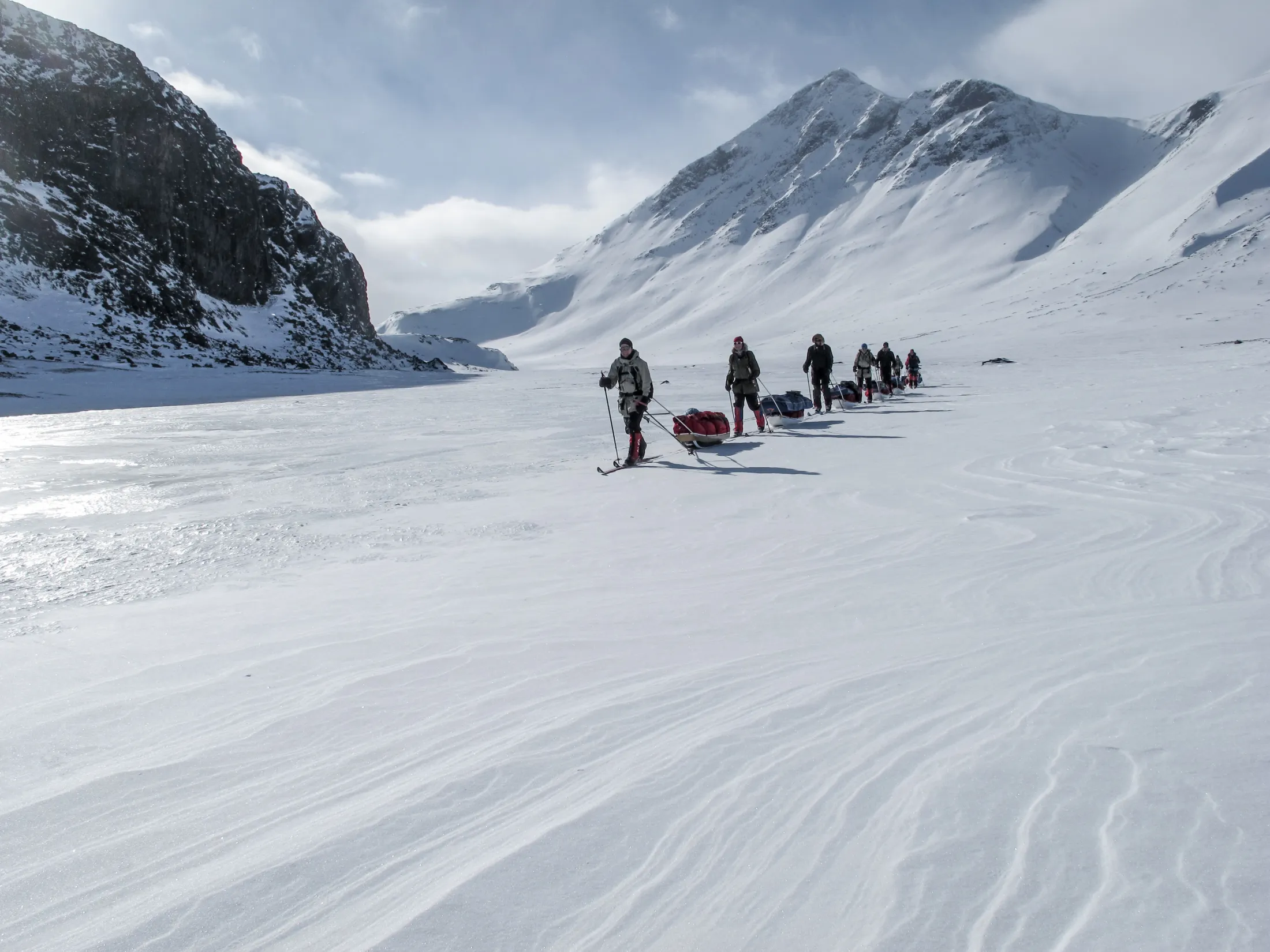
After Ritsem we continue further into the high mountains. During the next leg we will enter both the Nordkalottleden and Kungsleden. Two of the most famous and most beautiful hiking routes in Sweden. If we manage it this leg starts with being towed behind a snowmobile. Almost 20 kilometers hanging behind a scooter, exhausting and incredibly fun! The terrain is hilly, but now the body is starting to get used to the pulk trailing behind. It has almost become a part of you and the thought of walking without appears strange. The end of this leg, from Abiskojaure to Abisko, goes steeply downward. Suddenly we gaze out over Torneträsk. A 50 km long lake that we will hike across a few days later. But before that we check into a cabin in Abisko. We are actually going to eat at a table, sitting on chairs. With knives and forks in metal! Some are even so bold as to take a shower. Believe it who will. Abisko is not a big place, but one thing exists here that we can like: GODISFABRIKEN! The pulks weigh a little more out of Abisko than they strictly speaking should. But that is how it is. In Abisko we have our second depot. Here the pulks are filled to the breaking point again before the next leg.
After Ritsem we continue further into the high mountains. During the next leg we will enter both the Nordkalottleden and Kungsleden. Two of the most famous and most beautiful hiking routes in Sweden. If we manage it this leg starts with being towed behind a snowmobile. Almost 20 kilometers hanging behind a scooter, exhausting and incredibly fun! The terrain is hilly, but now the body is starting to get used to the pulk trailing behind. It has almost become a part of you and the thought of walking without appears strange. The end of this leg, from Abiskojaure to Abisko, goes steeply downward. Suddenly we gaze out over Torneträsk. A 50 km long lake that we will hike across a few days later. But before that we check into a cabin in Abisko. We are actually going to eat at a table, sitting on chairs. With knives and forks in metal! Some are even so bold as to take a shower. Believe it who will. Abisko is not a big place, but one thing exists here that we can like: GODISFABRIKEN! The pulks weigh a little more out of Abisko than they strictly speaking should. But that is how it is. In Abisko we have our second depot. Here the pulks are filled to the breaking point again before the next leg.
After an overnight stay in Abisko it is back to hard work and oats (plus a kilo of pick-and-mix candy from Godisfabrikken). The landscape changes character a bit from high mountains to flat lakes and gentle expanses. We start with 50 km across Torneträsk. Here the Greenland feeling comes out; trudging off on a compass march toward the next horizon. Is the weather nice and you look south you get a glimpse of Lapporten. A famous and cherished landmark in these regions. The next few days go rolling up and down. In and out of forest and over gentle expanses. Maybe we find a spot where we can get a fire going, tell tall tales and boast of our feats on the trip. The goal for this leg is the Three-Country Cairn. At this monument we are furthest north in Sweden and furthest east in Finland. Thirty seconds on skis and you are visiting Sweden, Finland and Norway. We of course pitch camp on the Norwegian side and prepare for the final leg.
After an overnight stay in Abisko it is back to hard work and oats (plus a kilo of pick-and-mix candy from Godisfabrikken). The landscape changes character a bit from high mountains to flat lakes and gentle expanses. We start with 50 km across Torneträsk. Here the Greenland feeling comes out; trudging off on a compass march toward the next horizon. Is the weather nice and you look south you get a glimpse of Lapporten. A famous and cherished landmark in these regions. The next few days go rolling up and down. In and out of forest and over gentle expanses. Maybe we find a spot where we can get a fire going, tell tall tales and boast of our feats on the trip. The goal for this leg is the Three-Country Cairn. At this monument we are furthest north in Sweden and furthest east in Finland. Thirty seconds on skis and you are visiting Sweden, Finland and Norway. We of course pitch camp on the Norwegian side and prepare for the final leg.
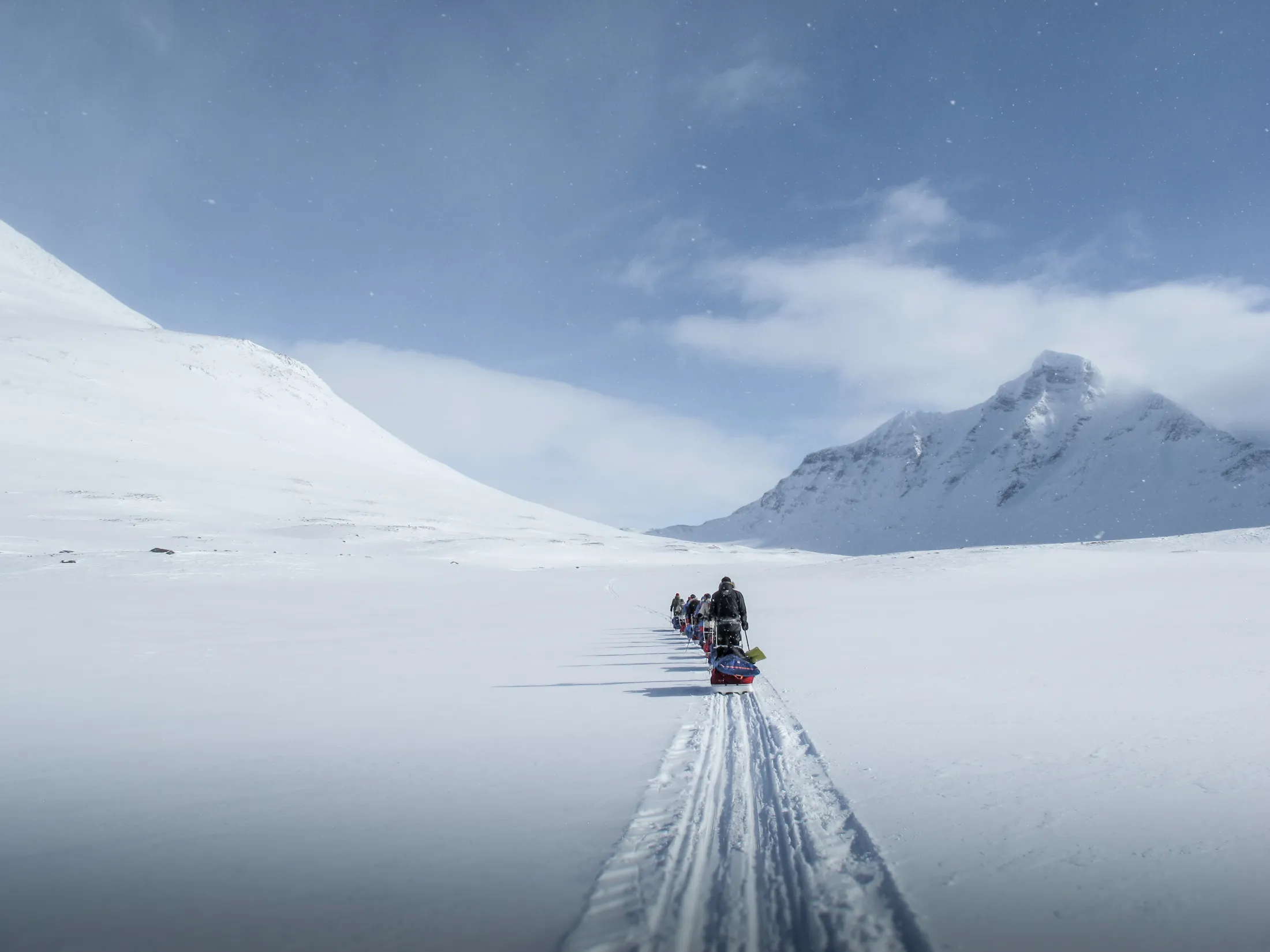
Final leg goes into Tromsø. Exactly which valley we walk down we find out when we see how much time we have left. But now it is inexorably heading toward the end. The "last days blues" sets in. Meaning that time on the trip when you look forward to coming home, but would happily have lived the carefree life with the pulk in tow for all eternity. Now it is home to everyday life. But before that: A proper celebratory meal in Tromsø!
Final leg goes into Tromsø. Exactly which valley we walk down we find out when we see how much time we have left. But now it is inexorably heading toward the end. The "last days blues" sets in. Meaning that time on the trip when you look forward to coming home, but would happily have lived the carefree life with the pulk in tow for all eternity. Now it is home to everyday life. But before that: A proper celebratory meal in Tromsø!
We fly from Oslo to Kiruna via Stockholm.
In Kiruna we spend the day packing food, fuel and all other equipment that will be brought on the trip, and get the pulks ready.
We are driven to Kvikkjokk before we strap on skis and pulks and set a course for Rapadalen. We are underway!
After a few days we move up into the heights, among Sarek's majestic 2000 m peaks. Surrounded by mountains on all sides we enjoy high mountain camps you will have to search long for. Sarek can be weather-beaten and it is a long way to civilization, but in the team and the pulk we have everything we need to manage. On our way to Ritsem we visit no less than three national parks: Sarek, Stora Sjöfallet and Padjelanta. Each one more fantastic than the last. This leg ends with a turn around the peerless Akkha massif and a 10 km walk over the ice on Akkajaure to Ritsem. In Ritsem we have our first depot. Here we fill up the pulks with new goodies before the trip we continue toward the north. First leg always starts easy. It is important for the body to get used to life in front of the pulk. With a calm pace and relatively short daily legs we lay the foundation for a successful trip. If we manage 10 days without blisters we will likely manage 30 as well.
After Ritsem we continue further into the high mountains. During the next leg we will enter both the Nordkalottleden and Kungsleden. Two of the most famous and most beautiful hiking routes in Sweden. If we manage it this leg starts with being towed behind a snowmobile. Almost 20 kilometers hanging behind a scooter, exhausting and incredibly fun! The terrain is hilly, but now the body is starting to get used to the pulk trailing behind. It has almost become a part of you and the thought of walking without appears strange. The end of this leg, from Abiskojaure to Abisko, goes steeply downward. Suddenly we gaze out over Torneträsk. A 50 km long lake that we will hike across a few days later. But before that we check into a cabin in Abisko. We are actually going to eat at a table, sitting on chairs. With knives and forks in metal! Some are even so bold as to take a shower. Believe it who will. Abisko is not a big place, but one thing exists here that we can like: GODISFABRIKEN! The pulks weigh a little more out of Abisko than they strictly speaking should. But that is how it is. In Abisko we have our second depot. Here the pulks are filled to the breaking point again before the next leg.
After an overnight stay in Abisko it is back to hard work and oats (plus a kilo of pick-and-mix candy from Godisfabrikken). The landscape changes character a bit from high mountains to flat lakes and gentle expanses. We start with 50 km across Torneträsk. Here the Greenland feeling comes out; trudging off on a compass march toward the next horizon. Is the weather nice and you look south you get a glimpse of Lapporten. A famous and cherished landmark in these regions. The next few days go rolling up and down. In and out of forest and over gentle expanses. Maybe we find a spot where we can get a fire going, tell tall tales and boast of our feats on the trip. The goal for this leg is the Three-Country Cairn. At this monument we are furthest north in Sweden and furthest east in Finland. Thirty seconds on skis and you are visiting Sweden, Finland and Norway. We of course pitch camp on the Norwegian side and prepare for the final leg.
Final leg goes into Tromsø. Exactly which valley we walk down we find out when we see how much time we have left. But now it is inexorably heading toward the end. The "last days blues" sets in. Meaning that time on the trip when you look forward to coming home, but would happily have lived the carefree life with the pulk in tow for all eternity. Now it is home to everyday life. But before that: A proper celebratory meal in Tromsø!
Oslo - Kiruna and Tromsø - Oslo.
Norwegian-speaking guide on programs with Norwegian language.
All transportation along the route, including the leg from Kiruna to Kvikkjokk Mountain Station.
In Kiruna, Abisko (if we choose to stay there), and Tromsø.
Meals as specified in the program.
The price of 7500 NOK for the training session is included. If a participant is rejected after the training camp, this amount will not be refunded.
Tents, Primus stoves, pots, navigation, communication, etc.
Emergency locator beacon, satellite phone, and medication.
After the training session and throughout the entire process from start to finish.
On the website.
For trips where flights are not included, please check our website to confirm that the departure is guaranteed before booking your own plane tickets. For each trip, we require a minimum number of confirmed participants before the departure can be guaranteed.
Request quotes from other cities in Norway.
We reserve the right to change prices. The day by day program is indicative and changes may occur. We also refer to our general travel conditions.
On all our trips, we advise you to have full travel and accident insurance, which must also cover potential medical repatriation. Read more about travel insurance.
For departures with Norrøna Adventure guides:
On our trips, it is important to understand that we often will be traveling far off the beaten track. We will, of course, do everything we can to assist if anything should happen, but a potential rescue operation can be demanding. It is therefore extremely important that all participants arrive well-prepared and ready to handle unforeseen situations.
Here you have to be ready for a real challenge! The trips are often longer than at lower levels. Along the way, it will be both physically and mentally demanding, and that requires you to be prepared for this. You should engage in targeted training well in advance of departure, and you must prepare well.
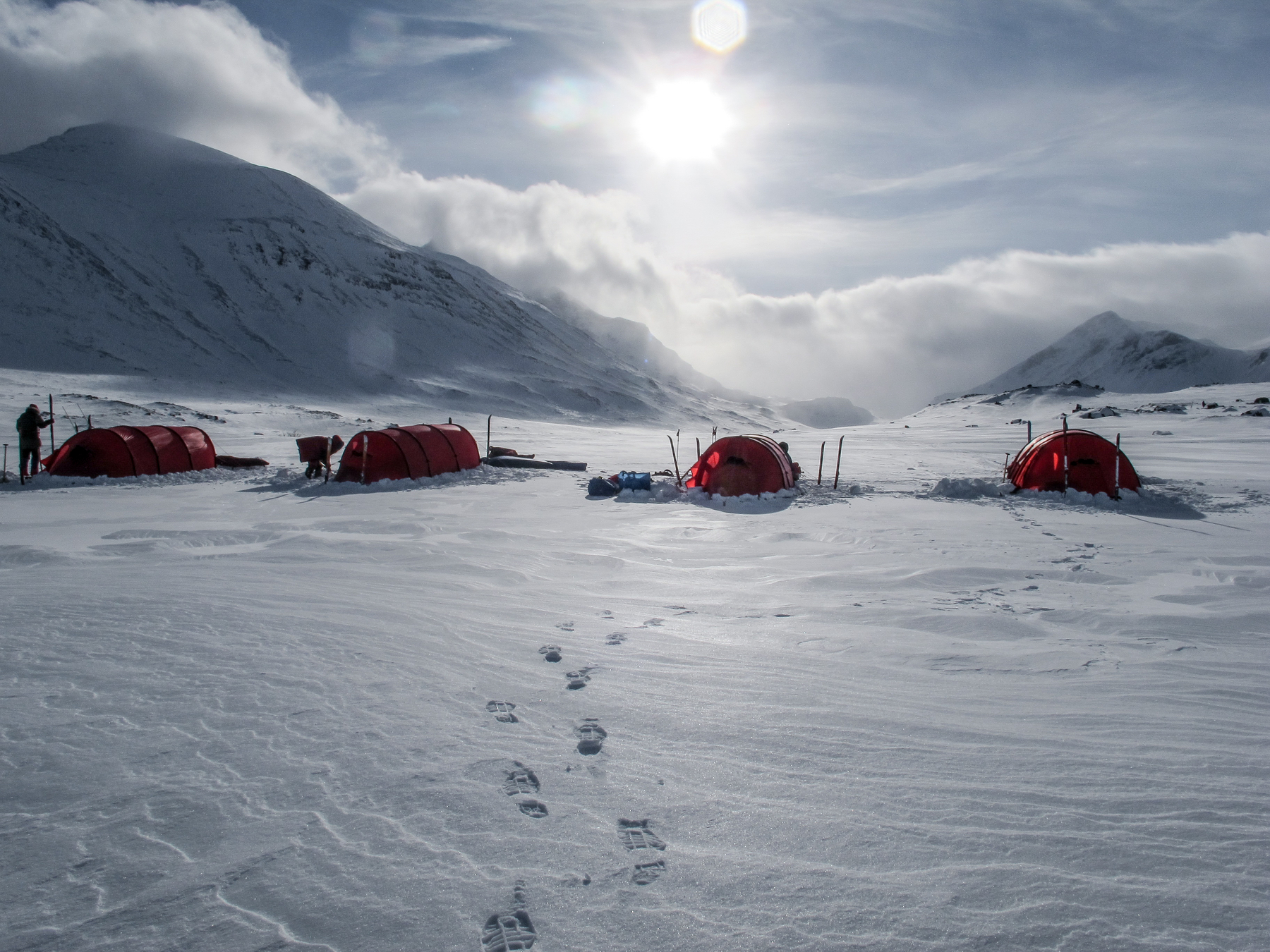
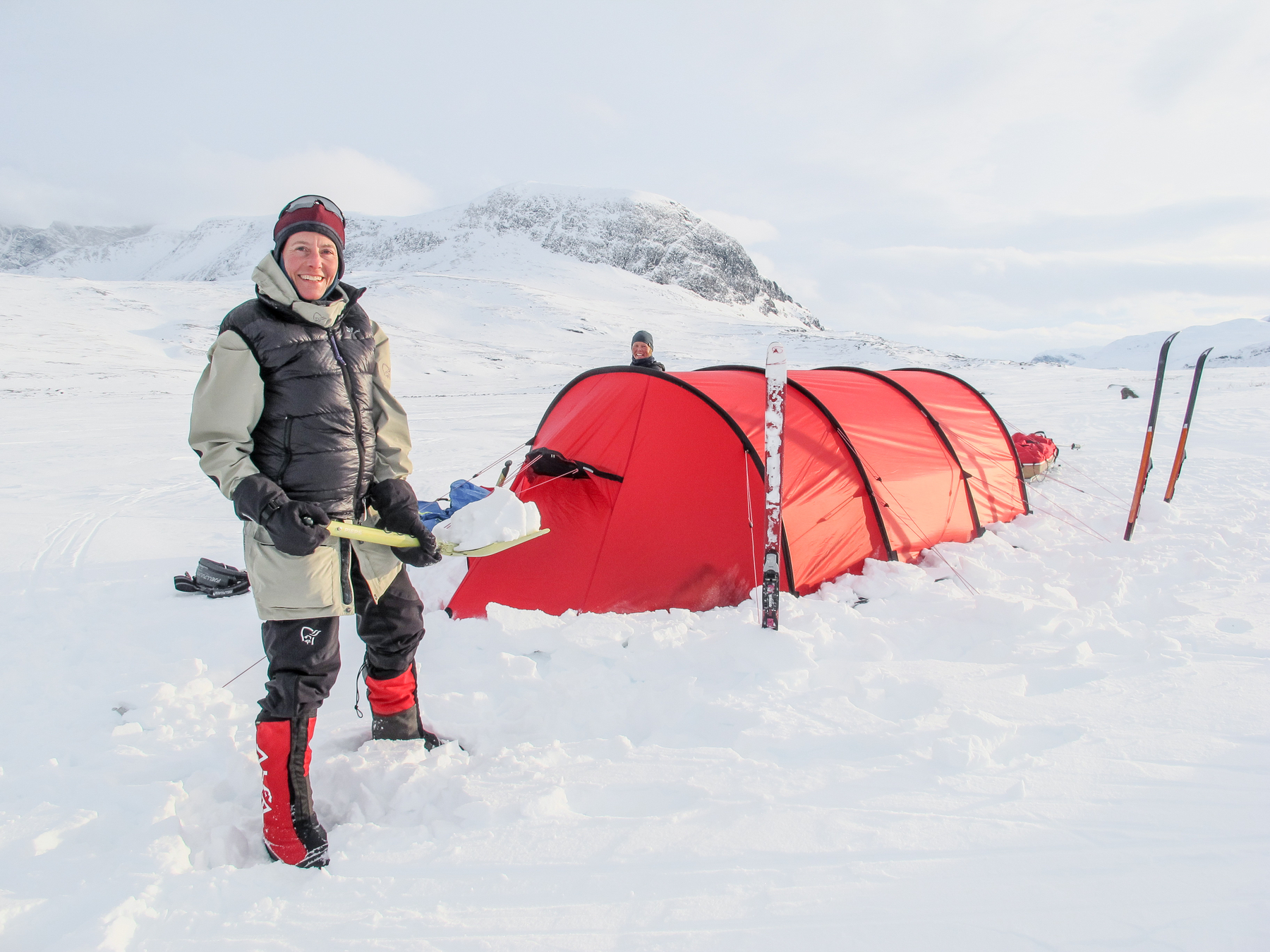
We overnight in tents. On these trips, the participants take part in camp routines such as setting up camp and cooking meals.
Activities/trips with some risk. Certain incidents may occur, and they may be of such a nature that they may require professional help.
This long-distance expedition requires that you train systematically over time in the two key areas: skiing and pulling a heavy load behind you. Read here about tire pulling training.
As a participant, you must also be able to do other essential things before we set out: set up a mountain tent in windy conditions and light and cook on a Primus stove. This is a trip that requires participants to be in good physical shape; you MUST train to complete the trip, and you must start training as soon as you sign up. For nearly a month, we’ll be on skis for 7–10 hours a day. Your body needs time to get used to the strain of pulling 40–50 kg in a sled every day.
We all need to build up our fitness before the trip. You should create a training program to follow leading up to departure. The trip requires motivation and a positive attitude. Everyone has bad days, and a little encouragement from the others helps. At the same time, the Cap of the North can offer some fantastic days. On previous trips, we’ve experienced everything from -30 to +15 degrees Celsius and sunshine. The trip takes place in the spring, and the weather can vary greatly from day to day and hour to hour.
Norrøna Adventure provides all shared equipment, including safety gear, navigation equipment, repair tools, first-aid supplies, tents, Primus stoves, cookware, etc. You are responsible for your own sled and personal gear. We have extensive experience in helping you choose the right sleds. Everyone must use the same boots and binding system (BC) so that we are well-equipped to handle maintenance and repairs along the way. We will go through the equipment list in detail during the preparation phase.
We will be holding a training weekend ahead of the trip. Here you’ll meet your fellow participants and Norrøna Adventure’s guide. The training camp will take place in the winter mountains, and we’ll run a program similar to what we’ll encounter at the Cap of the North.
We will be traveling long distances on skis and with a sled, sleeping in tents, and establishing routines. Each participant will be evaluated, and we reserve the right to exclude participants after the orientation if they are not sufficiently prepared to take part in the trip. Over the course of this weekend, we’ll share with you everything we can in terms of tips, advice, and experiences.
Before embarking on our journey together, we kindly remind all trip participants to check their respective country's visa status and vaccination requirements. Ensuring your travel documents are in order is a crucial step in guaranteeing a smooth and hassle-free adventure.
You must undergo a thorough medical examination before the trip. Inform your doctor that this is an expedition involving physical exertion and taking place far off the beaten path. We require that everyone complete a health form and have it certified by a doctor.
If you are over 67 years old, you should have a thorough medical check-up before your trip. Make your doctor aware that this is a trip involving physical exertion and moving off the beaten track.
It is important that you complete all parts of the registration form (especially where we ask for information about health and allergies), and let us know if there is anything we need to be aware of prior to and during the trip. Relevant health information that may affect the trip should also be communicated to the guide at the start of the trip. *Note* - If you are on regular medication, have known allergies or anything similar, you must always bring your personal medication with you.
See the overview on FHI´s pages on travel health advice. For vaccination and guidance, please contact Sentrum Reisemedisin: Reisemedisin.no.
This list is intended as a guideline, so that we have what we need regardless of the weather we get on the trip. Remember that you can also get used outdoor equipment that works perfectly. Get in touch if you have any questions. TIP: We recommend that you have the most important equipment in your hand luggage, for example hiking boots and gore-tex jacket/trousers.
We recommend wool underwear for both men and women. Wool sportstop is recommended for women.
Two layers for extra cold conditions: for example, combining wool or synthetic mesh next to the skin, with regular wool underwear on top.
The thicker the better, with good "resilience", which means that they should not have gone flat. Around 80% wool.
Thin, fine-knit wool liners/socks to wear under the thick wool socks. If you use vapor barriers, these socks should be worn inside of them.
Fleece or wool.
Big and warm! Big enough that it fits over everything else. It must have a hood and cover the butt. Down is recommended.
We recommend long shorts or 3/4-length pants with down insulation. A skirt can also work. They should be warm, and roomy enough to wear over shell pants, and preferably feature a full-length side zipper.
Gore-Tex or similar. Must be waterproof and windproof, zips for ventilation are recommended.
Such as the Norrøna arktis Windstopper Ousland Edition or similar.
Warm hat for cold days.
Thick, wool.
Thin gloves/liners can be worn inside your thick mittens/windproof mittens. Also practical when in the tent, handling the burner etc.
The overmittens should be roomy and extend well up the forearm. They should be windproof and ideally handle some moisture. They need to provide a good grip, even with the inner mittens inside. The inner mittens should be thick and warm, preferably made of wool.
To protect the face from freezing wind and blowing snow. We recommend neoprene, which provides extra good protection in the wind. Breathing hole in front of nose/mouth for ventilation.
Ski boots intended for ski expeditions. Large enough to fit inner boots. Must be compatible with BC bindings.
Intuition liners and/or thick wool liners. It might be nice to bring both.
Lightweight and back up very small. Keep your feet warm inside the tent, sleeping bag or while walking around camp. Down or synthetic filling. In addition, warm and good footwear in case of emergency, if your feet are very cold.
Good, warm sleeping bag that can withstand -30°C in comfort temperature. We recommend down. They are lighter, and become smaller in package volume.
Flat type made of closed-cell foam, e.g., Therm-a-Rest Z-Lite. Designed to be used underneath an inflatable sleeping mat.
For winter use. For example Exped down mat or Thermarest NeoAir. Used together with the flat sleeping mat.
Waterproof pack bags to keep your clothes and gear dry, organized, and help reduce volume. It is especially important to have dedicated waterproof bags for essential equipment on your trip, such as your sleeping bag, down jacket, and electronics.
They can be used in your backpack while hiking or skiing, in your sled bag on ski expeditions, or in your duffel bag on trips where the bag is carried by porters, mules, or similar.
Remember new/extra batteries.
A solid pair, with dark glass.
Personal medicines and, for example, band-aids, blister plaster, sports tape, throat lozenges, nasal drops, Paracetamol/Ibuprofen, stomach regulators, etc.
We need to know about all medicines you are taking, in case something happens.
Tooth brush, tooth paste, small towel, ear plugs, wet wipes, biodegradable soap, etc.
High SPF, 30-50. Remember chapstick for lips and nose.
Compact and light.
Preferably a spoon with a long handle if you are going to eat freeze dried food.
Passport, tickets, bank card, proof of vaccination andproof of insurance. Remember to have a copy of important documents on your phone and/or somewhere in your bag.
Alpine snow glasses. To protect your face and eyes in snow, wind and cold conditions.
Nordic backcountry skis with steel edges. Large pulleys on the rods, and not too long. We're not going to be poling, and long poles make your hands cold. Preferably poles with a "long handle". We walk with around 90 degrees in the elbow. Skis must have BC binding with manual closure.
1-2 short pairs, 1 long pair.
A small bag with antibac, and dog poop bags for used wet wipes etc. Here you can also keep toilet paper, and matches to burn used toilet paper.
2 x 1 litre bottles, with insulation cover, so they dont freeze. For example Nalgene bottles with wide mouth. They can handle hot water, so you can use them to keep warm in the sleeping bag. If you do not have 2 bottles you can bring an extra thermos instead (must be 3 litres of water capacity all together).
1-2 litre (3 litres all together in thermos and waterbottles).
Bungee cords/elastic straps with hooks for securing gear in the sled. 3-4 per sled.
For one sled; 1 full + 1-2 half bags (nice for organising), such as Piteraq HD version.
For example Piteraq HD. Be sure to have the right size, that fits your sleeping mats.
Thin, ultra light.
For evenings and leasure days.
For warmer days, and as a hat when sleeping.
Small and light.
To increase the comfort temperature in your sleeping bag.
Nuts, chocolate, energy bars, etc.
If youre a light sleeper.
Might be a good idea if you're going on a trip when it's bright at night (you can possibly use a buff/neck gaiter).
Such as hot chocolate, hot lemonade or berry drinks etc.
It is important to pack your clothes and sleeping bag in a completely waterproof manner. Even if your sleeping bag already has a cover, it’s important to pack it in a waterproof stuff sack as well. Read more about how to pack and prepare.
The sleds will weigh 40–50 kg. Shared equipment will be distributed among the participants.
Participants will be divided into tent groups of two or three. Cooking and melting snow will be handled by each tent group. The trail food consists mainly of freeze-dried meals for lunch and dinner, and oatmeal for breakfast.
TIP: Travel in your hiking boots. We recommend that you pack your most essential hiking gear in your carry-on luggage, such as ski boots and a Gore-Tex jacket and pants.
We also provide the following shared and safety equipment:
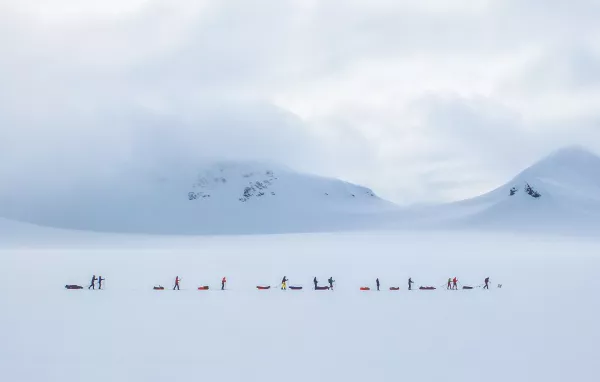
Agardhbukta to Grønfjorden
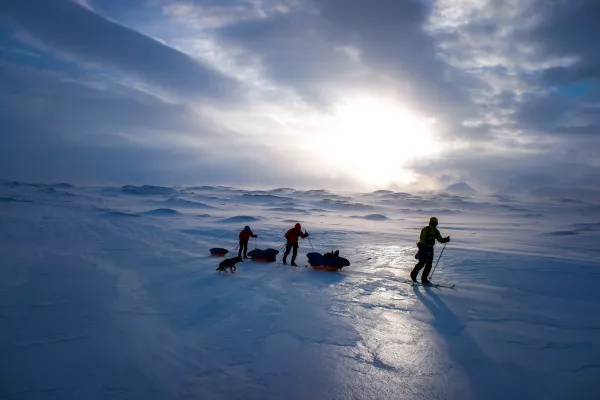
Skiing the entire length of Spitsbergen island
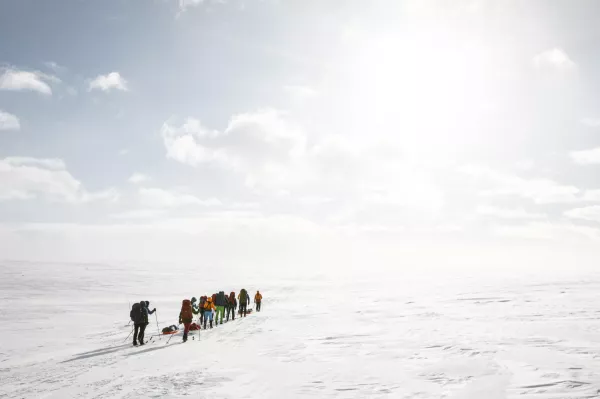
Crossing Finnmarksvidda Mountain Plateau
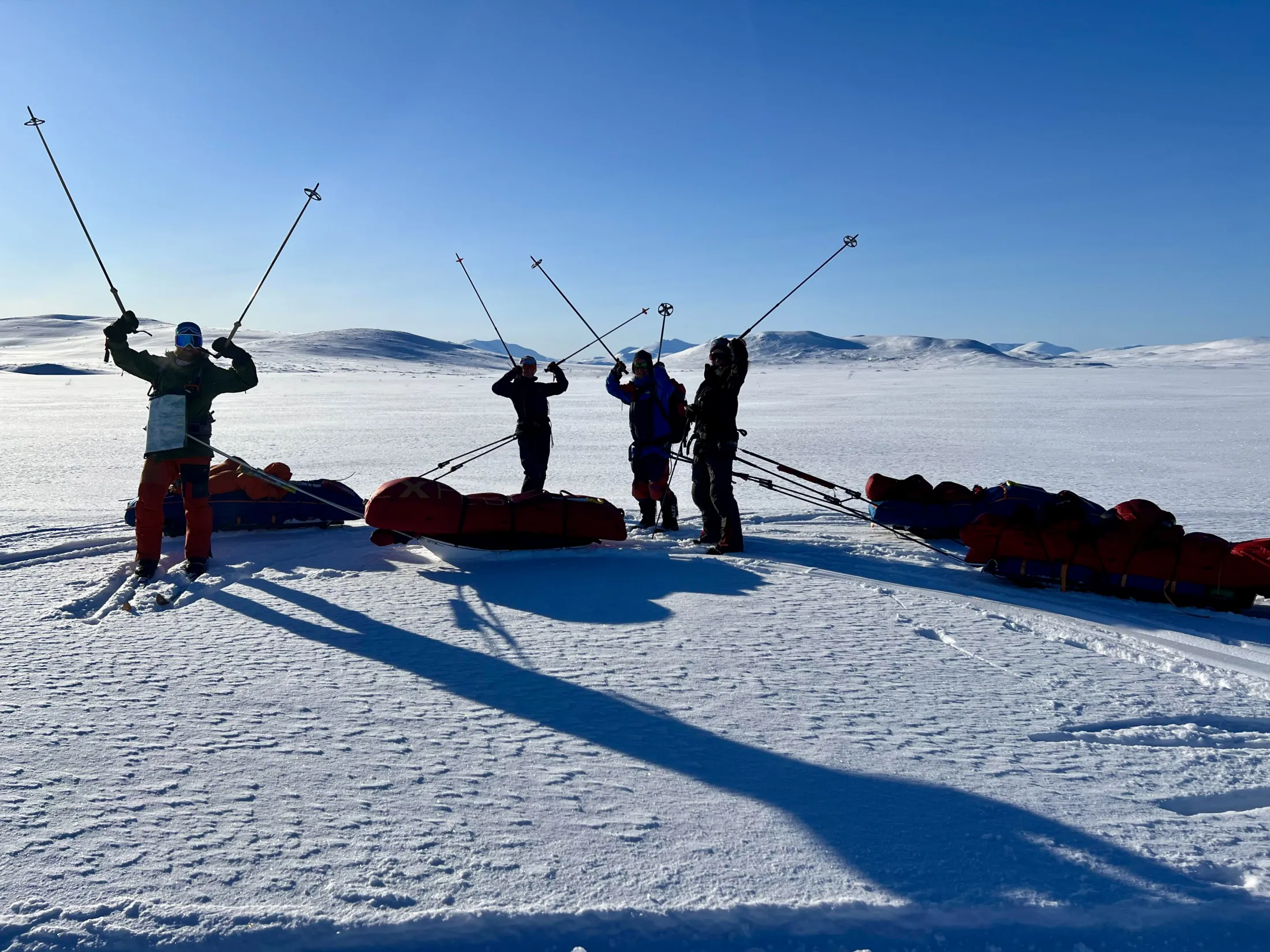
Wilderness Adventure: Lars Mausethagen is a fantastic guide who makes this trip a truly unique experience. The route takes shape as we go, depending on snow conditions, the weather, and the participants’ abilities. Nature at its best and challenges for both body and soul. Highly recommended!!!
– Eva R, 2024
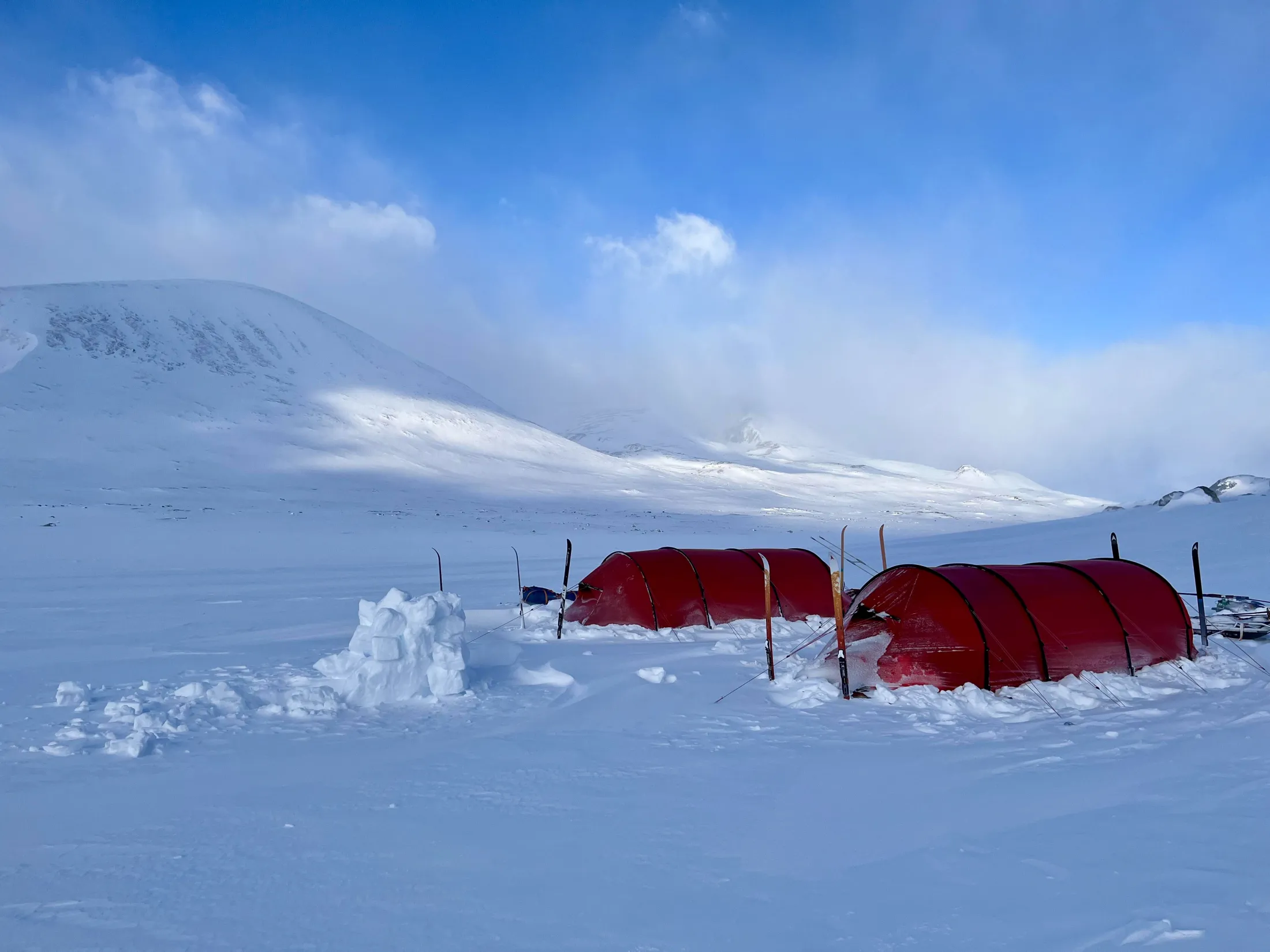
A truly magical trip—one that had it all! Wild and beautiful scenery with stunning mountains, steep ascents, and gentle, open, snow-covered expanses. When the Easter weather finally arrived, this turned out to be my most beautiful Easter trip ever. The guide led us safely and securely all the way to Tromsø. A very pleasant, accommodating, and skilled guide. All credit to him.
– Åse, 2022
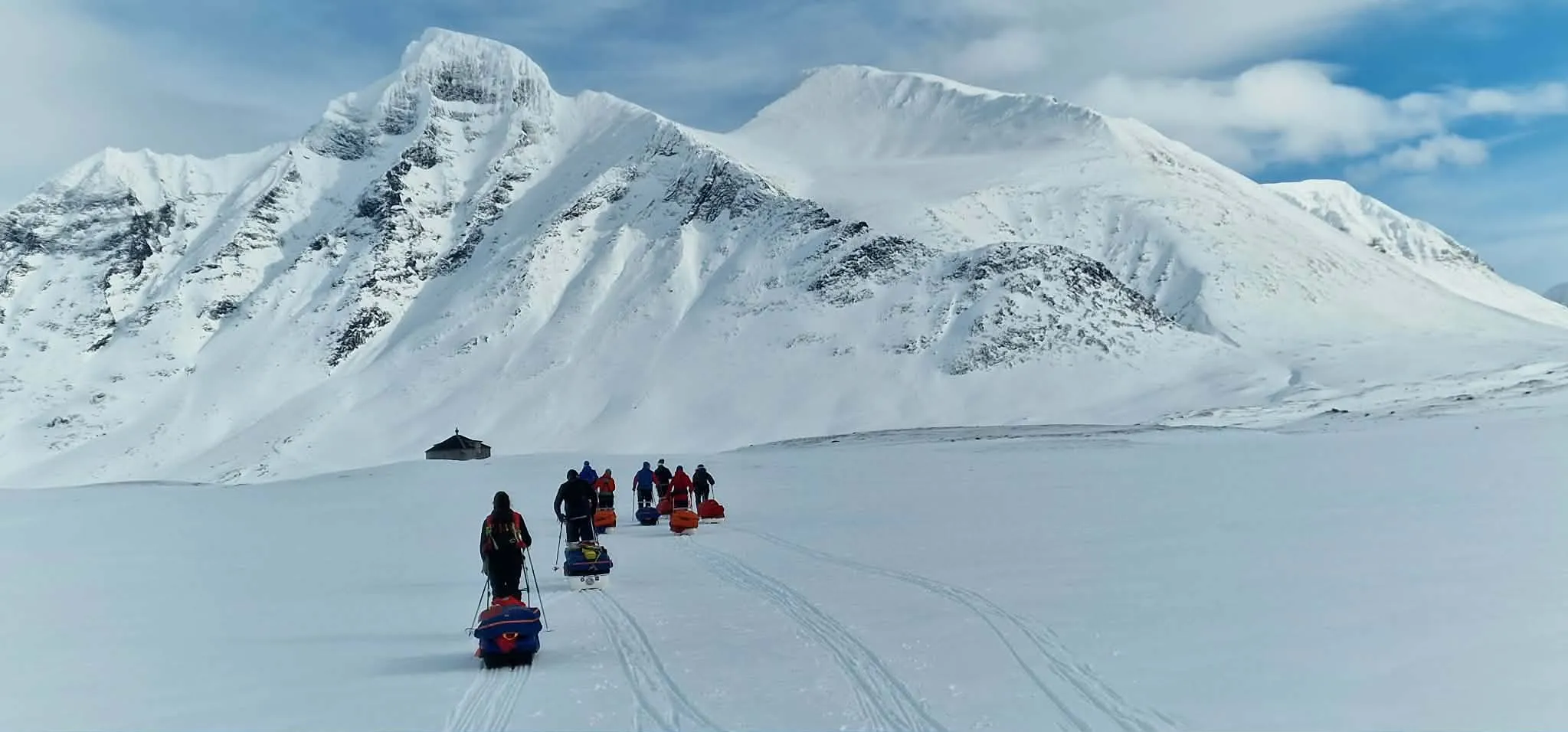
A really great trip 😊 Diverse and beautiful mountain scenery, and a wonderful group to go hiking with. Well-organized and well-planned, with a great guide.
– Kathrine, 2022