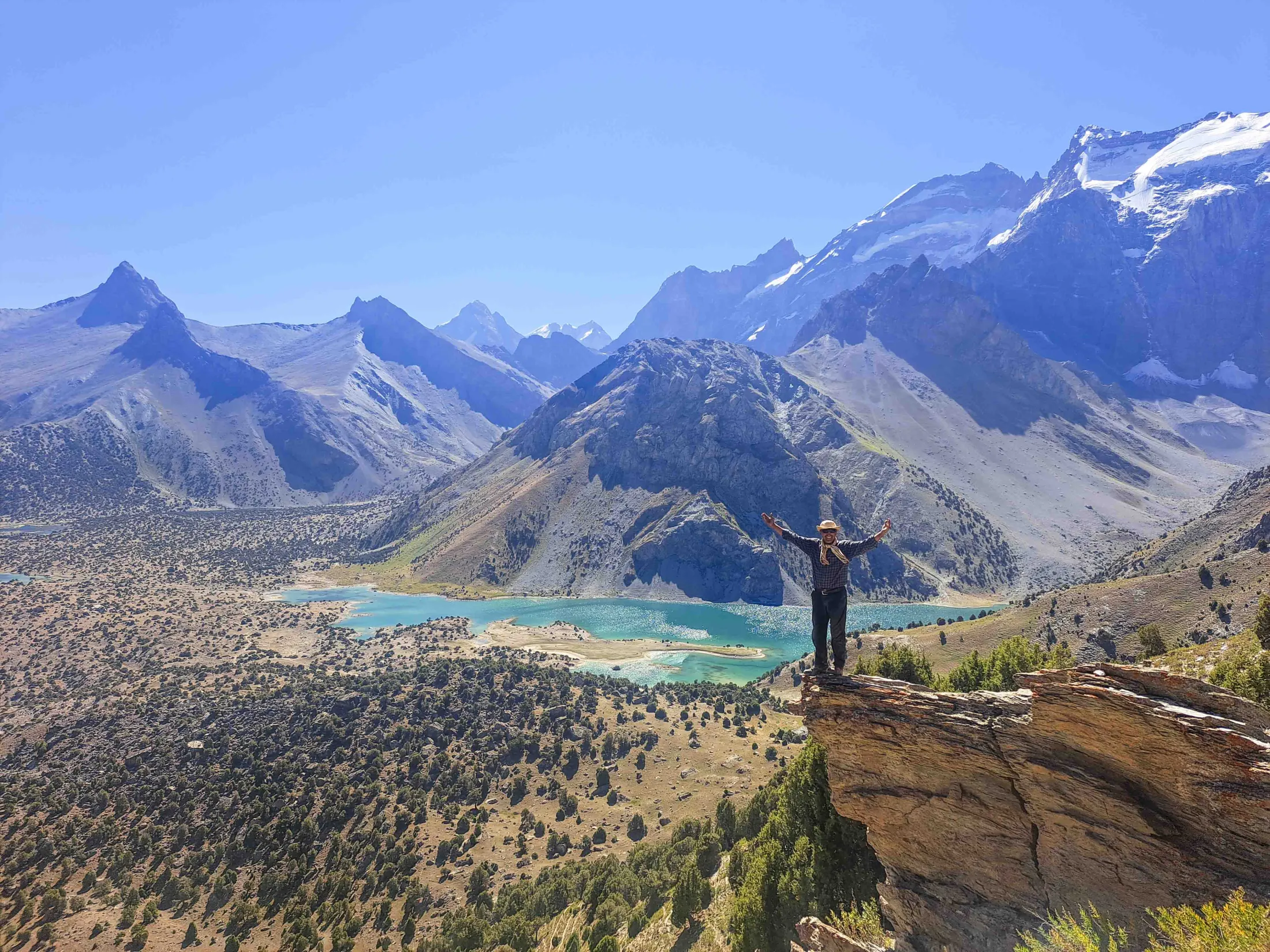
A man stands with open arms on a rocky outcrop overlooking a vibrant turquoise alpine lake surrounded by rugged, snow-capped mountains under a clear blue sky.
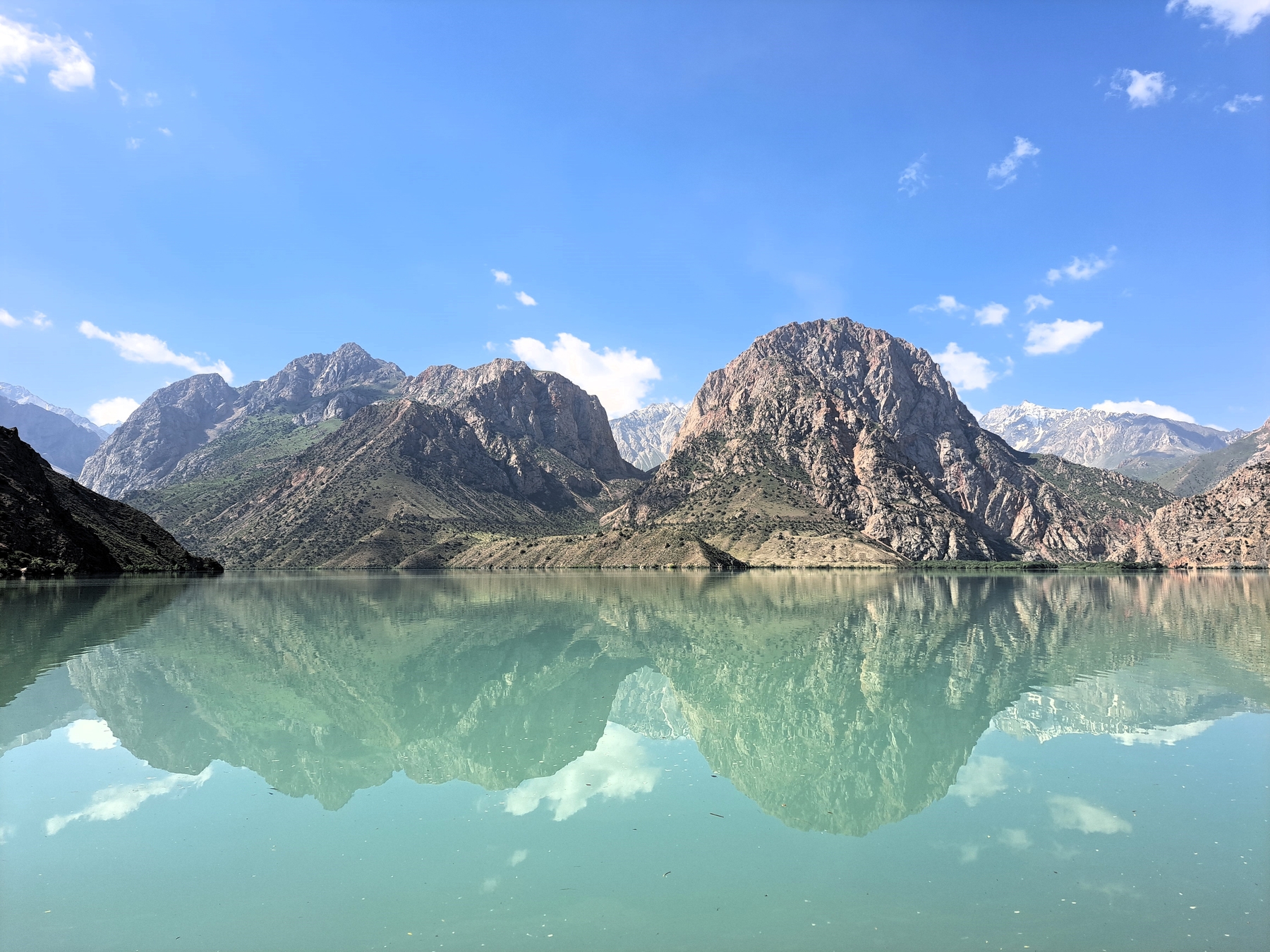
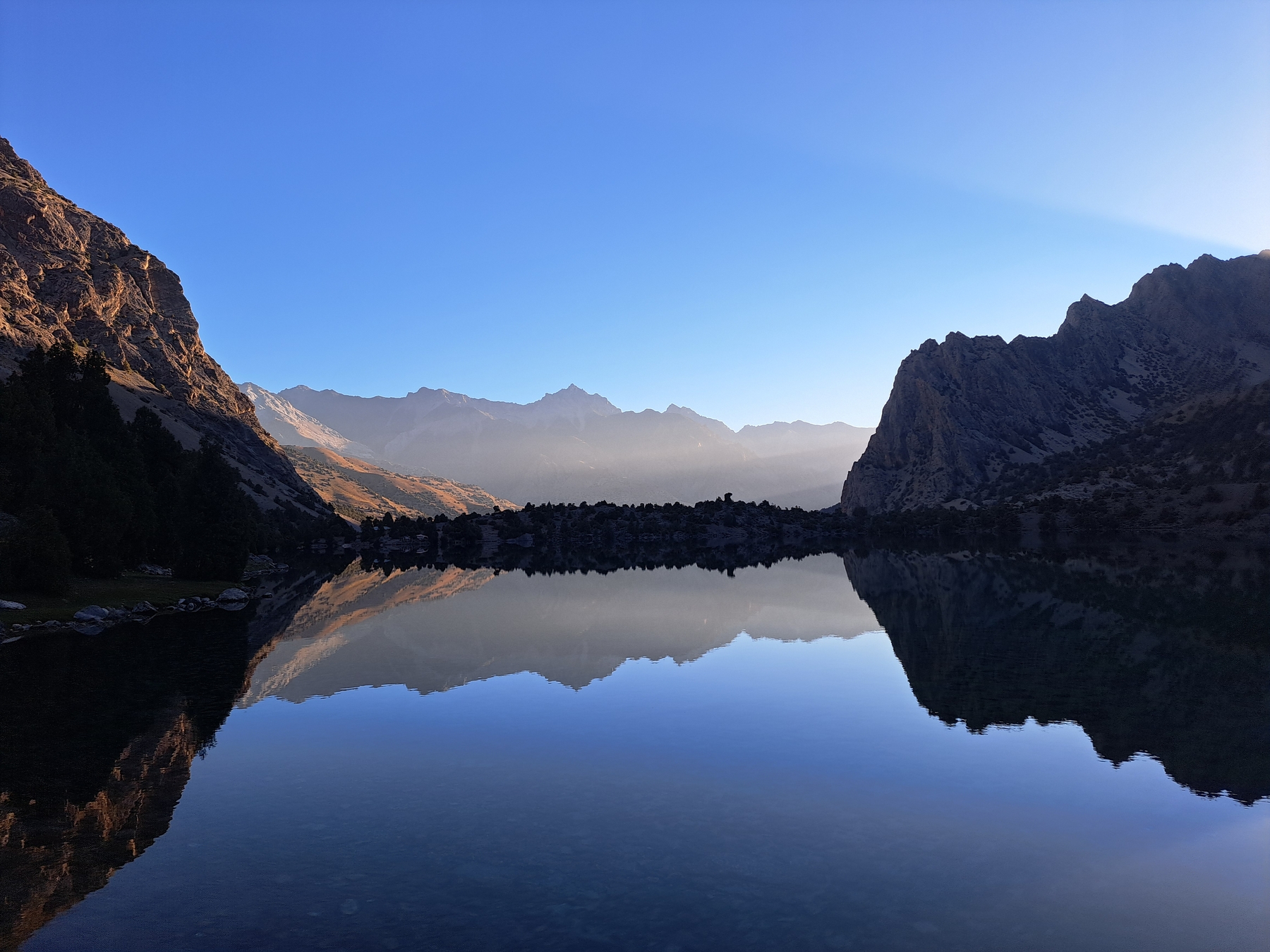
A still, clear alpine lake creates a perfect reflection of a towering mountain peak illuminated by sunlight and surrounded by rugged, tree-dotted slopes.
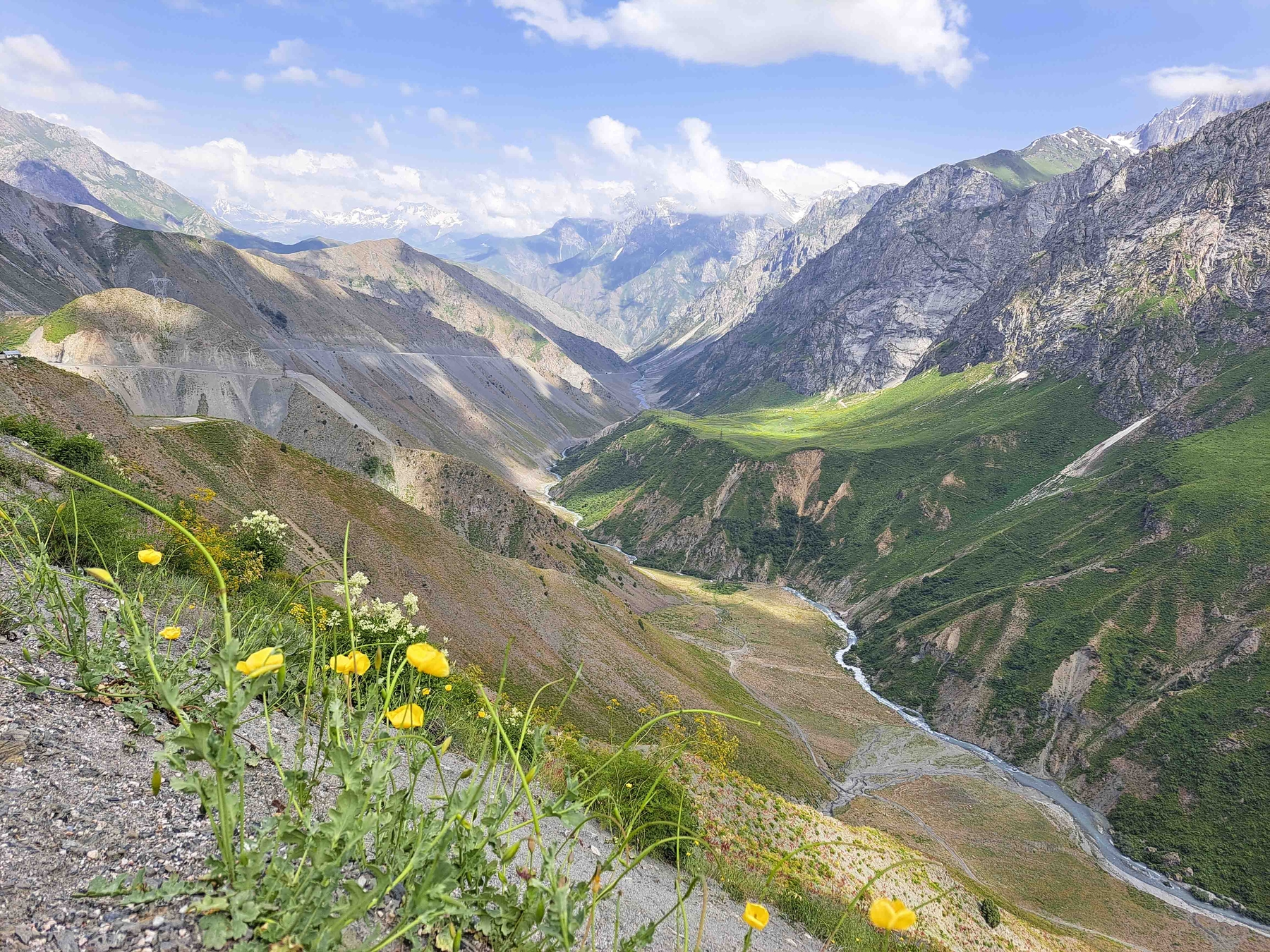
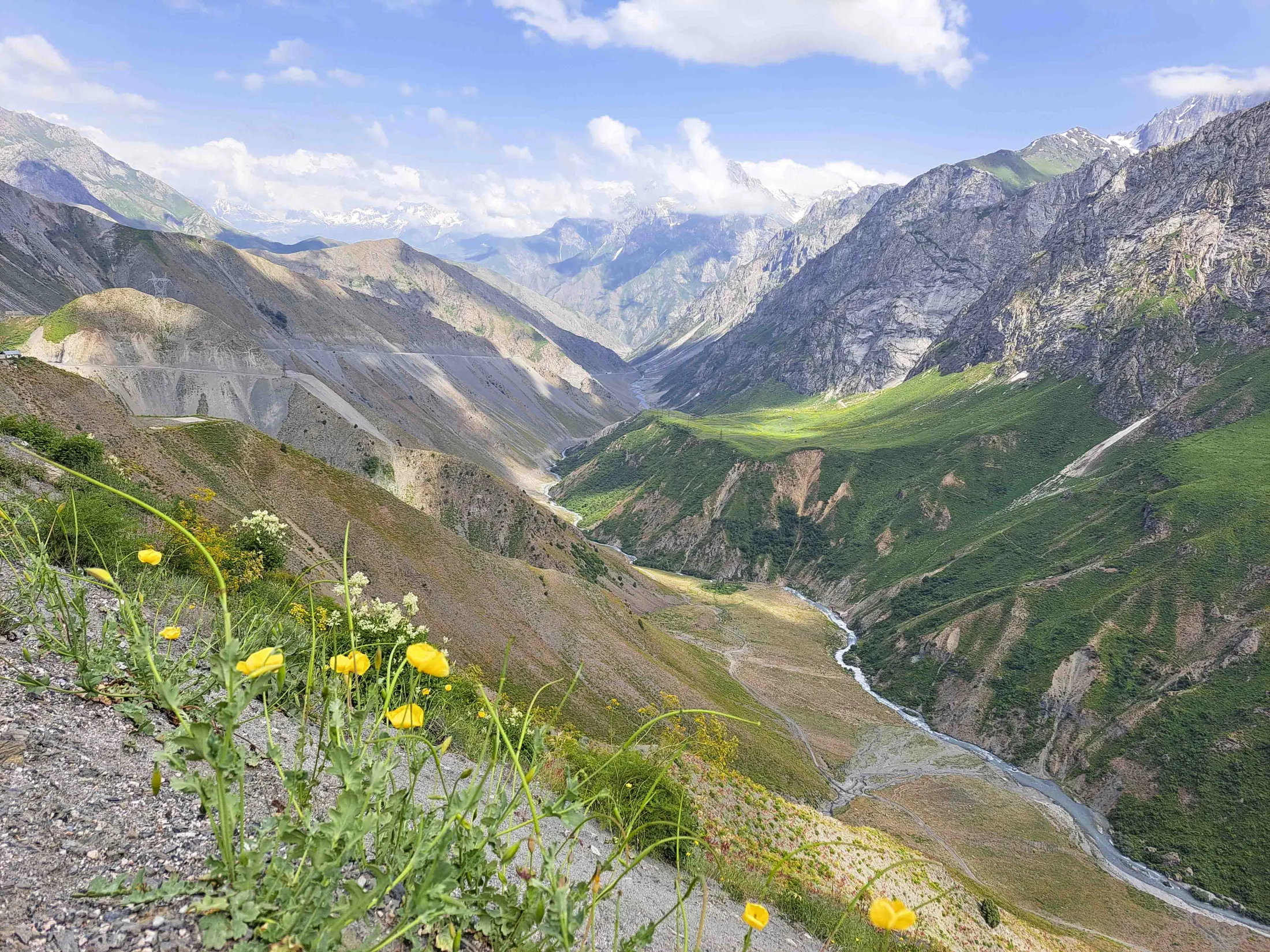
Yellow wildflowers bloom on a steep hillside in the foreground, overlooking a deep mountain valley where a winding river flows beneath partially cloudy skies.
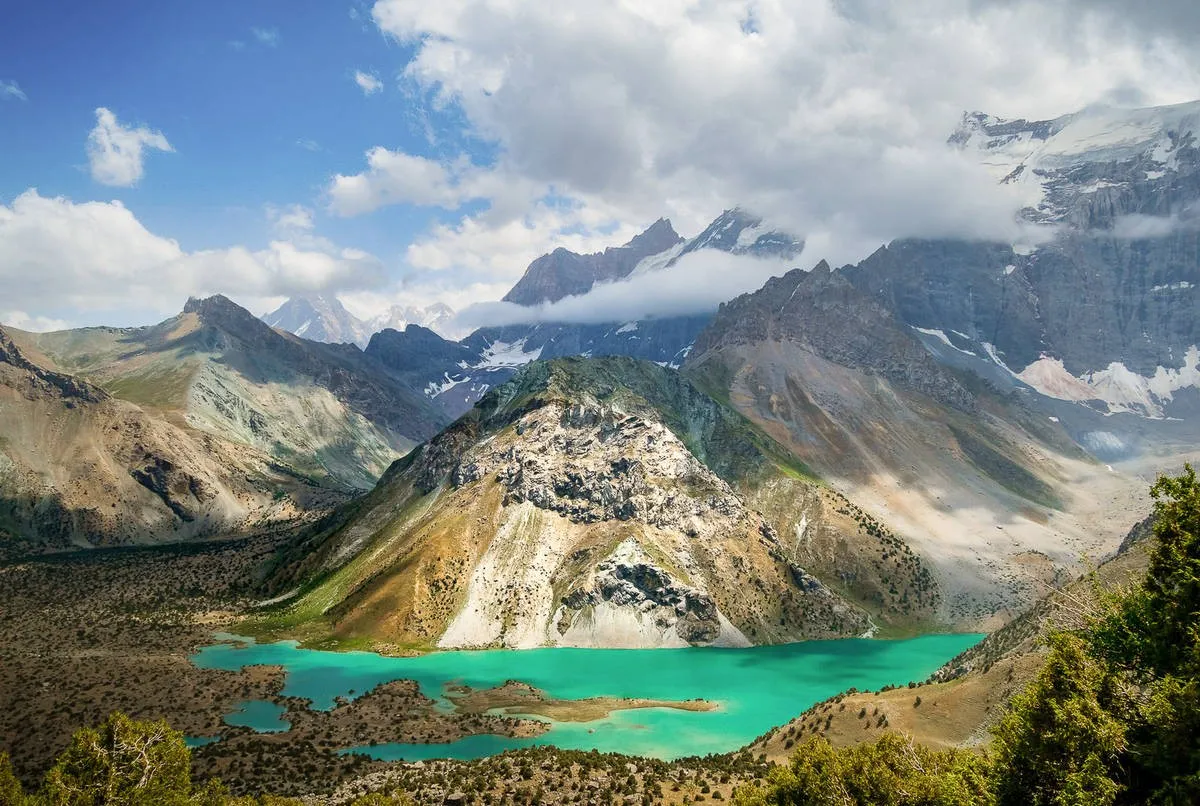
A vibrant turquoise lake stretches along the base of a distinctive, pyramid-shaped hill, dwarfed by massive, rugged mountain peaks partially shrouded in dramatic clouds.
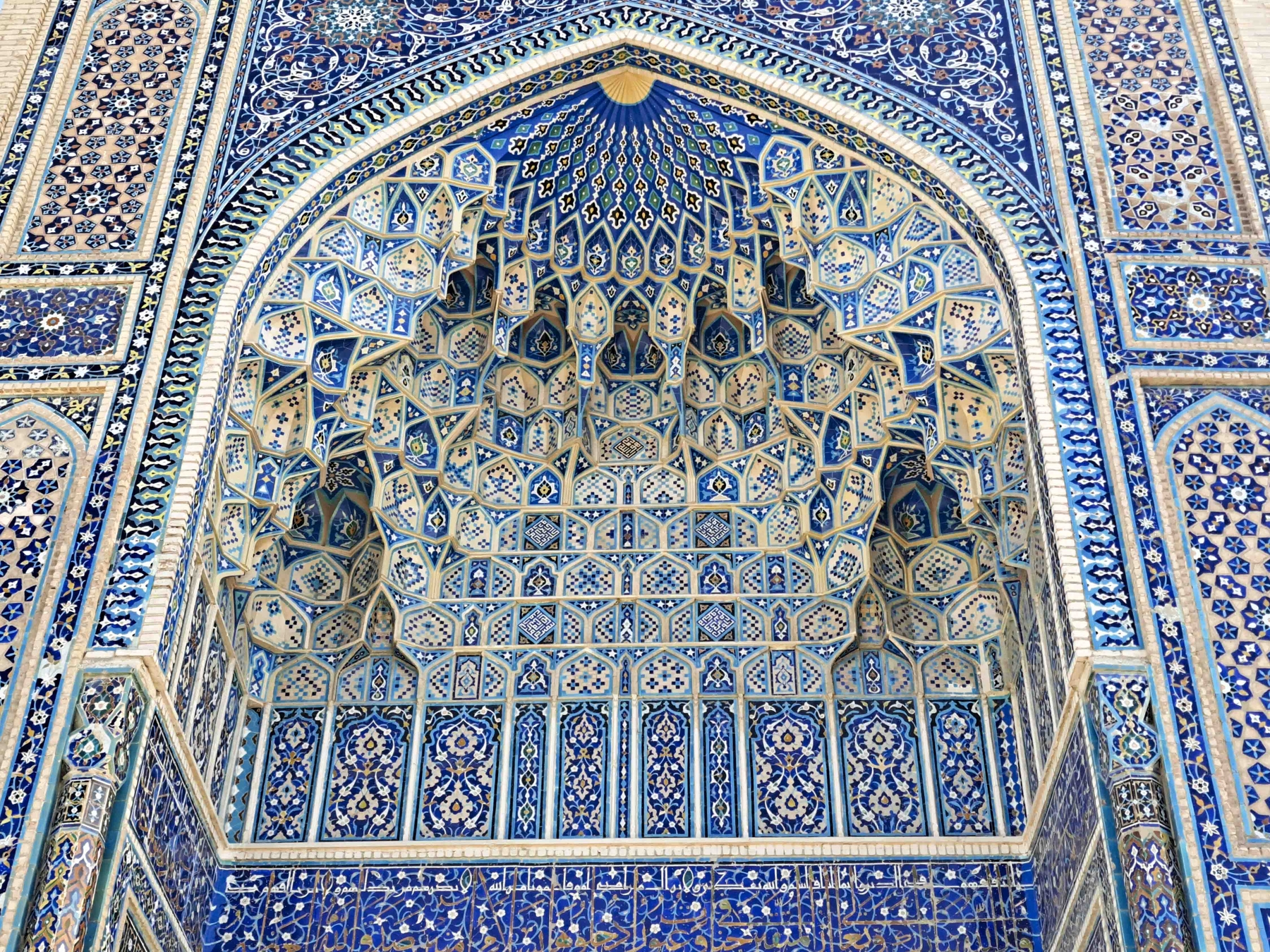
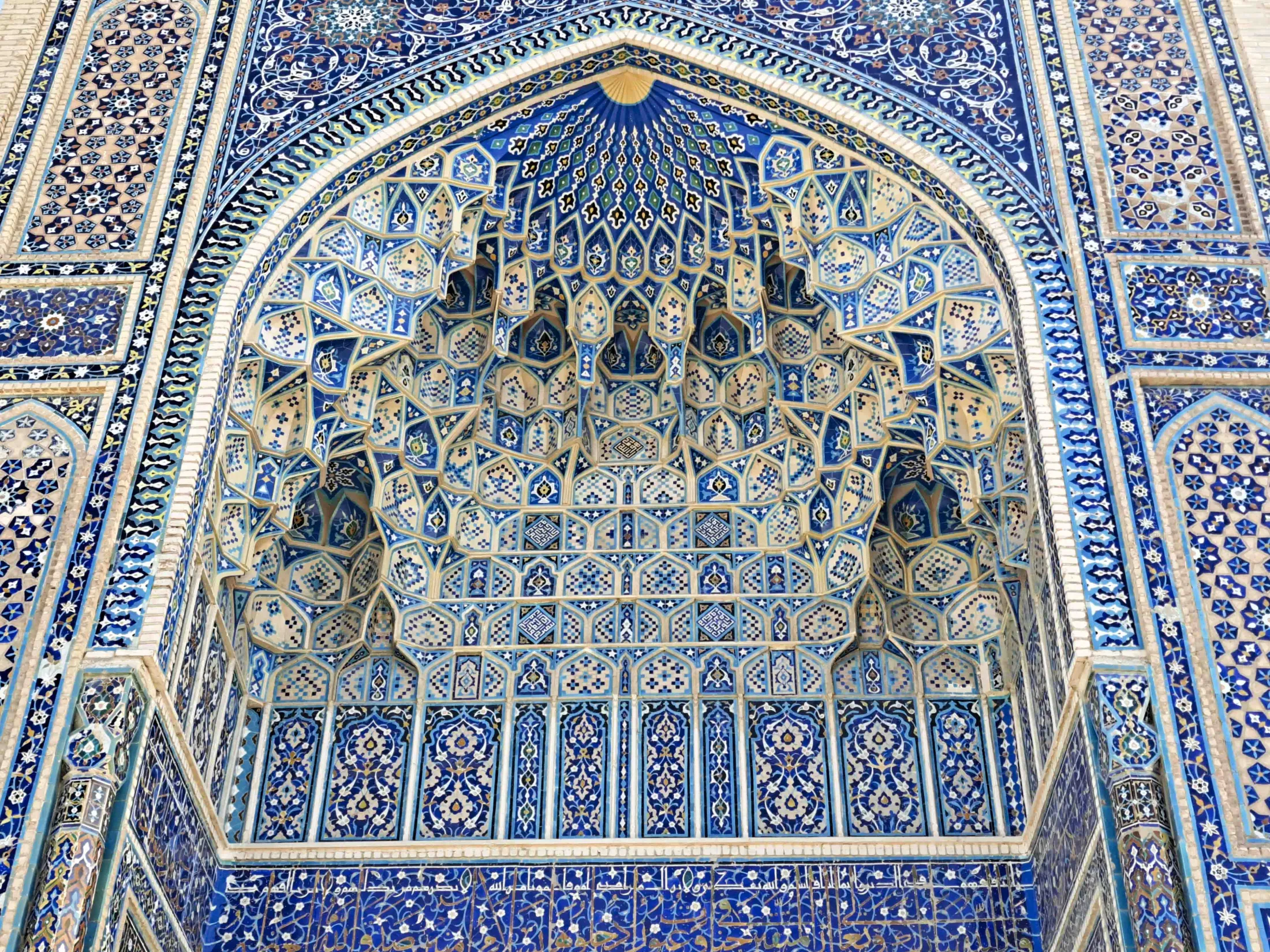
An intricate architectural alcove features elaborate blue and beige mosaic tiling and a complex, honeycombed muqarnas ceiling decoration.
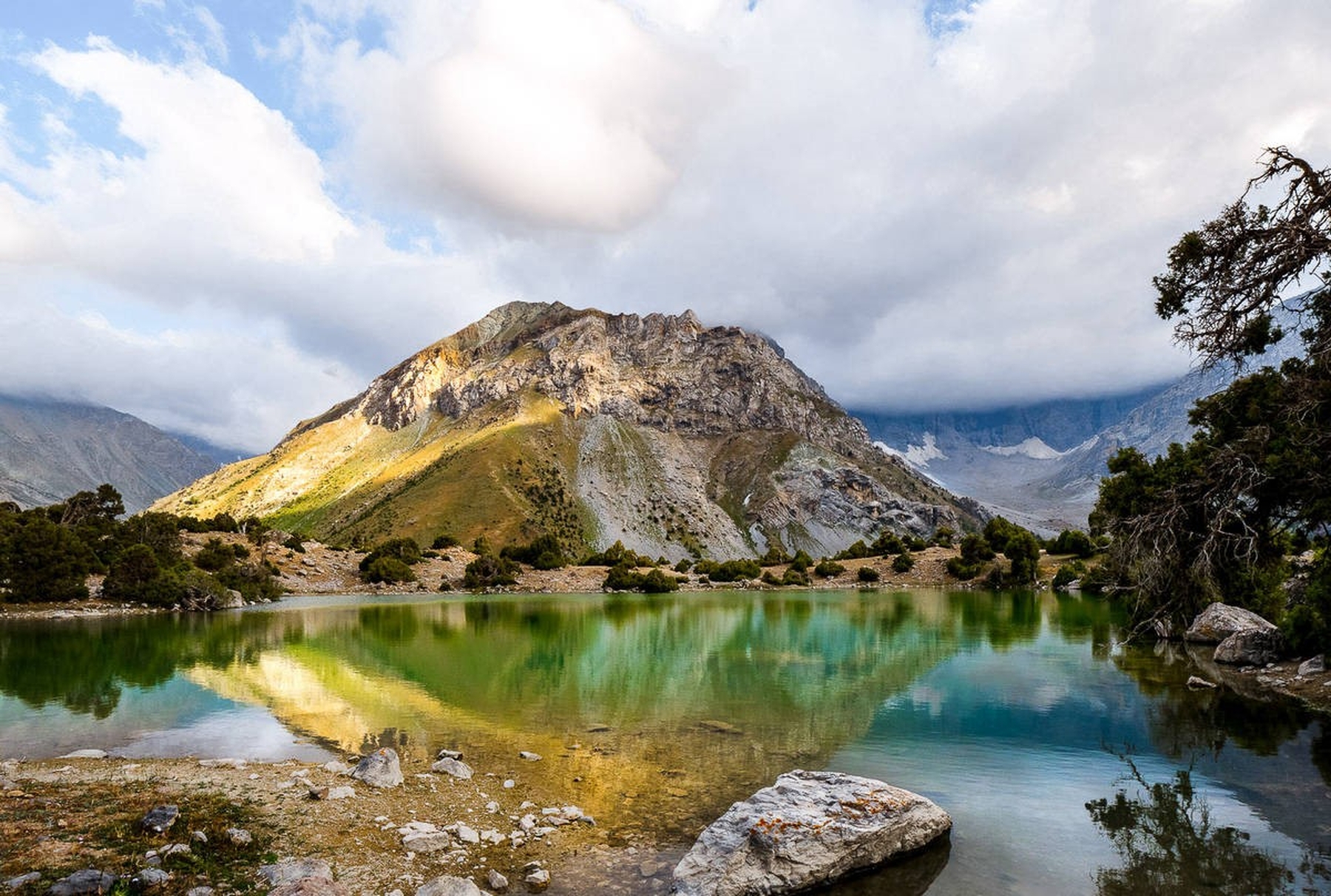
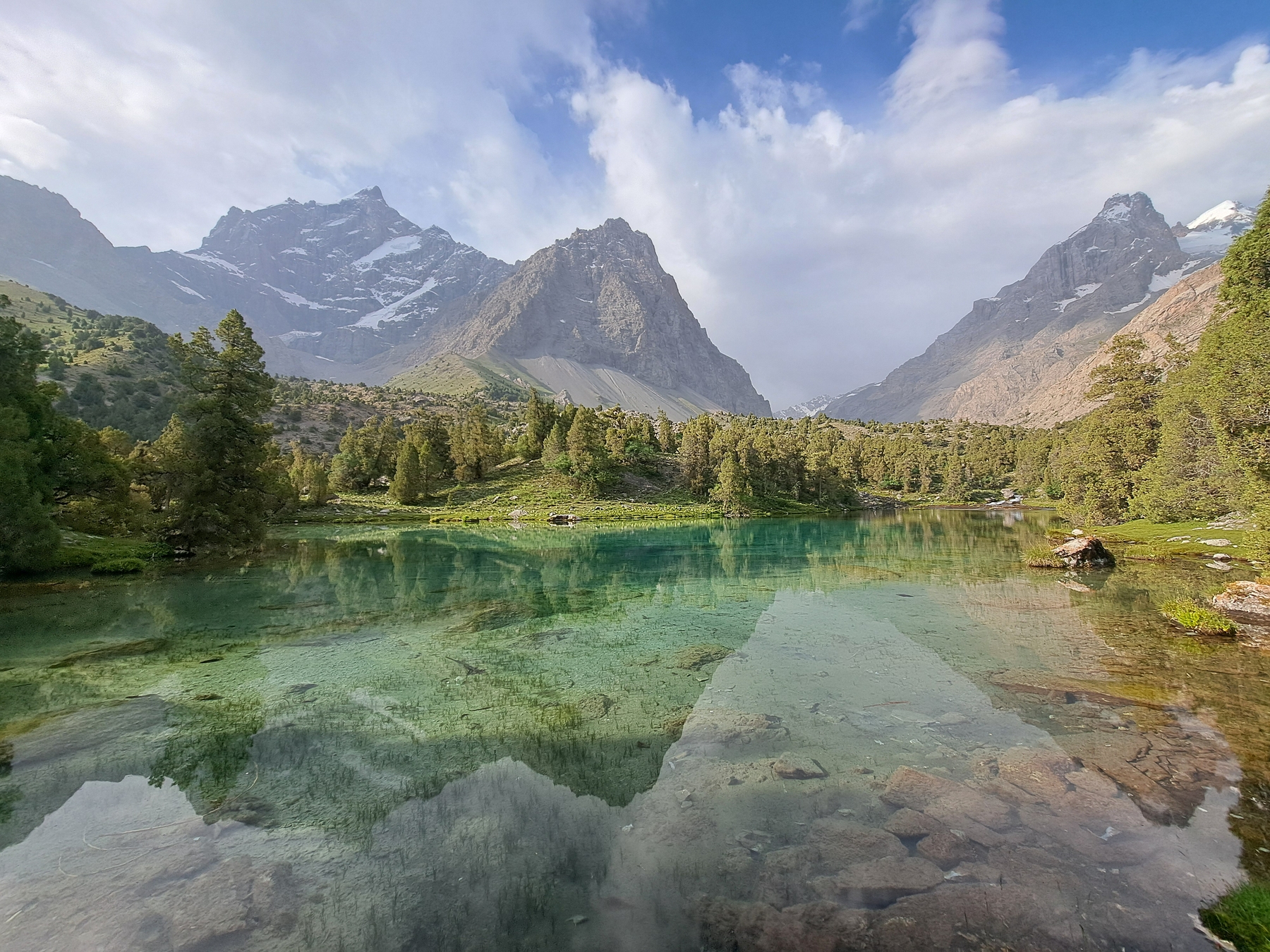
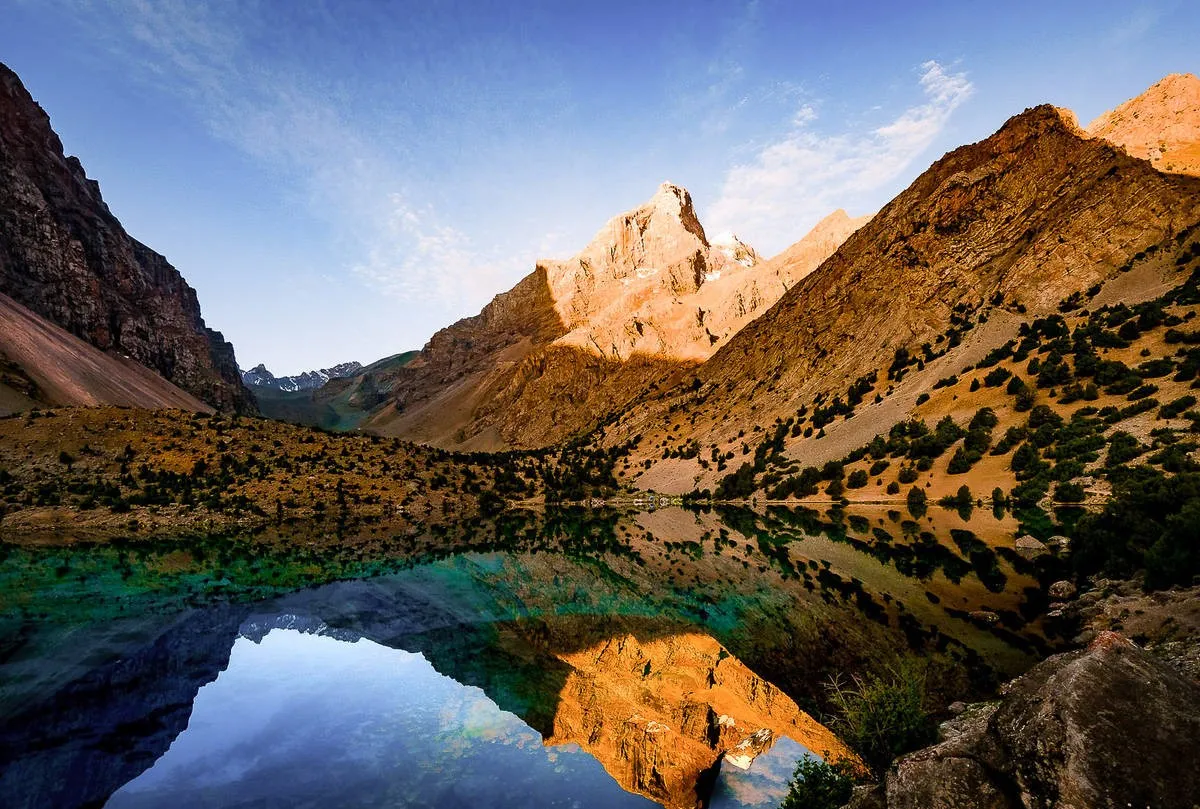
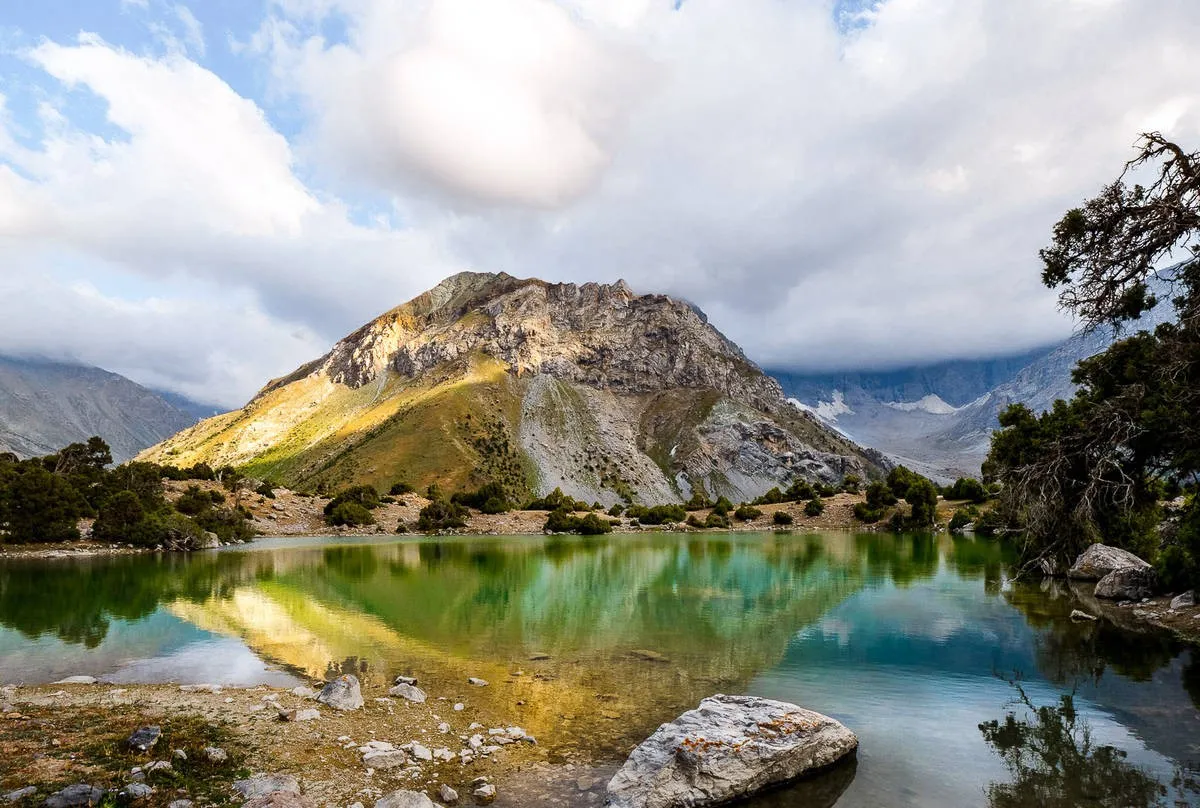
A tranquil, clear green alpine lake reflects a rocky mountain peak partially bathed in sunlight under a dramatic, cloudy sky.

Hiking Tajikistan and Uzbekistan

The Fann Mountains, Including the Cities of Samarkand and Bukhara

Hiking Tajikistan and Uzbekistan

The Fann Mountains, Including the Cities of Samarkand and Bukhara

From USD 6630

We combine a mountain hike in little-known Tajikistan with a cultural trip of Uzbekistan, one of the region’s most attractive countries. The trip begins in Tajikistan’s capital, Dushanbe, and takes you on a seven-day mountain trek through the stunning Fann Mountains. After the mountain trek, we’ll cross the border into Uzbekistan, where we’ll embark on a cultural journey to the cities of Samarkand and Bukhara, two important cities along the Silk Road between China and the West.

Highlights

  • Mountain trek in the scenic Fann Mountains
  • Tajikistan’s capital, Dushanbe
  • Historic Samarkand and Bukhara, two important cities along the Silk Road

Tajikistan is a mountainous country that is definitely worth a visit. We’ll take you to the Fann Mountains in the far west of the country, where the views and nature will take your breath away. Here, we’ll hike almost entirely alone in the mountains, surrounded by beautiful lakes and a starry sky like nothing you’ve ever seen. We’ll hike from east to west and end up in the Shing Valley with the Hafkul Lakes - or “The Seven Lakes” - which lie in a row in the same valley and are known for their various shades of blue. We’ll hike an average of 5–6 hours each day over mountain passes, mainly at altitudes of 2000–3000 meters. This is a mountain trek for the adventurous.

Before immersing ourselves in mountain life, we’ll take a guided tour of the Tajik capital, Dushanbe. We’ll also stop by the border town of Panjekent. Both of these cities will give us a better insight into the country’s culture and history.

After the mountain hike, we’ll drive across the border into Uzbekistan, where we’ll explore Samarkand and Bukhara and gain insight into just how important these cities were when the Silk Road was an active trade route.

Bring a good camera and join us on this truly special journey into the unknown.

15

9-15

NO/EN

3/6

2/6

3/6

Dates and booking
There are no departures on this trip.
Can't find a date? We'll notify you when new trips open!

Plan it your way

Want this trip just for your group? Or got something different in mind? We've got you.

Make this a private trip

Opening hours Phone
Mon-Fri : 08-20
Sat-Sun : 14-17
Opening hours Chat
Mon-Fri : 07-23
Sat : 10-18
Sun : 13-21
CET

Day by day

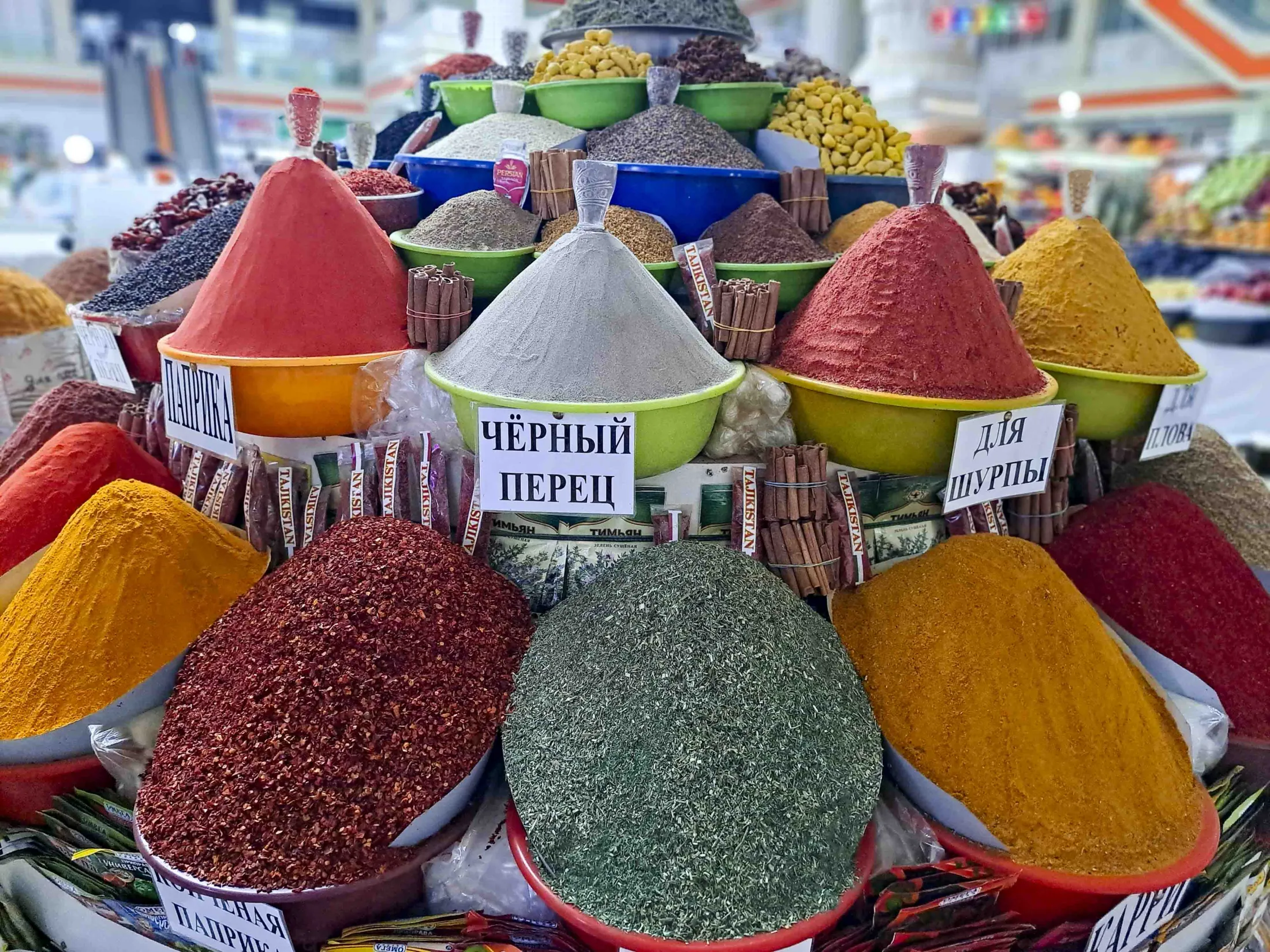
Vibrant mounds of various colorful spices, herbs, and cinnamon sticks are neatly arranged in bowls at a market display with Russian labels.

Day 1:First stop Dushanbe

We arrive in Dushanbe and are welcomed at the airport by our local partner. We will be driven to the hotel for our first night in this little-known capital.
We arrive in Dushanbe and are welcomed at the airport by our local partner. We will be driven to the hotel for our first night in this little-known capital.
Hotel

-,-,-

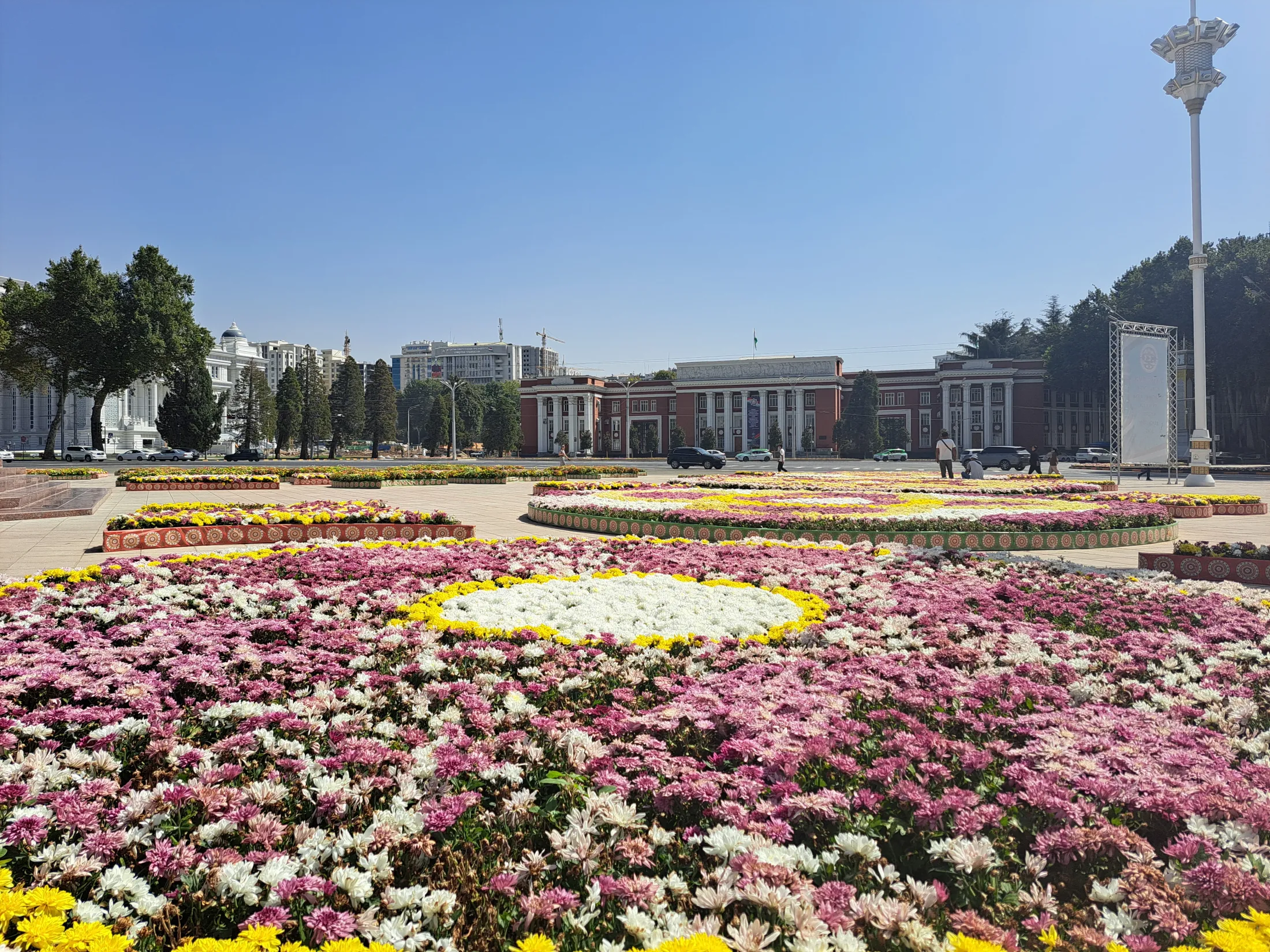
Large, patterned circular flowerbeds filled with pink, white, and yellow blossoms decorate a wide paved public square in front of a grand government building under a clear blue sky.

Day 2:Explore the city

Today, we will explore the main sights of Tajikistan's beautiful capital. We'll start our excursion with a visit to the National Museum, which will give us insight into the history and art of the region. The Buddha in Nirvana is one of the museum's main attractions. Next, we will visit a botanical garden and the bazaar, an oriental market that serves as an important gathering place for everyday Tajiks. We will end today's sightseeing at Ismoil Somoni Square, featuring Rudaki Park, the Palace of the Nation, and the 165-meter flagpole, which is one of the tallest in the world. We will have both lunch and dinner at local restaurants.

Today, we will explore the main sights of Tajikistan's beautiful capital. We'll start our excursion with a visit to the National Museum, which will give us insight into the history and art of the region. The Buddha in Nirvana is one of the museum's main attractions. Next, we will visit a botanical garden and the bazaar, an oriental market that serves as an important gathering place for everyday Tajiks. We will end today's sightseeing at Ismoil Somoni Square, featuring Rudaki Park, the Palace of the Nation, and the 165-meter flagpole, which is one of the tallest in the world. We will have both lunch and dinner at local restaurants.

Hotel

B,L,D

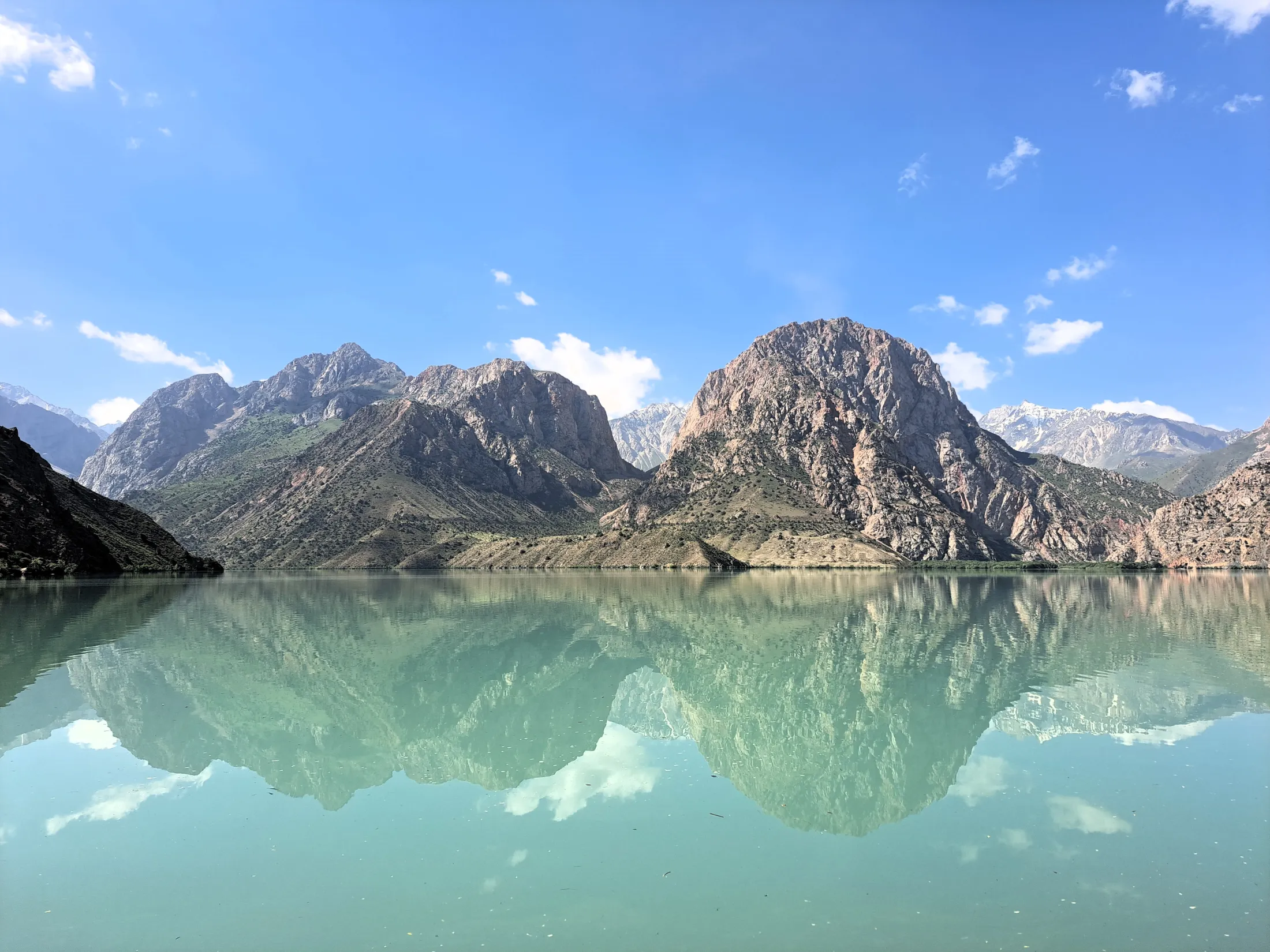
A panoramic view of massive, rocky mountains perfectly mirrored on the glassy surface of a calm, pale turquoise lake under a bright blue sky.
Yellow wildflowers bloom on a steep hillside in the foreground, overlooking a deep mountain valley where a winding river flows beneath partially cloudy skies.

Day 3:The Fann Mountains via Lake Iskanderkul

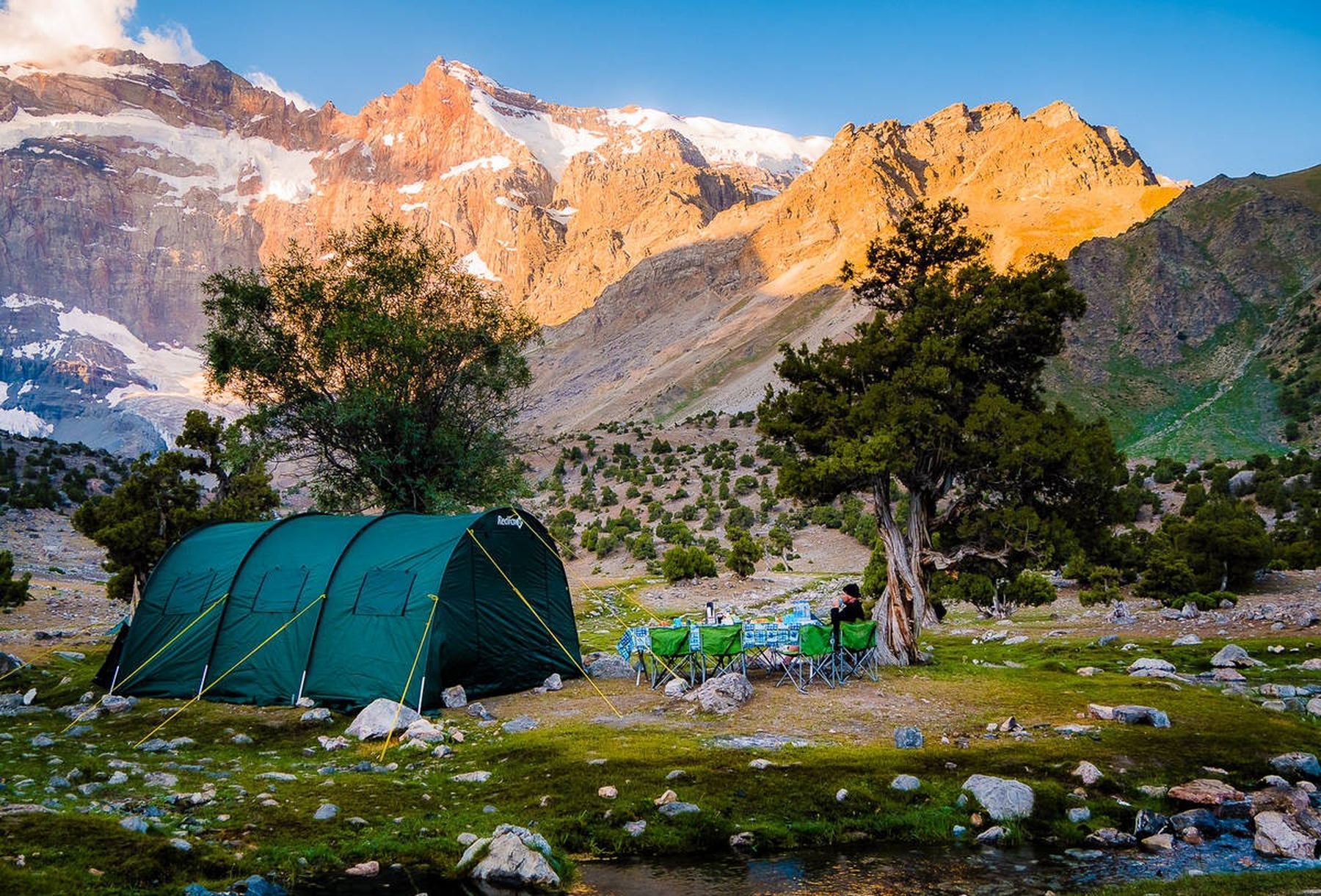
We drive from the capital up into the mountains, and the drive itself becomes quite an experience. The road takes us through the stunning Varzob Gorge, offering views of majestic mountains and glistening waterfalls. Here, we get a taste of what this mountainous country has to offer. A tunnel leads us further into the Zerafshan Valley, where we eventually turn off the main road to visit one of the most famous lakes in Tajikistan: Lake Iskanderkul. We will take a stroll here before driving onward to the starting point of our upcoming 7-day trek. In Sangi Safed (2460 m) by the Pasrud River, we are welcomed by our team consisting of a mountain guide, a cook, and donkey drivers with their donkeys. Tonight, we will set up camp and sleep soundly under the stars.

We drive from the capital up into the mountains, and the drive itself becomes quite an experience. The road takes us through the stunning Varzob Gorge, offering views of majestic mountains and glistening waterfalls. Here, we get a taste of what this mountainous country has to offer. A tunnel leads us further into the Zerafshan Valley, where we eventually turn off the main road to visit one of the most famous lakes in Tajikistan: Lake Iskanderkul. We will take a stroll here before driving onward to the starting point of our upcoming 7-day trek. In Sangi Safed (2460 m) by the Pasrud River, we are welcomed by our team consisting of a mountain guide, a cook, and donkey drivers with their donkeys. Tonight, we will set up camp and sleep soundly under the stars.

Tent

B,L,D

4-5 hours

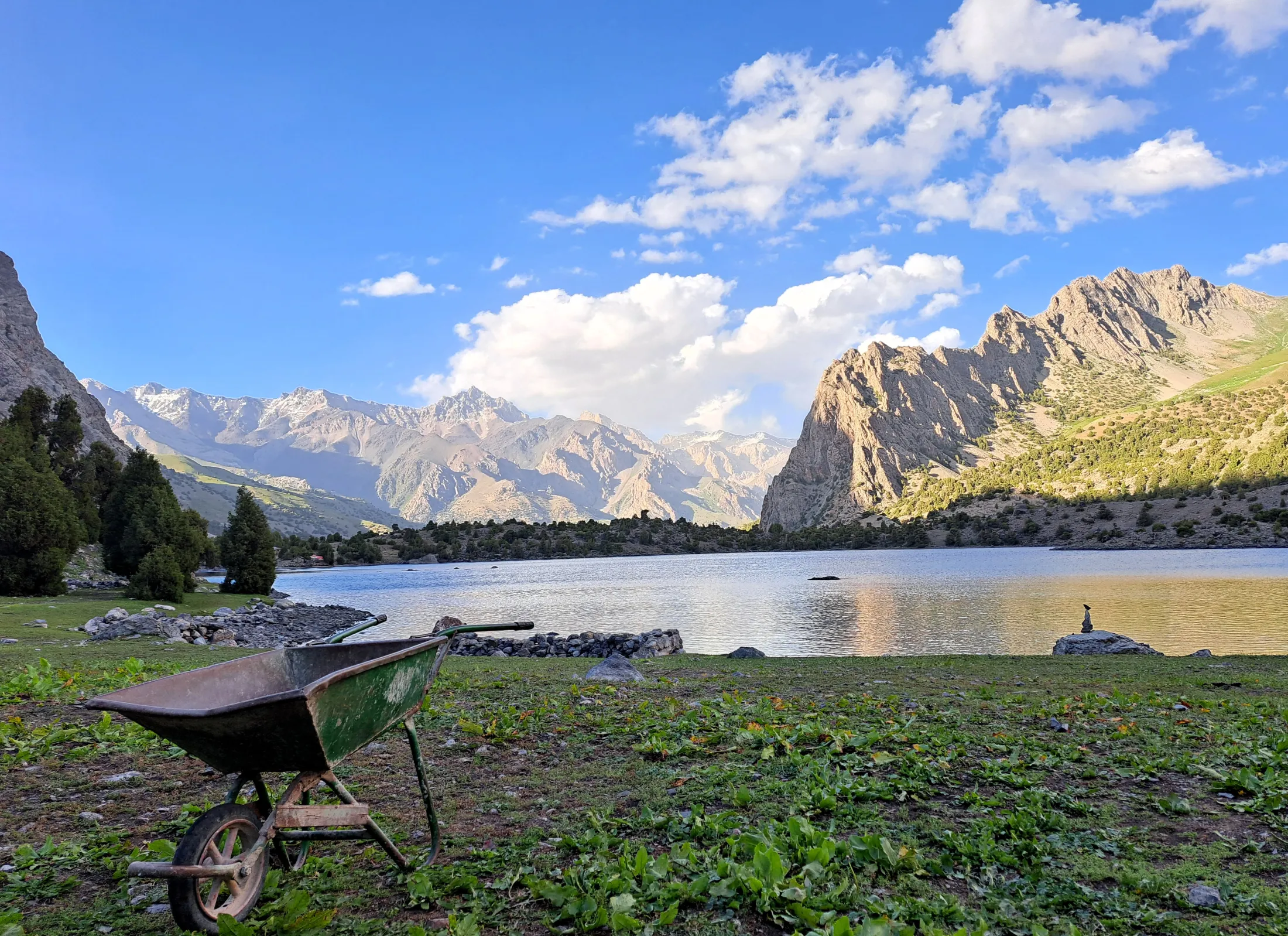
A green wheelbarrow stands on a grassy shore in the foreground of a scenic mountain lake under a bright blue sky with scattered clouds.
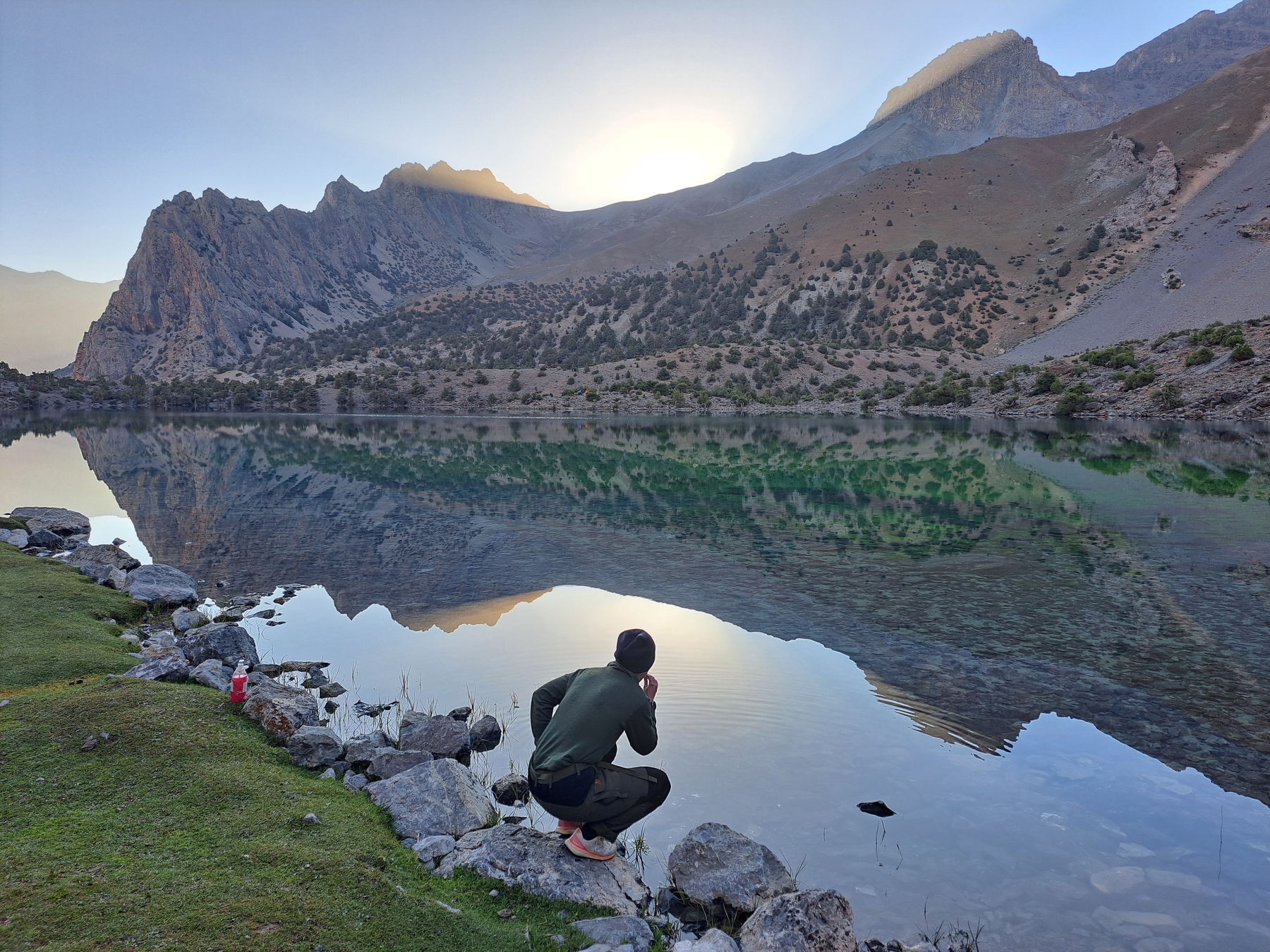
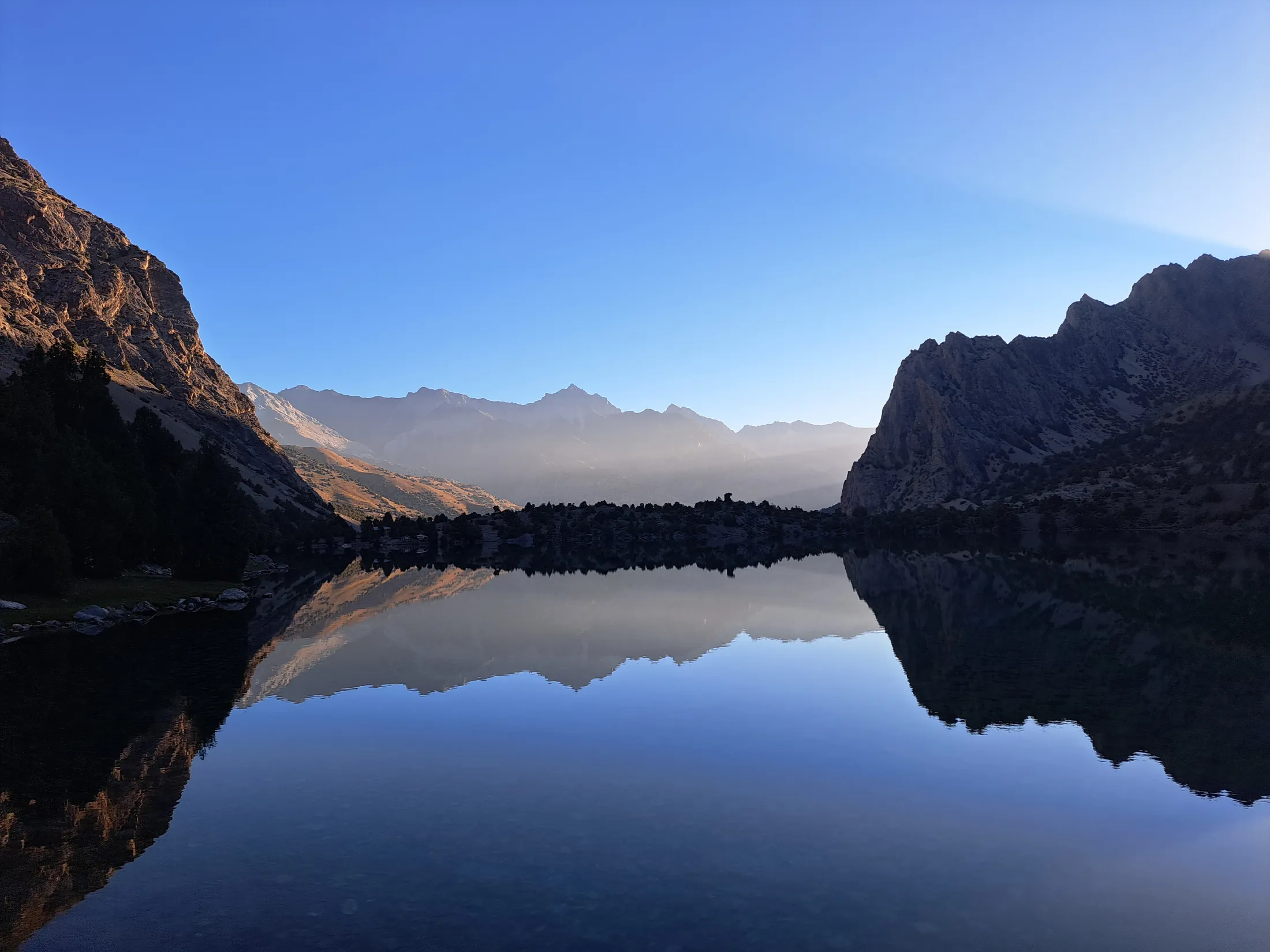
A calm mountain lake perfectly mirrors the surrounding rugged peaks and clear blue sky in a symmetrical reflection.

Day 4:First day of the mountain trip to Lake Allaudin (2750 m)

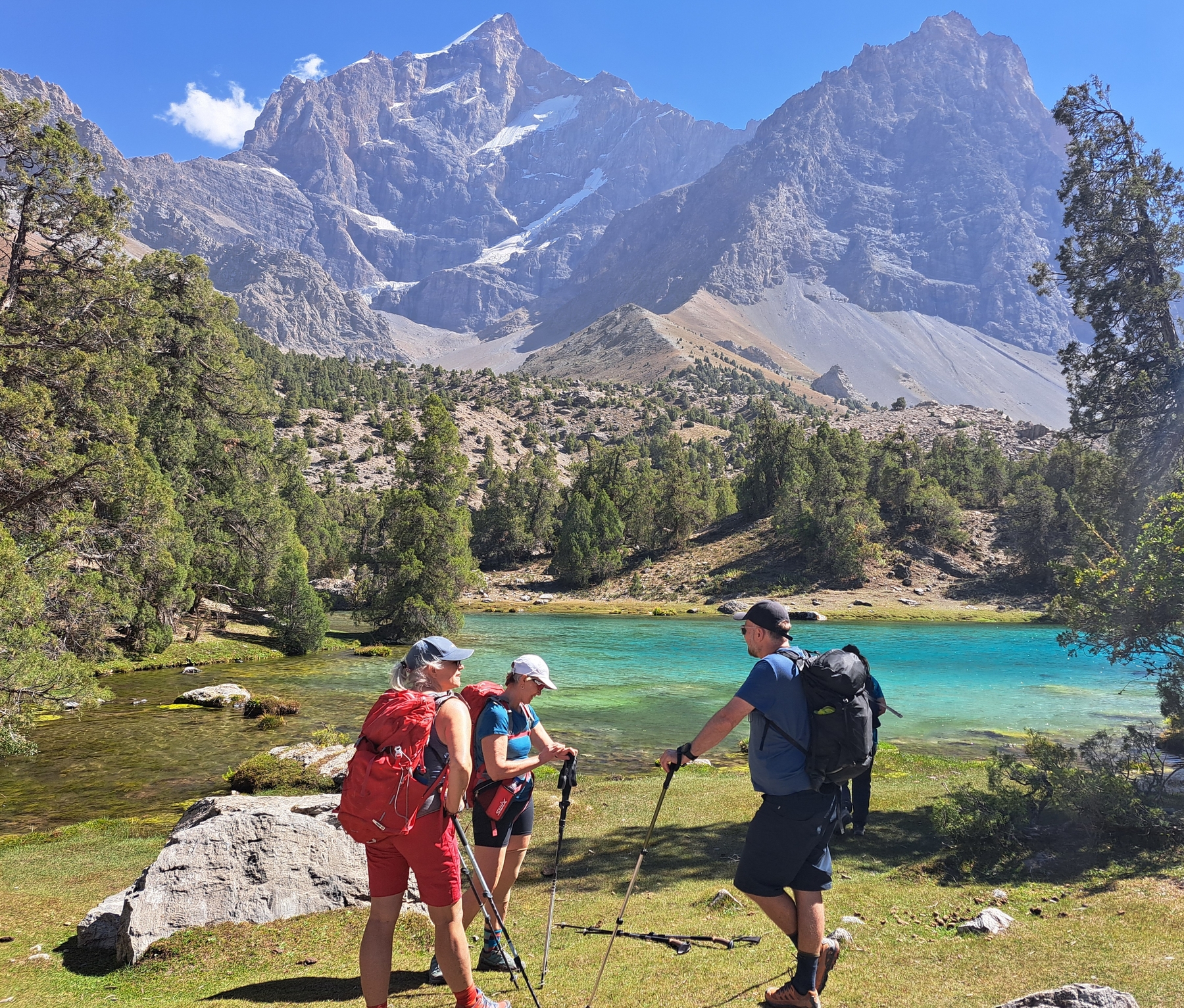
The trek is officially underway, with today’s leg leading up to Lake Allaudin, a true gem of the Fann Mountains. The lake's color spectrum shifts with the light, and the surrounding vegetation adds an extra reflection in the water. We will hike at a steady, relaxed pace to adjust to the altitude, eat a packed lunch along the way, and camp where the lake meets the Chadara River. A peaceful night's sleep awaits.

The trek is officially underway, with today’s leg leading up to Lake Allaudin, a true gem of the Fann Mountains. The lake's color spectrum shifts with the light, and the surrounding vegetation adds an extra reflection in the water. We will hike at a steady, relaxed pace to adjust to the altitude, eat a packed lunch along the way, and camp where the lake meets the Chadara River. A peaceful night's sleep awaits.

Tent

B,L,D

5-6 hours

500m/100m

15 km

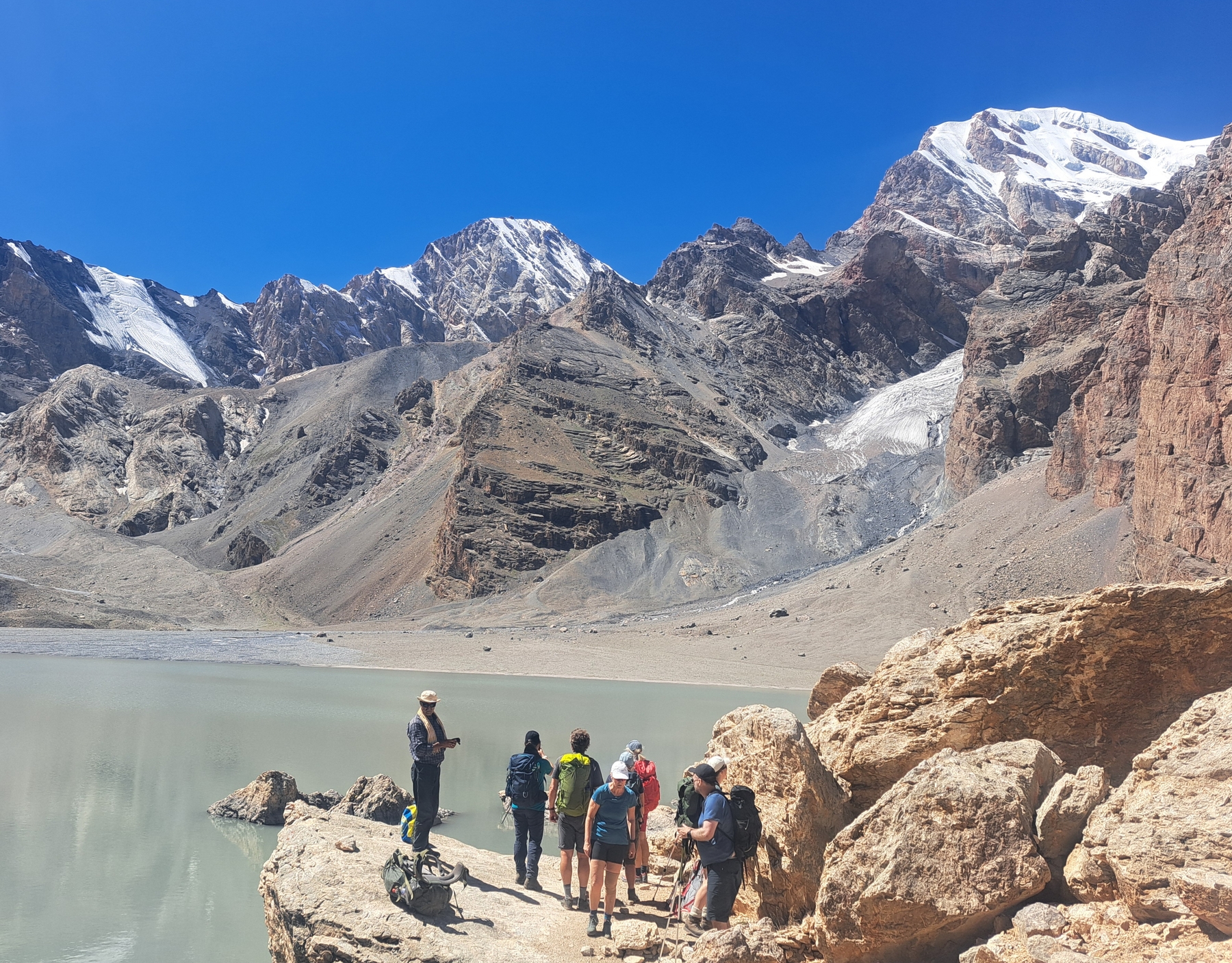
A person from behind wearing a blue jacket looks out over a pale blue alpine lake toward massive, snow-dusted mountains under a clear sky.

Day 5:Day trip to Lake Mutney (3650 m)

After breakfast, we will take a day trip south up the valley to Lake Mutney. This is a great acclimatization hike for the days ahead. After a 3-hour trek, the trail will lead you to the highest lake in the area, offering views of grand and majestic peaks that rise above 5000 m—the tallest of which is Chimtarga Peak (5480 m). After a nice break, we will head back to our camp at Lake Allaudin.

After breakfast, we will take a day trip south up the valley to Lake Mutney. This is a great acclimatization hike for the days ahead. After a 3-hour trek, the trail will lead you to the highest lake in the area, offering views of grand and majestic peaks that rise above 5000 m—the tallest of which is Chimtarga Peak (5480 m). After a nice break, we will head back to our camp at Lake Allaudin.

Tent

B,L,D

5-6 hours

900m/900m

11 km

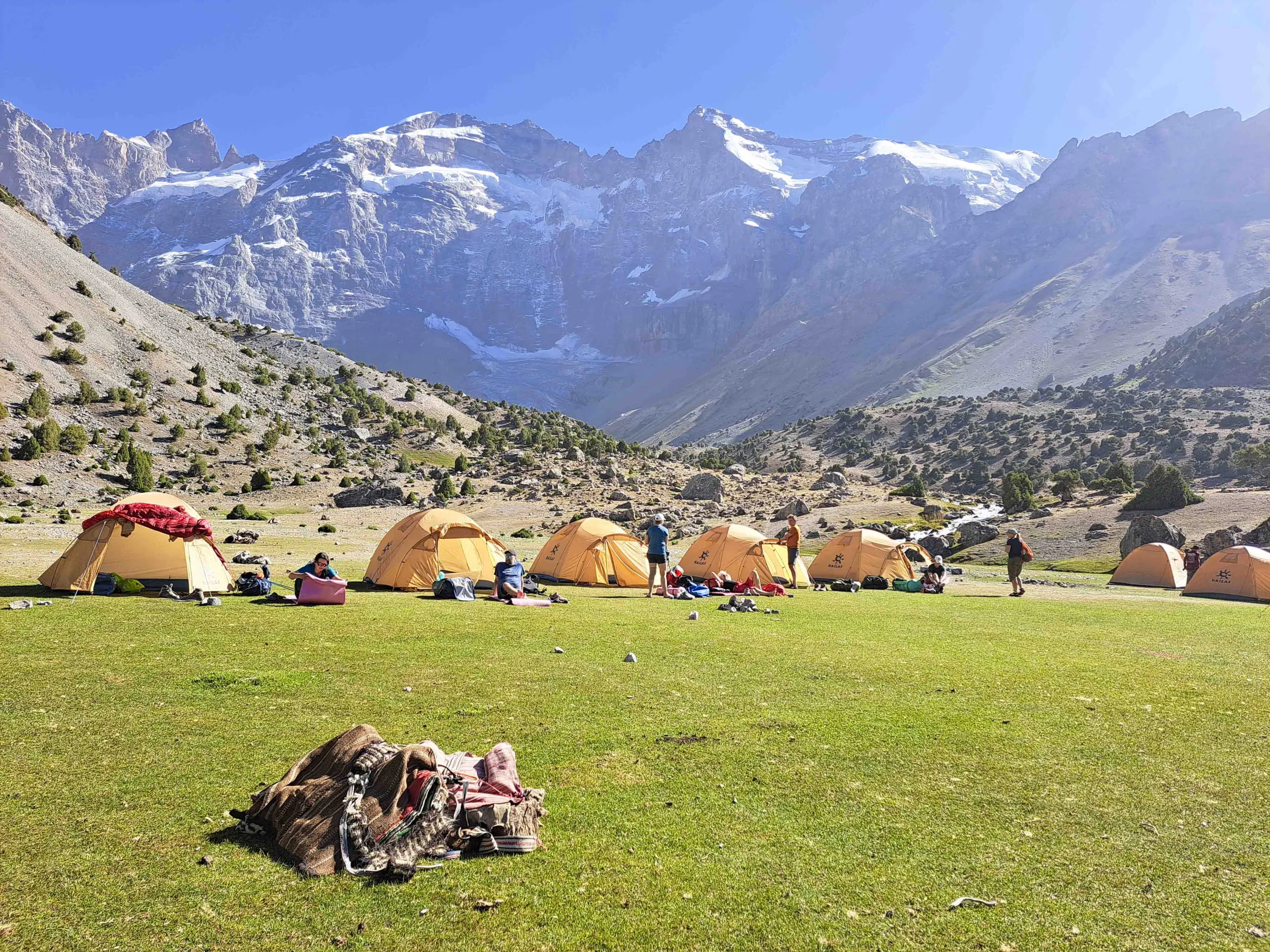
Several orange tents are pitched on a lush green grassy field where people are relaxing, set against a backdrop of towering, snow-capped mountains under a bright sky.
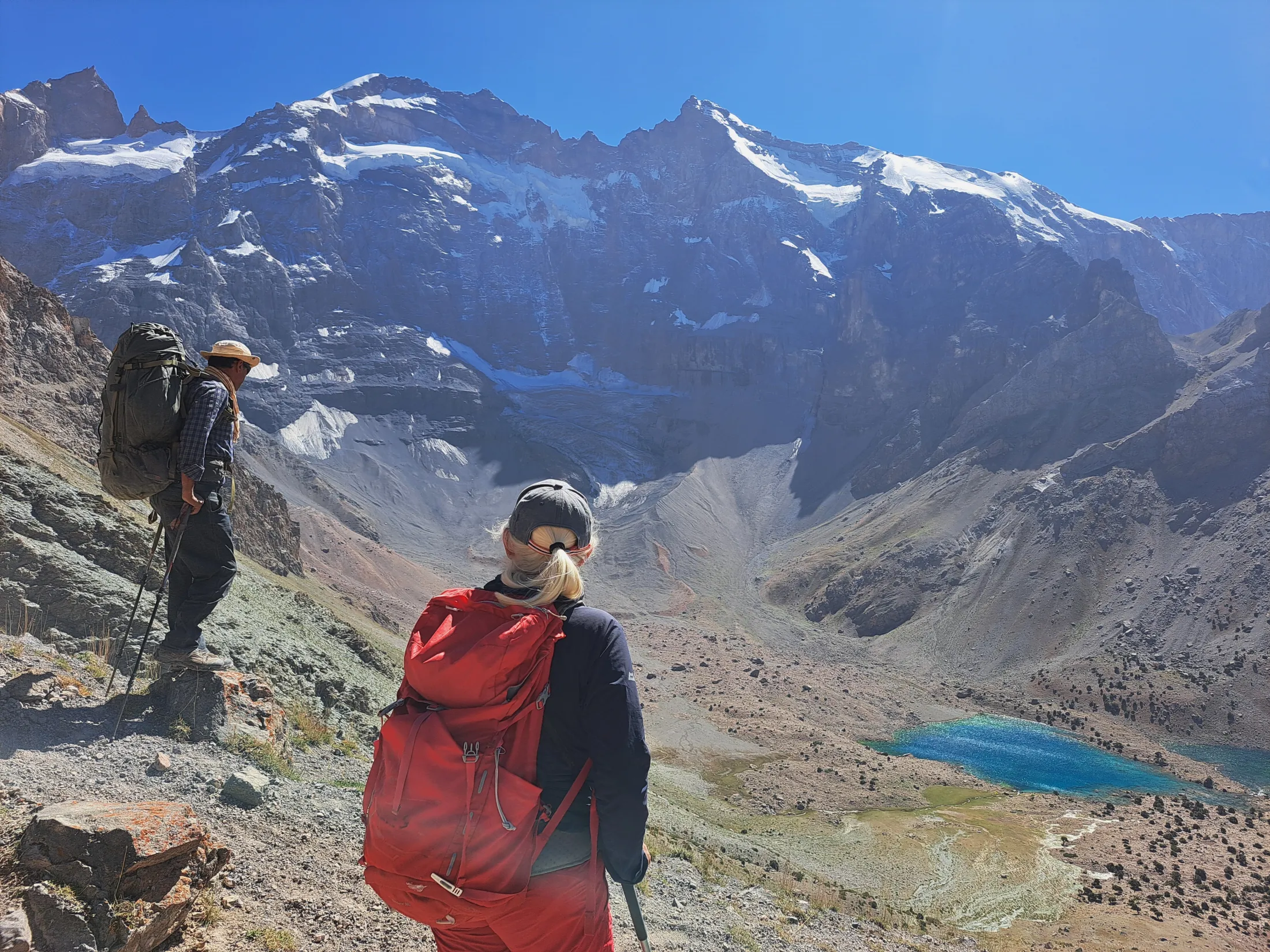
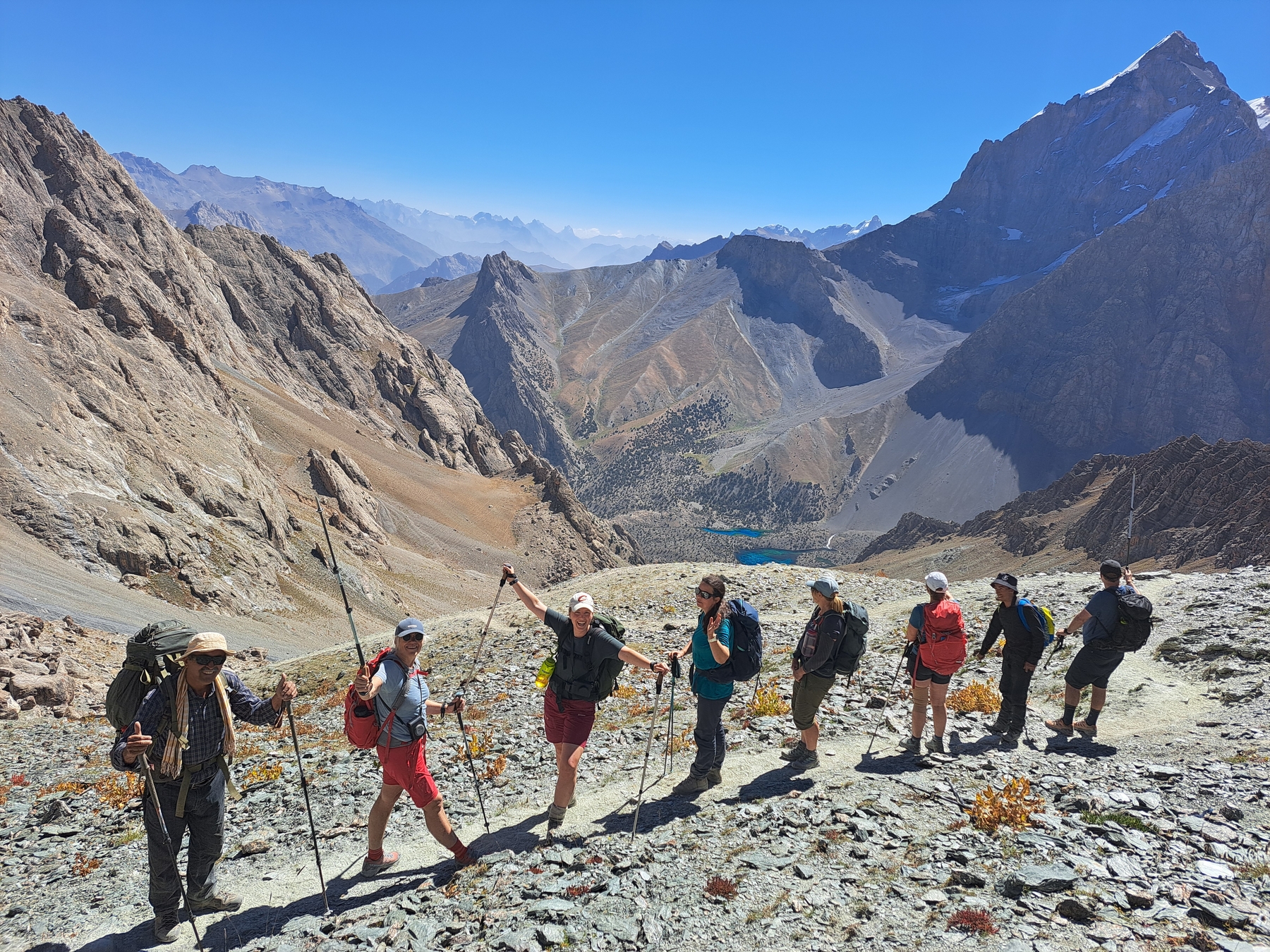
Two hikers with large backpacks look out over a high mountain valley featuring a bright blue alpine lake and massive, snow-covered peaks under a clear sky.

Day 6:Continuing through the Fann Mountains to Lake Kulikalon (2800 m)

We pack our bags and trek further through the Fann Mountains—from here on out, we will have a new place to sleep every night. There is a lot of curiosity about what today’s leg of the journey will bring us. The trail climbs steeply through a forest of juniper and pine trees up to the Allaudin Pass, where a fantastic view reveals itself. We must remember to look back at where we came from; the view is immense. We head down the other side until we reach the Kulikalon Lakes. Wild pine trees grow here, giving Lake Kulikalon a special environment and microclimate. Fish were artificially introduced here in 1956. The main attraction in the Kulikalon Valley is the majestic mountain wall that stretches like a massive barrier from east to west. The mountain wall has three main peaks: Adamtash, Mirali, and Maria.

We pack our bags and trek further through the Fann Mountains—from here on out, we will have a new place to sleep every night. There is a lot of curiosity about what today’s leg of the journey will bring us. The trail climbs steeply through a forest of juniper and pine trees up to the Allaudin Pass, where a fantastic view reveals itself. We must remember to look back at where we came from; the view is immense. We head down the other side until we reach the Kulikalon Lakes. Wild pine trees grow here, giving Lake Kulikalon a special environment and microclimate. Fish were artificially introduced here in 1956. The main attraction in the Kulikalon Valley is the majestic mountain wall that stretches like a massive barrier from east to west. The mountain wall has three main peaks: Adamtash, Mirali, and Maria.

Tent

B,L,D

6-7 hours

950m/850m

6 km

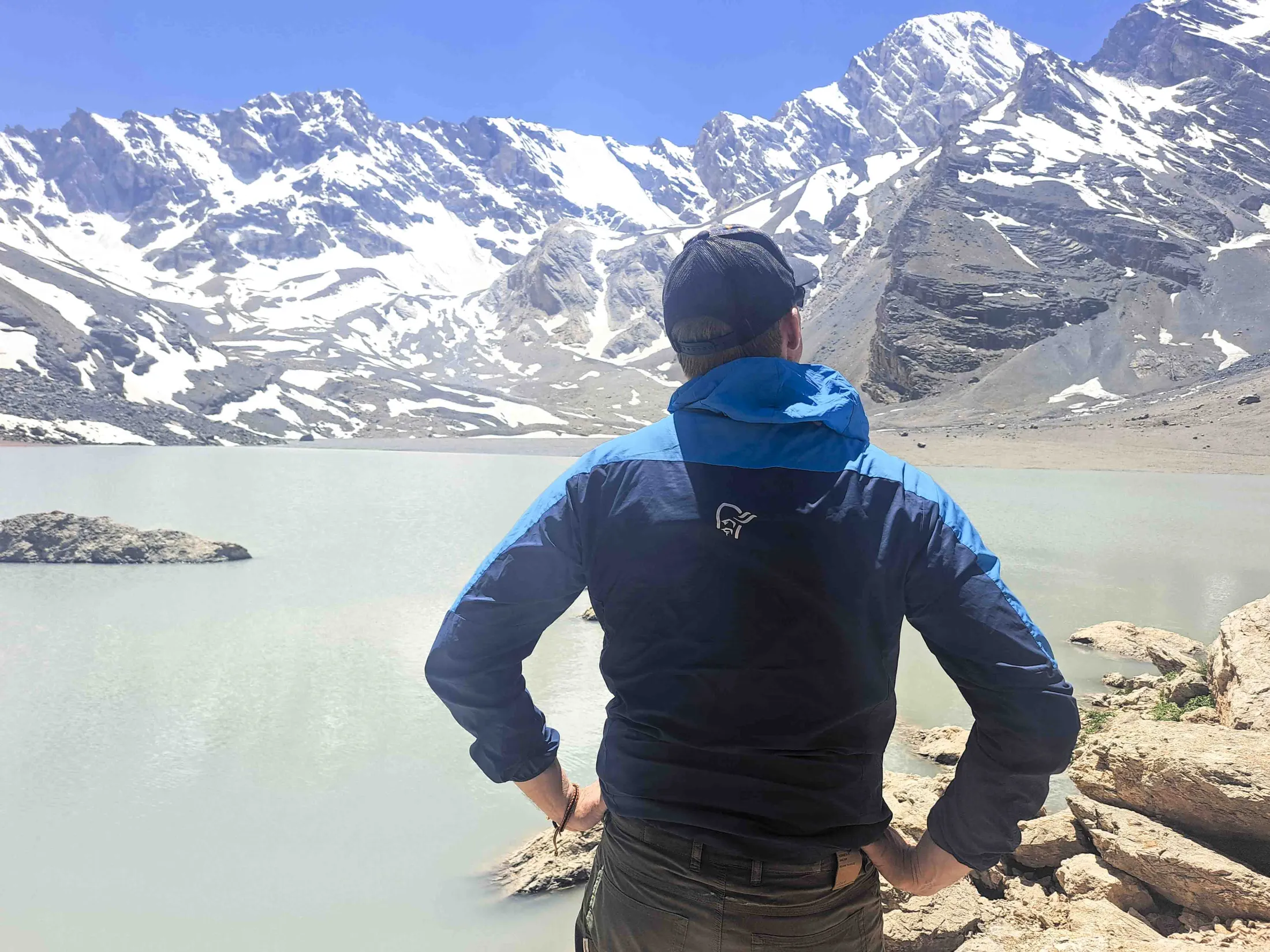
A man stands with open arms on a rocky outcrop overlooking a vibrant turquoise alpine lake surrounded by rugged, snow-capped mountains under a clear blue sky.

Day 7:Over Chukurak Pass (3180 m)

We start the day with a walk around the lake before trekking up the hillside toward the Chukurak Pass at 3180 m. The climb from Kulikalon will take 3–4 hours. The descent to Lake Chukurak goes through picturesque ravines covered in pine, and we end up in a small valley at an altitude of 2430 meters.

We start the day with a walk around the lake before trekking up the hillside toward the Chukurak Pass at 3180 m. The climb from Kulikalon will take 3–4 hours. The descent to Lake Chukurak goes through picturesque ravines covered in pine, and we end up in a small valley at an altitude of 2430 meters.

Tent

B,L,D

4-6 hours

400m/1000m

10-11 km

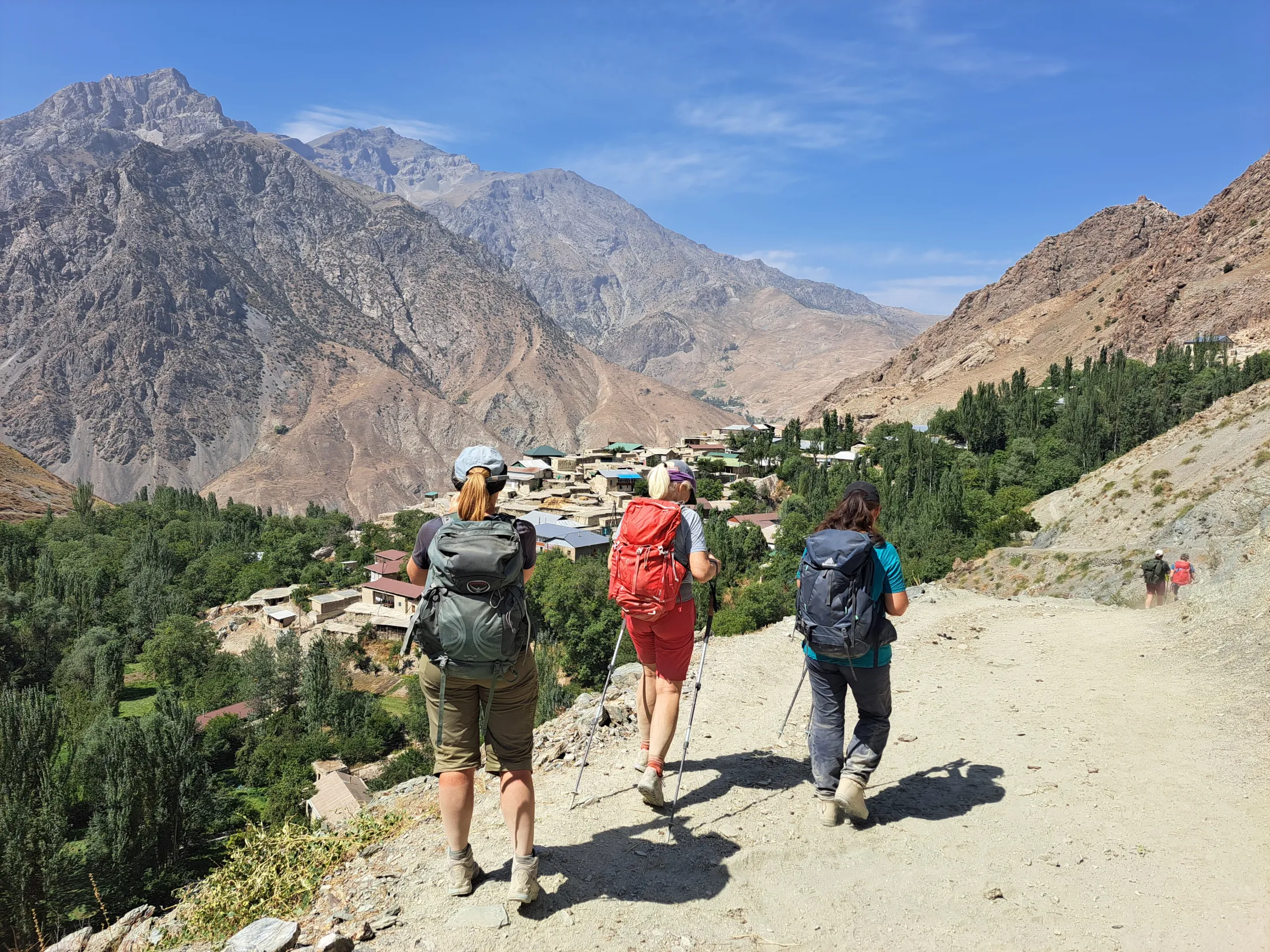
Three hikers with backpacks walk down a dirt path toward a small mountain village nestled in a lush, green valley surrounded by arid, towering peaks.

Day 8:Over another pass (2600 m) to the village of Guitan (1850 m)

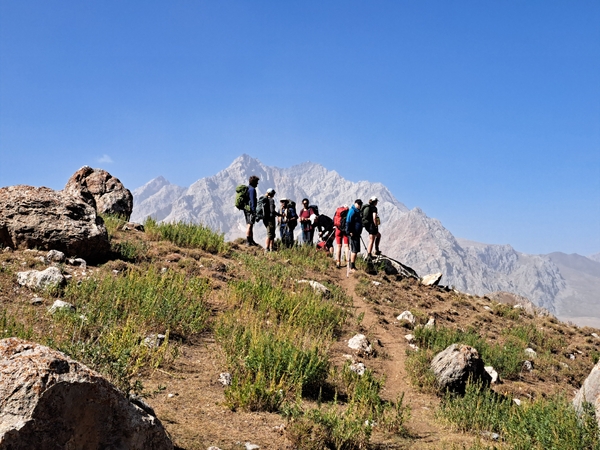
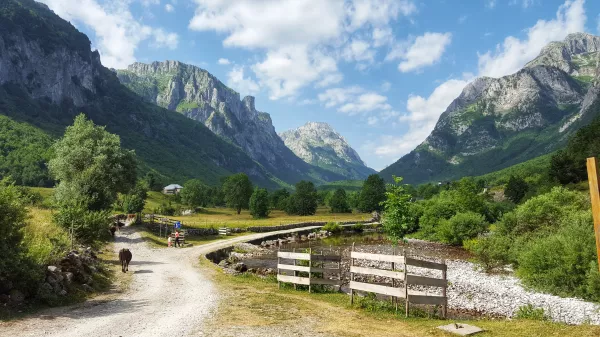
The trail to the Guitan Pass at 2600 m begins with a small ravine and a slope covered in pine trees. Along the way to the pass, there are huts where shepherds live, a sign that we are approaching civilization. We go through the pass and eventually reach a small village, Guitan. Here, we can get an up-close look at how the local Tajik mountain people live. We will walk a little further to Zimtut village, where we will stay at a local homestay.

The trail to the Guitan Pass at 2600 m begins with a small ravine and a slope covered in pine trees. Along the way to the pass, there are huts where shepherds live, a sign that we are approaching civilization. We go through the pass and eventually reach a small village, Guitan. Here, we can get an up-close look at how the local Tajik mountain people live. We will walk a little further to Zimtut village, where we will stay at a local homestay.

Homestay

B,L,D

5-6 hours

600m/110m

13-14 km

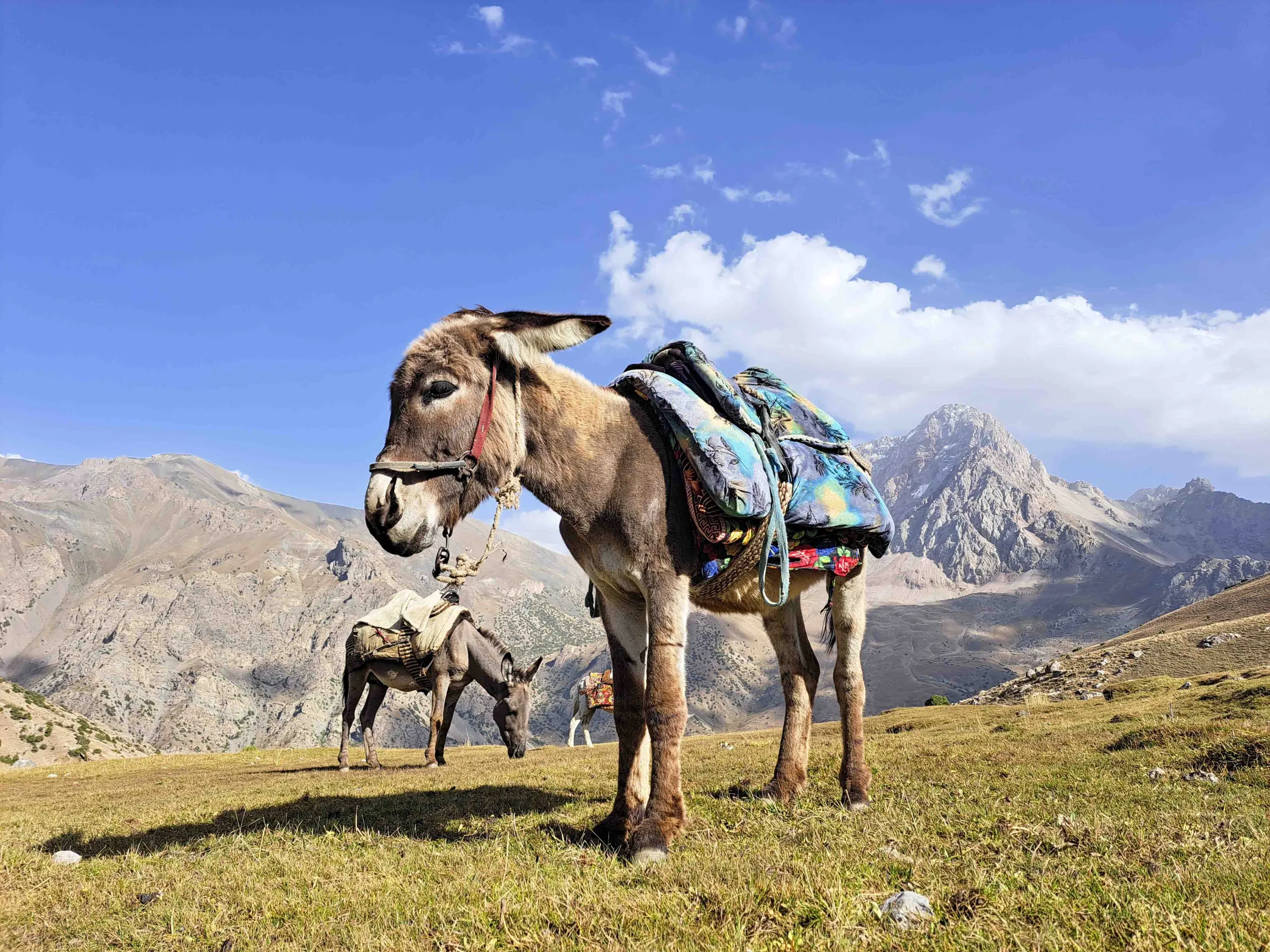
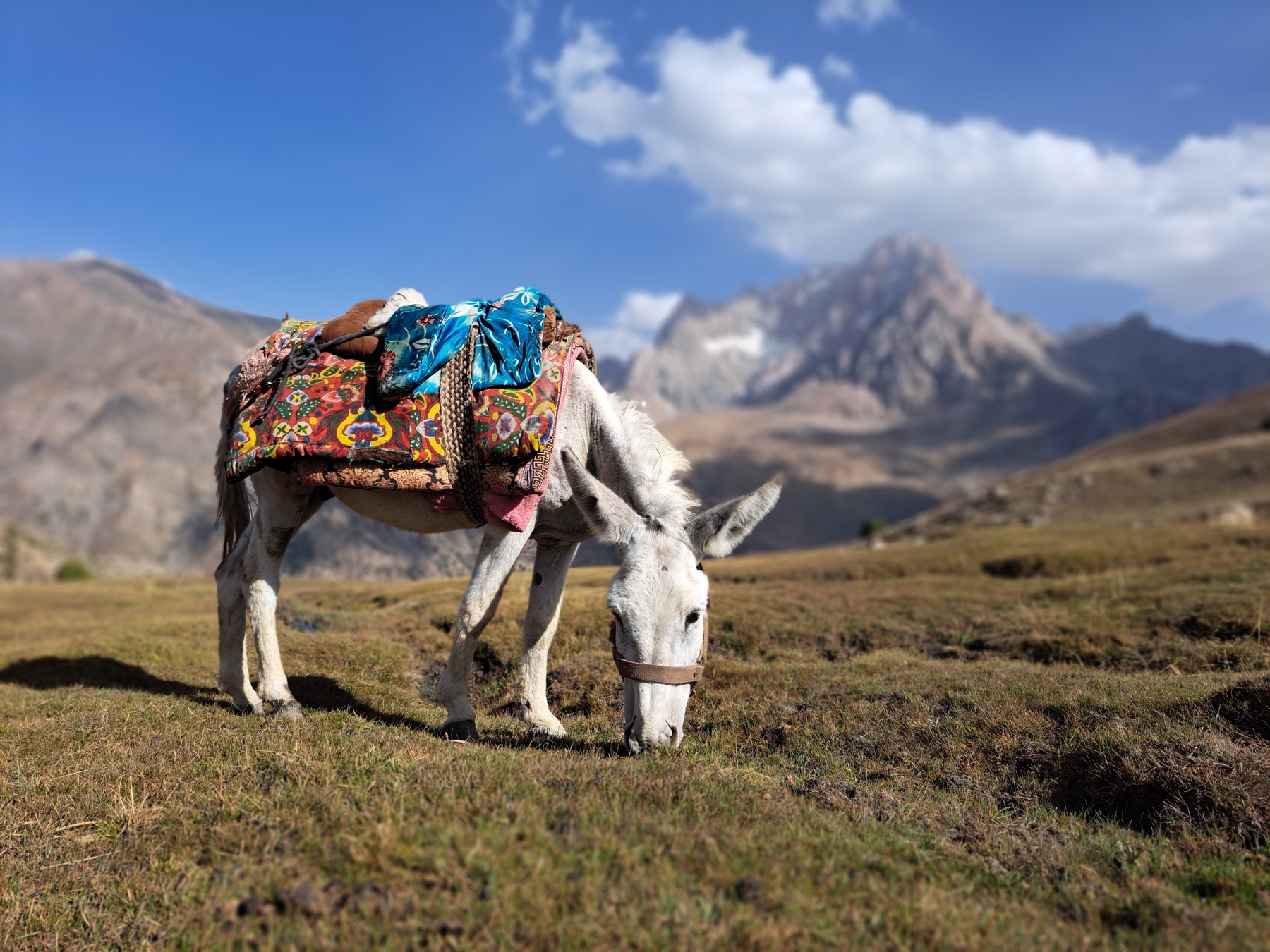
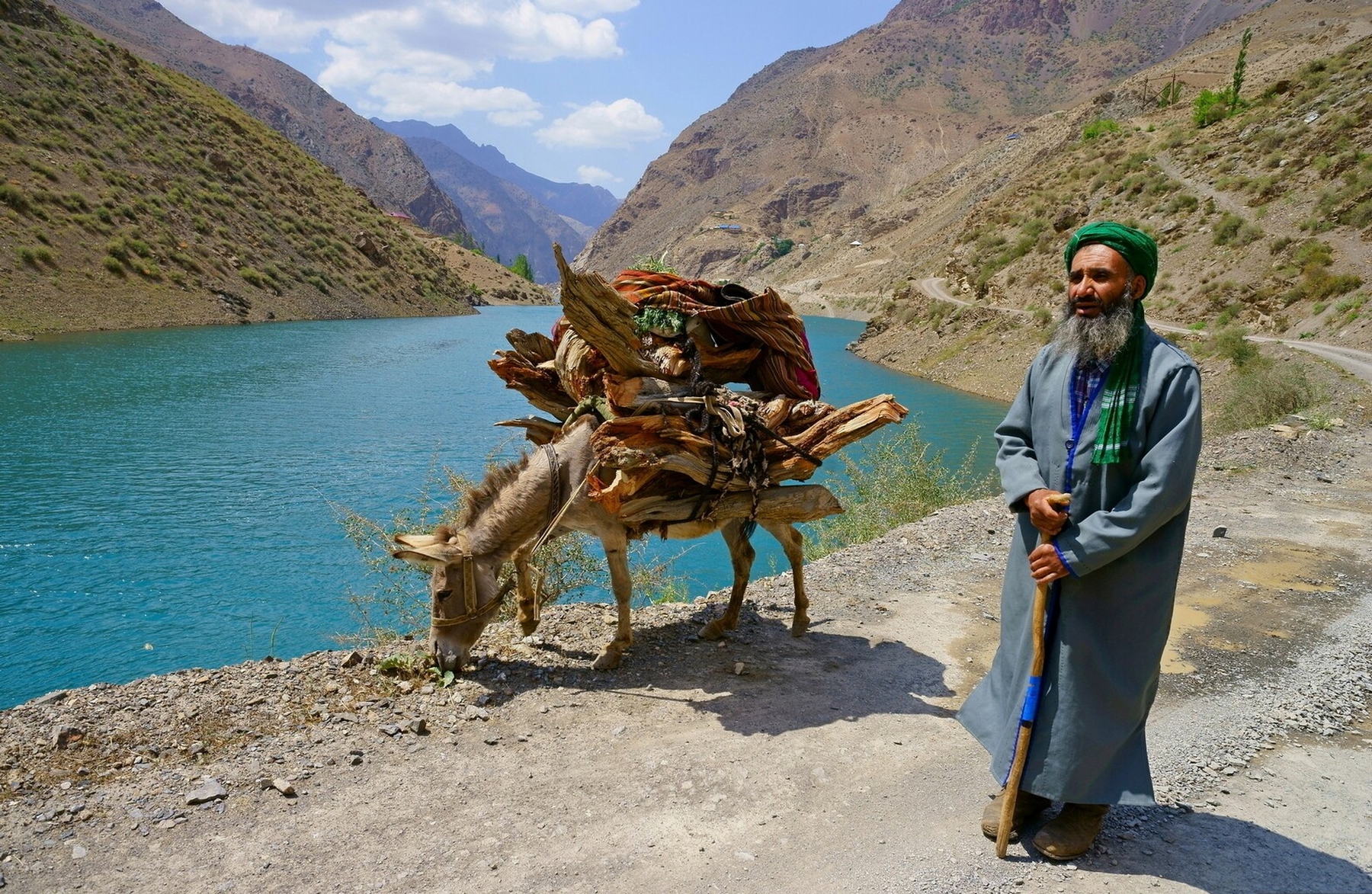
A loaded pack donkey stands in a grassy mountain pasture under a blue sky, with other donkeys grazing in the background near rugged peaks.

Day 9:Continuing to the Sarymat Valley (2500 m)

After a night indoors, we are heading back to tent life for a couple of nights. Today, we start with a short drive from Zimtut to Duoba before setting off on foot where the Sarymat and Archamaidan rivers meet. From Duoba, we trek to the Sarymat Valley. As the day draws to a Shelton, we will set up our camp at the foot of the Tavasang Pass at an altitude of approximately 2700 m.

After a night indoors, we are heading back to tent life for a couple of nights. Today, we start with a short drive from Zimtut to Duoba before setting off on foot where the Sarymat and Archamaidan rivers meet. From Duoba, we trek to the Sarymat Valley. As the day draws to a Shelton, we will set up our camp at the foot of the Tavasang Pass at an altitude of approximately 2700 m.

Tent

B,L,D

5-6 hours

1000m/50m

11 km

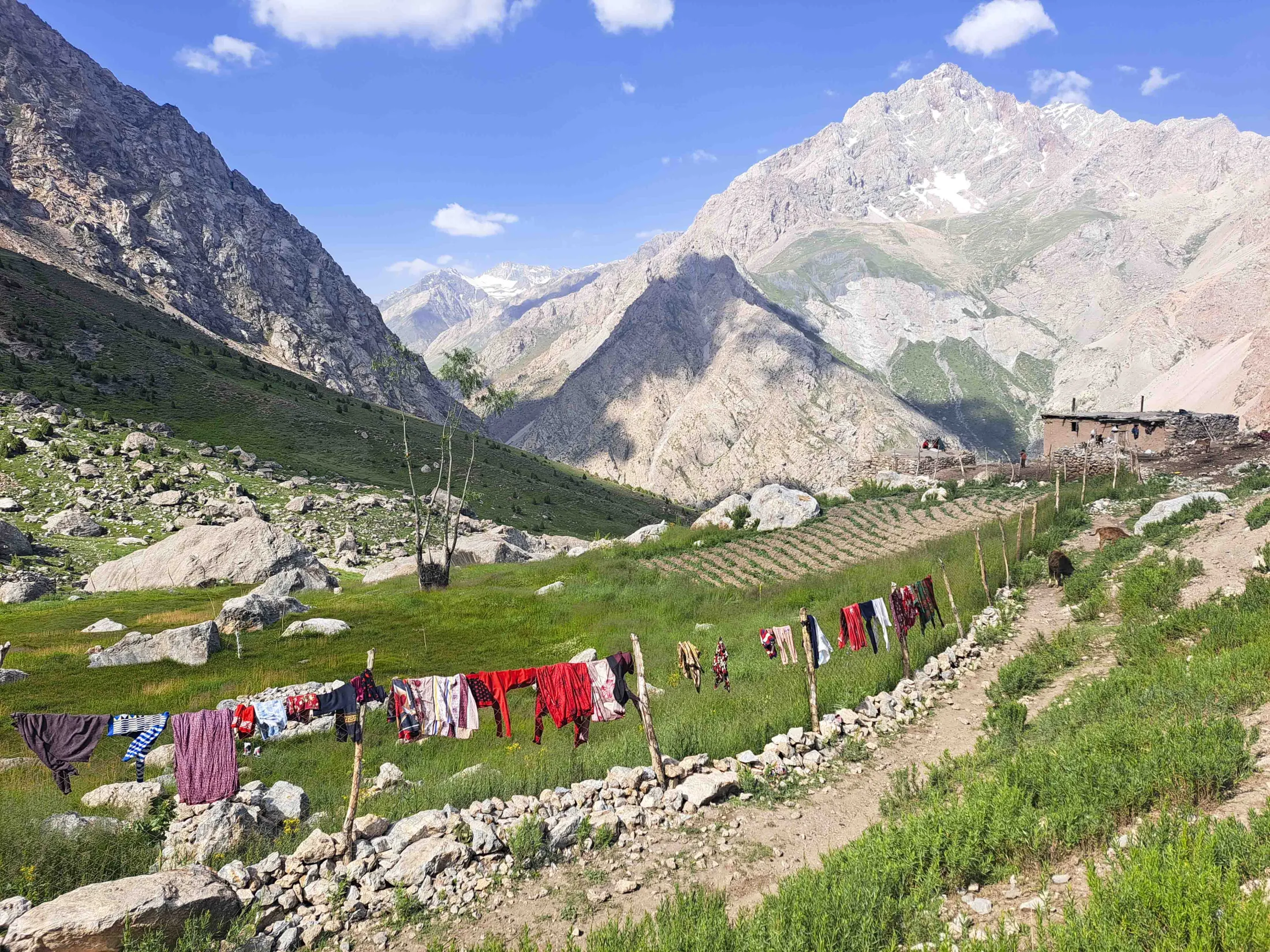
Colorful laundry hangs to dry on a line alongside a rocky mountain path leading toward a small stone outpost in a vast mountain valley.

Day 10:Last leg of the trip to the Valley of the Seven Lakes (2400 m)

After breakfast, we set out on our final day of hiking in the mountains. We begin with the ascent to the Tavasang Pass. The top of the pass sits at 3300 m and offers yet another beautiful view of the surrounding mountains. On the way down, we pass several local mountain villages. We hike down to Lake Hazorchashma (2400 m) in the afternoon. This is the seventh and highest lake in the "Haft Kul" (Seven Lakes) valley. The Haft Kul lakes are located in the far west of the Fann Mountains, in the valley of the Shing River. We pitch our tents on the shores of the lake and spend our final night under the stars.

After breakfast, we set out on our final day of hiking in the mountains. We begin with the ascent to the Tavasang Pass. The top of the pass sits at 3300 m and offers yet another beautiful view of the surrounding mountains. On the way down, we pass several local mountain villages. We hike down to Lake Hazorchashma (2400 m) in the afternoon. This is the seventh and highest lake in the "Haft Kul" (Seven Lakes) valley. The Haft Kul lakes are located in the far west of the Fann Mountains, in the valley of the Shing River. We pitch our tents on the shores of the lake and spend our final night under the stars.

Tent

B,L,D

5-6 hours

500m/1000m

11 km

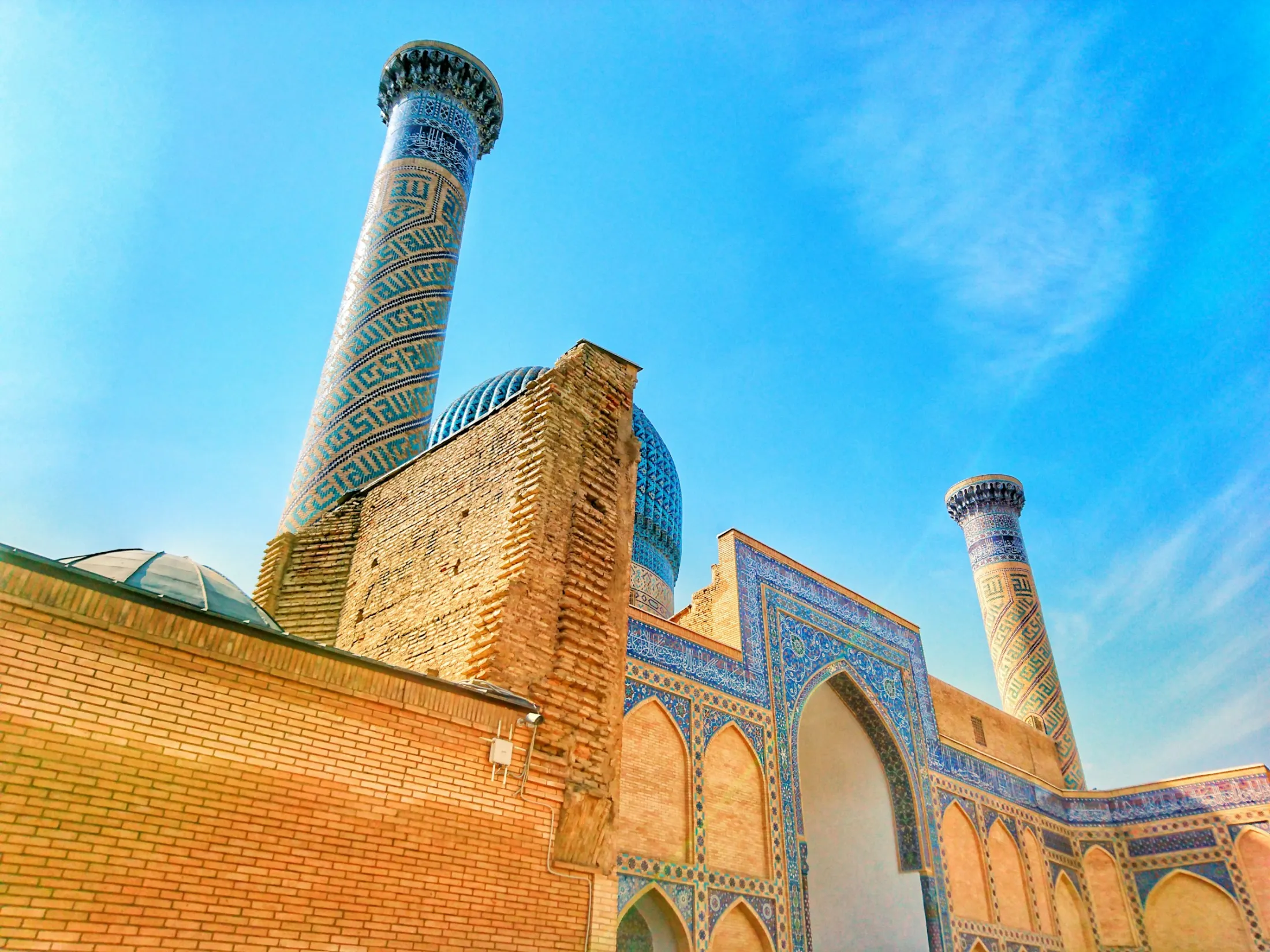
The low-angle shot features a historic brick mosque structure adorned with intricate blue mosaic tiles and two towering minarets under a clear sky.

Day 11:To Samarkand via Panjakent

After our final breakfast at the campsite, we pack up and are driven out of the Valley of the Seven Lakes. We drive past all of them until we hit the main road leading to Uzbekistan. We will stop for lunch in Panjakent, where we will also get a guided trip of the city's historical museum. This will be a nice summary of our stay before we cross the border into Uzbekistan on foot. Here, our Uzbek guide and driver will be waiting for us. On our way into Samarkand, we will stop by the Bibi-Khanym Mosque (14th–15th century)—an impressive project by Timur and the largest mosque of its time. Afterward, there will be a long-awaited shower and a hotel stay for the last two nights of the trip.

After our final breakfast at the campsite, we pack up and are driven out of the Valley of the Seven Lakes. We drive past all of them until we hit the main road leading to Uzbekistan. We will stop for lunch in Panjakent, where we will also get a guided trip of the city's historical museum. This will be a nice summary of our stay before we cross the border into Uzbekistan on foot. Here, our Uzbek guide and driver will be waiting for us. On our way into Samarkand, we will stop by the Bibi-Khanym Mosque (14th–15th century)—an impressive project by Timur and the largest mosque of its time. Afterward, there will be a long-awaited shower and a hotel stay for the last two nights of the trip.

Hotel

B,L,D

4-5 hours

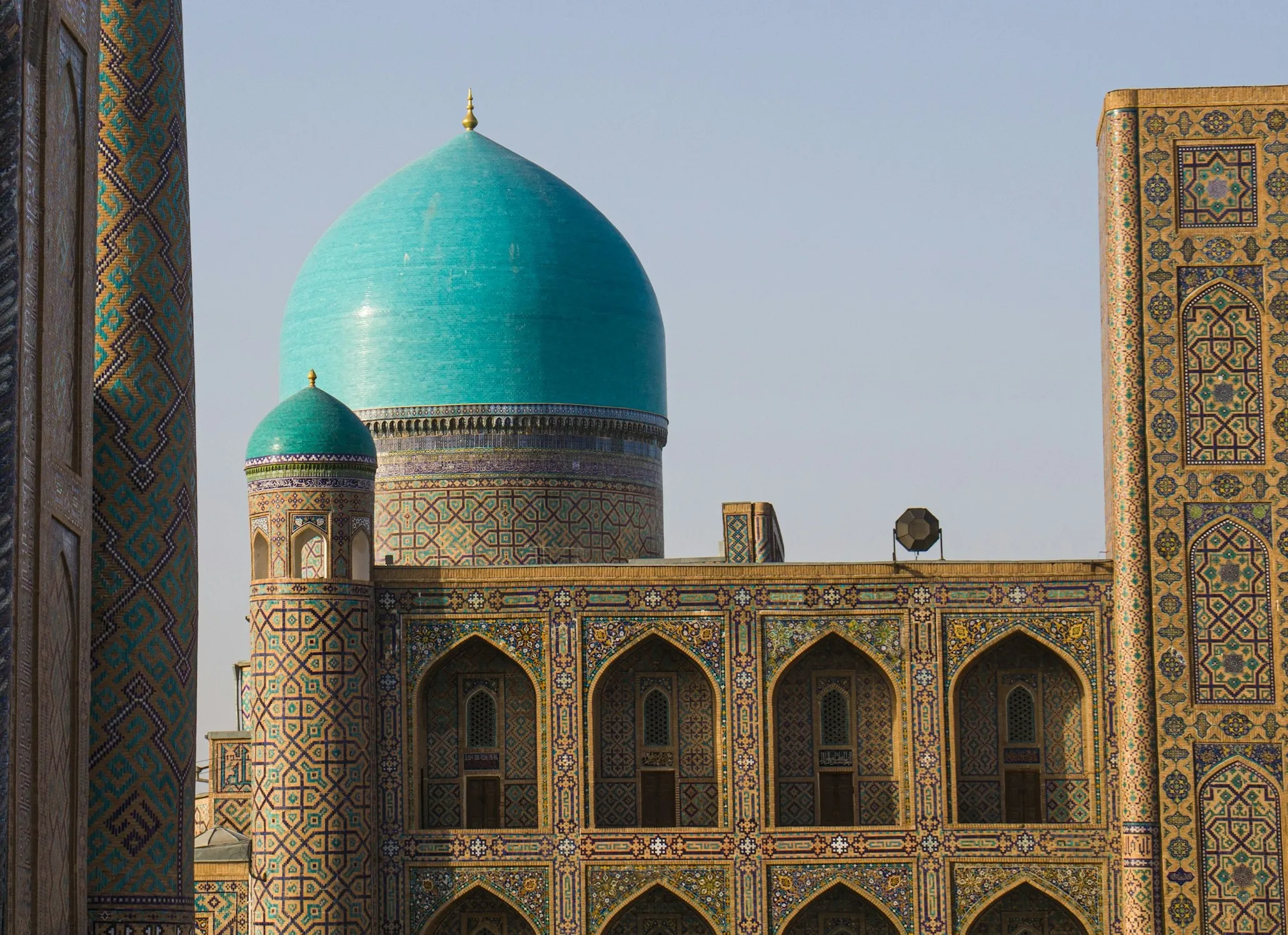
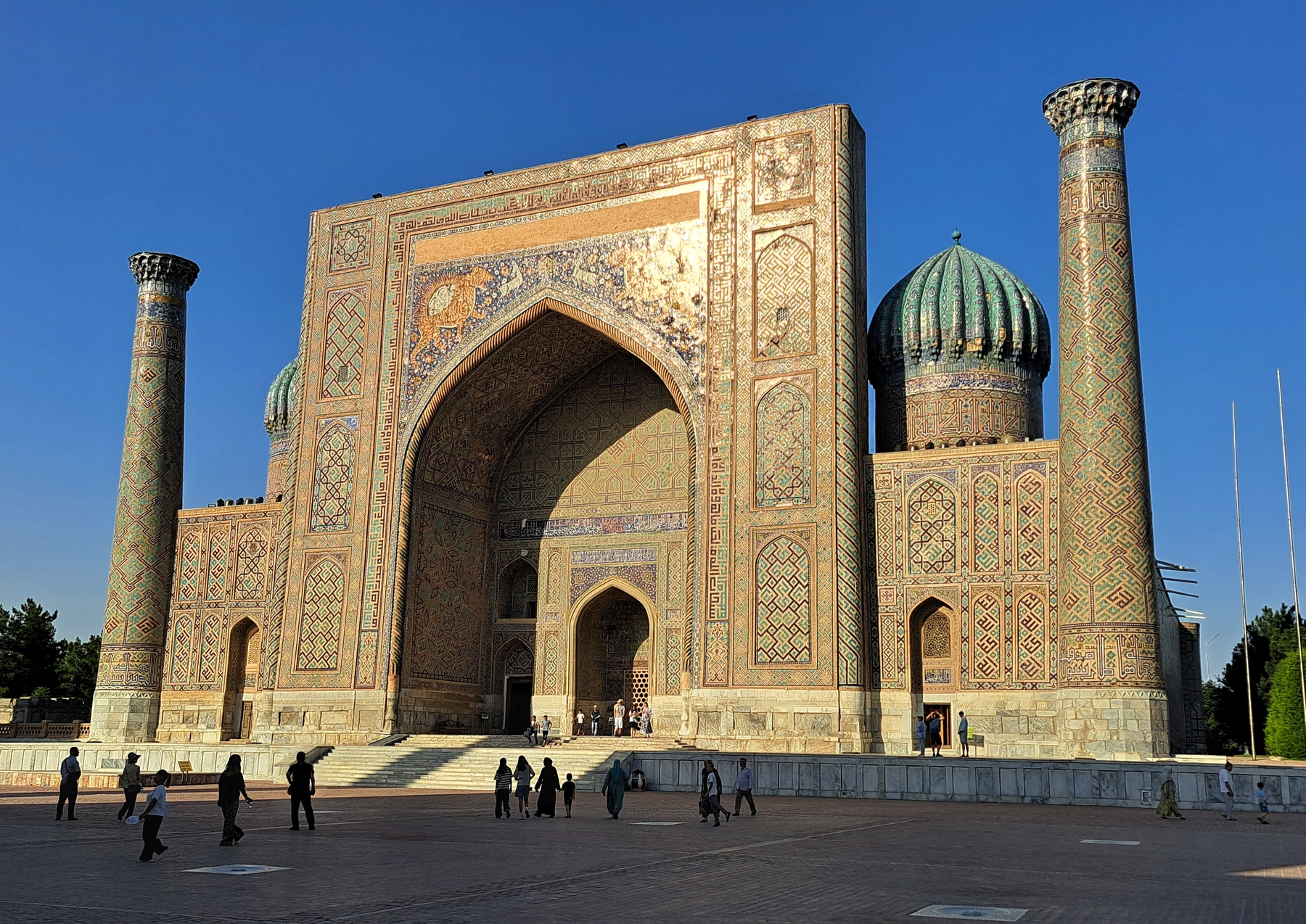
A grand turquoise dome rises above an intricately tiled madrasah facade featuring arched alcoves and patterned geometric designs.
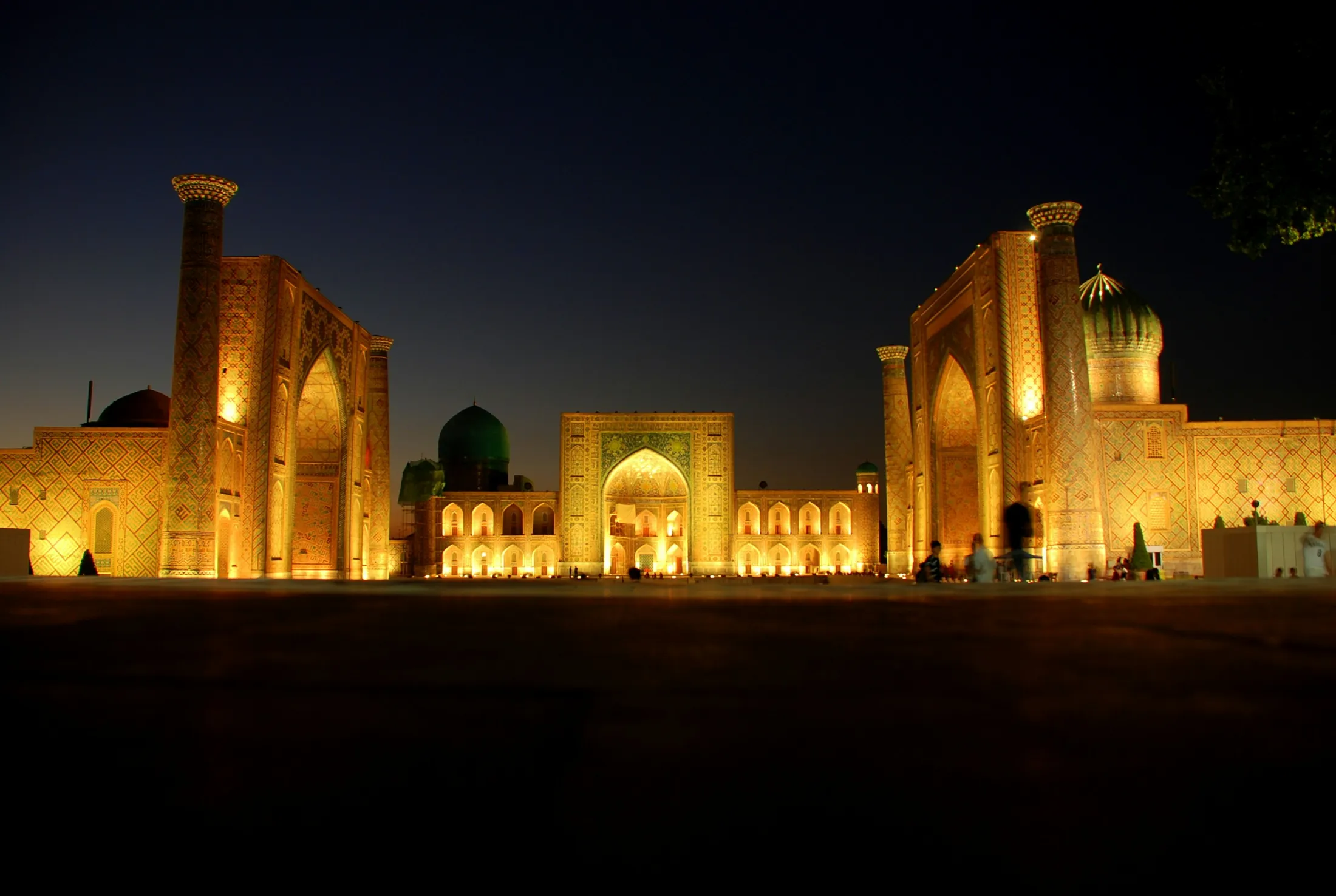
The illuminated ancient madrasahs of Registan Square stand brightly under a dark night sky in Samarkand.

Day 12:Samarkand

This day will be spent in Samarkand as we continue our historical excursion. We start with Registan Square (15th–17th century), which is the heart of Samarkand. This is a unique ensemble consisting of three madrasahs, which was and still is the center of the old city. The Gur-e-Amir Mausoleum (15th century) is the burial place of the Timurid dynasty. It is a unique architectural monument with an unforgettable blue dome, and it holds the famous tomb of Tamerlane. We will take a trip to the Siab Bazaar—a modern yet traditional "oriental" marketplace in Samarkand that surprises tourists with its colorful and diverse selection of products on offer. We will also visit the Shah-i-Zinda complex (11th–14th century), which is known as the "City of the Dead"—a complex featuring more than 20 unique buildings from different architectural periods. Finally, we will stop by the Ulugh Beg Observatory and visit the Konigil Meros paper mill, which produces the famous Samarkand paper according to ancient techniques at a paper workshop in the village of Konigil on the outskirts of Samarkand. We will wrap up our stay at a wonderful restaurant in the center of Samarkand.

This day will be spent in Samarkand as we continue our historical excursion. We start with Registan Square (15th–17th century), which is the heart of Samarkand. This is a unique ensemble consisting of three madrasahs, which was and still is the center of the old city. The Gur-e-Amir Mausoleum (15th century) is the burial place of the Timurid dynasty. It is a unique architectural monument with an unforgettable blue dome, and it holds the famous tomb of Tamerlane. We will take a trip to the Siab Bazaar—a modern yet traditional "oriental" marketplace in Samarkand that surprises tourists with its colorful and diverse selection of products on offer. We will also visit the Shah-i-Zinda complex (11th–14th century), which is known as the "City of the Dead"—a complex featuring more than 20 unique buildings from different architectural periods. Finally, we will stop by the Ulugh Beg Observatory and visit the Konigil Meros paper mill, which produces the famous Samarkand paper according to ancient techniques at a paper workshop in the village of Konigil on the outskirts of Samarkand. We will wrap up our stay at a wonderful restaurant in the center of Samarkand.

Hotel

B,L,D

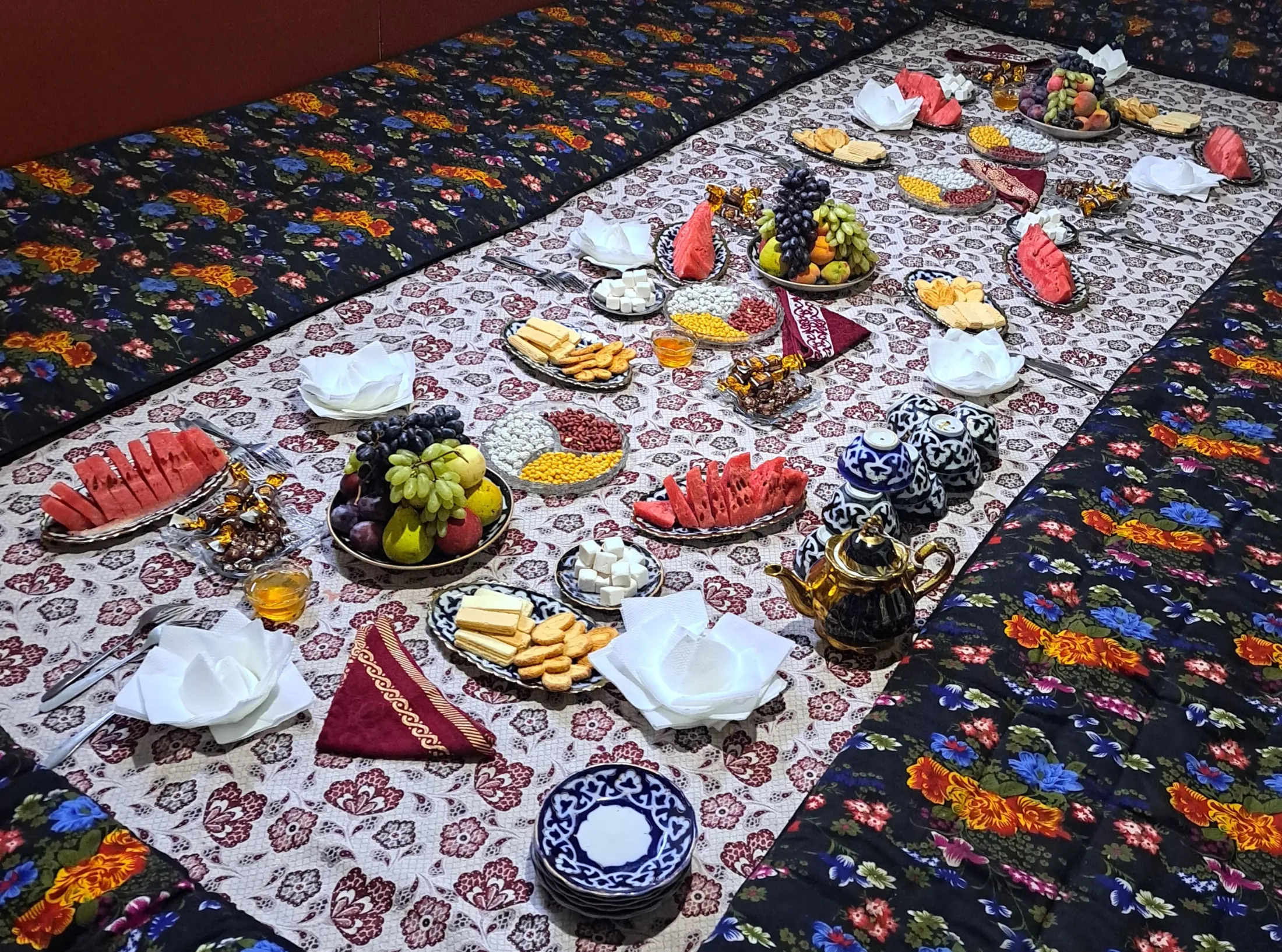
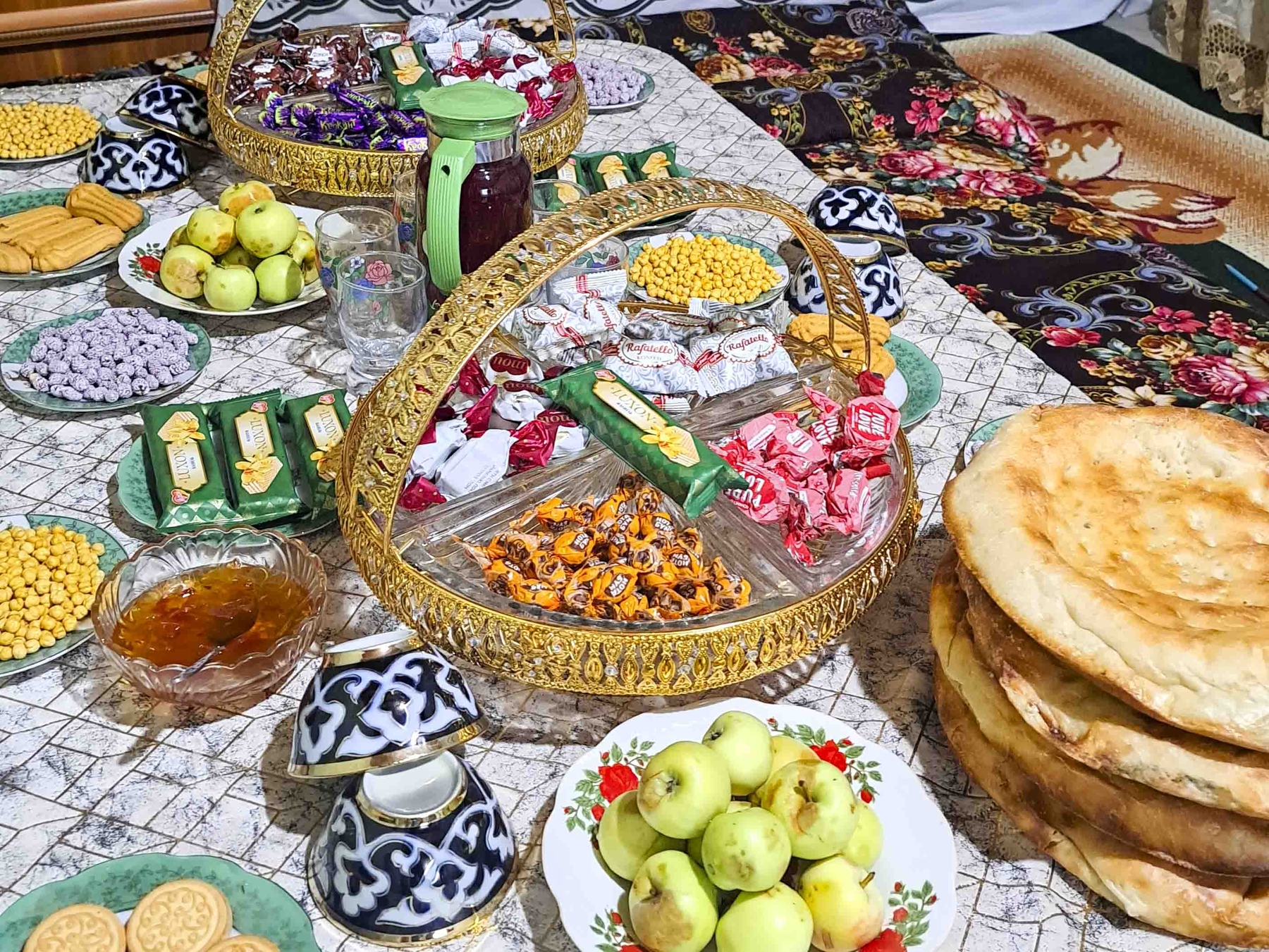
A low table is beautifully set with patterned tablecloths, cushions, and variety of dishes containing watermelon slices, fresh fruits, nuts, cookies, and traditional tea sets.

Day 13:We take the train to Bukhara

Today we will visit Bukhara, one of the oldest cities in Central Asia. This was the ancient capital of the Tajik people. Bukhara was a major center of the Muslim world and is famous for its old city center filled with mosques and Islamic schools. We will see the Lyabi-Khauz complex, which is the heart of Bukhara—a central square built in the 17th and 18th centuries. Here, you can also find authentic handicrafts to buy and take home. We will spend the night at a hotel.

Today we will visit Bukhara, one of the oldest cities in Central Asia. This was the ancient capital of the Tajik people. Bukhara was a major center of the Muslim world and is famous for its old city center filled with mosques and Islamic schools. We will see the Lyabi-Khauz complex, which is the heart of Bukhara—a central square built in the 17th and 18th centuries. Here, you can also find authentic handicrafts to buy and take home. We will spend the night at a hotel.

Hotel

B,L,D

3 hours

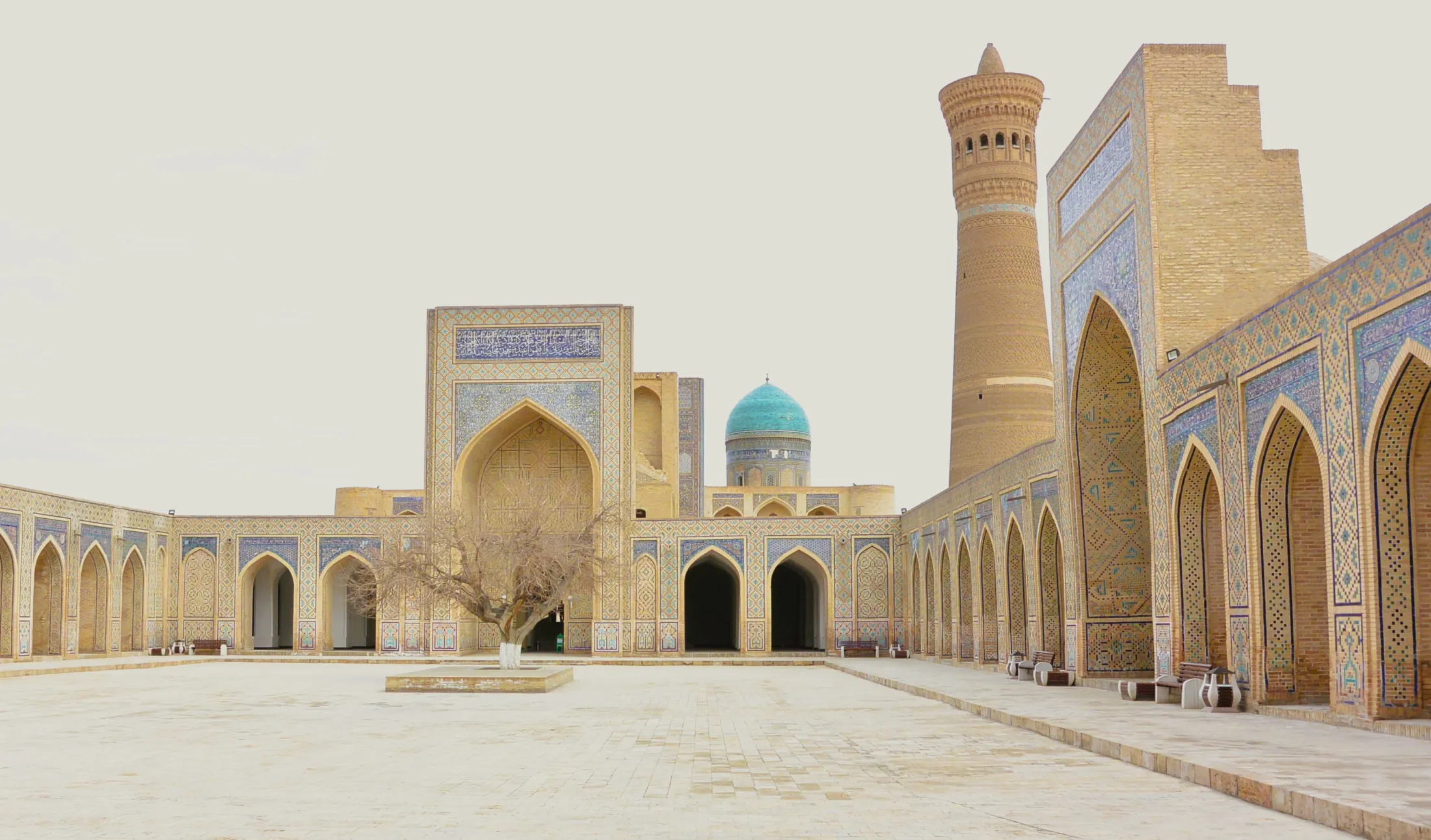
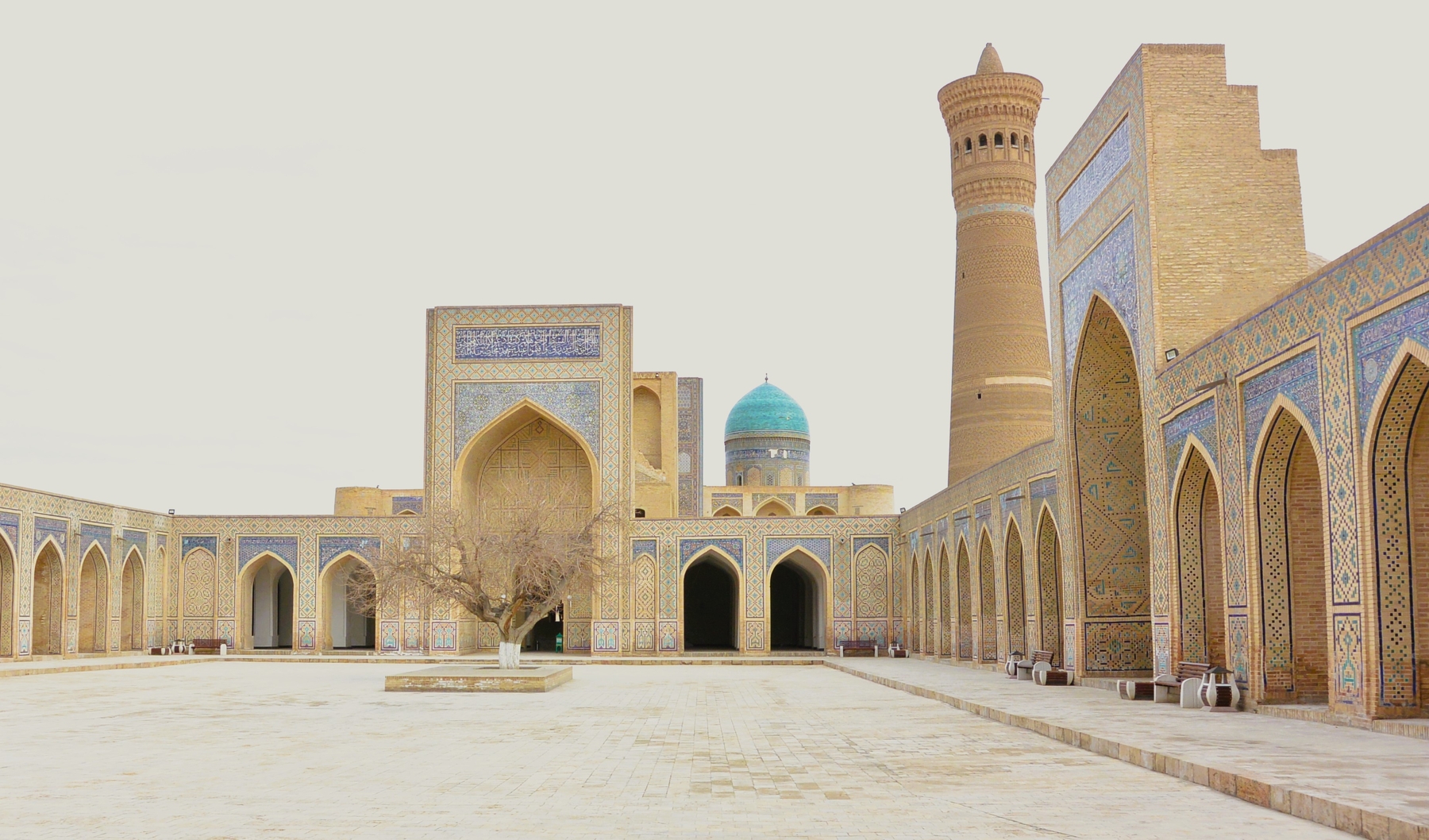
A large, open courtyard is enclosed by historic brick buildings with tiled arches, a single bare tree, a turquoise dome, and a tall minaret under an overcast sky.

Day 14:City trip in Bukhara and train back to Samarkand

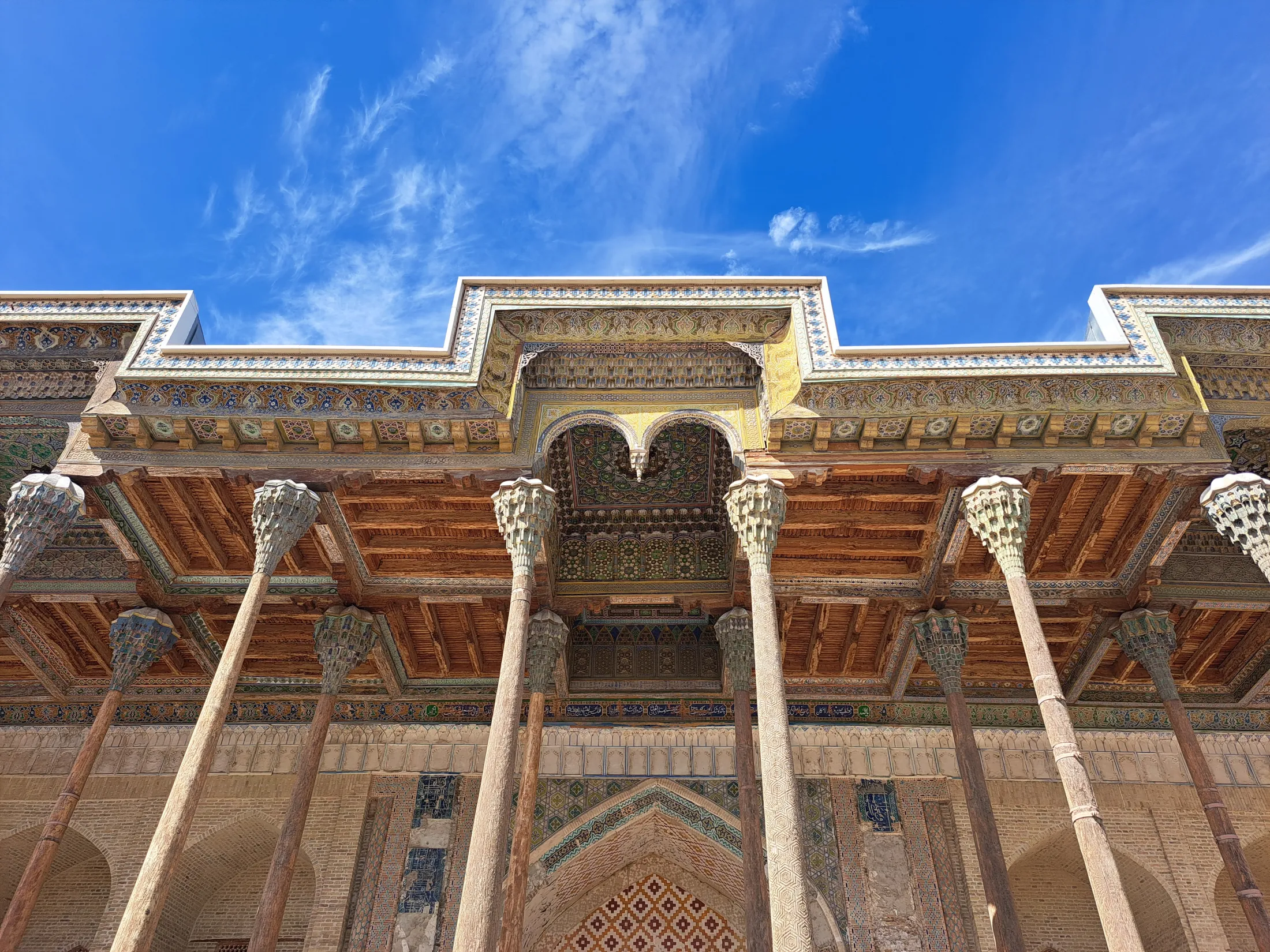
We continue our city trip in Bukhara with the Poi Kalyan complex (12th–17th century), a complex consisting of a mosque, a madrasah, and a minaret that stands 46 meters tall, making it the highest in Central Asia. We will visit the Ark Fortress, a medieval citadel that shows how the entire city used to be surrounded by fortress walls. We also have to stop by the Bolo Hauz Mosque (1712), a famous mosque with beautiful, colorful wooden pillars, before wrapping up with an excursion to the Sitorai Mokhi-Khosa Palace, the summer residence for several generations of Bukhara's emirs. Deeply impressed by this city, we take the afternoon train back to Samarkand.

We continue our city trip in Bukhara with the Poi Kalyan complex (12th–17th century), a complex consisting of a mosque, a madrasah, and a minaret that stands 46 meters tall, making it the highest in Central Asia. We will visit the Ark Fortress, a medieval citadel that shows how the entire city used to be surrounded by fortress walls. We also have to stop by the Bolo Hauz Mosque (1712), a famous mosque with beautiful, colorful wooden pillars, before wrapping up with an excursion to the Sitorai Mokhi-Khosa Palace, the summer residence for several generations of Bukhara's emirs. Deeply impressed by this city, we take the afternoon train back to Samarkand.

Hotel

B,L,D

A low-angle view shows an ornate wooden ceiling and intricately carved pillars supporting the grand entrance of a historic building under a bright blue sky.

Day 15:The adventure is over and we return to Norway

We travel home from Samarkand with a wealth of new historical and cultural knowledge, mixed with beautiful memories of the Fann Mountains. We arrive in Oslo on the same day.

We travel home from Samarkand with a wealth of new historical and cultural knowledge, mixed with beautiful memories of the Fann Mountains. We arrive in Oslo on the same day.

B,-,-

We arrive in Dushanbe and are welcomed at the airport by our local partner. We will be driven to the hotel for our first night in this little-known capital.
Hotel

-,-,-

Today, we will explore the main sights of Tajikistan's beautiful capital. We'll start our excursion with a visit to the National Museum, which will give us insight into the history and art of the region. The Buddha in Nirvana is one of the museum's main attractions. Next, we will visit a botanical garden and the bazaar, an oriental market that serves as an important gathering place for everyday Tajiks. We will end today's sightseeing at Ismoil Somoni Square, featuring Rudaki Park, the Palace of the Nation, and the 165-meter flagpole, which is one of the tallest in the world. We will have both lunch and dinner at local restaurants.
Hotel

B,L,D

We drive from the capital up into the mountains, and the drive itself becomes quite an experience. The road takes us through the stunning Varzob Gorge, offering views of majestic mountains and glistening waterfalls. Here, we get a taste of what this mountainous country has to offer. A tunnel leads us further into the Zerafshan Valley, where we eventually turn off the main road to visit one of the most famous lakes in Tajikistan: Lake Iskanderkul. We will take a stroll here before driving onward to the starting point of our upcoming 7-day trek. In Sangi Safed (2460 m) by the Pasrud River, we are welcomed by our team consisting of a mountain guide, a cook, and donkey drivers with their donkeys. Tonight, we will set up camp and sleep soundly under the stars.

Tent

B,L,D

4-5 hours

The trek is officially underway, with today’s leg leading up to Lake Allaudin, a true gem of the Fann Mountains. The lake's color spectrum shifts with the light, and the surrounding vegetation adds an extra reflection in the water. We will hike at a steady, relaxed pace to adjust to the altitude, eat a packed lunch along the way, and camp where the lake meets the Chadara River. A peaceful night's sleep awaits.

Tent

B,L,D

5-6 hours

500m/100m

15 km

After breakfast, we will take a day trip south up the valley to Lake Mutney. This is a great acclimatization hike for the days ahead. After a 3-hour trek, the trail will lead you to the highest lake in the area, offering views of grand and majestic peaks that rise above 5000 m—the tallest of which is Chimtarga Peak (5480 m). After a nice break, we will head back to our camp at Lake Allaudin.

Tent

B,L,D

5-6 hours

900m/900m

11 km

We pack our bags and trek further through the Fann Mountains—from here on out, we will have a new place to sleep every night. There is a lot of curiosity about what today’s leg of the journey will bring us. The trail climbs steeply through a forest of juniper and pine trees up to the Allaudin Pass, where a fantastic view reveals itself. We must remember to look back at where we came from; the view is immense. We head down the other side until we reach the Kulikalon Lakes. Wild pine trees grow here, giving Lake Kulikalon a special environment and microclimate. Fish were artificially introduced here in 1956. The main attraction in the Kulikalon Valley is the majestic mountain wall that stretches like a massive barrier from east to west. The mountain wall has three main peaks: Adamtash, Mirali, and Maria.

Tent

B,L,D

6-7 hours

950m/850m

6 km

We start the day with a walk around the lake before trekking up the hillside toward the Chukurak Pass at 3180 m. The climb from Kulikalon will take 3–4 hours. The descent to Lake Chukurak goes through picturesque ravines covered in pine, and we end up in a small valley at an altitude of 2430 meters.

Tent

B,L,D

4-6 hours

400m/1000m

10-11 km

The trail to the Guitan Pass at 2600 m begins with a small ravine and a slope covered in pine trees. Along the way to the pass, there are huts where shepherds live, a sign that we are approaching civilization. We go through the pass and eventually reach a small village, Guitan. Here, we can get an up-close look at how the local Tajik mountain people live. We will walk a little further to Zimtut village, where we will stay at a local homestay.

Homestay

B,L,D

5-6 hours

600m/110m

13-14 km

After a night indoors, we are heading back to tent life for a couple of nights. Today, we start with a short drive from Zimtut to Duoba before setting off on foot where the Sarymat and Archamaidan rivers meet. From Duoba, we trek to the Sarymat Valley. As the day draws to a Shelton, we will set up our camp at the foot of the Tavasang Pass at an altitude of approximately 2700 m.

Tent

B,L,D

5-6 hours

1000m/50m

11 km

After breakfast, we set out on our final day of hiking in the mountains. We begin with the ascent to the Tavasang Pass. The top of the pass sits at 3300 m and offers yet another beautiful view of the surrounding mountains. On the way down, we pass several local mountain villages. We hike down to Lake Hazorchashma (2400 m) in the afternoon. This is the seventh and highest lake in the "Haft Kul" (Seven Lakes) valley. The Haft Kul lakes are located in the far west of the Fann Mountains, in the valley of the Shing River. We pitch our tents on the shores of the lake and spend our final night under the stars.

Tent

B,L,D

5-6 hours

500m/1000m

11 km

After our final breakfast at the campsite, we pack up and are driven out of the Valley of the Seven Lakes. We drive past all of them until we hit the main road leading to Uzbekistan. We will stop for lunch in Panjakent, where we will also get a guided trip of the city's historical museum. This will be a nice summary of our stay before we cross the border into Uzbekistan on foot. Here, our Uzbek guide and driver will be waiting for us. On our way into Samarkand, we will stop by the Bibi-Khanym Mosque (14th–15th century)—an impressive project by Timur and the largest mosque of its time. Afterward, there will be a long-awaited shower and a hotel stay for the last two nights of the trip.

Hotel

B,L,D

4-5 hours

This day will be spent in Samarkand as we continue our historical excursion. We start with Registan Square (15th–17th century), which is the heart of Samarkand. This is a unique ensemble consisting of three madrasahs, which was and still is the center of the old city. The Gur-e-Amir Mausoleum (15th century) is the burial place of the Timurid dynasty. It is a unique architectural monument with an unforgettable blue dome, and it holds the famous tomb of Tamerlane. We will take a trip to the Siab Bazaar—a modern yet traditional "oriental" marketplace in Samarkand that surprises tourists with its colorful and diverse selection of products on offer. We will also visit the Shah-i-Zinda complex (11th–14th century), which is known as the "City of the Dead"—a complex featuring more than 20 unique buildings from different architectural periods. Finally, we will stop by the Ulugh Beg Observatory and visit the Konigil Meros paper mill, which produces the famous Samarkand paper according to ancient techniques at a paper workshop in the village of Konigil on the outskirts of Samarkand. We will wrap up our stay at a wonderful restaurant in the center of Samarkand.

Hotel

B,L,D

Today we will visit Bukhara, one of the oldest cities in Central Asia. This was the ancient capital of the Tajik people. Bukhara was a major center of the Muslim world and is famous for its old city center filled with mosques and Islamic schools. We will see the Lyabi-Khauz complex, which is the heart of Bukhara—a central square built in the 17th and 18th centuries. Here, you can also find authentic handicrafts to buy and take home. We will spend the night at a hotel.

Hotel

B,L,D

3 hours

We continue our city trip in Bukhara with the Poi Kalyan complex (12th–17th century), a complex consisting of a mosque, a madrasah, and a minaret that stands 46 meters tall, making it the highest in Central Asia. We will visit the Ark Fortress, a medieval citadel that shows how the entire city used to be surrounded by fortress walls. We also have to stop by the Bolo Hauz Mosque (1712), a famous mosque with beautiful, colorful wooden pillars, before wrapping up with an excursion to the Sitorai Mokhi-Khosa Palace, the summer residence for several generations of Bukhara's emirs. Deeply impressed by this city, we take the afternoon train back to Samarkand.

Hotel

B,L,D

We travel home from Samarkand with a wealth of new historical and cultural knowledge, mixed with beautiful memories of the Fann Mountains. We arrive in Oslo on the same day.

B,-,-

What's included in the price

Included

Oslo - Dushanbe and Samarkand - Oslo

Norwegian-speaking guide on programs with Norwegian language.

Local guides in the cities, a mountain guide with a chef and assistants in the mountains.

All transportation as specified in the program.

In a shared double room and a 2-person tent.

Meals as specified in the program.

Not included

For trips where flights are not included, please check our website to confirm that the departure is guaranteed before booking your own plane tickets. For each trip, we require a minimum number of confirmed participants before the departure can be guaranteed. 

To local guides and assistants. Tips are a common and expected part of being a tourist in many of the destinations we visit. These are given in cash during the trip and therefore cannot be included in the trip price.

Available upon request, limited quantities.

Request quotes from other cities in Norway.

Terms and Conditions 

We reserve the right to change prices. The day by day program is indicative and changes may occur. We also refer to our general travel conditions.

Travel Insurance

On all our trips outside of Norway, we require you to have full travel and accident insurance, which must also cover potential medical repatriation. Read more about travel insurance.

Highlights

Reviews

Rated
-
- reviews
(-)
(-)
(-)
(-)
(-)

Safety & Grading

Read more

For departures with Norrøna Adventure guides:

  • 24-hour emergency response
  • Guides trained in first aid in the field
  • Basic first aid equipment available
  • Cooperation with Turlegen.no for medical advice

On this trip, it is important to understand that we will be traveling far off the beaten track. We will of course do everything we can to assist if anything should happen, but any rescue operation could take longer than on other trips we organize. It is therefore extremely important that all participants are well prepared and ready to deal with unforeseen situations.

Physical level

3/6 Physical

Some segments of the journey may prove challenging. It's essential to possess a solid level of fitness prior to departure. Persistence will be required in reaching the trip's goal.
Comfort level

2/6 Comfort

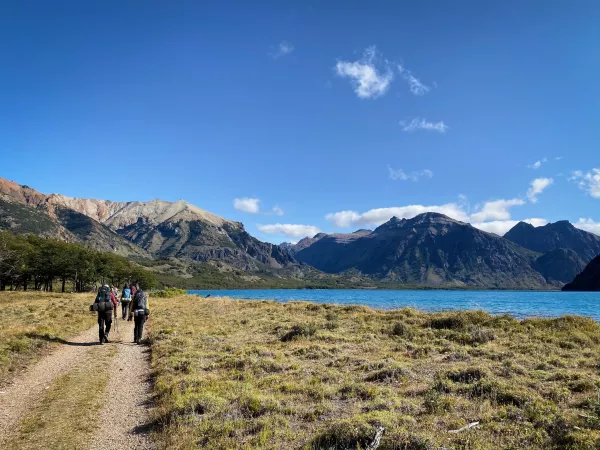
We overnight in tents. We are usually served food, but may have to contribute with cooking on certain occasions.

Risk level

3/6 Risk

Activities/trips with some risk. Certain incidents may occur, and they may be of such a nature that they may require professional help.

Training and Preparations

This is a moderately challenging trip, with daily hikes in occasionally hilly terrain. The daily hikes last up to 6–7 hours, and we’ll stay at moderate altitudes. We’ll take our time along the way, walk at a leisurely pace, and enjoy the nature around us. We’ll only carry daypacks on this mountain hike.

You should be an experienced hiker and in generally good physical condition to participate, and it is a great advantage to have hiked in the mountains before.  Experience with longer hikes in the mountains—whether hiking from cabin to cabin or camping in mountainous areas—is good preparation.

Visas, Vaccinations and Health

Before embarking on our journey together, we kindly remind all trip participants to check their respective country's visa status and vaccination requirements. Ensuring your travel documents are in order is a crucial step in guaranteeing a smooth and hassle-free adventure. 

Norwegian citizens do not need a visa, but must register upon arrival in the country. Our partner will take care of this for us. We need a passport valid for at least 6 months after our return and a copy of the passport. See also the current entry and visa regulations on the Ministry of Foreign Affairs' country pages.

If you are over 67, you should have a thorough medical check-up before your trip. Make your doctor aware that this is a trip involving physical exertion and moving off the beaten track.

It is important that you complete all parts of the registration form (especially where we ask for information about health and allergies), and let us know if there is anything we need to be aware of prior to and during the trip. Relevant health information that may affect the trip should also be communicated to the guide at the start of the trip. *Note* - If you are on regular medication, have known allergies or anything similar, you must always bring your personal medication with you.

See the overview on FHI´s pages on travel health advice. For vaccination and guidance, please contact Sentrum Reisemedisin: Reisemedisin.no. Or visit your local medical office for advise. 

Additional Information

For trips where flights are not included, please check our website to confirm that the departure is guaranteed before booking your own plane tickets. For each trip, we require a minimum number of confirmed participants before the departure can be guaranteed.

We’ll be staying in shared double rooms in the cities and in shared tents on the mountain hike. We’ll spend one night at a “homestay” during the mountain hike.

On the mountain hike, we can bring a bag weighing 12–14 kg, which will be carried by donkeys. The bag will be protected by an extra bag on the outside. We’ll only carry a daypack with what we need for each day’s hike. We’ll leave the rest of our luggage at the hotel in Dushanbe and retrieve it before crossing the border into Uzbekistan. It’s a good idea to pack light and sensibly for this trip, as the border crossing must be done on foot without access to luggage transport. It’s about 1 km with 4 checkpoints.

It is not always easy to get hold of gluten-free wholemeal bread, lactose-free alternatives or to accommodate other food preferences. If you have any allergies, please let us know in the registration form and we will try to accommodate you as best we can. However, we would still recommend that anyone with special dietary needs bring some alternatives in the form of, for example, a packet of crispbread, energy bars or similar that you know you can eat.

Equipment list

This list is intended as a guideline, so that we have what we need regardless of the weather we get on the trip. Remember that you can also get used outdoor equipment that works perfectly. Get in touch if you have any questions. TIP: We recommend that you have the most important equipment in your hand luggage, for example hiking boots and gore-tex jacket/trousers.

Obligatory

Clothing

We recommend wool underwear for both men and women. Wool sportstop is recommended for women. A boxershorts with windstopper is recommended for cold days. 

Top and bottom.

Wool or synthetic. Avoid cotton. 

Fleece or wool. 
Down or synthetic insulation, medium thickness.
Gore-Tex or similar. Must have a decent hood, and hold out wind and rain. Should have space for midlayers underneath. Ventilation under the arms is recommended. 

Gore-Tex or similar. Must hold out wind and rain. Ventilation zippers along the legs is recommended.

Hat or headband

We recommend thin wool or synthetic.

Footwear

Solid hiking boots with extra room for warm socks.  

Equipment

Avoid bringing a suitcase, they are more difficult to transport between hotels.

Needs to have space for everything you want to bring on the hikes.

Comfort temperature down to -10 degrees (C).

Waterproof pack bags to keep your clothes and gear dry, organized, and help reduce volume. It is especially important to have dedicated waterproof bags for essential equipment on your trip, such as your sleeping bag, down jacket, and electronics.

They can be used in your backpack while hiking or skiing, in your sled bag on ski expeditions, or in your duffel bag on trips where the bag is carried by porters, mules, or similar.

Remember new/extra batteries.

A solid pair, with dark glass. 

Personal medicines and, for example, band-aids, blister plaster, sports tape, throat lozenges, nasal drops, Paracetamol/Ibuprofen, stomach regulators, etc.
We need to know about all medicines you are taking, in case something happens. 

Tooth brush, tooth paste, small towel, ear plugs, wet wipes, biodegradable soap, etc.

High SPF, 30-50. Remember chapstick for lips and nose. 

Toilet paper, antibac, and waste bags for the paper. Remember leave no trace.

You should be able to bring 2-3 litres of water.

Passport, tickets, bank card, proof of vaccination andproof of insurance. Remember to have a copy of important documents on your phone and/or somewhere in your bag. 

Recommended

Clothing

Thin, ultra light.

For evenings and leasure days.

Footwear

Slippers, crocs, sandals or similar.

Equipment

Inflatable, for extra comfort. 

Light. Have to be foldable or telescope.

Resorb, electrolytes, isotonic drink etc. For energy, fluid balance and taste.

Nuts, chocolate, energy bars, etc.

If youre a light sleeper.

Packing Tips

Temperatures typically range from 5 to 10 degrees in June and are slightly lower in September, with nighttime lows of 0 to 5 degrees. However, both the wind and the altitude can make it feel colder, so it’s a good idea to bring a warm sleeping bag, as well as a down jacket or possibly a thick fleece for the evenings.

Generally, the weather will be stable during the time we’re on the trip, but the mountains can be unpredictable, so it’s important to be prepared for changing conditions with rain, snow, and wind, especially in the fall.

The sun can be relentless, and especially in the summer, it can get hot during the day if there is no wind. It’s important to protect yourself from the sun with a sun hat or cap.

We recommend hiking boots with ankle support, or footwear you would wear on hikes in the mountains in Norway. These are Norwegian trails, which can be somewhat rocky at times. You can bring an extra pair of hiking shoes for the easier sections.

Recommended trips

Testimonial

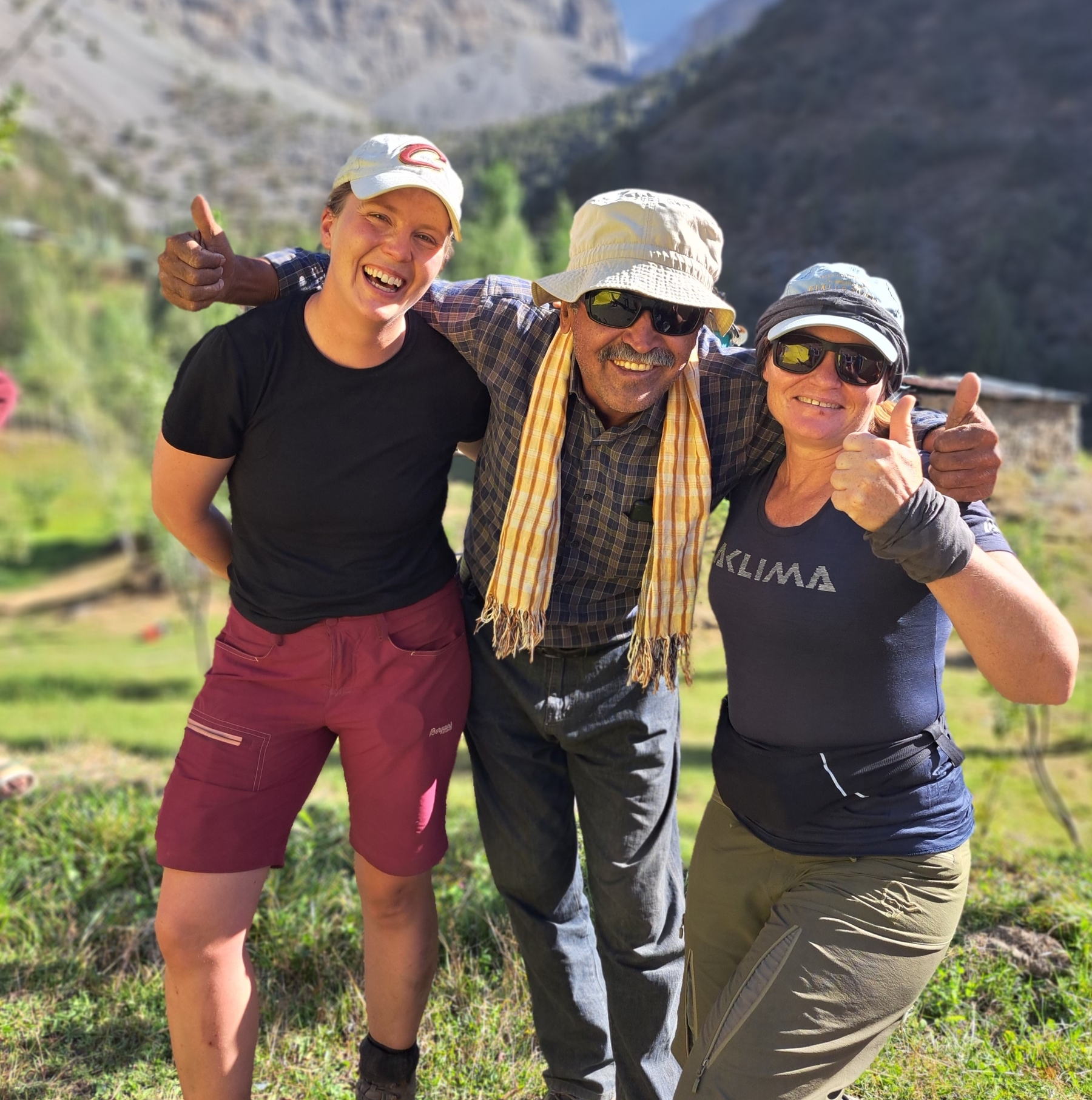
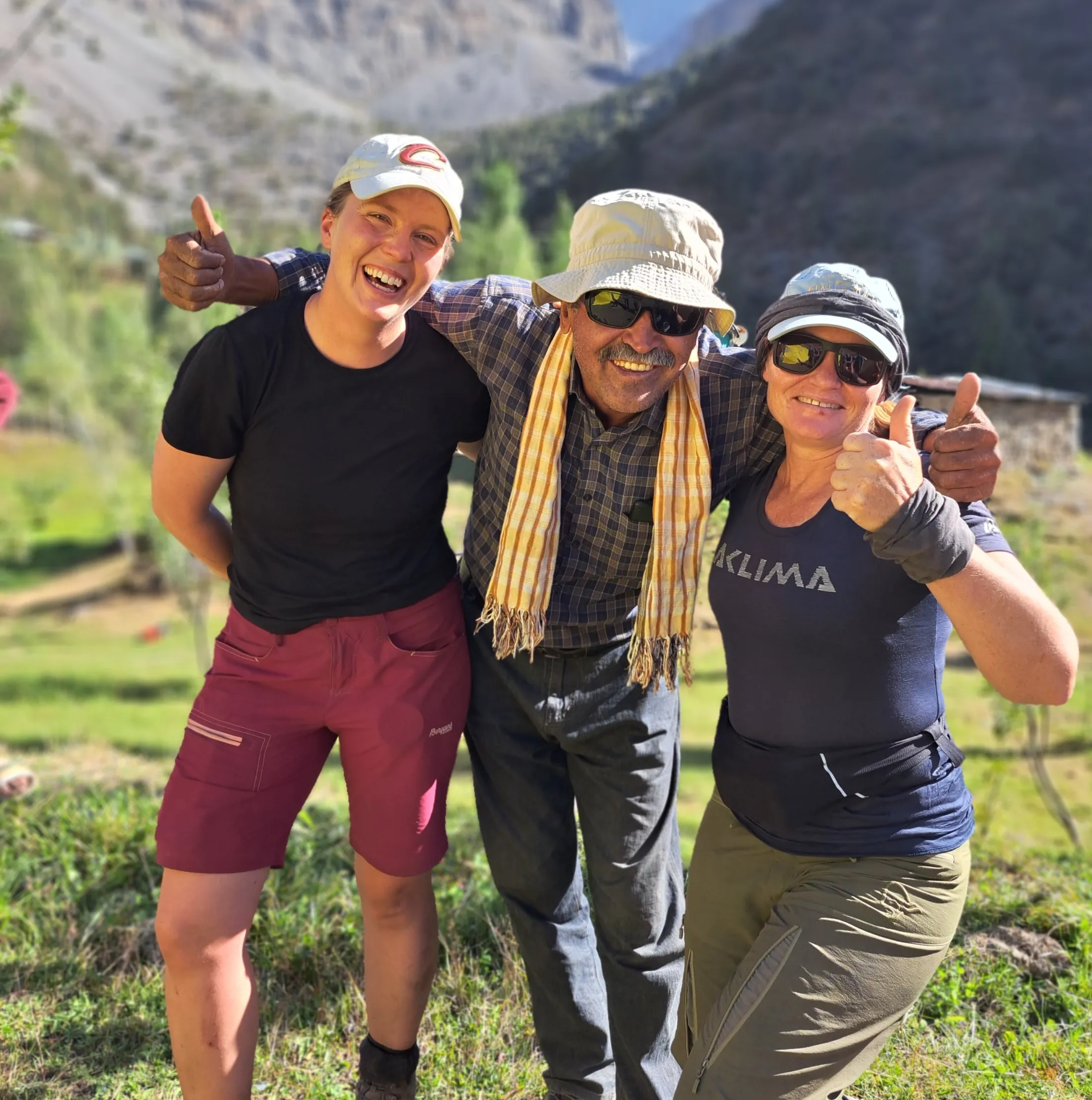
Among a wide selection of trips, this journey must be one of the absolute most adventurous destinations that Norrøna Adventure has to offer! I have been on many great trips before, but none can compare to this one! The journey is at the intersection of nature, culture, and absolutely fantastic human encounters.

– Kristin, 2024