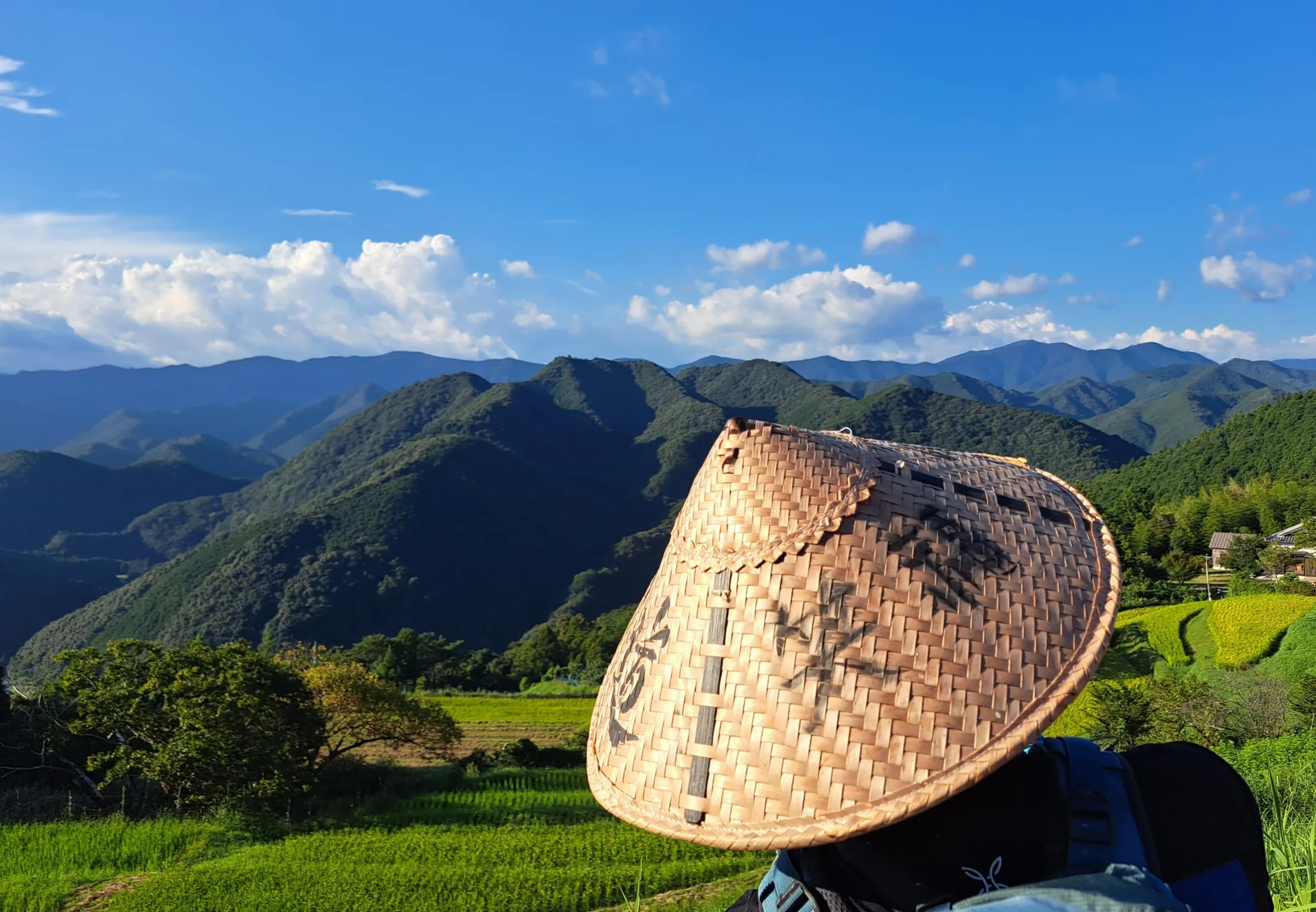
A person wearing a traditional woven conical hat stands before a vast landscape of vibrant green rice terraces and rolling forested mountains under a bright blue sky.
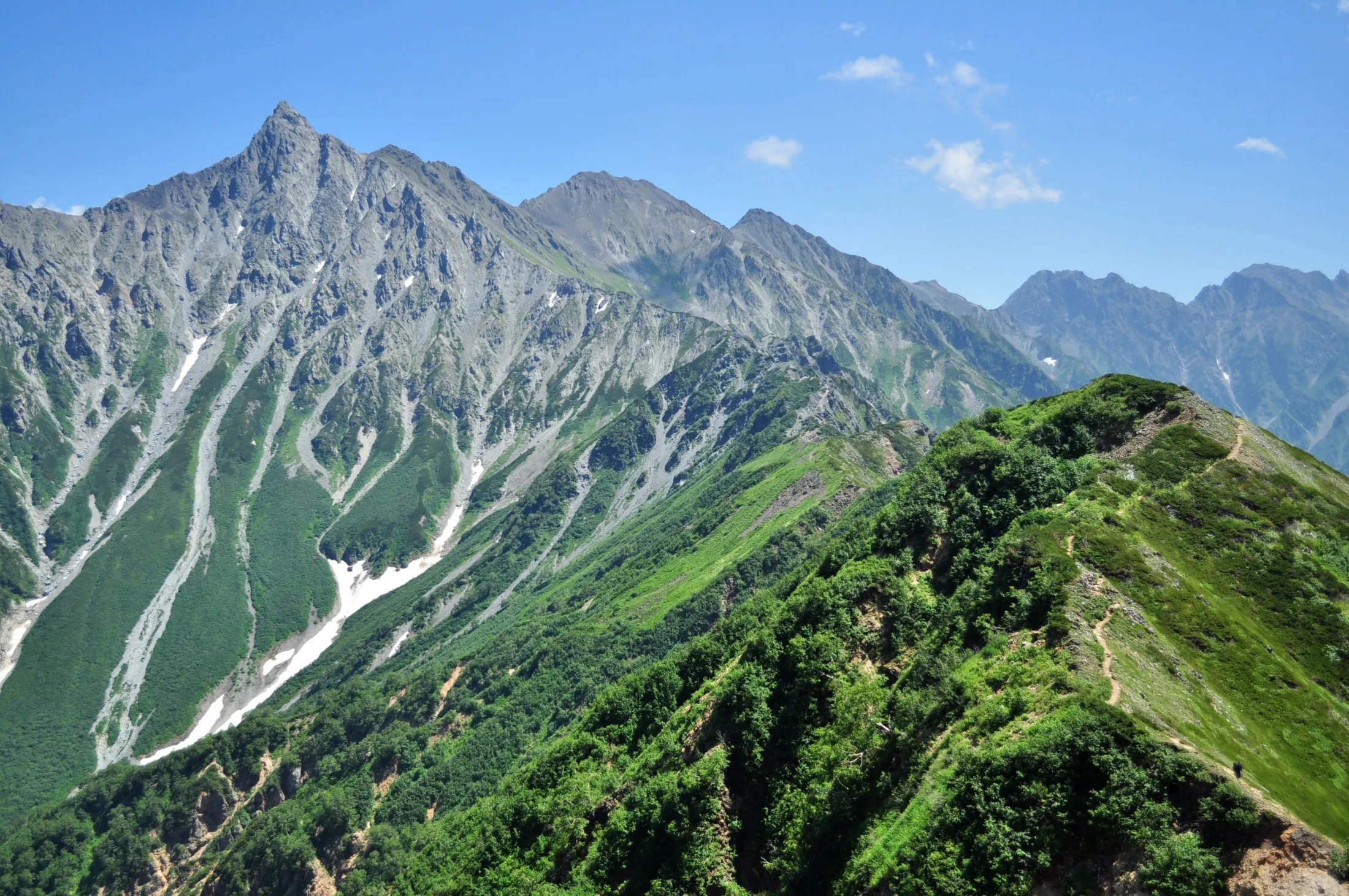
A narrow hiking trail winds along a lush, green mountain ridge leading toward massive, rugged alpine peaks with patches of lingering snow under a clear blue sky.
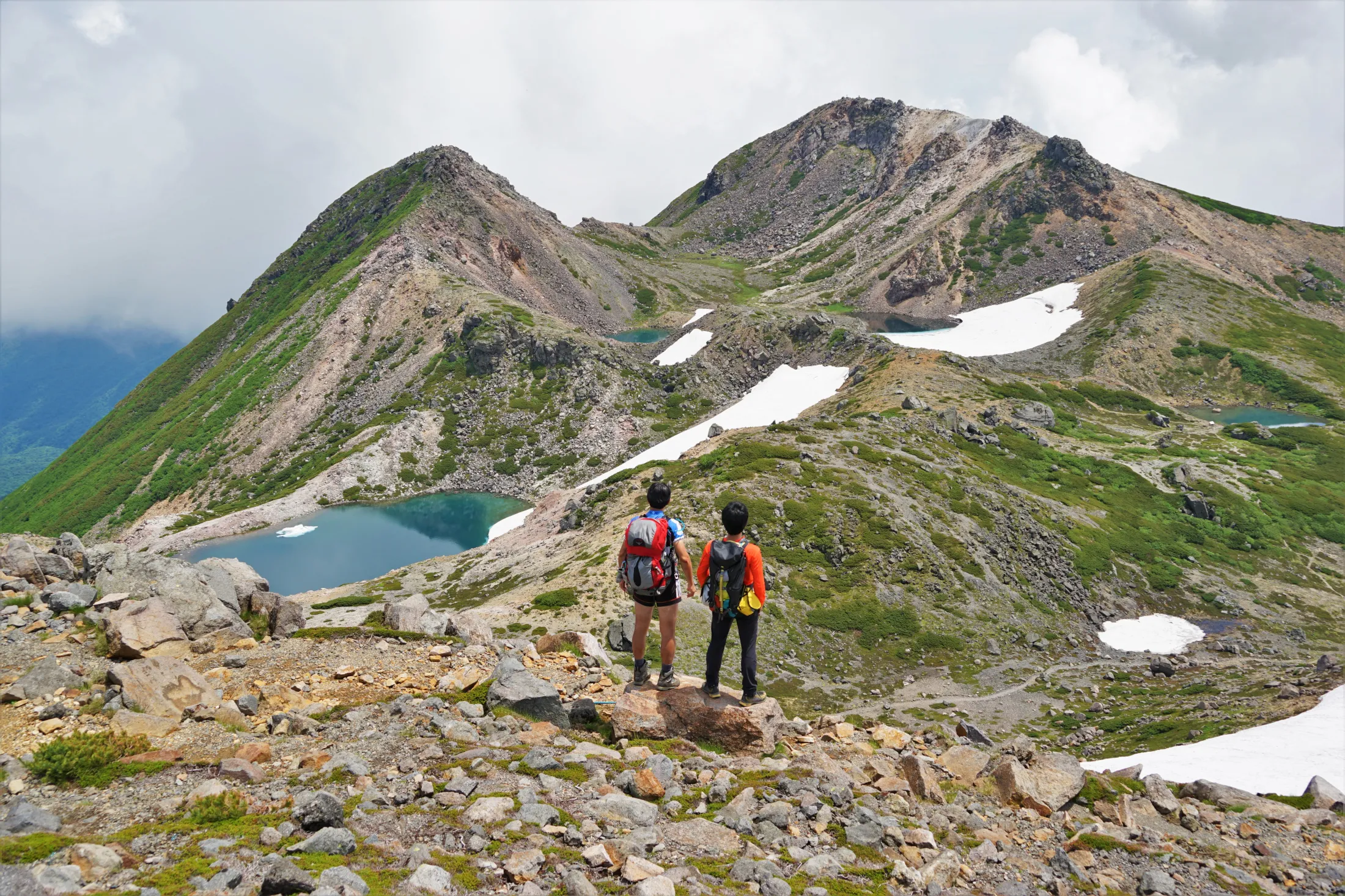
Two hikers with backpacks stand on a rocky overlook, gazing at a dramatic alpine crater landscape with turquoise volcanic lakes and patches of snow nestled between mountain peaks.
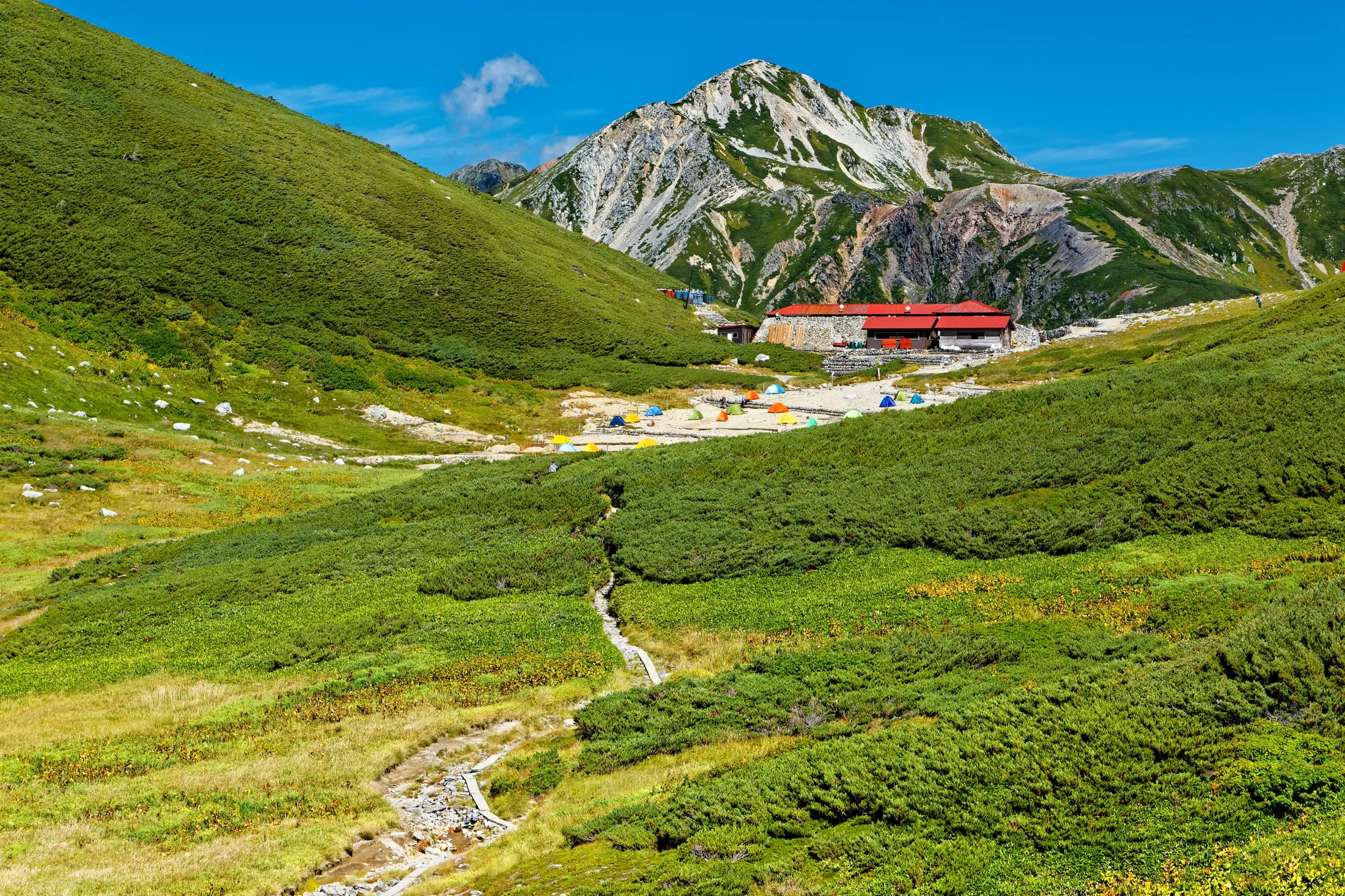
A narrow dirt path winds through lush green, rolling hills toward a mountain lodge with a red roof and a colorful tent campsite nestled at the base of a rugged peak.

Hiking in Japan with Mt. Fuji (3776 m)

3 different hiking trips and the exotic cities of Kyoto and Tokyo

Hiking in Japan with Mt. Fuji (3776 m)

3 different hiking trips and the exotic cities of Kyoto and Tokyo

From USD 8172

Join us on a mountain trek in Japan full of contrasts, where we’ll climb Mt. Fuji and two other peaks, hike from hut to hut through the Japanese Alps, explore the beautiful imperial city of Kyoto, and finish with a bike ride through Tokyo!

Highlights

  • Kyoto
  • Tokyo
  • Summit climbs of three mountains: Hakusan, Yarigatake, and Mt. Fuji
  • Hut-to-hut hiking in the Japanese Alps
  • Shirakawa Village

This tour includes three different mountain hikes, all among the finest in Japan. First, we travel to Kanazawa, a historic city that was Japan’s third-largest 400 years ago, during the samurai era. Kanazawa was not damaged during World War II and has therefore preserved its traditional buildings and cultural treasures. We’ll spend one night here before continuing our journey.

The next stop is Mount Hakusan, one of Japan’s most important sacred mountains. Hakusan, which means “White Mountain,” has been climbed since 717. Hakusan is relatively isolated, and if we’re lucky with the weather, we’ll enjoy a magnificent panoramic view from the summit. After the hike, we’ll continue to the UNESCO-protected village of Shirakawa, known for its traditional gassho-zukuri farmhouses that are over 250 years old.

The second mountain hike is to Mt. Yarigatake, Japan’s fifth-highest mountain and a favorite among hikers. The mountain has a distinctive spear-shaped appearance and offers a beautiful and exciting hike with a slightly airy finish. We’ll plan a 4-day hike from west to east, ending at Kamikochi, a well-known mountain resort. After the hike, we’ll spend the night in Matsumoto, known for its historic castles, and recharge for the final leg.

The final hike takes us to Japan’s highest mountain, Mt. Fuji. We’ll choose a less-traveled route than many others. After reaching the summit, we return to Tokyo for two exciting days here, including a bike ride. This itinerary combines spectacular mountain hikes with cultural experiences that make the trip unforgettable.

16

10-16

NO/EN

3/6

3/6

3/6

Dates and booking
There are no departures on this trip.
Can't find a date? We'll notify you when new trips open!

Plan it your way

Want this trip just for your group? Or got something different in mind? We've got you.

Make this a private trip

Opening hours Phone
Mon-Fri : 08-20
Sat-Sun : 14-17
Opening hours Chat
Mon-Fri : 07-23
Sat : 10-18
Sun : 13-21
CET

Day by day

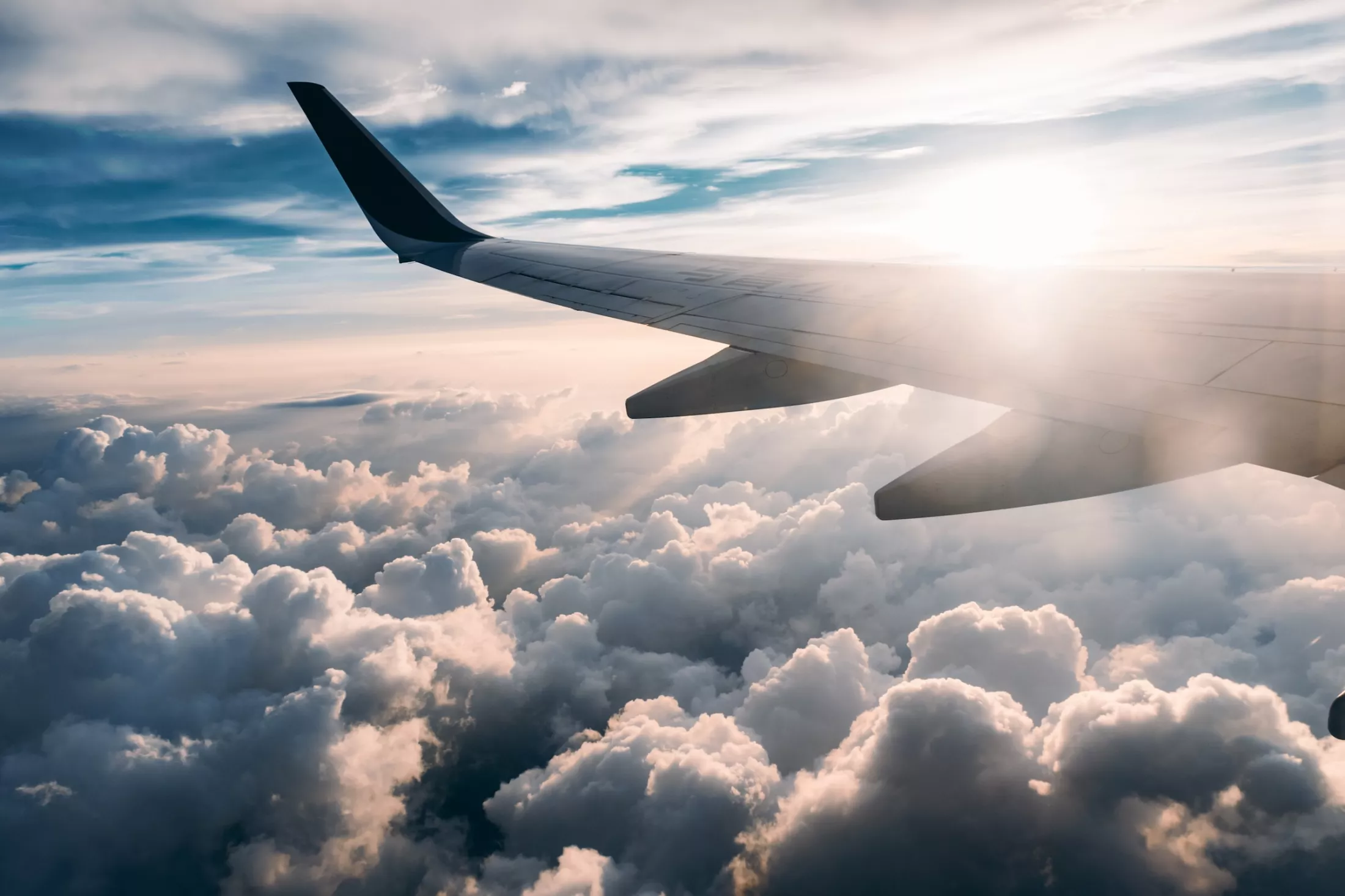
An airplane wing stretches across the sky high above a dense layer of fluffy white clouds with the bright sun creating a brilliant lens flare.

Day 1:Departure

We are traveling towards Japan. The itinerary will vary based on where you are coming from. For some people, you will not have to leave until day 2 of the program. Group tours from Norway meet at Oslo Airport, and have a stopover before arriving at Kilimanjaro Airport. For other departures, airfare and tickets will not be included in the program, unless otherwise agreed.
We are traveling towards Japan. The itinerary will vary based on where you are coming from. For some people, you will not have to leave until day 2 of the program. Group tours from Norway meet at Oslo Airport, and have a stopover before arriving at Kilimanjaro Airport. For other departures, airfare and tickets will not be included in the program, unless otherwise agreed.
-,-,-

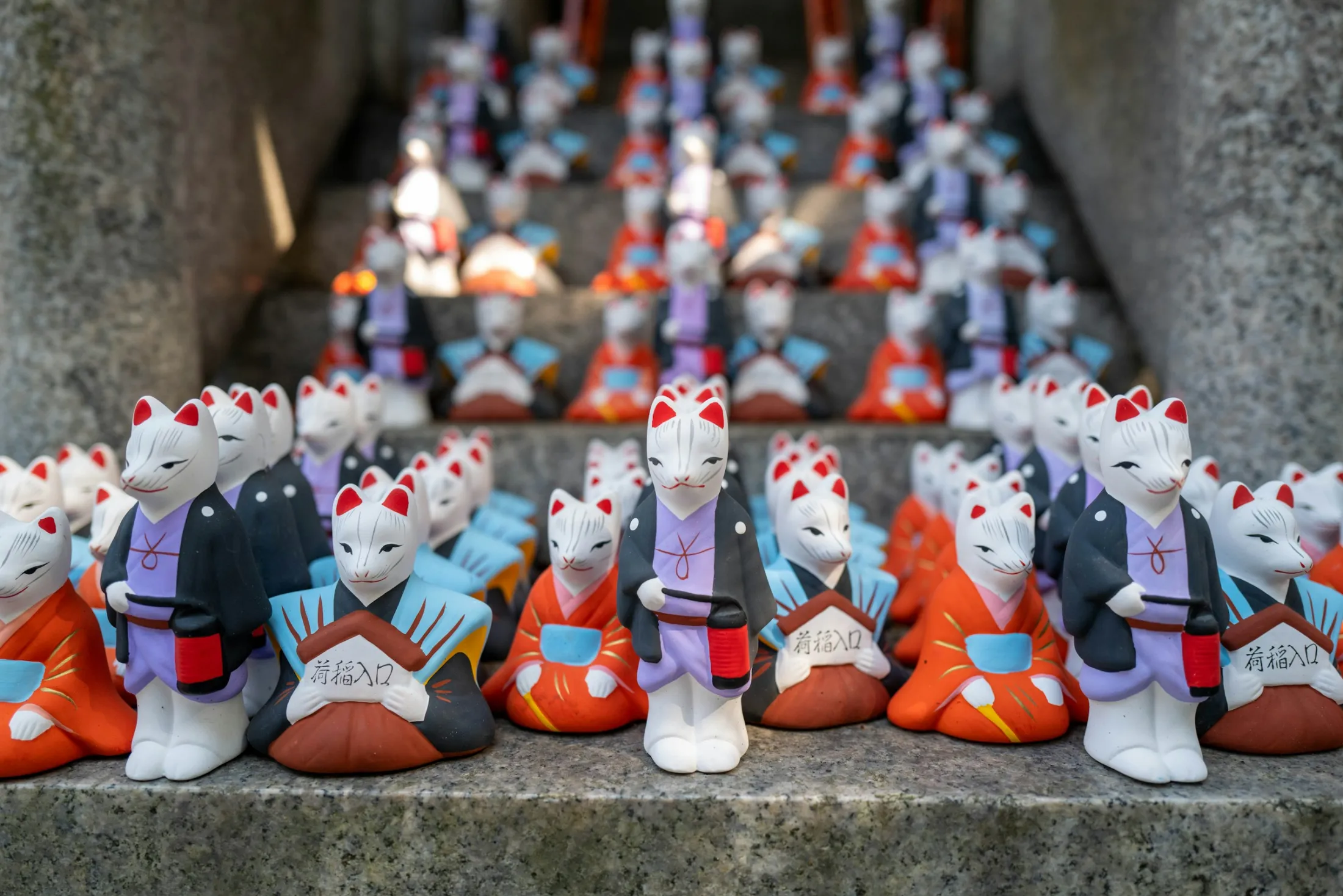
Dozens of small, colorful porcelain fox figurines dressed in traditional Japanese attire sit arranged in rows on a stone step at a shrine.

Day 2:Arrival in Tokyo

We arrive in Tokyo. “Welcome to Japan. Please respect the rules.” This sign awaits you at the airport. And there are rules everywhere. The Japanese love rules and they respect them—perhaps that’s why this strange country is so clean and tidy. After arriving at the hotel near the airport, we enjoy a pleasant welcome dinner, and most people are probably eager to get to bed after a long flight. There will be plenty of traditional food in the days ahead—fantastic dinners with many small dishes, rice and fish for breakfast, and rice balls for lunch.

We arrive in Tokyo. “Welcome to Japan. Please respect the rules.” This sign awaits you at the airport. And there are rules everywhere. The Japanese love rules and they respect them—perhaps that’s why this strange country is so clean and tidy. After arriving at the hotel near the airport, we enjoy a pleasant welcome dinner, and most people are probably eager to get to bed after a long flight. There will be plenty of traditional food in the days ahead—fantastic dinners with many small dishes, rice and fish for breakfast, and rice balls for lunch.

Hotel

-,-,D

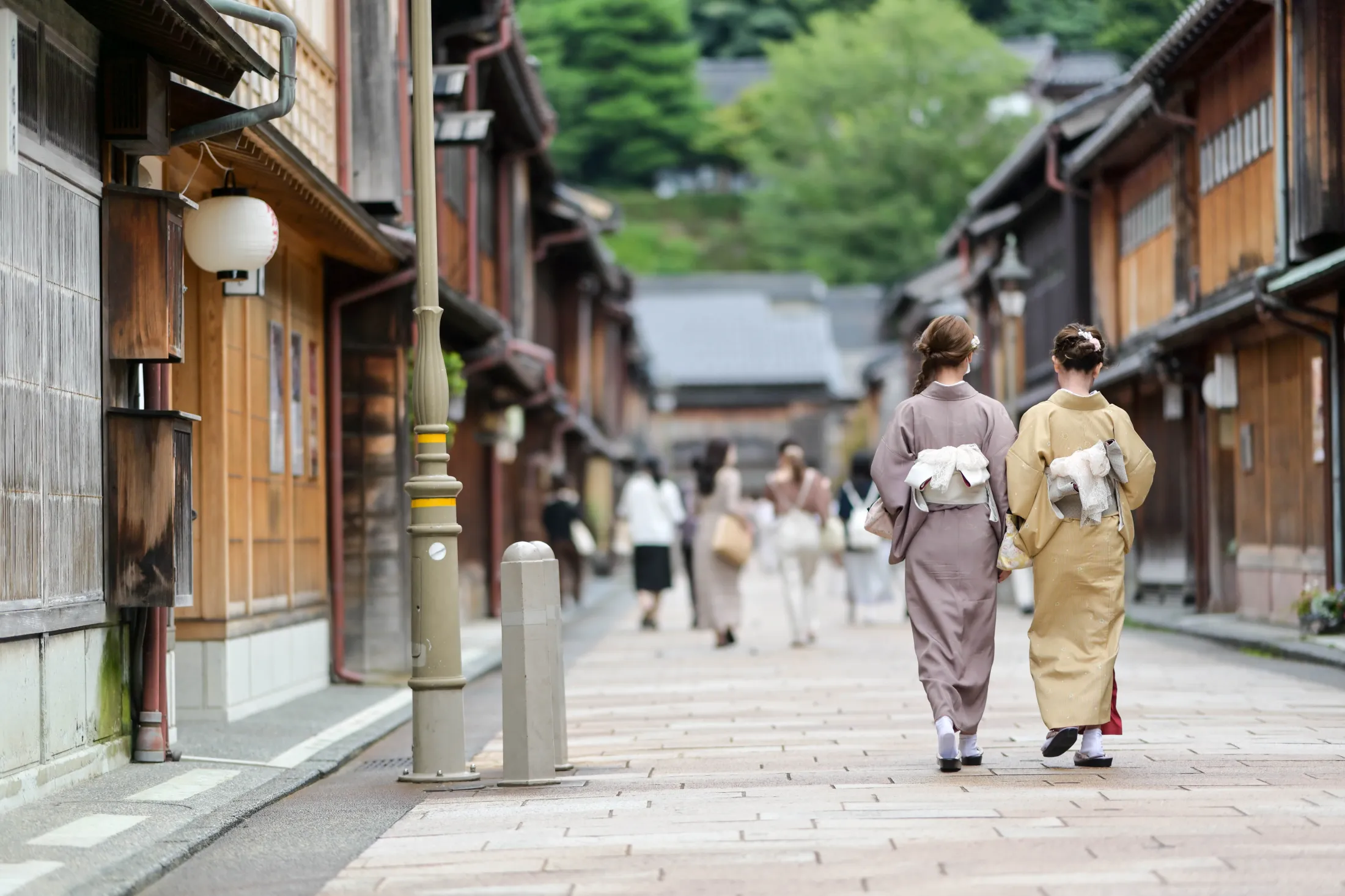
Two women wearing traditional elegant kimonos walk away down a paved street lined with historic wooden buildings in a Japanese town.

Day 3:Train to Kanazawa

After breakfast at the hotel, we’ll take an early express train to central Tokyo, where we’ll transfer to a train bound for Kanazawa. At the train station, it’s a good idea to pick up a “bento” or lunch box for the train ride. We’ll arrive in Kanazawa around midday and head to our hotel to drop off our luggage. Then we’ll go sightseeing by public bus, where we’ll see, among other things, the city’s main attraction: Kenroku-en (one of the three finest Japanese-style gardens in the country). We’ll also take a stroll through Kanazawa’s old town, where we’ll visit the Higashi-Chaya district—an area with teahouses where geishas perform traditional song and dance. Kanazawa has three such districts that are still preserved. Dinner on your own tonight.

After breakfast at the hotel, we’ll take an early express train to central Tokyo, where we’ll transfer to a train bound for Kanazawa. At the train station, it’s a good idea to pick up a “bento” or lunch box for the train ride. We’ll arrive in Kanazawa around midday and head to our hotel to drop off our luggage. Then we’ll go sightseeing by public bus, where we’ll see, among other things, the city’s main attraction: Kenroku-en (one of the three finest Japanese-style gardens in the country). We’ll also take a stroll through Kanazawa’s old town, where we’ll visit the Higashi-Chaya district—an area with teahouses where geishas perform traditional song and dance. Kanazawa has three such districts that are still preserved. Dinner on your own tonight.

Hotel

B,-,-

5 hours

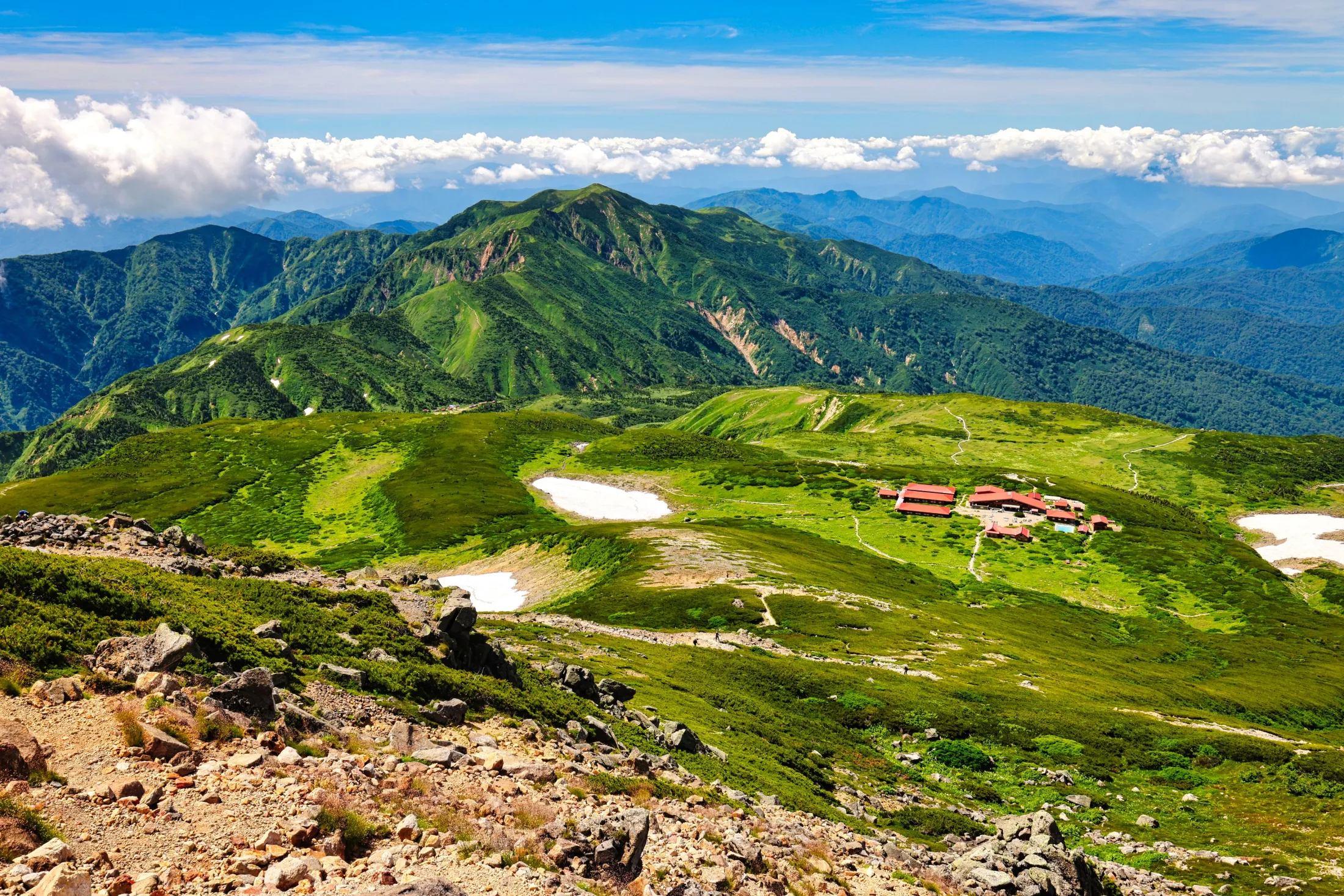
A high-angle view reveals a sprawling mountain landscape with a cluster of red-roofed buildings nestled on a bright green plateau next to small patches of snow.

Day 4:The first mountain hike begins (2450 m)

Today we’ll have an early breakfast and send the luggage we won’t need on the mountain hike by bus to Shirakawa Village, where we’ll end up tomorrow afternoon. You’ll therefore need to pack everything you’ll need for the next 24 hours of the hike into your backpack. We’ll be picked up at the hotel by a bus that will take us to the starting point of our mountain hike, a place called Betto Deai (1260 m). From here, we’ll begin our ascent toward today’s destination and tonight’s mountain hut (2450 m), where we’ll be served dinner this evening.

Today we’ll have an early breakfast and send the luggage we won’t need on the mountain hike by bus to Shirakawa Village, where we’ll end up tomorrow afternoon. You’ll therefore need to pack everything you’ll need for the next 24 hours of the hike into your backpack. We’ll be picked up at the hotel by a bus that will take us to the starting point of our mountain hike, a place called Betto Deai (1260 m). From here, we’ll begin our ascent toward today’s destination and tonight’s mountain hut (2450 m), where we’ll be served dinner this evening.

Mountain lodge

B,-,D

1,5 hours

4-5 hours

+1190m

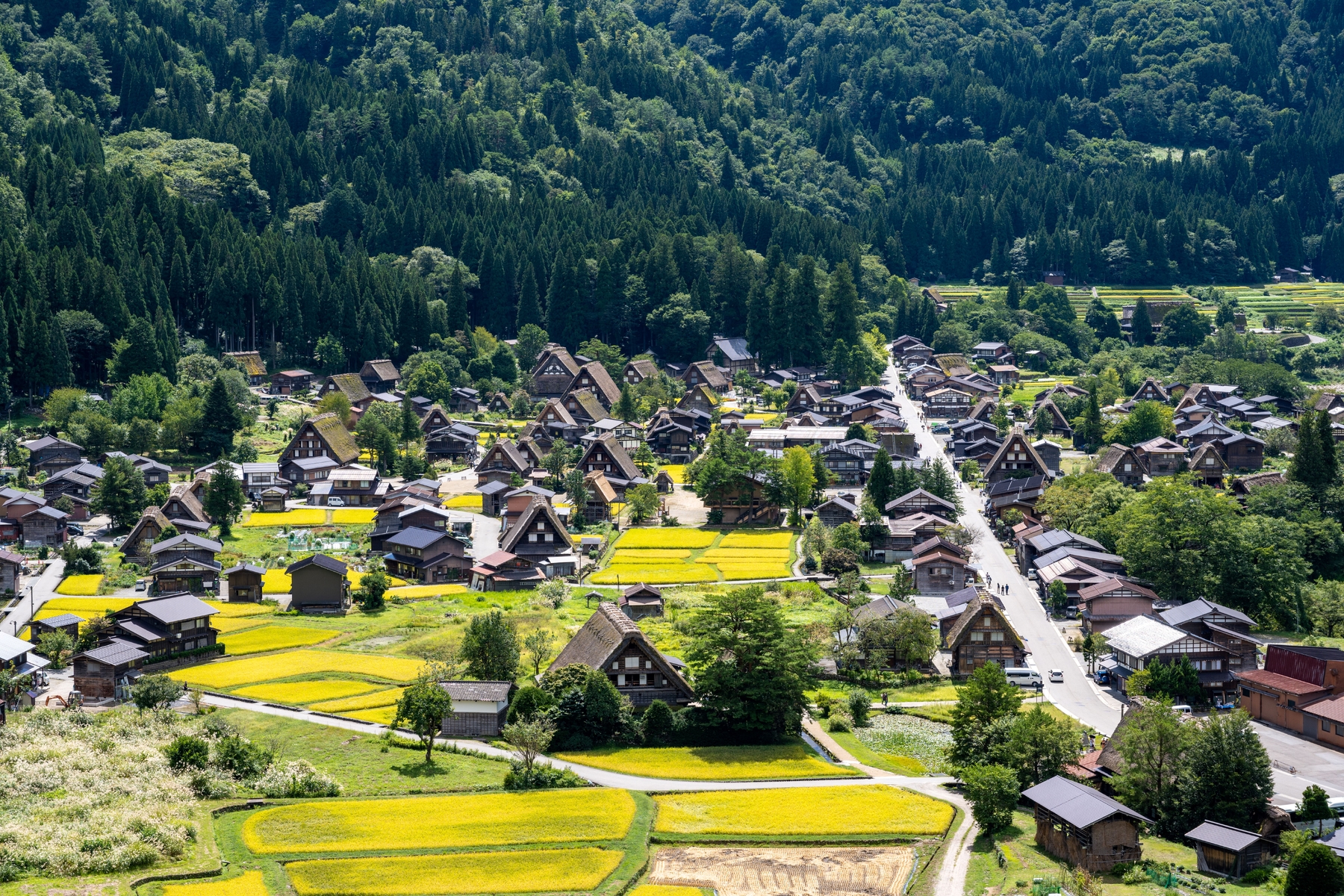
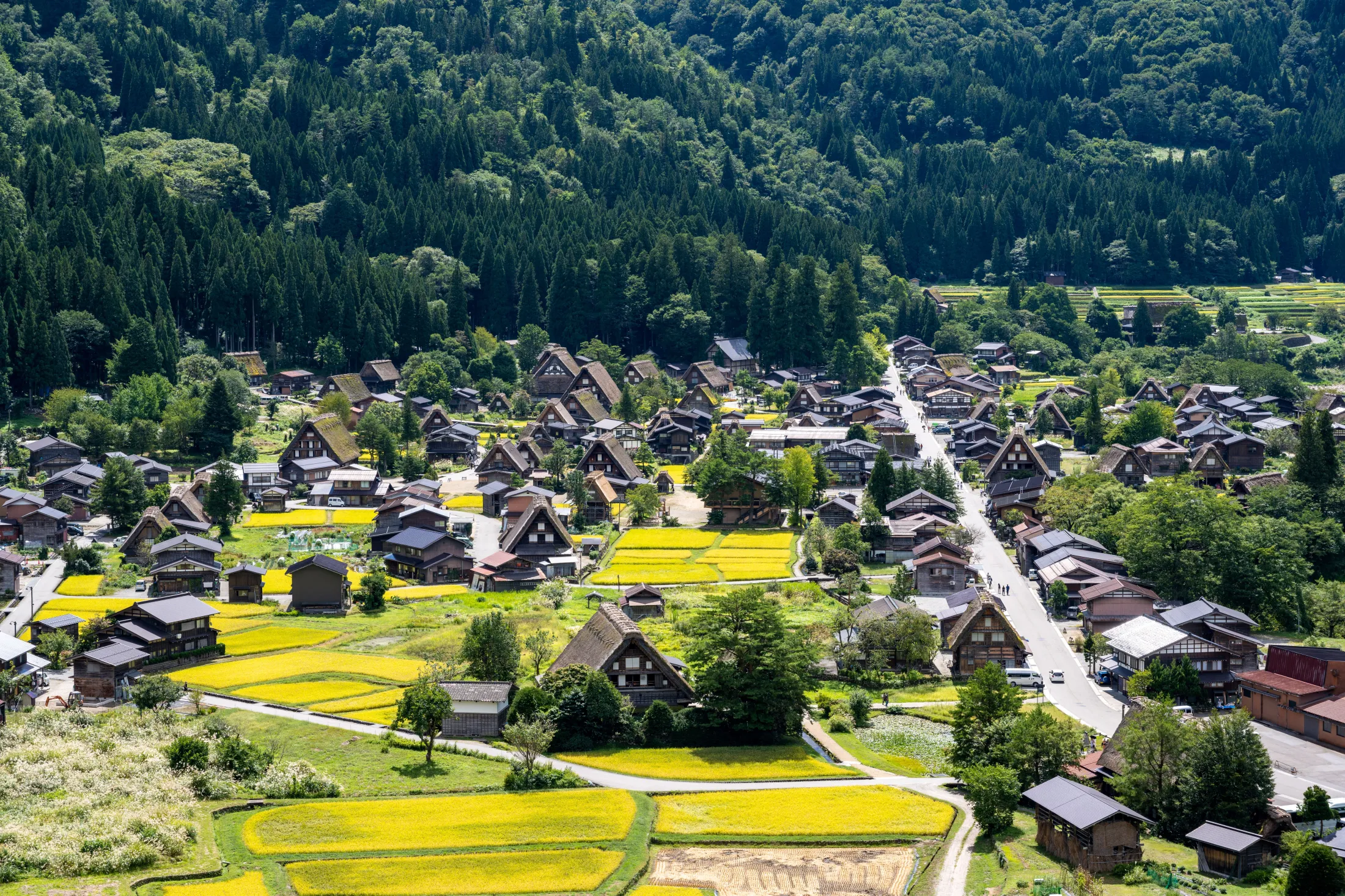
An elevated view looks down on a historic village filled with traditional thatched-roof gassho-zukuri houses interspersed among bright yellow and green rice fields at the edge of a dense forest.
Two hikers with backpacks stand on a rocky overlook, gazing at a dramatic alpine crater landscape with turquoise volcanic lakes and patches of snow nestled between mountain peaks.

Day 5:Summit hike to Hakusan (2702 m)

We’ll have breakfast at the mountain cabin and recharge our energy before heading up to Hakusan at 2702 m. Weather permitting, we’ll descend from the summit on a different side than the one we ascended (the east side) to O-Shirakawa Dam (1250 m). If it has rained heavily, we’ll descend the same way we ascended. Here, we’ll be picked up and driven to the village of Shirakawa, a UNESCO World Heritage Site. We’ll have some time to stroll around here in the afternoon and explore the village. Group dinner at the hotel in the evening.

We’ll have breakfast at the mountain cabin and recharge our energy before heading up to Hakusan at 2702 m. Weather permitting, we’ll descend from the summit on a different side than the one we ascended (the east side) to O-Shirakawa Dam (1250 m). If it has rained heavily, we’ll descend the same way we ascended. Here, we’ll be picked up and driven to the village of Shirakawa, a UNESCO World Heritage Site. We’ll have some time to stroll around here in the afternoon and explore the village. Group dinner at the hotel in the evening.

Hotel

B,-,D

6-7 hours

250m/1450m

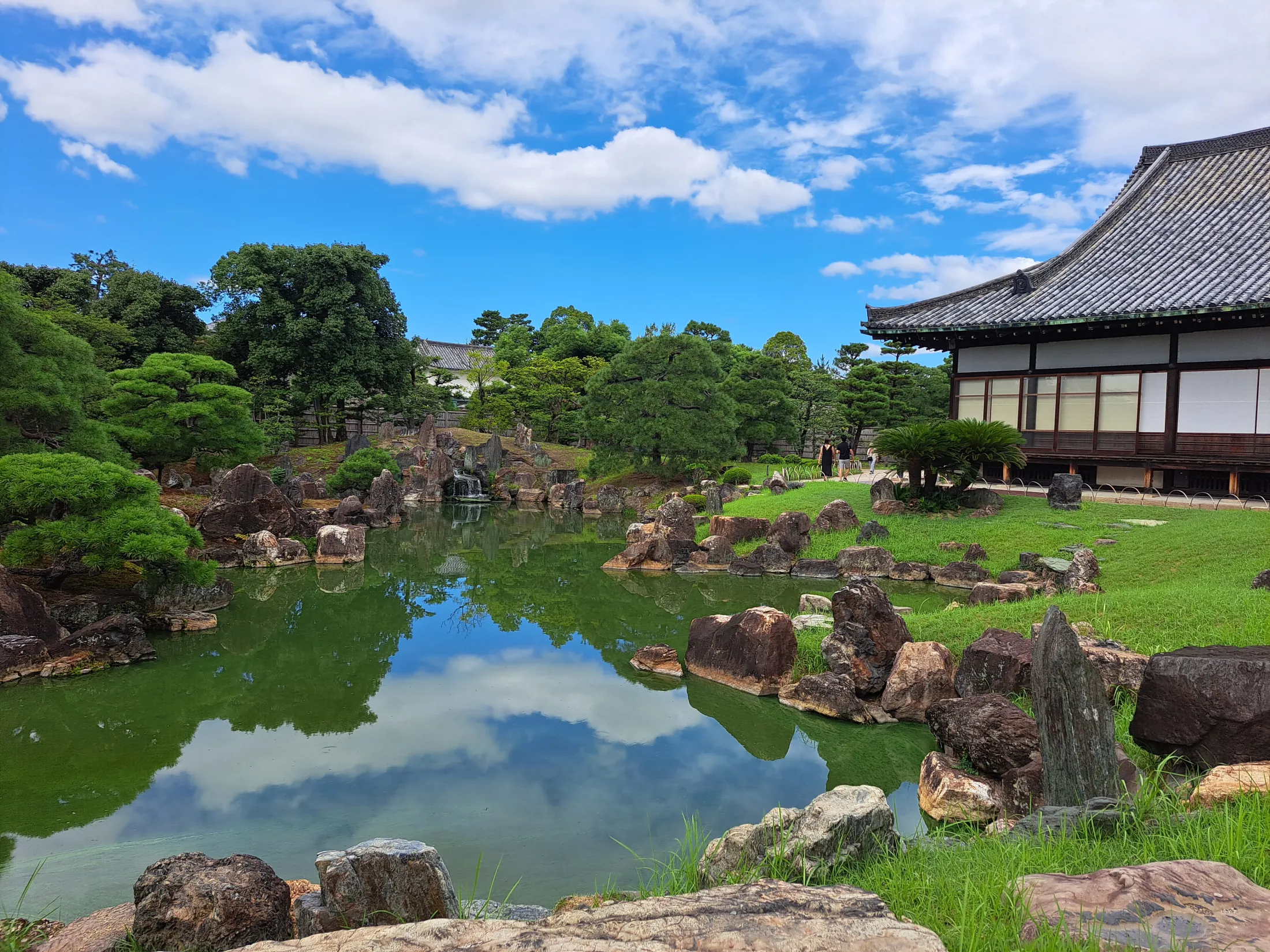
A serene traditional Japanese garden features a calm pond reflecting a blue, cloudy sky, surrounded by meticulously placed rocks, lush green trees, and a historic wooden building.

Day 6:The Imperial City of Kyoto

We’ll start the day with a short bus ride to Kanazawa, and from there we’ll continue by express train to the ancient imperial city of Kyoto. This is another highlight of the trip—Kyoto is full of fascinating architecture and history, and it’s one of the most culturally rich cities in the world. The city is one of the absolute highlights of all of Japan. If there’s time in the afternoon, we’ll take a guided tour of the city and visit some of the famous temples and attractions. We’ll spend the night at a cozy hotel.

We’ll start the day with a short bus ride to Kanazawa, and from there we’ll continue by express train to the ancient imperial city of Kyoto. This is another highlight of the trip—Kyoto is full of fascinating architecture and history, and it’s one of the most culturally rich cities in the world. The city is one of the absolute highlights of all of Japan. If there’s time in the afternoon, we’ll take a guided tour of the city and visit some of the famous temples and attractions. We’ll spend the night at a cozy hotel.

Hotel

B,-,-

4 hours

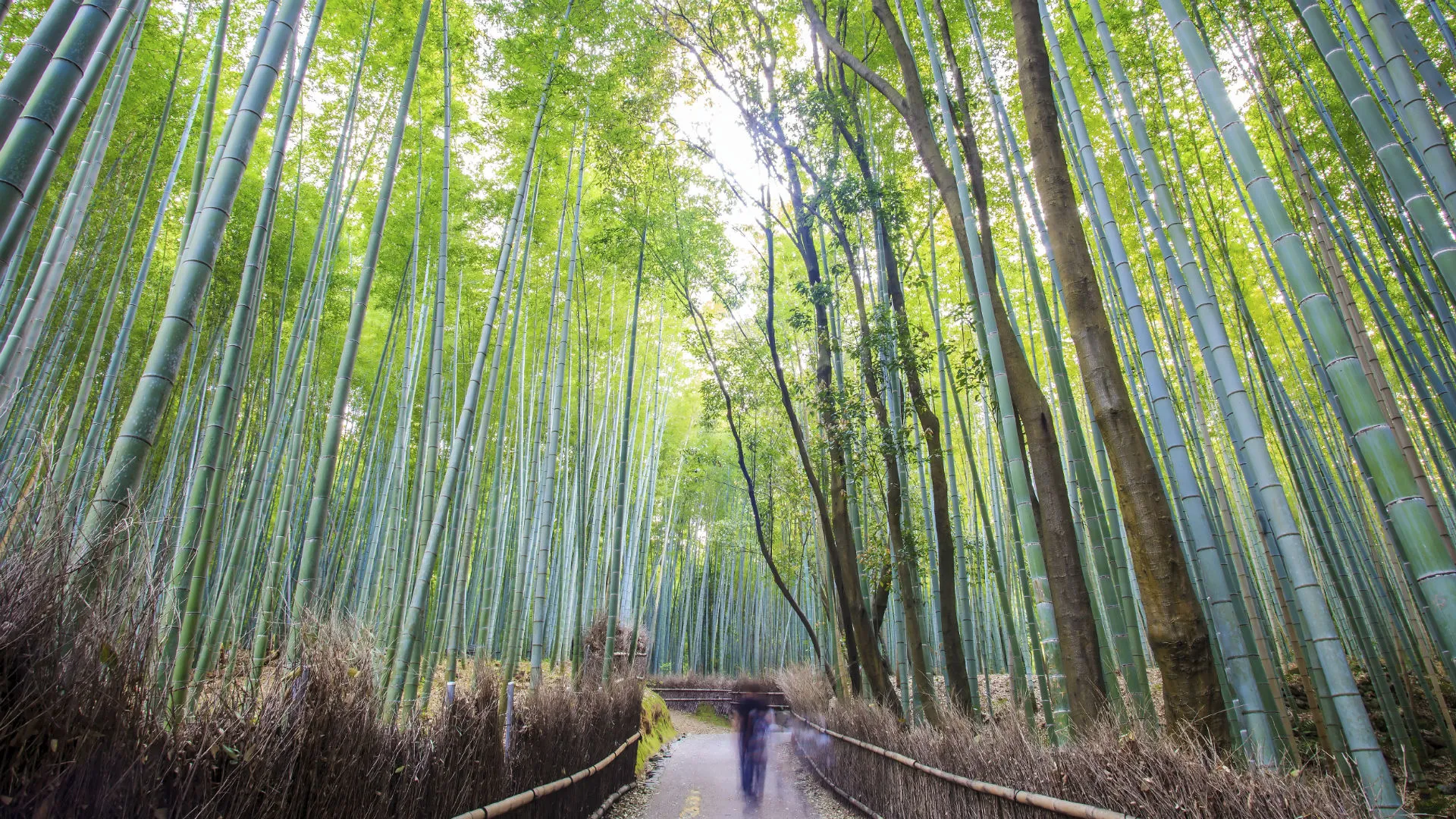
A walking path lined with a low brush fence winds through a dense forest of towering green bamboo stalks reaching toward the sky.
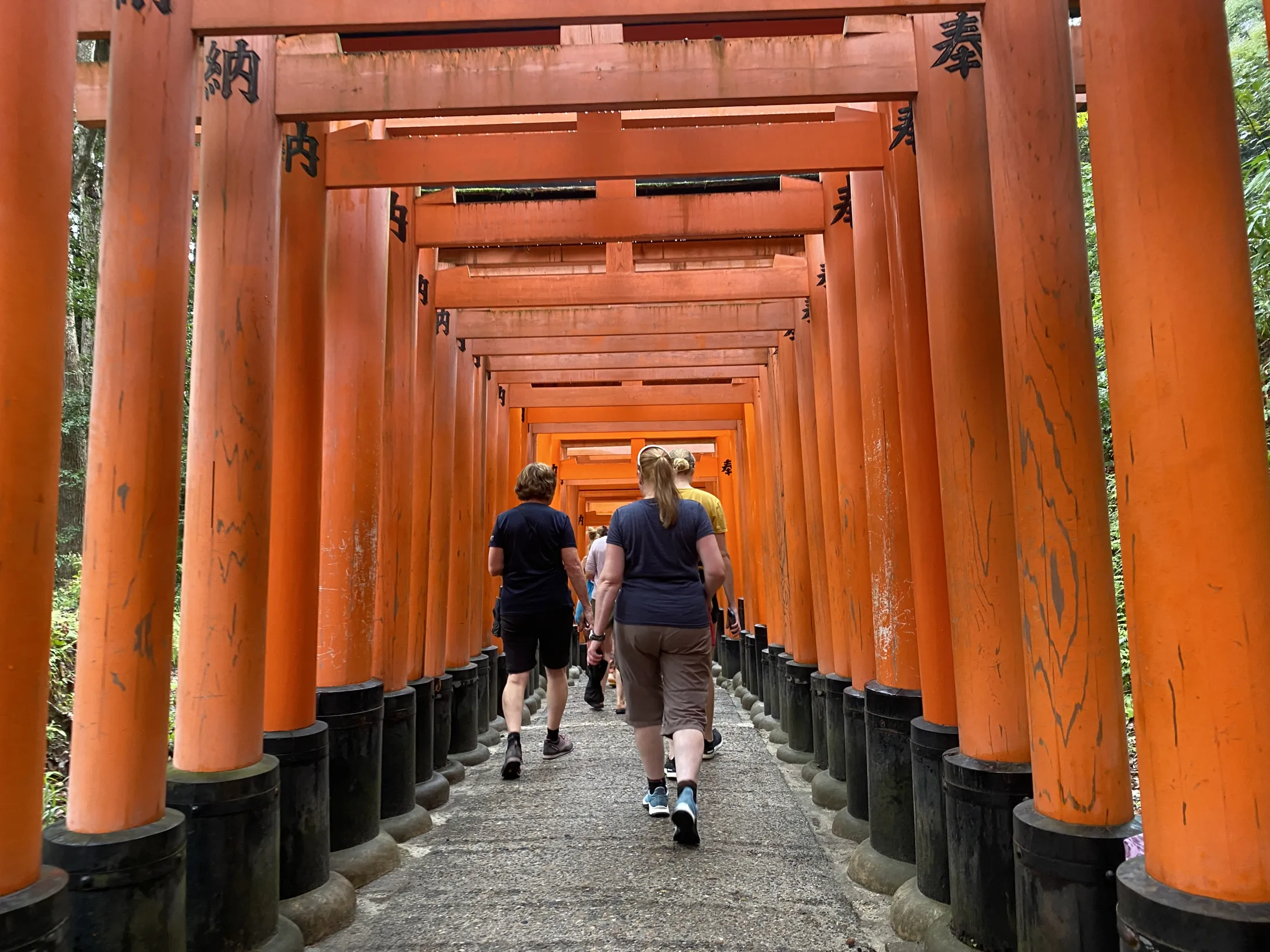
Several people walk down a paved pathway under a dense, receding tunnel of traditional bright orange torii gates.

Day 7:Hiking around Kyoto

Kyoto is surrounded by mountains on three sides. There’s no set itinerary for today, but our local guide will be with us, and we can, for example, head out to the beautiful Arashiyama Bamboo Forest—and experience a forest unlike anything you’ve ever seen before; this forest is magical and almost mesmerizing! The afternoon is free, but there are opportunities to visit more of Kyoto’s attractions before we return to the hotel for the night. For example, food enthusiasts can take a trip to Nishiki Market.

Kyoto is surrounded by mountains on three sides. There’s no set itinerary for today, but our local guide will be with us, and we can, for example, head out to the beautiful Arashiyama Bamboo Forest—and experience a forest unlike anything you’ve ever seen before; this forest is magical and almost mesmerizing! The afternoon is free, but there are opportunities to visit more of Kyoto’s attractions before we return to the hotel for the night. For example, food enthusiasts can take a trip to Nishiki Market.

Hotel

B,-,-

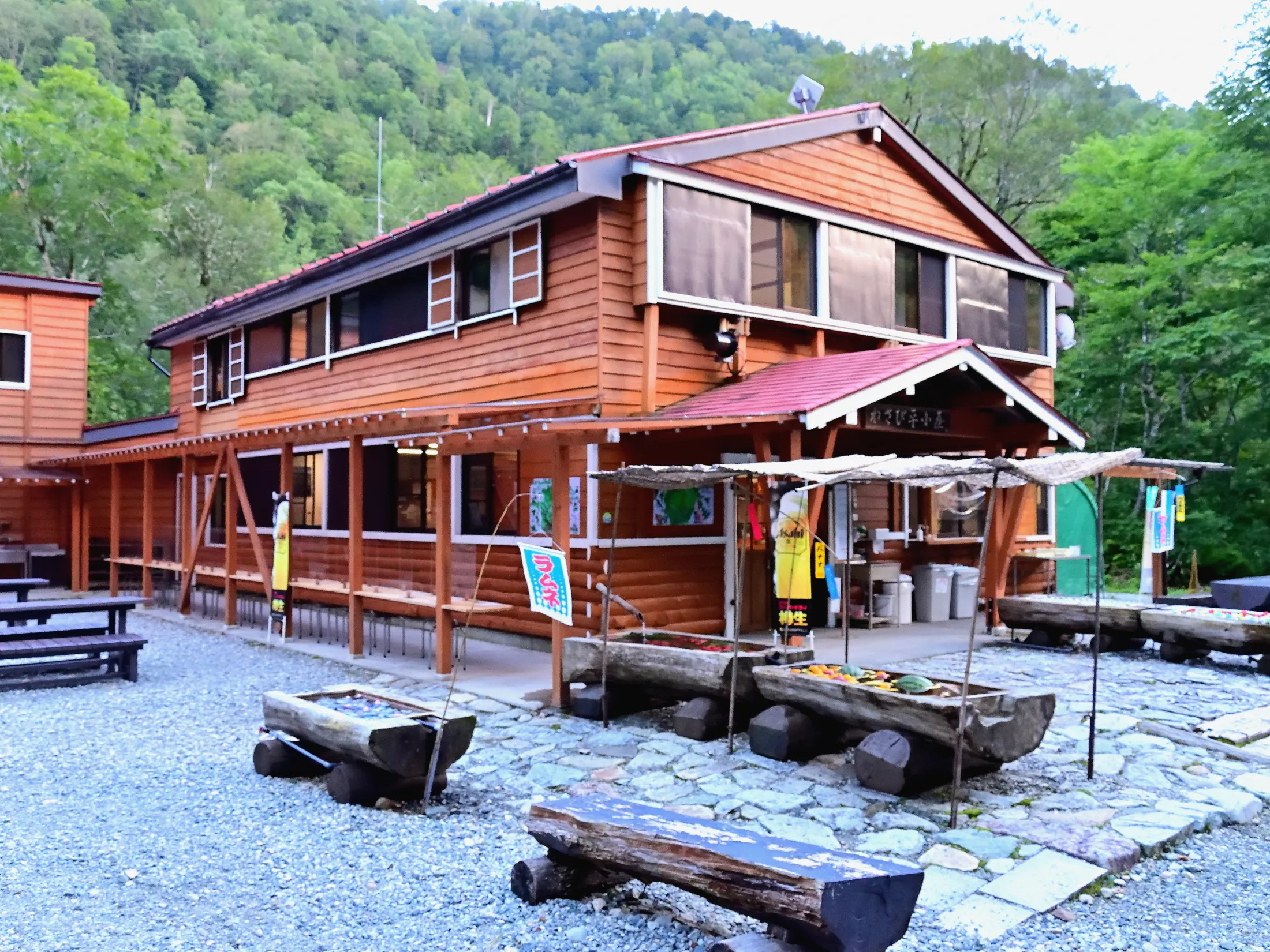
A large wooden mountain lodge sits surrounded by trees, with hollowed-out log troughs filled with water and fresh produce resting on a gravel courtyard out front.

Day 8:Express Trains and the Start of the Second Mountain Hike

We’ll pack our backpacks again for a 4-day/3-night trip in the mountains; you’ll see the rest of your luggage again on Day 11. We’ll hop on the express train from Kyoto to Takayama and continue by bus to Shin-Hodaka-Onsen in the northern part of the Japanese Alps. This is the starting point for the hike up to Yariga-Take (3,180 meters above sea level), and the town is surrounded by mountains, flowers, and beautiful forests. We’ll hike for a couple of hours up to the mountain hut where we’ll spend the night and be served dinner. We’ll be hiking at a time of year when there’s a high probability of experiencing the Japanese Alps at their most beautiful—and after the peak season, when there are usually large crowds of hikers in the area.

We’ll pack our backpacks again for a 4-day/3-night trip in the mountains; you’ll see the rest of your luggage again on Day 11. We’ll hop on the express train from Kyoto to Takayama and continue by bus to Shin-Hodaka-Onsen in the northern part of the Japanese Alps. This is the starting point for the hike up to Yariga-Take (3,180 meters above sea level), and the town is surrounded by mountains, flowers, and beautiful forests. We’ll hike for a couple of hours up to the mountain hut where we’ll spend the night and be served dinner. We’ll be hiking at a time of year when there’s a high probability of experiencing the Japanese Alps at their most beautiful—and after the peak season, when there are usually large crowds of hikers in the area.

Mountain lodge

B,-,D

4-5 hours

2 hours

+350m

4 km

A narrow dirt path winds through lush green, rolling hills toward a mountain lodge with a red roof and a colorful tent campsite nestled at the base of a rugged peak.

Day 9:Continue uphill to the Sugoroku mountain lodge (2600 m)

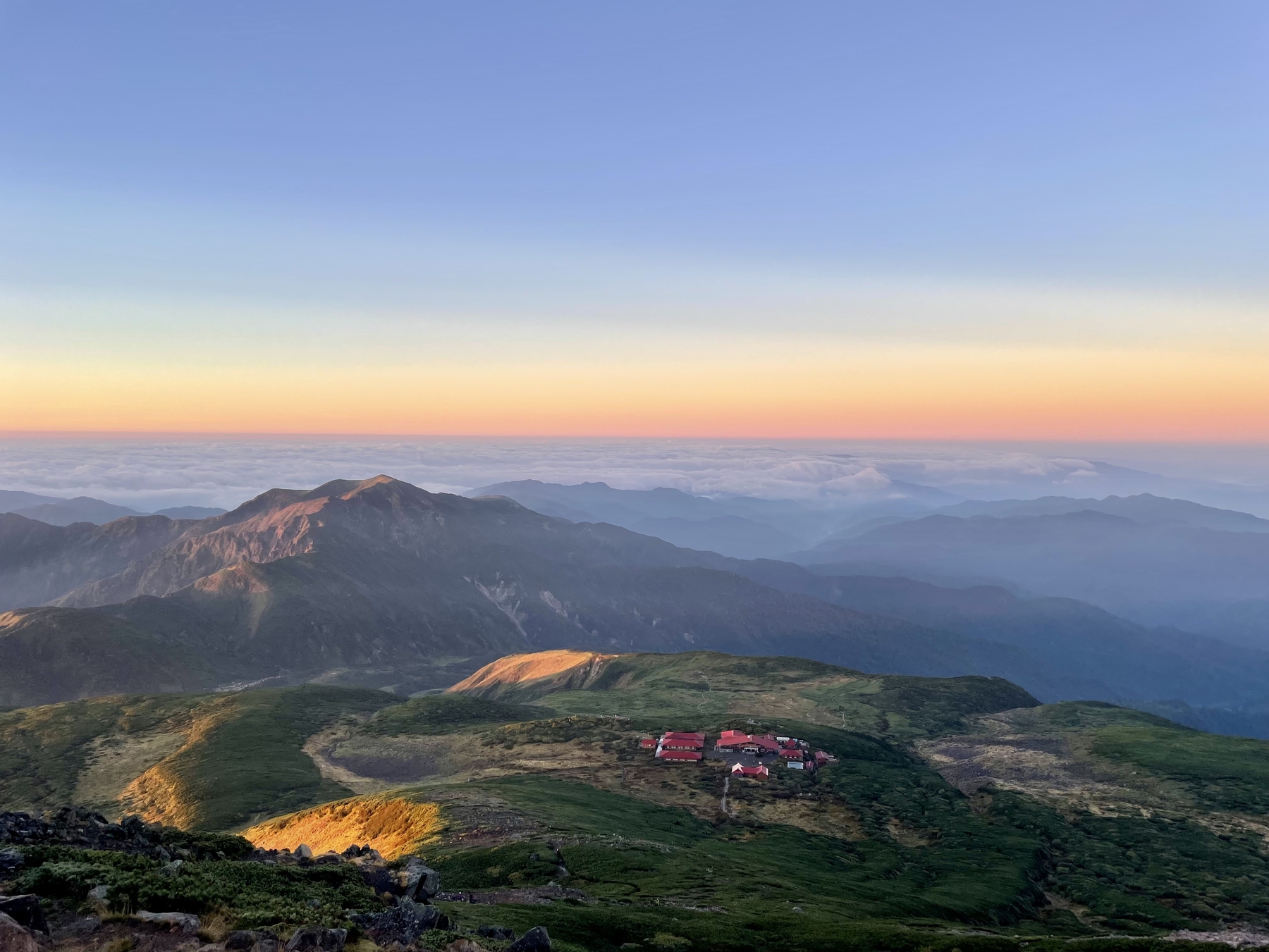
We’ll have breakfast and get ready for today’s long hike. We’ll be climbing 1,200 meters in elevation today, but the view from the mountain cabin where we’ll be staying tonight is well worth the effort. We’ll start out walking through a beech forest, and the terrain will gradually become more alpine as we climb higher. We’ll hike on well-maintained trails and take breaks along the way. Today we’ll bring a packed lunch. Dinner will be served at the mountain hut in the evening. If time and weather permit, we can take a short afternoon hike up to Mt. Sugoroku-dake, which is 300 meters higher than the mountain hut. The round-trip hike takes about 1.5–2 hours.

We’ll have breakfast and get ready for today’s long hike. We’ll be climbing 1,200 meters in elevation today, but the view from the mountain cabin where we’ll be staying tonight is well worth the effort. We’ll start out walking through a beech forest, and the terrain will gradually become more alpine as we climb higher. We’ll hike on well-maintained trails and take breaks along the way. Today we’ll bring a packed lunch. Dinner will be served at the mountain hut in the evening. If time and weather permit, we can take a short afternoon hike up to Mt. Sugoroku-dake, which is 300 meters higher than the mountain hut. The round-trip hike takes about 1.5–2 hours.

Mountain lodge

B,L,D

6-7 hours

+1200m

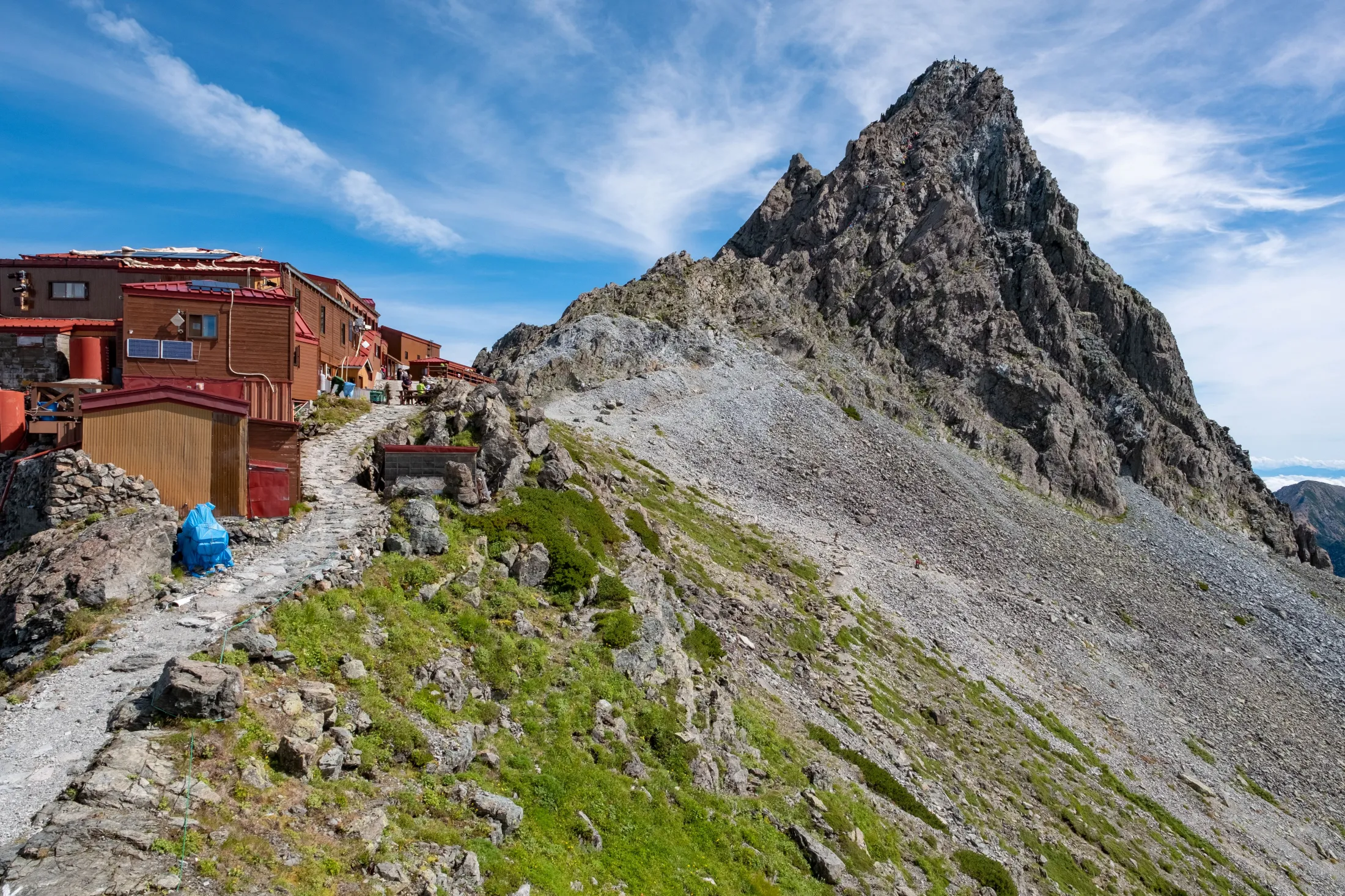
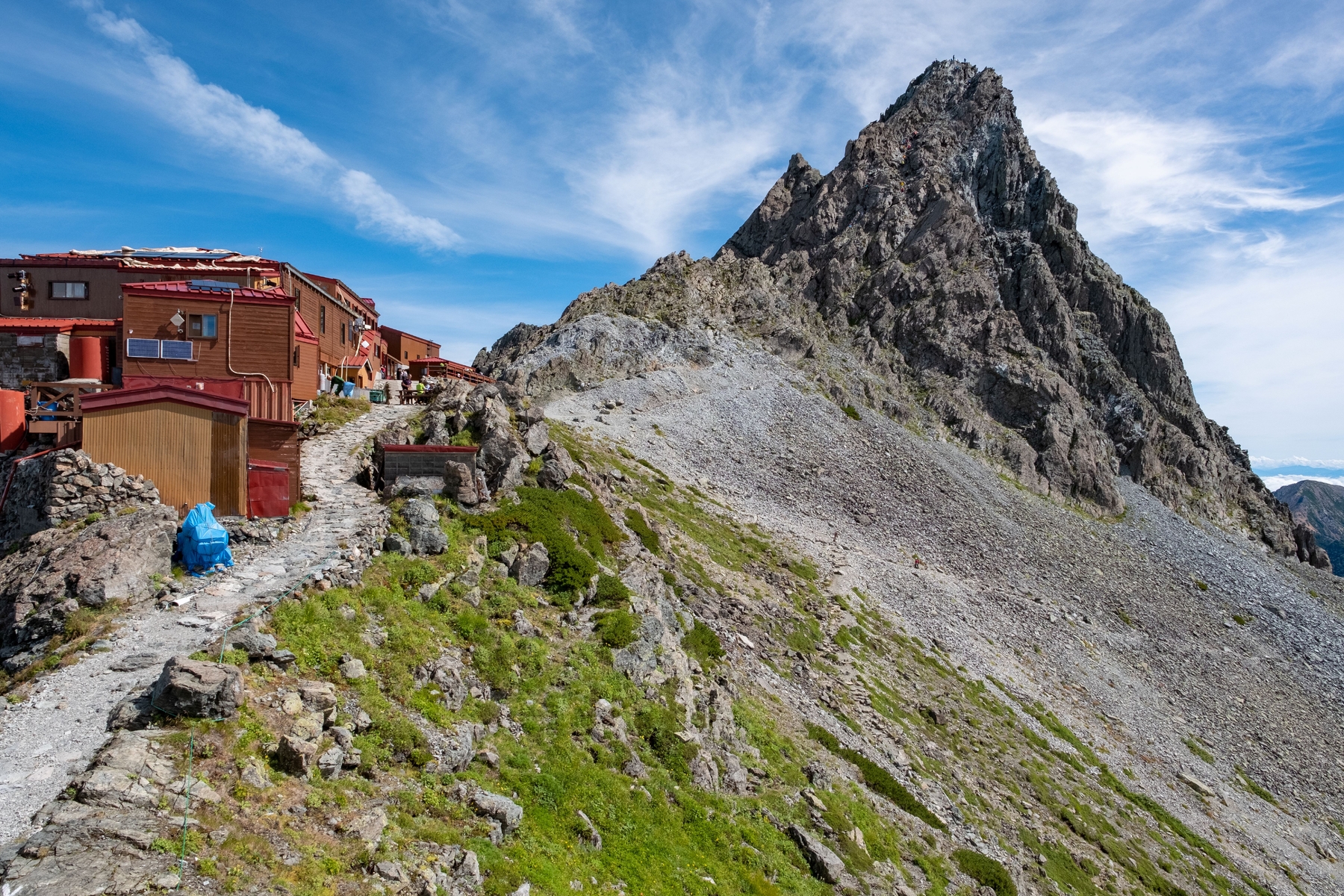
A stone mountain path leads past a collection of wooden alpine huts toward a towering, rugged rock peak under a blue sky with wispy clouds.
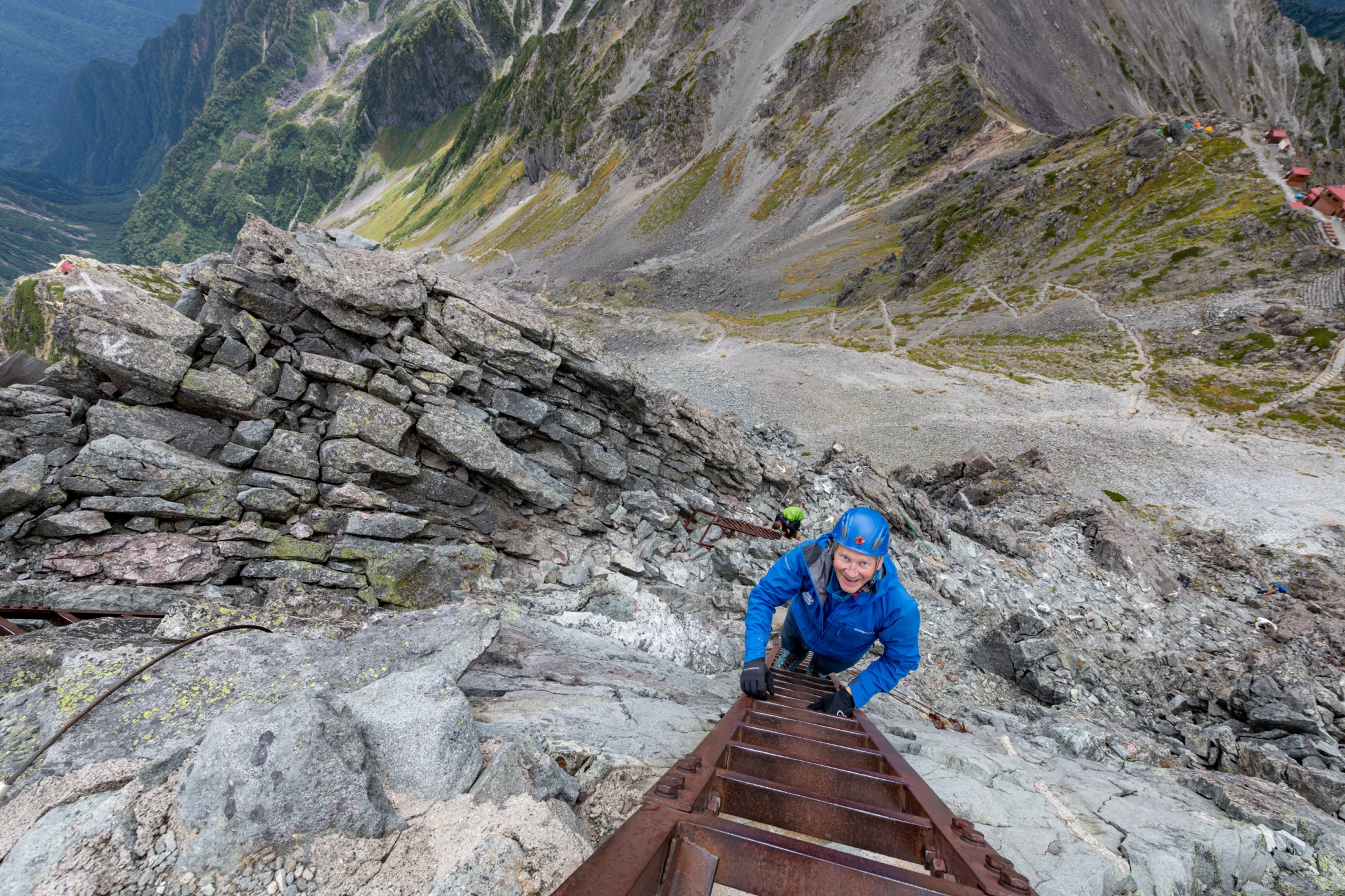
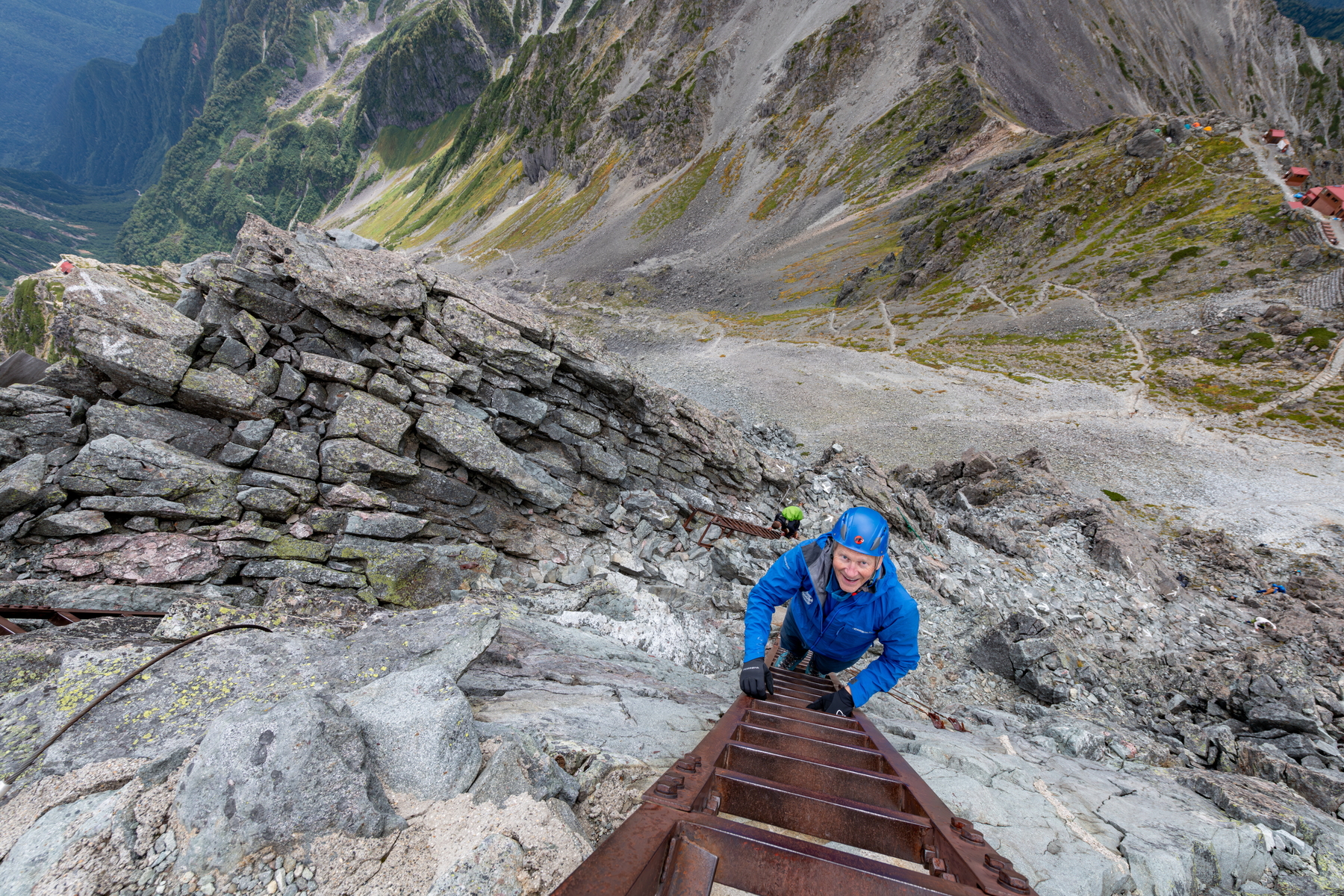
Looking down a steep, rocky mountainside, a smiling climber wearing a blue jacket and a blue helmet ascends a long metal ladder bolted to the cliff.
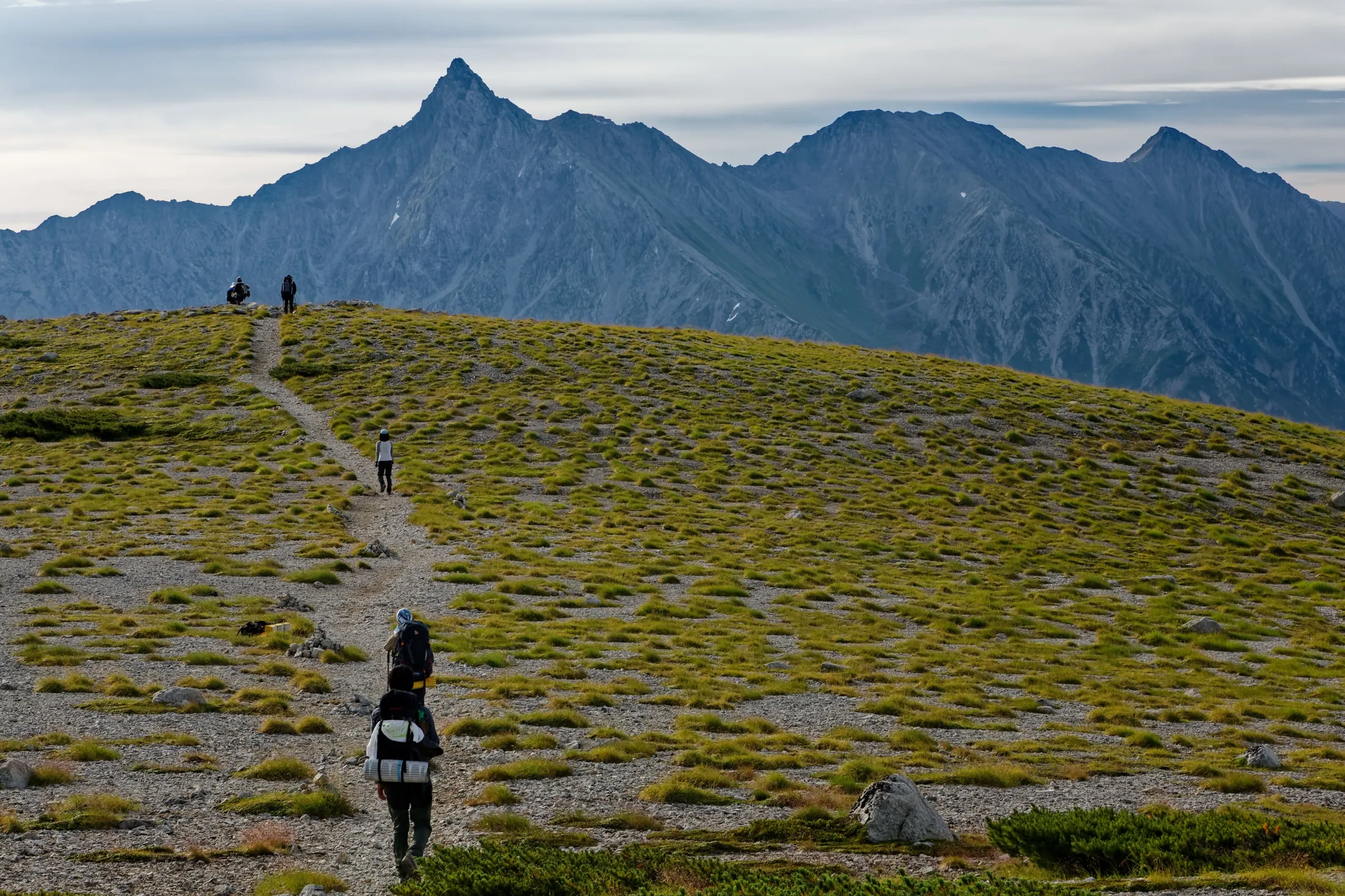
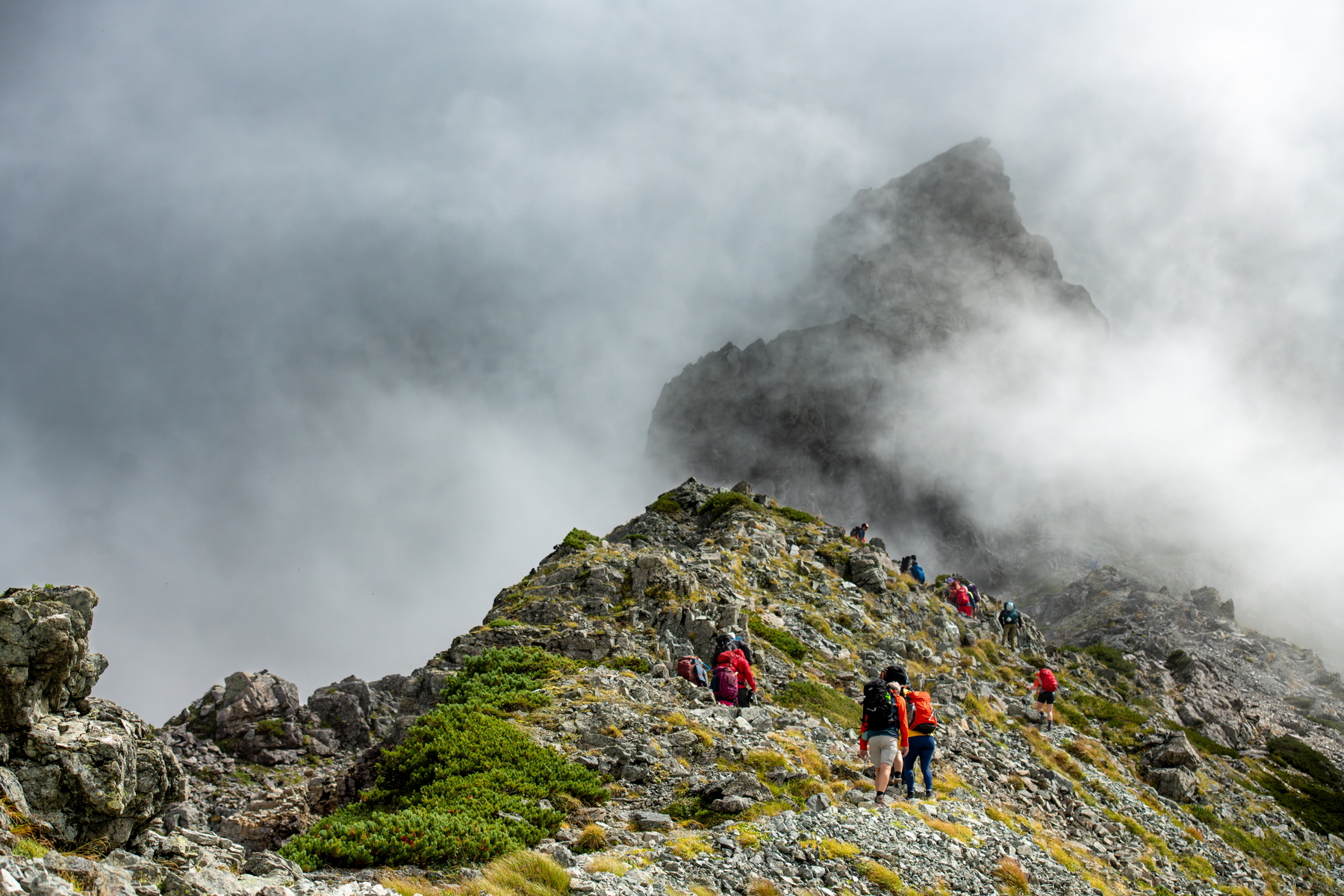
Hikers with large backpacks follow a gravel trail across a grassy, alpine plateau toward a jagged, imposing mountain range in the distance.

Day 10:Ascent of YarigaTake (3180 m)

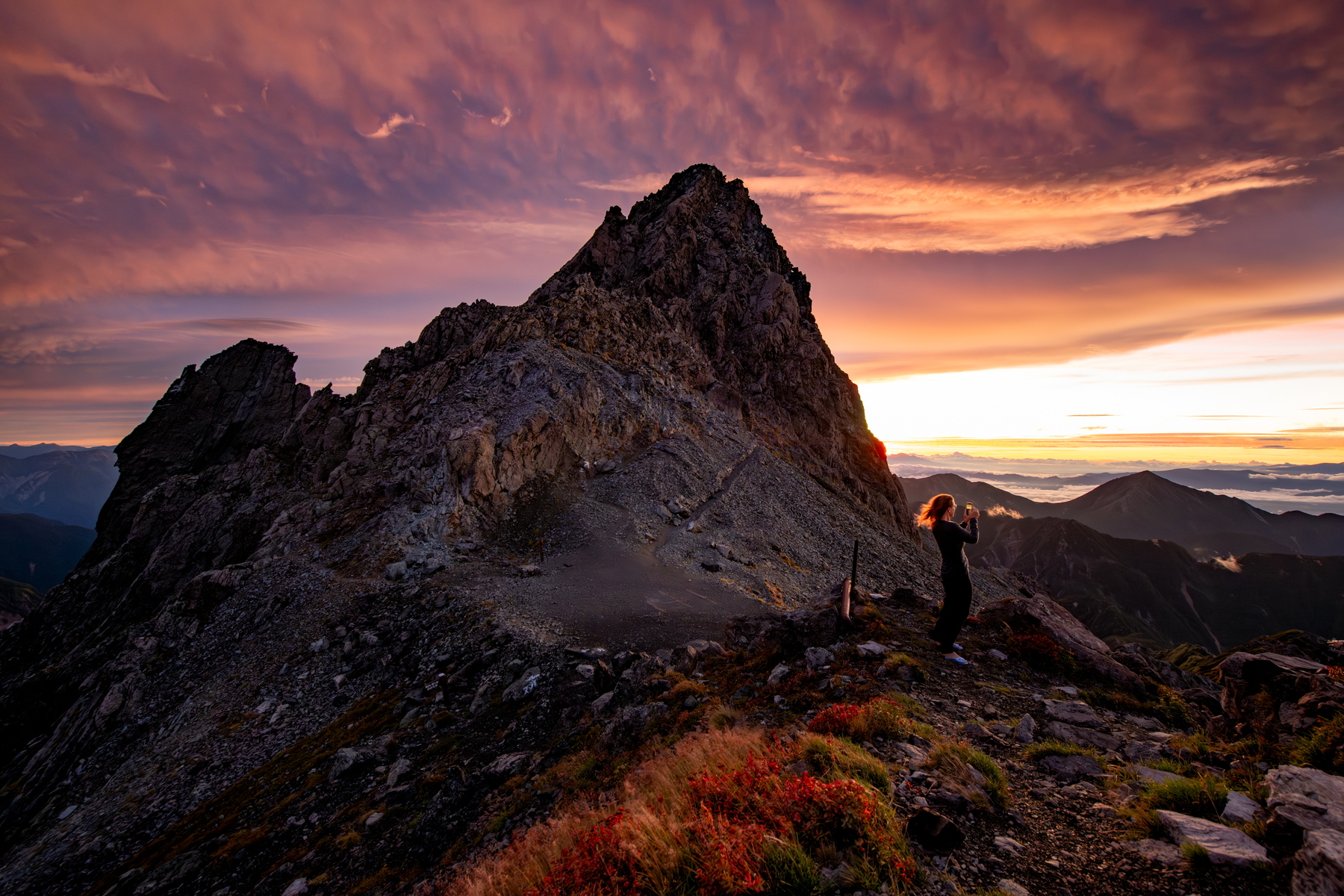
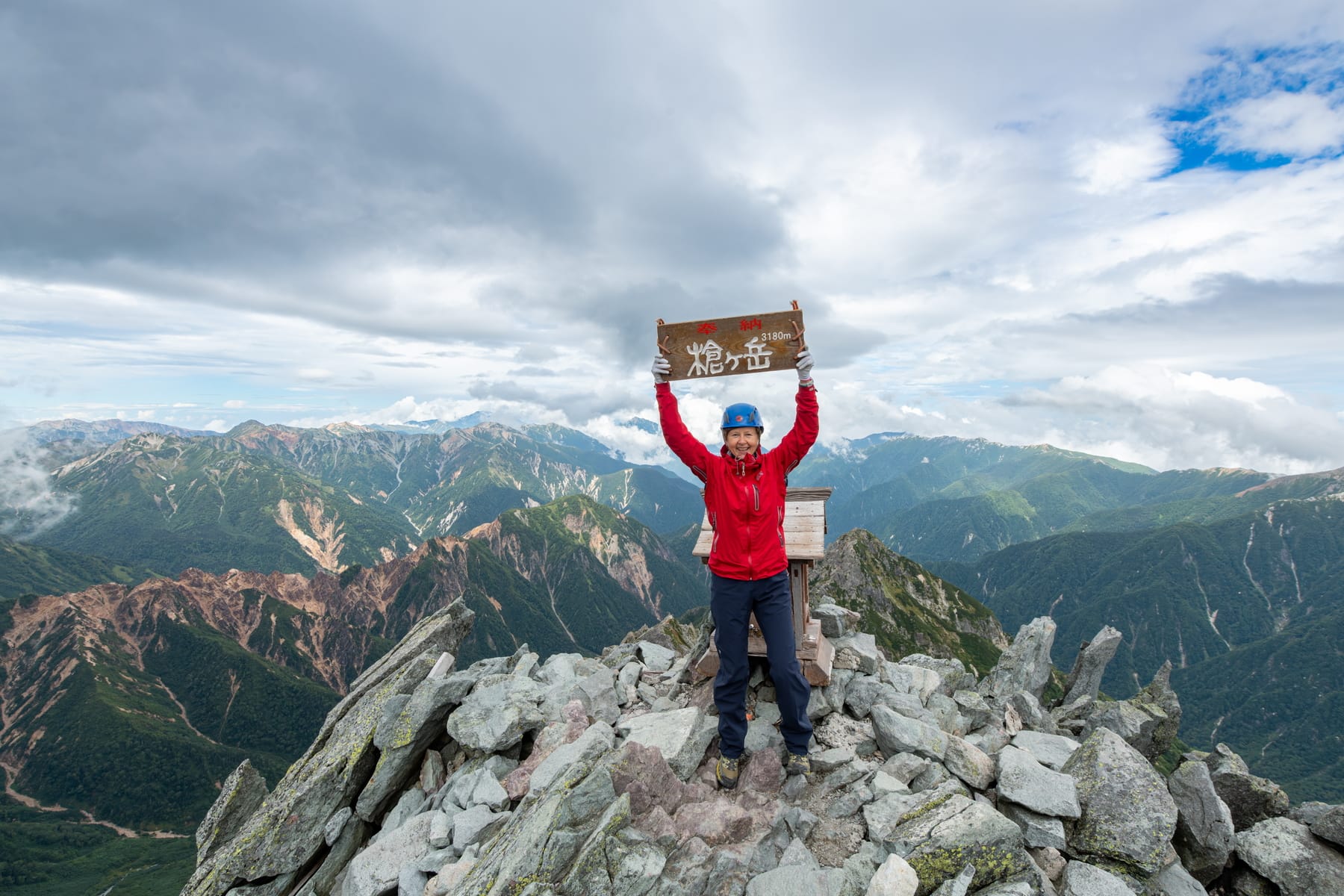
After a good night’s sleep, we’re ready for a new peak: Mt. Yarigadake (3180 m). The peak is the fifth highest in Japan and is known as Japan’s Matterhorn. The hike doesn’t require any climbing, but the very last stretch up to the summit has some chains and ladders. We’ll hike along a ridge with great views the whole way. From the summit of Yarigadake, we’ll have panoramic views of large parts of the Japanese Alps—if we’re lucky, we might even see all the way to Mt. Fuji, which is our next destination. We’ll have lunch along the way, either a packed lunch or at the mountain hut just below the summit. Those who do not wish to hike all the way to the summit can wait at the mountain hut where we’ll be spending the night, just below the summit. Tonight we’ll stay at the Yarigatake Sansou Hut, located at 3080 meters above sea level. (The last photo of the day is from the Sugoroku Plateau).

After a good night’s sleep, we’re ready for a new peak: Mt. Yarigadake (3180 m). The peak is the fifth highest in Japan and is known as Japan’s Matterhorn. The hike doesn’t require any climbing, but the very last stretch up to the summit has some chains and ladders. We’ll hike along a ridge with great views the whole way. From the summit of Yarigadake, we’ll have panoramic views of large parts of the Japanese Alps—if we’re lucky, we might even see all the way to Mt. Fuji, which is our next destination. We’ll have lunch along the way, either a packed lunch or at the mountain hut just below the summit. Those who do not wish to hike all the way to the summit can wait at the mountain hut where we’ll be spending the night, just below the summit. Tonight we’ll stay at the Yarigatake Sansou Hut, located at 3080 meters above sea level. (The last photo of the day is from the Sugoroku Plateau).

Mountain lodge

B,L,D

6-8 hours

620m/400m

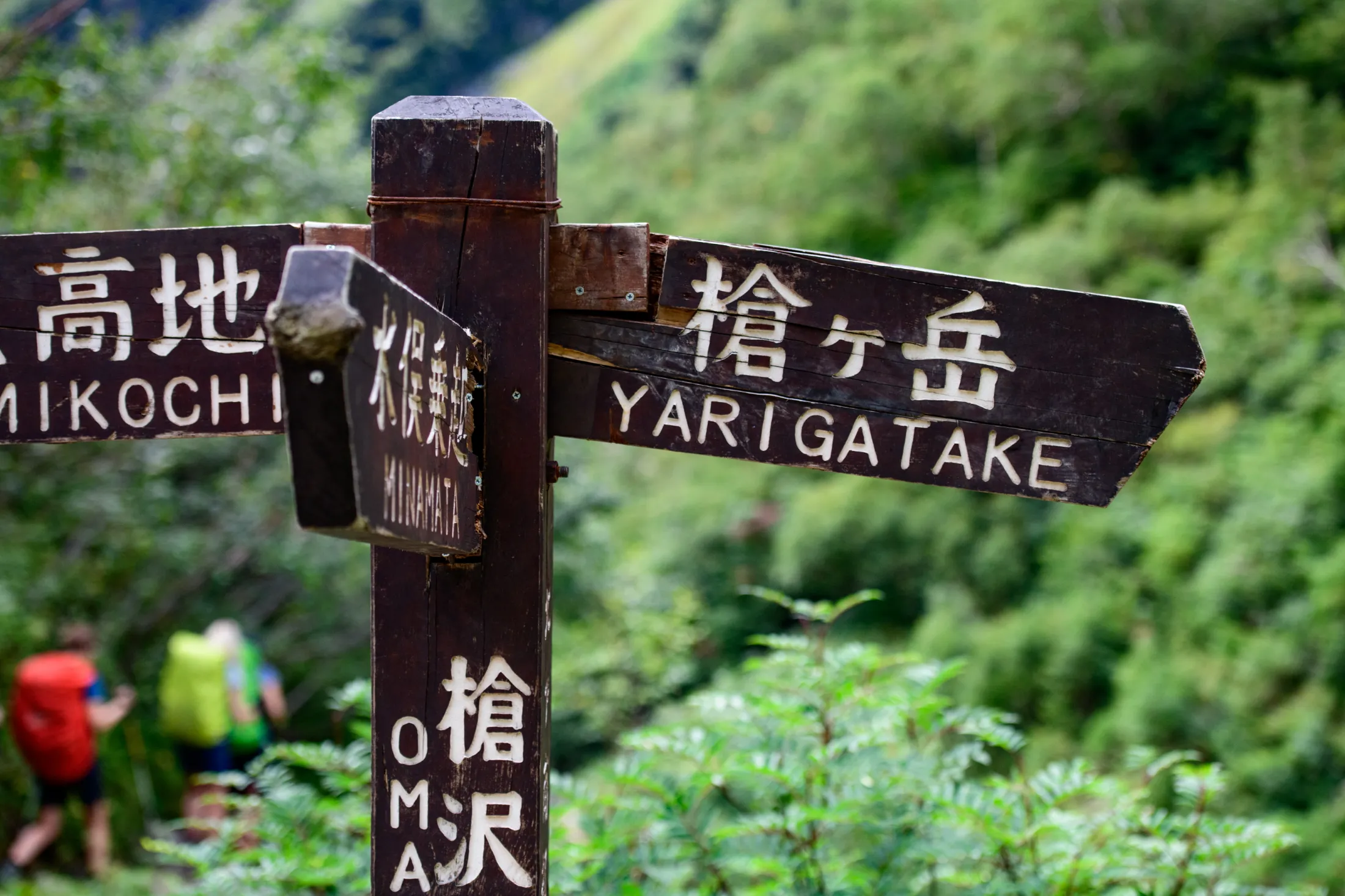
A close-up shows a weathered wooden trail signpost with carved Japanese characters and English text pointing toward destinations like Yarigatake, with blurred hikers in the background.
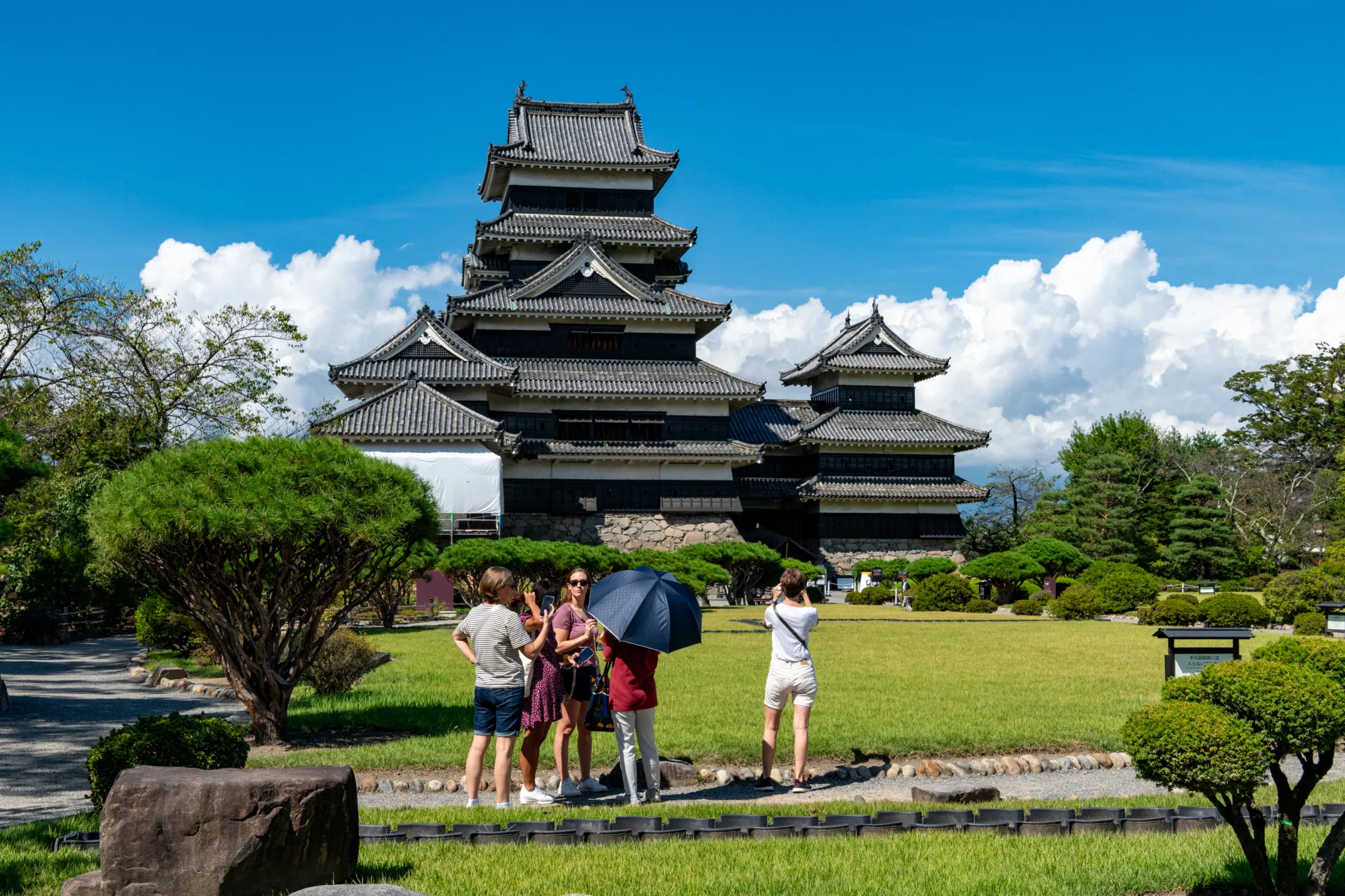
Tourists gather on a manicured lawn to take photos of a grand, multi-tiered traditional Japanese castle with dark wooden walls under a bright blue sky.

Day 11:Hike in the mountains and on to Matsumoto

Today, the hike takes us from the mountain cabin down to Kamikochi. The entire hike takes about 8 hours. Upon arrival in Kamikochi, we’ll take the bus to Matsumoto, where we’ll spend the night at a hotel and prepare for our climb up Mt. Fuji. Matsumoto is the second-largest city in the Nagano Prefecture, and it’s best known for Matsumotojo—one of Japan’s most beautiful original castles.

Today, the hike takes us from the mountain cabin down to Kamikochi. The entire hike takes about 8 hours. Upon arrival in Kamikochi, we’ll take the bus to Matsumoto, where we’ll spend the night at a hotel and prepare for our climb up Mt. Fuji. Matsumoto is the second-largest city in the Nagano Prefecture, and it’s best known for Matsumotojo—one of Japan’s most beautiful original castles.

Hotel

B,L,D

1,5 hours

7-9 hours

100m/1690m

22 km

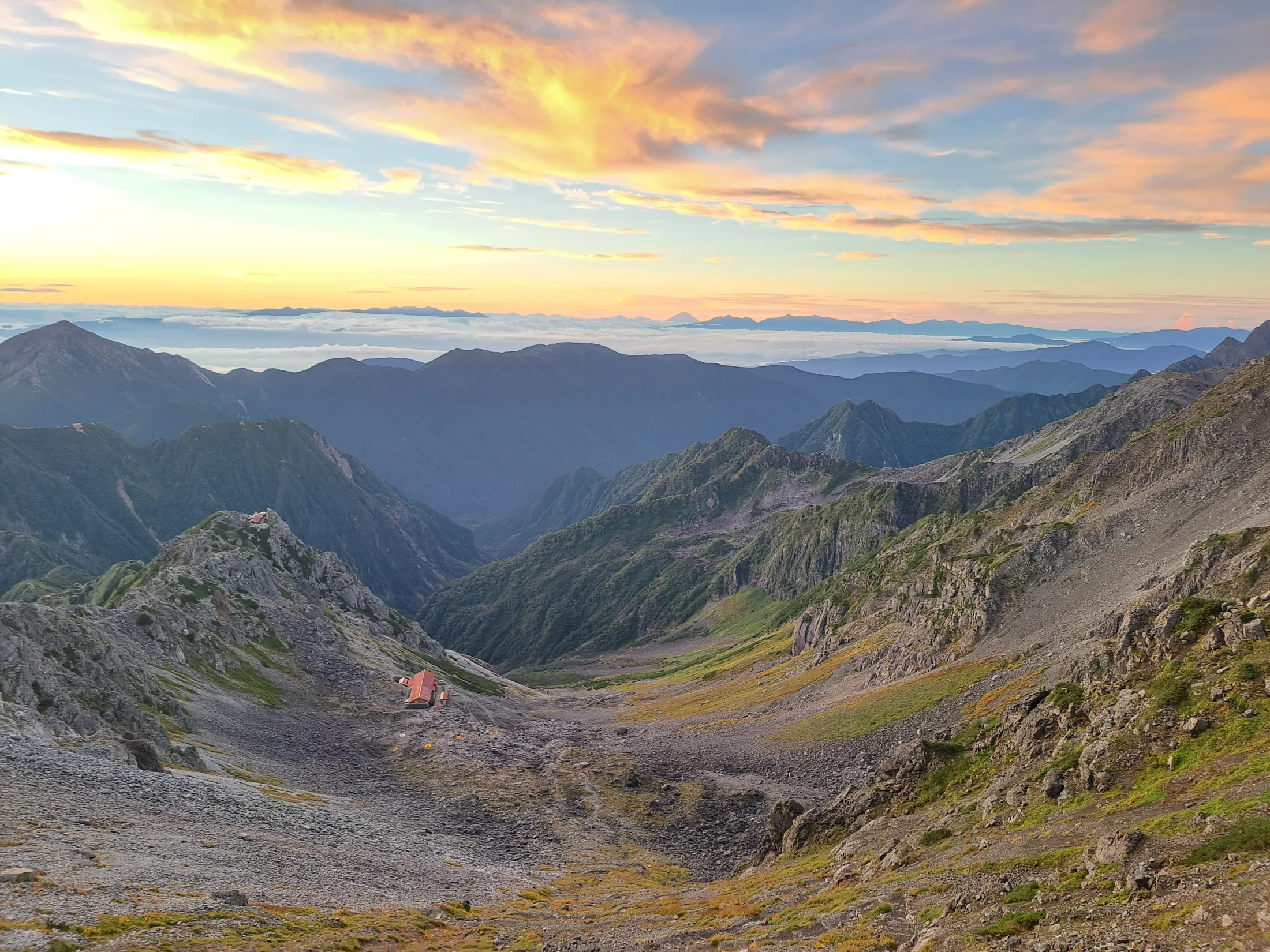
A vast alpine valley with a small red-roofed mountain hut is illuminated by a vibrant sunrise with golden and orange clouds above a sea of distant mist.
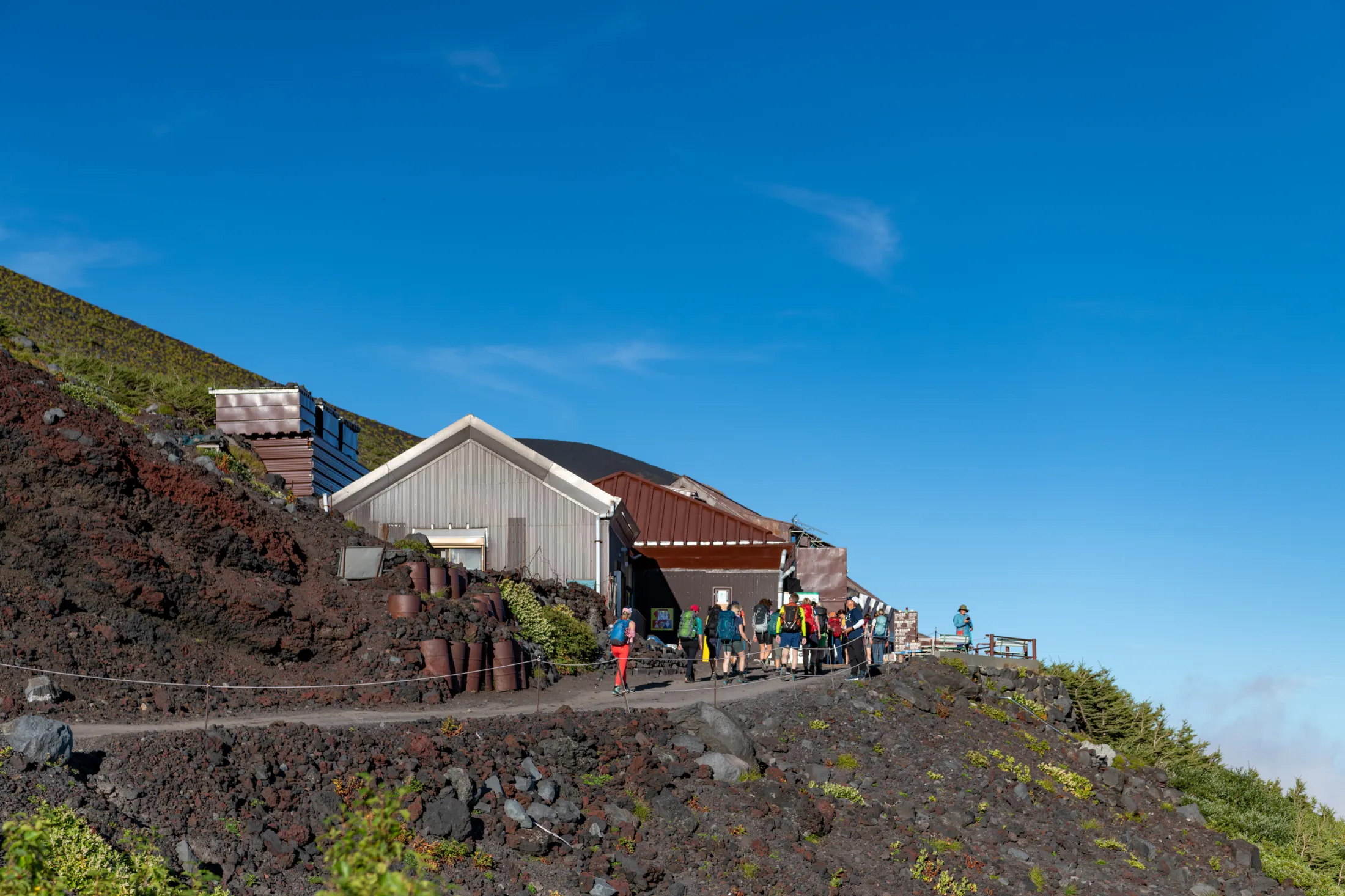
A group of hikers walks along a volcanic, rocky path past simple mountain station buildings under a clear, bright blue sky.

Day 12:At the foot of Mt. Fuji

After breakfast, we’ll visit Matsumoto Castle before continuing on to the starting point of our mountain hike, which takes 4–5 hours. We’ll stop along the way to have lunch and buy some snacks for tomorrow’s hike. We’ll hike from 2,380 meters above sea level (known as the 5th Station) up to the 6th Station (2,780 meters), where we’ll spend the night in a simple mountain hut. It depends on which station is open this late in the season, so it might also be the 7th Station. Here we’ll be served a traditional dinner and stay in a dormitory. We’ll spend the evening getting ready for the ascent of Mt. Fuji (3,776 meters above sea level), Japan’s highest mountain!

After breakfast, we’ll visit Matsumoto Castle before continuing on to the starting point of our mountain hike, which takes 4–5 hours. We’ll stop along the way to have lunch and buy some snacks for tomorrow’s hike. We’ll hike from 2,380 meters above sea level (known as the 5th Station) up to the 6th Station (2,780 meters), where we’ll spend the night in a simple mountain hut. It depends on which station is open this late in the season, so it might also be the 7th Station. Here we’ll be served a traditional dinner and stay in a dormitory. We’ll spend the evening getting ready for the ascent of Mt. Fuji (3,776 meters above sea level), Japan’s highest mountain!

Mountain lodge

B,-,D

4-5 hours

1-2 hours

+100m

0,6 km

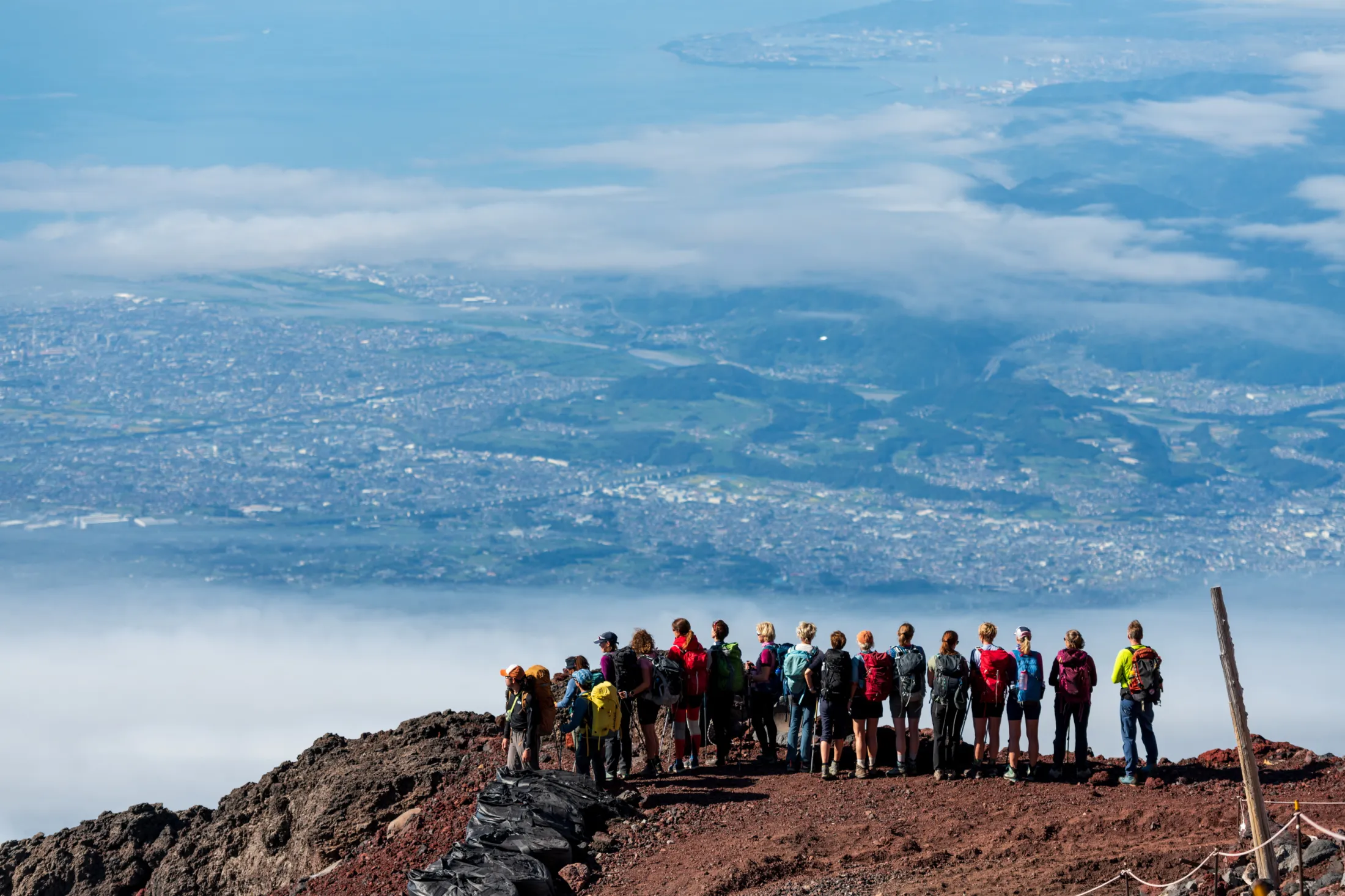
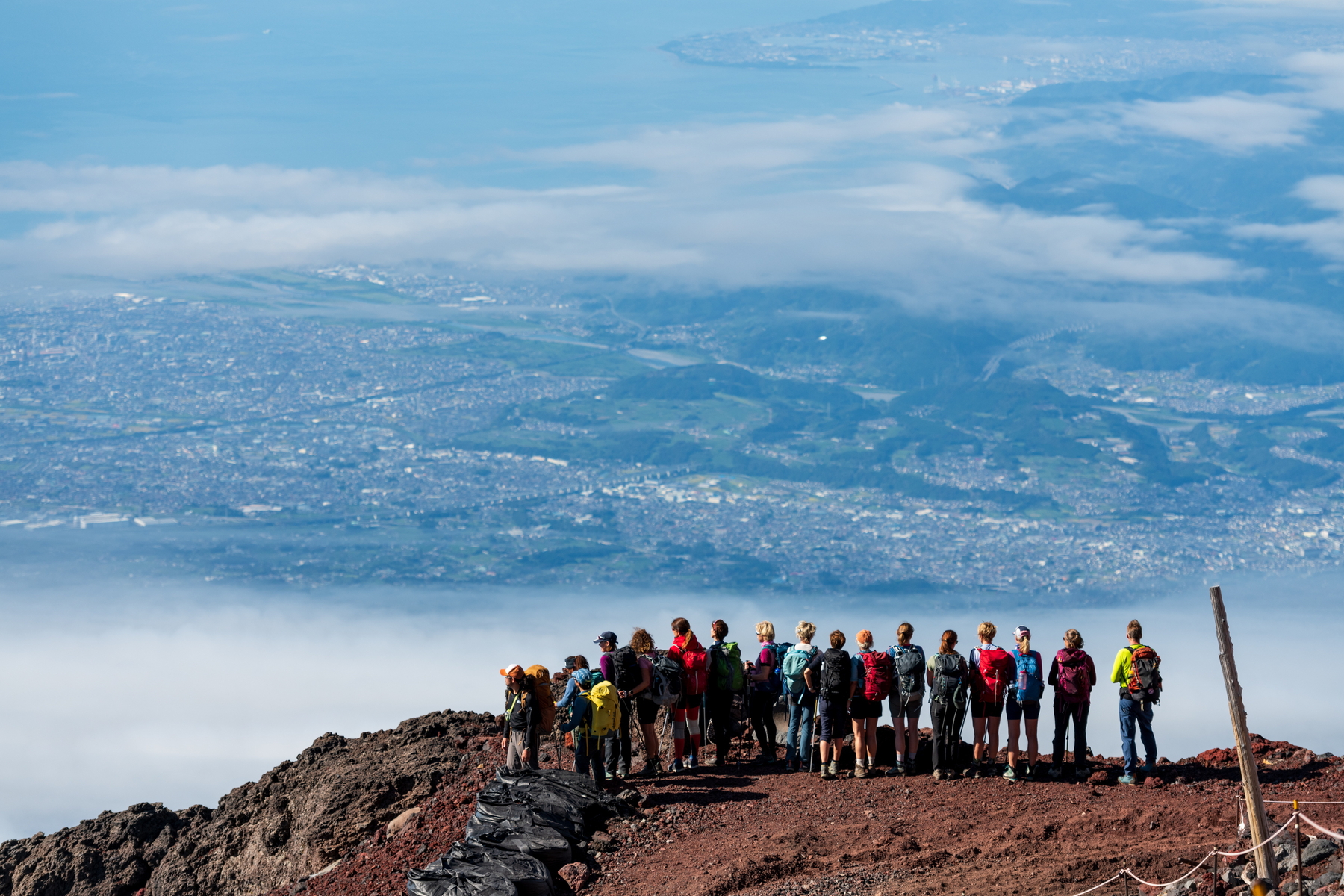
A large group of hikers with colorful backpacks stands in a line on a high, rocky ridge, looking out over a sprawling coastal landscape covered by thin layers of low-lying clouds.
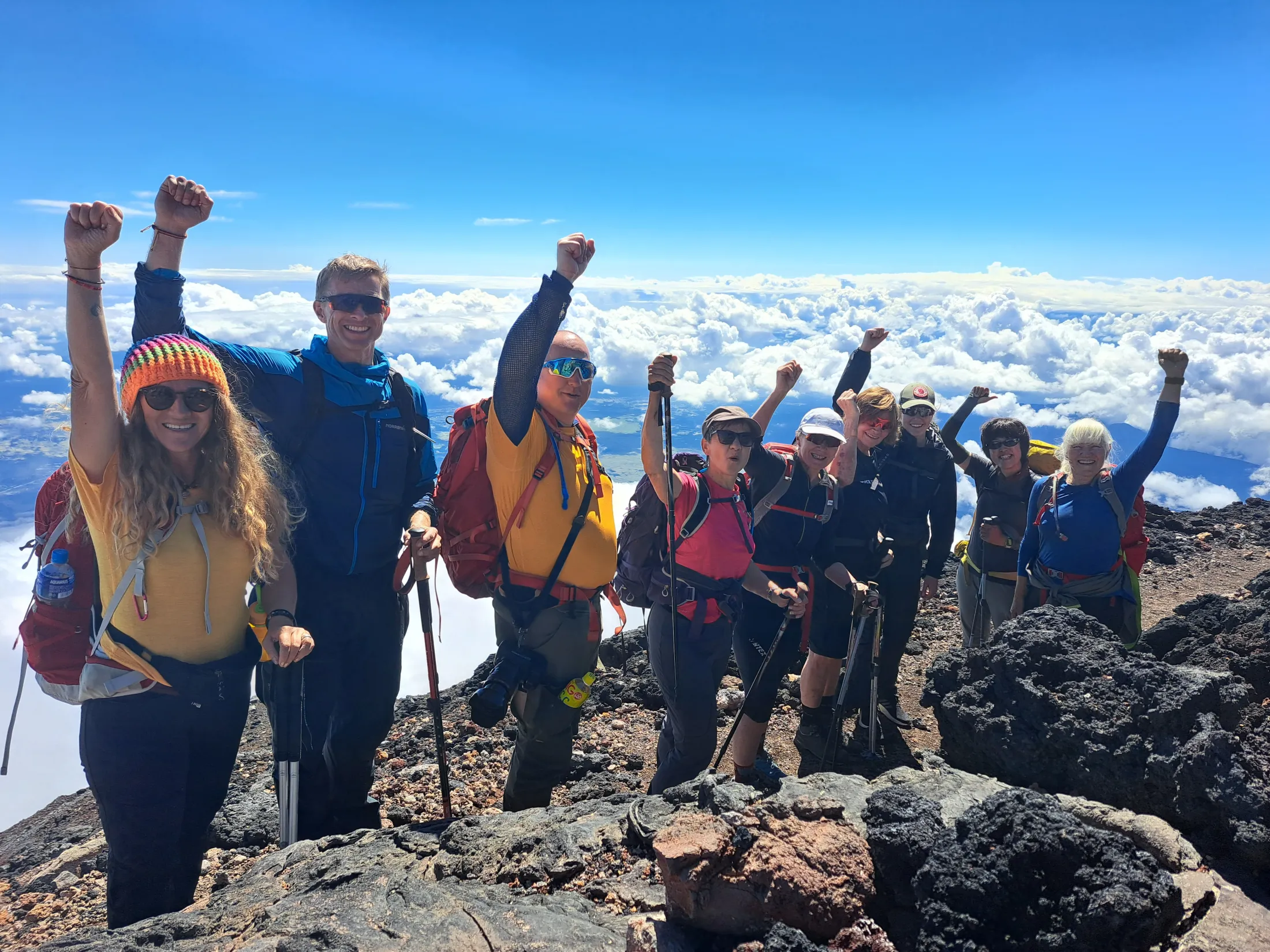
A group of cheerful hikers celebrates on a rocky mountain summit, raising their fists in the air above a vast blanket of white clouds under a clear blue sky.
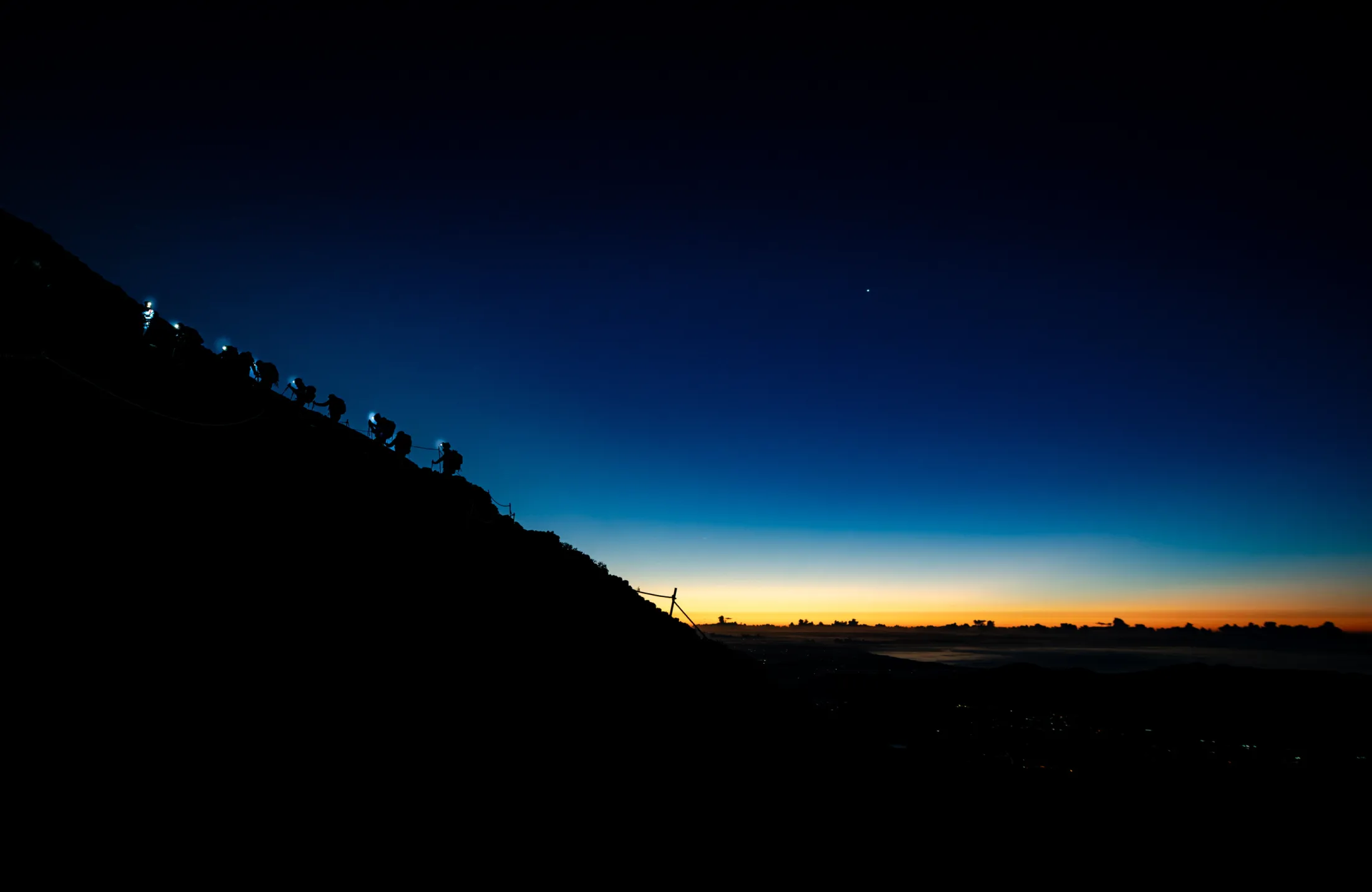
Silhouetted hikers wearing headlamps ascend a steep mountain slope under a deep blue night sky that fades into a vibrant orange dawn horizon.

Day 13:A Night at the Summit of Mt. Fuji (3776 m) and Tokyo

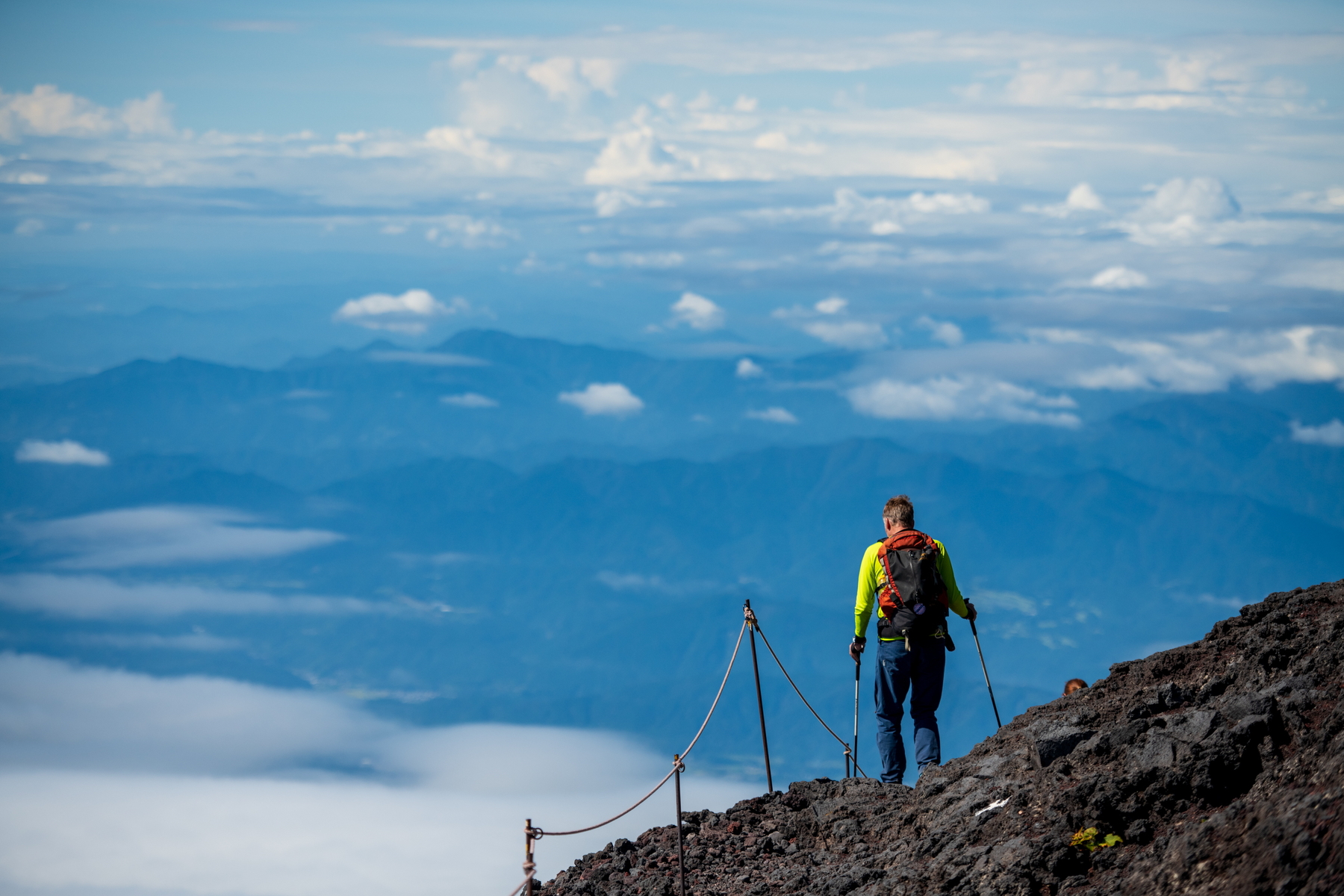
Early in the morning, before sunrise, we begin our ascent to the summit. It is only in the last 100 years that people have climbed this mountain—previously, the summit was considered sacred and therefore off-limits to anyone other than priests and pilgrims. The summit is not a single point but a circular crater rim, with the highest point at 3,776 meters above sea level. Here, we will hopefully witness the sunrise before beginning our descent to the base of the mountain. Mt. Fuji is located about three hours outside of Tokyo; we arrive in Tokyo late in the afternoon. Suddenly, we’re in one of the world’s largest cities—and compared to the mountain hikes we’ve been on, the contrasts are, of course, enormous! We’ll head out into Tokyo for a group farewell dinner and celebrate the wonderful days we’ve spent in the mountains! We’re having the farewell dinner tonight because over the next two days, we’ll have the opportunity to explore the city on our own.

Early in the morning, before sunrise, we begin our ascent to the summit. It is only in the last 100 years that people have climbed this mountain—previously, the summit was considered sacred and therefore off-limits to anyone other than priests and pilgrims. The summit is not a single point but a circular crater rim, with the highest point at 3,776 meters above sea level. Here, we will hopefully witness the sunrise before beginning our descent to the base of the mountain. Mt. Fuji is located about three hours outside of Tokyo; we arrive in Tokyo late in the afternoon. Suddenly, we’re in one of the world’s largest cities—and compared to the mountain hikes we’ve been on, the contrasts are, of course, enormous! We’ll head out into Tokyo for a group farewell dinner and celebrate the wonderful days we’ve spent in the mountains! We’re having the farewell dinner tonight because over the next two days, we’ll have the opportunity to explore the city on our own.

Hotel

B,-,D

3-4 hours

8-10 hours

1250m/1350m

9-12 km

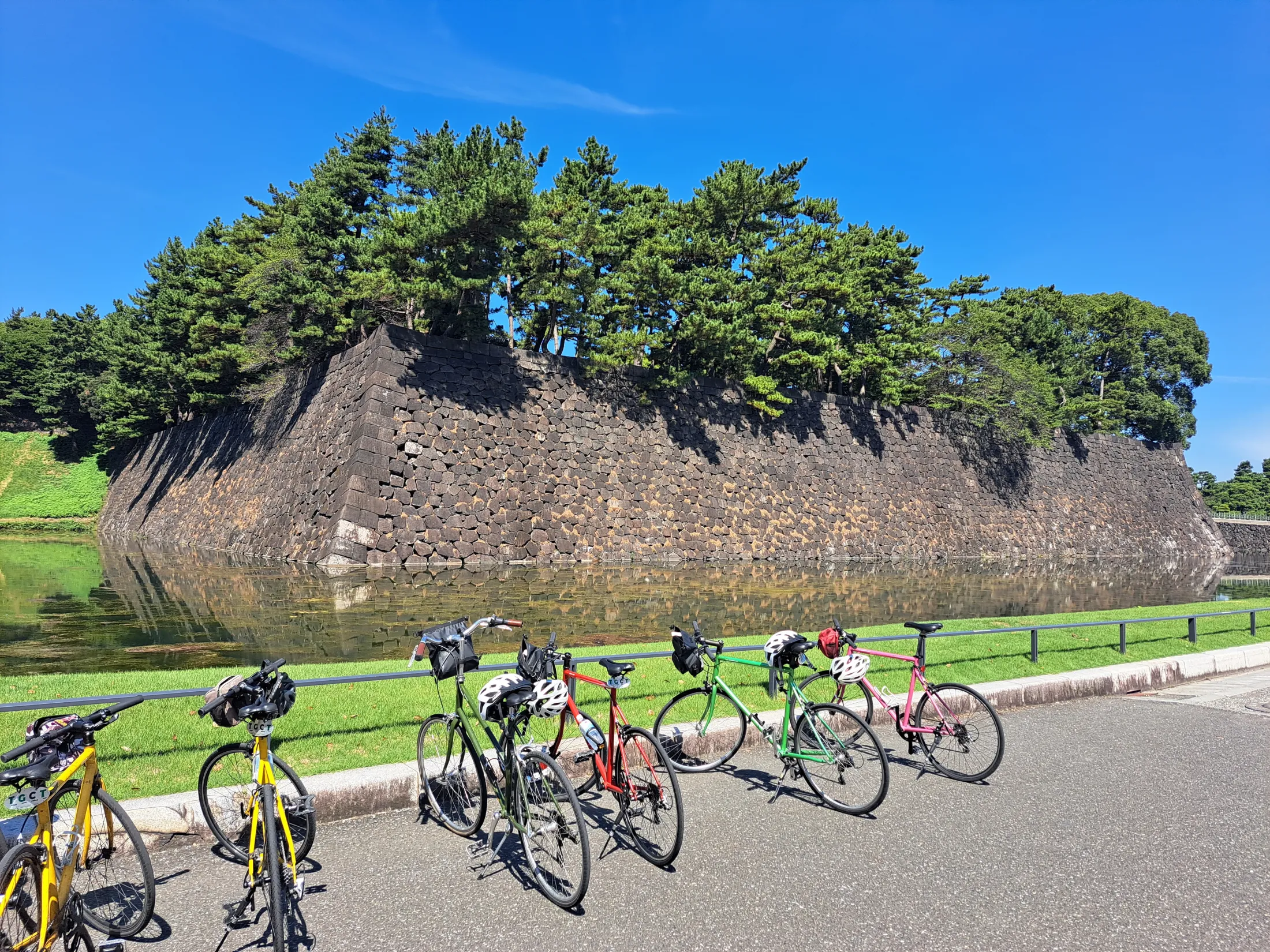
Several bicycles are parked in a row along a paved path next to a water-filled moat and a massive stone fortress wall topped with green pine trees under a clear blue sky.
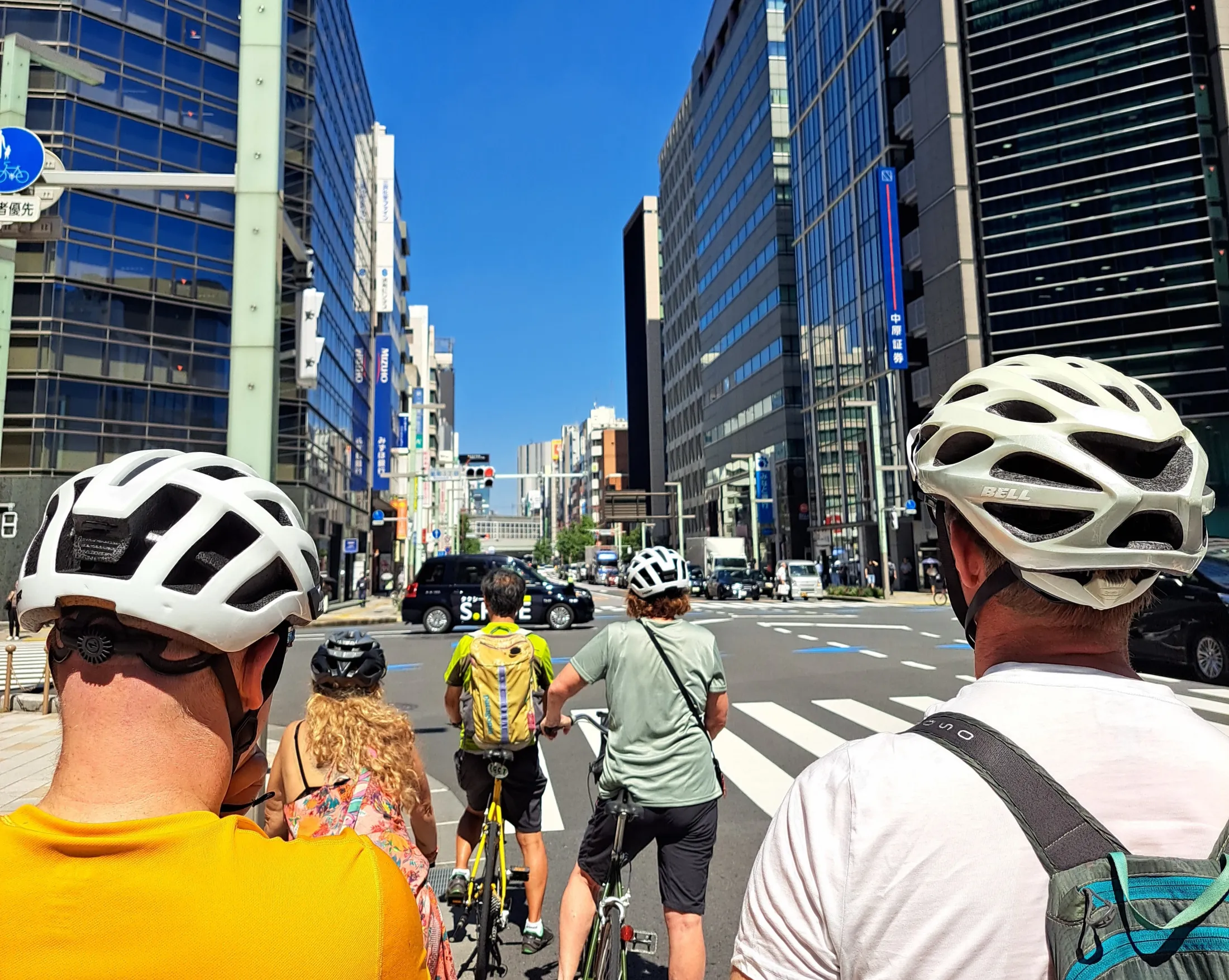
A group of cyclists wearing helmets waits on their bikes at a crosswalk in a busy city center surrounded by modern skyscrapers under a clear blue sky.
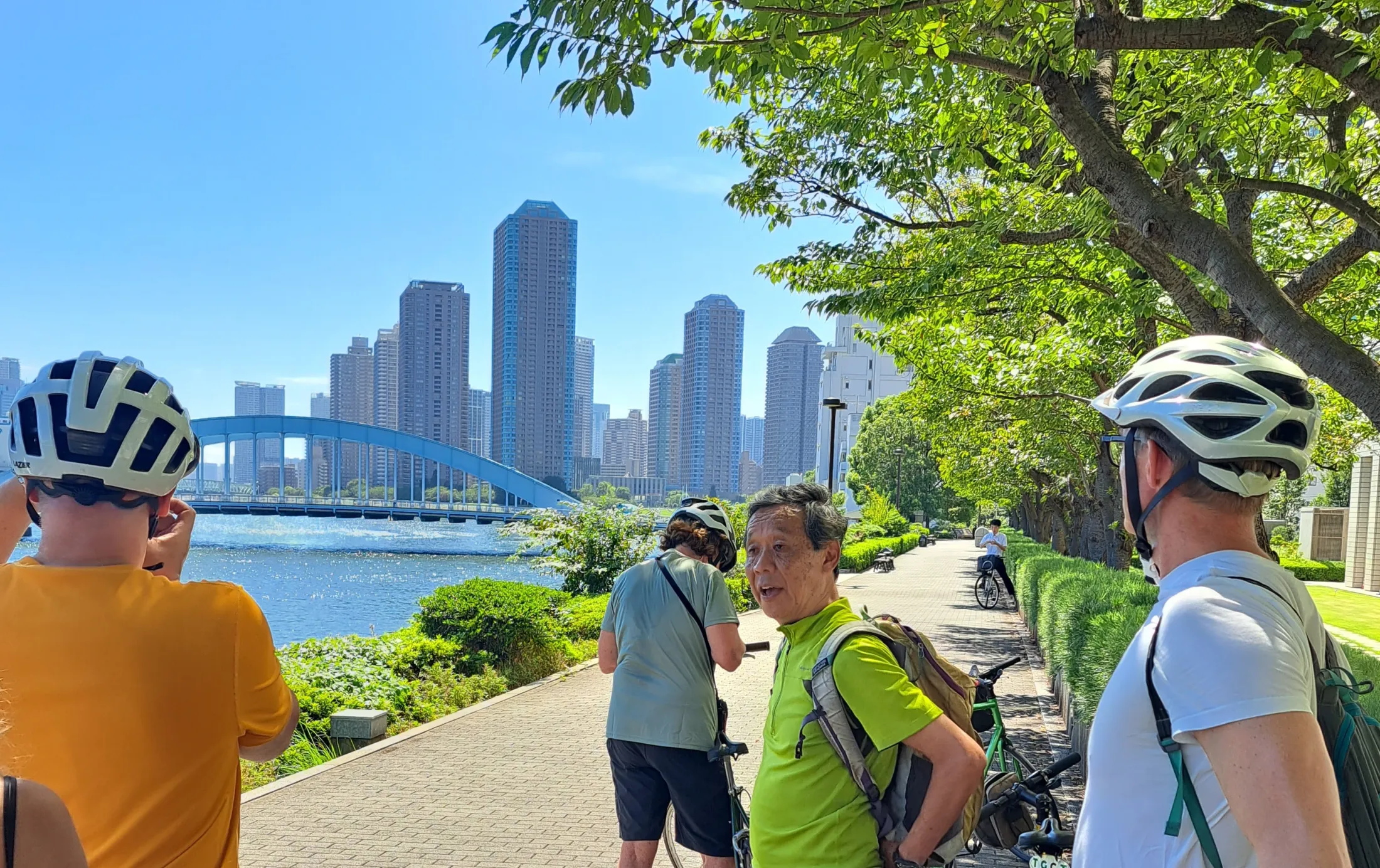
A group of cyclists with helmets pauses along a riverside paved pathway to talk, with a blue arch bridge and modern city high-rises visible across the water.

Day 14:Sightseeing and a bike ride in Tokyo

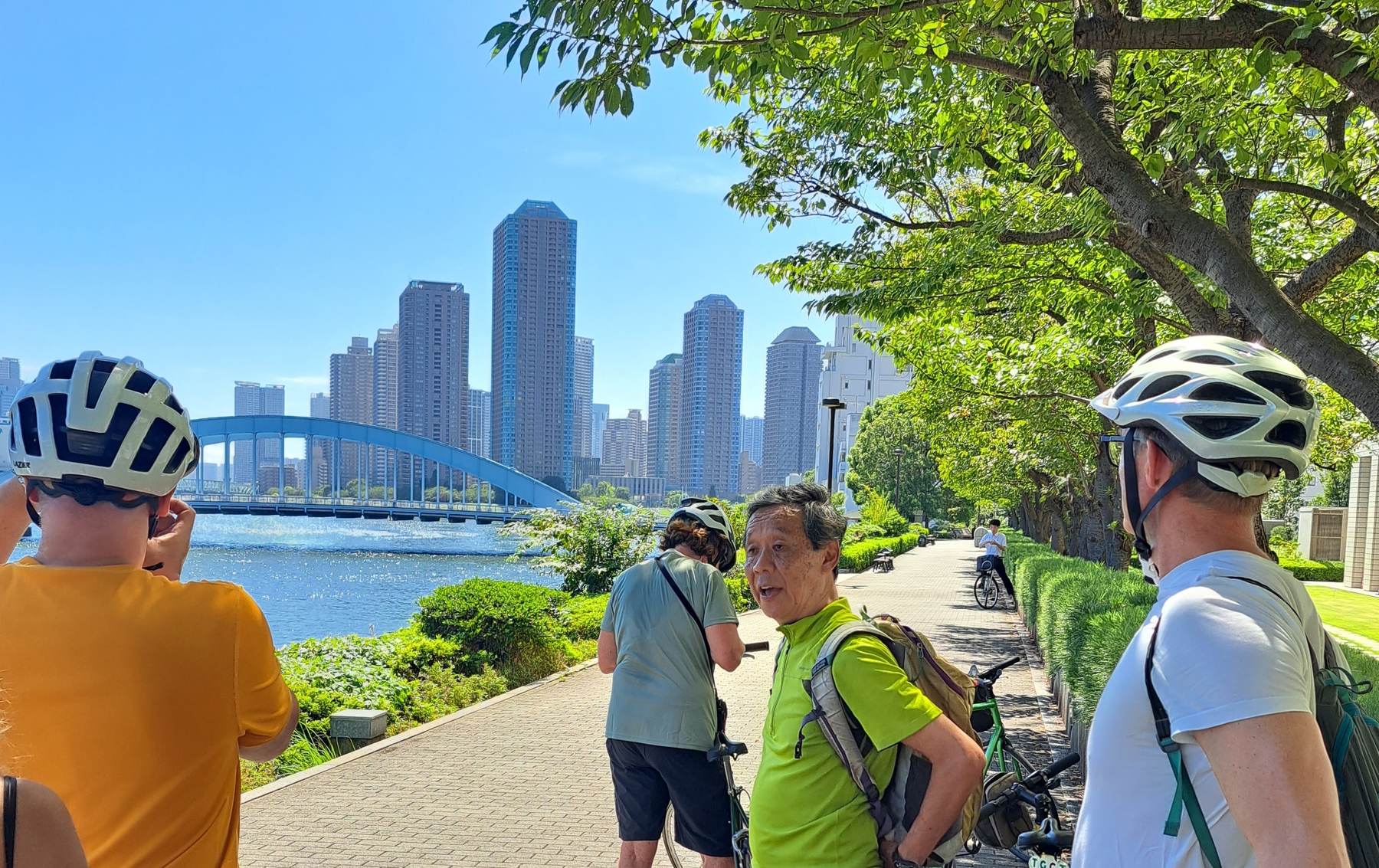
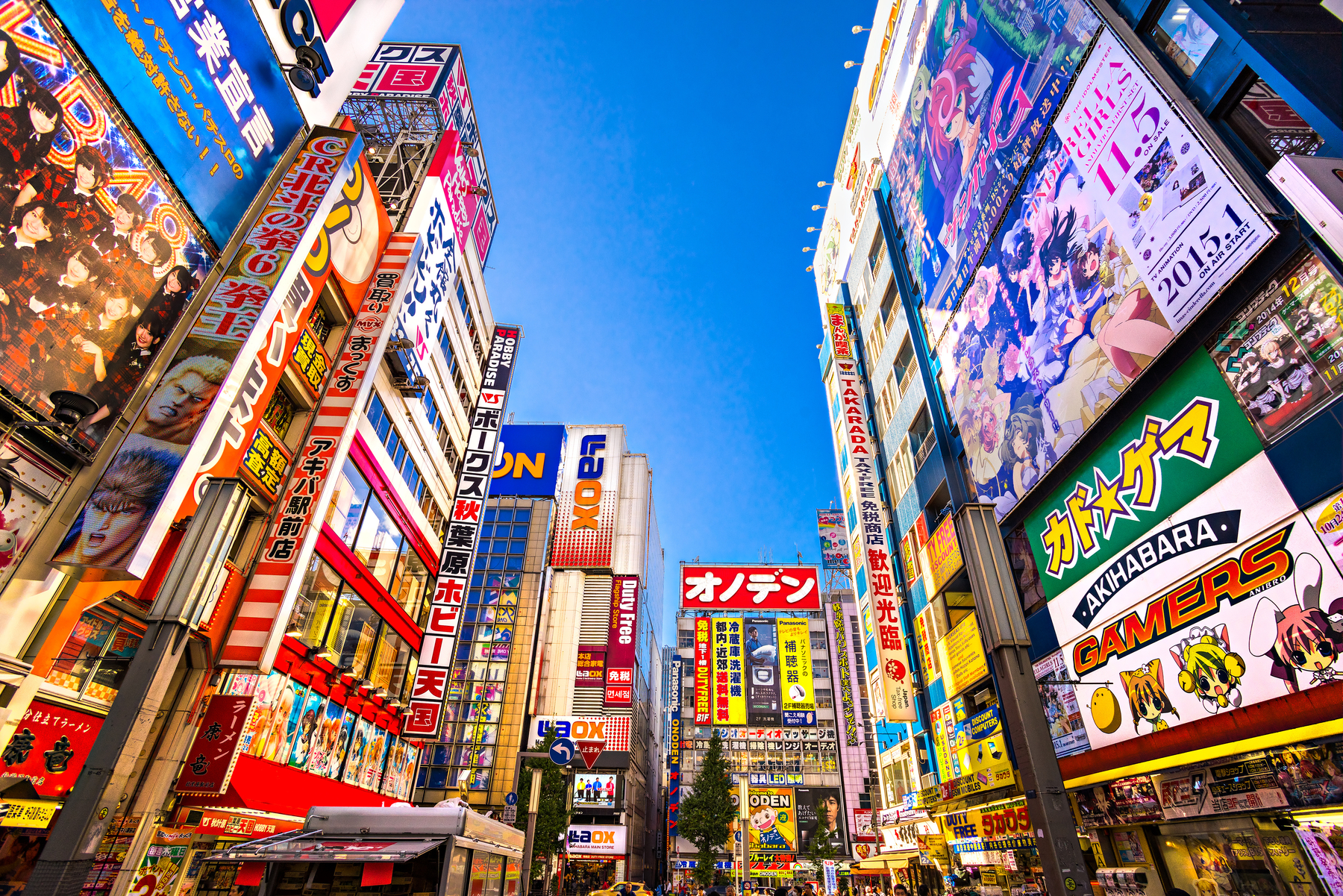
To get an exciting glimpse into everyday life in Tokyo, we’ll take a guided half-day bike tour. Some of the highlights of the bike tour include: Ginza, Nihonbashi Bridge, Old Ningyocho Town, Ryogoku Sumo Stadium, Akihabara, the Imperial Palace, Tokyo Station, and Hibiya Park. The afternoon and evening are free for you to explore exciting Tokyo.

To get an exciting glimpse into everyday life in Tokyo, we’ll take a guided half-day bike tour. Some of the highlights of the bike tour include: Ginza, Nihonbashi Bridge, Old Ningyocho Town, Ryogoku Sumo Stadium, Akihabara, the Imperial Palace, Tokyo Station, and Hibiya Park. The afternoon and evening are free for you to explore exciting Tokyo.

Hotel

B,-,-

1-2 hours

3 hours

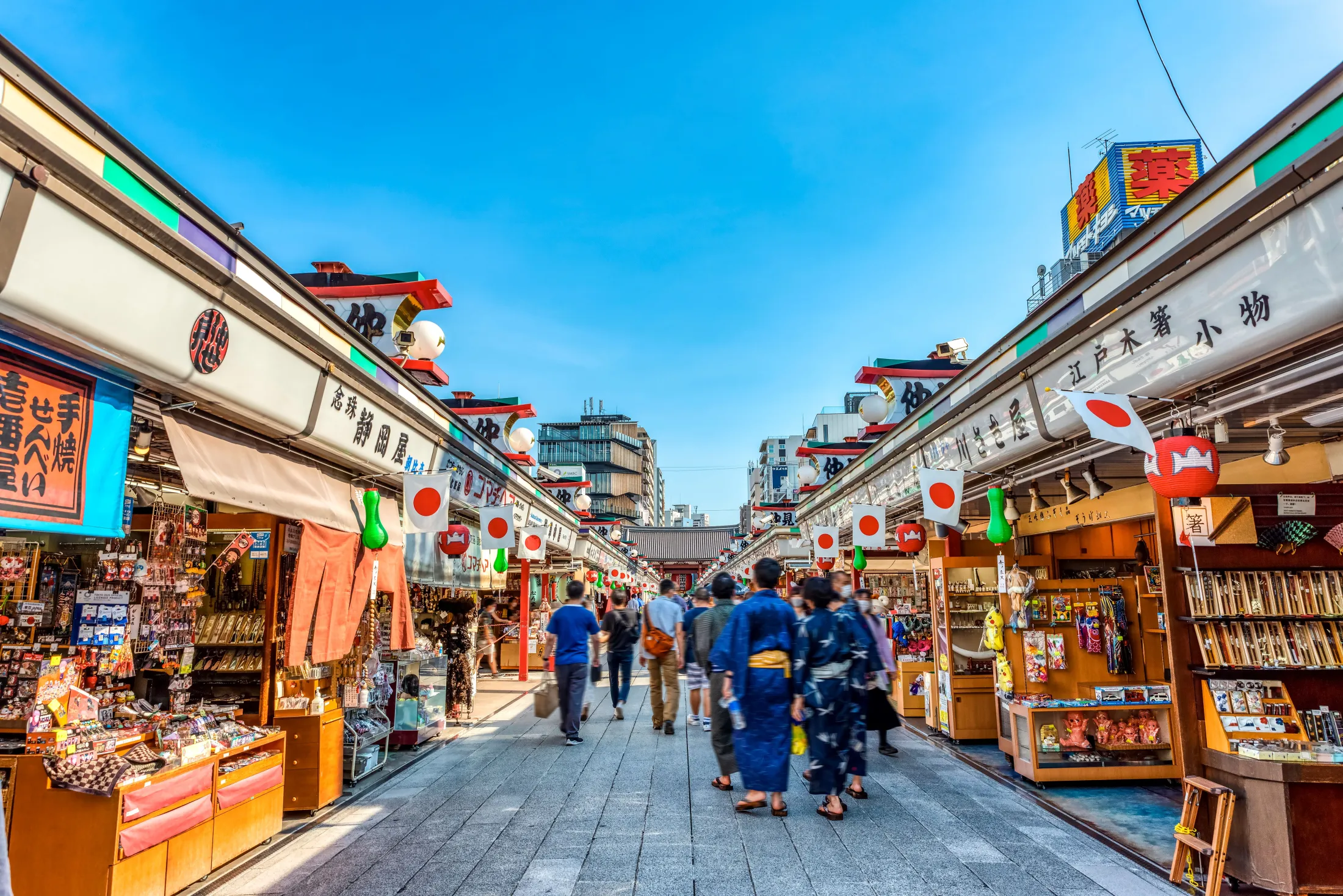
Many shoppers and tourists stroll down a lively, paved market street lined with traditional souvenir stalls decorated with Japanese flags under a bright blue sky.

Day 15:Morning in Tokyo and travel home

Breakfast at the hotel, and the day is free to explore more of the city. We must check out of our rooms by 12:00, but we can store our luggage at the hotel. In the late afternoon, we’ll meet at the hotel for shared transportation to the airport by bus and express train. The flight home departs late in the evening, and we’ll wave goodbye to this exciting country from the plane.

Breakfast at the hotel, and the day is free to explore more of the city. We must check out of our rooms by 12:00, but we can store our luggage at the hotel. In the late afternoon, we’ll meet at the hotel for shared transportation to the airport by bus and express train. The flight home departs late in the evening, and we’ll wave goodbye to this exciting country from the plane.

B,-,-

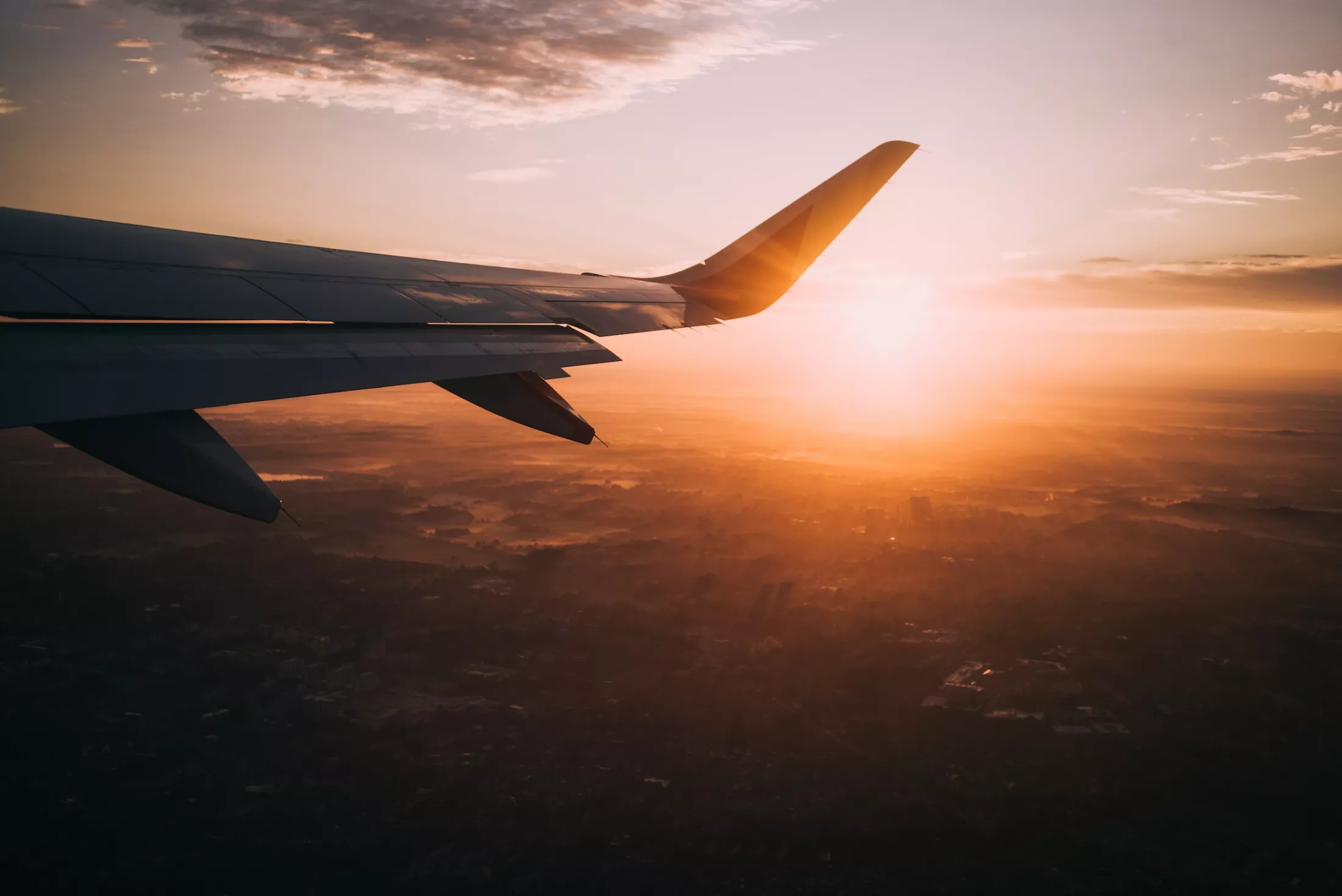
Plane wing in the sky at sunset.

Day 16:Home again

Depends on where home is, we arrive home today. For group departures departing from and returning to Oslo, we usually arrive in Oslo in the morning. Thank you for joining us this time!

Depends on where home is, we arrive home today. For group departures departing from and returning to Oslo, we usually arrive in Oslo in the morning. Thank you for joining us this time!

We are traveling towards Japan. The itinerary will vary based on where you are coming from. For some people, you will not have to leave until day 2 of the program. Group tours from Norway meet at Oslo Airport, and have a stopover before arriving at Kilimanjaro Airport. For other departures, airfare and tickets will not be included in the program, unless otherwise agreed.
-,-,-

We arrive in Tokyo. “Welcome to Japan. Please respect the rules.” This sign awaits you at the airport. And there are rules everywhere. The Japanese love rules and they respect them—perhaps that’s why this strange country is so clean and tidy. After arriving at the hotel near the airport, we enjoy a pleasant welcome dinner, and most people are probably eager to get to bed after a long flight. There will be plenty of traditional food in the days ahead—fantastic dinners with many small dishes, rice and fish for breakfast, and rice balls for lunch.

Hotel

-,-,D

After breakfast at the hotel, we’ll take an early express train to central Tokyo, where we’ll transfer to a train bound for Kanazawa. At the train station, it’s a good idea to pick up a “bento” or lunch box for the train ride. We’ll arrive in Kanazawa around midday and head to our hotel to drop off our luggage. Then we’ll go sightseeing by public bus, where we’ll see, among other things, the city’s main attraction: Kenroku-en (one of the three finest Japanese-style gardens in the country). We’ll also take a stroll through Kanazawa’s old town, where we’ll visit the Higashi-Chaya district—an area with teahouses where geishas perform traditional song and dance. Kanazawa has three such districts that are still preserved. Dinner on your own tonight.

Hotel

B,-,-

5 hours

Today we’ll have an early breakfast and send the luggage we won’t need on the mountain hike by bus to Shirakawa Village, where we’ll end up tomorrow afternoon. You’ll therefore need to pack everything you’ll need for the next 24 hours of the hike into your backpack. We’ll be picked up at the hotel by a bus that will take us to the starting point of our mountain hike, a place called Betto Deai (1260 m). From here, we’ll begin our ascent toward today’s destination and tonight’s mountain hut (2450 m), where we’ll be served dinner this evening.

Mountain lodge

B,-,D

1,5 hours

4-5 hours

+1190m

We’ll have breakfast at the mountain cabin and recharge our energy before heading up to Hakusan at 2702 m. Weather permitting, we’ll descend from the summit on a different side than the one we ascended (the east side) to O-Shirakawa Dam (1250 m). If it has rained heavily, we’ll descend the same way we ascended. Here, we’ll be picked up and driven to the village of Shirakawa, a UNESCO World Heritage Site. We’ll have some time to stroll around here in the afternoon and explore the village. Group dinner at the hotel in the evening.

Hotel

B,-,D

6-7 hours

250m/1450m

We’ll start the day with a short bus ride to Kanazawa, and from there we’ll continue by express train to the ancient imperial city of Kyoto. This is another highlight of the trip—Kyoto is full of fascinating architecture and history, and it’s one of the most culturally rich cities in the world. The city is one of the absolute highlights of all of Japan. If there’s time in the afternoon, we’ll take a guided tour of the city and visit some of the famous temples and attractions. We’ll spend the night at a cozy hotel.

Hotel

B,-,-

4 hours

Kyoto is surrounded by mountains on three sides. There’s no set itinerary for today, but our local guide will be with us, and we can, for example, head out to the beautiful Arashiyama Bamboo Forest—and experience a forest unlike anything you’ve ever seen before; this forest is magical and almost mesmerizing! The afternoon is free, but there are opportunities to visit more of Kyoto’s attractions before we return to the hotel for the night. For example, food enthusiasts can take a trip to Nishiki Market.

Hotel

B,-,-

We’ll pack our backpacks again for a 4-day/3-night trip in the mountains; you’ll see the rest of your luggage again on Day 11. We’ll hop on the express train from Kyoto to Takayama and continue by bus to Shin-Hodaka-Onsen in the northern part of the Japanese Alps. This is the starting point for the hike up to Yariga-Take (3,180 meters above sea level), and the town is surrounded by mountains, flowers, and beautiful forests. We’ll hike for a couple of hours up to the mountain hut where we’ll spend the night and be served dinner. We’ll be hiking at a time of year when there’s a high probability of experiencing the Japanese Alps at their most beautiful—and after the peak season, when there are usually large crowds of hikers in the area.

Mountain lodge

B,-,D

4-5 hours

2 hours

+350m

4 km

We’ll have breakfast and get ready for today’s long hike. We’ll be climbing 1,200 meters in elevation today, but the view from the mountain cabin where we’ll be staying tonight is well worth the effort. We’ll start out walking through a beech forest, and the terrain will gradually become more alpine as we climb higher. We’ll hike on well-maintained trails and take breaks along the way. Today we’ll bring a packed lunch. Dinner will be served at the mountain hut in the evening. If time and weather permit, we can take a short afternoon hike up to Mt. Sugoroku-dake, which is 300 meters higher than the mountain hut. The round-trip hike takes about 1.5–2 hours.

Mountain lodge

B,L,D

6-7 hours

+1200m

After a good night’s sleep, we’re ready for a new peak: Mt. Yarigadake (3180 m). The peak is the fifth highest in Japan and is known as Japan’s Matterhorn. The hike doesn’t require any climbing, but the very last stretch up to the summit has some chains and ladders. We’ll hike along a ridge with great views the whole way. From the summit of Yarigadake, we’ll have panoramic views of large parts of the Japanese Alps—if we’re lucky, we might even see all the way to Mt. Fuji, which is our next destination. We’ll have lunch along the way, either a packed lunch or at the mountain hut just below the summit. Those who do not wish to hike all the way to the summit can wait at the mountain hut where we’ll be spending the night, just below the summit. Tonight we’ll stay at the Yarigatake Sansou Hut, located at 3080 meters above sea level. (The last photo of the day is from the Sugoroku Plateau).

Mountain lodge

B,L,D

6-8 hours

620m/400m

Today, the hike takes us from the mountain cabin down to Kamikochi. The entire hike takes about 8 hours. Upon arrival in Kamikochi, we’ll take the bus to Matsumoto, where we’ll spend the night at a hotel and prepare for our climb up Mt. Fuji. Matsumoto is the second-largest city in the Nagano Prefecture, and it’s best known for Matsumotojo—one of Japan’s most beautiful original castles.

Hotel

B,L,D

1,5 hours

7-9 hours

100m/1690m

22 km

After breakfast, we’ll visit Matsumoto Castle before continuing on to the starting point of our mountain hike, which takes 4–5 hours. We’ll stop along the way to have lunch and buy some snacks for tomorrow’s hike. We’ll hike from 2,380 meters above sea level (known as the 5th Station) up to the 6th Station (2,780 meters), where we’ll spend the night in a simple mountain hut. It depends on which station is open this late in the season, so it might also be the 7th Station. Here we’ll be served a traditional dinner and stay in a dormitory. We’ll spend the evening getting ready for the ascent of Mt. Fuji (3,776 meters above sea level), Japan’s highest mountain!

Mountain lodge

B,-,D

4-5 hours

1-2 hours

+100m

0,6 km

Early in the morning, before sunrise, we begin our ascent to the summit. It is only in the last 100 years that people have climbed this mountain—previously, the summit was considered sacred and therefore off-limits to anyone other than priests and pilgrims. The summit is not a single point but a circular crater rim, with the highest point at 3,776 meters above sea level. Here, we will hopefully witness the sunrise before beginning our descent to the base of the mountain. Mt. Fuji is located about three hours outside of Tokyo; we arrive in Tokyo late in the afternoon. Suddenly, we’re in one of the world’s largest cities—and compared to the mountain hikes we’ve been on, the contrasts are, of course, enormous! We’ll head out into Tokyo for a group farewell dinner and celebrate the wonderful days we’ve spent in the mountains! We’re having the farewell dinner tonight because over the next two days, we’ll have the opportunity to explore the city on our own.

Hotel

B,-,D

3-4 hours

8-10 hours

1250m/1350m

9-12 km

To get an exciting glimpse into everyday life in Tokyo, we’ll take a guided half-day bike tour. Some of the highlights of the bike tour include: Ginza, Nihonbashi Bridge, Old Ningyocho Town, Ryogoku Sumo Stadium, Akihabara, the Imperial Palace, Tokyo Station, and Hibiya Park. The afternoon and evening are free for you to explore exciting Tokyo.

Hotel

B,-,-

1-2 hours

3 hours

Breakfast at the hotel, and the day is free to explore more of the city. We must check out of our rooms by 12:00, but we can store our luggage at the hotel. In the late afternoon, we’ll meet at the hotel for shared transportation to the airport by bus and express train. The flight home departs late in the evening, and we’ll wave goodbye to this exciting country from the plane.

B,-,-

Depends on where home is, we arrive home today. For group departures departing from and returning to Oslo, we usually arrive in Oslo in the morning. Thank you for joining us this time!

What's included in the price

Included

Round trip Oslo–Tokyo, when specified as included in departure information.

Norwegian-speaking guide on programs with Norwegian language.

All transportation as specified in the program.

Accommodations in double/twin rooms at hotels (8 nights) and shared rooms/dormitories at mountain cabins (5 nights).

Meals as specified in the program.

For those who want to join a local guide in Kyoto and go on a bike ride in Tokyo.

 To Nijo Catsle, Tenryu-ji (temple), Matsumoto Castle.

Not included

For trips where flights are not included, please check our website to confirm that the departure is guaranteed before booking your own plane tickets. For each trip, we require a minimum number of confirmed participants before the departure can be guaranteed.
If you want to tip at restaurants or similar places.

Available upon request, limited quantities.

Request quotes from other cities in Norway.

Entrance fees for sightseeing not mentioned under "Included".

Terms and Conditions 

We reserve the right to change prices. The day by day program is indicative and changes may occur. We also refer to our general travel conditions.

Travel Insurance

On all our trips, we require you to have full health and accident insurance which will also cover any transport home. Read more about travel insurance.

Highlights

Reviews

Rated
-
- reviews
(-)
(-)
(-)
(-)
(-)

Safety & Grading

Read more

For departures with Norrøna Adventure guides:

  • 24-hour emergency response
  • Guides trained in first aid in the field
  • Basic first aid equipment available
  • Cooperation with Turlegen.no for medical advice

On this trip, it is important to understand that we will be traveling far off the beaten track. We will of course do everything we can to assist if anything should happen, but any rescue operation could take longer than on other trips we organize. It is therefore extremely important that all participants are well prepared and ready to deal with unforeseen situations.

Physical level

3/6 Physical

Some segments of the journey may prove challenging. It's essential to possess a solid level of fitness prior to departure. Persistence will be required in reaching the trip's goal.

Comfort level

3/6 Comfort

Simple accommodations, such as cabins or guesthouses, often with multi-bed rooms. Sometimes with bunk beds and often with a shared bathroom.

Risk level

3/6 Risk

Activities/trips with some risk. Certain incidents may occur, and they may be of such a nature that they may require professional help.

Training and Preparations

Most of our trips involve physical challenges. You should be experienced in hiking and in generally good physical condition to participate. Longer hikes in the countryside and, for example, “cabin-to-cabin” hikes or camping trips in the mountains are good preparation.

On all three mountain hikes, we’ll carry everything we need for the hike in our backpacks. We’ll get our luggage back after each hike.

This trip is suitable for those who hike frequently in the mountains. The longest daily hike is up to 9 hours, and you’ll carry your own backpack during the hikes. The hike to the summit of Mt. Yariga Dake is somewhat exposed—especially the final stretch. However, it is not necessary to go all the way to the summit to enjoy the magnificent mountain views and this hike. The round-trip consists of three different hikes, with “rest days” in between.

September is a pleasant time to visit Japan. Temperatures are usually between 20 and 25 degrees during the day, and although a rain shower may occur, it usually passes quickly.

Visas, Vaccinations and Health

Before embarking on our journey together, we kindly remind all tour participants to check their respective country's visa status and vaccination requirements. Ensuring your travel documents are in order is a crucial step in guaranteeing a smooth and hassle-free adventure.

For Norwegian xcitizens, visa is not required for short stays in Japan of up to 90 days, regardless of the purpose of the visit. This is provided that you are traveling on a valid passport. See also the current entry and visa regulations on the Ministry of Foreign Affairs' country pages. For other nationalities, please check your governments information. 

In Japan, it is prohibited to import fresh fruit, vegetables, and meat, among other items. Importing medication for personal use is often permitted with a doctor’s note. However, there may be certain medications that are illegal in Japan or that require prior approval from Japanese authorities.

If you are over 67, you should have a thorough medical check-up before your trip. Make your doctor aware that this is a trip involving physical exertion and moving off the beaten track.

It is important that you complete all parts of the registration form (especially where we ask for information about health and allergies), and let us know if there is anything we need to be aware of prior to and during the tour. Relevant health information that may affect the tour should also be communicated to the guide at the start of the tour. *Note* - If you are on regular medication, have known allergies or anything similar, you must always bring your personal medication with you.

For Norwegian travellers, see the overview on FHI´s pages on travel health advice. For vaccination and guidance, please contact Sentrum Reisemedisin: Reisemedisin.no.
For all other nationalities, please contact your local medical office. 

Additional Information

For trips where flights are not included, please check our website to confirm that the departure is guaranteed before booking your own plane tickets. For each trip, we require a minimum number of confirmed participants before the departure can be guaranteed.
We stay in twin or double rooms whenever possible. On the mountain hikes, we’ll stay in mountain huts of a simple (but charming) standard, in dormitory-style rooms, and get to experience Japanese hiking culture.

There will be plenty of traditional food, especially on the days we’re hiking—fantastic dinners with many small dishes, rice and fish for breakfast, and rice balls for lunch. If you’d like a more varied diet, we recommend packing a few packets of crispbread or something similar in your backpack.

In Japan, there is a ban on importing fresh fruit, vegetables, and meat, among other things.

It is not always easy to get hold of gluten-free wholemeal bread, lactose-free alternatives or to accommodate other food preferences. If you have any allergies, please let us know in the registration form and we will try to accommodate you as best we can. However, we would still recommend that anyone with special dietary needs bring some alternatives in the form of, for example, a packet of crispbread, energy bars or similar that you know you can eat.

Equipment list

This list is intended as a guideline, so that we have what we need regardless of the weather we get on the trip. Remember that you can also get used outdoor equipment that works perfectly. Get in touch if you have any questions. TIP: We recommend that you have the most important equipment in your hand luggage, for example hiking boots and gore-tex jacket/trousers.

Obligatory

Clothing

We recommend thin wool.

Wool or synthetic.

Fleece or wool. 

Gore-Tex or similar. Must have a decent hood, and hold out wind and rain. Should have space for midlayers underneath. Ventilation under the arms is recommended. 
In case of a short rain shower.

Waterproof pants.

Footwear

Bring waterproof shoes/boots that you are familiar with.

Solid, with a solid sole. Such as approaches shoes.

Equipment

Avoid bringing a suitcase, they are more difficult to transport between hotels.

Needs to have space for everything you want to bring on the hikes.

Remember new/extra batteries.

Personal medicines and, for example, band-aids, blister plaster, sports tape, throat lozenges, nasal drops, Paracetamol/Ibuprofen, stomach regulators, etc.
We need to know about all medicines you are taking, in case something happens. 

Tooth brush, tooth paste, small towel, ear plugs, wet wipes, biodegradable soap, etc.

You should be able to bring 2-3 litres of water.

Passport, tickets, bank card, proof of vaccination andproof of insurance. Remember to have a copy of important documents on your phone and/or somewhere in your bag. 

Recommended

Clothing

For evenings and leasure days.

Hat or headband

Footwear
Equipment

Light. Have to be foldable or telescope.

Toilet paper, antibac, and waste bags for the paper. Remember leave no trace.

If youre a light sleeper.

Nice to have to protect against sun and rain.

For use in the backpack to keep your equipment dry during rain. 

Packing Tips

It is often warm and humid in the mountains, with varying amounts of rain. We therefore recommend lightweight rain gear, a shell jacket, and lightweight rain pants.

We use headlamps on the summit hike to Mount Fuji, as we start hiking while it is still dark.

You MUST bring your own sleeping bag liner on the mountain hikes. There are blankets/duvets at the cabins, so there’s no need for a sleeping bag.

Recommended trips

Testimonial

An adventure trip featuring a summit, sushi, and sumo.

– Vigdis, 2022

Testimonial

A trip packed with activities, featuring three different hikes. Beautiful scenery and a fascinating country to visit. Our tour leaders, Atle and Genya, took great care of us, along with the local guides.

– Bente, 2022