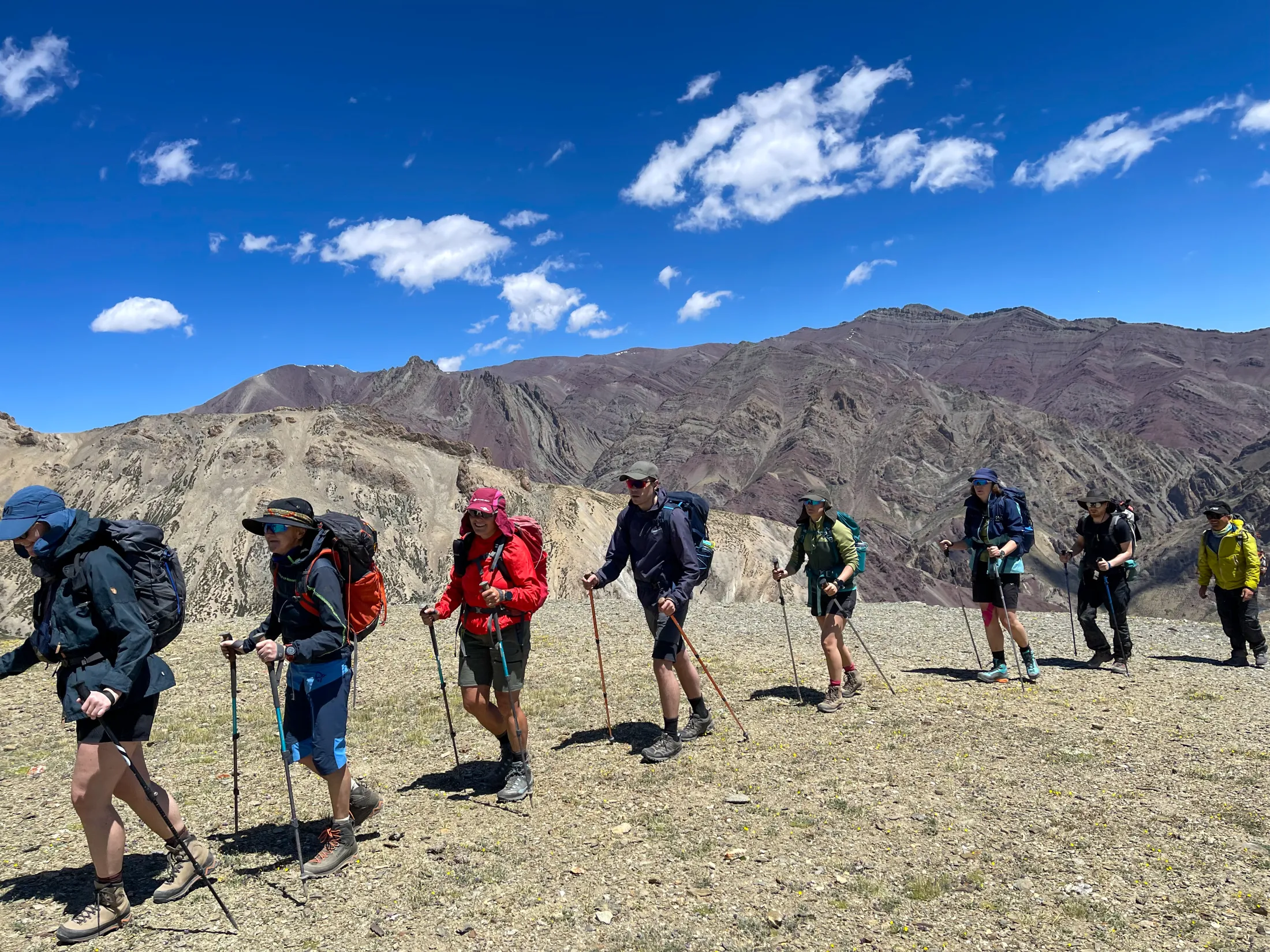
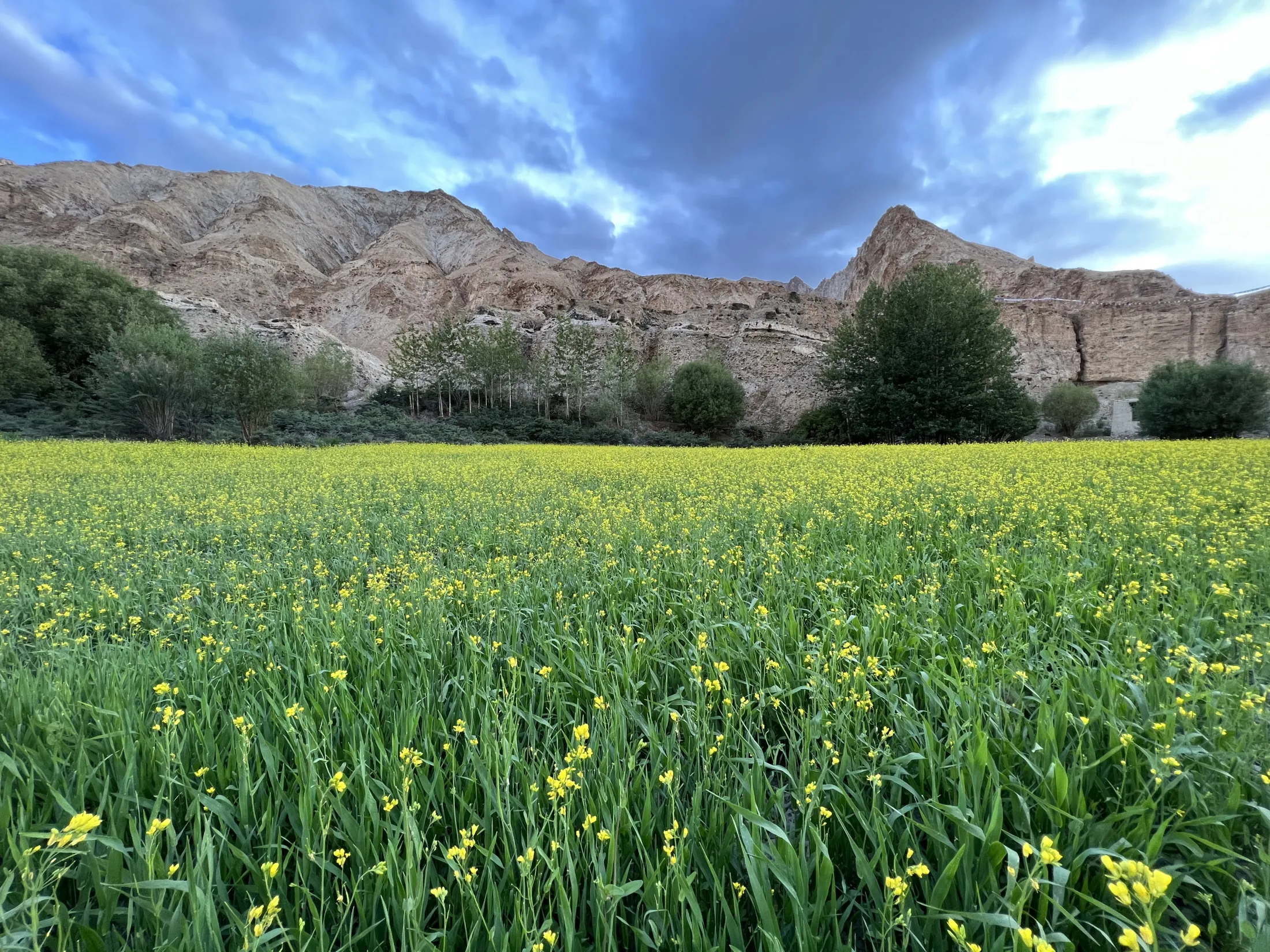
Do you dream of greater challenges? Then Kang Yatze II (Stok Kangri’s lesser-known sibling, and 22 meters higher) in the Indian Himalayas is the mountain for you! The approach alone is almost worth the trip: a leisurely hike through unspoiled areas with few tourists and spectacular views of the Zanskar and Karakoram mountain ranges.
Are you looking for a high-altitude hike that doesn’t take four weeks or involve technical difficulties? Just outside the idyllic town of Leh in the Indian Himalayas lies Kang Yatze II, which, at 6175 meters above sea level, is a challenging peak—but with proper acclimatization, all the conditions are in place for a successful summit attempt.
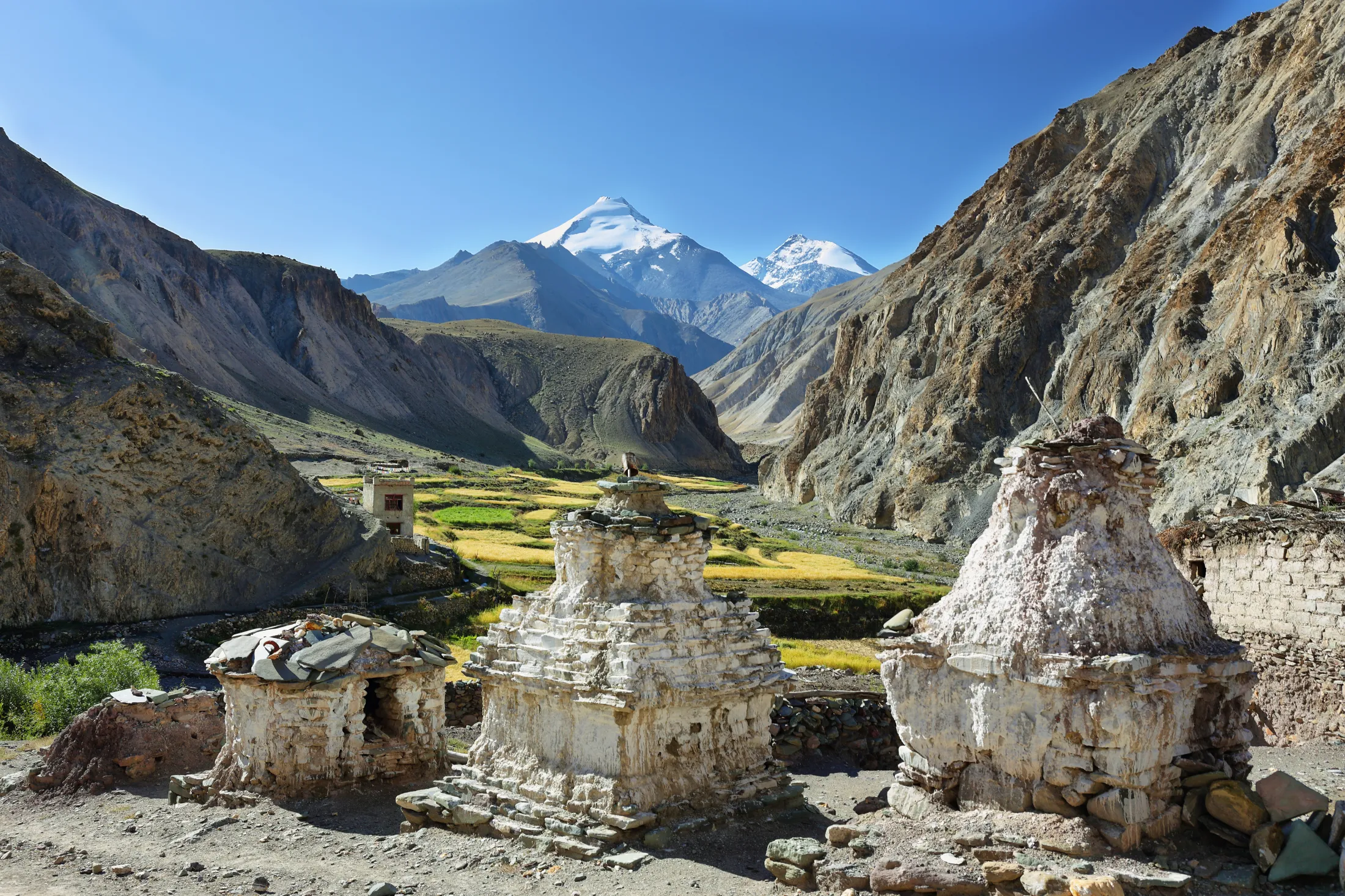
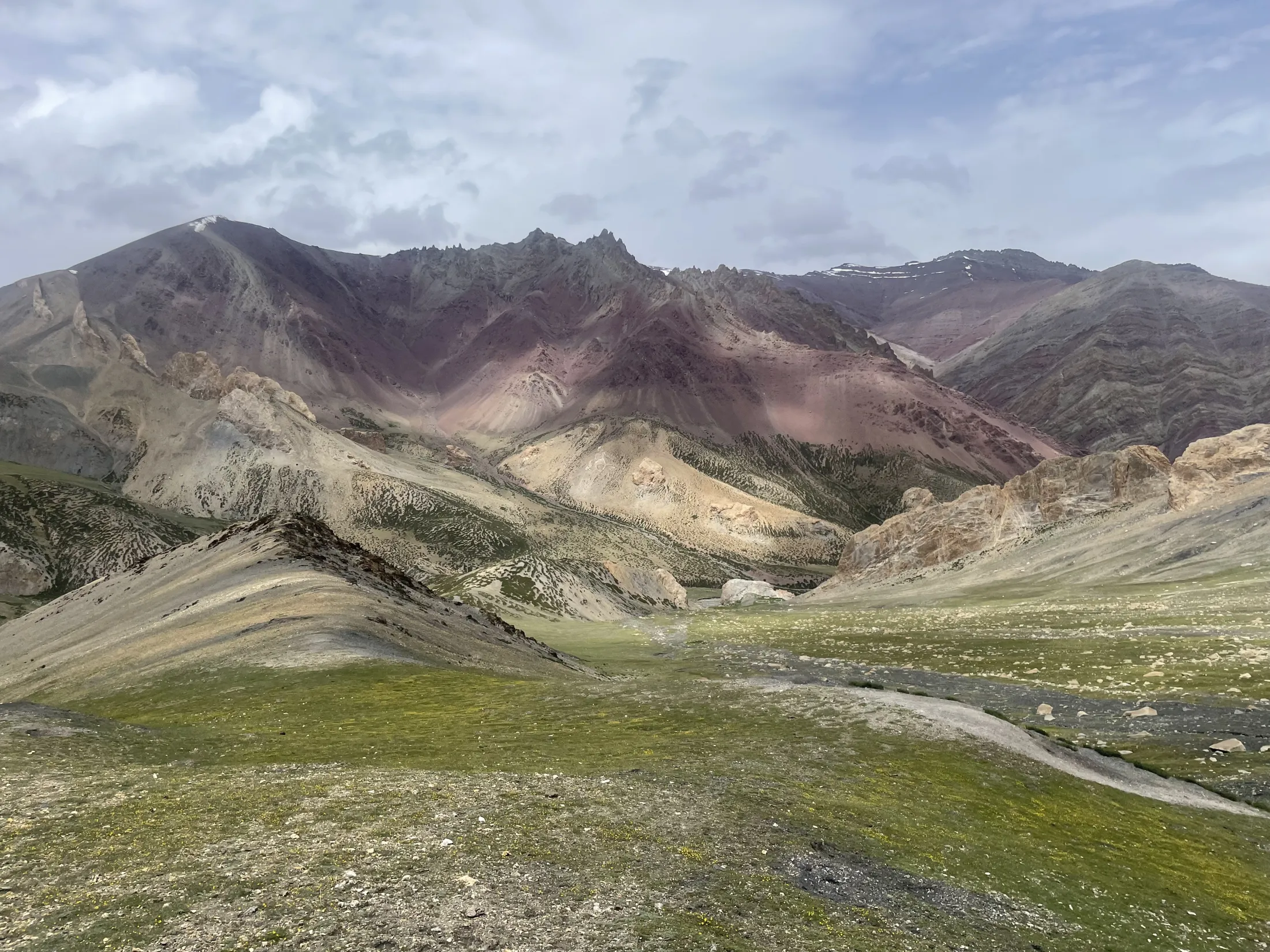
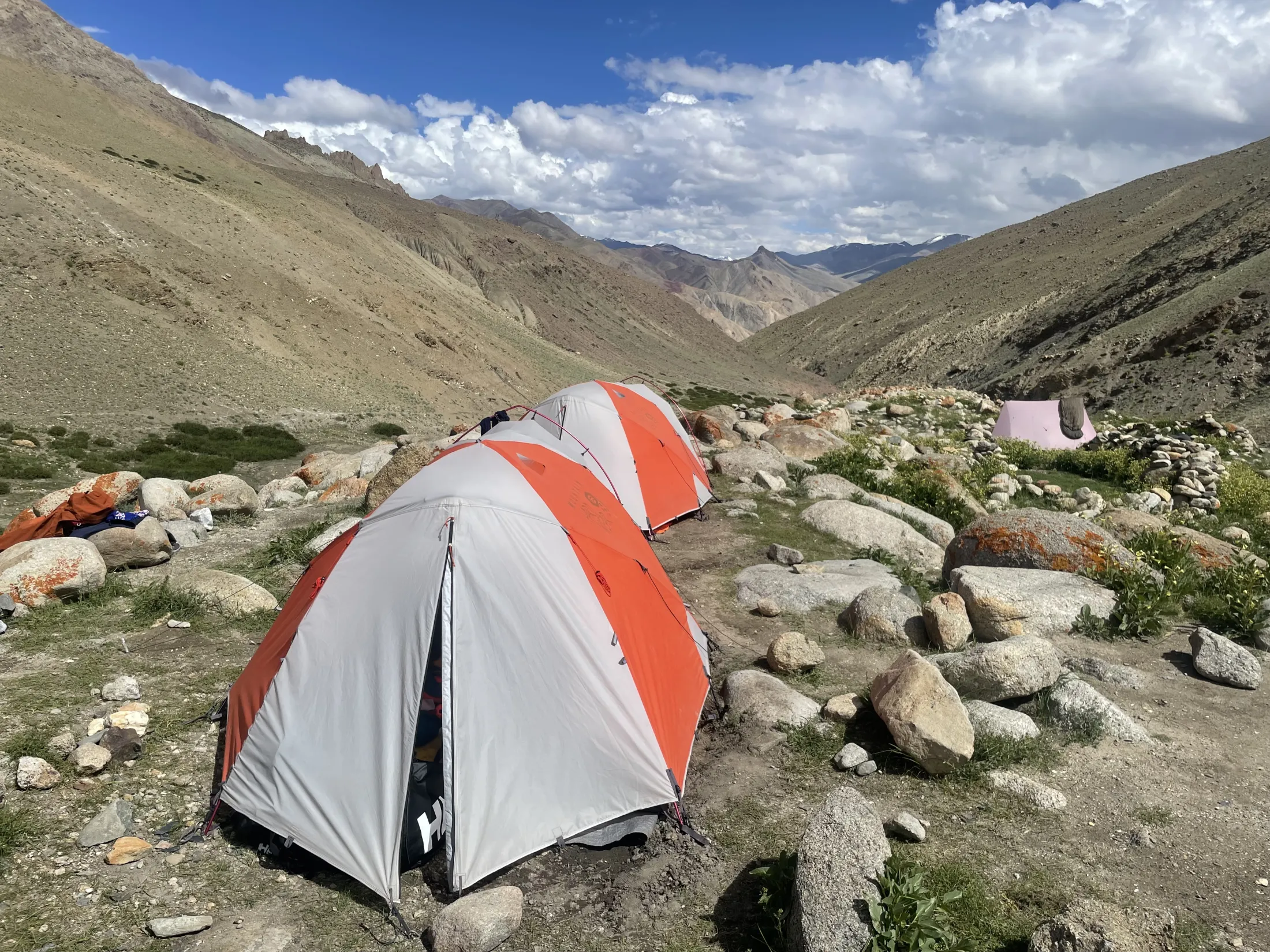
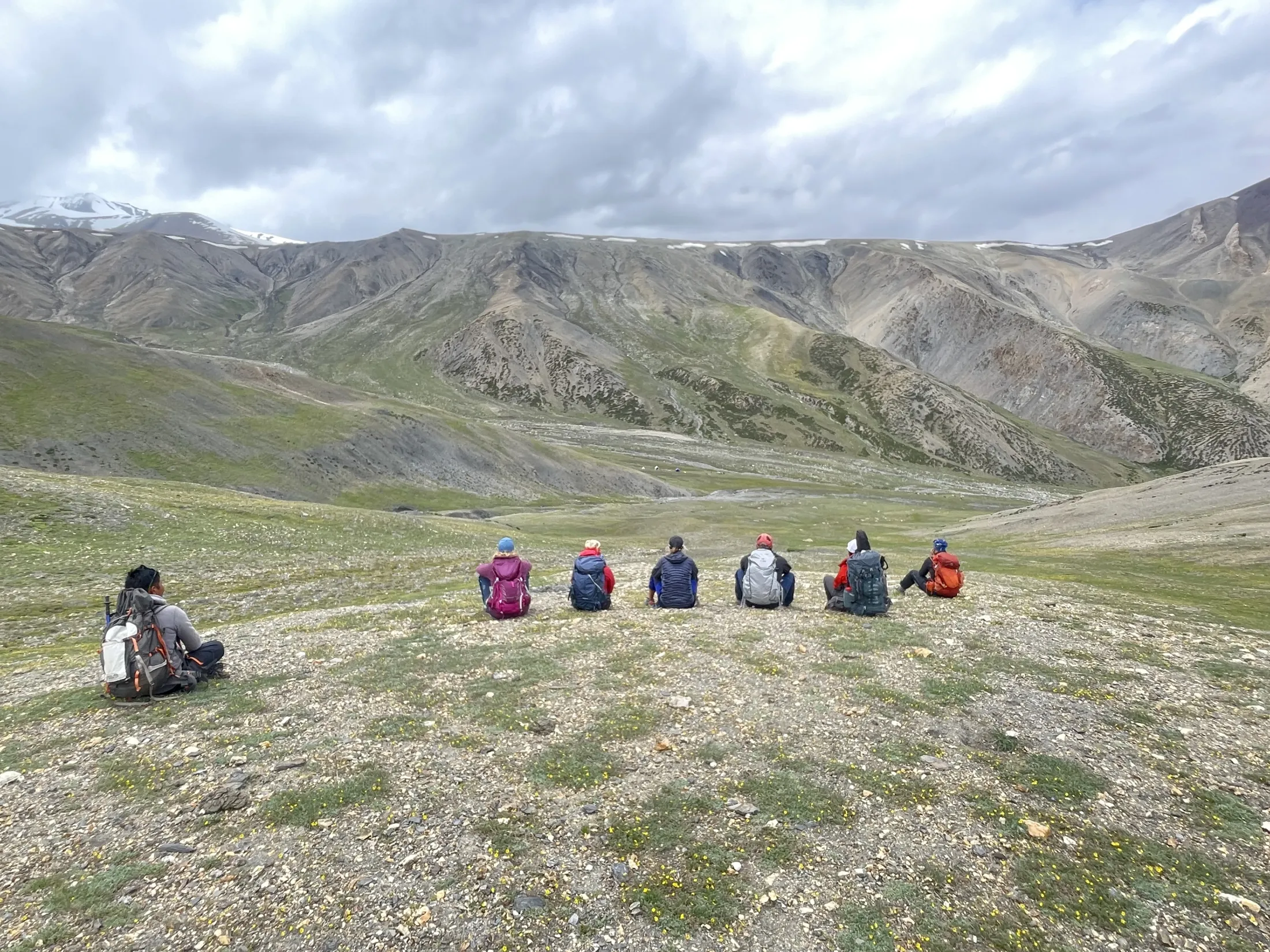
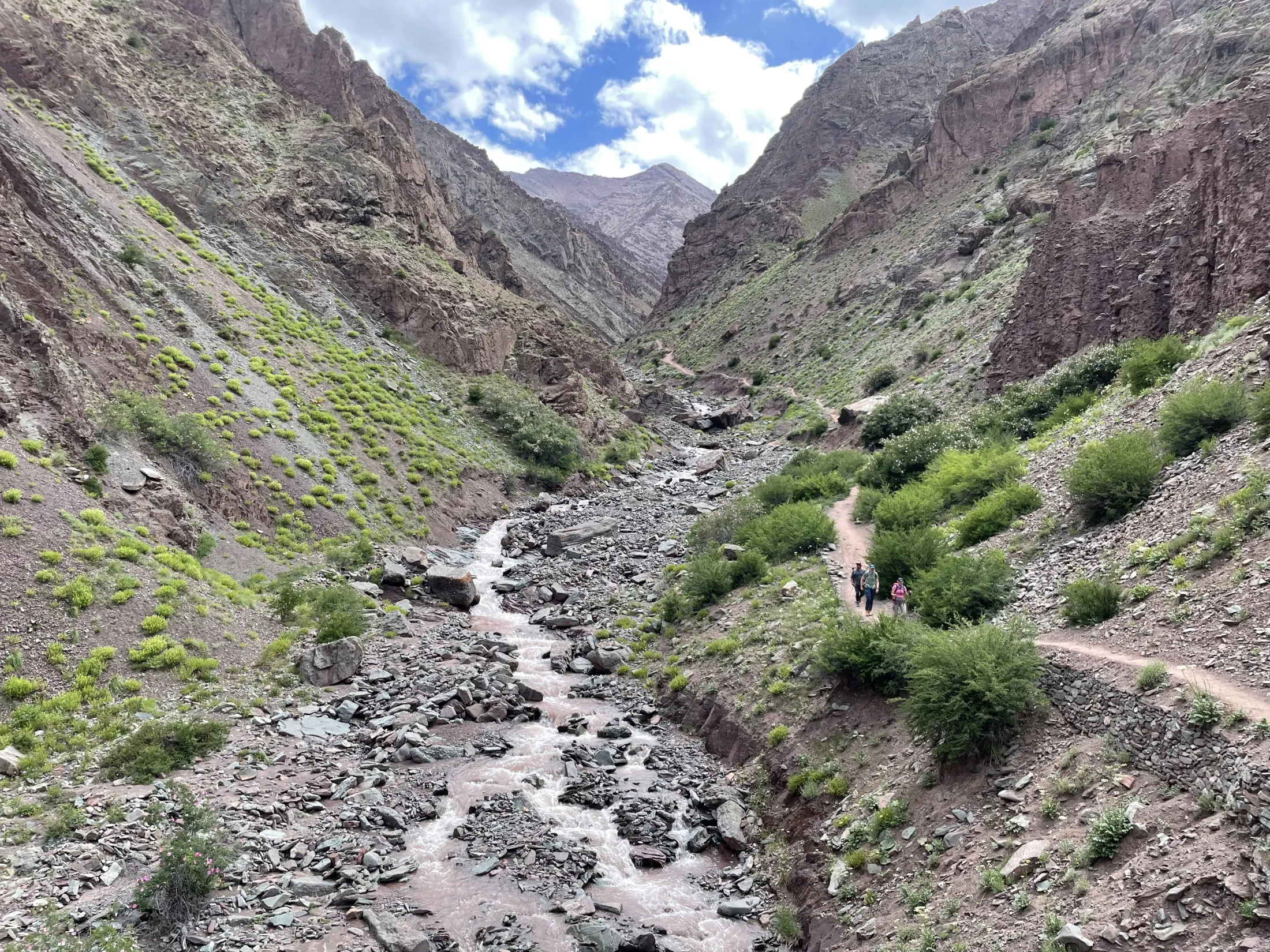
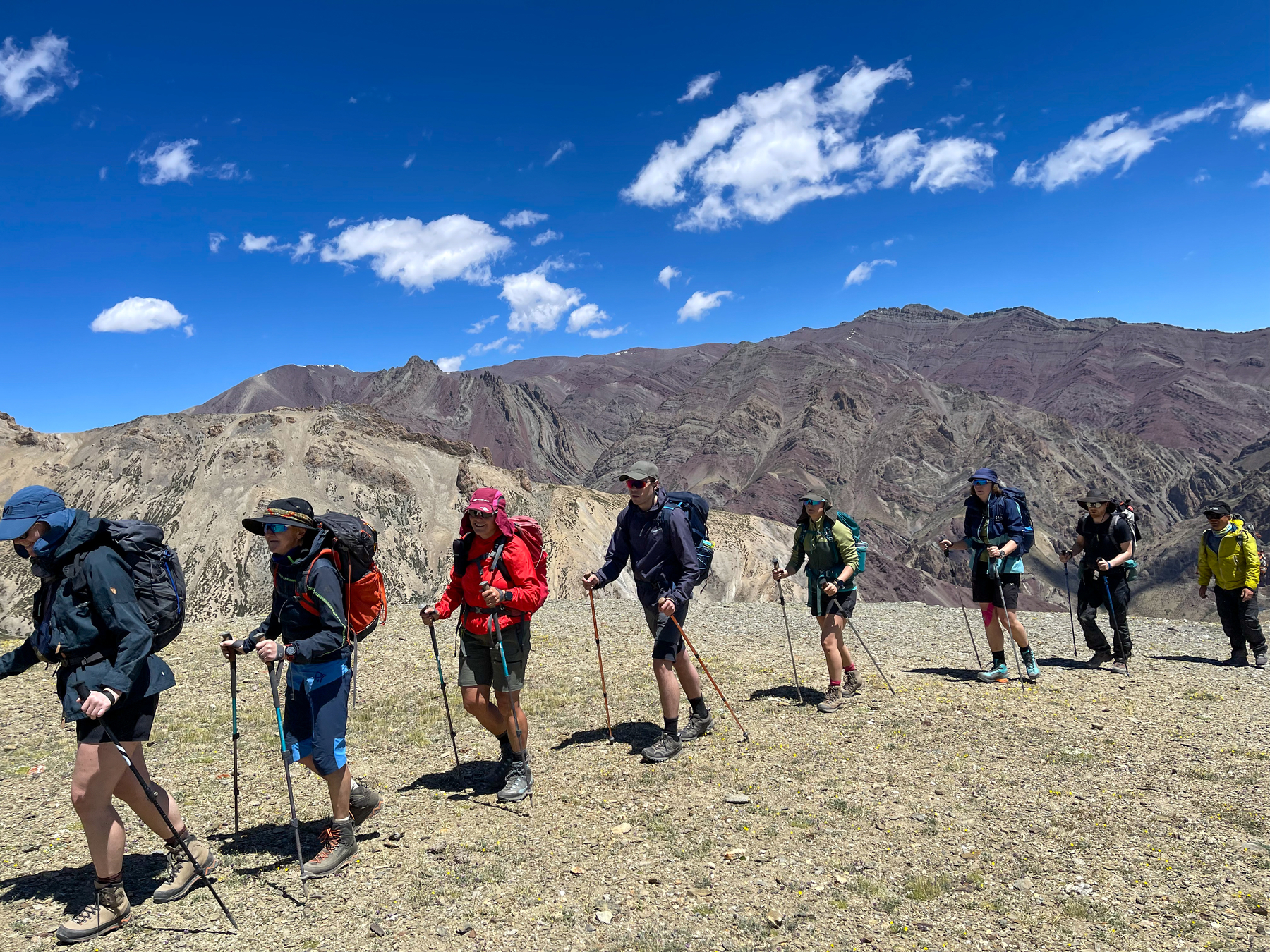
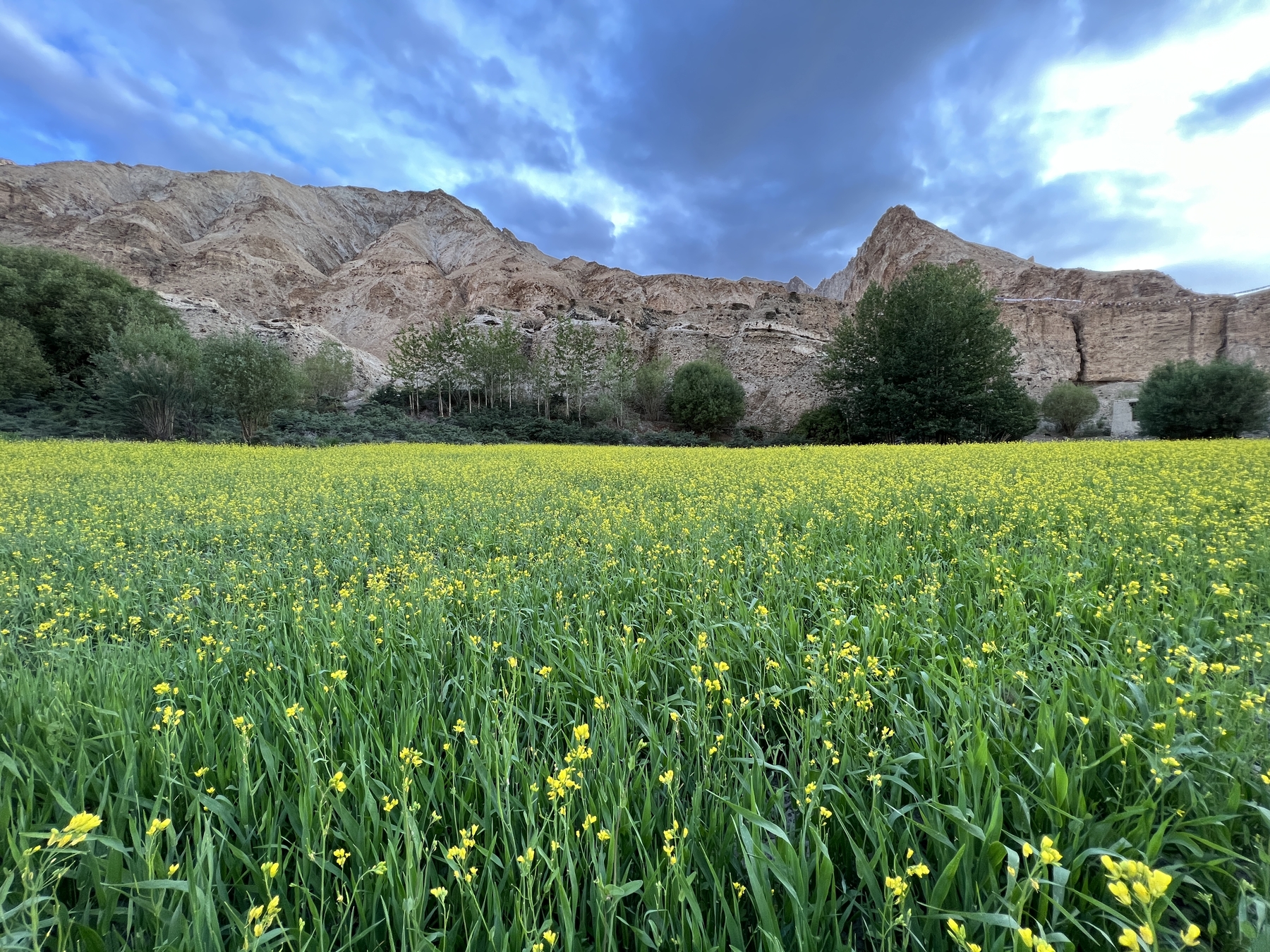
We pass small villages, temples, and majestic natural scenery on the way to Kang Yatze Base Camp. The landscape on the way to base camp is fascinating, with relatively little vegetation but diverse rock formations that shift in color from red, green, purple, and brown. If we’re lucky, we’ll spot some local wildlife—from small marmots to mountain goats that traverse the sheer mountain slopes with ease. This hike is relatively similar to the one to Stok Kangri, which we did earlier. P.S.: This peak is 22 meters higher!
Thank you for your tailor made trip request. We have received your information and will get back to you within 48 hours with some tailor made suggestions for you.
Please don’t hesitate to contact us if you have any questions in the meantime.
Departure from Oslo. Arrival in Delhi late that evening or early the next morning, depending on flight schedules.
Departure from Oslo. Arrival in Delhi late that evening or early the next morning, depending on flight schedules.
Day 2:Arrival Delhi
We usually arrive in Delhi in the morning and head to the hotel. We relax a bit and have lunch before going sightseeing in Delhi.
We usually arrive in Delhi in the morning and head to the hotel. We relax a bit and have lunch before going sightseeing in Delhi.
Hotel
-,-,-
Day 3:Arrival Leh (3500 m)
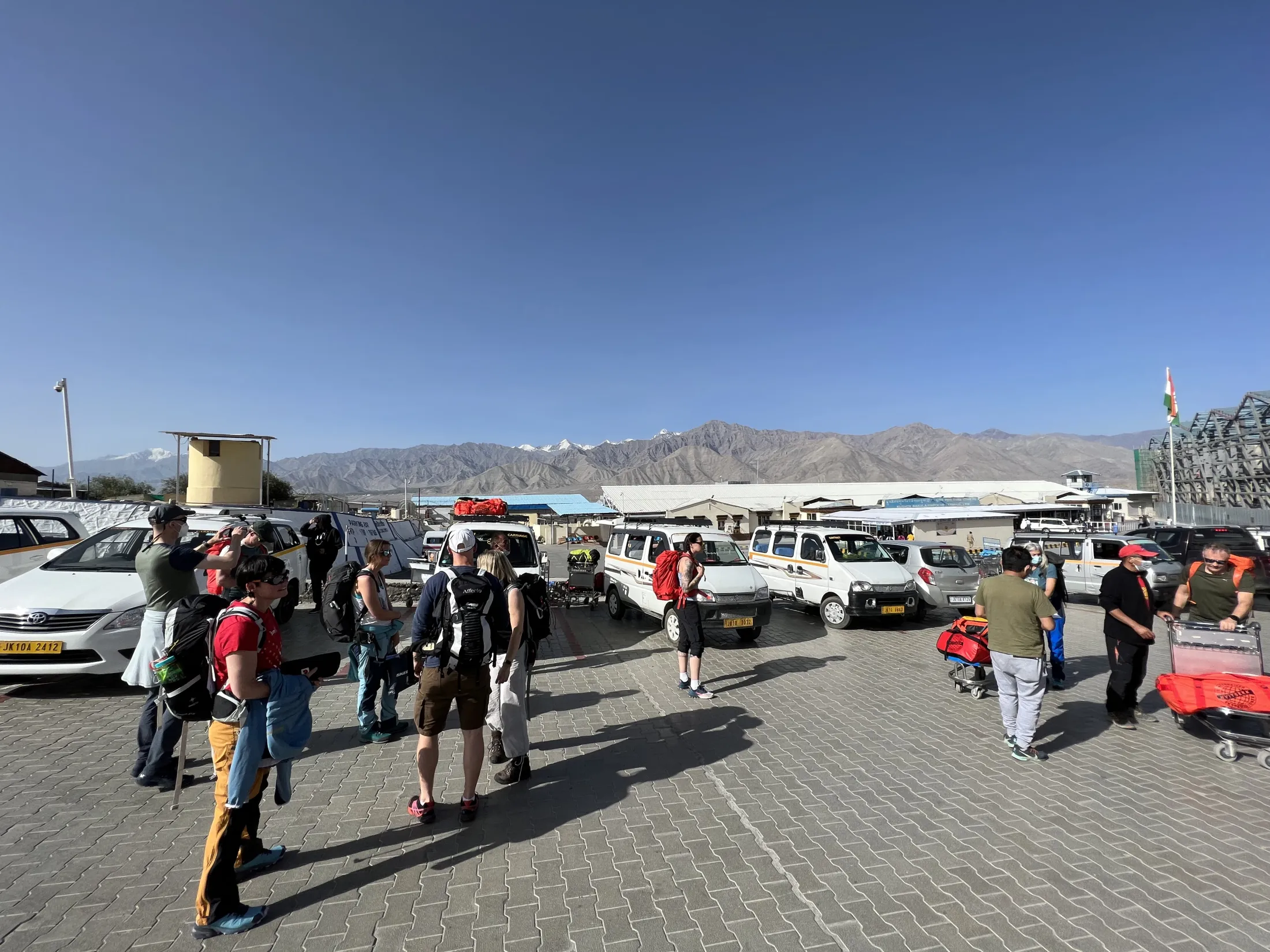
If the weather is nice, on the flight from Delhi to Leh we can catch a glimpse of hundreds of snow-capped mountain peaks and start dreaming right away about what the coming days will bring. The rest of the day is free, and we take our time getting used to the altitude. Acclimatization begins immediately, and we make sure to drink enough water and avoid strenuous physical activity.
If the weather is nice, on the flight from Delhi to Leh we can catch a glimpse of hundreds of snow-capped mountain peaks and start dreaming right away about what the coming days will bring. The rest of the day is free, and we take our time getting used to the altitude. Acclimatization begins immediately, and we make sure to drink enough water and avoid strenuous physical activity.
Hotel
B,L,D
Day 4:A walk in Leh
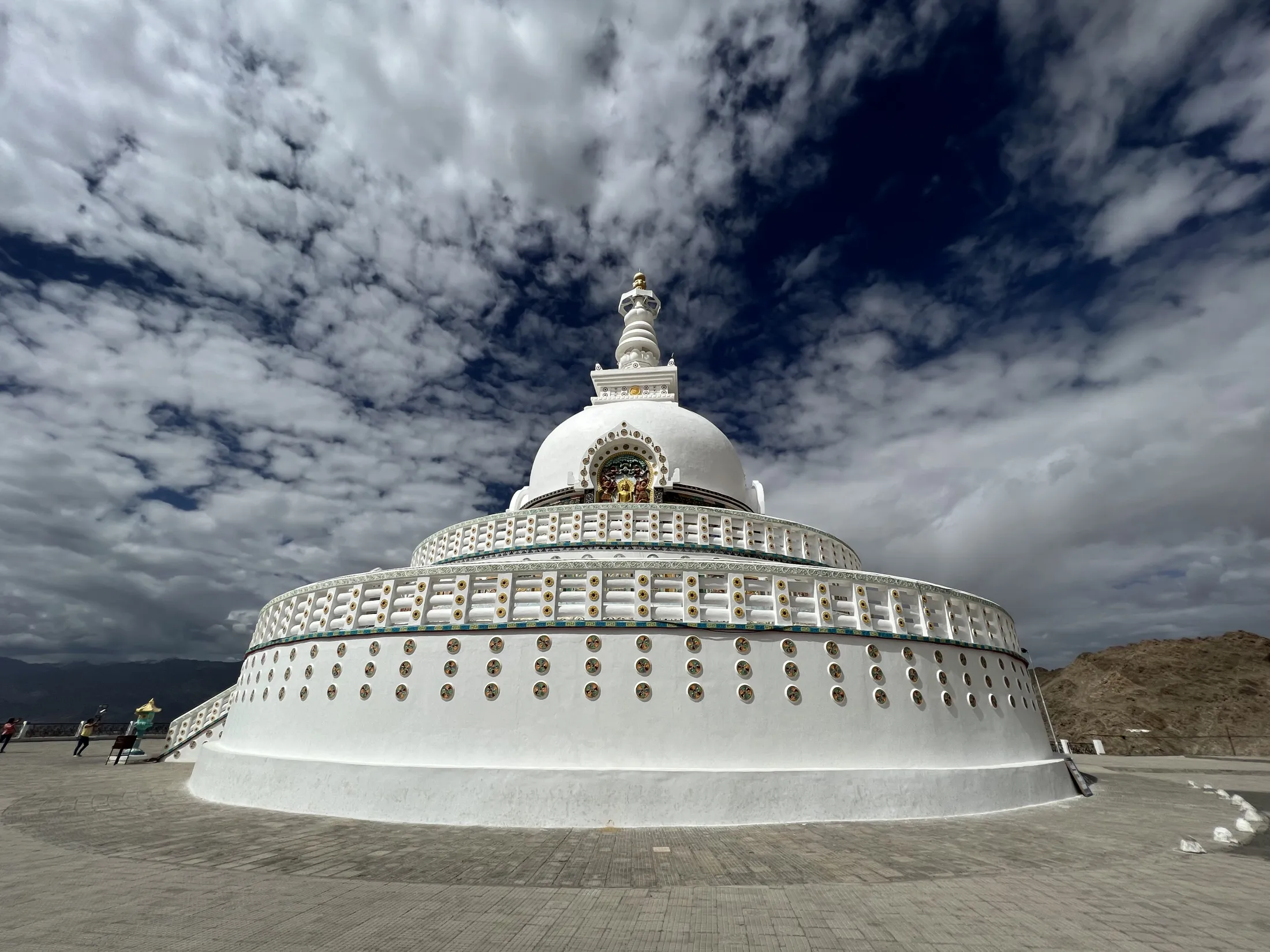
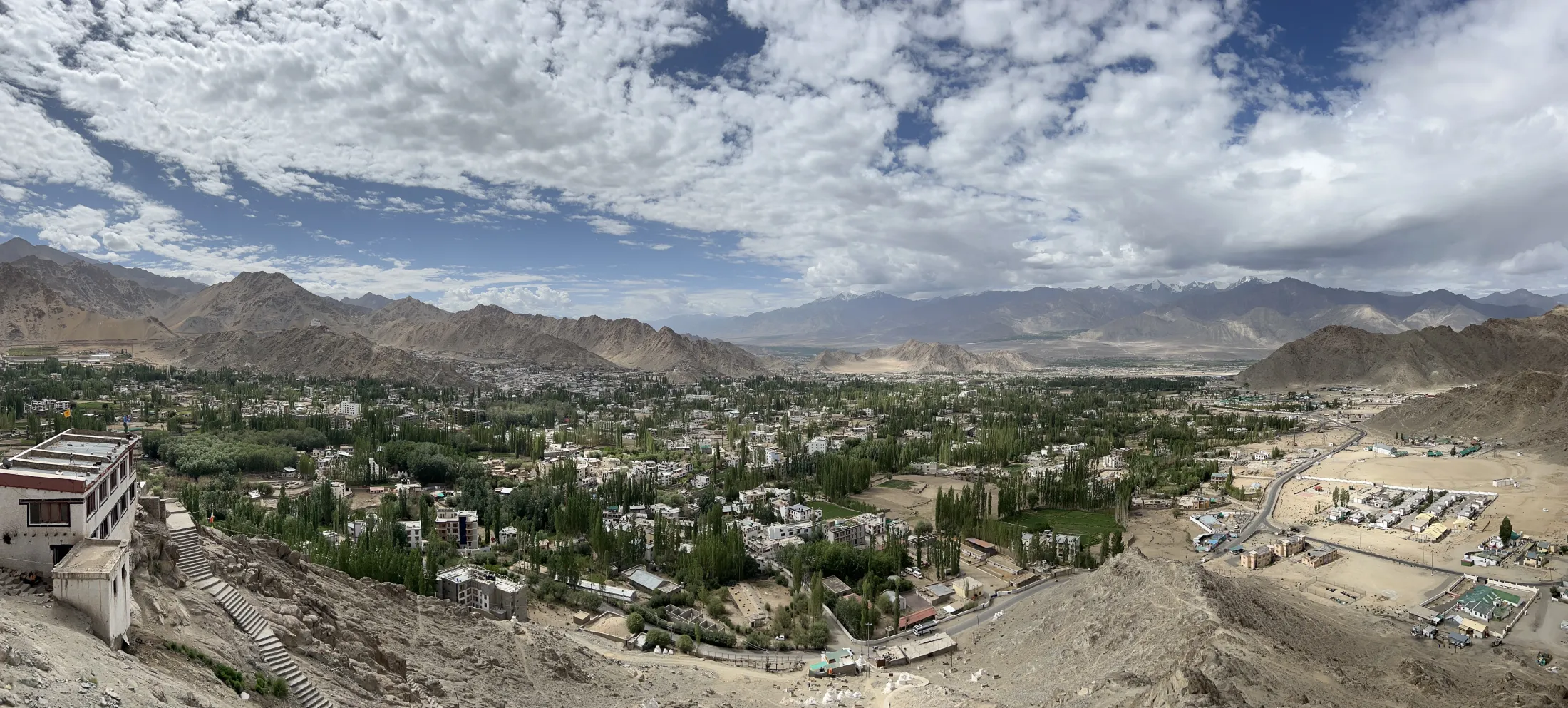
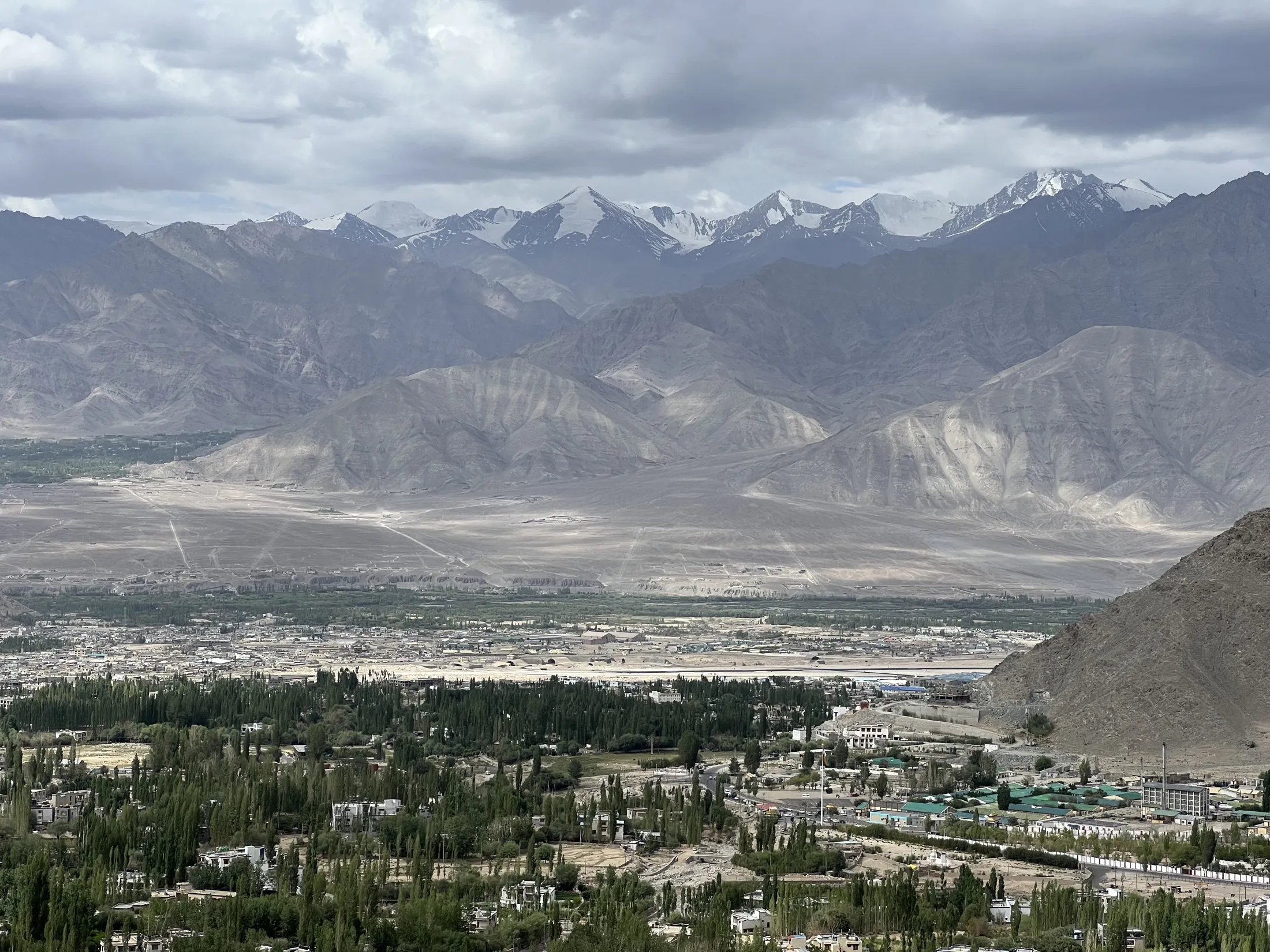
Since we’re already at an altitude of 3,500 meters, we’ll take an easy hike in the area today. We’ll visit the Shanti Stupa, which towers over the city—from here, we can see many beautiful mountain peaks all around us.
Since we’re already at an altitude of 3,500 meters, we’ll take an easy hike in the area today. We’ll visit the Shanti Stupa, which towers over the city—from here, we can see many beautiful mountain peaks all around us.
Hotel
B,L,D
Day 5:Acclimatization Hike in Leh
Today we’ll take a short acclimatization hike outside Leh and have some time to stroll around the market and do any last-minute shopping before the mountain hike. We’ll meet up again for dinner together at the hotel in the evening.
Today we’ll take a short acclimatization hike outside Leh and have some time to stroll around the market and do any last-minute shopping before the mountain hike. We’ll meet up again for dinner together at the hotel in the evening.
Hotel
B,L,D
Day 6:The Wari La Pass and the mountain hike are underway (3850 m)
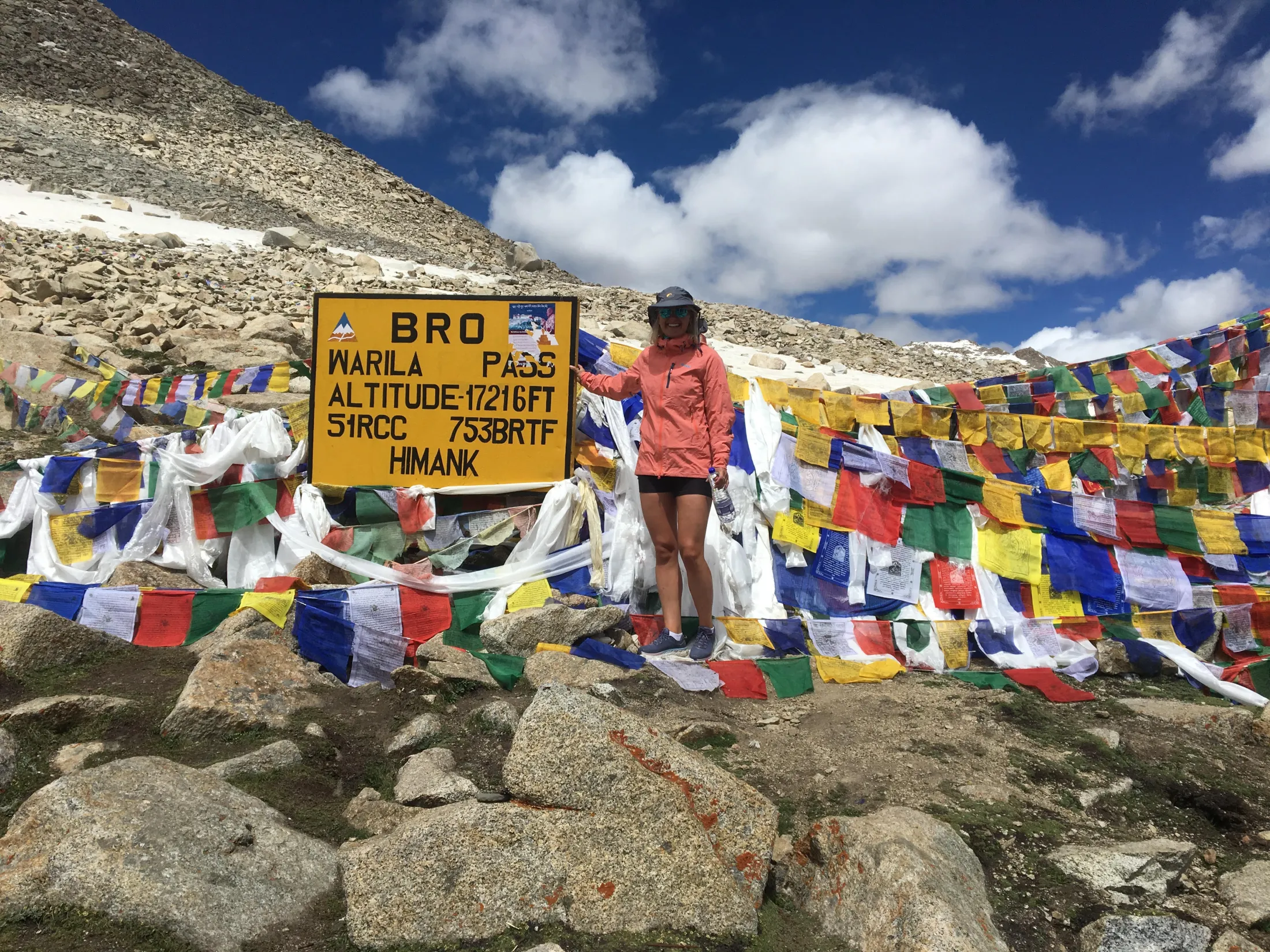
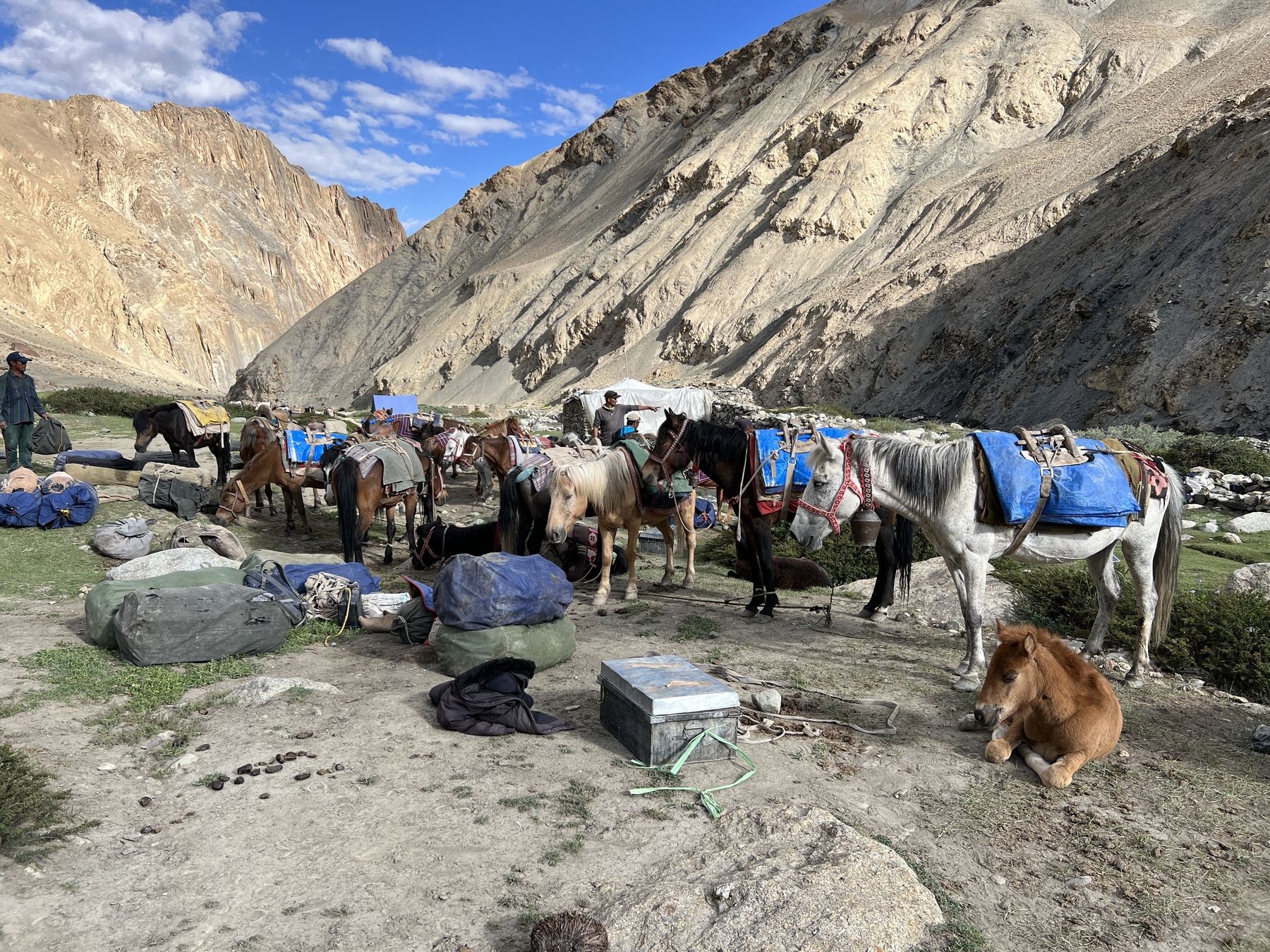
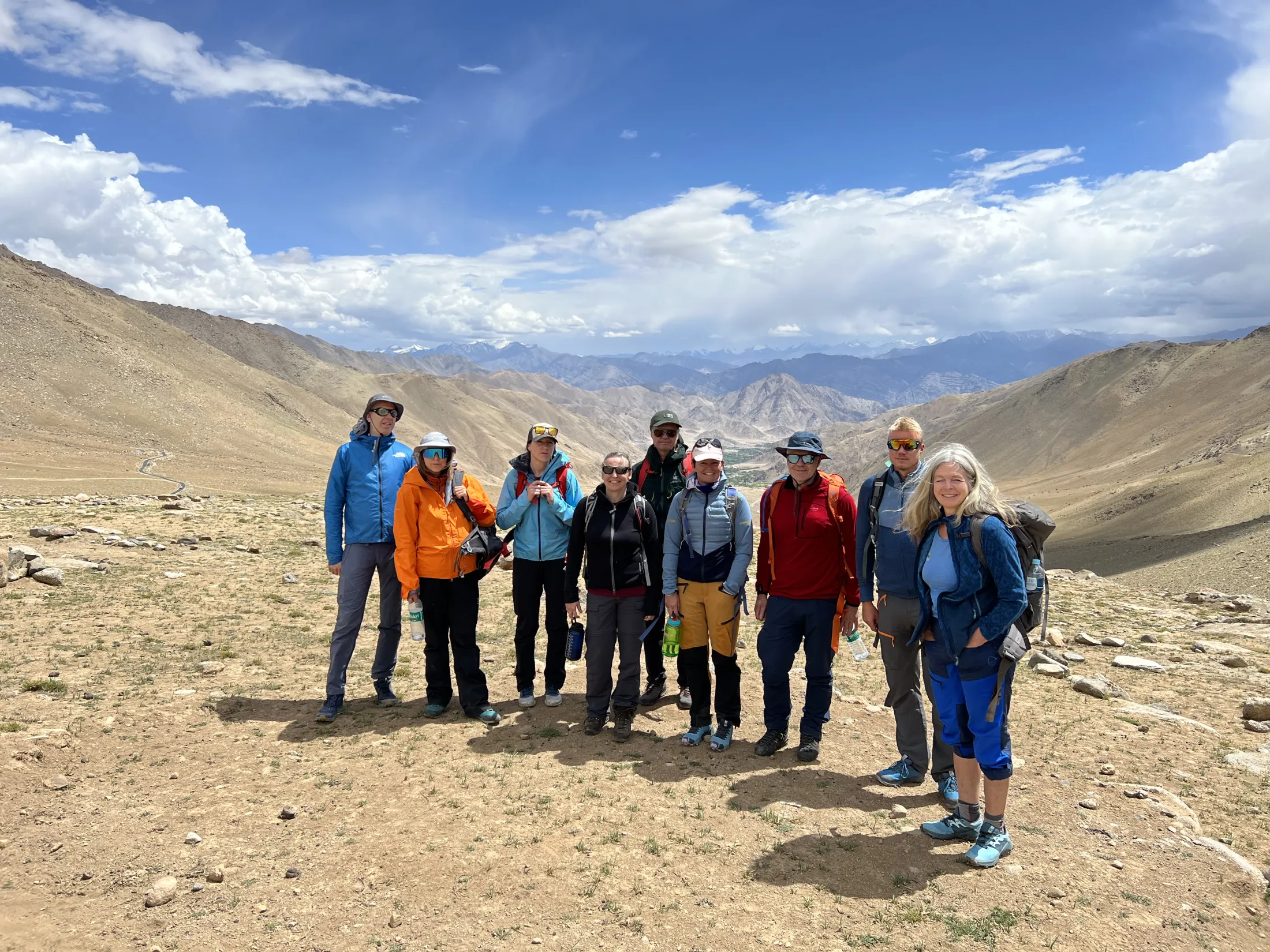
We leave Leh and are driven to the Wari La Pass, located at 5312 meters above sea level, where we hike around a bit and spend about an hour at that altitude. We’ll likely feel the altitude, but from the back seat of the car, we can enjoy the fantastic surroundings and views without much effort. This is a very helpful day for our acclimatization. After spending some time at altitude, we drive on to Lhato (4000 m). We settle into camp, have dinner together, and recharge for the mountain trek that begins in earnest tomorrow.
We leave Leh and are driven to the Wari La Pass, located at 5312 meters above sea level, where we hike around a bit and spend about an hour at that altitude. We’ll likely feel the altitude, but from the back seat of the car, we can enjoy the fantastic surroundings and views without much effort. This is a very helpful day for our acclimatization. After spending some time at altitude, we drive on to Lhato (4000 m). We settle into camp, have dinner together, and recharge for the mountain trek that begins in earnest tomorrow.
Tent
B,L,D
Day 7:Slowly but surely upward to Rigyul Sumdo (4530 m)
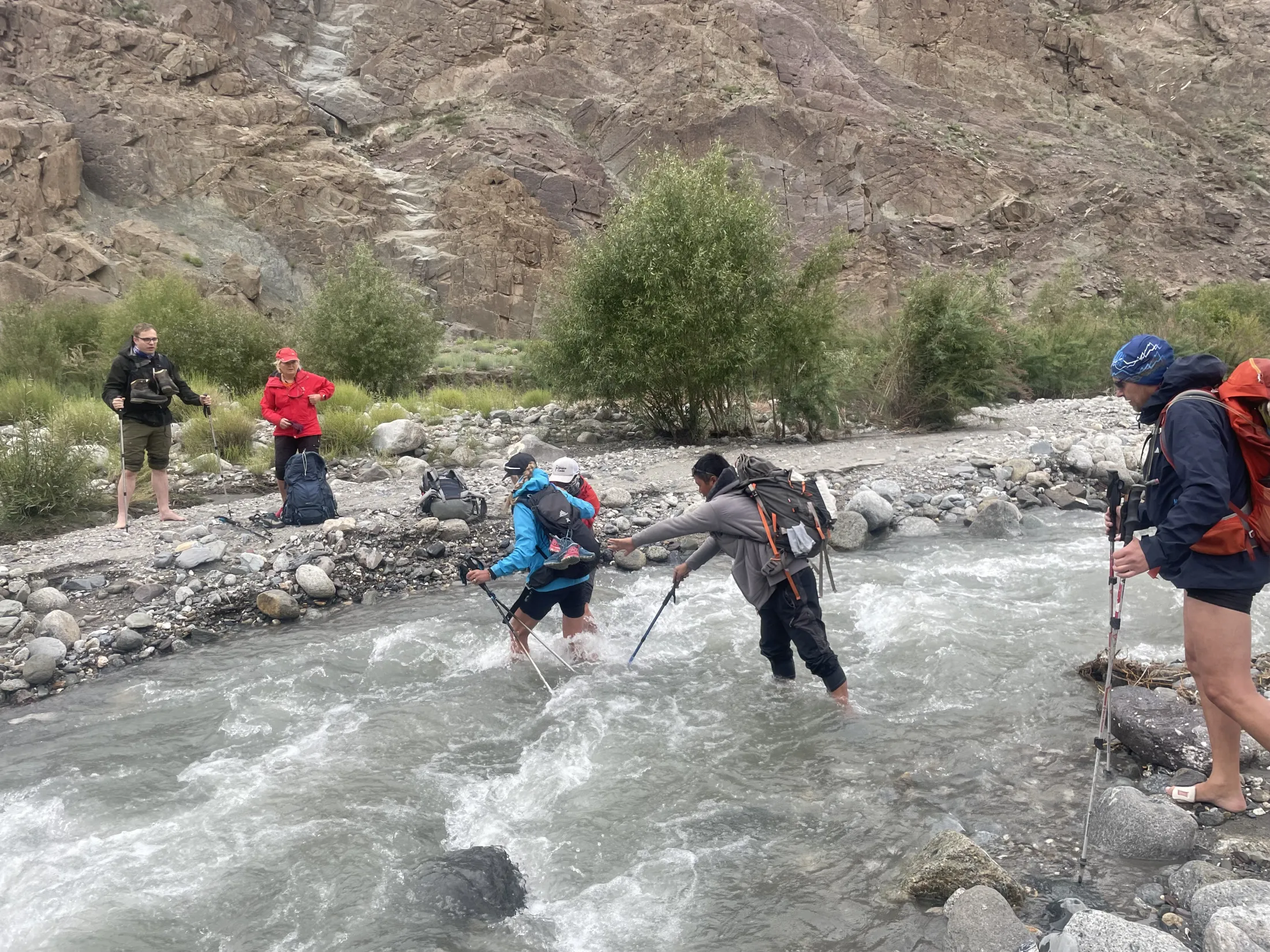
Today we start gaining elevation and walk gradually uphill for most of the day, following the riverbed along a rocky trail. If it has rained heavily recently, we may have to wade across the river a few times during the day, and the water may reach well up our thighs. So be sure to bring shorts and sturdy sandals. We hike up a valley with mountains on one side. As the day goes on, the trail improves, and on a clear day we can see across to the Leh-Manali Road and the Taglangla Pass. Our camp for the night is on a grassy clearing between two valleys at 4530 meters above sea level. In the afternoon, we’ll take a short acclimatization hike in the area, followed by dinner at camp. We might come across a herd of “blue sheep”; they’re most active in the morning and afternoon.
Today we start gaining elevation and walk gradually uphill for most of the day, following the riverbed along a rocky trail. If it has rained heavily recently, we may have to wade across the river a few times during the day, and the water may reach well up our thighs. So be sure to bring shorts and sturdy sandals. We hike up a valley with mountains on one side. As the day goes on, the trail improves, and on a clear day we can see across to the Leh-Manali Road and the Taglangla Pass. Our camp for the night is on a grassy clearing between two valleys at 4530 meters above sea level. In the afternoon, we’ll take a short acclimatization hike in the area, followed by dinner at camp. We might come across a herd of “blue sheep”; they’re most active in the morning and afternoon.
Tent
B,L,D
5-6 hours
+680m
Day 8:Rest Day and Acclimatization Hike
Today we’ll take a rest day in the area to acclimatize to the altitude. We’ll go on a short acclimatization hike during the day up to about 4950 meters above sea level, in beautiful surroundings.
Today we’ll take a rest day in the area to acclimatize to the altitude. We’ll go on a short acclimatization hike during the day up to about 4950 meters above sea level, in beautiful surroundings.
Tent
B,L,D
420m/420m
Day 9:Over two mountain passes (4950 and 5200 m)
From the camp, we begin with a gradual ascent on a good trail up to the first pass - Pozela - at 4953 meters above sea level. From here, we can enjoy impressive views of the mountains on the Changtang Plateau, and maybe we’ll be lucky enough to spot some wild rabbits? It takes about 3 hours to reach the first pass. From the pass, we don’t descend, but continue along the hillside, gradually making our way all the way to the second pass of the day - Chaktsangla at 5219 meters above sea level. This will take another couple of hours. From the pass, we’ll descend steeply along a trail until we finally reach our camp for the night. The camp is located by a stream at the foot of Lalunga at 4900 meters above sea level. It’s going to be a long day of hiking today.
From the camp, we begin with a gradual ascent on a good trail up to the first pass - Pozela - at 4953 meters above sea level. From here, we can enjoy impressive views of the mountains on the Changtang Plateau, and maybe we’ll be lucky enough to spot some wild rabbits? It takes about 3 hours to reach the first pass. From the pass, we don’t descend, but continue along the hillside, gradually making our way all the way to the second pass of the day - Chaktsangla at 5219 meters above sea level. This will take another couple of hours. From the pass, we’ll descend steeply along a trail until we finally reach our camp for the night. The camp is located by a stream at the foot of Lalunga at 4900 meters above sea level. It’s going to be a long day of hiking today.
Tent
B,L,D
6-7 hours
670m/300m
Day 10:Over the Lalunga Pass (5200 m) to camp in Nimaling (4730 m)
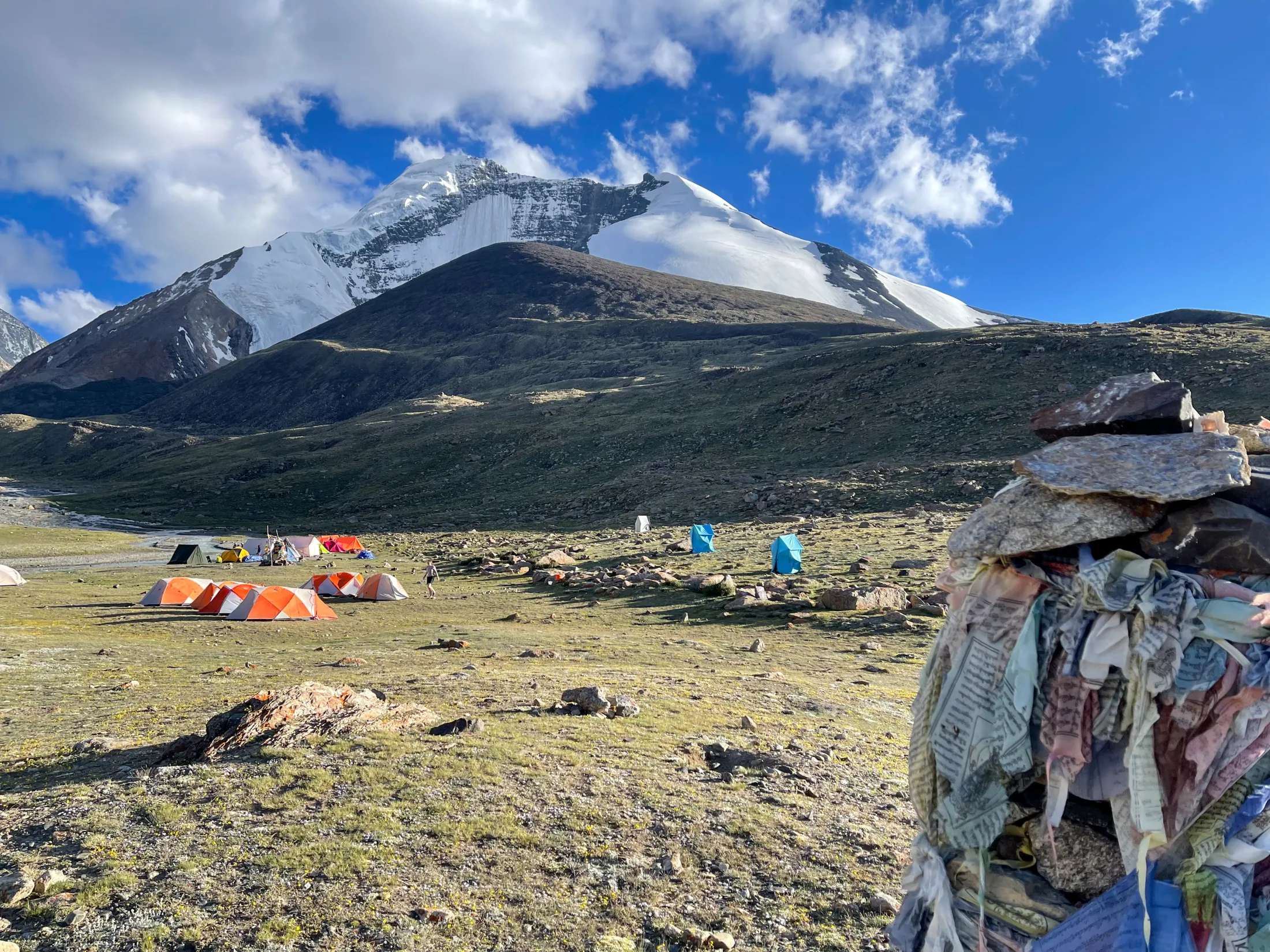
After a hearty breakfast, we start the day with a zigzagging trail that climbs quite steeply up a grassy slope, leading us toward the Lalungla Pass at 5200 meters above sea level. It’s a relatively tough start to the day, but we’re rewarded with our first view of the Kang Yatze and Dzo Jongo peaks from the top of the pass. After a short photo and rest break here, we’ll walk gently downhill for a couple of hours until we reach the Nimaling River, which we’ll follow toward camp. A well-deserved group dinner at camp tonight after a tough day.
After a hearty breakfast, we start the day with a zigzagging trail that climbs quite steeply up a grassy slope, leading us toward the Lalungla Pass at 5200 meters above sea level. It’s a relatively tough start to the day, but we’re rewarded with our first view of the Kang Yatze and Dzo Jongo peaks from the top of the pass. After a short photo and rest break here, we’ll walk gently downhill for a couple of hours until we reach the Nimaling River, which we’ll follow toward camp. A well-deserved group dinner at camp tonight after a tough day.
Tent
B,L,D
6-7 hours
300m/500m
8 km
Day 11:Kang Yatze Basecamp (5050 m)
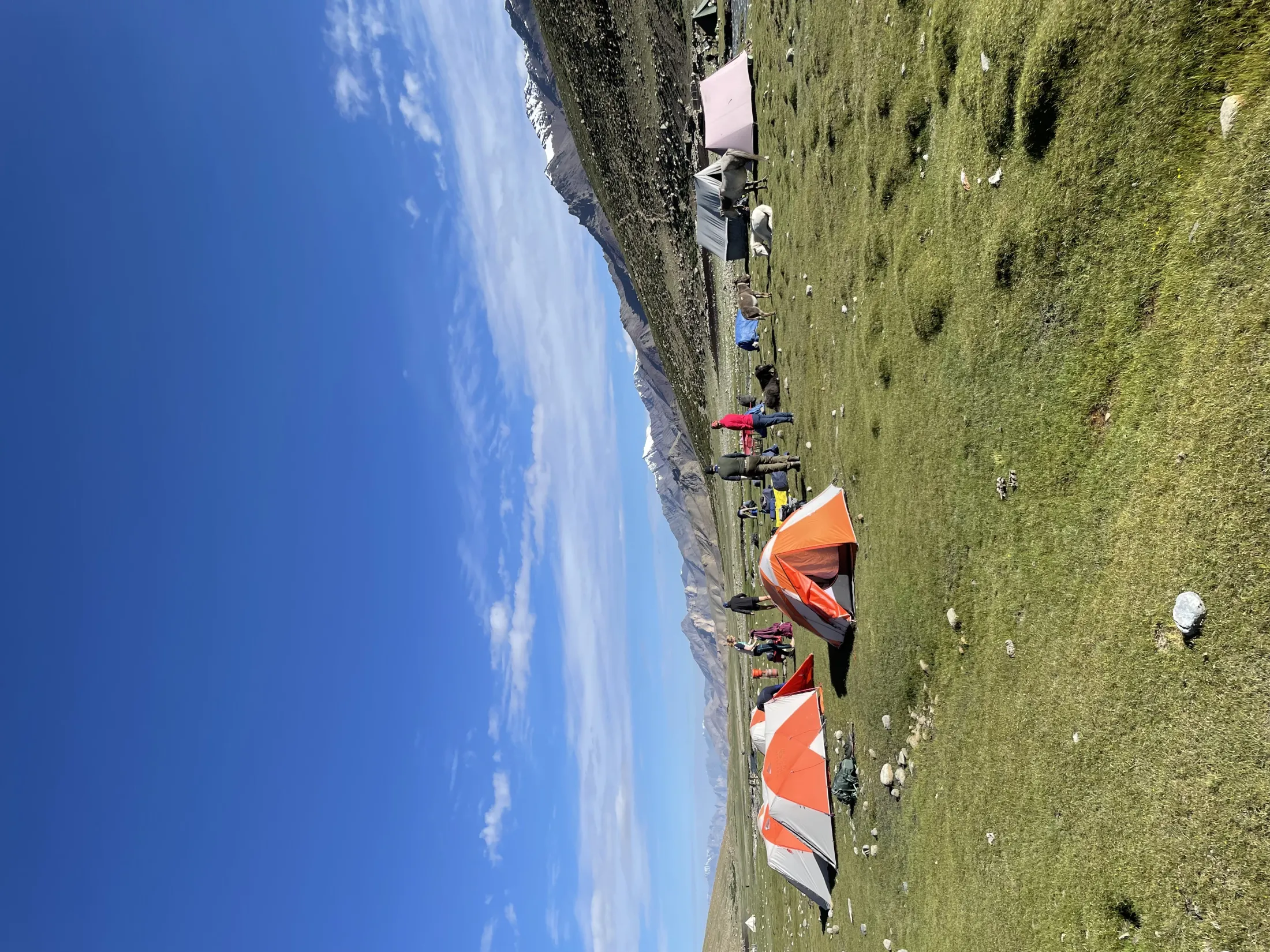
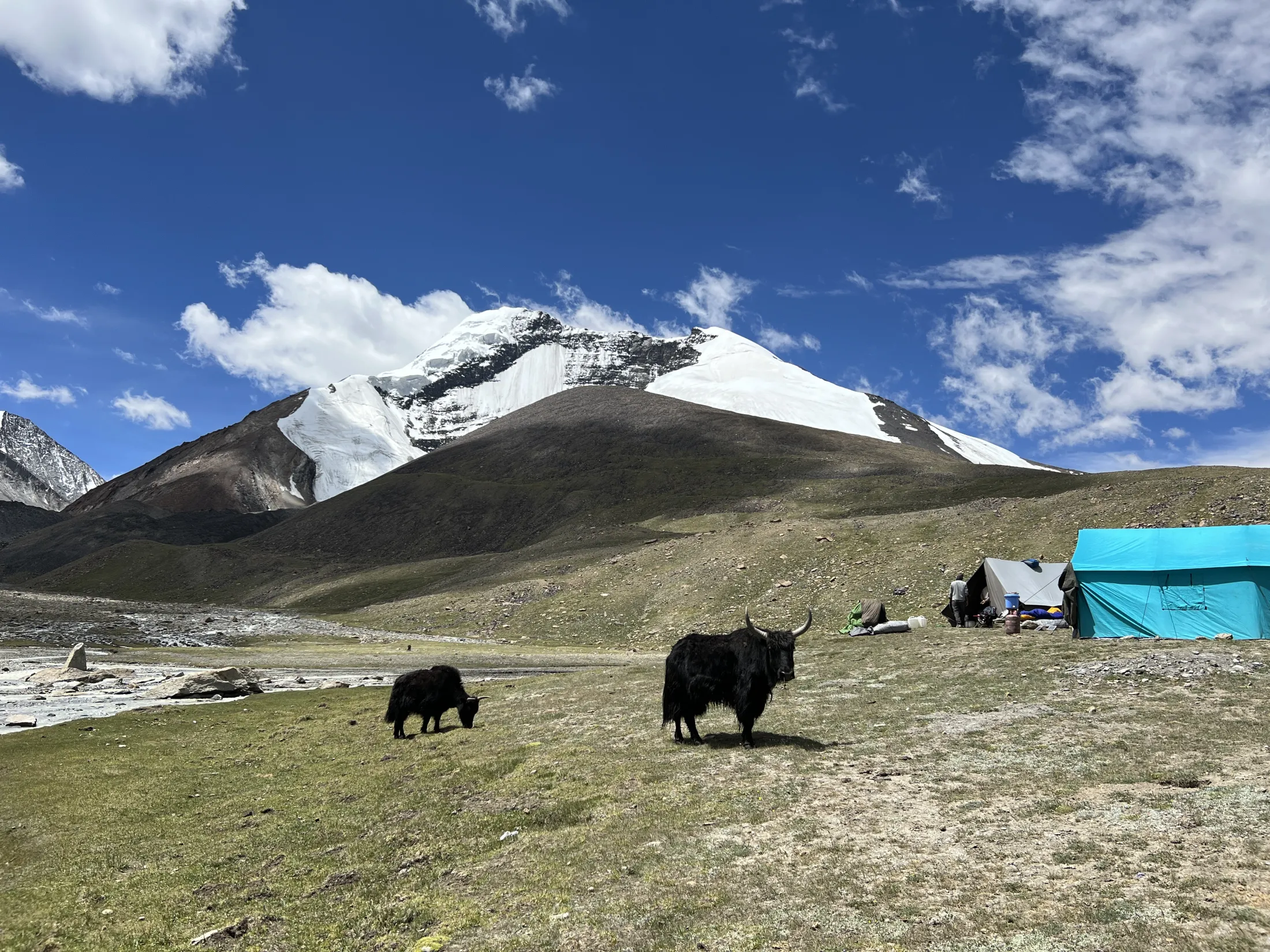
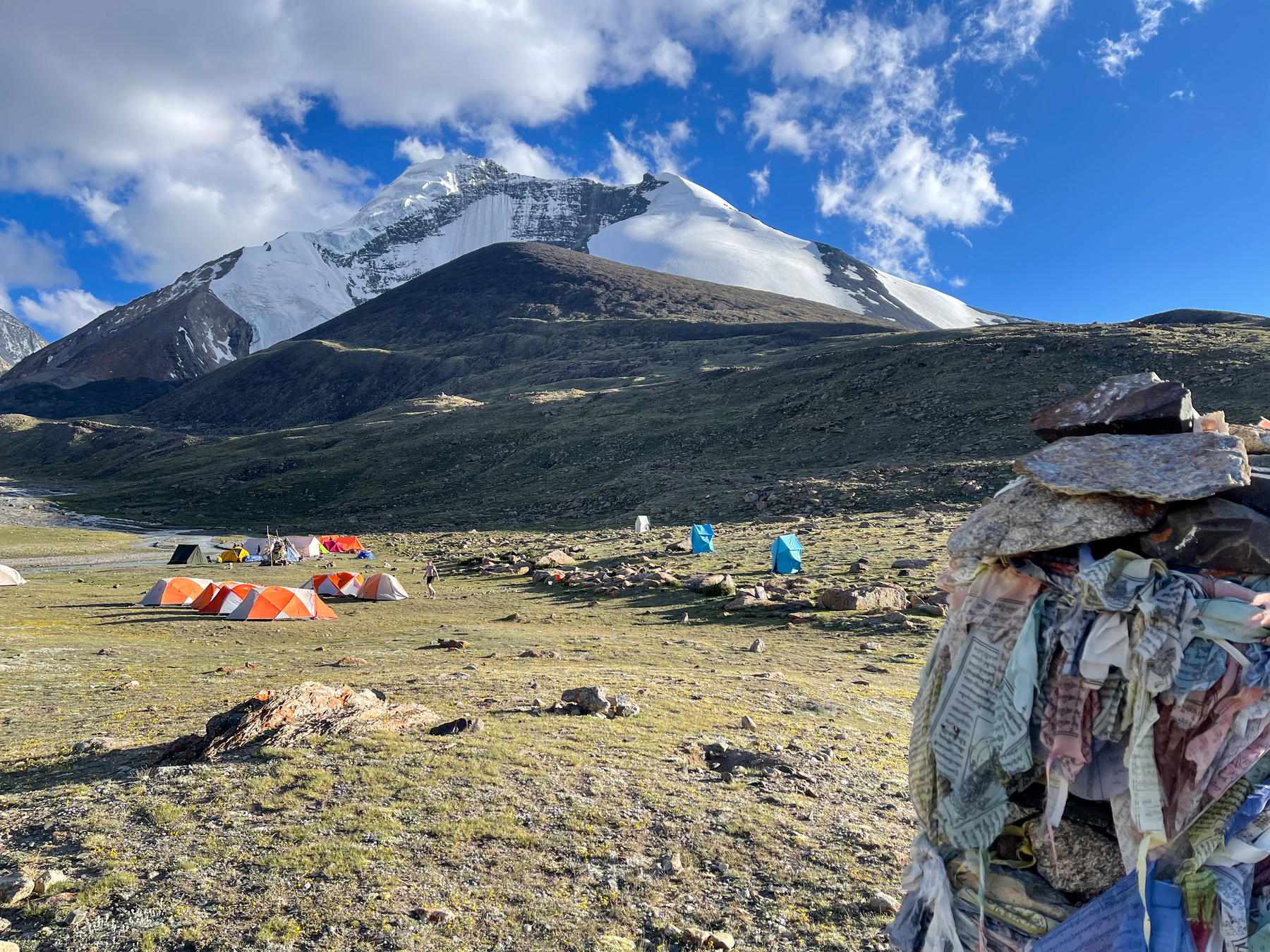
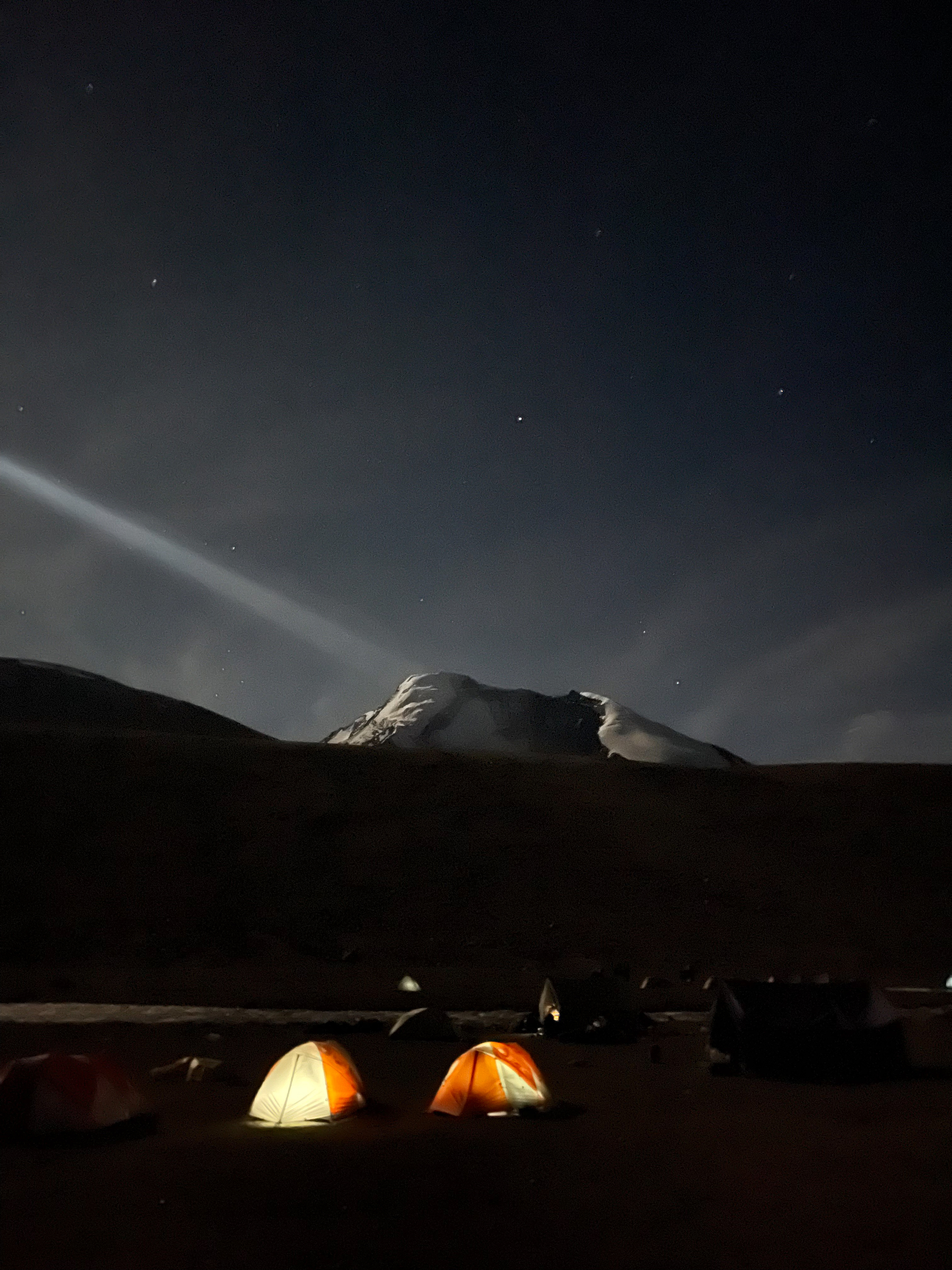
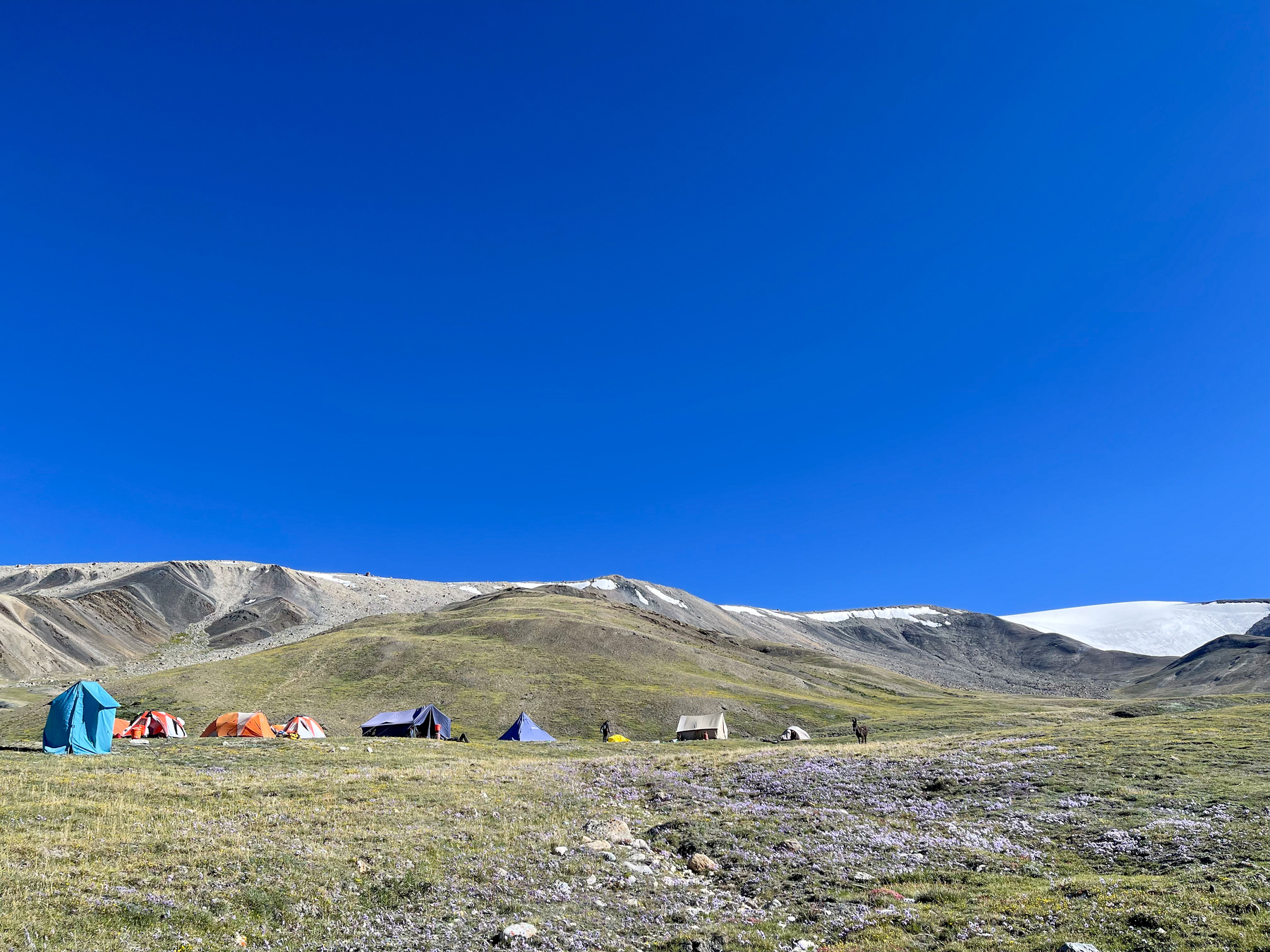
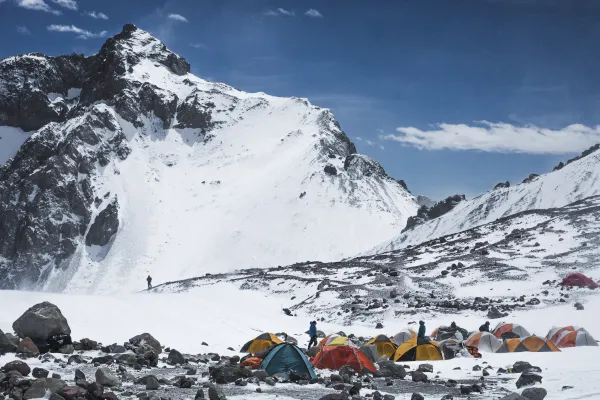
We leave Nimaling and take a leisurely 2-hour hike up to Kang Yatze Base Camp. We’re finally here! We’re served lunch and relax a bit at the camp. In the afternoon, we take a short acclimatization hike up to around 5400 meters above sea level.
We leave Nimaling and take a leisurely 2-hour hike up to Kang Yatze Base Camp. We’re finally here! We’re served lunch and relax a bit at the camp. In the afternoon, we take a short acclimatization hike up to around 5400 meters above sea level.
Tent
B,L,D
5 hours
+700m
Day 12:Day of Rest
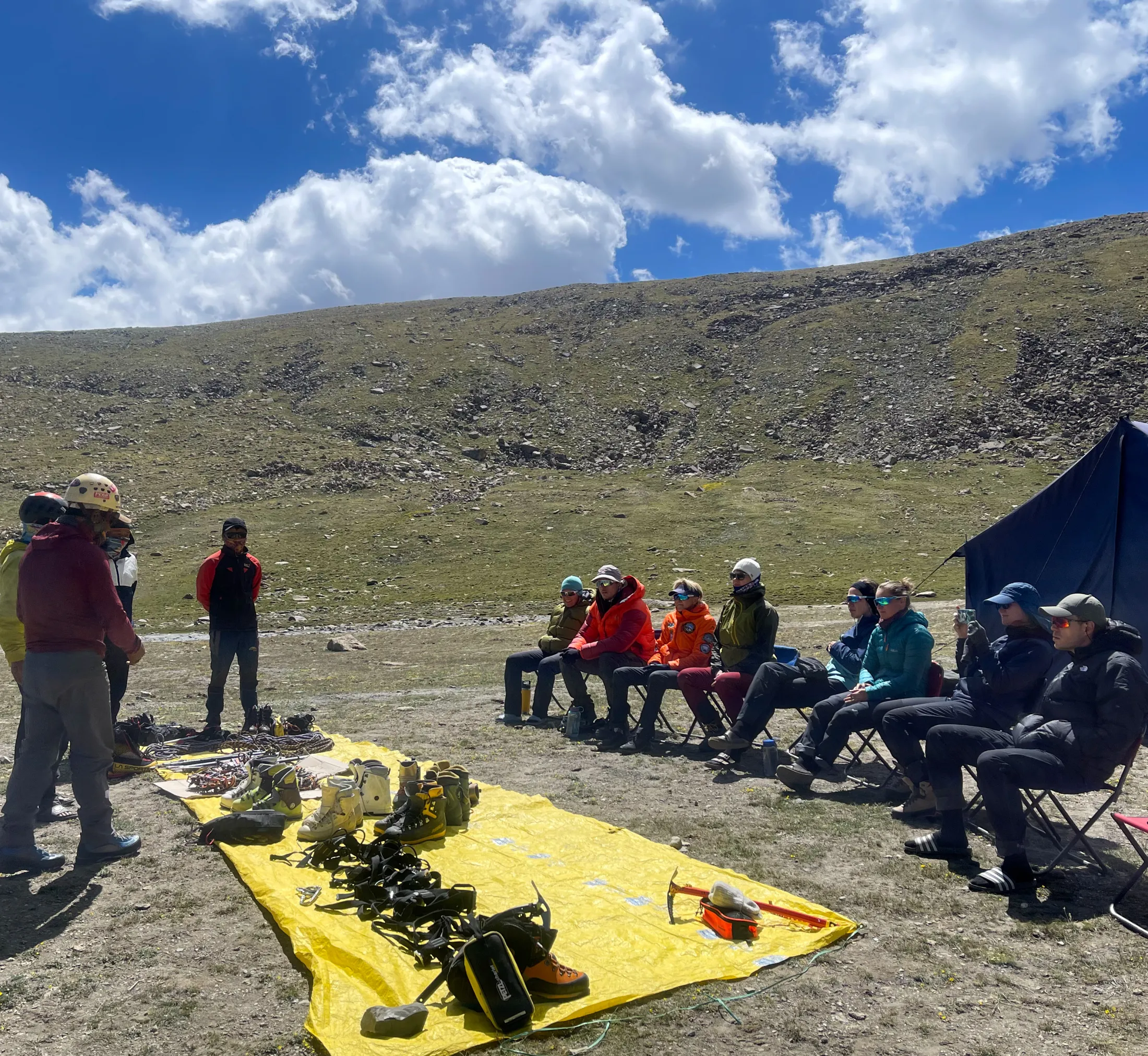
It’s a quiet day, but we’ll also be preparing for the summit push. We’ll spend the day resting a bit, practicing how to use crampons, and practicing roped hiking. Otherwise, we’ll relax, enjoy a good meal, and pack our backpacks for tonight’s summit push.
It’s a quiet day, but we’ll also be preparing for the summit push. We’ll spend the day resting a bit, practicing how to use crampons, and practicing roped hiking. Otherwise, we’ll relax, enjoy a good meal, and pack our backpacks for tonight’s summit push.
Tent
B,L,D
Day 13:Kang Yatze II summit! (6175 m)
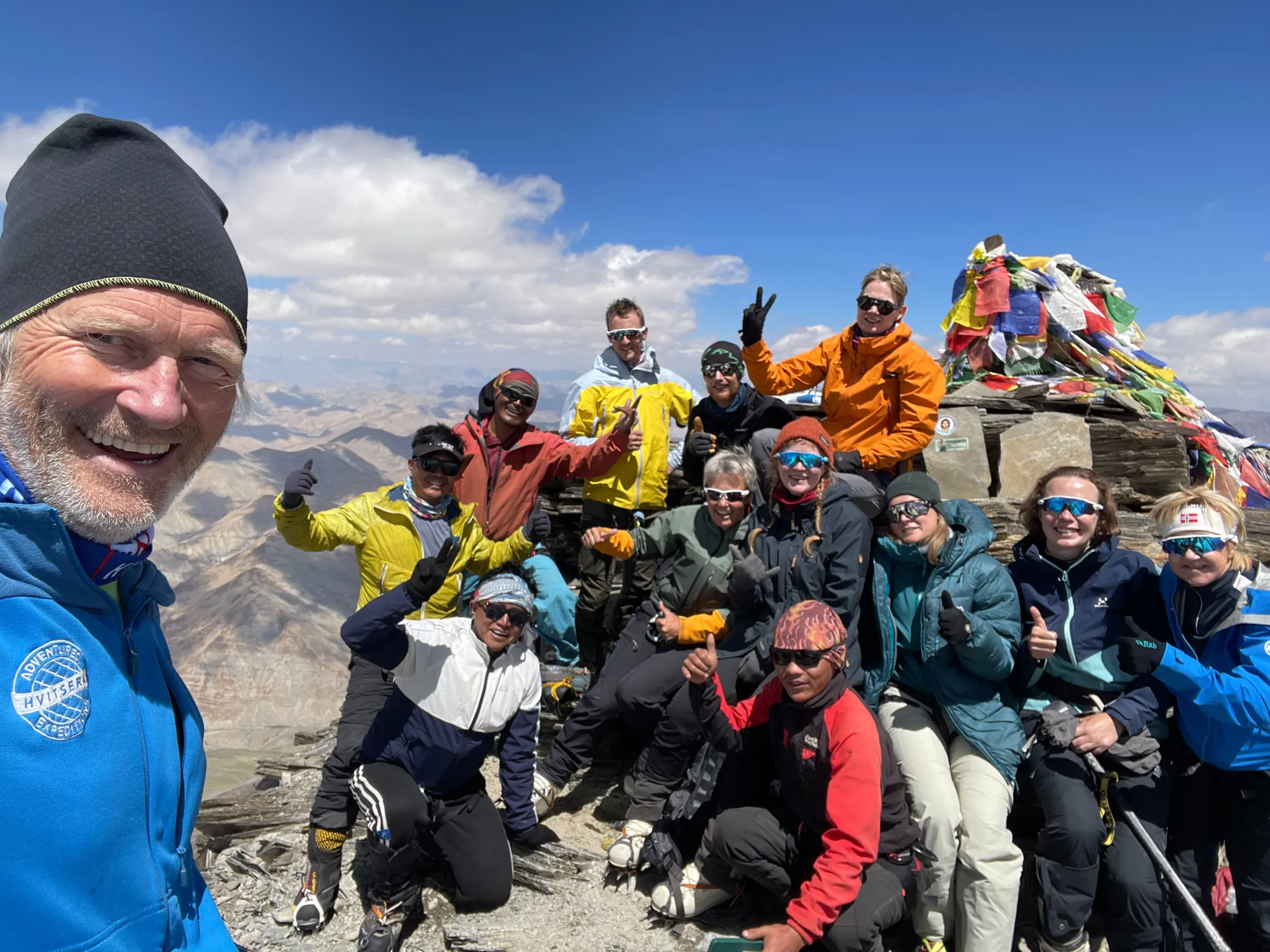
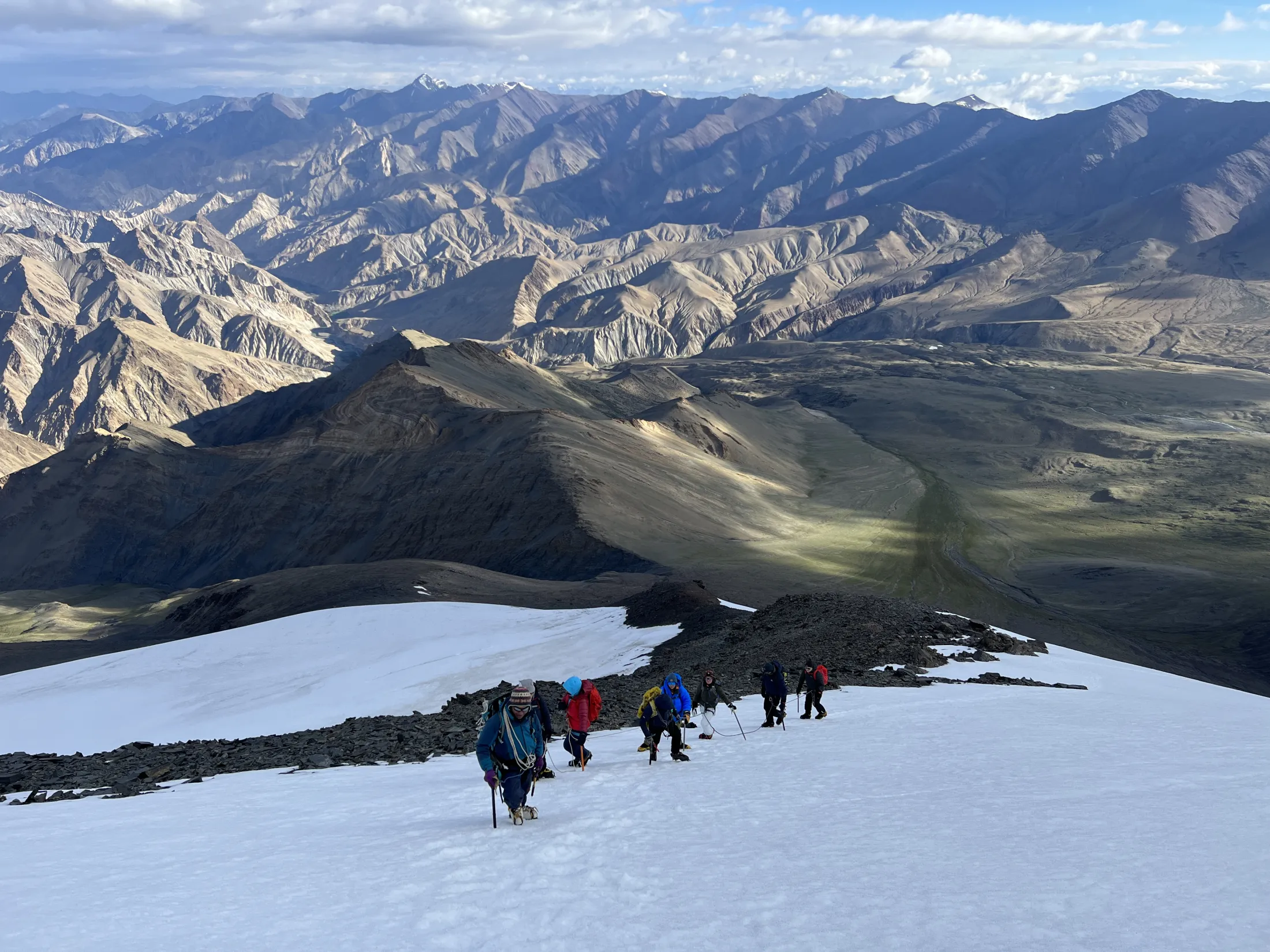
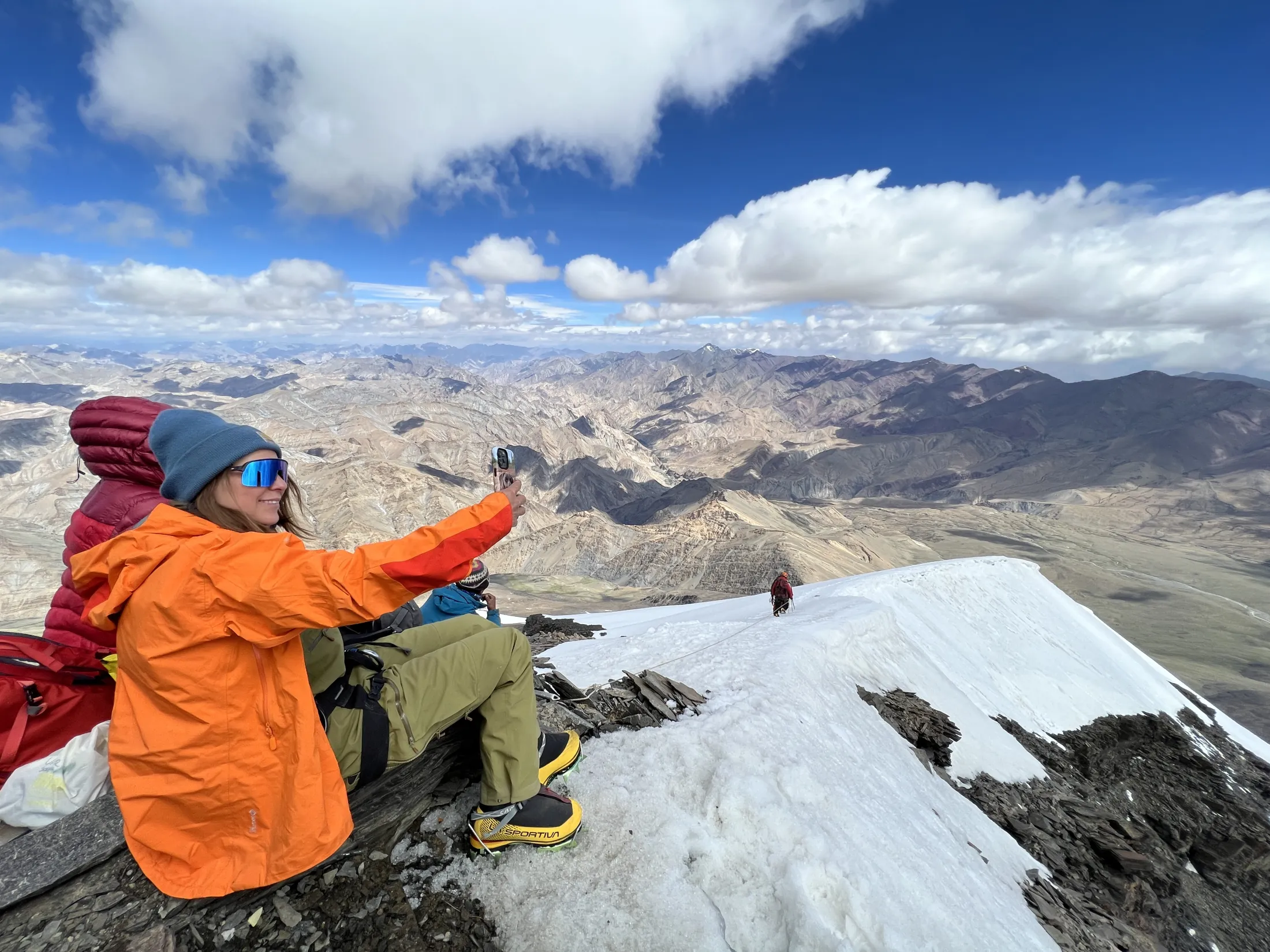
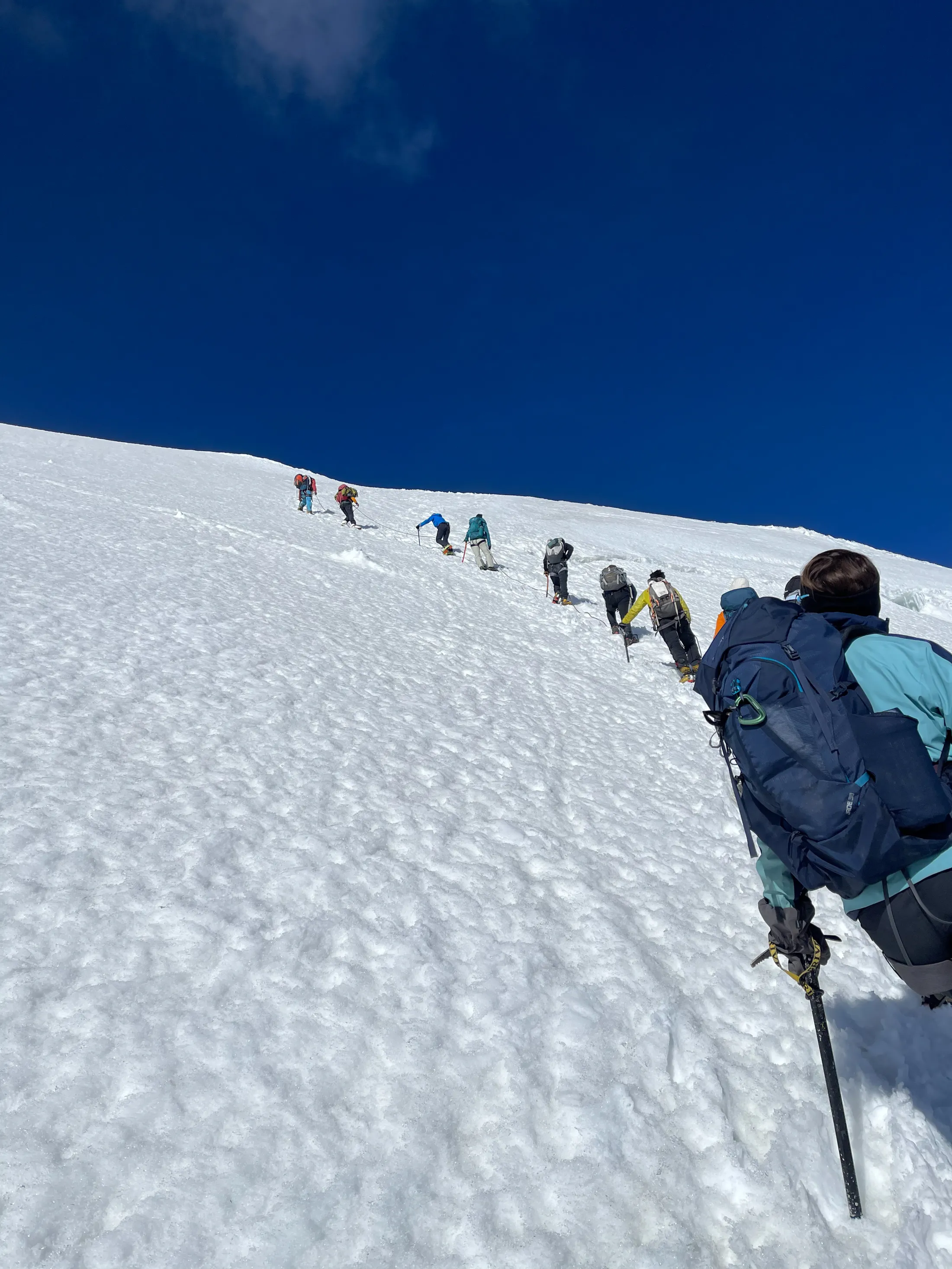
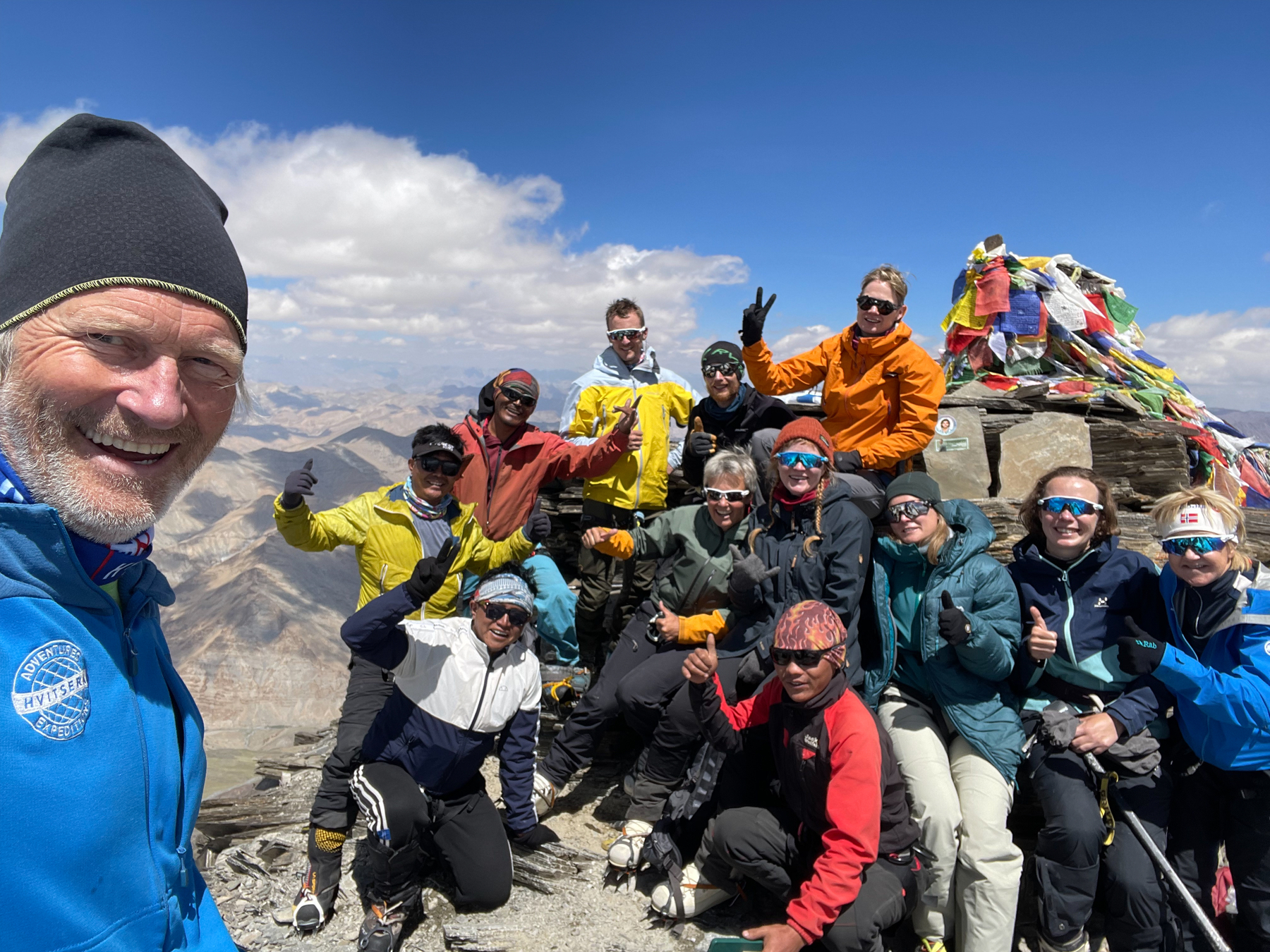
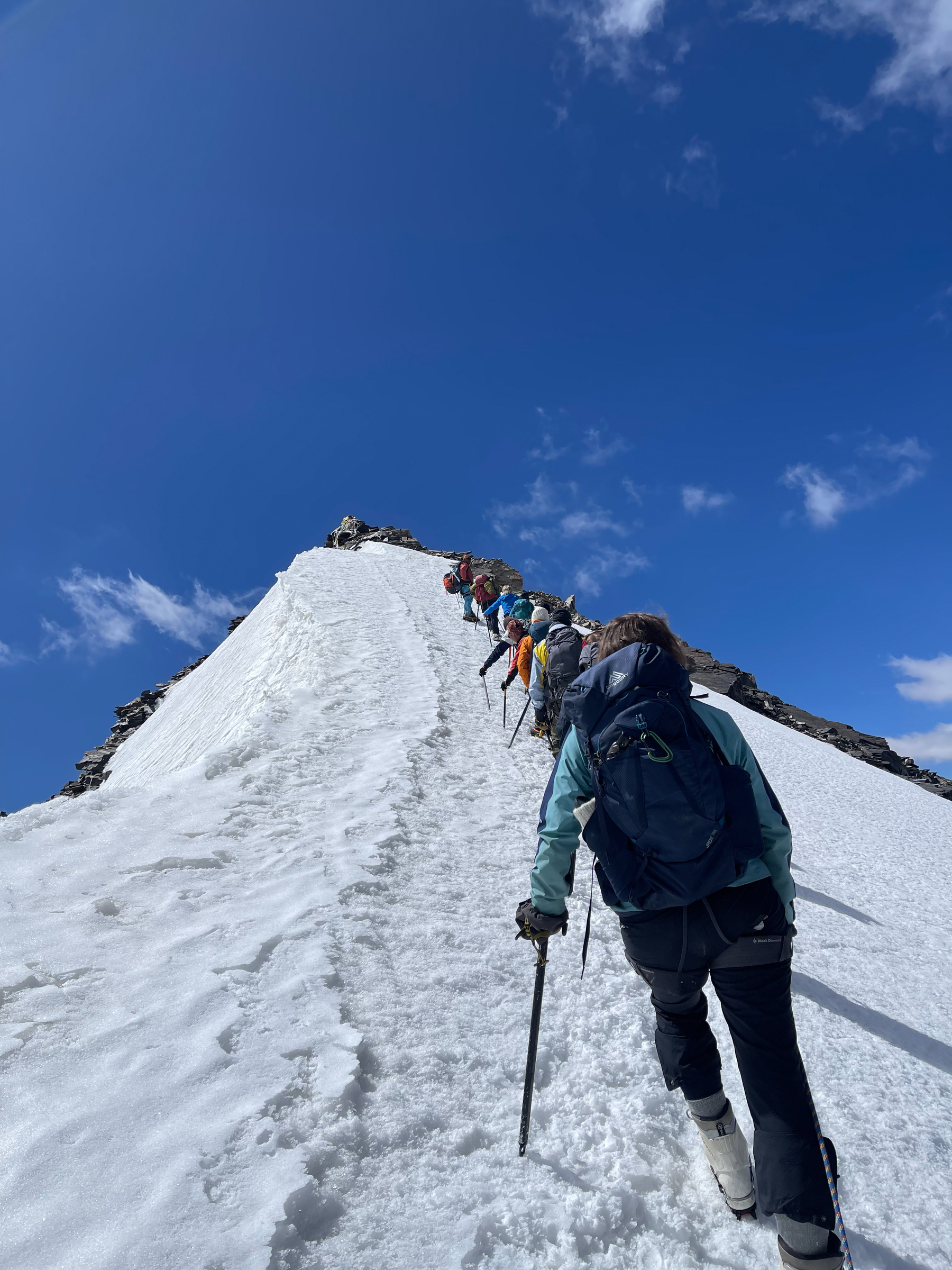
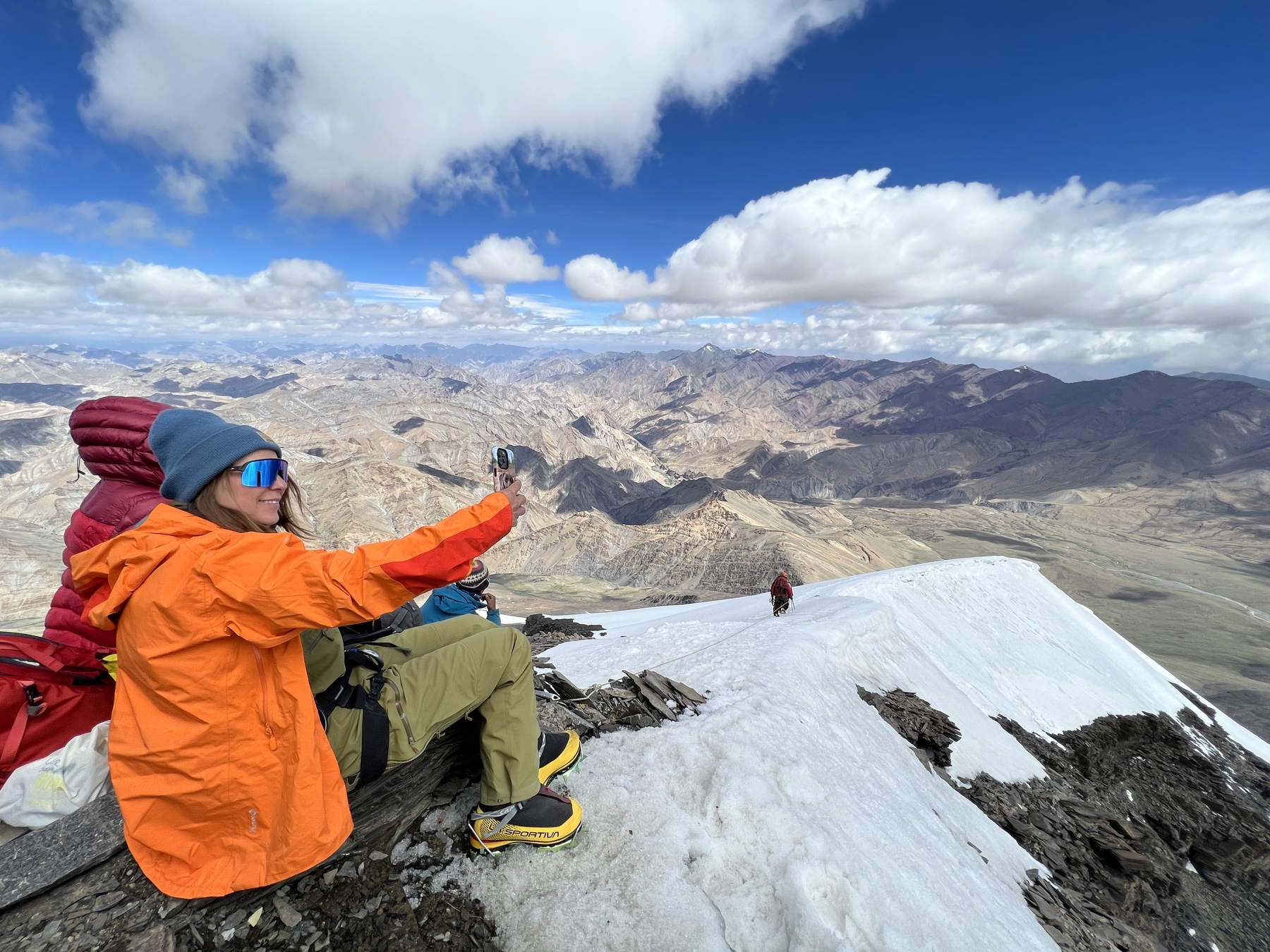
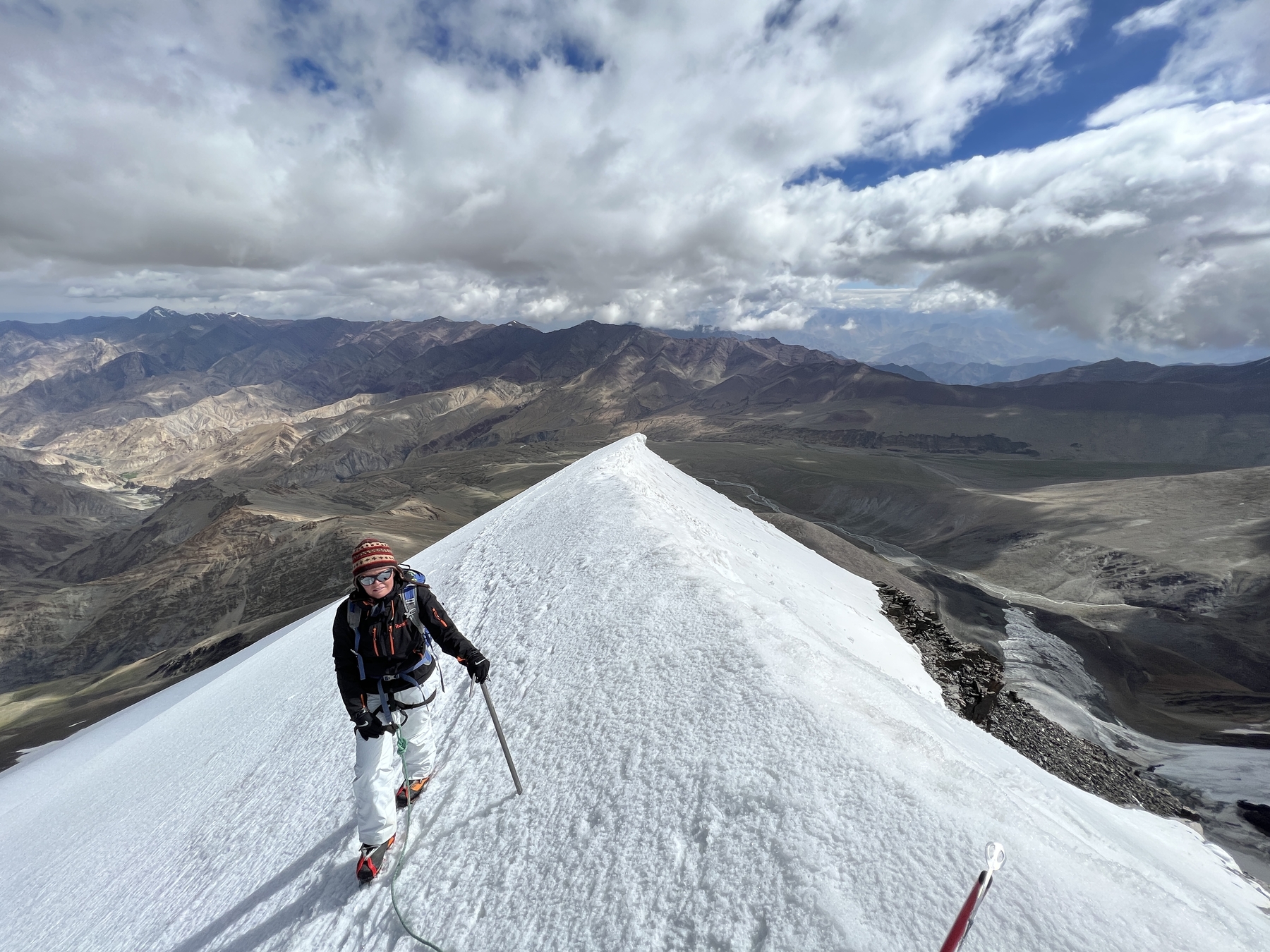
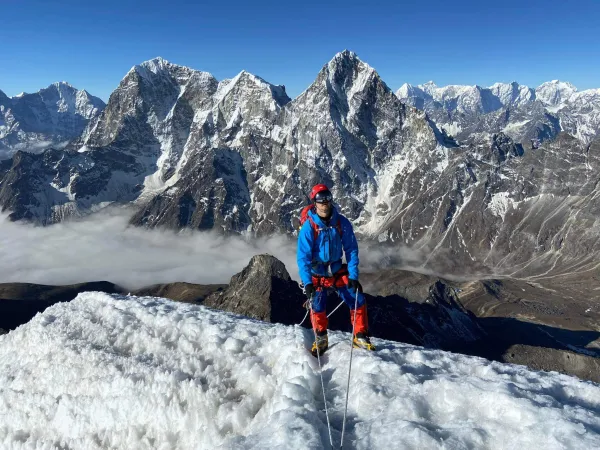
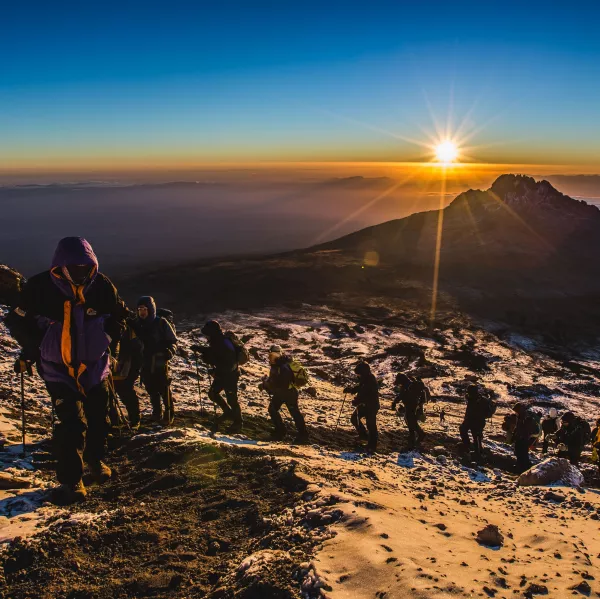
We get up around midnight, and after a hearty breakfast, we’re ready for the summit of Kang Yatze II! We start by hiking up a relatively steep slope over gravel and rocky terrain for about 3–4 hours until we reach the crampon point. Here, we put on our crampons and hike in a rope team up the glacier for another 3 hours. For the final couple of hours, we hike along a ridge toward the summit. The last stretch is exposed, but the reward awaits at the top! The view from Kang Yatze II is fabulous, and we can see snow-capped peaks in the Himalayas, Ladakh, Zanskar, and the Karakoram far in the distance. We return to base camp for a well-deserved rest. Later that day, we continue down toward the camp in Nimaling again. The summit push takes about 12–15 hours in total, so it’s a long and tough day, but when we finally arrive in Nimaling, we’re served a delicious dinner and get a good night’s sleep.
We get up around midnight, and after a hearty breakfast, we’re ready for the summit of Kang Yatze II! We start by hiking up a relatively steep slope over gravel and rocky terrain for about 3–4 hours until we reach the crampon point. Here, we put on our crampons and hike in a rope team up the glacier for another 3 hours. For the final couple of hours, we hike along a ridge toward the summit. The last stretch is exposed, but the reward awaits at the top! The view from Kang Yatze II is fabulous, and we can see snow-capped peaks in the Himalayas, Ladakh, Zanskar, and the Karakoram far in the distance. We return to base camp for a well-deserved rest. Later that day, we continue down toward the camp in Nimaling again. The summit push takes about 12–15 hours in total, so it’s a long and tough day, but when we finally arrive in Nimaling, we’re served a delicious dinner and get a good night’s sleep.
Tent
B,L,D
12-15 hours
1100m/1100m
Day 14:Kongmaru La Pass and Back to Leh (5290–3500 m)
We leave Nimaling in the morning, and before we begin the descent, we’ll cross another pass at 5290 meters above sea level, the Kongmaru La Pass. After about 2 hours, we’ll reach the top of the pass and enjoy views of the Karakoram Mountains, Kang Yatze, and China. We then begin the descent through a narrow valley down to Chogdo, where we’ll be picked up and driven back to Leh. This is a different route than the one we took on the way in, and we’ll get to see new, beautiful parts of this mountainous region. This is also a long day, but in return, the terrain is even more beautiful and varied than on previous days.
Once we arrive in Leh, we’ll take a well-deserved shower at the hotel before enjoying a delicious dinner together.
Hotel
B,L,D
7 hours
300m/1790m
14 km
Day 15:From Leh to Delhi
We'll leave Leh early in the morning and fly to Delhi. We'll have the afternoon to ourselves, and we'll have a farewell dinner together.
We'll leave Leh early in the morning and fly to Delhi. We'll have the afternoon to ourselves, and we'll have a farewell dinner together.
Hotel
B,-,D
Day 16:Return Trip and Arrival in Norway
Departure for Norway early in the morning; arrival in the afternoon or evening.
Departure for Norway early in the morning; arrival in the afternoon or evening.
B,-,-
Day 16 - 20?:An add-on program to Taj Mahal and Jaipur?
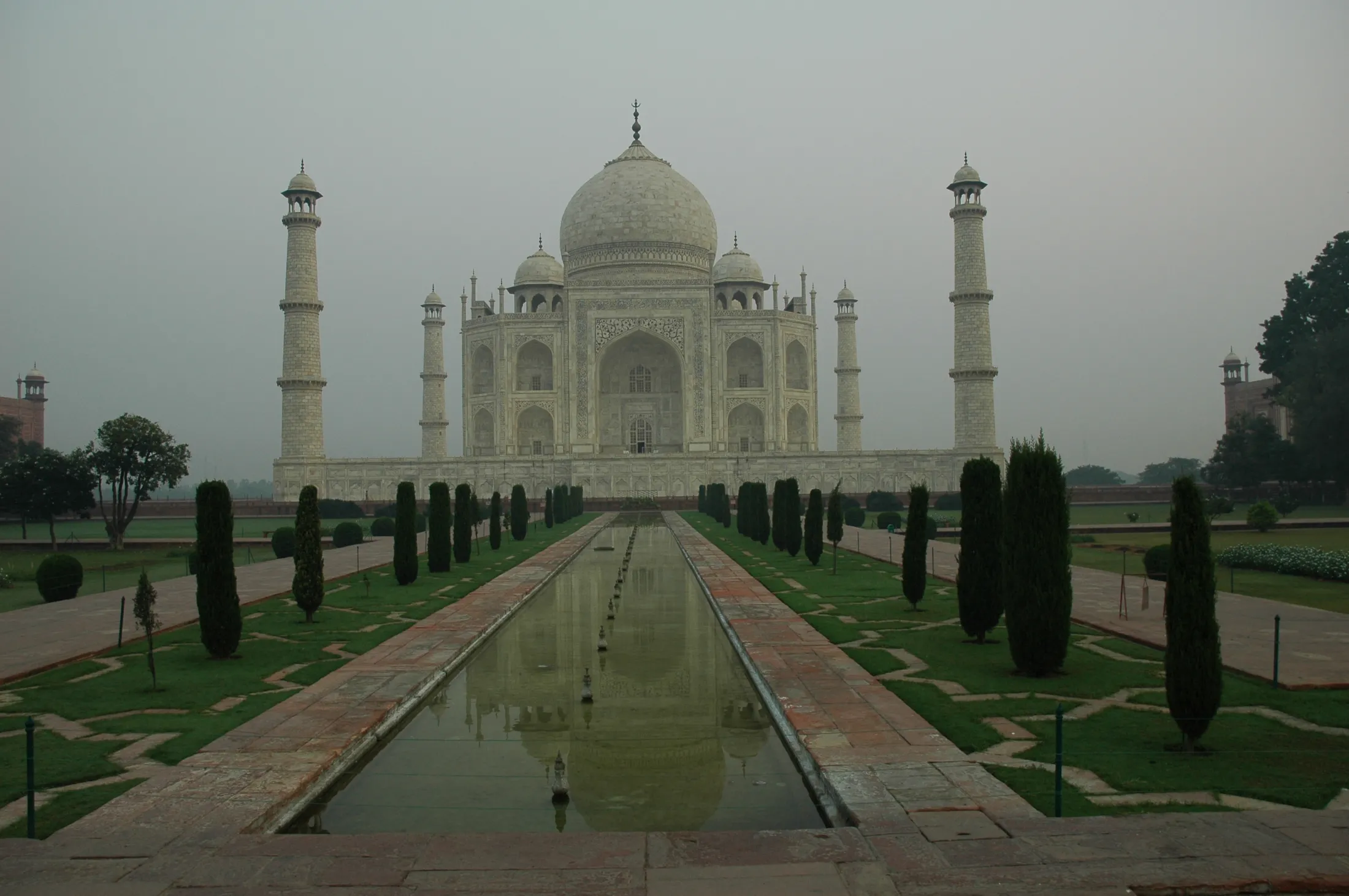
If you’d like to see more of India while you’re traveling, we can offer a 5-day itinerary to the magnificent Taj Mahal and Jaipur.
On this exciting tour, you’ll travel across India to see the famous monument to love—the Taj Mahal! Explore the Mughal monuments in Agra. Continue on to Jaipur in the colorful and vibrant state of Rajasthan. There’s a certain magic to traveling through this state—everything is beautiful, impressive, and fascinating. You’ll visit the City Palace in Jaipur and the impressive Amber Fort—testaments to a rich cultural heritage.
We can tailor the tour just for you, or for a group. The more people there are, the more affordable the price becomes. Send us a request and we’ll provide you with a detailed day-by-day itinerary and price.
Day 1: Departure from Oslo
Departure from Oslo. Arrival in Delhi late that evening or early the next morning, depending on flight schedules.
Day 2: Arrival Delhi
We usually arrive in Delhi in the morning and head to the hotel. We relax a bit and have lunch before going sightseeing in Delhi.
Hotel
-,-,-
Day 3: Arrival Leh (3500 m)
If the weather is nice, on the flight from Delhi to Leh we can catch a glimpse of hundreds of snow-capped mountain peaks and start dreaming right away about what the coming days will bring. The rest of the day is free, and we take our time getting used to the altitude. Acclimatization begins immediately, and we make sure to drink enough water and avoid strenuous physical activity.
Hotel
B,L,D
Day 4: A walk in Leh
Since we’re already at an altitude of 3,500 meters, we’ll take an easy hike in the area today. We’ll visit the Shanti Stupa, which towers over the city—from here, we can see many beautiful mountain peaks all around us.
Hotel
B,L,D
Day 5: Acclimatization Hike in Leh
Today we’ll take a short acclimatization hike outside Leh and have some time to stroll around the market and do any last-minute shopping before the mountain hike. We’ll meet up again for dinner together at the hotel in the evening.
Hotel
B,L,D
Day 6: The Wari La Pass and the mountain hike are underway (3850 m)
We leave Leh and are driven to the Wari La Pass, located at 5312 meters above sea level, where we hike around a bit and spend about an hour at that altitude. We’ll likely feel the altitude, but from the back seat of the car, we can enjoy the fantastic surroundings and views without much effort. This is a very helpful day for our acclimatization. After spending some time at altitude, we drive on to Lhato (4000 m). We settle into camp, have dinner together, and recharge for the mountain trek that begins in earnest tomorrow.
Tent
B,L,D
Day 7: Slowly but surely upward to Rigyul Sumdo (4530 m)
Today we start gaining elevation and walk gradually uphill for most of the day, following the riverbed along a rocky trail. If it has rained heavily recently, we may have to wade across the river a few times during the day, and the water may reach well up our thighs. So be sure to bring shorts and sturdy sandals. We hike up a valley with mountains on one side. As the day goes on, the trail improves, and on a clear day we can see across to the Leh-Manali Road and the Taglangla Pass. Our camp for the night is on a grassy clearing between two valleys at 4530 meters above sea level. In the afternoon, we’ll take a short acclimatization hike in the area, followed by dinner at camp. We might come across a herd of “blue sheep”; they’re most active in the morning and afternoon.
Tent
B,L,D
5-6 hours
+680m
Day 8: Rest Day and Acclimatization Hike
Today we’ll take a rest day in the area to acclimatize to the altitude. We’ll go on a short acclimatization hike during the day up to about 4950 meters above sea level, in beautiful surroundings.
Tent
B,L,D
420m/420m
Day 9: Over two mountain passes (4950 and 5200 m)
From the camp, we begin with a gradual ascent on a good trail up to the first pass - Pozela - at 4953 meters above sea level. From here, we can enjoy impressive views of the mountains on the Changtang Plateau, and maybe we’ll be lucky enough to spot some wild rabbits? It takes about 3 hours to reach the first pass. From the pass, we don’t descend, but continue along the hillside, gradually making our way all the way to the second pass of the day - Chaktsangla at 5219 meters above sea level. This will take another couple of hours. From the pass, we’ll descend steeply along a trail until we finally reach our camp for the night. The camp is located by a stream at the foot of Lalunga at 4900 meters above sea level. It’s going to be a long day of hiking today.
Tent
B,L,D
6-7 hours
670m/300m
Day 10: Over the Lalunga Pass (5200 m) to camp in Nimaling (4730 m)
After a hearty breakfast, we start the day with a zigzagging trail that climbs quite steeply up a grassy slope, leading us toward the Lalungla Pass at 5200 meters above sea level. It’s a relatively tough start to the day, but we’re rewarded with our first view of the Kang Yatze and Dzo Jongo peaks from the top of the pass. After a short photo and rest break here, we’ll walk gently downhill for a couple of hours until we reach the Nimaling River, which we’ll follow toward camp. A well-deserved group dinner at camp tonight after a tough day.
Tent
B,L,D
6-7 hours
300m/500m
8 km
Day 11: Kang Yatze Basecamp (5050 m)
We leave Nimaling and take a leisurely 2-hour hike up to Kang Yatze Base Camp. We’re finally here! We’re served lunch and relax a bit at the camp. In the afternoon, we take a short acclimatization hike up to around 5400 meters above sea level.
Tent
B,L,D
5 hours
+700m
Day 12: Day of Rest
It’s a quiet day, but we’ll also be preparing for the summit push. We’ll spend the day resting a bit, practicing how to use crampons, and practicing roped hiking. Otherwise, we’ll relax, enjoy a good meal, and pack our backpacks for tonight’s summit push.
Tent
B,L,D
Day 13: Kang Yatze II summit! (6175 m)
We get up around midnight, and after a hearty breakfast, we’re ready for the summit of Kang Yatze II! We start by hiking up a relatively steep slope over gravel and rocky terrain for about 3–4 hours until we reach the crampon point. Here, we put on our crampons and hike in a rope team up the glacier for another 3 hours. For the final couple of hours, we hike along a ridge toward the summit. The last stretch is exposed, but the reward awaits at the top! The view from Kang Yatze II is fabulous, and we can see snow-capped peaks in the Himalayas, Ladakh, Zanskar, and the Karakoram far in the distance. We return to base camp for a well-deserved rest. Later that day, we continue down toward the camp in Nimaling again. The summit push takes about 12–15 hours in total, so it’s a long and tough day, but when we finally arrive in Nimaling, we’re served a delicious dinner and get a good night’s sleep.
Tent
B,L,D
12-15 hours
1100m/1100m
Day 14: Kongmaru La Pass and Back to Leh (5290–3500 m)
We leave Nimaling in the morning, and before we begin the descent, we’ll cross another pass at 5290 meters above sea level, the Kongmaru La Pass. After about 2 hours, we’ll reach the top of the pass and enjoy views of the Karakoram Mountains, Kang Yatze, and China. We then begin the descent through a narrow valley down to Chogdo, where we’ll be picked up and driven back to Leh. This is a different route than the one we took on the way in, and we’ll get to see new, beautiful parts of this mountainous region. This is also a long day, but in return, the terrain is even more beautiful and varied than on previous days.
Once we arrive in Leh, we’ll take a well-deserved shower at the hotel before enjoying a delicious dinner together.
Hotel
B,L,D
7 hours
300m/1790m
14 km
Day 15: From Leh to Delhi
We'll leave Leh early in the morning and fly to Delhi. We'll have the afternoon to ourselves, and we'll have a farewell dinner together.
Hotel
B,-,D
Day 16: Return Trip and Arrival in Norway
Departure for Norway early in the morning; arrival in the afternoon or evening.
B,-,-
Day 16 - 20?: An add-on program to Taj Mahal and Jaipur?
If you’d like to see more of India while you’re traveling, we can offer a 5-day itinerary to the magnificent Taj Mahal and Jaipur.
On this exciting tour, you’ll travel across India to see the famous monument to love—the Taj Mahal! Explore the Mughal monuments in Agra. Continue on to Jaipur in the colorful and vibrant state of Rajasthan. There’s a certain magic to traveling through this state—everything is beautiful, impressive, and fascinating. You’ll visit the City Palace in Jaipur and the impressive Amber Fort—testaments to a rich cultural heritage.
We can tailor the tour just for you, or for a group. The more people there are, the more affordable the price becomes. Send us a request and we’ll provide you with a detailed day-by-day itinerary and price.
What's included in the price
Included
Round trip Oslo–Delhi and round trip Delhi–Leh.
Norwegian-speaking guide on programs with Norwegian language.
Local main guide, local guides, chefs, crew.
All transportation as specified in the program.
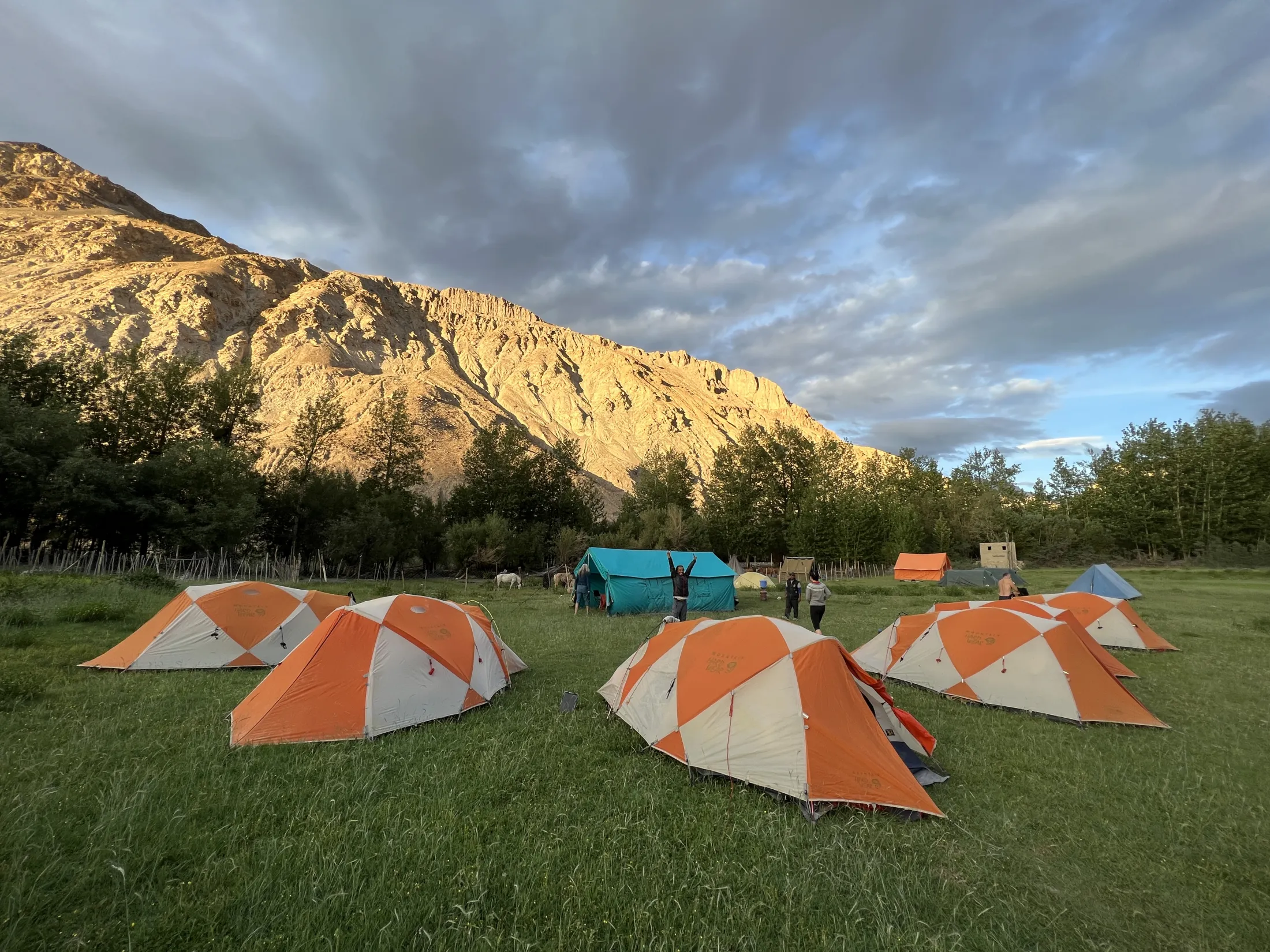
Accommodations in shared double rooms at hotels in Delhi and Leh, and in shared tents during the mountain trek.
Meals as specified in the program.
Not included
For trips where flights are not included, please check our website to confirm that the departure is guaranteed before booking your own plane tickets. For each trip, we require a minimum number of confirmed participants before the departure can be guaranteed.
To local guides and assistants. Tips are a common and expected part of being a tourist in many of the destinations we visit. These are given in cash during the trip and therefore cannot be included in the trip price.
Available upon request, limited quantities.
Request quotes from other cities in Norway.
If you need to rent any equipment for the summit push (ice axe, harness, crampons, crampon boots, or hiking poles), please let us know. Rental prices: Ice axe: 5 USD Crampons: 15 USD Harness: 10 USD Crampon boots: 25 USD Hiking poles: 15 USD per pair
Terms and Conditions
We reserve the right to change prices. The day by day program is indicative and changes may occur. We also refer to our general travel conditions.
Travel Insurance
On all our trips, we advise you to have full travel and accident insurance, which must also cover potential medical repatriation. Read more about travel insurance.
On this trip, it is important to understand that we will be traveling far off the beaten track. We will of course do everything we can to assist if anything should happen, but any rescue operation could take longer than on other trips we organize. It is therefore extremely important that all participants are well prepared and ready to deal with unforeseen situations.
Physical level
4/6 Physical
Here you have to be ready for a real challenge! The trips are often longer than at lower levels. Along the way, it will be both physically and mentally demanding, and that requires you to be prepared for this. You should engage in targeted training well in advance of departure, and you must prepare well.
Comfort level
2/6 Comfort
We overnight in tents. We are usually served food, but may have to contribute with cooking on certain occasions.
Risk level
4/6 Risk
Activities/trips with significant risk. Incidents may occur, and they can be of such a nature that they require professional help.
Training and Preparations
Most of our hikes involve physical challenges. It’s a big advantage to have a lot of hiking experience in the mountains. You should be an experienced hiker and in generally good physical shape to participate. You don’t need any experience with high-altitude hikes, but we recommend that you put in a good amount of training before the trip.
You really feel the altitude, and everything feels harder than on mountain hikes here in Norway. That’s why it’s important to have plenty of physical stamina.
The hike to base camp consists of pleasant day hikes lasting 4–8 hours. The night on the summit is long, and it requires that you be motivated and in good physical shape. Although the final ascent does not involve technically difficult climbing, we bring crampons, ice axes, and climbing harnesses, which we must be able to use proficiently during the final ascent.
Visas, Vaccinations and Health
Before embarking on our journey together, we kindly remind all trip participants to check their respective country's visa status and vaccination requirements. Ensuring your travel documents are in order is a crucial step in guaranteeing a smooth and hassle-free adventure.
Norwegian citizens need a valid passport that remains valid for at least 6 months after their return date, as well as a visa for India. See also the current entry and visa regulations on the Ministry of Foreign Affairs' country pages.
If you are over 67, you should have a thorough medical check-up before your trip. Make your doctor aware that this is a trip involving physical exertion and moving off the beaten track.
It is important that you complete all parts of the registration form (especially where we ask for information about health and allergies), and let us know if there is anything we need to be aware of prior to and during the trip. Relevant health information that may affect the trip should also be communicated to the guide at the start of the trip. *Note* - If you are on regular medication, have known allergies or anything similar, you must always bring your personal medication with you.
For trips where flights are not included, please check our website to confirm that the departure is guaranteed before booking your own plane tickets. For each trip, we require a minimum number of confirmed participants before the departure can be guaranteed.
In Leh, it’s pleasantly warm in July, between 25 and 30 degrees. On most hiking days, we can wear shorts and a T-shirt, but as soon as the sun goes down, it gets colder, and both a down jacket and woolen clothing are essential in your luggage.
When we arrive at base camp, temperatures drop, and the down jacket comes in handy. The temperature can drop to near freezing up at base camp. At the summit, temperatures are mostly below freezing, so we’ll dress warmly for the final push to the top.
We’ll stay in shared double rooms at hotels in Delhi and Leh, and during the mountain trek, we’ll stay two to a tent.
It is not always easy to get hold of gluten-free wholemeal bread, lactose-free alternatives or to accommodate other food preferences. If you have any allergies, please let us know in the registration form and we will try to accommodate you as best we can. However, we would still recommend that anyone with special dietary needs bring some alternatives in the form of, for example, a packet of crispbread, energy bars or similar that you know you can eat.
Equipment list
This list is intended as a guideline, so that we have what we need regardless of the weather we get on the trip. Remember that you can also get used outdoor equipment that works perfectly. Get in touch if you have any questions. TIP: We recommend that you have the most important equipment in your hand luggage, for example hiking boots and gore-tex jacket/trousers.
Obligatory
Clothing
We recommend wool underwear for both men and women. Wool sportstop is recommended for women. A boxershorts with windstopper is recommended for cold days.
Not too thick, bring more layers if necessary. Top and bottom.
We recommend bringing several pairs of wool socks in different thicknesses. Be sure to have a thick, clean pair for the summit night.
Wool, 2-3 paris.
2-3 pairs. Wool or synthetic material.
We recommend thin wool.
Fleece or wool.
Warm, light, and long - down is strongly preferred. It should be big enough to fit over everything else, have a hood (preferably helmet-compatible), and cover the butt.
Gore-Tex or similar. Must have a decent hood, and hold out wind and rain. Should have space for midlayers underneath. Ventilation under the arms is recommended.
Gore-Tex or similar. Must be waterproof and windproof, zips for ventilation are recommended.
Thick, wool.
The overmittens should be roomy and extend well up the forearm. They should be windproof and ideally handle some moisture. They need to provide a good grip, even with the inner mittens inside. The inner mittens should be thick and warm, preferably made of wool.
Footwear
Solid hiking boots for winter use. For example La Sportiva Nepal EVO or Scarpa Phantom Guide.
Solid, with a solid sole. Such as approaches shoes.
Equipment
Avoid bringing a suitcase, they are more difficult to transport between hotels.
Needs to have space for everything you want to bring on the hikes.
Comfort temperature rating of at least -20°C. Both down and synthetic are fine, remember to pack it in a waterproof bag. A liner can increase the comfort temperature.
Remember new/extra batteries.
A solid pair, with dark glass.
Personal medicines and, for example, band-aids, blister plaster, sports tape, throat lozenges, nasal drops, Paracetamol/Ibuprofen, stomach regulators, etc. We need to know about all medicines you are taking, in case something happens.
Tooth brush, tooth paste, small towel, ear plugs, wet wipes, biodegradable soap, etc.
Toilet paper, antibac, and waste bags for the paper. Remember leave no trace.
2-3 litre bottles, with an insulation cover, so they dont freeze. For example Nalgene bottles with wide mouth. They can handle hot water, so you can use them to keep warm in the sleeping bag.
Passport, tickets, bank card, proof of vaccination andproof of insurance. Remember to have a copy of important documents on your phone and/or somewhere in your bag.
Can be rented, let us know good time in advance
For rent in India.
Recommended
Clothing
In case of a short rain shower.
Footwear
Solid, with a solid sole. Such as approaches shoes.
Equipment
Light. Have to be foldable or telescope.
Alpine snow glasses. To protect your face and eyes in snow, wind and cold conditions.
Packing Tips
The maximum weight allowance on the flight to Leh is 15 kilograms. In Leh, it’s pleasantly warm in July, between 25 and 30 degrees. On most hiking days, we can wear shorts and a T-shirt, but as soon as the sun goes down, it gets colder, and both a down jacket and waterproof clothing are mandatory in your luggage.
Be sure to check that the hiking boots you’ll be using for the summit push are compatible with crampons.
Umbrellas can be purchased in Leh. Crampons, ice axes, climbing harnesses, and screw-lock carabiners can be rented locally in India.
The maximum weight for the duffel bag carried by the pack mules on this trip is 18 kilos per person.
We’ll be provided with relatively thick sleeping pads/mattresses in the tent, so your own sleeping pad is for extra comfort and doesn’t need to be very thick or insulated, unless you get cold very easily.
A magical trip with high mountains, friendly people, and great food. The trip is tough, but Norrøna Adventure has done a fantastic job organizing everything so you can enjoy the real challenge of climbing high mountains to the fullest.
– Carl, 2024
Testimonial
I had a fantastic trip with lots of great experiences. It was my first trip at such a high altitude, but we had a tour guide who prepared us and provided support to everyone, both as a group and individually, to make sure we were all ready and able to complete the trip. I’m very satisfied.
– Atle, 2022
Testimonial
A fantastic trip, with stunning scenery and plenty of wildlife. Glamping the whole way, with great food and friendly people. Highly recommended.
– Helene, 2022
Welcome to Norrøna Adventure
We use cookies for analytics and advertising purposes. Mainly to examine our website traffic, and to optimize advertising that best suits your interests. Click "Accept" if this is ok by you.
Any website you visit has the potential to save or retrieve data on your browser, primarily in the form of cookies. This data may pertain to you, your choices, or your device and is mostly used to ensure that the website functions as expected. Although the data typically does not directly identify you, it can improve your online experience.