Watch full video

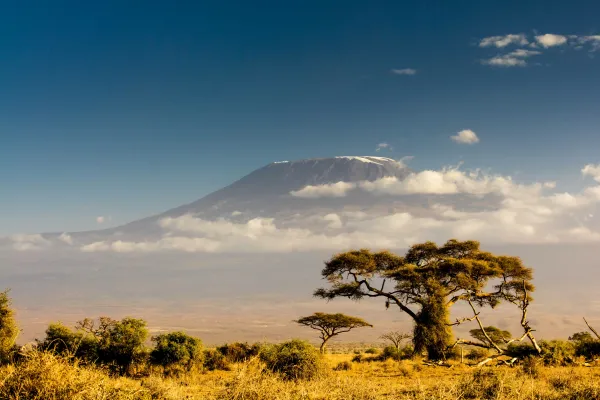
Kilimanjaro (5895 m) with safari

Africa's Highest Mountain

Kilimanjaro (5895 m) with safari

Africa's Highest Mountain

From USD 6643

Kilimanjaro is not only one of our most popular treks, it is also one of the world’s most famous mountains. The iconic peak offers a wealth of natural beauty and a variety of routes to reach the famous Uhuru Peak at 5895 m. We wrap up this adventure-filled mountain trek with a couple of relaxing days in Tarangire National Park. Here, we enjoy good food and drinks and an incredibly rich wildlife experience in beautiful surroundings. In the evenings, we’ll sit around the campfire and reflect on the wonderful - yet also exhausting - trek we’ve just completed.

Highlights

  • The world’s tallest freestanding mountain
  • Five different climate zones along the route
  • Sunrise and views from the summit of Kilimanjaro
  • The rich wildlife of Tarangire National Park

Note: You are welcome to join us with a Norrøna guide only for the Kilimanjaro climb itself. The safari afterward is optional and does not need to be included in your booking. Click here to read more about how the Kilimanjaro trip works with our local guides.

The summit of Kilimanjaro is the goal, but the trek itself is a fantastic experience. With varied climate zones, each day’s stage reveals a new landscape and new experiences in nature. We’ve chosen to hike the Rongai Route, starting from the north side of the mountain, which means we’ll spend seven days on the mountain. Here, we’ll encounter fewer tourists than on many of the other routes (such as Shira, Marangu, and Machame), and the natural scenery is spectacular. The daily stages and campsites are carefully chosen to ensure the best possible acclimatization to the altitude, which gives us the best chance of reaching the summit.

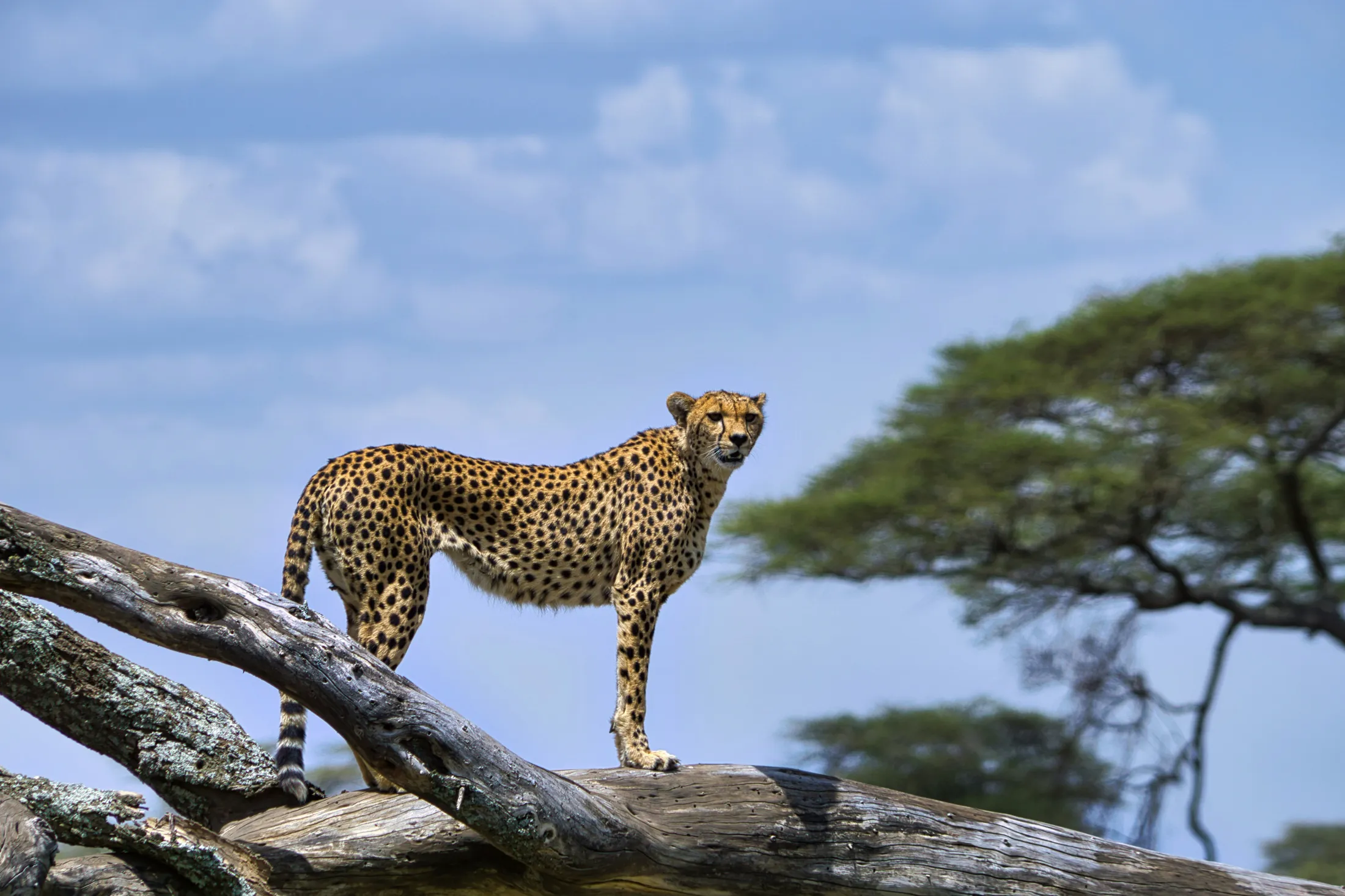
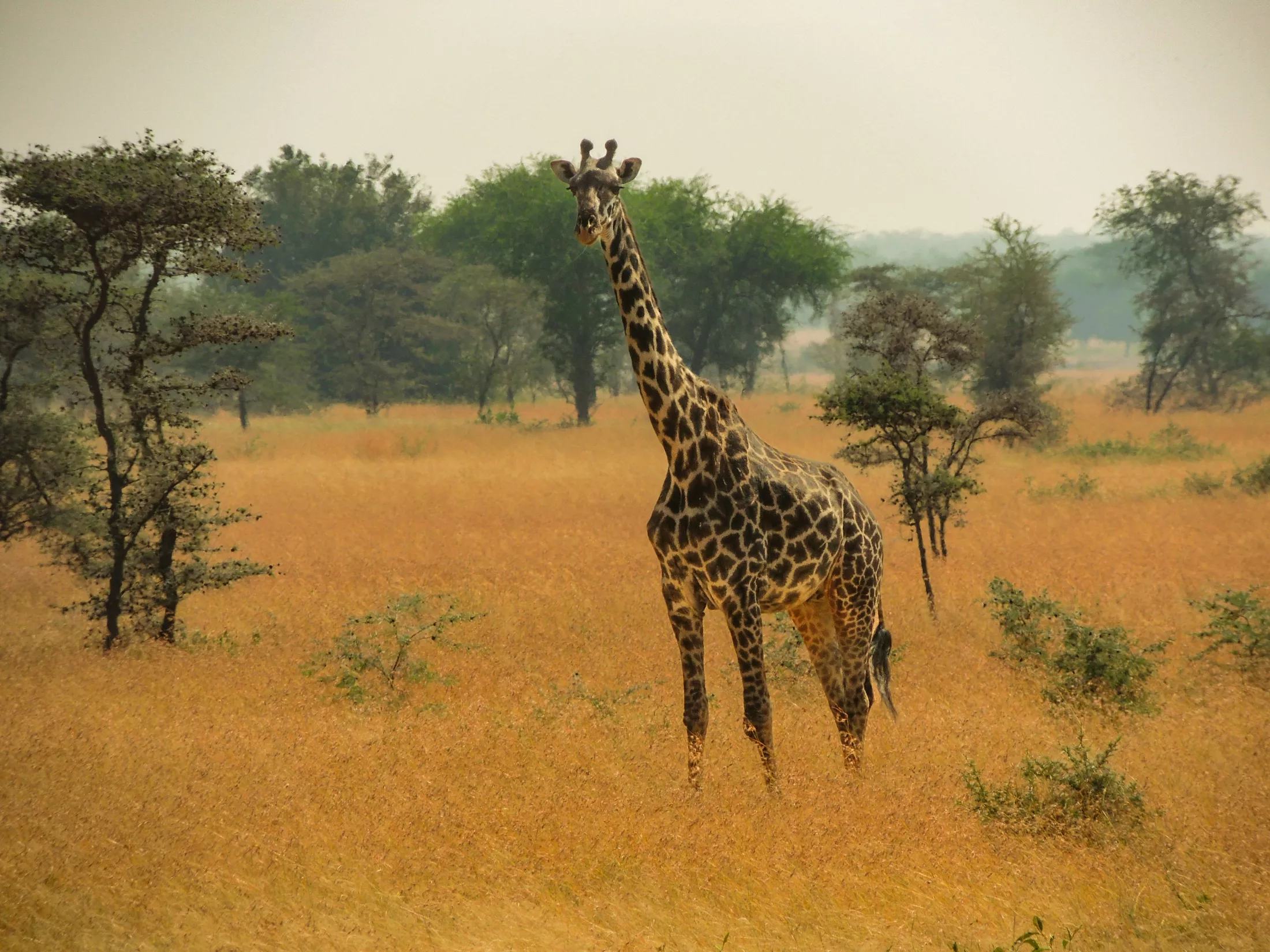
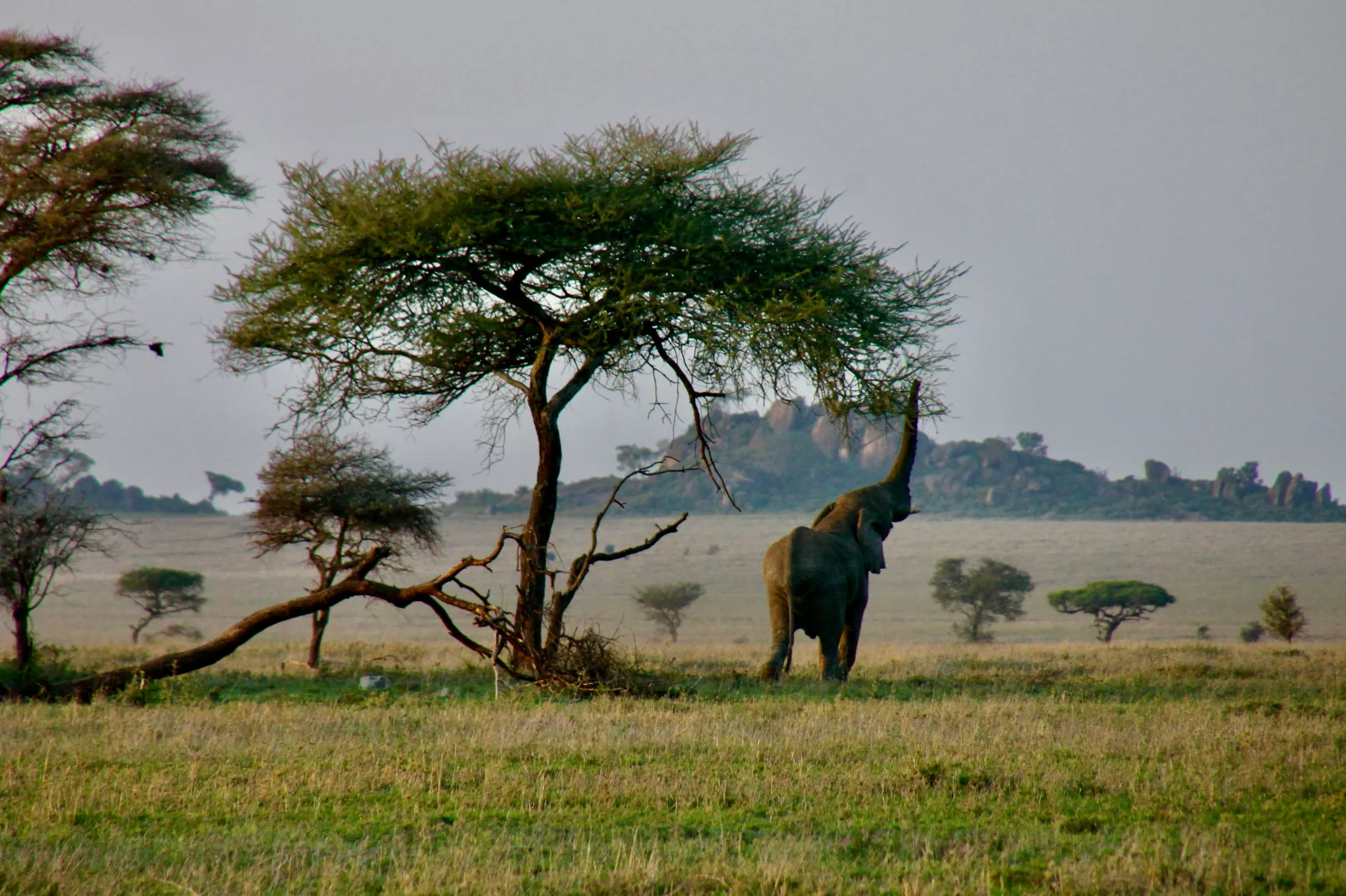
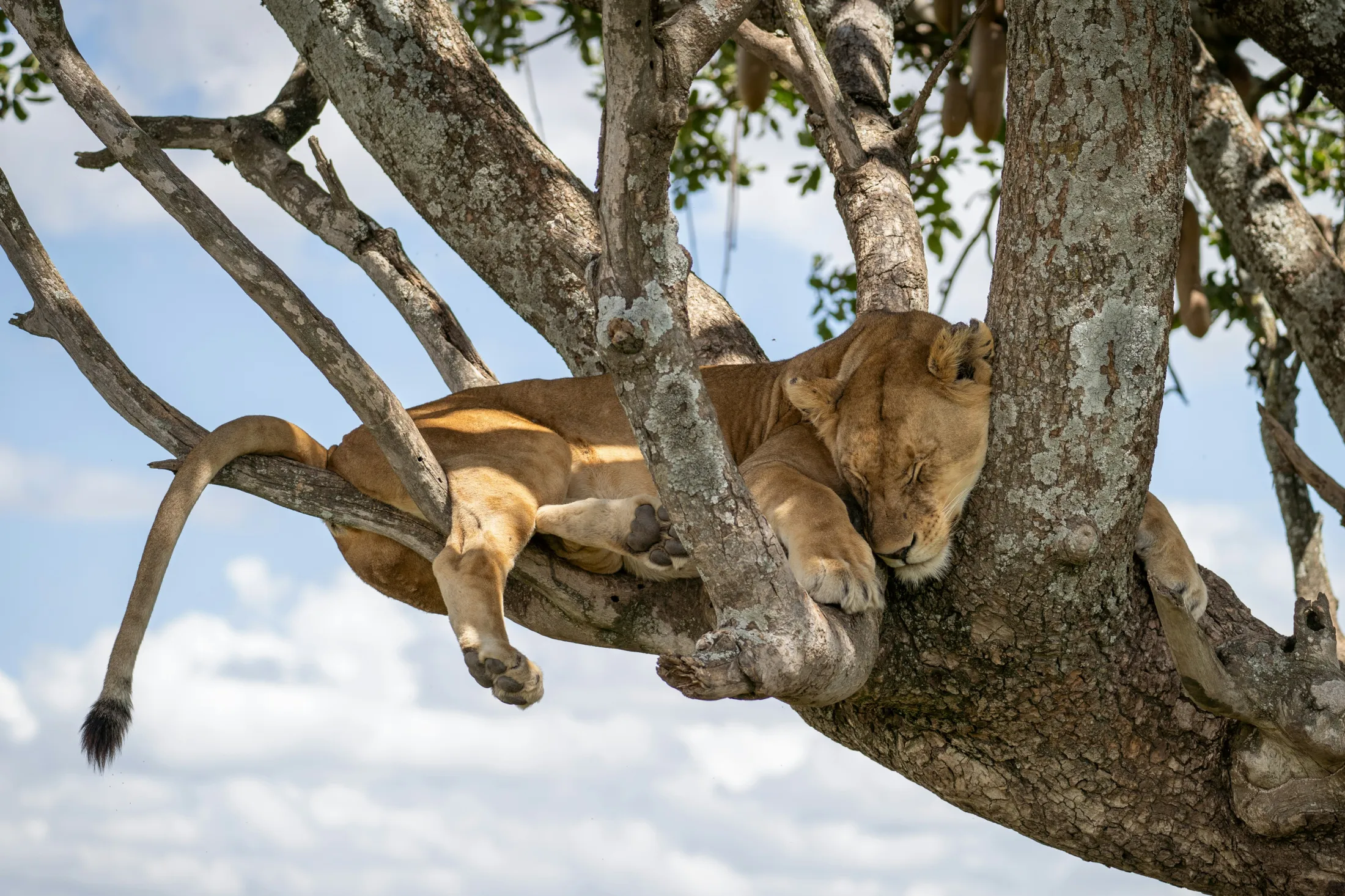
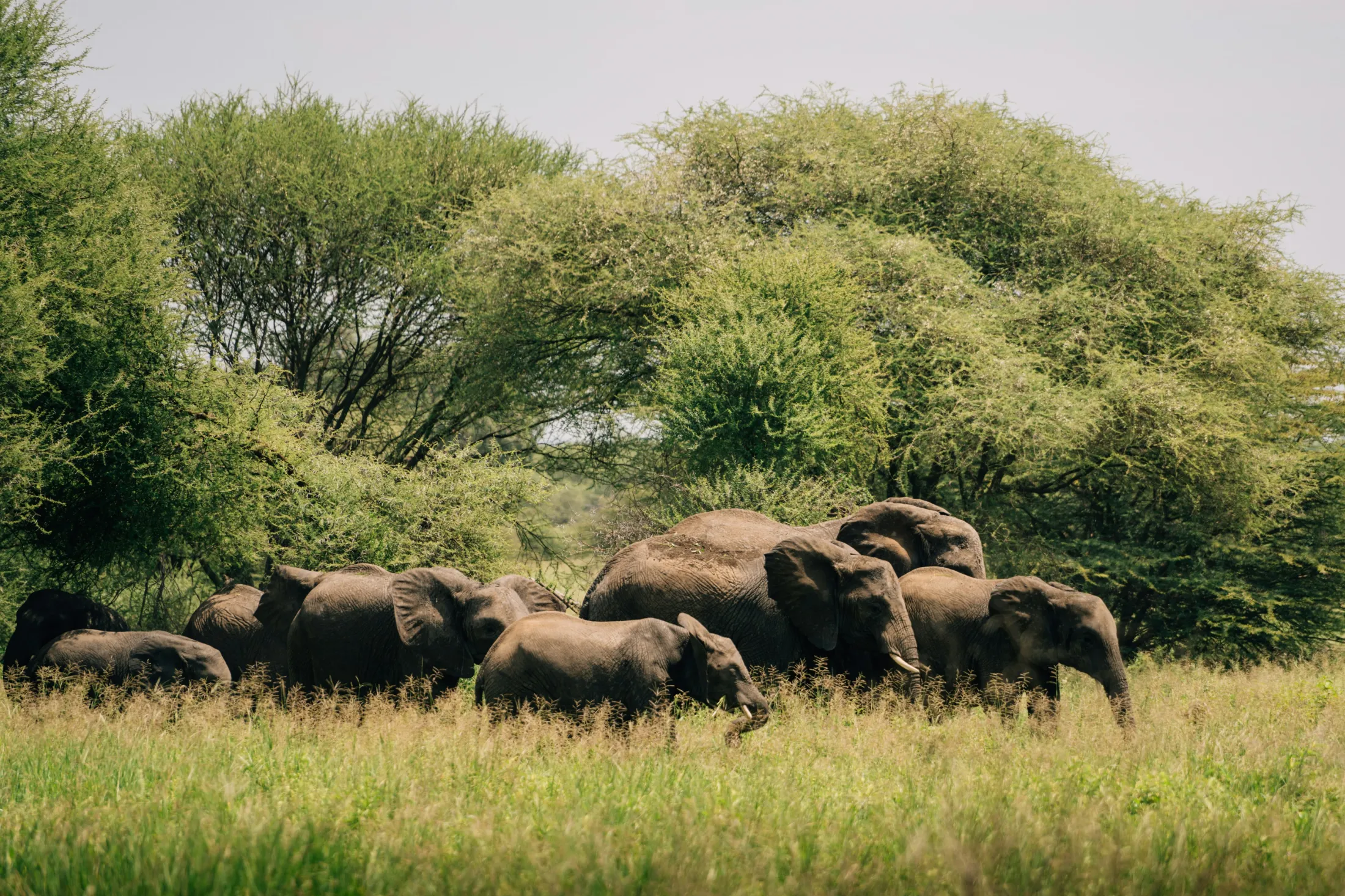
Tarangire National Park is the sixth-largest in Tanzania and boasts fantastic wildlife. The park is best known for its large population of elephants, baobab trees, and tree-climbing African pythons. In addition, this national park is home to over 1,000 bird species, cheetahs, lions, giraffes, and—if you’re lucky—even leopards. Top it all off with a sunset on the savanna while enjoying a “sundowner,” evening stories around the campfire, and, not least, knowledgeable guides.

This trip is led by a Norwegian guide. This ensures close attention to each participant during the climb, including advice and treatment related to altitude sickness. The Norwegian guide accompanies the group throughout the entire trip, starting with the meet-up at Oslo Airport, and helps foster a sense of camaraderie within the group.

13

9-16

NO/EN

3/6

2/6

3/6

Dates and booking
There are no departures on this trip.
Can't find a date? We'll notify you when new trips open!

Plan it your way

Want this trip just for your group? Or got something different in mind? We've got you.

Make this a private trip

Opening hours Phone
Mon-Fri : 08-20
Sat-Sun : 14-17
Opening hours Chat
Mon-Fri : 07-23
Sat : 10-18
Sun : 13-21
CET

Day by day

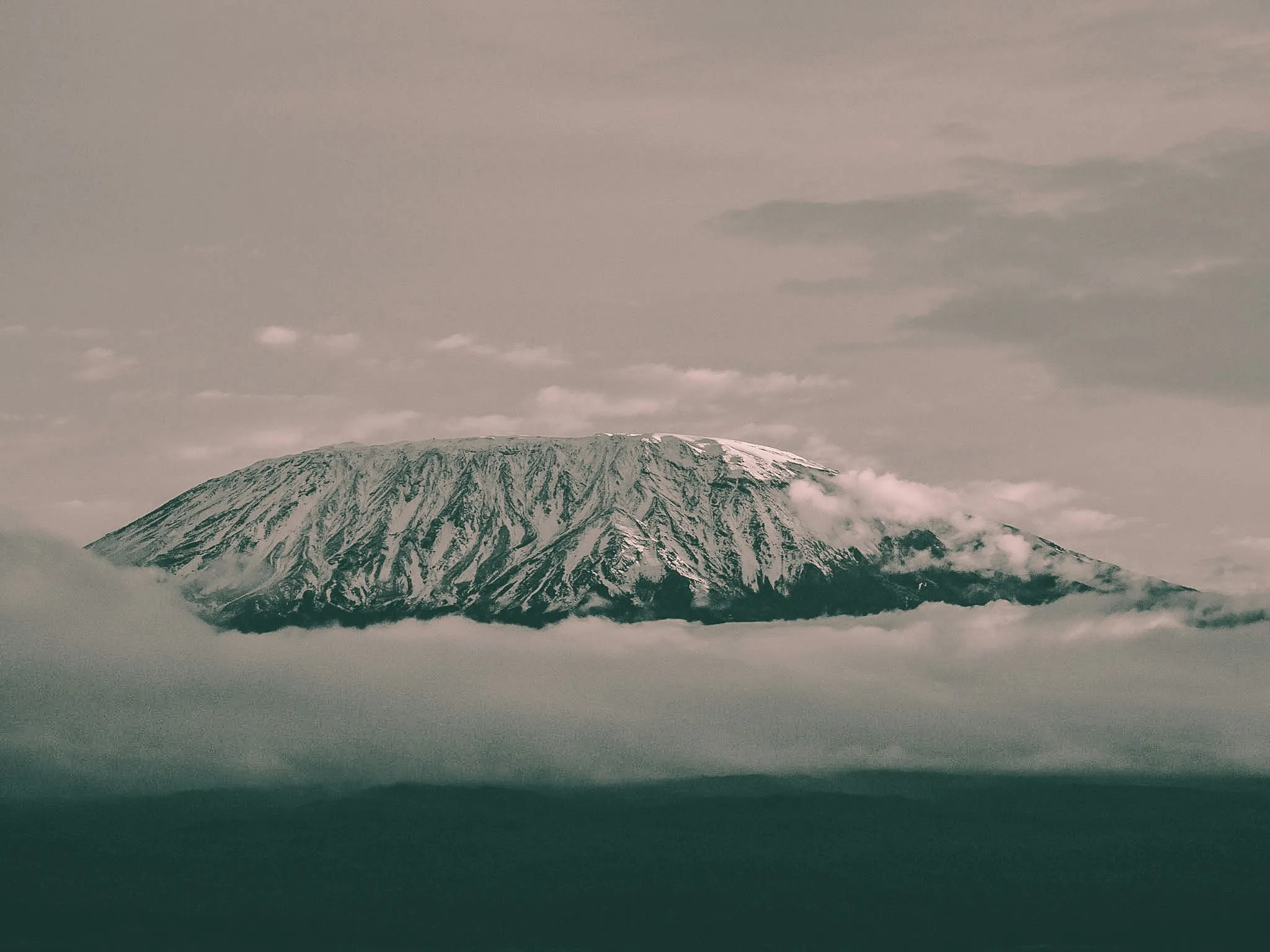
The snow-covered, rocky peak of Mount Kilimanjaro looms above a thick bed of clouds under an overcast sky.

Day 1:Travel day

We are traveling towards Tanzania. The itinerary will vary based on where you are coming from. Group tours from Norway meet at Oslo Airport, and have a stopover before arriving at Kilimanjaro Airport. For other departures, airfare and tickets will not be included in the program, unless otherwise agreed. For groups without tickets included you will begin your program on Day 2.
We are traveling towards Tanzania. The itinerary will vary based on where you are coming from. Group tours from Norway meet at Oslo Airport, and have a stopover before arriving at Kilimanjaro Airport. For other departures, airfare and tickets will not be included in the program, unless otherwise agreed. For groups without tickets included you will begin your program on Day 2.
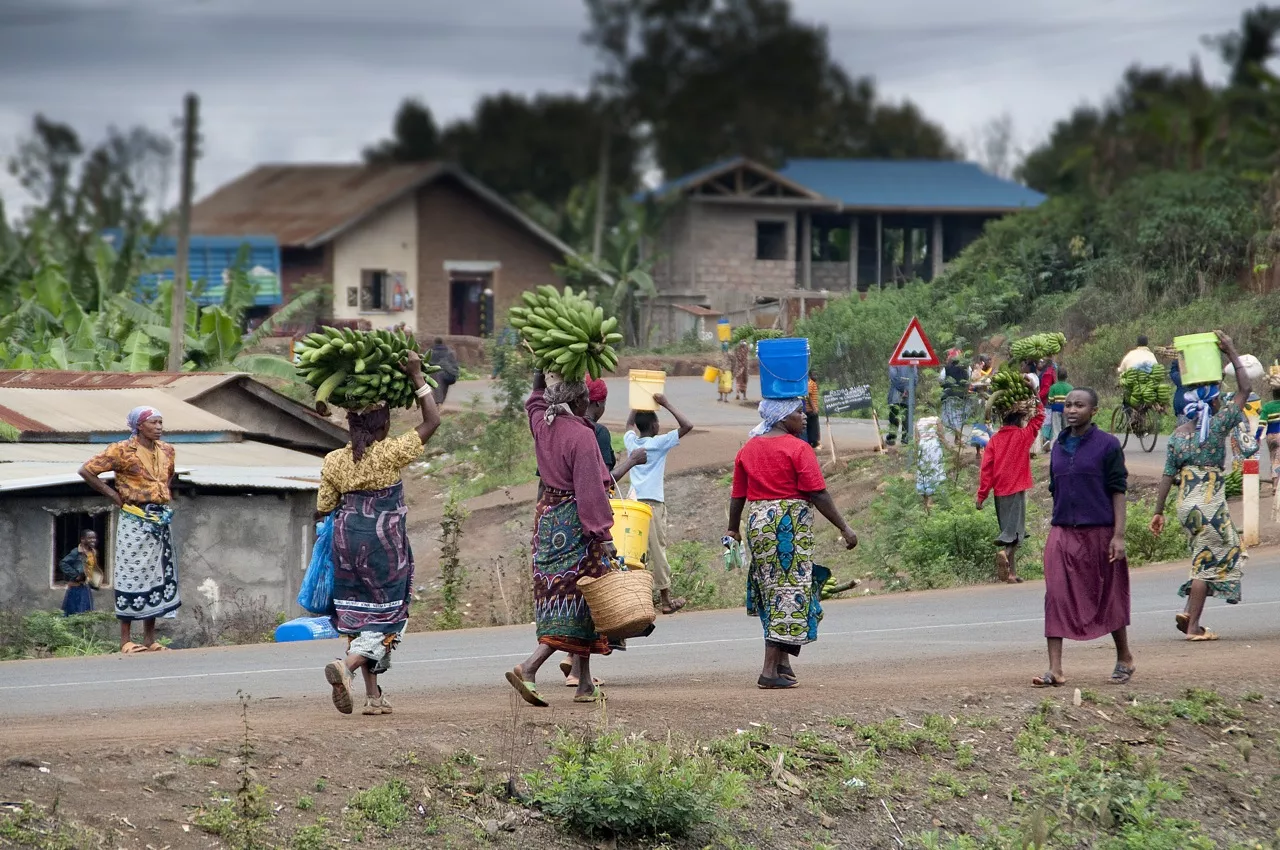
People walk along a paved road carrying large bunches of green bananas and colorful buckets on their heads in a village setting.

Day 2:Arrival Tanzania

We arrive at Kilimanjaro airport, where we are met by our African friends. We arrange our visas and make our way through the lines until we step out into Africa's warmth. After a couple of hours on the bus, we arrive at the cozy hotel in Moshi. Here we can gather our strength for the big day tomorrow! If time permits, we can take a trip into Moshi.

We arrive at Kilimanjaro airport, where we are met by our African friends. We arrange our visas and make our way through the lines until we step out into Africa's warmth. After a couple of hours on the bus, we arrive at the cozy hotel in Moshi. Here we can gather our strength for the big day tomorrow! If time permits, we can take a trip into Moshi.

Hotel

-,-,D

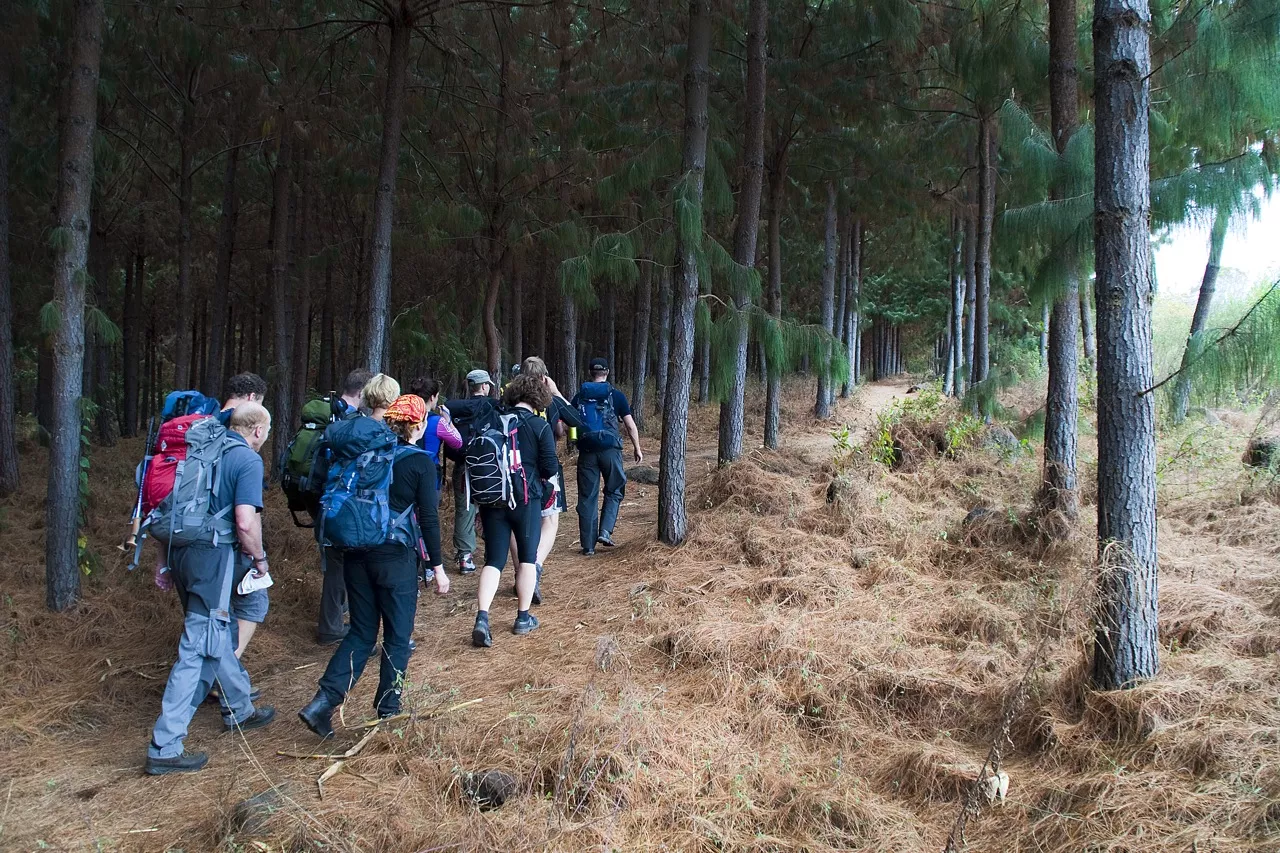
A group of hikers with heavy backpacks walks along a forest trail covered in dry pine needles.

Day 3:Easy mountain trip to Simba Camp (2670 m)

We will hike the Rongai Route to the summit, which approaches from the north side. On this route, there are slightly fewer people than many of the other routes up Kilimanjaro, and it is a beautiful and varied nature experience. After breakfast, we drive to Rongai Gate (approx. 3-4 hours) for registration and lunch. Today's stage goes to Simba Camp, which is located at 2670 m. The route starts on narrow trails through jungle and rainforest. When we reach the camp, we get a fantastic view of Kilimanjaro and across the plains below Kilimanjaro.

We will hike the Rongai Route to the summit, which approaches from the north side. On this route, there are slightly fewer people than many of the other routes up Kilimanjaro, and it is a beautiful and varied nature experience. After breakfast, we drive to Rongai Gate (approx. 3-4 hours) for registration and lunch. Today's stage goes to Simba Camp, which is located at 2670 m. The route starts on narrow trails through jungle and rainforest. When we reach the camp, we get a fantastic view of Kilimanjaro and across the plains below Kilimanjaro.

Tent

B,L,D

3 hours

+300m

7 km

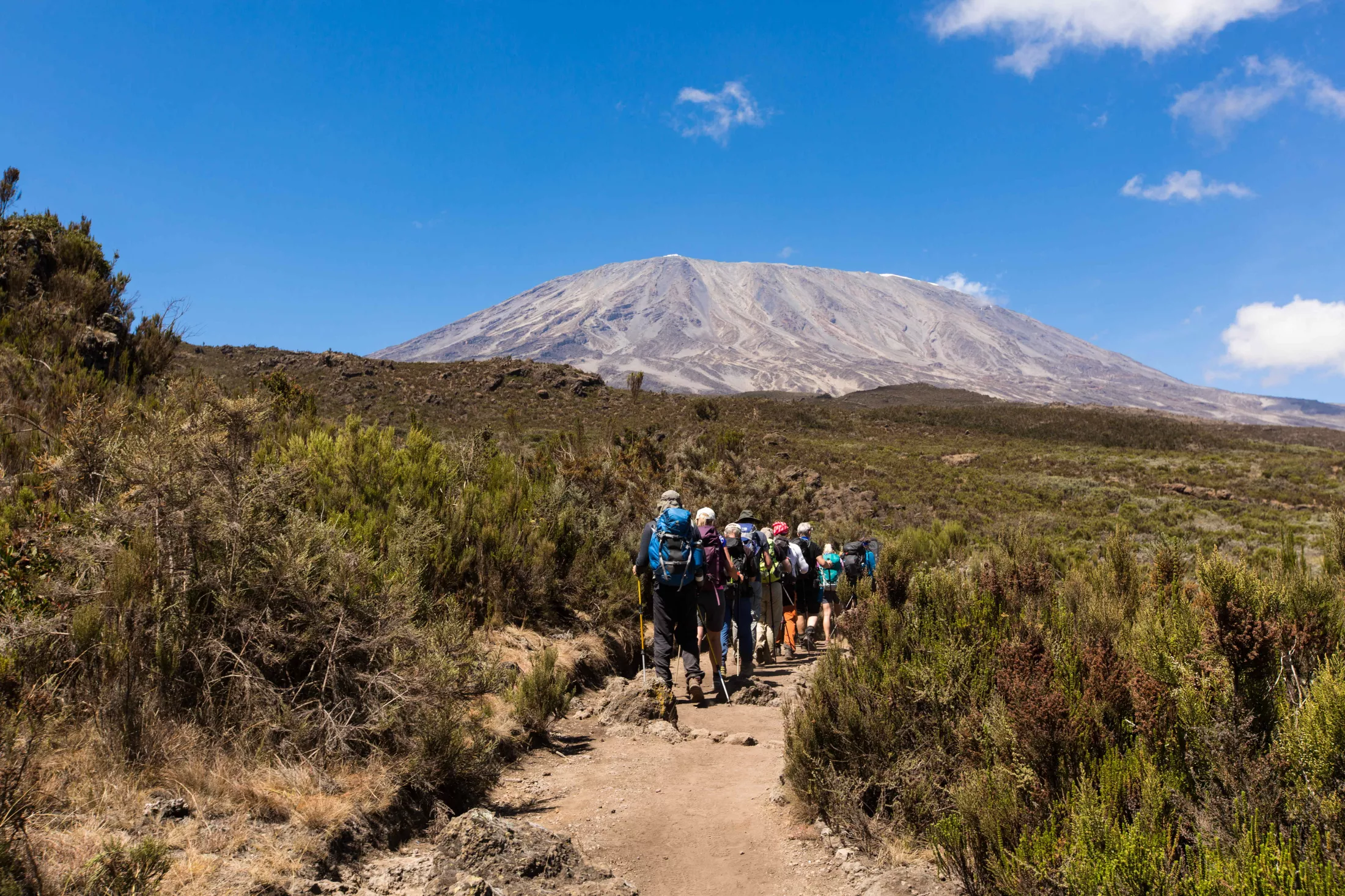
A group of hikers with backpacks follows a dirt trail toward Mount Kilimanjaro rising under a bright blue sky.

Day 4:Up into the altitude - Second Camp (3450 m)

After being woken up with tea and coffee in the tent, we eat breakfast and start today's stage - quickly noticing that this stage is different from the previous one. The vegetation changes all the way up toward Kilimanjaro - and eventually, you will get a great view of Kibo and the crater rim. We hike steadily uphill before arriving at the camp. Here we relax, and those who feel energetic can take a short trip in the area after lunch, which is recommended to acclimatize even better.

After being woken up with tea and coffee in the tent, we eat breakfast and start today's stage - quickly noticing that this stage is different from the previous one. The vegetation changes all the way up toward Kilimanjaro - and eventually, you will get a great view of Kibo and the crater rim. We hike steadily uphill before arriving at the camp. Here we relax, and those who feel energetic can take a short trip in the area after lunch, which is recommended to acclimatize even better.

Tent

B,L,D

3-4 hours

+780m

6 km

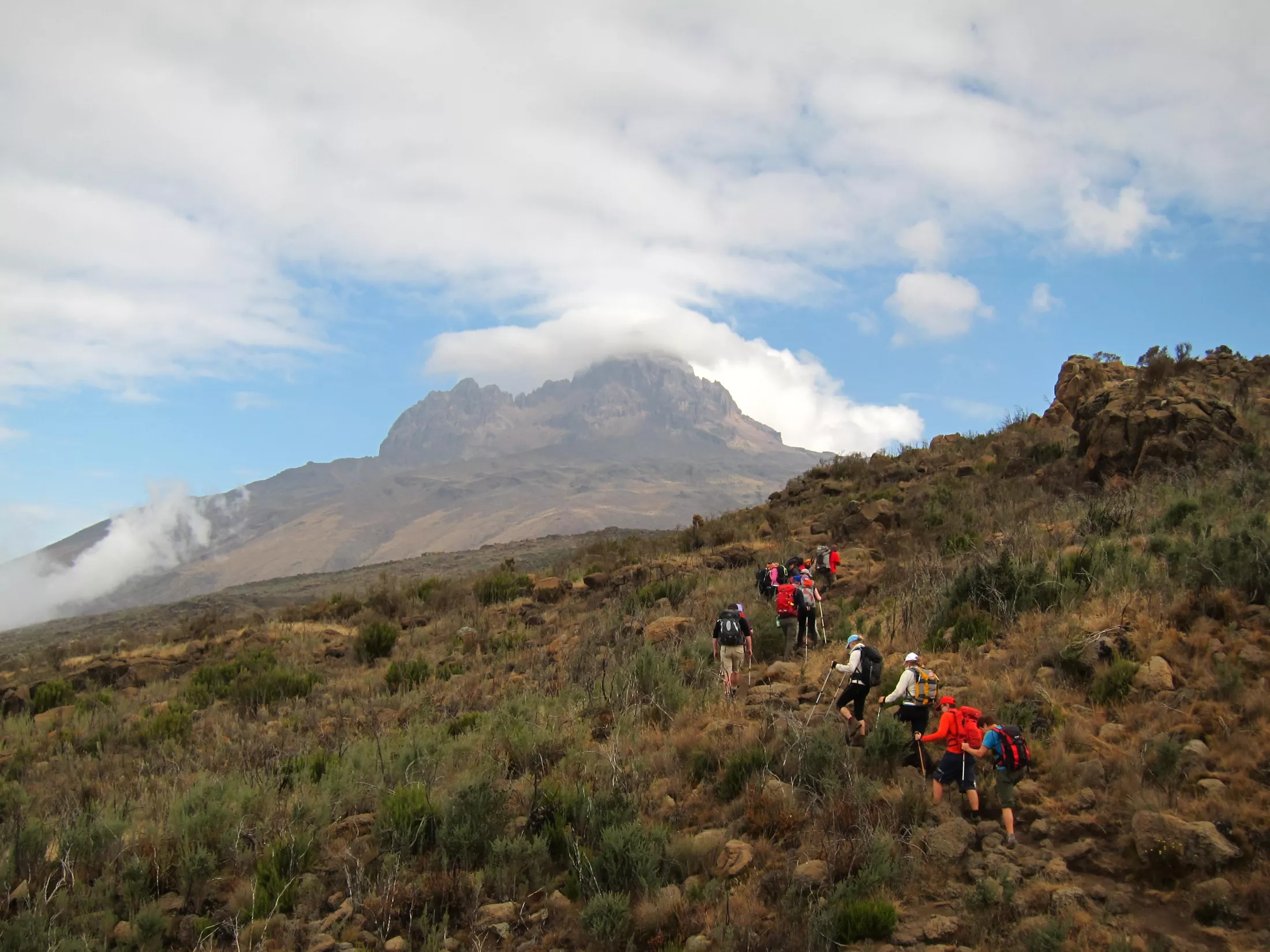
A group of hikers ascends a grassy mountain slope towards a towering peak shrouded in clouds.

Day 5:Above the clouds - Kikelewa Caves (3600 m)

This is also a relatively calm day. We eat breakfast and start today's stage quite steeply, up narrow trails, and now the vegetation is no longer as tall and dense. Once at the camp, we get a fantastic view of the crater and the glaciers on the east side of the summit. The air is starting to get thinner, the trails gradually narrower, and tonight we spend the night in a camp by Kikelewa Caves, at approximately 3600 m.

This is also a relatively calm day. We eat breakfast and start today's stage quite steeply, up narrow trails, and now the vegetation is no longer as tall and dense. Once at the camp, we get a fantastic view of the crater and the glaciers on the east side of the summit. The air is starting to get thinner, the trails gradually narrower, and tonight we spend the night in a camp by Kikelewa Caves, at approximately 3600 m.

Tent

B,L,D

4-5 hours

+150m

9 km

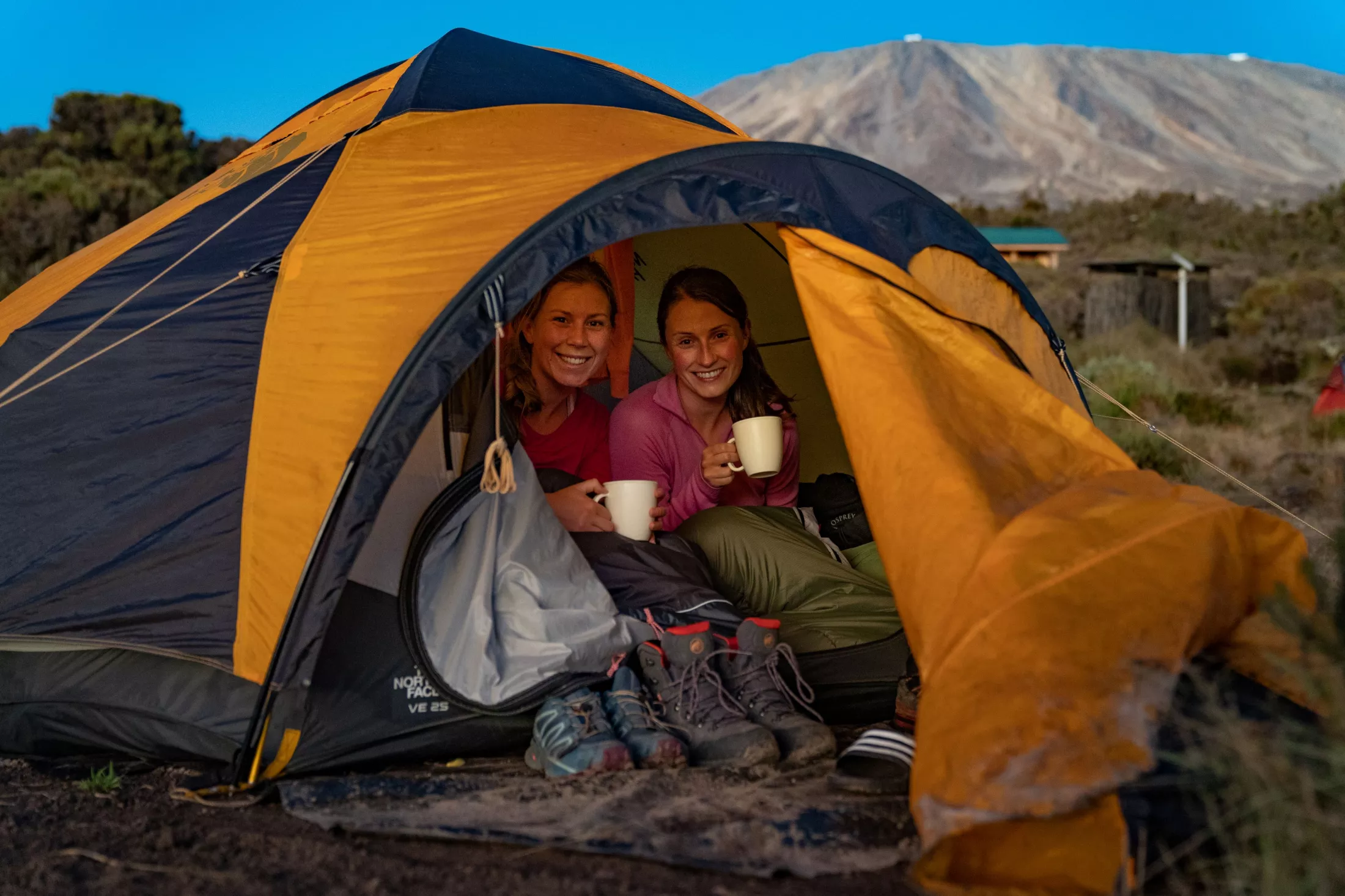
Two smiling women sit inside an yellow and black tent holding mugs, with hiking boots lined up at the entrance and Mount Kilimanjaro in the background.

Day 6:Acclimatization - Mawenzi Tarn Camp (4300 m)

Once again, we are woken up with tea and coffee in the tent – a luxury we have gotten used to. After breakfast, we start hiking up grassy slopes while the vegetation gradually becomes more sparse. Today's stage is a bit steeper than the previous two, but we do not go as far. To adapt to the altitude in the best possible way, we constantly remind each other to walk slowly and drink plenty of water along the way. Today, we spend the night at the route's finest camp; Mawenzi Tarn Camp (4300 m) – and have another nice dinner in the mess tent. Before dinner, we go on a short acclimatization trip up toward Mount Mawenzi. In clear weather, we have a panoramic view of Kilimanjaro almost all day.

Once again, we are woken up with tea and coffee in the tent – a luxury we have gotten used to. After breakfast, we start hiking up grassy slopes while the vegetation gradually becomes more sparse. Today's stage is a bit steeper than the previous two, but we do not go as far. To adapt to the altitude in the best possible way, we constantly remind each other to walk slowly and drink plenty of water along the way. Today, we spend the night at the route's finest camp; Mawenzi Tarn Camp (4300 m) – and have another nice dinner in the mess tent. Before dinner, we go on a short acclimatization trip up toward Mount Mawenzi. In clear weather, we have a panoramic view of Kilimanjaro almost all day.

Tent

B,L,D

5-6 hours

+700m

6 km

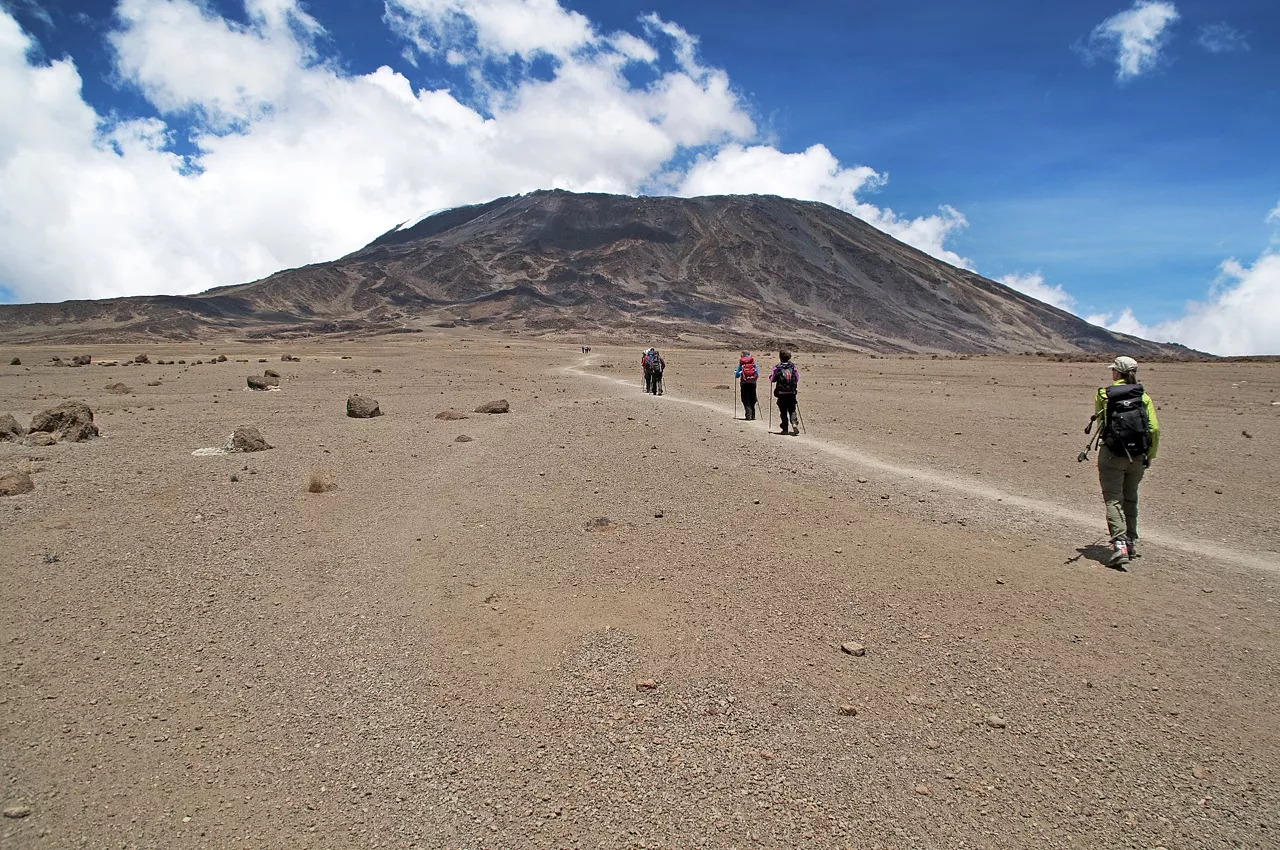
Hikers walk along a narrow trail across a vast, barren desert landscape toward Mount Kilimanjaro under a partly cloudy sky.

Day 7:From lunar landscape to Kibo Camp (4700 m)

Now the lunar landscape begins, and across the saddle between Mawenzi Camp and Kibo (4700 m), we arrive at Kibo Camp where we pitch our tents. We are heading up in altitude on today's stage, but we keep a slow pace and the terrain is easy to move in. The camp has a spectacular location at the base of the Kibo crater wall. Here we make sure to doze, gather strength, and prepare for tonight's summit push – interrupted only by another delicious dinner from the chef!

Now the lunar landscape begins, and across the saddle between Mawenzi Camp and Kibo (4700 m), we arrive at Kibo Camp where we pitch our tents. We are heading up in altitude on today's stage, but we keep a slow pace and the terrain is easy to move in. The camp has a spectacular location at the base of the Kibo crater wall. Here we make sure to doze, gather strength, and prepare for tonight's summit push – interrupted only by another delicious dinner from the chef!

Tent

B,L,D

6-8 hours

+400m

10 km

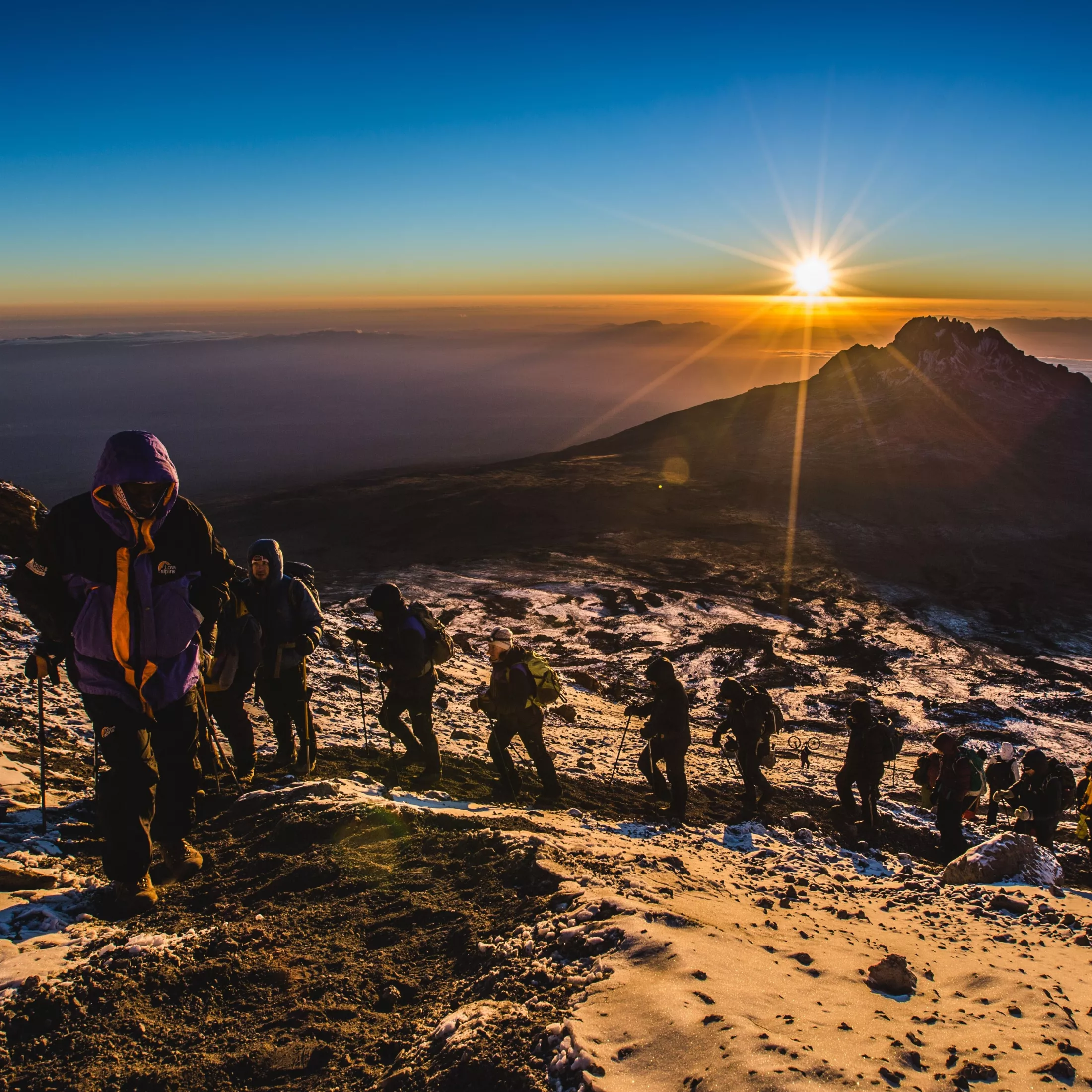
A line of hikers climbs a snowy mountain path during sunrise as the sun bursts over distant peaks in the background.

Day 8:Summit night! (Uhuru Peak 5895 m - Horombo Camp)

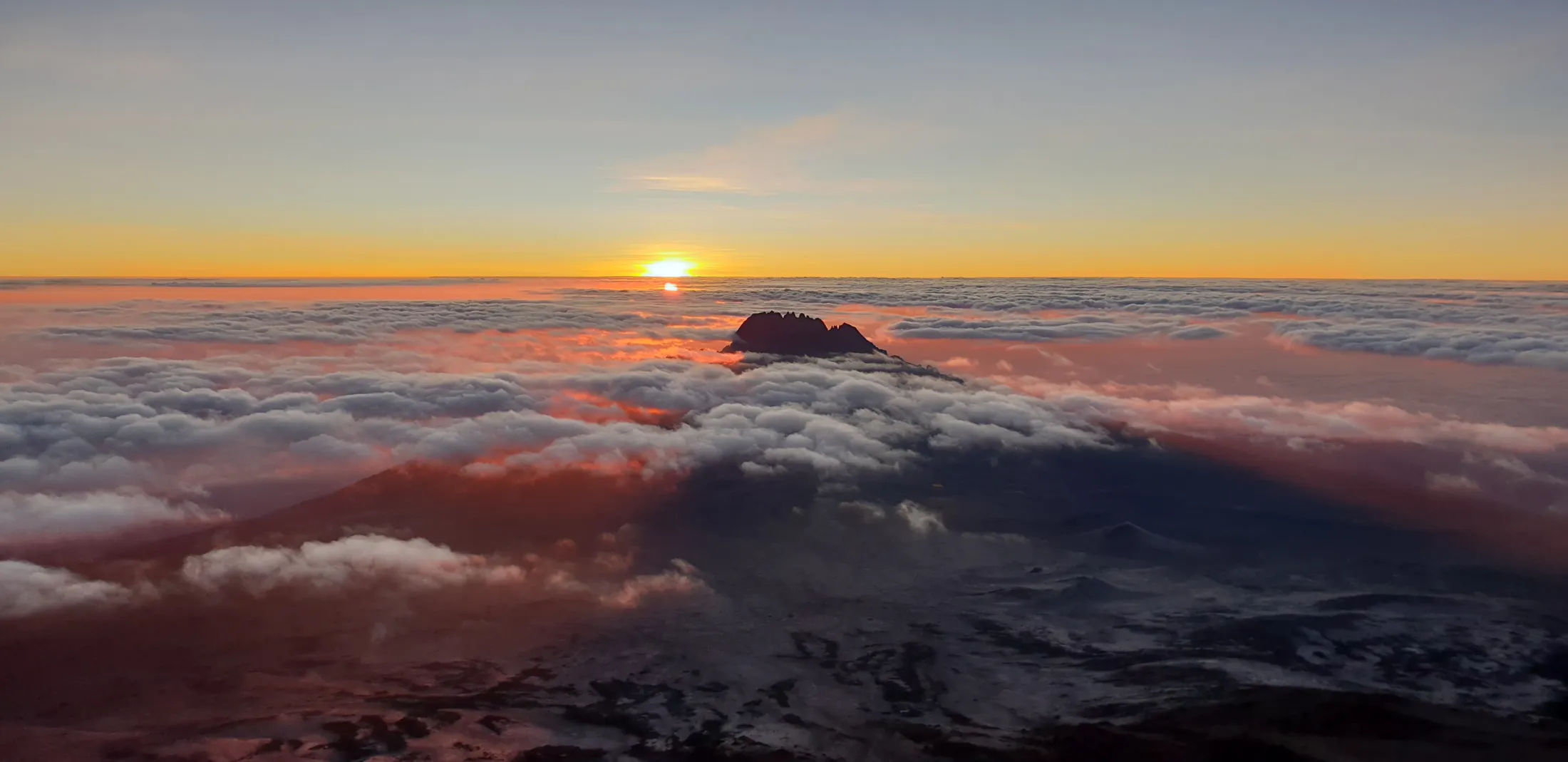
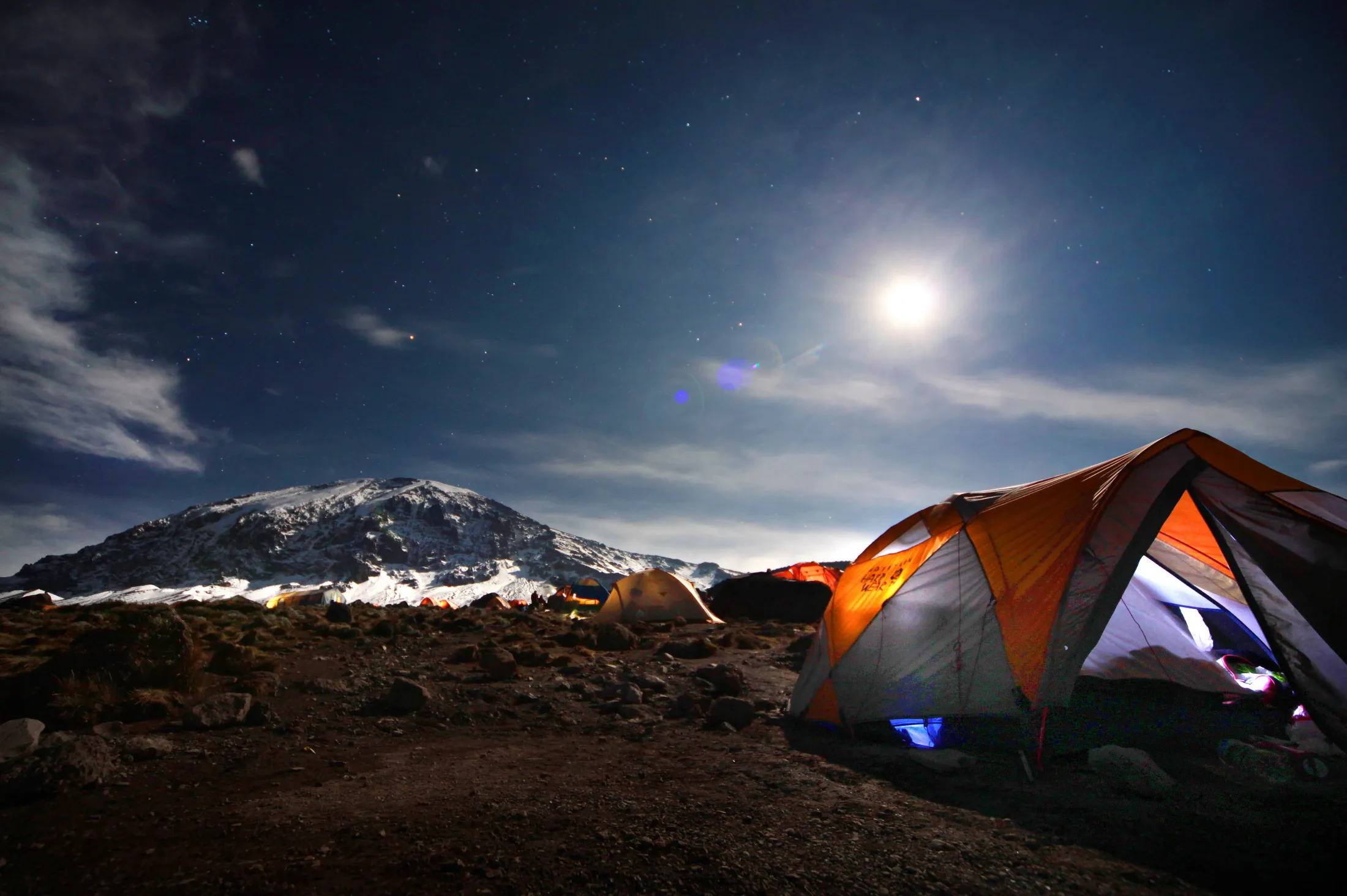
This is the longest and toughest stage of the whole trip. We start during the night; it can be cold, and it can be starry and bright with moonlight. Most people feel an extra sense of excitement as we hike slowly upward. It eventually starts to lighten, and we take a break at Gilman's Point (5700 m) and enjoy the magical sunrise over the jagged Mawenzi ridge. The sun gives us extra strength, and from Gilman's Point, the trip to Uhuru Peak (5895 m) – the main summit of Kilimanjaro – takes about two hours. We pass Stella Point, the glacier, and the ice formations that still make up large parts of the summit plateau. It feels incredible to reach the sign showing that we are on the roof of Africa! At Uhuru Peak, we pull out our cameras and quickly forget all the hard work! After the summit session, the descent begins. It is a long way downhill to Kibo (4700 m), where we take a break and eat a bit of lunch before continuing nearly six miles down to Horombo Camp Site (3720 m), where we spend the night and rest after a tiring but great day!

This is the longest and toughest stage of the whole trip. We start during the night; it can be cold, and it can be starry and bright with moonlight. Most people feel an extra sense of excitement as we hike slowly upward. It eventually starts to lighten, and we take a break at Gilman's Point (5700 m) and enjoy the magical sunrise over the jagged Mawenzi ridge. The sun gives us extra strength, and from Gilman's Point, the trip to Uhuru Peak (5895 m) – the main summit of Kilimanjaro – takes about two hours. We pass Stella Point, the glacier, and the ice formations that still make up large parts of the summit plateau. It feels incredible to reach the sign showing that we are on the roof of Africa! At Uhuru Peak, we pull out our cameras and quickly forget all the hard work! After the summit session, the descent begins. It is a long way downhill to Kibo (4700 m), where we take a break and eat a bit of lunch before continuing nearly six miles down to Horombo Camp Site (3720 m), where we spend the night and rest after a tiring but great day!

Tent

B,L,D

12-16 hours

1200m/2200m

15 km

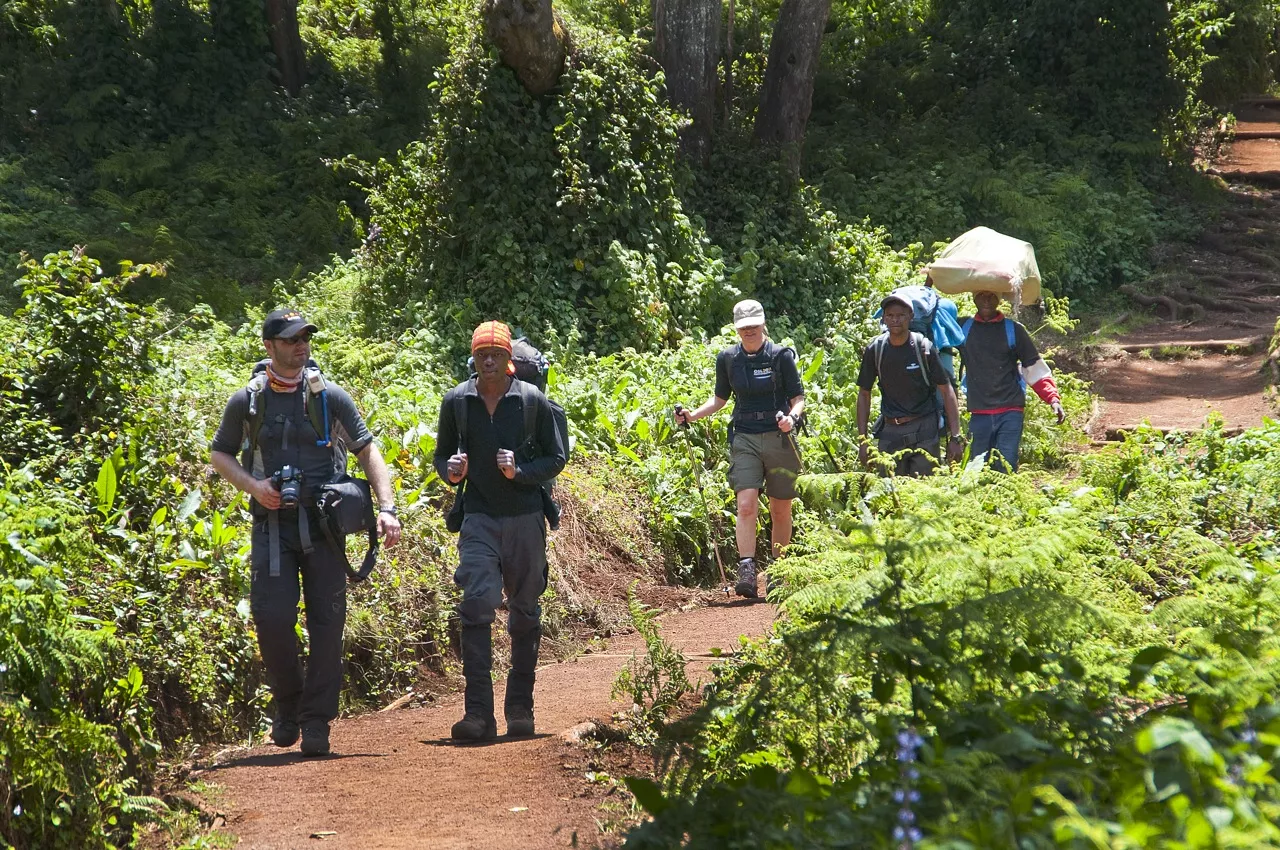
A group of hikers and porters walks along a reddish dirt trail through a lush, green rainforest.

Day 9:Last day through the rainforest - Marangu Gate

The last day on the mountain. We enjoy the rainforest on the way down to Marangu Gate (1860 m), where we have earned a local Kilimanjaro beer! Everyone who reached the summit receives a certificate, and here we also say goodbye to our faithful porters and guides. We are driven back to the hotel – where a shower, a dip in the pool, and a delicious dinner taste amazing!

The last day on the mountain. We enjoy the rainforest on the way down to Marangu Gate (1860 m), where we have earned a local Kilimanjaro beer! Everyone who reached the summit receives a certificate, and here we also say goodbye to our faithful porters and guides. We are driven back to the hotel – where a shower, a dip in the pool, and a delicious dinner taste amazing!

Hotel

B,L,D

5-7 hours

-1850m

20 km

A cheetah stands alert on a thick, fallen tree branch in the savanna under a blue sky.
A giraffe stands tall in a golden grassy field surrounded by scattered trees on the savanna.

Day 10:We travel to Tarangire

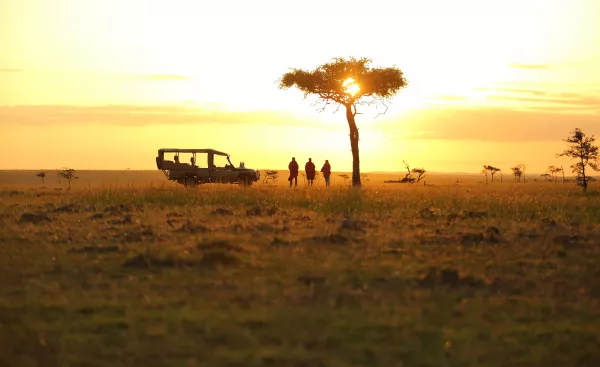
After an early breakfast, we continue to Tarangire, where we will spend the next two days on safari. It is easy to get swept up in the fantastic wildlife we now find ourselves in the middle of. We will spend two days at this intimate camp that gives us the true "Karen Blixen" feel! There are fantastic views of the river, gourmet food, and luxury tents that will take your breath away. It is a small camp, so there are not many people here other than us, our local friends, and plenty of four-legged animals. We enjoy good food and have time for even more safari viewing before the sun goes down. We drive 4-wheel-drive vehicles with open tops, and it is a fascinating world we are driving into, quite unaffected by our presence.

After an early breakfast, we continue to Tarangire, where we will spend the next two days on safari. It is easy to get swept up in the fantastic wildlife we now find ourselves in the middle of. We will spend two days at this intimate camp that gives us the true "Karen Blixen" feel! There are fantastic views of the river, gourmet food, and luxury tents that will take your breath away. It is a small camp, so there are not many people here other than us, our local friends, and plenty of four-legged animals. We enjoy good food and have time for even more safari viewing before the sun goes down. We drive 4-wheel-drive vehicles with open tops, and it is a fascinating world we are driving into, quite unaffected by our presence.

Safari Lodge

B,L,D

An elephant reaches its trunk high up into the branches of an acacia tree on the open savanna.
A lioness sleeps comfortably perched on the sturdy branches of a large tree.
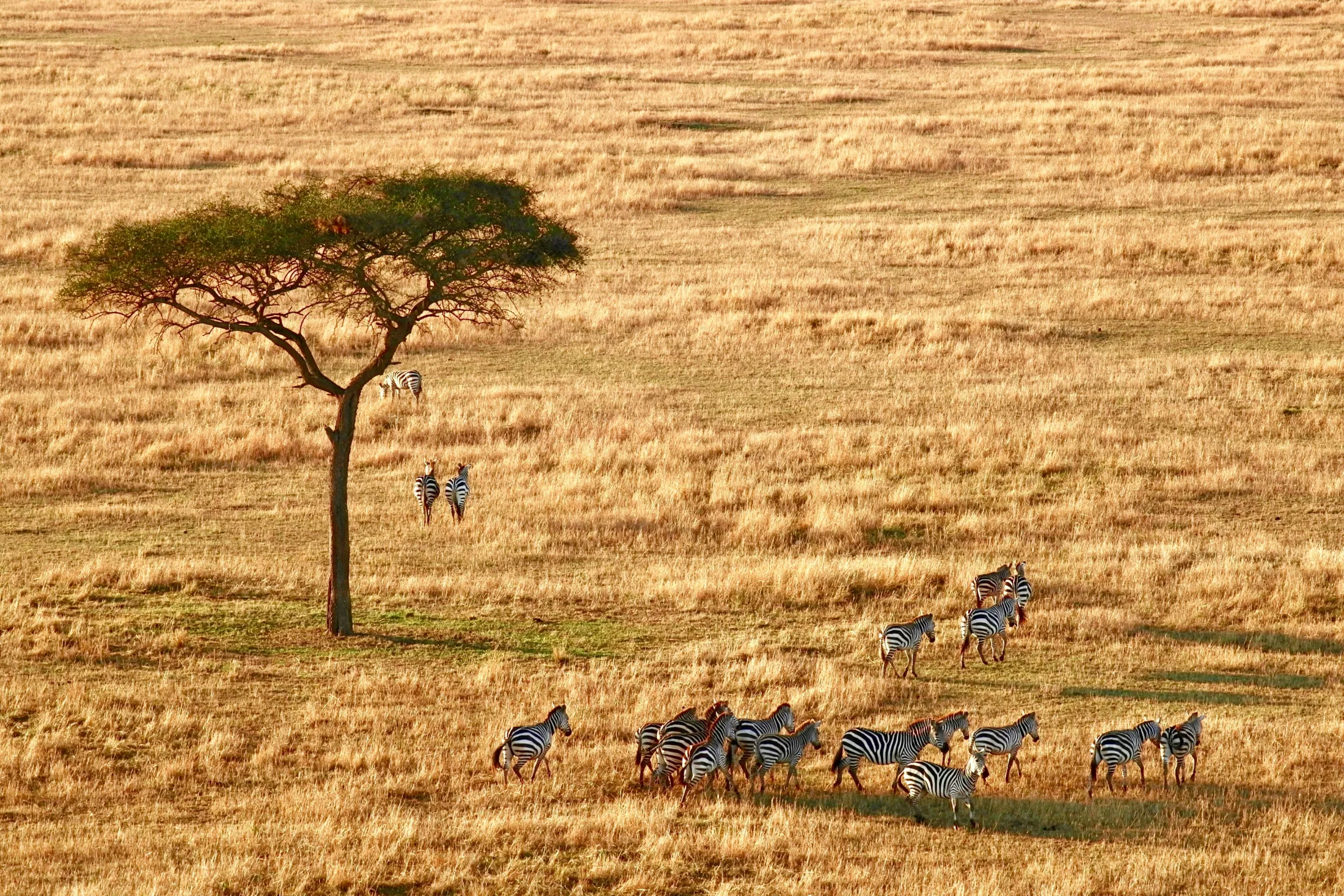
An aerial view shows a herd of zebras grazing across a golden, vast savanna near a lone acacia tree.

Day 11:Safari in Tarangire

This will be a full day in Tarangire with safari; we bring a lunch box with us and stop along the way to eat. Here we get safari from morning to night and will hopefully meet lots of animals. Tarangire Park is especially known for its baobab trees and large herds of elephants, but there are plenty of big cats, antelopes, and giraffes as well. A lovely dinner is prepared by the chef and served with a view of the river. A unique atmosphere! In the evening, we enjoy the African wilderness around the campfire, a wonderful experience where you let the impressions of the day sink in.

This will be a full day in Tarangire with safari; we bring a lunch box with us and stop along the way to eat. Here we get safari from morning to night and will hopefully meet lots of animals. Tarangire Park is especially known for its baobab trees and large herds of elephants, but there are plenty of big cats, antelopes, and giraffes as well. A lovely dinner is prepared by the chef and served with a view of the river. A unique atmosphere! In the evening, we enjoy the African wilderness around the campfire, a wonderful experience where you let the impressions of the day sink in.

Safari Lodge

B,L,D

A herd of elephants walks through tall green grass in front of dense, leafy trees.

Day 12:Tarangire and journey home

After breakfast, we have time for even more safari, and once again, we bring a lunch box to enjoy along the way. After the safari, we continue to the airport for the journey home that same evening. If the flight leaves at night or early the next morning, we spend an extra night at a hotel in Moshi.

After breakfast, we have time for even more safari, and once again, we bring a lunch box to enjoy along the way. After the safari, we continue to the airport for the journey home that same evening. If the flight leaves at night or early the next morning, we spend an extra night at a hotel in Moshi.

B,L,-

The sun rises over a sea of clouds surrounding the dark silhouette of a mountain peak.

Day 13:Homeward bound

Today the program is finished and you will be traveling home or onto other adventures.

Today the program is finished and you will be traveling home or onto other adventures.

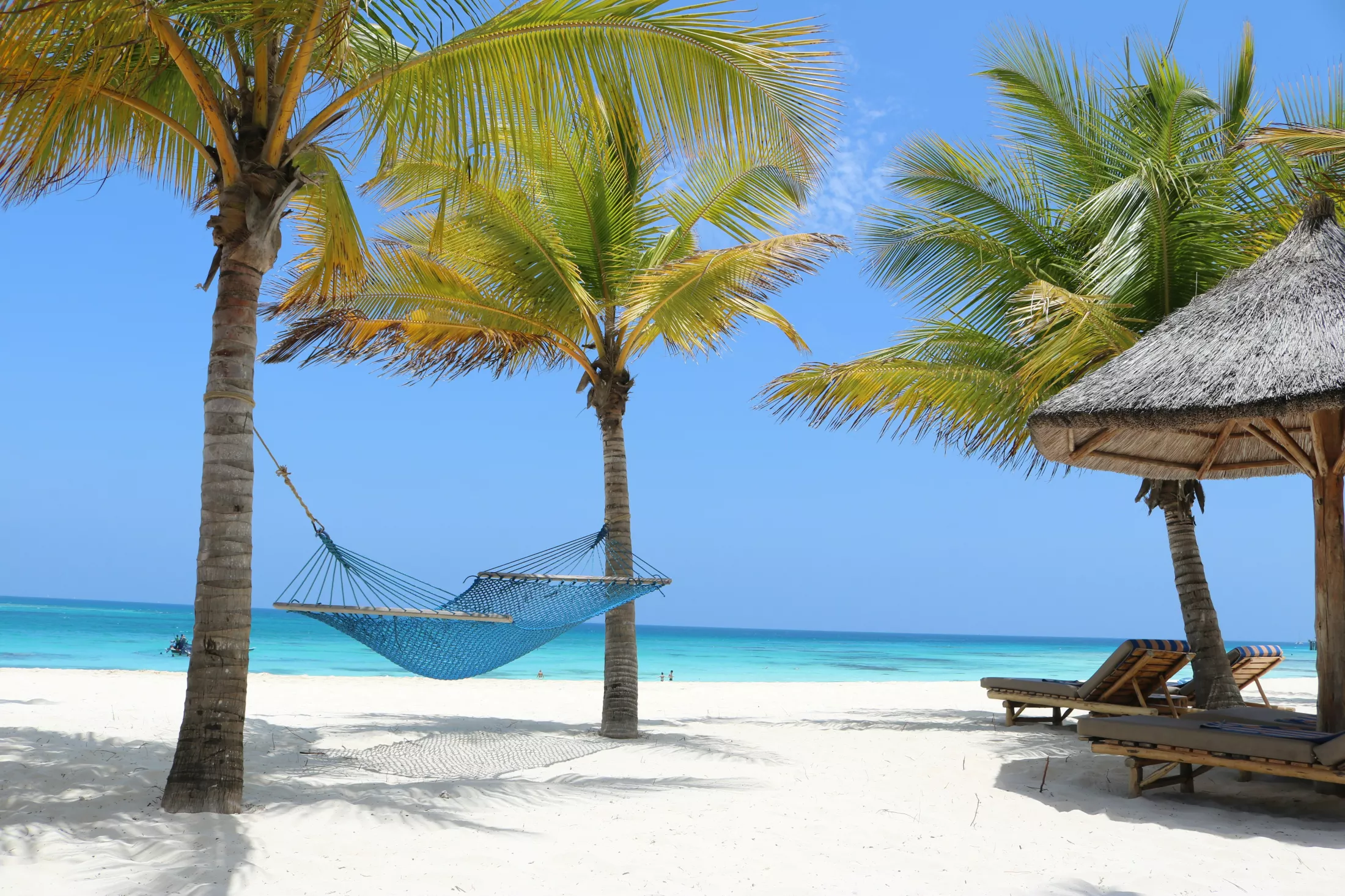
A blue hammock sways between two palm trees on a white sandy beach with turquoise ocean waters in the background.

Day x:Extended safari or a beach holiday in Zanzibar?

Many people want to extend their stay with a safari and/or end with a beach holiday in Zanzibar. Contact us for suggestions and prices.

Many people want to extend their stay with a safari and/or end with a beach holiday in Zanzibar. Contact us for suggestions and prices.

We are traveling towards Tanzania. The itinerary will vary based on where you are coming from. Group tours from Norway meet at Oslo Airport, and have a stopover before arriving at Kilimanjaro Airport. For other departures, airfare and tickets will not be included in the program, unless otherwise agreed. For groups without tickets included you will begin your program on Day 2.
We arrive at Kilimanjaro airport, where we are met by our African friends. We arrange our visas and make our way through the lines until we step out into Africa's warmth. After a couple of hours on the bus, we arrive at the cozy hotel in Moshi. Here we can gather our strength for the big day tomorrow! If time permits, we can take a trip into Moshi.

Hotel

-,-,D

We will hike the Rongai Route to the summit, which approaches from the north side. On this route, there are slightly fewer people than many of the other routes up Kilimanjaro, and it is a beautiful and varied nature experience. After breakfast, we drive to Rongai Gate (approx. 3-4 hours) for registration and lunch. Today's stage goes to Simba Camp, which is located at 2670 m. The route starts on narrow trails through jungle and rainforest. When we reach the camp, we get a fantastic view of Kilimanjaro and across the plains below Kilimanjaro.

Tent

B,L,D

3 hours

+300m

7 km

After being woken up with tea and coffee in the tent, we eat breakfast and start today's stage - quickly noticing that this stage is different from the previous one. The vegetation changes all the way up toward Kilimanjaro - and eventually, you will get a great view of Kibo and the crater rim. We hike steadily uphill before arriving at the camp. Here we relax, and those who feel energetic can take a short trip in the area after lunch, which is recommended to acclimatize even better.

Tent

B,L,D

3-4 hours

+780m

6 km

This is also a relatively calm day. We eat breakfast and start today's stage quite steeply, up narrow trails, and now the vegetation is no longer as tall and dense. Once at the camp, we get a fantastic view of the crater and the glaciers on the east side of the summit. The air is starting to get thinner, the trails gradually narrower, and tonight we spend the night in a camp by Kikelewa Caves, at approximately 3600 m.

Tent

B,L,D

4-5 hours

+150m

9 km

Once again, we are woken up with tea and coffee in the tent – a luxury we have gotten used to. After breakfast, we start hiking up grassy slopes while the vegetation gradually becomes more sparse. Today's stage is a bit steeper than the previous two, but we do not go as far. To adapt to the altitude in the best possible way, we constantly remind each other to walk slowly and drink plenty of water along the way. Today, we spend the night at the route's finest camp; Mawenzi Tarn Camp (4300 m) – and have another nice dinner in the mess tent. Before dinner, we go on a short acclimatization trip up toward Mount Mawenzi. In clear weather, we have a panoramic view of Kilimanjaro almost all day.

Tent

B,L,D

5-6 hours

+700m

6 km

Now the lunar landscape begins, and across the saddle between Mawenzi Camp and Kibo (4700 m), we arrive at Kibo Camp where we pitch our tents. We are heading up in altitude on today's stage, but we keep a slow pace and the terrain is easy to move in. The camp has a spectacular location at the base of the Kibo crater wall. Here we make sure to doze, gather strength, and prepare for tonight's summit push – interrupted only by another delicious dinner from the chef!

Tent

B,L,D

6-8 hours

+400m

10 km

This is the longest and toughest stage of the whole trip. We start during the night; it can be cold, and it can be starry and bright with moonlight. Most people feel an extra sense of excitement as we hike slowly upward. It eventually starts to lighten, and we take a break at Gilman's Point (5700 m) and enjoy the magical sunrise over the jagged Mawenzi ridge. The sun gives us extra strength, and from Gilman's Point, the trip to Uhuru Peak (5895 m) – the main summit of Kilimanjaro – takes about two hours. We pass Stella Point, the glacier, and the ice formations that still make up large parts of the summit plateau. It feels incredible to reach the sign showing that we are on the roof of Africa! At Uhuru Peak, we pull out our cameras and quickly forget all the hard work! After the summit session, the descent begins. It is a long way downhill to Kibo (4700 m), where we take a break and eat a bit of lunch before continuing nearly six miles down to Horombo Camp Site (3720 m), where we spend the night and rest after a tiring but great day!

Tent

B,L,D

12-16 hours

1200m/2200m

15 km

The last day on the mountain. We enjoy the rainforest on the way down to Marangu Gate (1860 m), where we have earned a local Kilimanjaro beer! Everyone who reached the summit receives a certificate, and here we also say goodbye to our faithful porters and guides. We are driven back to the hotel – where a shower, a dip in the pool, and a delicious dinner taste amazing!

Hotel

B,L,D

5-7 hours

-1850m

20 km

After an early breakfast, we continue to Tarangire, where we will spend the next two days on safari. It is easy to get swept up in the fantastic wildlife we now find ourselves in the middle of. We will spend two days at this intimate camp that gives us the true "Karen Blixen" feel! There are fantastic views of the river, gourmet food, and luxury tents that will take your breath away. It is a small camp, so there are not many people here other than us, our local friends, and plenty of four-legged animals. We enjoy good food and have time for even more safari viewing before the sun goes down. We drive 4-wheel-drive vehicles with open tops, and it is a fascinating world we are driving into, quite unaffected by our presence.

Safari Lodge

B,L,D

This will be a full day in Tarangire with safari; we bring a lunch box with us and stop along the way to eat. Here we get safari from morning to night and will hopefully meet lots of animals. Tarangire Park is especially known for its baobab trees and large herds of elephants, but there are plenty of big cats, antelopes, and giraffes as well. A lovely dinner is prepared by the chef and served with a view of the river. A unique atmosphere! In the evening, we enjoy the African wilderness around the campfire, a wonderful experience where you let the impressions of the day sink in.

Safari Lodge

B,L,D

After breakfast, we have time for even more safari, and once again, we bring a lunch box to enjoy along the way. After the safari, we continue to the airport for the journey home that same evening. If the flight leaves at night or early the next morning, we spend an extra night at a hotel in Moshi.

B,L,-

Today the program is finished and you will be traveling home or onto other adventures.

Many people want to extend their stay with a safari and/or end with a beach holiday in Zanzibar. Contact us for suggestions and prices.

What's included in the price

Included

Oslo-Kilimanjaro, roundtrip.

Norwegian-speaking guide on programs with Norwegian language.

English-speaking local guides, cooks, and porters.

All transportation as specified in the program.

In shared double room and two-person tent.

Meals as specified in the program.

Water, coffee, and tea on the mountain trip.

Not included

For trips where flights are not included, please check our website to confirm that the departure is guaranteed before booking your own plane tickets. For each trip, we require a minimum number of confirmed participants before the departure can be guaranteed. 

It is important to check that your travel insurance covers helicopter evacuation in Tanzania. It is important for us to know this in case an evacuation should become necessary.

For Tanzania.

To local guides and assistants. Tips are a common and expected part of being a tourist in many of the destinations we visit. These are given in cash during the trip and therefore cannot be included in the trip price.

Available before and after mountain trip upon request, limited quantities.

Request quotes from other cities in Norway.

State approved travel insurance in addition to personal travel insurance.

Terms and Conditions 

We reserve the right to change prices. The day by day program is indicative and changes may occur. We also refer to our general travel conditions.

Travel Insurance

On all our trips, we require you to have full travel and accident insurance, which must also cover potential medical repatriation. Read more about travel insurance.

Highlights

Reviews

Rated
-
- reviews
(-)
(-)
(-)
(-)
(-)

Safety & Grading

Read more

For departures with Norrøna Adventure guides:

  • 24-hour emergency response
  • Guides trained in first aid in the field
  • Basic first aid equipment available
  • Cooperation with Turlegen.no for medical advice

On our trips, it is important to understand that we often will be traveling far off the beaten track. We will, of course, do everything we can to assist if anything should happen, but a potential rescue operation can be demanding. It is therefore extremely important that all participants arrive well-prepared and ready to handle unforeseen situations.

Physical level

3/6 Physical

Some segments of the journey may prove challenging. It's essential to possess a solid level of fitness prior to departure. Persistence will be required in reaching the trip's goal.

Comfort level

2/6 Comfort

We overnight in tents. We are usually served food, but may have to contribute with cooking on certain occasions.

Risk level

3/6 Risk

Activities/trips with some risk. Certain incidents may occur, and they may be of such a nature that they may require professional help.

Training and Preparations

Attempting to reach nearly 6,000 meters will always be an ambitious goal. We believe the summit is achievable for many, but many find the night at the summit particularly demanding. It’s by no means guaranteed that everyone will make it to the summit. If you haven’t spent time at high altitudes before, be prepared for some exhausting surprises and headaches, but we’ll give you good advice along the way.

Many people wonder what it takes to go on a trip with Norrøna Adventure to high mountains. Here's an introduction to hiking at altitude - what to expect and how to prepare with the right clothing, equipment and training.

It’s a big advantage to have a lot of hiking experience in the mountains. You should be an experienced hiker and in generally good physical shape to participate. Longer hikes in the countryside, cabin-to-cabin trips, or camping trips in the mountains are good preparation.

If you need any tips, we have a training plan for high mountains—feel free to ask us about it.

We also recommend that you read up a bit about the country and the trip you’re going on before you leave. This will make the experience even more fulfilling.

Visas, Vaccinations and Health

Before embarking on our journey together, we kindly remind all trip participants to check their respective country's visa status and vaccination requirements. Ensuring your travel documents are in order is a crucial step in guaranteeing a smooth and hassle-free adventure. 

Norwegian citizens need a visa to enter Tanzania. You can apply for a visa to Tanzania online before departure, or purchase one at Kilimanjaro Airport for 50 USD. Your passport must be valid for at least 6 months after your return date. See also the current entry and visa regulations on the Ministry of Foreign Affairs' country pages.

If you are over 67 years old, you should have a thorough medical check-up before your trip. Make your doctor aware that this is a trip involving physical exertion and moving off the beaten track.

It is important that you complete all parts of the registration form (especially where we ask for information about health and allergies), and let us know if there is anything we need to be aware of prior to and during the trip. Relevant health information that may affect the trip should also be communicated to the guide at the start of the trip. *Note* - If you are on regular medication, have known allergies or anything similar, you must always bring your personal medication with you.

See the overview on FHI´s pages on travel health advice. For vaccination and guidance, please contact Sentrum Reisemedisin: Reisemedisin.no.

Additional Information

For trips where flights are not included, please check our website to confirm that the departure is guaranteed before booking your own plane tickets. For each trip, we require a minimum number of confirmed participants before the departure can be guaranteed.

On some departures, the flight times mean that we arrive on the same day we depart; on other trips, we arrive the day after we left Oslo. This means the trip lasts 12 or 13 days, including travel days. Flight schedules will be sent out along with the final invoice 70 days before departure.

We stay at hotels in the lowlands before and after the trip. During the mountain trek, we stay in two-person tents at established campsites. We bring our own tent where we eat our meals, as well as our own toilet tent.

In Tanzania, it is summer all year round, but interrupted by rainy seasons. Statistically speaking, there is a long rainy season from late March to early June, and a short rainy season in November. All our departures are scheduled at times that are favorable for climbing the mountain.

Our minimum age requirement is 16 years old. If you are under 18, you must travel with a parent or guardian.

It is not always easy to get hold of gluten-free wholemeal bread, lactose-free alternatives or to accommodate other food preferences. If you have any allergies, please let us know in the registration form and we will try to accommodate you as best we can. However, we would still recommend that anyone with special dietary needs bring some alternatives in the form of, for example, a packet of crispbread, energy bars or similar that you know you can eat.

Equipment list

This list is intended as a guideline, so that we have what we need regardless of the weather we get on the trip. Remember that you can also get used outdoor equipment that works perfectly. Get in touch if you have any questions. TIP: We recommend that you have the most important equipment in your hand luggage, for example hiking boots and gore-tex jacket/trousers.

Obligatory

Clothing

We recommend wool underwear for both men and women. Wool sportstop is recommended for women. A boxershorts with windstopper is recommended for cold days. 

2 sets of top and bottom. Not too thick, instead use multiple layers.

Wool, 2-3 paris.

2-3 pairs. Wool or synthetic material.

We recommend thin wool.

Fleece or wool. 

Down or synthetic insulation, featuring a hood and ideally long enough to cover the butt.

Gore-Tex or similar. Must hold out wind and rain. Ventilation zippers along the legs is recommended.

Warm hat for cold days.

Thick, wool.

The overmittens should be roomy and extend well up the forearm. They should be windproof and ideally handle some moisture. They need to provide a good grip, even with the inner mittens inside. The inner mittens should be thick and warm, preferably made of wool.

Footwear

Solid hiking boots with extra room for warm socks.  

Equipment

Avoid bringing a suitcase, they are more difficult to transport between hotels.

Needs to have space for everything you want to bring on the hikes.

Comfort temperature rating of at least -20°C. Both down and synthetic are fine, remember to pack it in a waterproof bag. A liner can increase the comfort temperature.

Inflatable, for extra comfort. 

Remember new/extra batteries.

A solid pair, with dark glass. 

Personal medicines and, for example, band-aids, blister plaster, sports tape, throat lozenges, nasal drops, Paracetamol/Ibuprofen, stomach regulators, etc.
We need to know about all medicines you are taking, in case something happens. 

Tooth brush, tooth paste, small towel, ear plugs, wet wipes, biodegradable soap, etc.

High SPF, 30-50. Remember chapstick for lips and nose. 

Toilet paper, antibac, and waste bags for the paper. Remember leave no trace.

2-3 litre bottles, with an insulation cover, so they dont freeze. For example Nalgene bottles with wide mouth. They can handle hot water, so you can use them to keep warm in the sleeping bag.

Passport, tickets, bank card, proof of vaccination andproof of insurance. Remember to have a copy of important documents on your phone and/or somewhere in your bag. 

Recommended

Clothing

Thick, warm, large mittens are important. Make sure you have plenty of room inside and that they are long. There are several good expedition gloves in down/primaloft.

In case of a short rain shower.

Footwear

Solid, with a solid sole. Such as approaches shoes.

Equipment

Light. Have to be foldable or telescope.

As light at possible. 

Resorb, electrolytes, isotonic drink etc. For energy, fluid balance and taste.

Nuts, chocolate, energy bars, etc.

Packing Tips

The temperature in Moshi is pleasant, around 20–25 degrees. In the mountains, it can be warm enough for shorts during the day up to 4,000 meters above sea level, but temperatures are generally below 0 degrees at night starting from the first camp. Temperatures can drop to as low as minus 10–20 degrees Celsius on the night at the summit.

You’ll only carry a daypack; the rest of your luggage will be transported by porters from camp to camp. Luggage carried from camp to camp cannot weigh more than 15 kilograms. Everyone is provided with a simple sleeping pad, but most people will want to bring an inflatable pad as well, for better insulation and comfort.

We can leave some luggage at the hotel, which we’ll retrieve after the mountain hike (safari clothes, travel clothes, etc.).

Recommended trips

Masai Mara Safari & Beach Holiday

Masai Mara Safari & Beach Holiday

The big five, stunning sunsets and pristine white beaches

Learn more

Testimonial

Super satisfied with the setup from start to finish! Clear that this is something Norrøna Adventure and partners in Tanzania have extensive experience with, so that we as participants don't have to worry about anything regarding the setup.

– Kristin, 2022