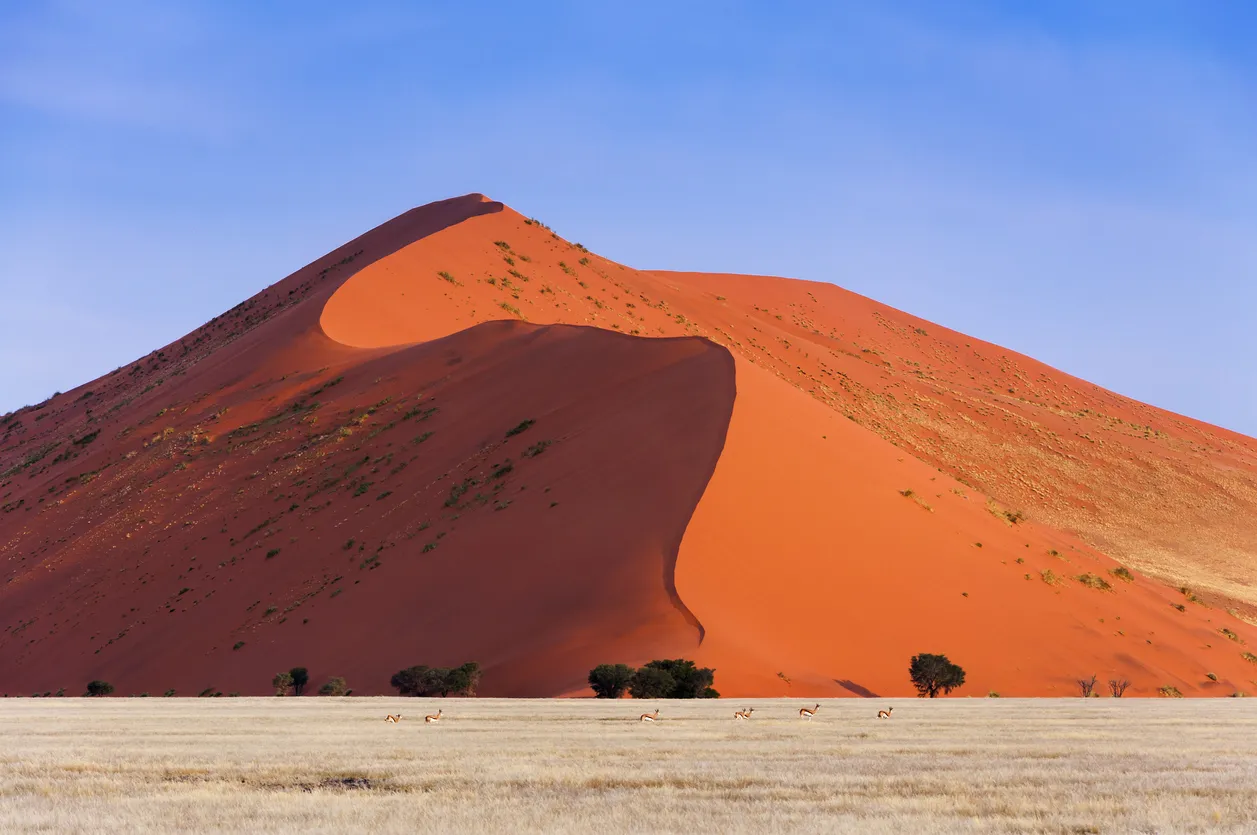
A red massive sand dine in an African landscape.
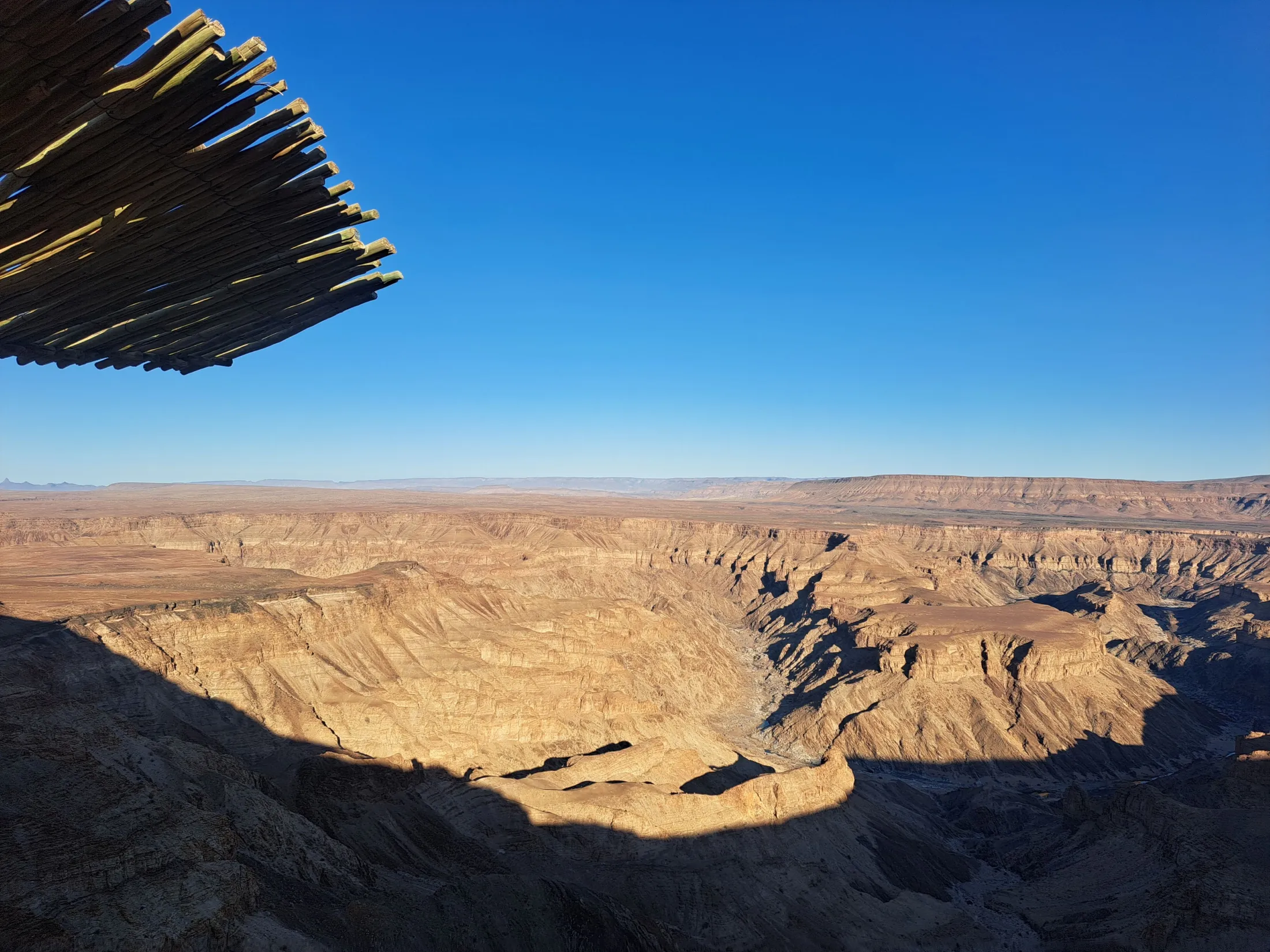
A view of a vast canyon under a clear blue sky.
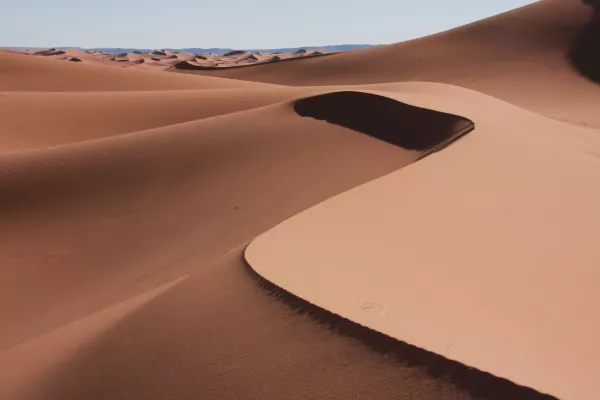
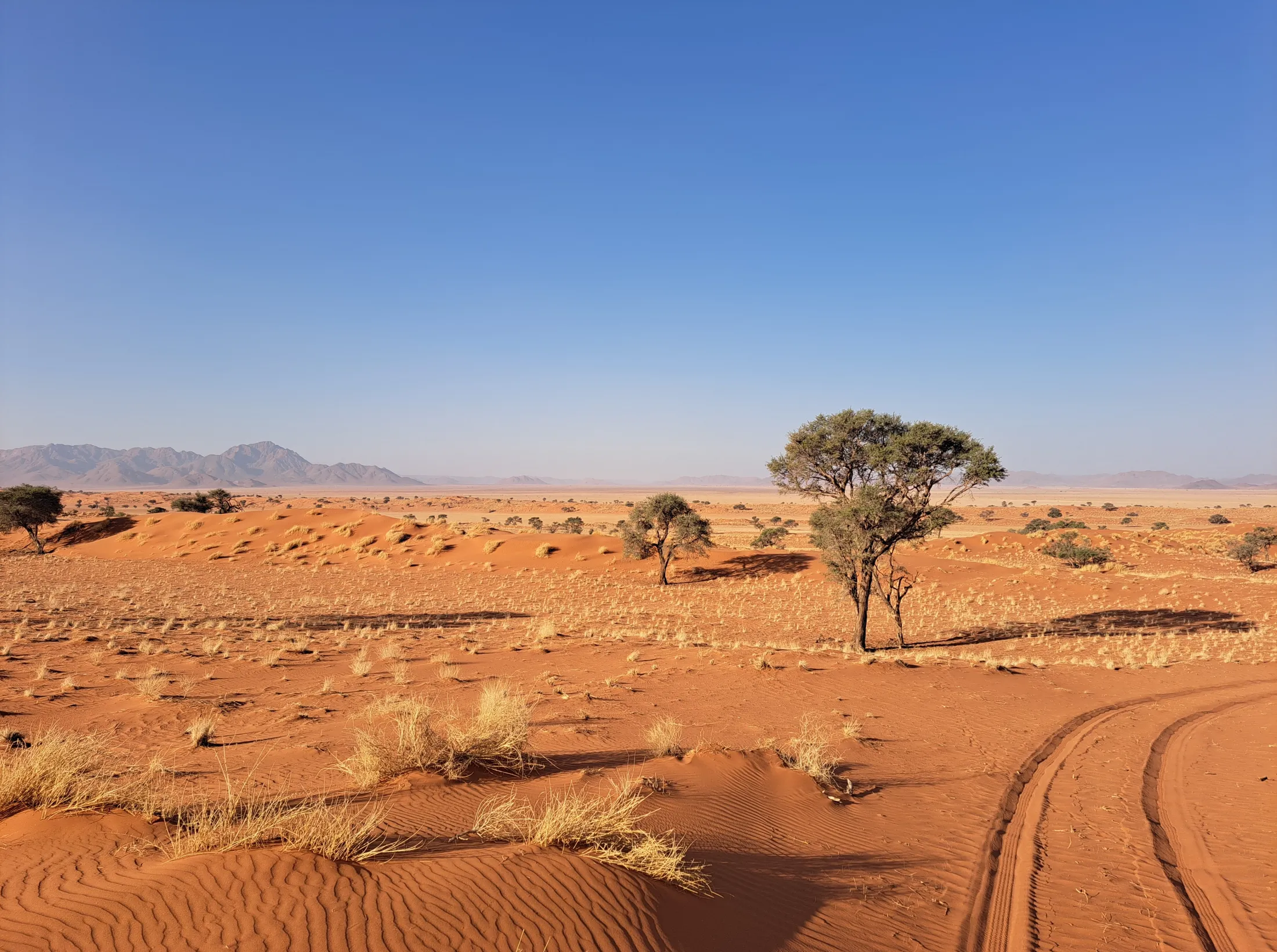
A reddish, flat desert landscape with mountains in the horizon under a clear blue sky.
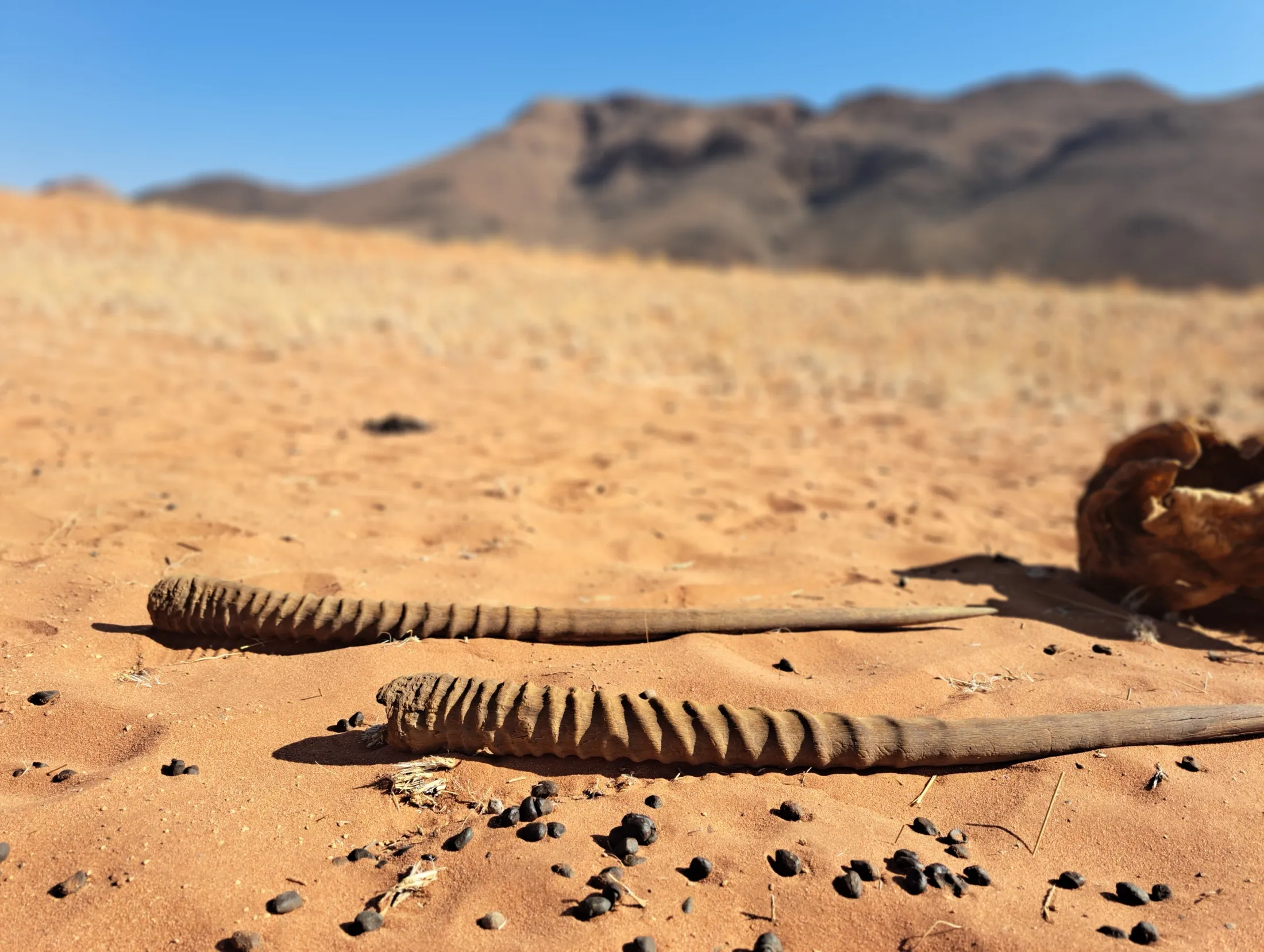
Two antelope horns in the desert, with mountains in the background and a blue sky.
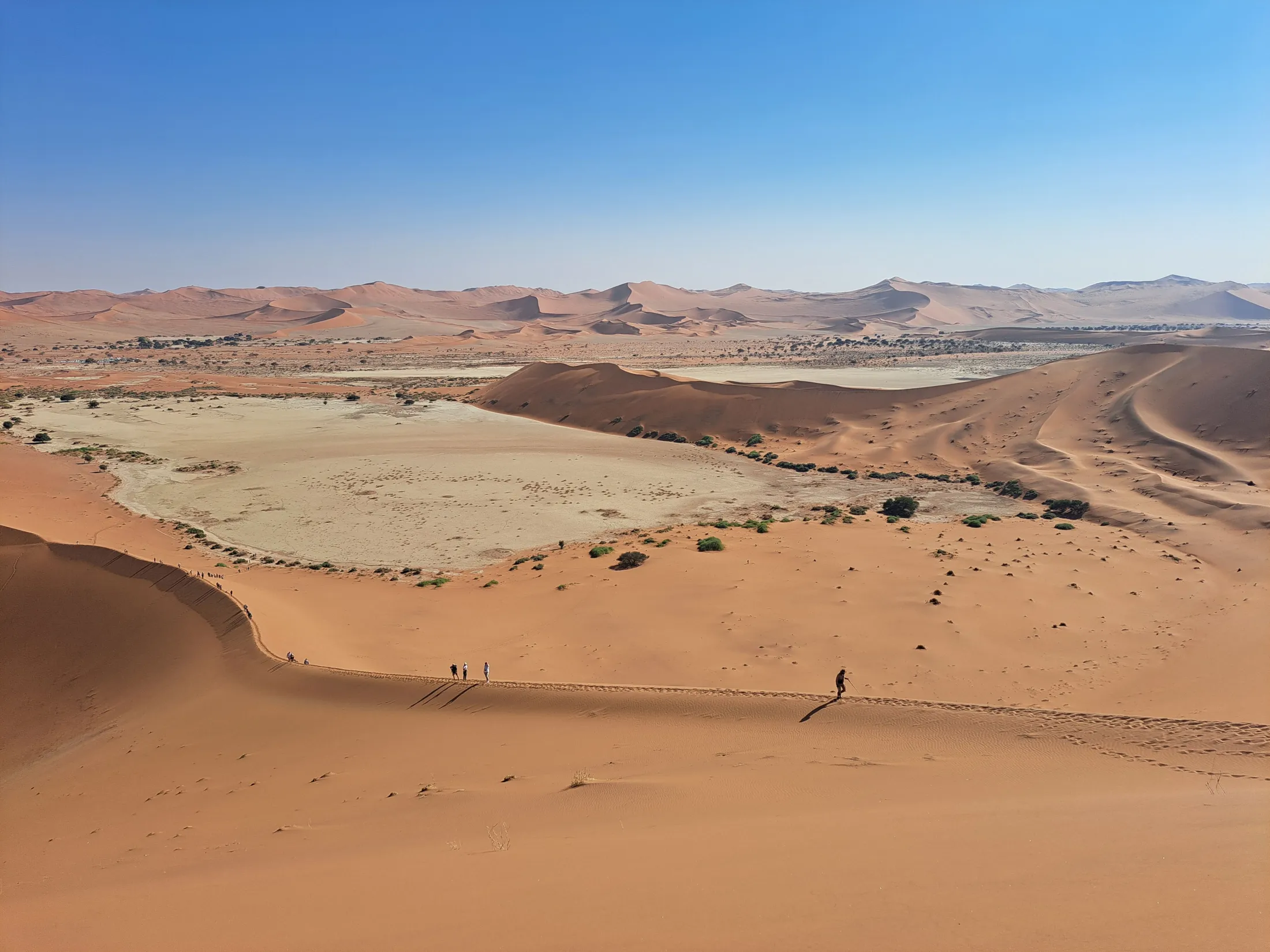
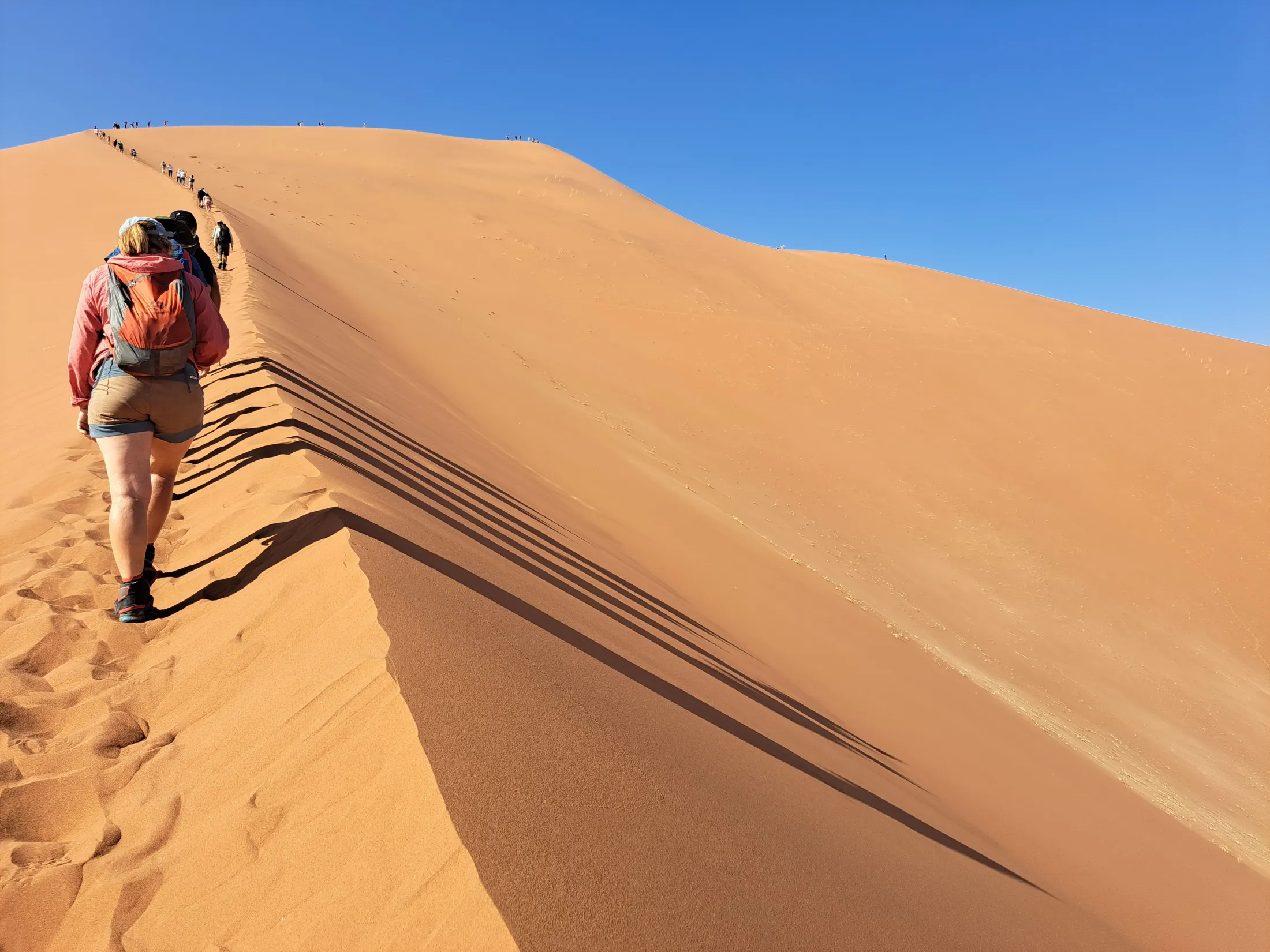
Hikers walking up the ridge of an enormous sand dune in the desert under a blue sky.
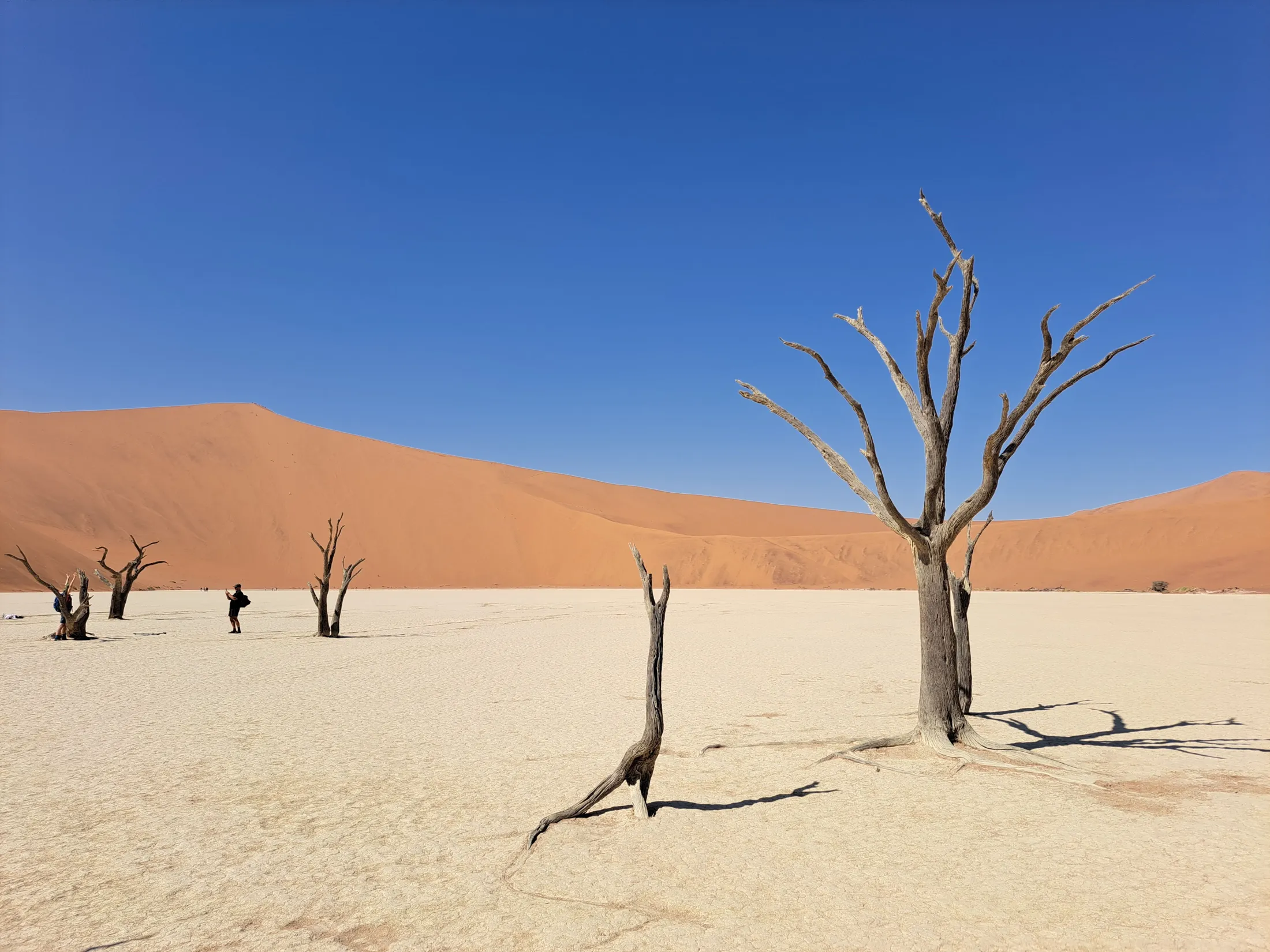
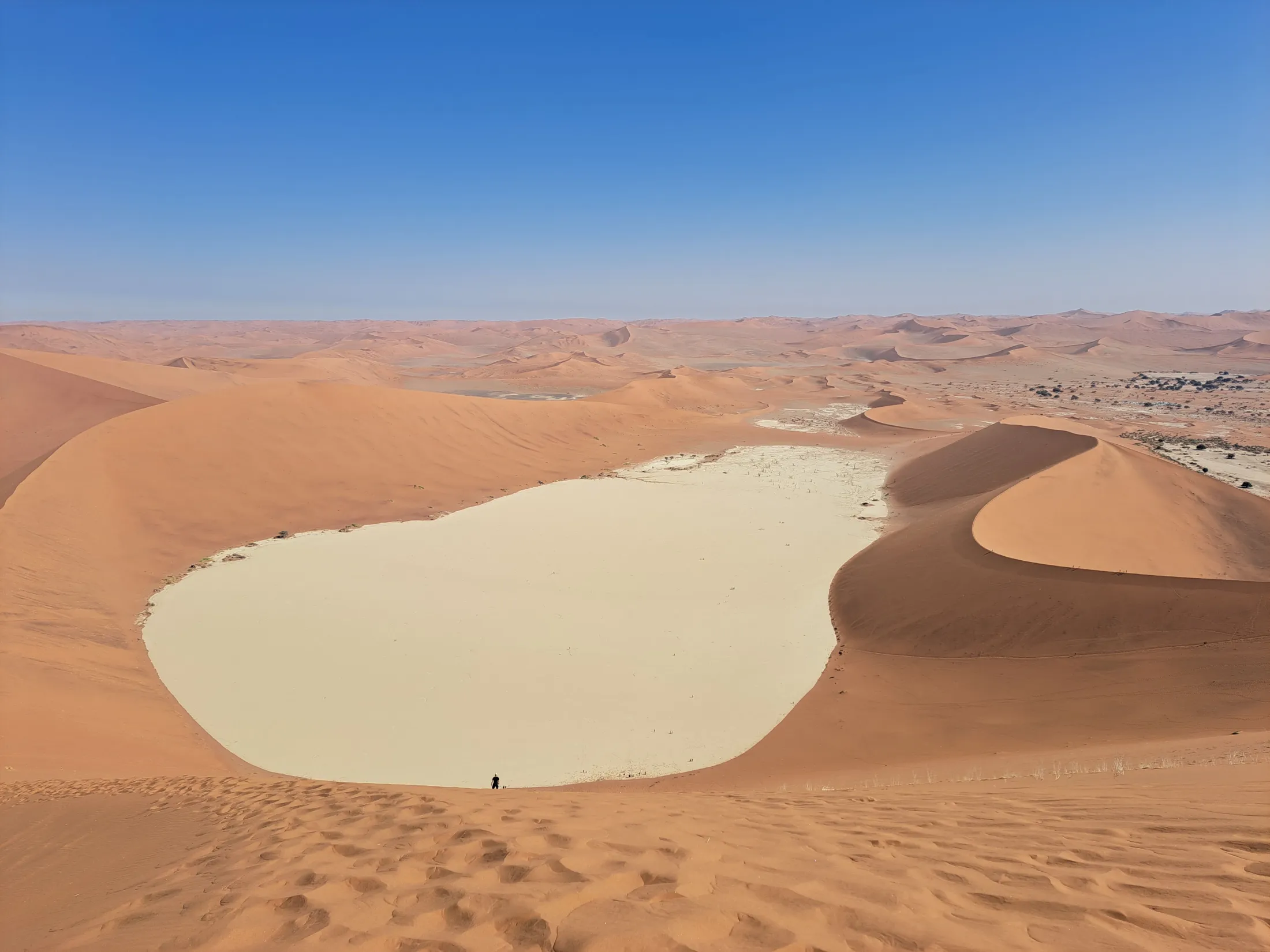
A white salt pan surrounded by towering red sand dunes under a clear blue sky.

Exotic hiking in Namibia

Fish River Canyon and Tok Tokkie Trail

Exotic hiking in Namibia

Fish River Canyon and Tok Tokkie Trail

From USD 8733

Namibia is a country full of superlatives. It boasts the world’s second-largest canyon, the largest sand dunes in the world, the oldest desert, the darkest skies, and the oldest cultures; it is among the countries with the lowest population density in the world and has the largest protected areas in Africa. Our hike takes us through both the Fish River Canyon and the Namib Desert, and we’ll sleep under the open sky in both places. We’ll climb one of the world’s tallest sand dunes, Big Daddy, and hike in the Naukluft Mountains. This is a rare adventure unlike any other.

Highlights

  • The world's second largest canyon, Fish River Canyon
  • Namib Desert, the world's oldest desert
  • Staying in the desert under the open sky and a million stars
  • Big Daddy, one of the world's highest sand dunes
  • Get up close to Africa's wild animals, such as antelope, wildebeest, impala, giraffe and ostrich

We start in the magnificent Fish River Canyon - the second largest canyon in the world. Only a few people get permission to hike here per day, so this is a unique experience. Along the way, we camp under the open sky where the stars are so close it seems like you can touch them. The tour continues to the Namib Desert, and hiking on the so-called Tok Tokkie Trail. This is an exclusive hike that must be booked a year in advance. Here we get up close to the exotic desert, from mountainous terrain to sand dunes, and our experienced guide introduces us to the life and creatures of the desert. In the evening, we'll enjoy a three-course dinner and relax in camp until the desert's magical sunset. We also experience the huge, rust-red dunes of Sossusvlei, and climb to the top of one of the world's highest dunes - Big Daddy. We finish with a hike in the Naukluft Mountains, an overnight stay at a safari resort, and a safari in an open jeep. This will be an adventure!

15

8-10

NO/EN

3/6

2/6

2/6

Dates and booking

Fri 09. July - Fri 23. July 2027

USD 8733

Flight included

Available

Book

Can't find a date? We'll notify you when new trips open!

Plan it your way

Want this trip just for your group? Or got something different in mind? We've got you.

Make this a private trip

Opening hours Phone
Mon-Fri : 08-20
Sat-Sun : 14-17
Opening hours Chat
Mon-Fri : 07-23
Sat : 10-18
Sun : 13-21
CET

Day by day

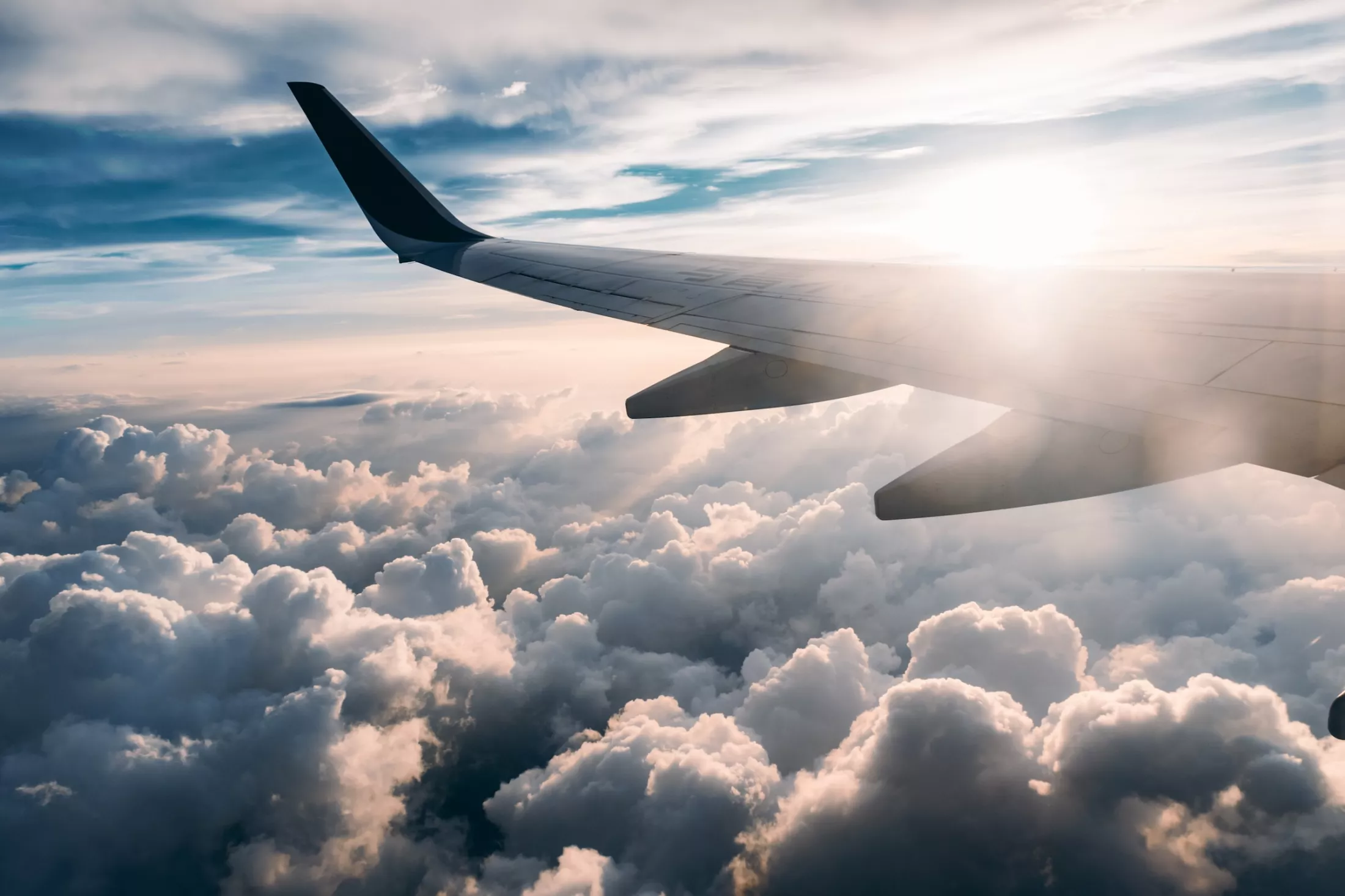
Plane wing in the sky.

Day 1:Departure

We are traveling towards Namibia. The itinerary will vary based on where you are coming from. For some people, you will not have to leave until day 2 of the program. Group tours from Norway meet at Oslo Airport, and have a stopover before arriving in Windhoek. For other departures, airfare and tickets will not be included in the program, unless otherwise agreed.
We are traveling towards Namibia. The itinerary will vary based on where you are coming from. For some people, you will not have to leave until day 2 of the program. Group tours from Norway meet at Oslo Airport, and have a stopover before arriving in Windhoek. For other departures, airfare and tickets will not be included in the program, unless otherwise agreed.
-,-,-

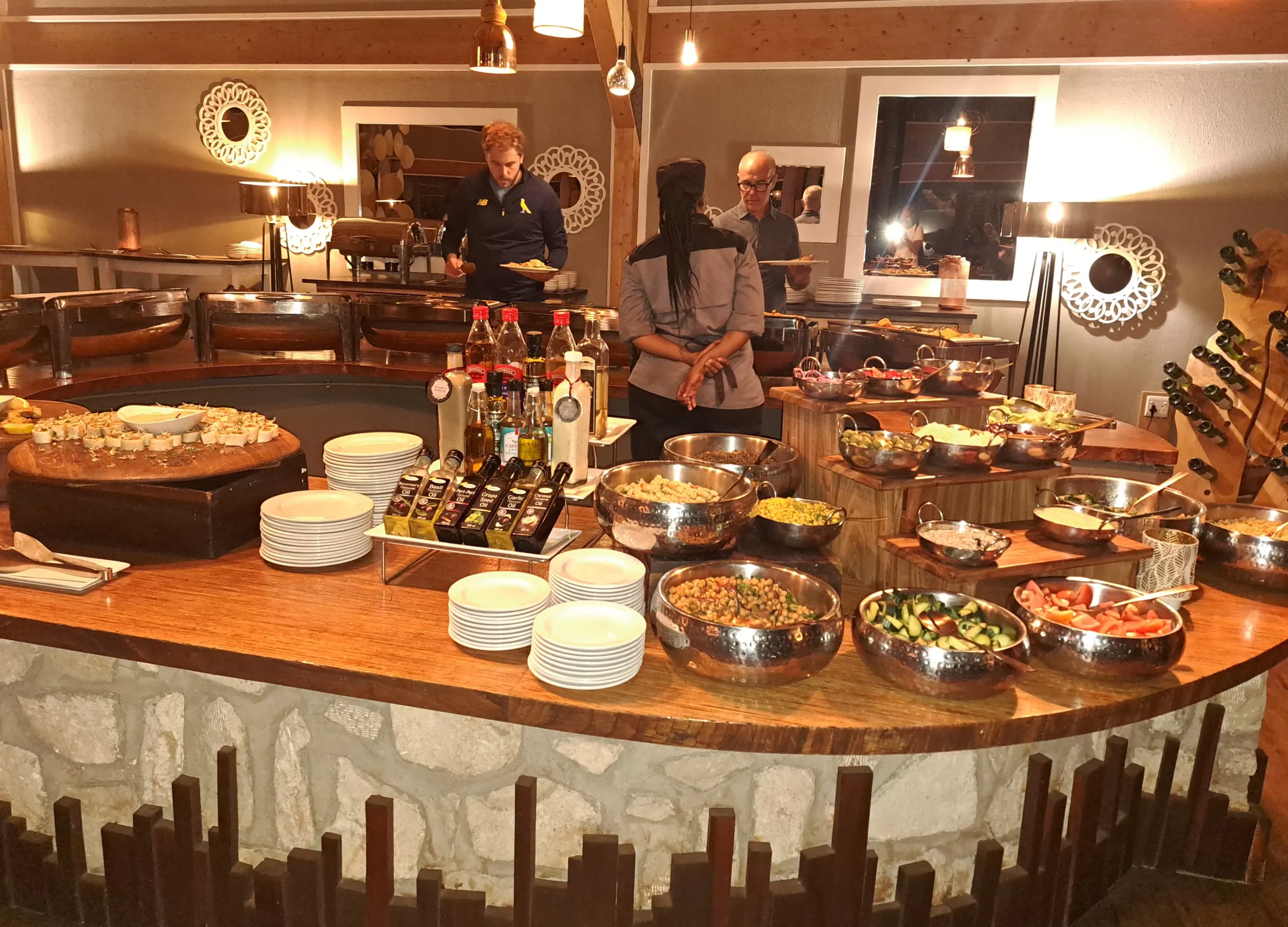
Buffet at a hotel with one server, and two guests taking food.
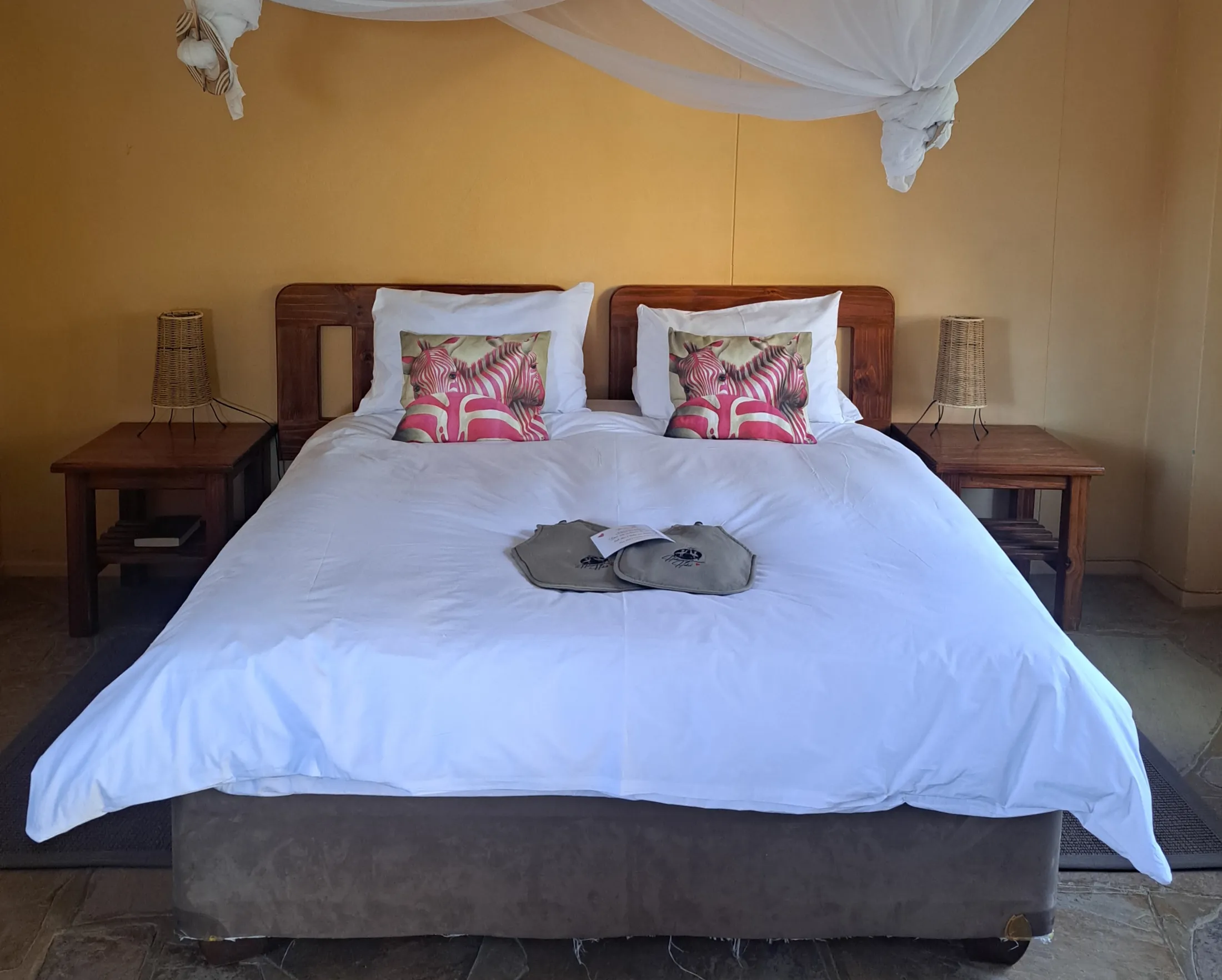
Double bed with white sheets in a cozy room.

Day 2:Arrival Windhoek - heading south

Upon arrival in the Namibian capital, we are warmly welcomed by our local friends. We take our seats in the minibus waiting for us and head south. After a long drive, we arrive at our lovely little hotel for the night, located at the foot of the red sand dunes of the Kalahari Desert. There will be a welcome dinner early in the evening where we’ll go over the itinerary for the next few days.

Upon arrival in the Namibian capital, we are warmly welcomed by our local friends. We take our seats in the minibus waiting for us and head south. After a long drive, we arrive at our lovely little hotel for the night, located at the foot of the red sand dunes of the Kalahari Desert. There will be a welcome dinner early in the evening where we’ll go over the itinerary for the next few days.

Lodge

-,-,D

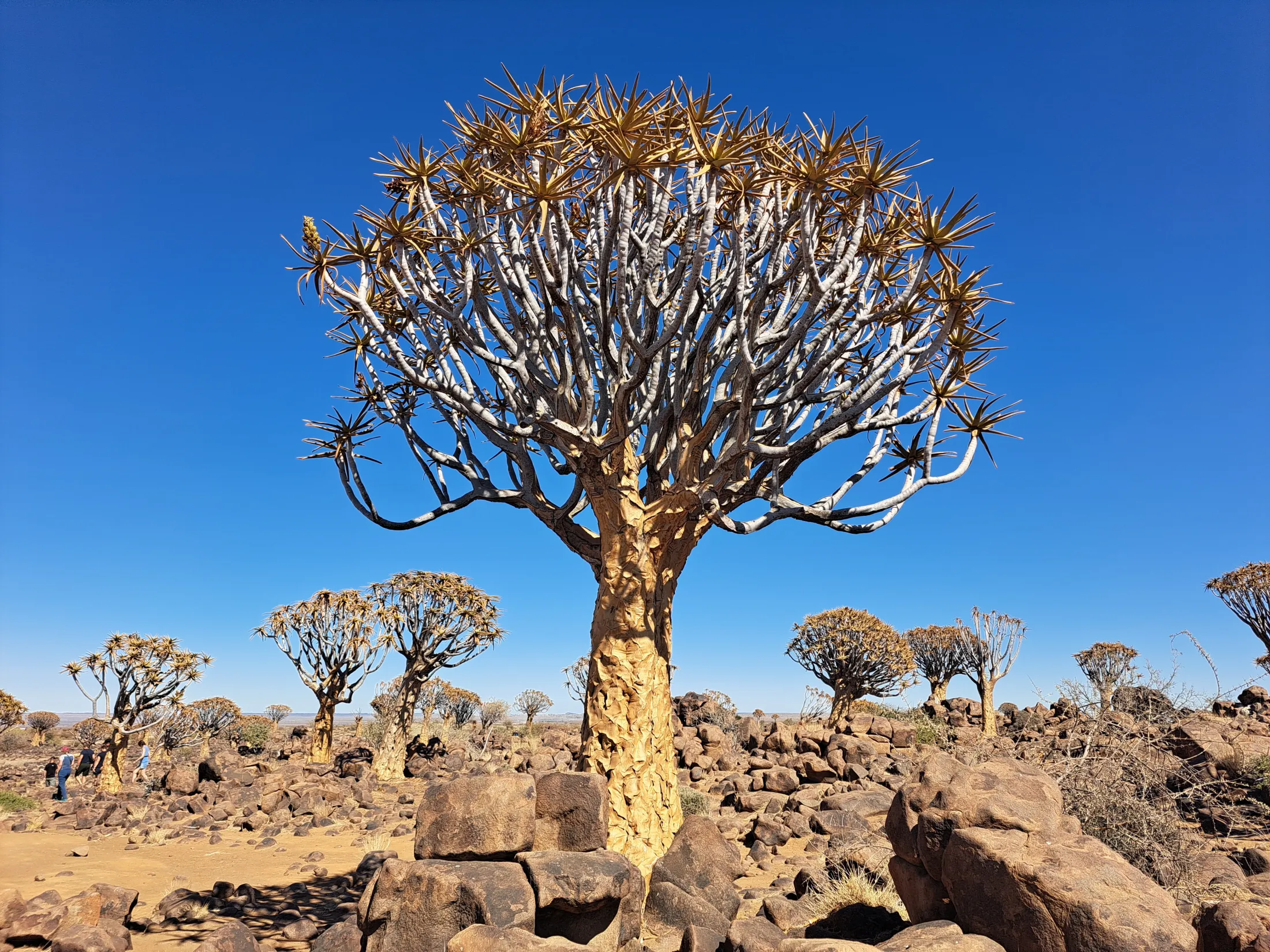
Quiver trees in a dry landscape with blue sky.
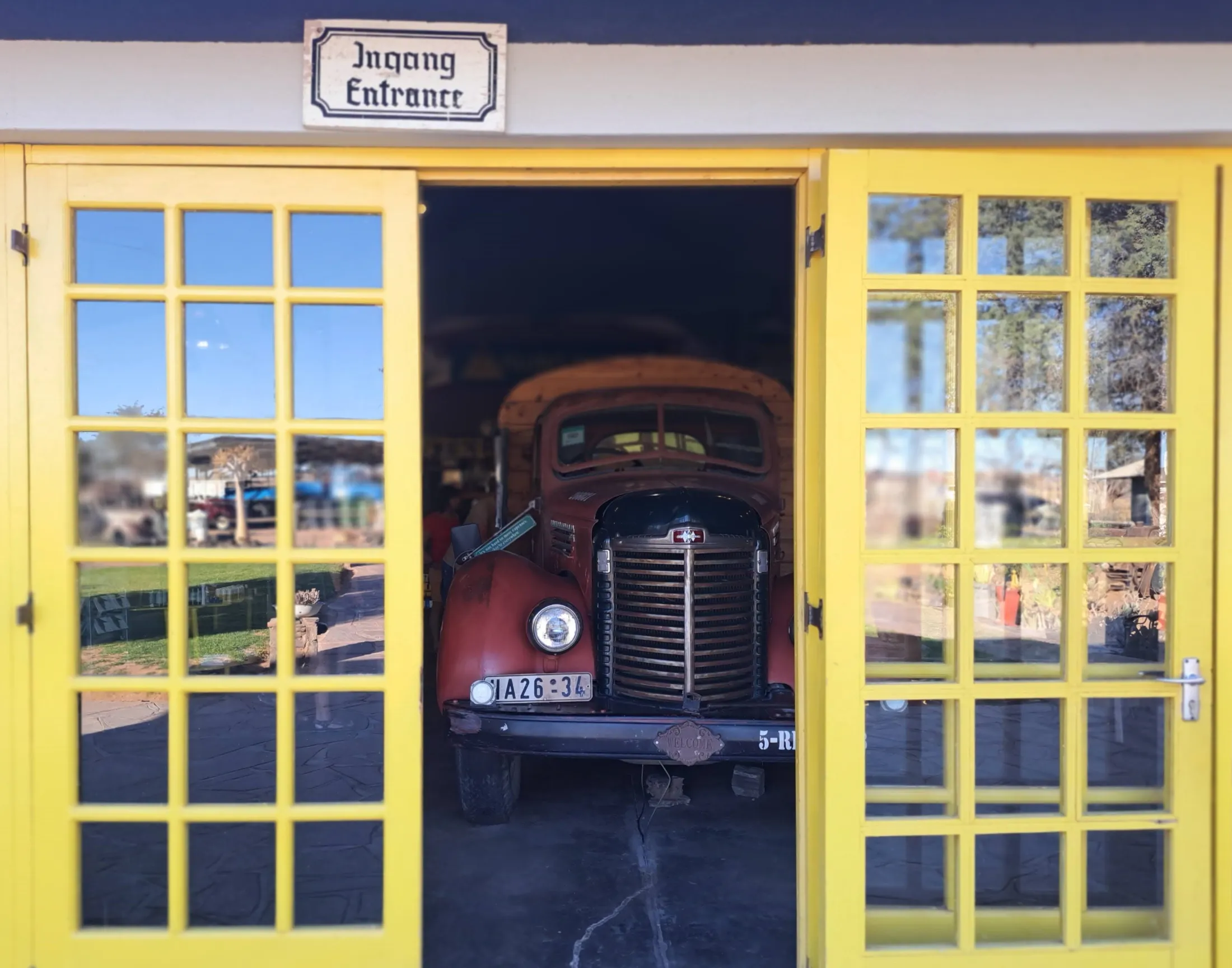
A old styled car standing inside a garage with yellow doors.

Day 3:In the very south of Namibia, Fish River Canyon

We start with a hearty breakfast and continue south to Keetmannshoop. Along the way, we stop in a forest of so-called quiver trees. These unique plants grow only in southern Namibia and northern South Africa. They are highly heat-resistant and can survive many months without rain thanks to their ability to store water. In the afternoon, we arrive at our lodge near Fish River Canyon. Here we enjoy a delicious dinner and take one last shower before the next few days. We go over the itinerary, pack, and prepare for the exciting trip that starts tomorrow.

We start with a hearty breakfast and continue south to Keetmannshoop. Along the way, we stop in a forest of so-called quiver trees. These unique plants grow only in southern Namibia and northern South Africa. They are highly heat-resistant and can survive many months without rain thanks to their ability to store water. In the afternoon, we arrive at our lodge near Fish River Canyon. Here we enjoy a delicious dinner and take one last shower before the next few days. We go over the itinerary, pack, and prepare for the exciting trip that starts tomorrow.

Lodge

B,-,D

3 hours

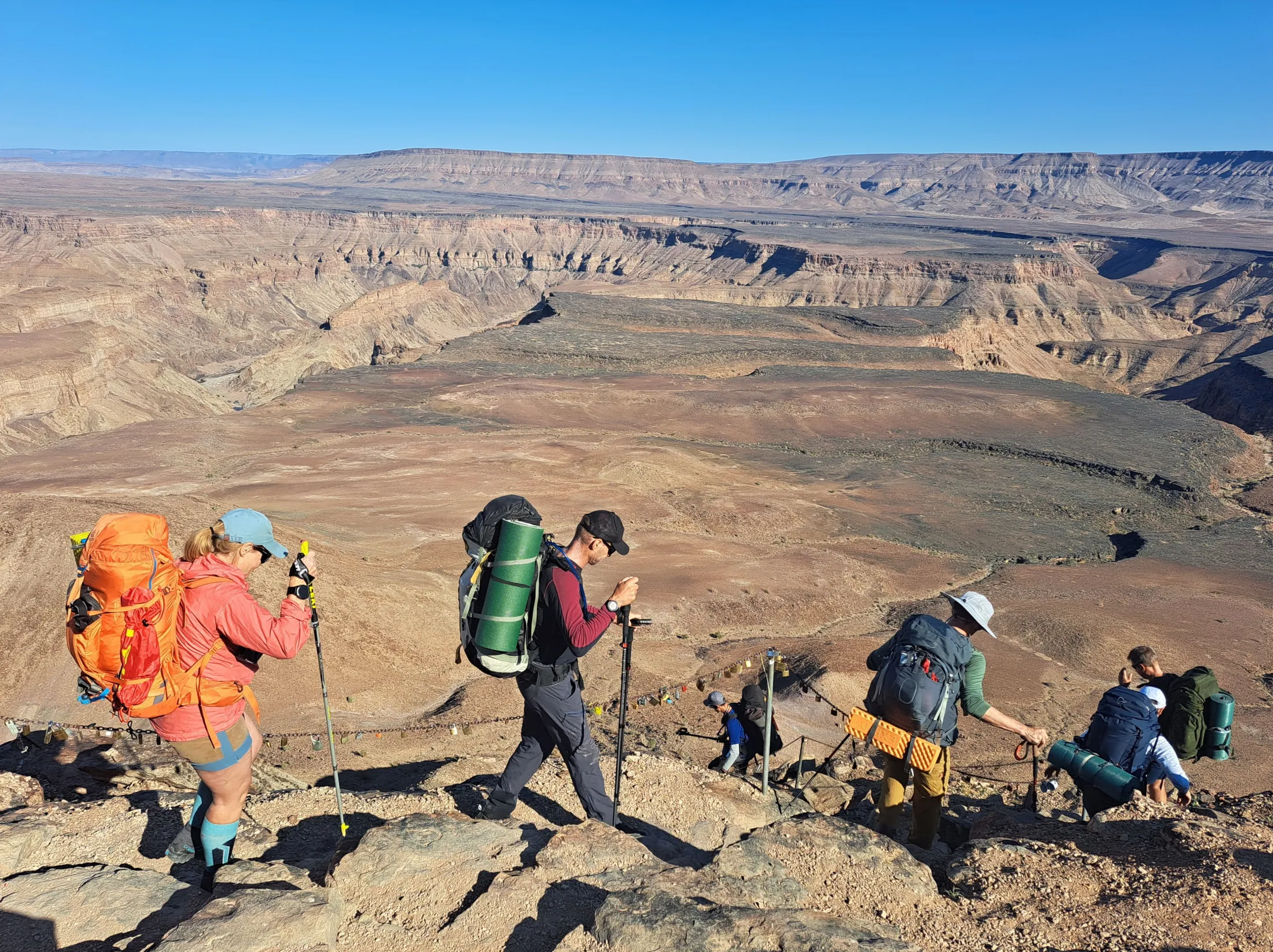
Viewpoint looking at a huge, dry canyon and blue sky.
Six hikers hiking through a huge canyon, with blue, clear sky.
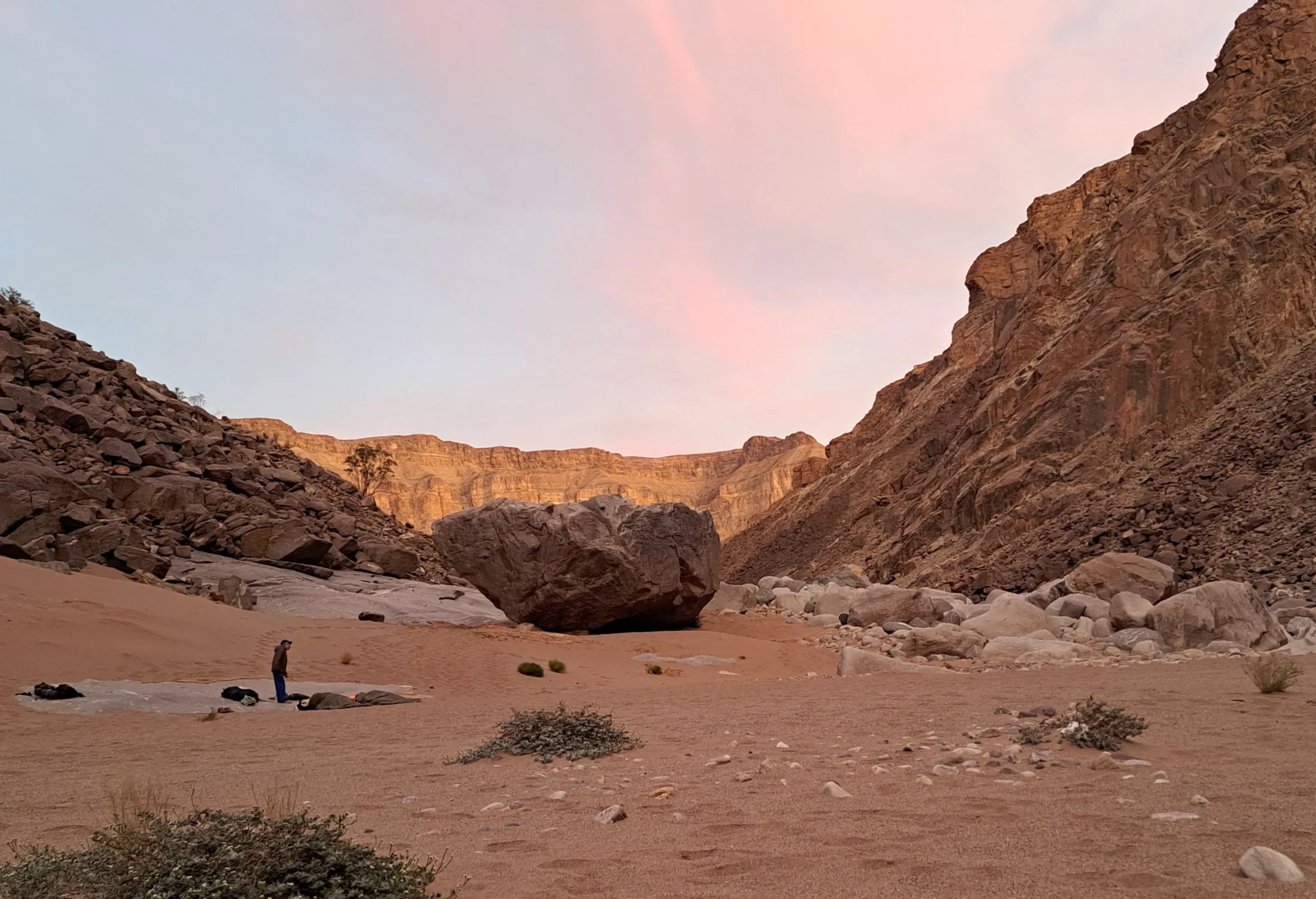
Evening in a canyon with campers ready for a night under the stars.
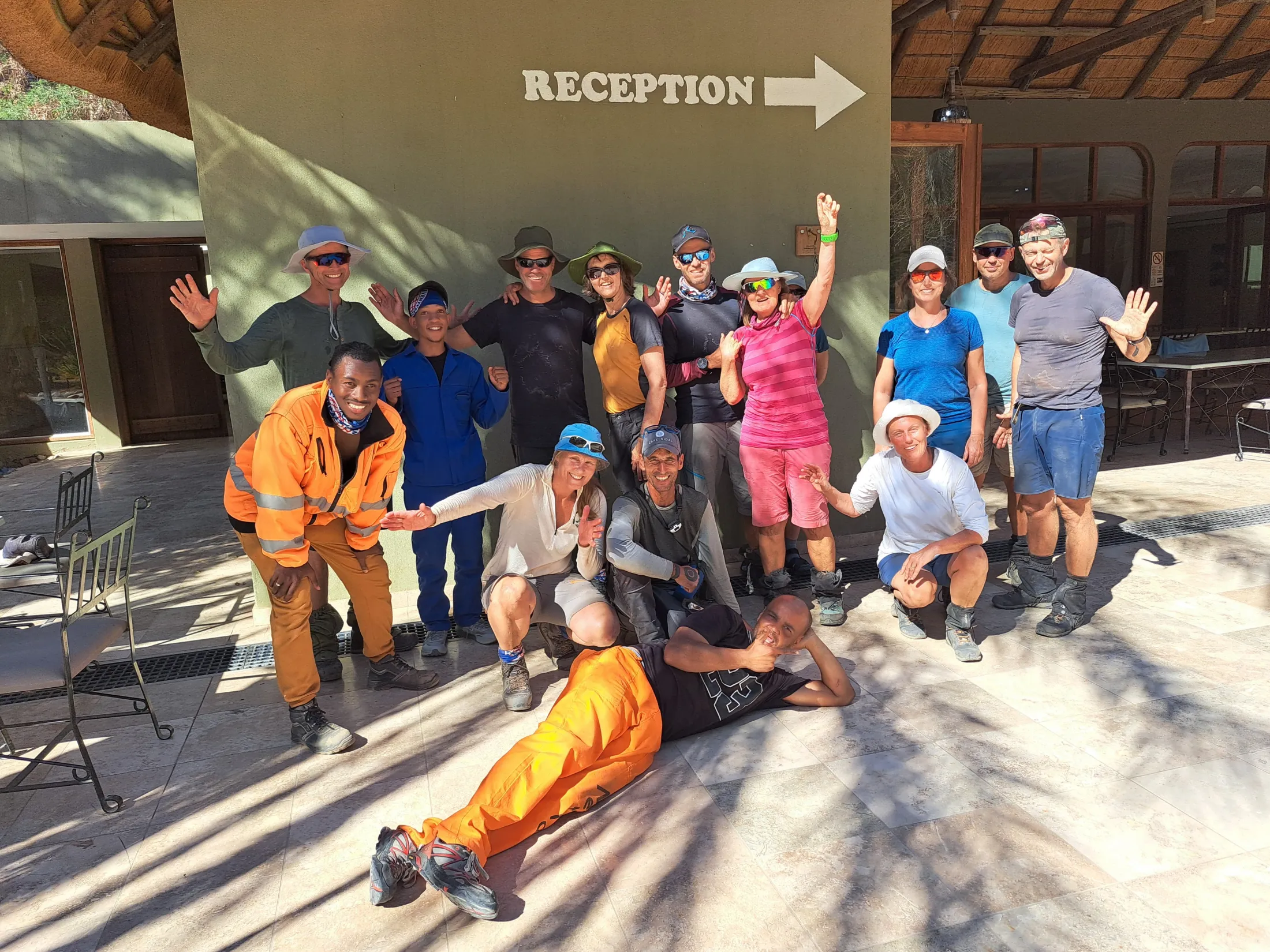
Happy group after a long hike.

Day 4-8:Five days through Fish River Canyon

Fish River Canyon in Namibia is the largest canyon in Africa and the second largest in the world! Only a few people are allowed to hike here each day, so we’ll be practically alone in this spectacular natural setting. After breakfast at our lodge, we’ll grab our pre-packed backpacks—packed for five days—and we’ll be ready to go. We’ll drive about an hour to the starting point of our expedition through Fish River Canyon. At Hikers View Point, the descent into the canyon begins, and we’re thrilled that the hike is already underway. Over the next few days in Fish River Canyon, we’ll hike approximately 70 km through the canyon. We’ll be walking through untouched wilderness with no facilities, eating our meals outdoors, and sleeping four nights under the open sky. On the fifth day, we’ve reached our destination and finally arrive at Ai-Ais Resort, a very welcome sight after the long hike through the canyon. We celebrate our achievement with a long-awaited soda and are glad to have reached civilization. We drive back to our lodge and enjoy a nice shower and a delicious dinner. It will be good to sleep in a bed again.

Fish River Canyon in Namibia is the largest canyon in Africa and the second largest in the world! Only a few people are allowed to hike here each day, so we’ll be practically alone in this spectacular natural setting. After breakfast at our lodge, we’ll grab our pre-packed backpacks—packed for five days—and we’ll be ready to go. We’ll drive about an hour to the starting point of our expedition through Fish River Canyon. At Hikers View Point, the descent into the canyon begins, and we’re thrilled that the hike is already underway. Over the next few days in Fish River Canyon, we’ll hike approximately 70 km through the canyon. We’ll be walking through untouched wilderness with no facilities, eating our meals outdoors, and sleeping four nights under the open sky. On the fifth day, we’ve reached our destination and finally arrive at Ai-Ais Resort, a very welcome sight after the long hike through the canyon. We celebrate our achievement with a long-awaited soda and are glad to have reached civilization. We drive back to our lodge and enjoy a nice shower and a delicious dinner. It will be good to sleep in a bed again.

Under the stars/lodge

B,L,D

5 days/4 nights

70 km

Flat desert with mountains far away in the horizon and blue sky.
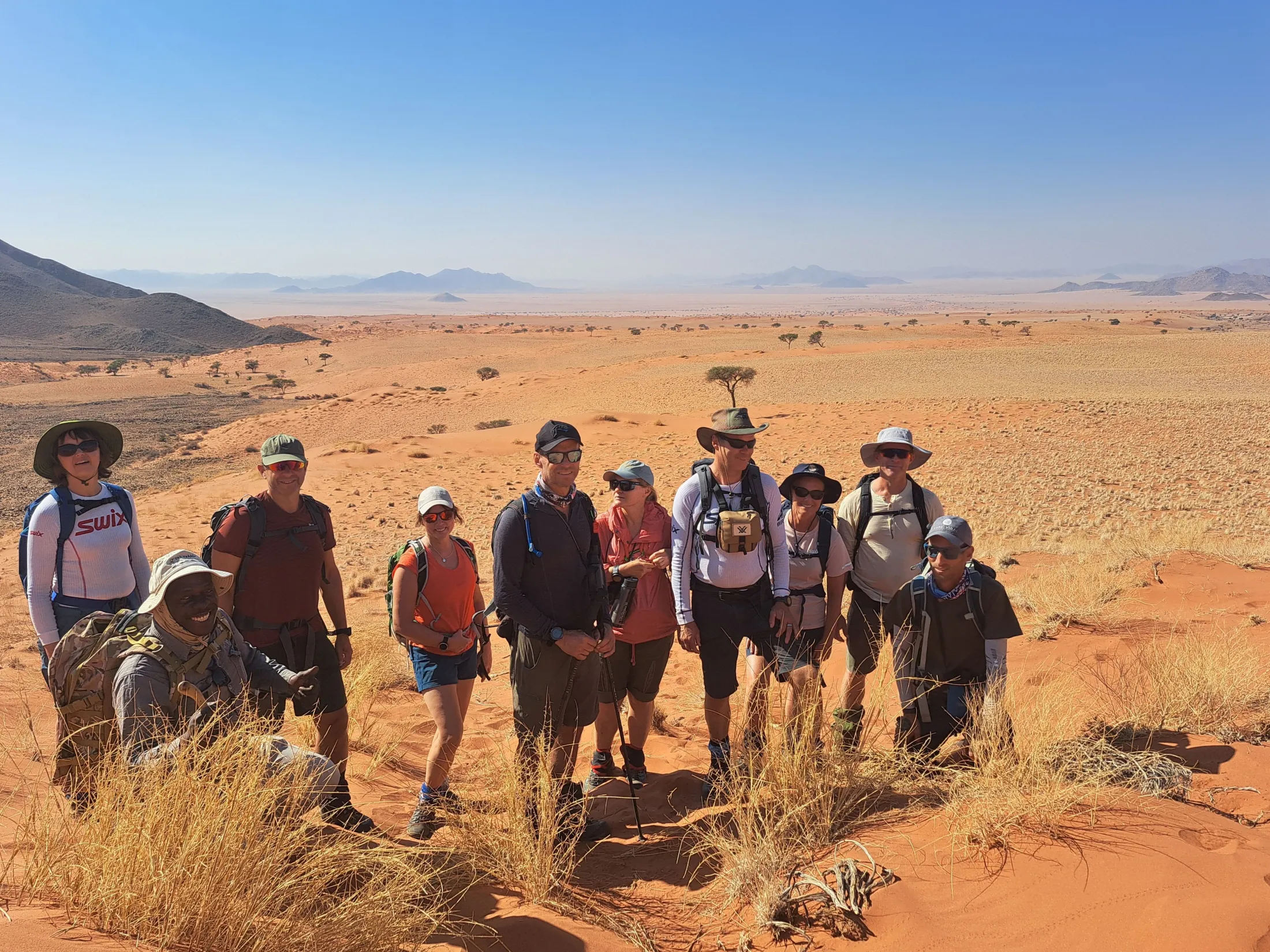
A group of hikers in a desert with mountains far away in the horizon and blue sky.

Day 9:Towards new adventures - The Namib Desert

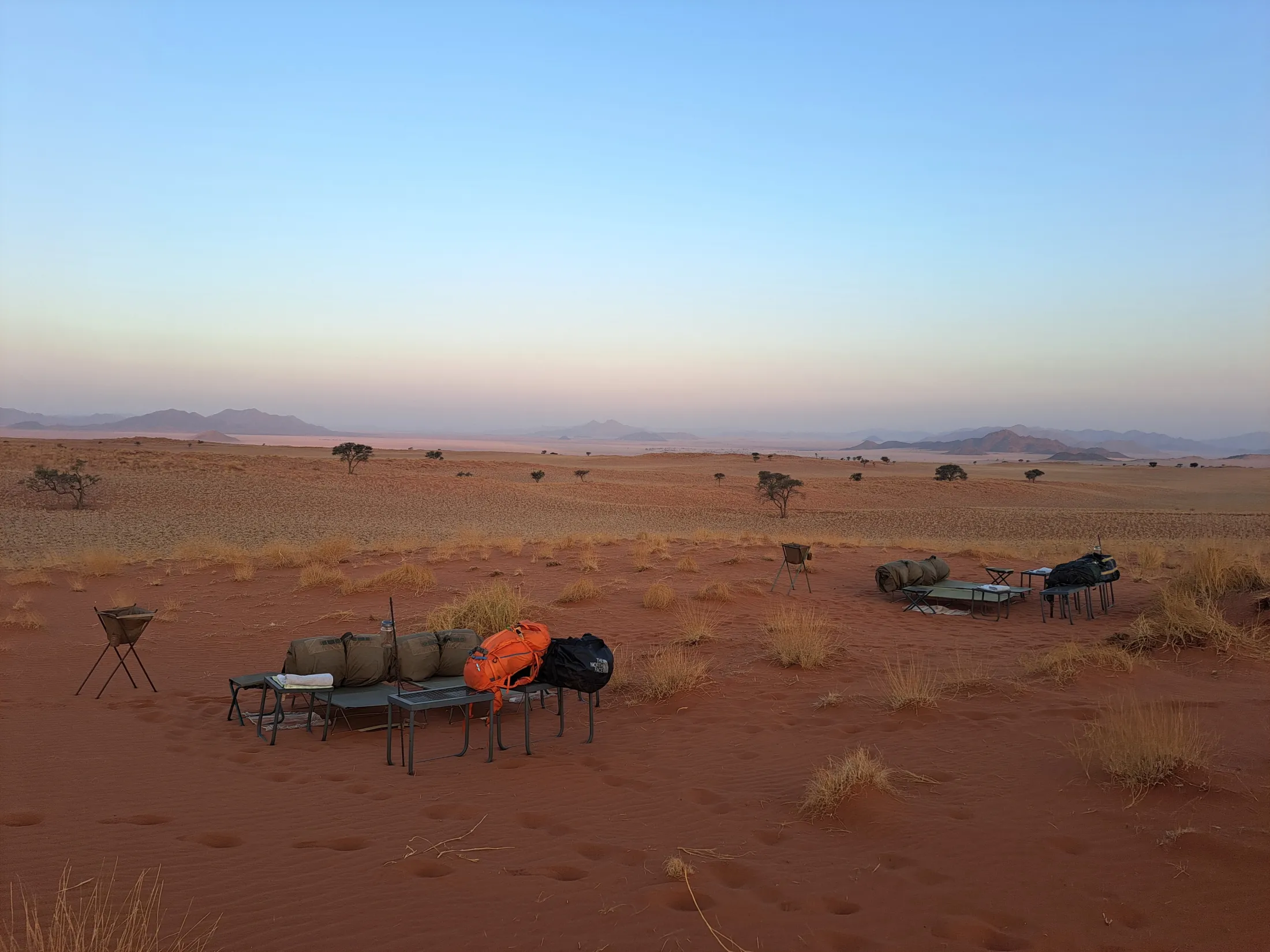
After breakfast, we head north to the Namib Desert. We’ll stop about halfway, in Helmeringhausen, for lunch in the middle of nowhere. Maybe we’ll get to try the delicious apple pie they’re so famous for. After lunch, we continue the drive to the starting point of our exotic desert hike. Upon arrival at the farm, we’ll meet our nature guide, who will take us along the “Tok Tokkie Trail” in the world’s oldest desert. We’ll spend two nights under the vast Namibian starry sky. They have comfortable camp beds, and dinner is served at a stylish table set with white tablecloths, right out here in the desert. Believe it or not, we’ll also have access to a shower and restroom in the wild. We’ll only carry a daypack, as our main luggage will be transported to the next campsite.

After breakfast, we head north to the Namib Desert. We’ll stop about halfway, in Helmeringhausen, for lunch in the middle of nowhere. Maybe we’ll get to try the delicious apple pie they’re so famous for. After lunch, we continue the drive to the starting point of our exotic desert hike. Upon arrival at the farm, we’ll meet our nature guide, who will take us along the “Tok Tokkie Trail” in the world’s oldest desert. We’ll spend two nights under the vast Namibian starry sky. They have comfortable camp beds, and dinner is served at a stylish table set with white tablecloths, right out here in the desert. Believe it or not, we’ll also have access to a shower and restroom in the wild. We’ll only carry a daypack, as our main luggage will be transported to the next campsite.

Under the open sky

B,-,D

6 hours

Camp in the desert at sunrise and clear sky.
Two antelope horns in the desert, with mountains in the background and a blue sky.
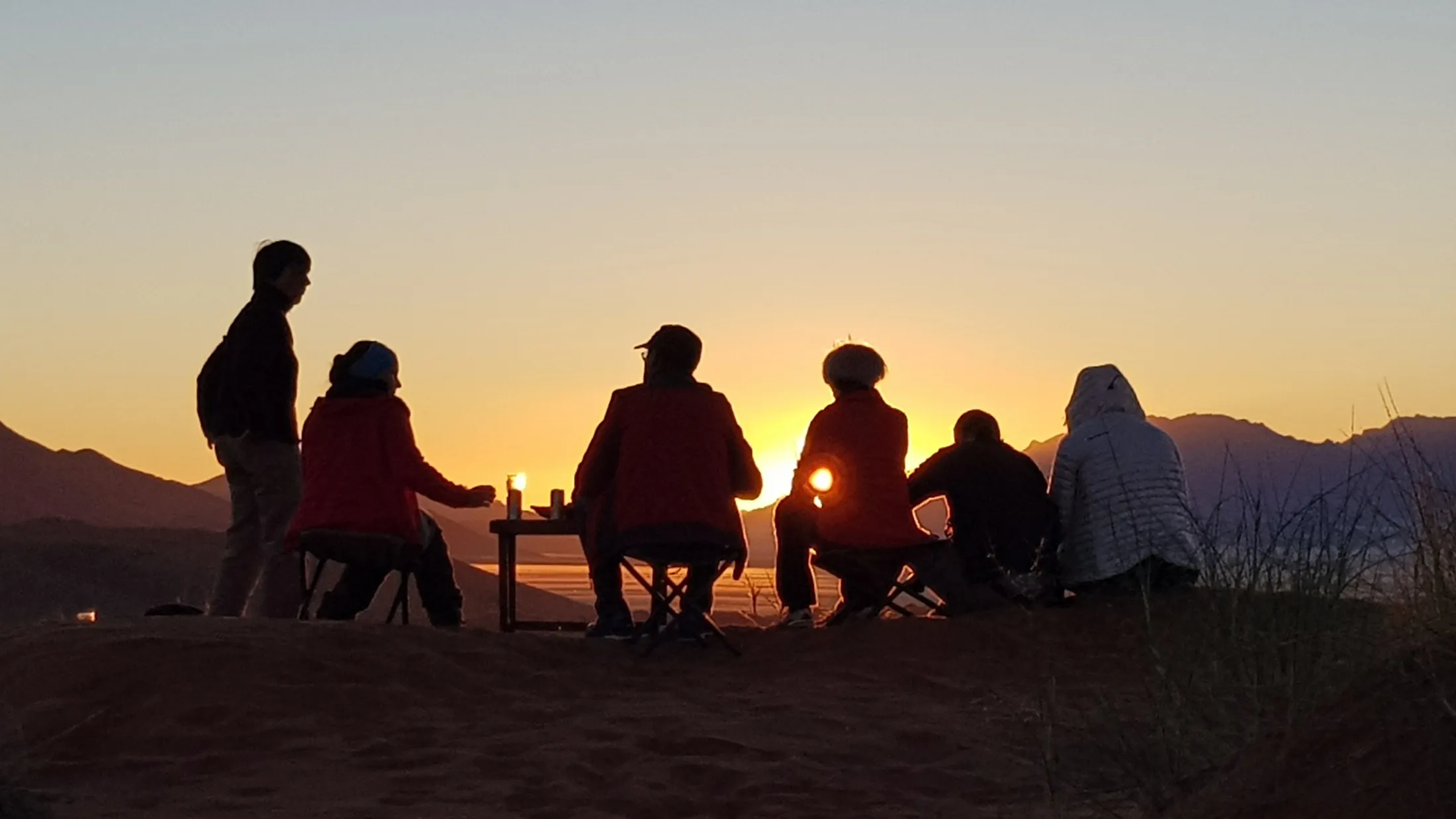
The silhouette of a group sitting on camping chairs watching the sunset in a desert.

Day 10:Hiking in the world´s oldest desert

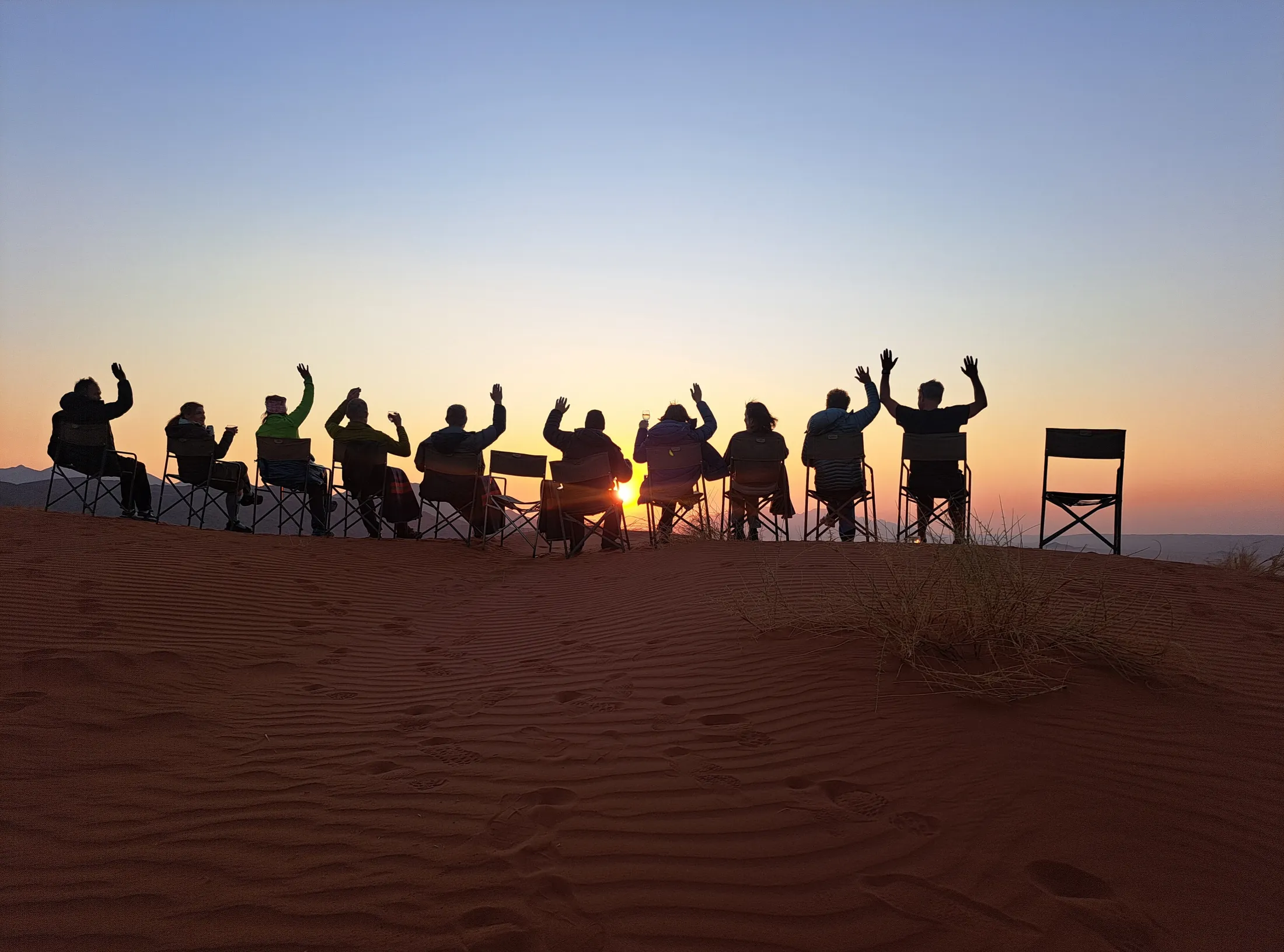
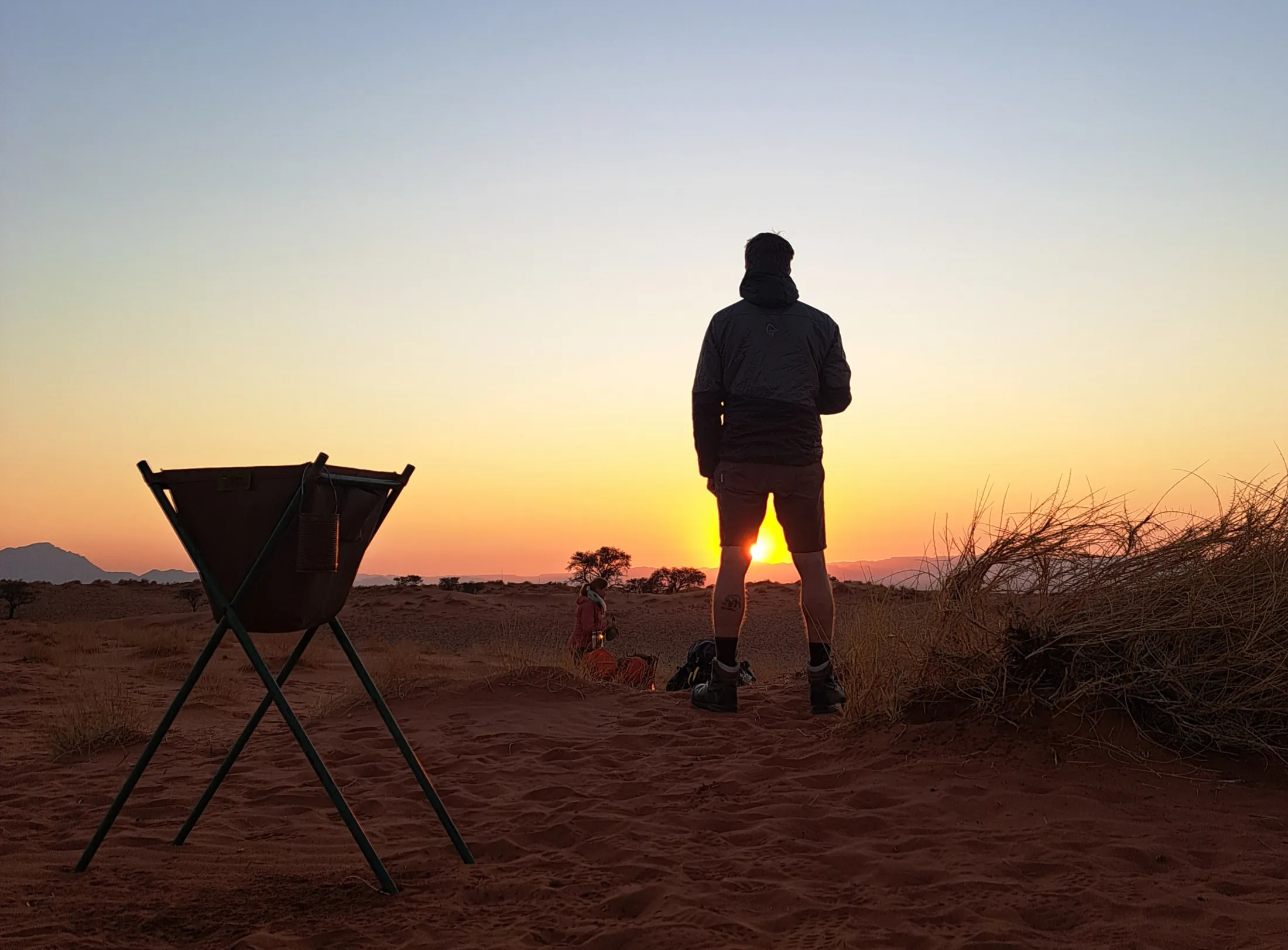
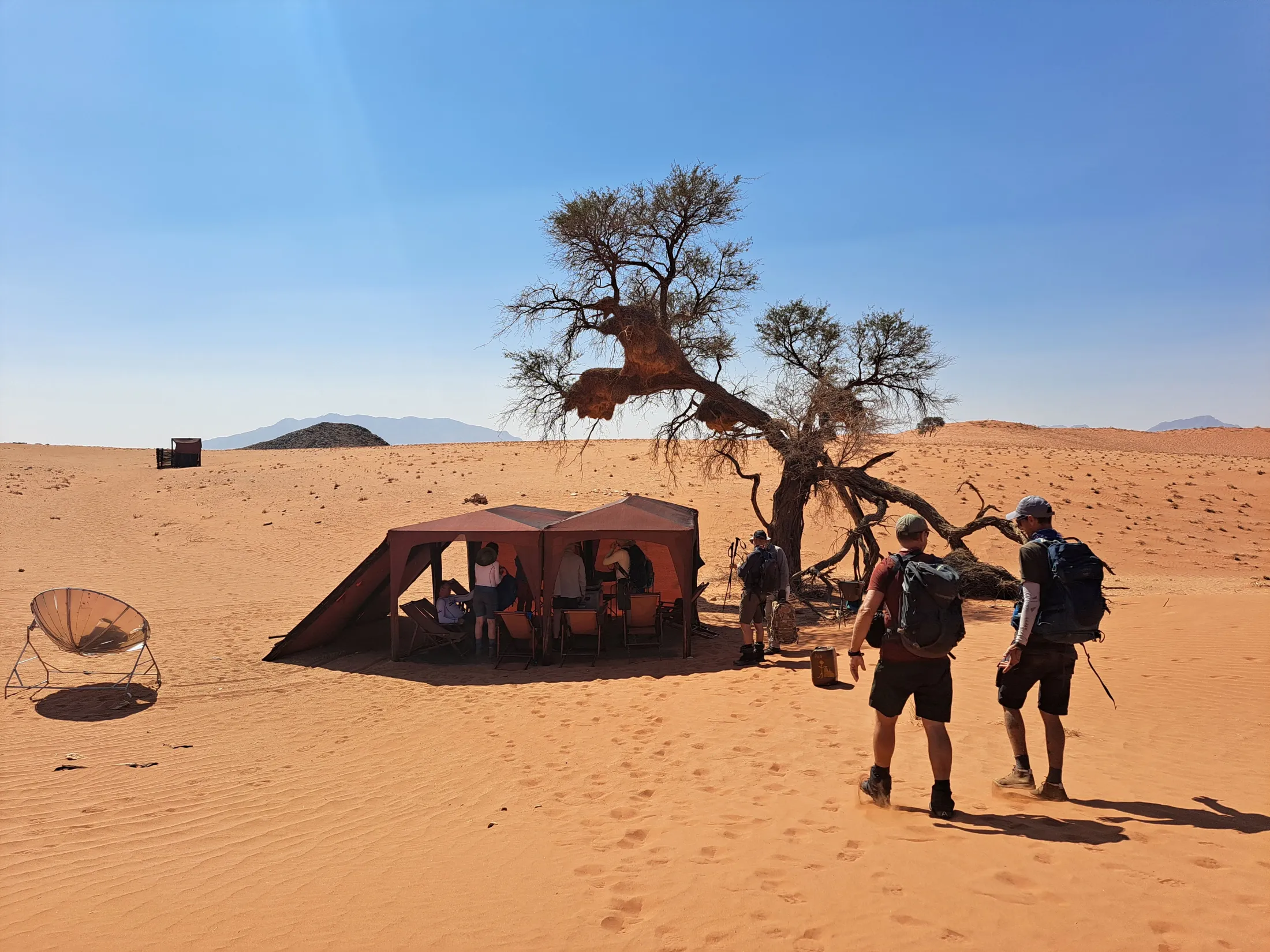
We’re woken up by our guide with tea or coffee served in bed just before sunrise. This is a “pinch-yourself” kind of experience that you’ll never forget. The colors in this desert are absolutely magical with their deep, rich orange and reddish hues. This is due to the high iron content. A fantastic breakfast awaits before we continue our hike with a very inspiring local guide who knows every spider hole and trail as well as the back of his hand. It’s fun to go on a discovery tour with him. There’s always something new waiting to be discovered, whether it’s useful plants, beetles, or other insects. Maybe we’ll also get to see South African oryx (antelope) and ostriches. Experiencing the desert at sunset is just as magical an experience as the sunrise.

We’re woken up by our guide with tea or coffee served in bed just before sunrise. This is a “pinch-yourself” kind of experience that you’ll never forget. The colors in this desert are absolutely magical with their deep, rich orange and reddish hues. This is due to the high iron content. A fantastic breakfast awaits before we continue our hike with a very inspiring local guide who knows every spider hole and trail as well as the back of his hand. It’s fun to go on a discovery tour with him. There’s always something new waiting to be discovered, whether it’s useful plants, beetles, or other insects. Maybe we’ll also get to see South African oryx (antelope) and ostriches. Experiencing the desert at sunset is just as magical an experience as the sunrise.

Under the open sky

B,L,D

20 km

The silhouette of a man standing and watching the sunrise in the desert.
Hikers arriving at a party tent standing next to a tree in the desert under a blue sky.

Day 11:The last day of the desert hike

We wake up to yet another sunrise and eventually hike back to the farm where we started. We drive on toward new adventures, heading north into Namib-Naukluft National Park, the largest national park in Africa and the fourth largest in the world, which encompasses parts of the Namib Desert, numerous sand dunes, and salt flats, as well as the mountains. We drive along the Naukluft Mountains to our lodge, where we’ll spend the night in cozy cabins, not far from the sand dunes of Sossusvlei.

We wake up to yet another sunrise and eventually hike back to the farm where we started. We drive on toward new adventures, heading north into Namib-Naukluft National Park, the largest national park in Africa and the fourth largest in the world, which encompasses parts of the Namib Desert, numerous sand dunes, and salt flats, as well as the mountains. We drive along the Naukluft Mountains to our lodge, where we’ll spend the night in cozy cabins, not far from the sand dunes of Sossusvlei.

Lodge

B,-,D

4 hours

Desert landscape with a path and hikers hiking through sand dunes under a clear sky.
Hikers walking up the ridge of an enormous sand dune in the desert under a blue sky.
A white salt pan with ancient, dead trees, surrounded by towering red sand dunes under a clear blue sky.

Day 12:One of the world´s tallest sand dunes

Early in the morning, well before sunrise, we head to the red sand dunes of Sossusvlei. In this photogenic landscape, there are plenty of opportunities to take some stunning photos! From Sossusvlei, we take a shuttle and hike to the top of the dune, “Big Daddy” (325 meters). There’s a lot of sand to traverse here; it’s a tough hike, but it’s absolutely worth it. From the top, there’s a spectacular view of red sand dunes in every direction. We take the shortcut down the dune to Dead Vlei, where the iconic dead trees stand, having died over 600 years ago when the area dried up. Because of the dry air, they haven’t rotted away but stand there like sculptures on the white salt plain. After our hike through this unique landscape, we take the shuttle bus back and drive on through the Buellsport Valley to our next cozy guesthouse.

Early in the morning, well before sunrise, we head to the red sand dunes of Sossusvlei. In this photogenic landscape, there are plenty of opportunities to take some stunning photos! From Sossusvlei, we take a shuttle and hike to the top of the dune, “Big Daddy” (325 meters). There’s a lot of sand to traverse here; it’s a tough hike, but it’s absolutely worth it. From the top, there’s a spectacular view of red sand dunes in every direction. We take the shortcut down the dune to Dead Vlei, where the iconic dead trees stand, having died over 600 years ago when the area dried up. Because of the dry air, they haven’t rotted away but stand there like sculptures on the white salt plain. After our hike through this unique landscape, we take the shuttle bus back and drive on through the Buellsport Valley to our next cozy guesthouse.

Lodge

B,-,D

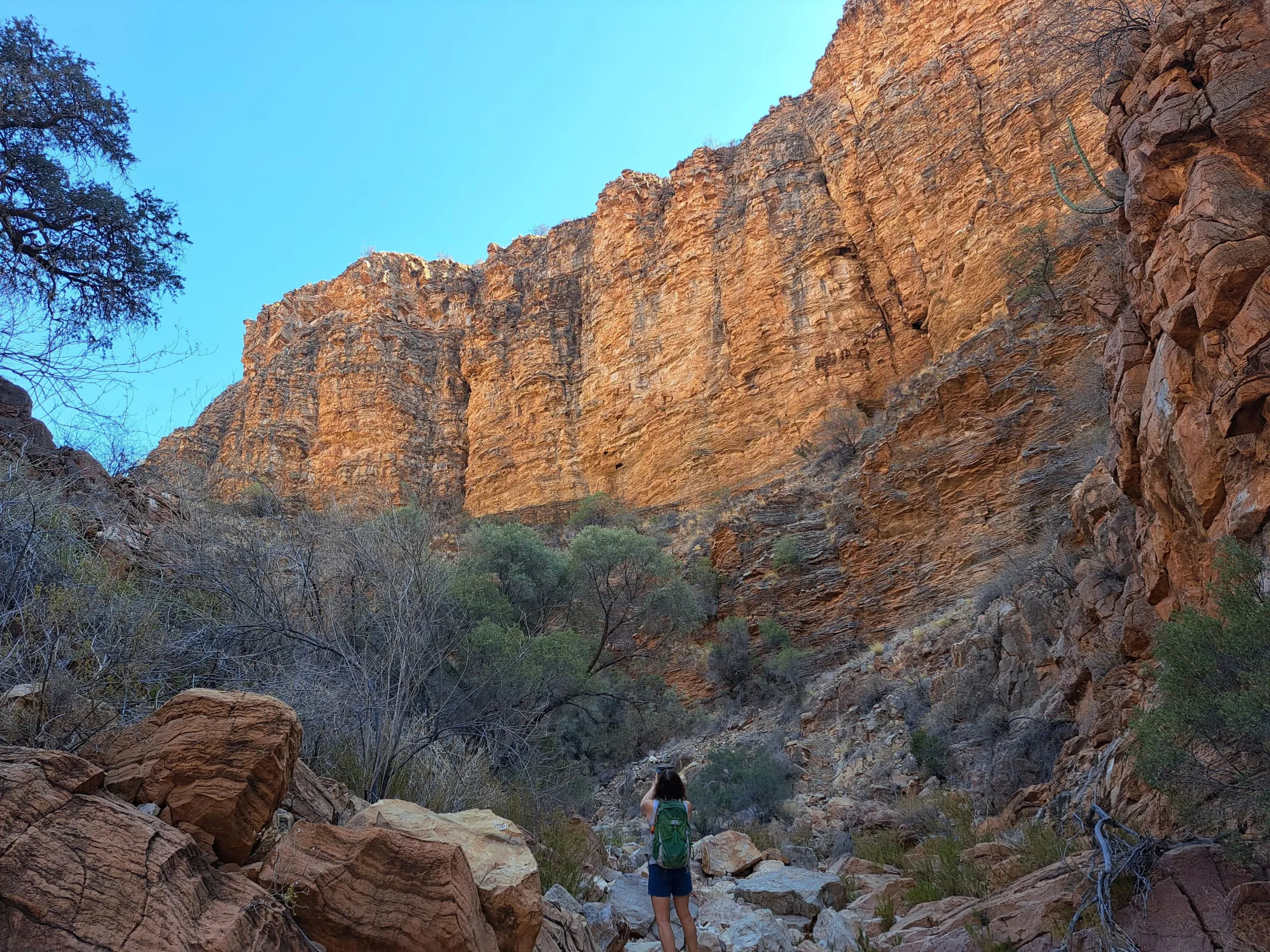
A hiker taking a photo of a rock face from below.
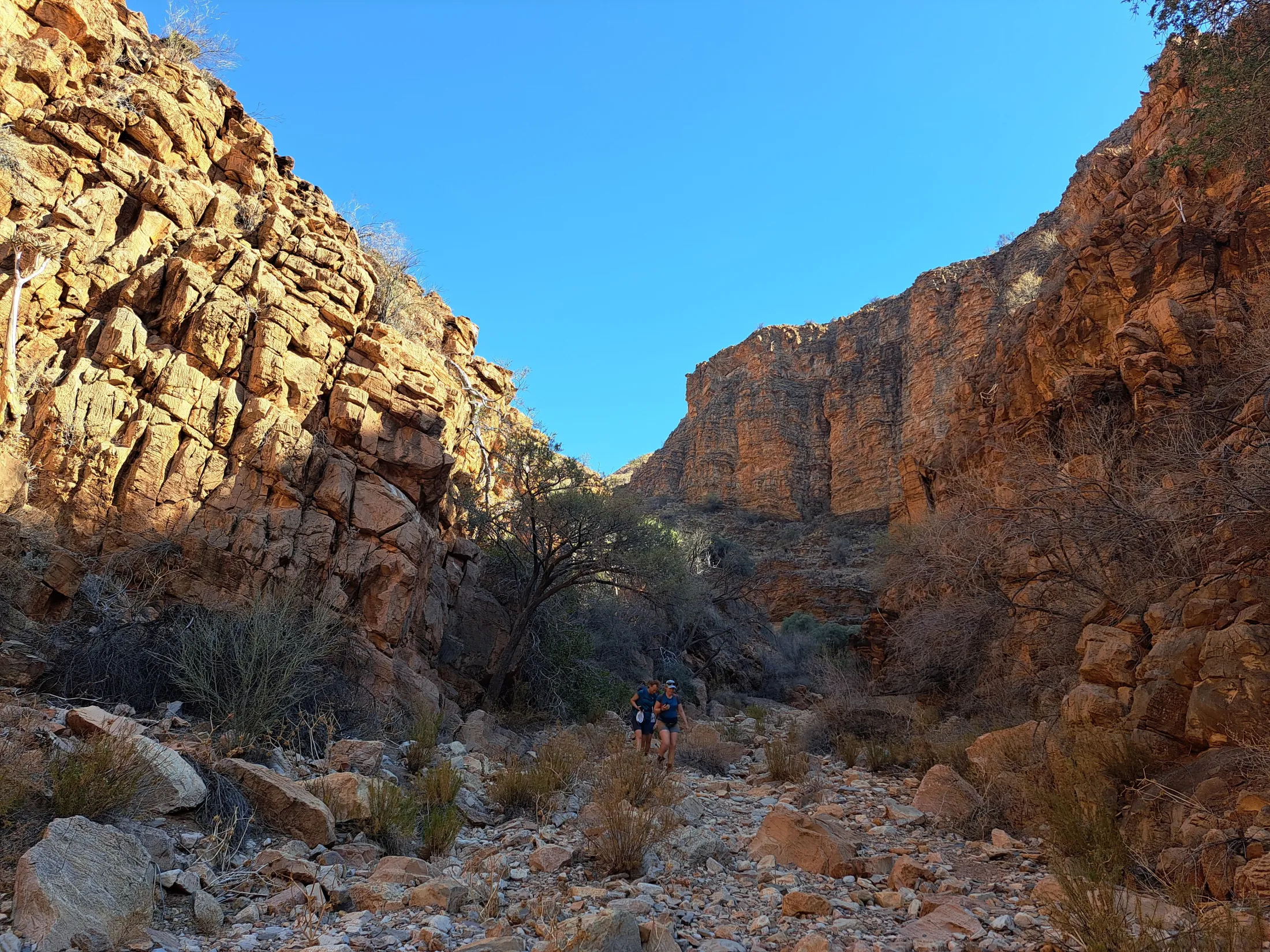
Two hikers walking through a gorge flanked by rocky cliffs on both sides.

Day 13:Hiking in Namib-Naukluft National Park

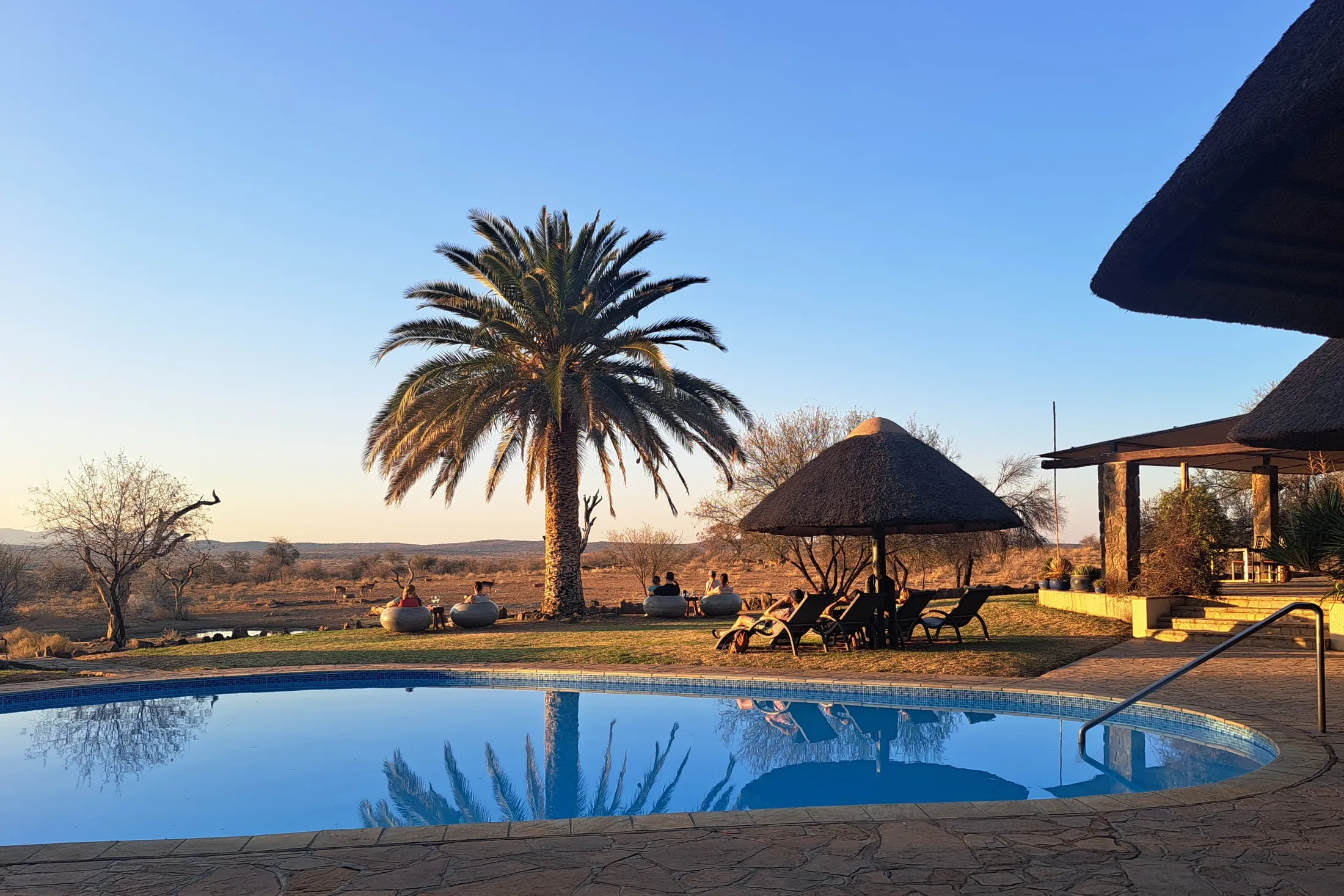
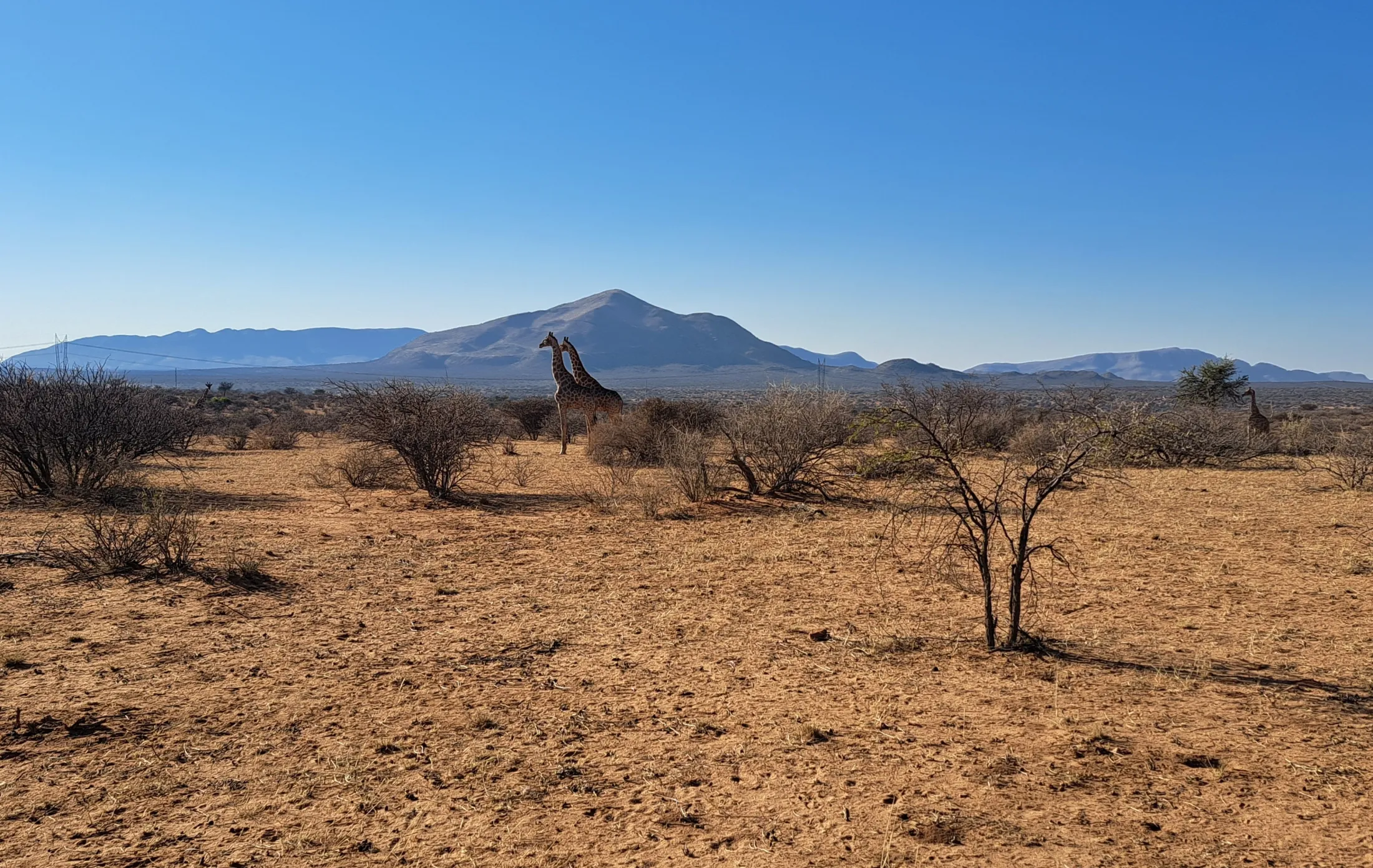
After an early breakfast, we’ll head into the Namib Naukluft Mountains in the northern part of the national park for a day hike. Today’s hike will first take us up to a plateau overlooking the landscape, then down into a gorge with palm trees, olive trees, and striking, unique rock formations. If we’re lucky, we might encounter mountain zebras, antelopes, and baboons along the way. In the afternoon, we’ll drive a few hours to our safari lodge outside Windhoek, where we’ll have dinner and spend the night. Wild animals such as oryx, impala, springbok, ostriches, wildebeest, and giraffes may be spotted at the waterhole at dusk.

After an early breakfast, we’ll head into the Namib Naukluft Mountains in the northern part of the national park for a day hike. Today’s hike will first take us up to a plateau overlooking the landscape, then down into a gorge with palm trees, olive trees, and striking, unique rock formations. If we’re lucky, we might encounter mountain zebras, antelopes, and baboons along the way. In the afternoon, we’ll drive a few hours to our safari lodge outside Windhoek, where we’ll have dinner and spend the night. Wild animals such as oryx, impala, springbok, ostriches, wildebeest, and giraffes may be spotted at the waterhole at dusk.

Safari Lodge

B,-,D

4 hours

10 km

People relaxing in comfortable chairs outside by a pool under a palm tree, watching an African sunrise.
Giraffes in an African national park with mountains on the horizon under a clear blue sky.

Day 14:Last day in Namibia

After a magical African sunrise, we’ll have breakfast, and there will be an opportunity to go on a final morning safari in open safari jeeps. It will be a short 45-minute drive to Windhoek International Airport, where we’ll say goodbye to our Namibian friends and head back home.

After a magical African sunrise, we’ll have breakfast, and there will be an opportunity to go on a final morning safari in open safari jeeps. It will be a short 45-minute drive to Windhoek International Airport, where we’ll say goodbye to our Namibian friends and head back home.

B,-,-

1 hour

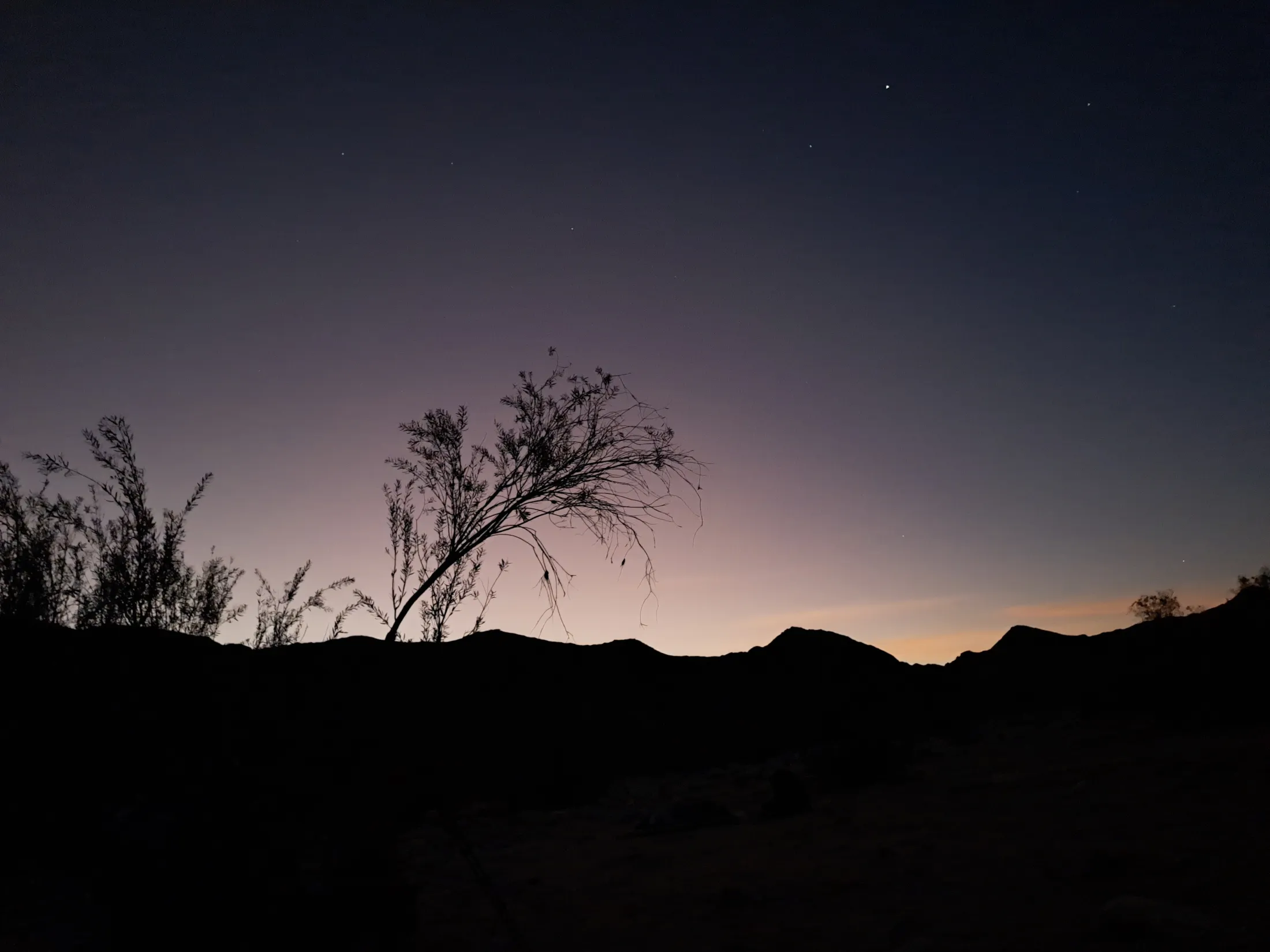
Silhouette of an African desert landscape under a starry night sky with a lingering orange sunset glow on the horizon.

Day 15:Back home again

Depends on where home is, we arrive home today filled with wonderful memories of that unique desert landscape in Africa. On group tours we arrive together in Oslo. Thank you for this time!

Depends on where home is, we arrive home today filled with wonderful memories of that unique desert landscape in Africa. On group tours we arrive together in Oslo. Thank you for this time!

We are traveling towards Namibia. The itinerary will vary based on where you are coming from. For some people, you will not have to leave until day 2 of the program. Group tours from Norway meet at Oslo Airport, and have a stopover before arriving in Windhoek. For other departures, airfare and tickets will not be included in the program, unless otherwise agreed.
-,-,-

Upon arrival in the Namibian capital, we are warmly welcomed by our local friends. We take our seats in the minibus waiting for us and head south. After a long drive, we arrive at our lovely little hotel for the night, located at the foot of the red sand dunes of the Kalahari Desert. There will be a welcome dinner early in the evening where we’ll go over the itinerary for the next few days.

Lodge

-,-,D

We start with a hearty breakfast and continue south to Keetmannshoop. Along the way, we stop in a forest of so-called quiver trees. These unique plants grow only in southern Namibia and northern South Africa. They are highly heat-resistant and can survive many months without rain thanks to their ability to store water. In the afternoon, we arrive at our lodge near Fish River Canyon. Here we enjoy a delicious dinner and take one last shower before the next few days. We go over the itinerary, pack, and prepare for the exciting trip that starts tomorrow.

Lodge

B,-,D

3 hours

Fish River Canyon in Namibia is the largest canyon in Africa and the second largest in the world! Only a few people are allowed to hike here each day, so we’ll be practically alone in this spectacular natural setting. After breakfast at our lodge, we’ll grab our pre-packed backpacks—packed for five days—and we’ll be ready to go. We’ll drive about an hour to the starting point of our expedition through Fish River Canyon. At Hikers View Point, the descent into the canyon begins, and we’re thrilled that the hike is already underway. Over the next few days in Fish River Canyon, we’ll hike approximately 70 km through the canyon. We’ll be walking through untouched wilderness with no facilities, eating our meals outdoors, and sleeping four nights under the open sky. On the fifth day, we’ve reached our destination and finally arrive at Ai-Ais Resort, a very welcome sight after the long hike through the canyon. We celebrate our achievement with a long-awaited soda and are glad to have reached civilization. We drive back to our lodge and enjoy a nice shower and a delicious dinner. It will be good to sleep in a bed again.

Under the stars/lodge

B,L,D

5 days/4 nights

70 km

After breakfast, we head north to the Namib Desert. We’ll stop about halfway, in Helmeringhausen, for lunch in the middle of nowhere. Maybe we’ll get to try the delicious apple pie they’re so famous for. After lunch, we continue the drive to the starting point of our exotic desert hike. Upon arrival at the farm, we’ll meet our nature guide, who will take us along the “Tok Tokkie Trail” in the world’s oldest desert. We’ll spend two nights under the vast Namibian starry sky. They have comfortable camp beds, and dinner is served at a stylish table set with white tablecloths, right out here in the desert. Believe it or not, we’ll also have access to a shower and restroom in the wild. We’ll only carry a daypack, as our main luggage will be transported to the next campsite.

Under the open sky

B,-,D

6 hours

We’re woken up by our guide with tea or coffee served in bed just before sunrise. This is a “pinch-yourself” kind of experience that you’ll never forget. The colors in this desert are absolutely magical with their deep, rich orange and reddish hues. This is due to the high iron content. A fantastic breakfast awaits before we continue our hike with a very inspiring local guide who knows every spider hole and trail as well as the back of his hand. It’s fun to go on a discovery tour with him. There’s always something new waiting to be discovered, whether it’s useful plants, beetles, or other insects. Maybe we’ll also get to see South African oryx (antelope) and ostriches. Experiencing the desert at sunset is just as magical an experience as the sunrise.

Under the open sky

B,L,D

20 km

We wake up to yet another sunrise and eventually hike back to the farm where we started. We drive on toward new adventures, heading north into Namib-Naukluft National Park, the largest national park in Africa and the fourth largest in the world, which encompasses parts of the Namib Desert, numerous sand dunes, and salt flats, as well as the mountains. We drive along the Naukluft Mountains to our lodge, where we’ll spend the night in cozy cabins, not far from the sand dunes of Sossusvlei.

Lodge

B,-,D

4 hours

Early in the morning, well before sunrise, we head to the red sand dunes of Sossusvlei. In this photogenic landscape, there are plenty of opportunities to take some stunning photos! From Sossusvlei, we take a shuttle and hike to the top of the dune, “Big Daddy” (325 meters). There’s a lot of sand to traverse here; it’s a tough hike, but it’s absolutely worth it. From the top, there’s a spectacular view of red sand dunes in every direction. We take the shortcut down the dune to Dead Vlei, where the iconic dead trees stand, having died over 600 years ago when the area dried up. Because of the dry air, they haven’t rotted away but stand there like sculptures on the white salt plain. After our hike through this unique landscape, we take the shuttle bus back and drive on through the Buellsport Valley to our next cozy guesthouse.

Lodge

B,-,D

After an early breakfast, we’ll head into the Namib Naukluft Mountains in the northern part of the national park for a day hike. Today’s hike will first take us up to a plateau overlooking the landscape, then down into a gorge with palm trees, olive trees, and striking, unique rock formations. If we’re lucky, we might encounter mountain zebras, antelopes, and baboons along the way. In the afternoon, we’ll drive a few hours to our safari lodge outside Windhoek, where we’ll have dinner and spend the night. Wild animals such as oryx, impala, springbok, ostriches, wildebeest, and giraffes may be spotted at the waterhole at dusk.

Safari Lodge

B,-,D

4 hours

10 km

After a magical African sunrise, we’ll have breakfast, and there will be an opportunity to go on a final morning safari in open safari jeeps. It will be a short 45-minute drive to Windhoek International Airport, where we’ll say goodbye to our Namibian friends and head back home.

B,-,-

1 hour

Depends on where home is, we arrive home today filled with wonderful memories of that unique desert landscape in Africa. On group tours we arrive together in Oslo. Thank you for this time!

What's included in the price

Included

Oslo - Windhoek, round trip.

Norwegian-speaking guide for group departures from Oslo

English-speaking local guides and drivers.

All transportation as specified in the program

In shared double room and under the open night sky. 

Meals as specified in the program

Camping stove etc.

Not included

For trips where flights are not included, please check our website to confirm that the departure is guaranteed before booking your own plane tickets. For each trip, we require a minimum number of confirmed participants before the departure can be guaranteed.

To local guides and assistants. Tips are a common and expected part of being a tourist in many of the destinations we visit. These are given in cash during the trip and therefore cannot be included in the tour price. 

Available only at lodges.

Request quotes from other cities in Norway

Terms and conditions

We reserve the right to change prices. The day by day program is indicative and changes may occur. We also refer to our general travel conditions.

Travel insurance

On all our trips, we require you to have full health and accident insurance which will also cover any transport home. Read more about travel insurance.

Highlights

Reviews

Rated
-
- reviews
(-)
(-)
(-)
(-)
(-)

Safety & Grading

Read more

For departures with Norrøna Adventure guides:

  • 24-hour emergency response
  • Guides trained in first aid in the field
  • Basic first aid equipment available
  • Cooperation with Turlegen.no for medical advice

On this trip, it is important to understand that we will be traveling far off the beaten track. We will of course do everything we can to assist if anything should happen, but any rescue operation could take longer than on other trips we organize. It is therefore extremely important that all participants are well prepared and ready to deal with unforeseen situations.

Physical level

3/6 Physical

Some segments of the journey may prove challenging. It's essential to possess a solid level of fitness prior to departure. Persistence will be required in reaching the trip's goal.

Comfort level

2/6 Comfort

We overnight in tents. We are usually served food, but may have to contribute with cooking on certain occasions.

Risk level

2/6 Risk

Activities/trips with little risk. There are usually few incidents and they are usually of such a nature that they can be dealt with locally.

Training and Preparations

We hike for up to 7-8 hours per day, and several days over 2 miles. In the Fish River Canyon, you carry your own backpack with luggage for four days of camping.

We also have to carry a lot of water. On the desert hike, we get help to carry and you only have a daypack. The terrain is somewhat hilly, but mostly quite flat, except for the day in the Naukluft Mountains. Here you'll be hiking with a daypack only. Longer hikes in the field and e.g. "hut to hut" or camping in the mountains are a good way to recharge.

Visas, Vaccinations and Health

Before embarking on our journey together, we kindly remind all tour participants to check their respective country's visa status and vaccination requirements. Ensuring your travel documents are in order is a crucial step in guaranteeing a smooth and hassle-free adventure.

Norwegian citizens do not need a visa to enter Namibia. Visitor visas are granted upon entry for up to three months and are free of charge. Please note that there must be at least one blank page for each entry or exit in your passport. The passport must be valid for at least six months after departure from Namibia. See also the current entry and visa regulations on the Ministry of Foreign Affairs' country pages.

A health form will be sent out to all participants which must be completed by a doctor no earlier than 40 days prior to departure (closer to departure than 40 days).

It is important that you complete all parts of the registration form (especially where we ask for information about health and allergies), and let us know if there is anything we need to be aware of prior to and during the tour. Relevant health information that may affect the tour should also be communicated to the guide at the start of the tour. *Note* - If you are on regular medication, have known allergies or anything similar, you must always bring your personal medication with you.

See the overview on FHI´s pages on travel health advice. For vaccination and guidance, please contact Sentrum Reisemedisin: Reisemedisin.no.

Additional Information

For four nights we'll be hiking in the Fish River Canyon, sleeping under the stars with sleeping bags and sleeping pads. We will be hiking in the Namib Desert for three days, where we will also sleep under the open sky, but have facilities such as a made-up camp bed and table/chairs, as well as toilet and washing facilities. In addition, we sleep in lodges in shared double rooms.

It's not always easy to get hold of gluten-free wholemeal bread, lactose-free alternatives or to accommodate other food preferences. Please let us know in the registration form if you have any allergies and we will try to accommodate as best we can. However, we would recommend those with special food needs to bring some alternatives in the form of, for example, a packet of crispbread, energy bars or similar that you know you can eat.

Related content

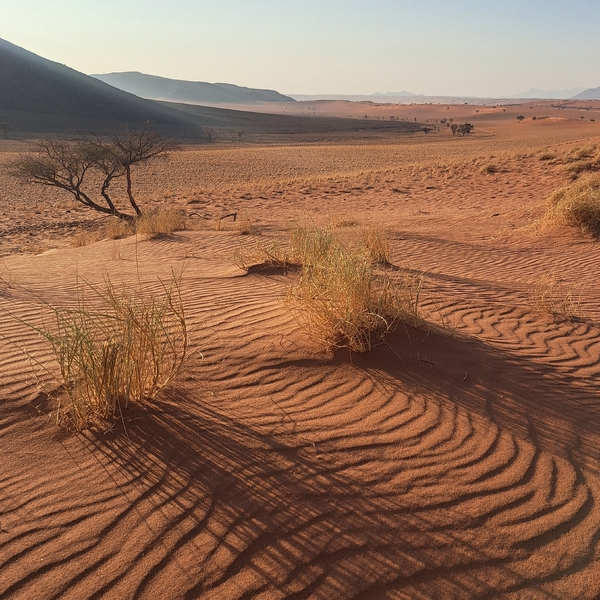
The Namib Desert with sunset shadows.

Hannes blog from Namibia

A Journey into Namibia´s Wilderness

Learn more

Equipment list

This list is intended as a guideline, so that we have what we need regardless of the weather we get on the trip. Remember that you can also get used outdoor equipment that works perfectly. Get in touch if you have any questions. TIP: We recommend that you have the most important equipment in your hand luggage, for example hiking boots and gore-tex jacket/trousers.

Obligatory

Clothing

Wool or synthetic. Avoid cotton. 

Wool or synthetic.

Fleece or wool. 

Down or synthetic insulation.

Hat or headband

Can also be used inside the down mittens.

We recommend thin wool or synthetic.

Footwear

Solid shoes, sole with good grip and traction.

Equipment

Avoid bringing a suitcase, they are more difficult to transport between hotels.

50-60 liter capacity.

In this pack, you’ll carry what you need during the day on the hike: extra clothes, food, water, snacks, etc. Remember a rain cover. Around 30 liters, give or take, is suitable.

Remember new/extra batteries.

Personal medicines and, for example, band-aids, blister plaster, sports tape, throat lozenges, nasal drops, Paracetamol/Ibuprofen, stomach regulators, etc.
We need to know about all medicines you are taking, in case something happens. 

Tooth brush, tooth paste, small towel, ear plugs, wet wipes, biodegradable soap, etc.

Toilet paper, antibac, and waste bags for the paper. Remember leave no trace.

Compact and light.

Preferably a spoon with a long handle if you are going to eat freeze dried food.

Passport, tickets, bank card, proof of vaccination andproof of insurance. Remember to have a copy of important documents on your phone and/or somewhere in your bag. 

Light and compact.

Recommended

Clothing

Waterproof jacket and pants.

Thin, ultra light.

For evenings and leasure days.

Short and tight, to prevent the sand from getting in your shoes.

In case of a short rain shower.

Footwear

Solid, with a solid sole. Such as approaches shoes.

For warmer days, camping, and crossing rivers (recommend a full coat so they don't disappear in the river).

Equipment

To increase the comfort temperature in your sleeping bag.

Light. Have to be foldable or telescope.

Resorb, electrolytes, isotonic drink etc. For energy, fluid balance and taste.

Nuts, chocolate, energy bars, etc.

If youre a light sleeper.

Packing Tips

The climate varies from desert to subtropical and is generally hot and dry. It can get cold at night, down to 5 degrees.

You'll need a backpack that can hold the personal gear you need to spend the night out in Fish River Canyon. We get help from porters to carry most of the common equipment and food, but all personal equipment you have to carry yourself, in addition to 4 liters of water that we almost always carry because it is uncertain where the next water post is. For the rest of the trip, we only use a daypack and have the rest of our luggage transported.

Bring a fleece or a thin down jacket.
If you choose to bring an inflatable sleeping mat, you should also bring a plastic tablecloth or similar, or a simple foam mat, to lay underneath to avoid punctures. It very rarely rains, so some people choose to make do with a rain poncho.

Pack lightly, this makes it much easier to move around during the trip.

Recommended trips

Testimonial

Namibia and this trip are almost indescribable in all their diversity and uniqueness. Exhausting and wonderful, adventurous and demanding, beautiful, wild, desolate, endless… The country, the nature, the experiences get under your skin and stay there forever! I am captivated! Along the way, I felt a sense of complete happiness.

– Anne, 2023