FjellturAtlasfjellene-2024@EliseKoren1
Atlasfjellene-2019@Bjørn Ankre (59)
Atlasfjellene-2019@Bjørn Ankre (16)
Atlasfjellene-2019@Bjørn Ankre (50)

The Atlas Mountains with Jebel Toubkal (4167 m)

Between Berber villages to the roof of North Africa

The Atlas Mountains with Jebel Toubkal (4167 m)

Between Berber villages to the roof of North Africa

From USD 2672

Would you like to join a journey that combines mountain trekking in spectacular surroundings, beach life in a relaxed hippie town, and exotic Moroccan culture? Then this trip is for you!

Highlights

  •      The magnificent nature of the Atlas Mountains
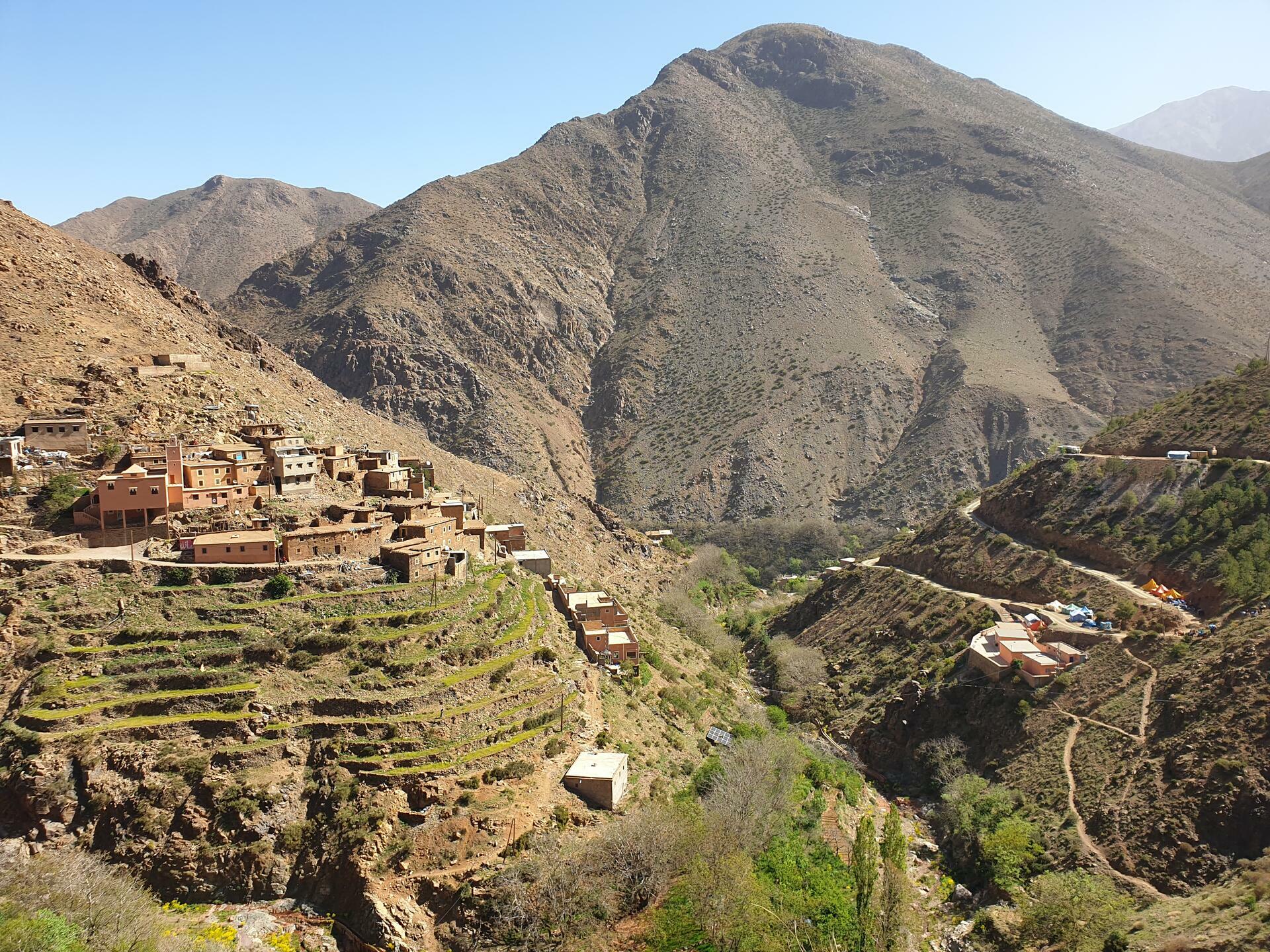
  •      Berber villages 
  •      The highest peak in North Africa: Jebel Toubkal 4,167 m
  •      The beaches and old town of Essaouira
  •      Magical Marrakesh

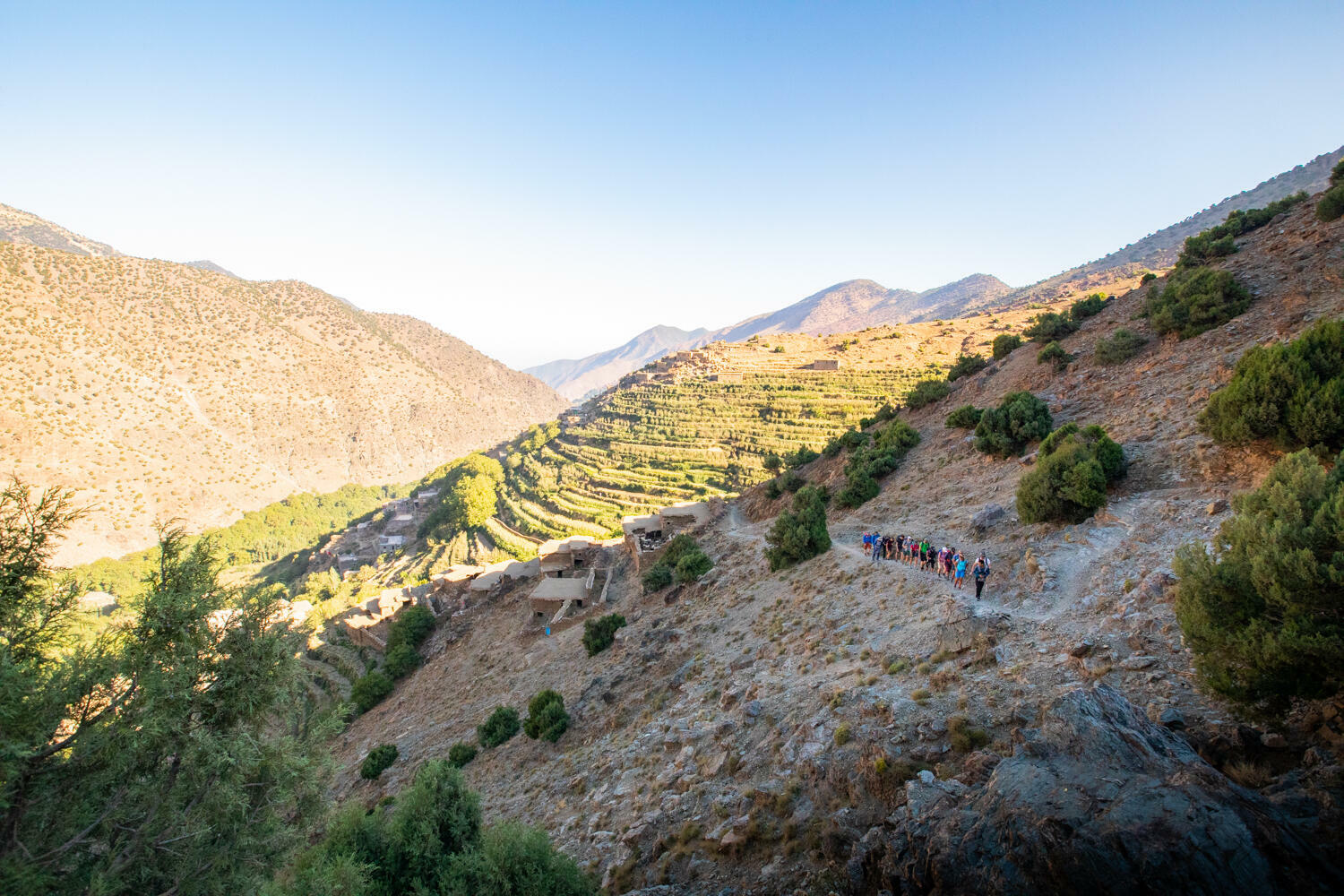
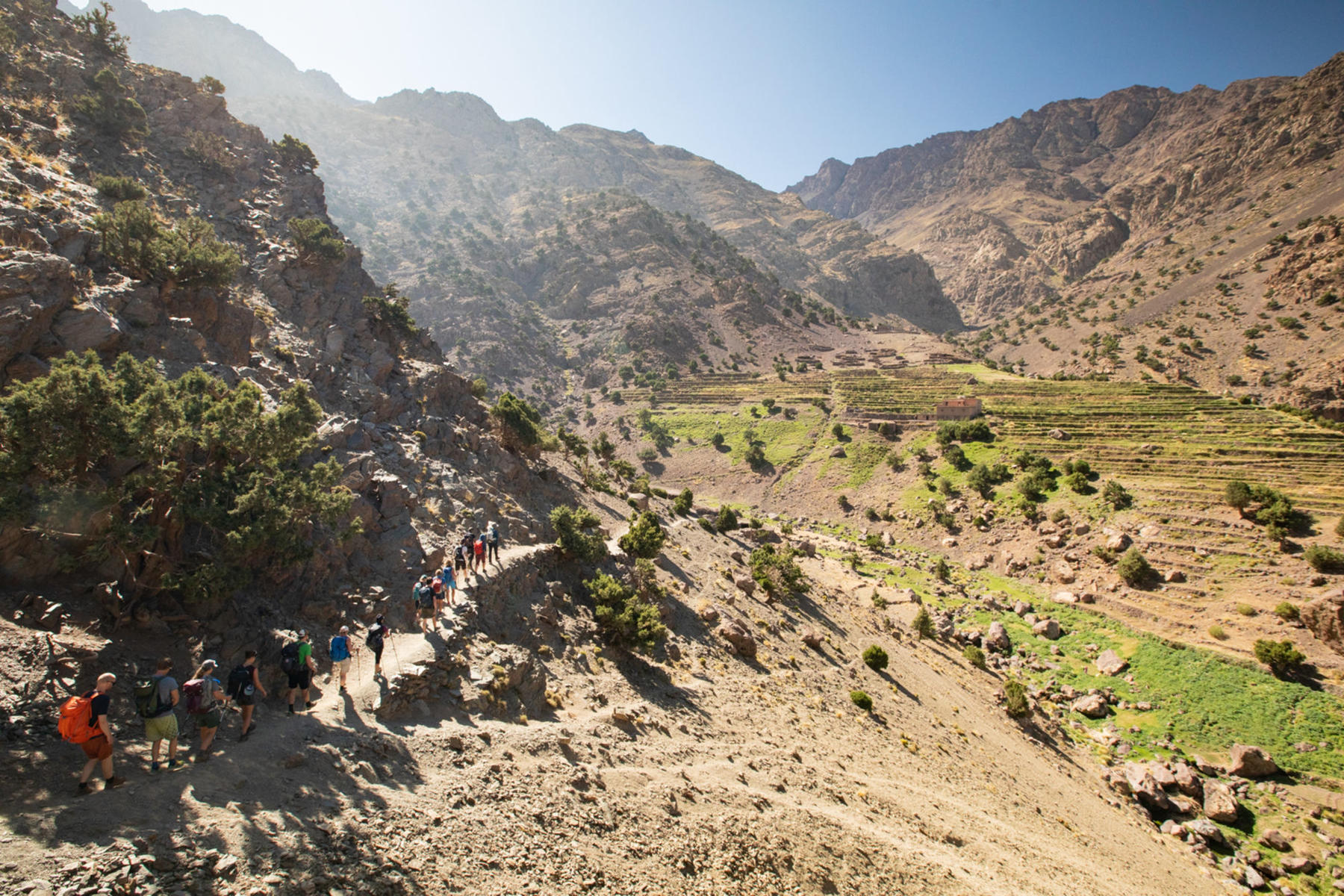
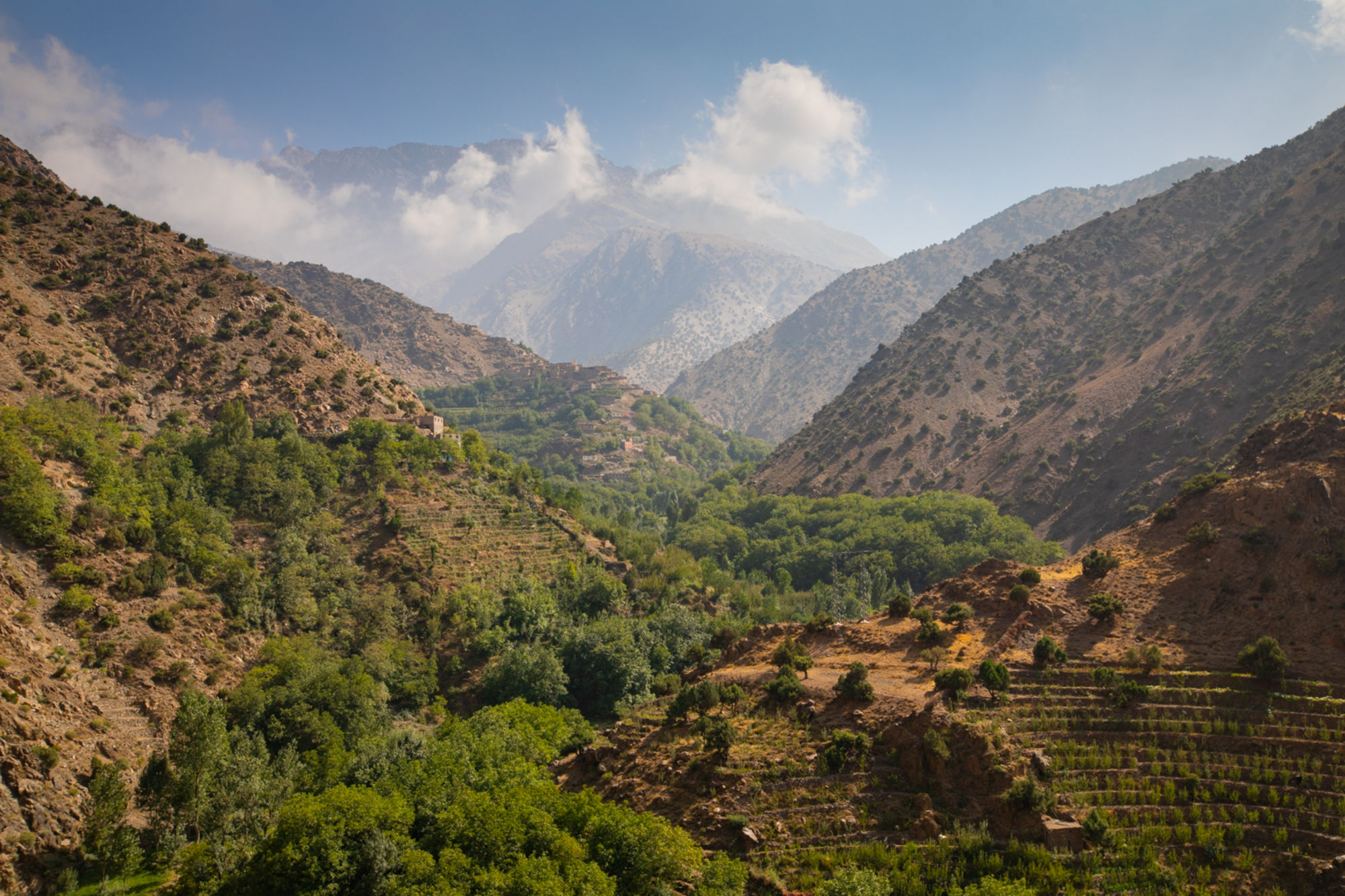
Join us on an incredible mountain trek in the High Atlas, culminating in the ascent of the legendary Jebel Toubkal at 4,167 meters! Hiking in the Atlas Mountains offers so much more than just stunning views. The rugged landscape features lush green terraced fields, ochre-colored slopes, and glistening waterfalls. You'll breathe in the scent of wild lavender and fresh mountain air, as well as the aroma of meals cooked over charcoal in traditional Berber villages.

The Berbers are Morocco’s indigenous people, and along the way, you’ll experience their warm hospitality, rich culture, and deep-rooted traditions. The journey is full of contrasts, taking you from rolling farmlands to high alpine terrain in a single day.

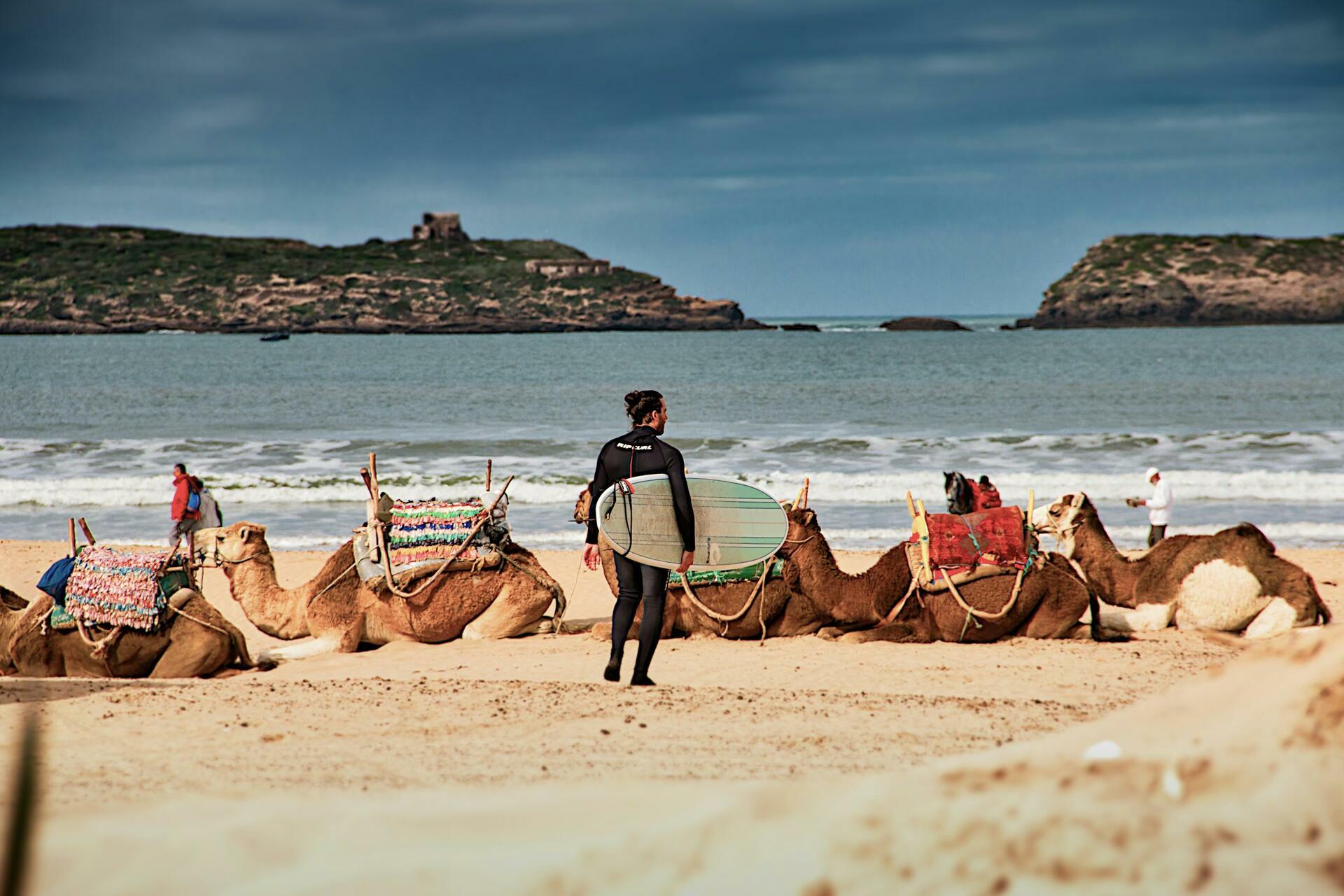
We begin our adventure in the vibrant city of Marrakesh and end with a few relaxing days in the laid-back coastal town of Essaouira, where you can unwind, surf, swim, or even ride camels along the beach.

8

9-16

Norsk

3/6

3/6

3/6

Dates and booking

Thu 08. October - Thu 15. October 2026

USD 2374

Flight not included

Available

Book

Can't find a date? We'll notify you when new trips open!

Plan it your way

Want this trip just for your group? Or got something different in mind? We've got you.

Make this a private trip

Opening hours Phone
Mon-Fri : 08-20
Sat-Sun : 14-17
Opening hours Chat
Mon-Fri : 07-23
Sat : 10-18
Sun : 13-21
CET

Day by day

Atlasfjellene-2024@AnnieSpratt-q8Dl7K6PyYM-unsplash

Day 1:One night in Marrakesh

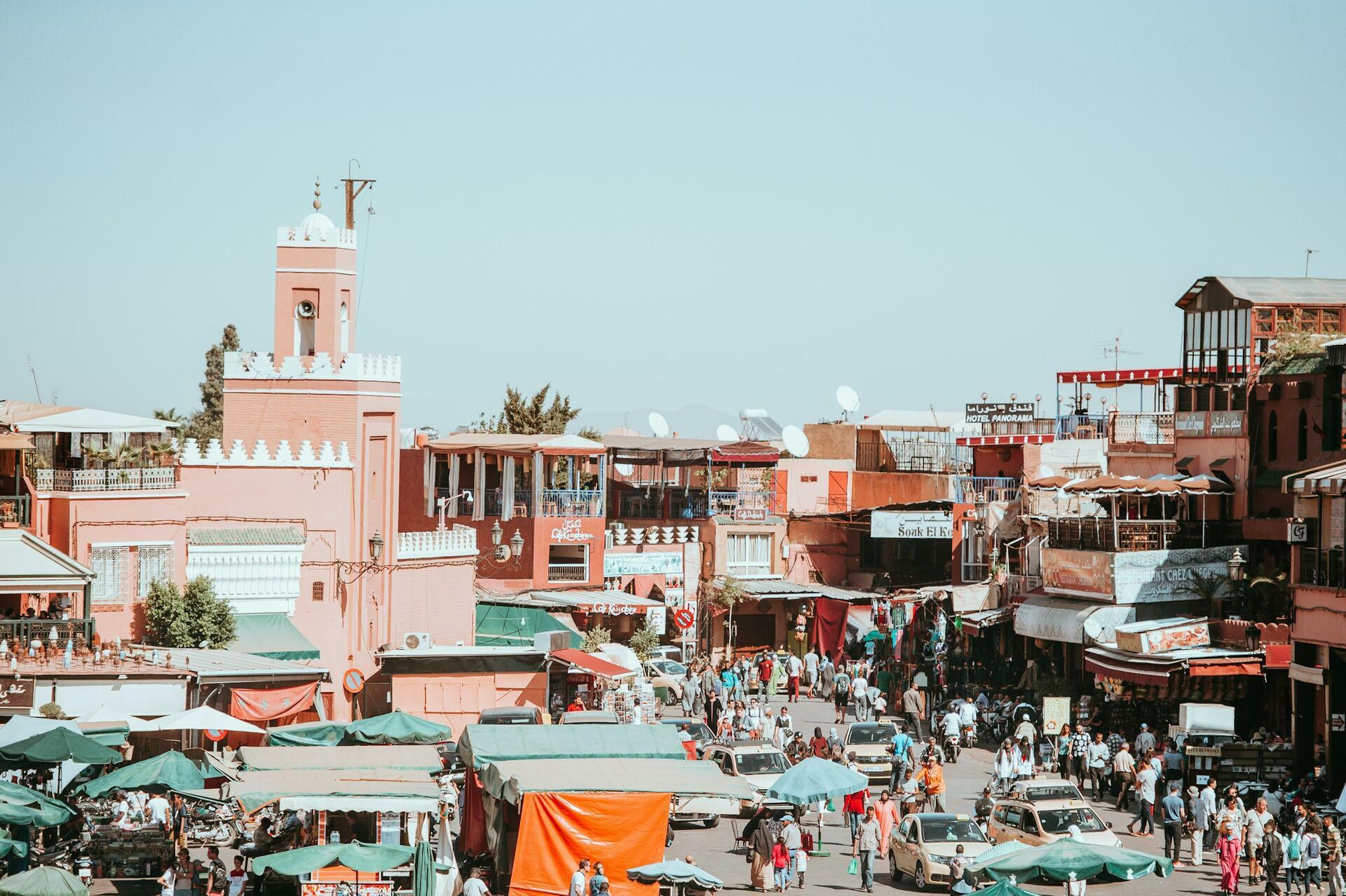
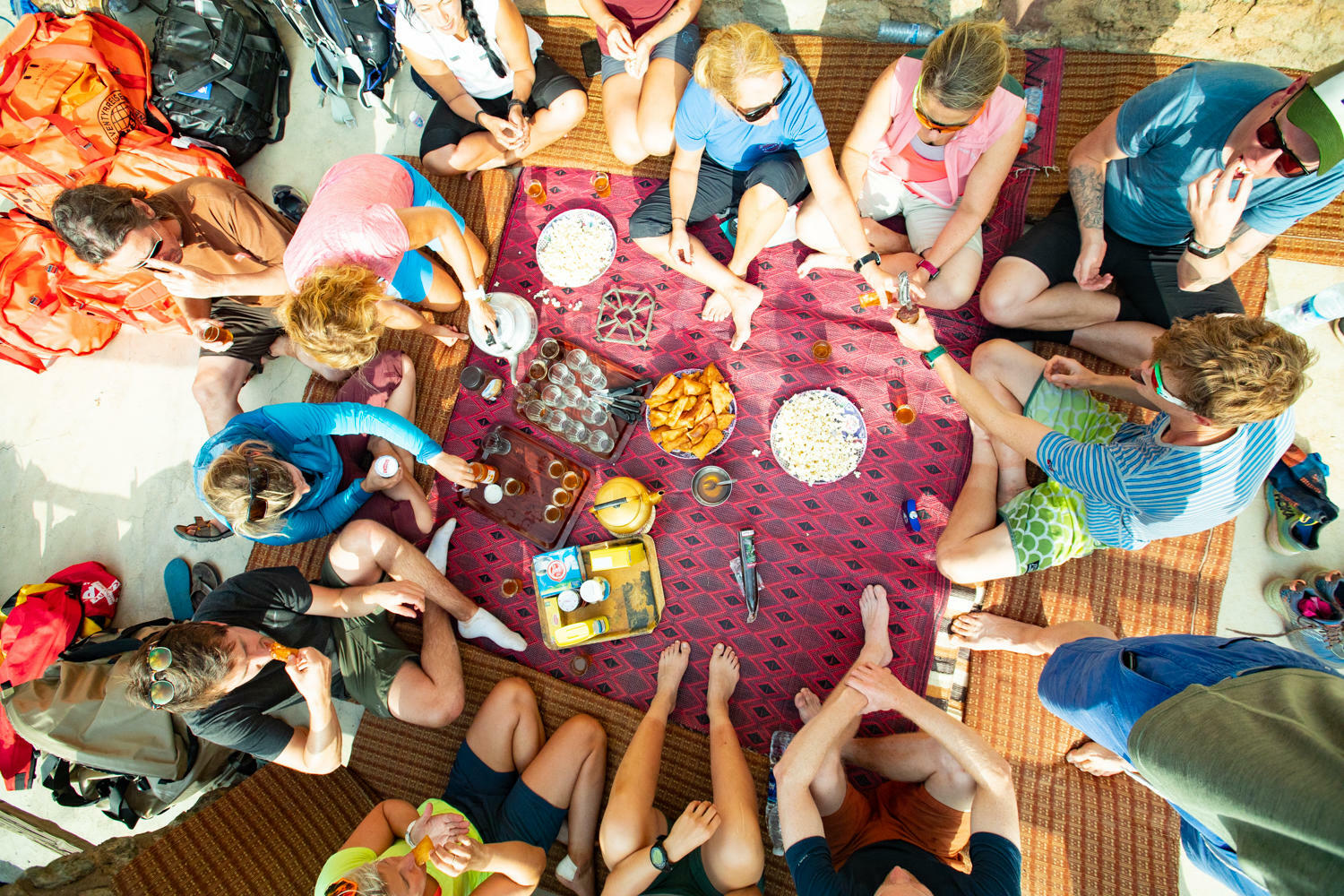
Airfare is not included in this tour, so you are responsible for arranging your own transportation to and from Morocco. The first day is unscheduled, allowing you to arrive in Marrakesh at your convenience. Our meeting point on the first day will be the the riad, a traditional Moroccan hotel, located in the heart of the city's medina (old town). In the evening, we will enjoy a welcome dinner at the riad and get to know each other better. Depending on flight times, there may not be much time to explore Marrakesh. If you'd like more time in this exciting city, you can request an additional program for an extra night or two at the end of the trip.
Airfare is not included in this tour, so you are responsible for arranging your own transportation to and from Morocco. The first day is unscheduled, allowing you to arrive in Marrakesh at your convenience. Our meeting point on the first day will be the the riad, a traditional Moroccan hotel, located in the heart of the city's medina (old town). In the evening, we will enjoy a welcome dinner at the riad and get to know each other better. Depending on flight times, there may not be much time to explore Marrakesh. If you'd like more time in this exciting city, you can request an additional program for an extra night or two at the end of the trip.
Riad

-,-,D

FjellturAtlasfjellene-2024@EliseKoren1
FjellturiAtlasfjellene-2024@EliseKoren (2)
Atlasfjellene-2019@Bjørn Ankre (18)

Day 2:Hike to Tizi Oussem (1850 m)

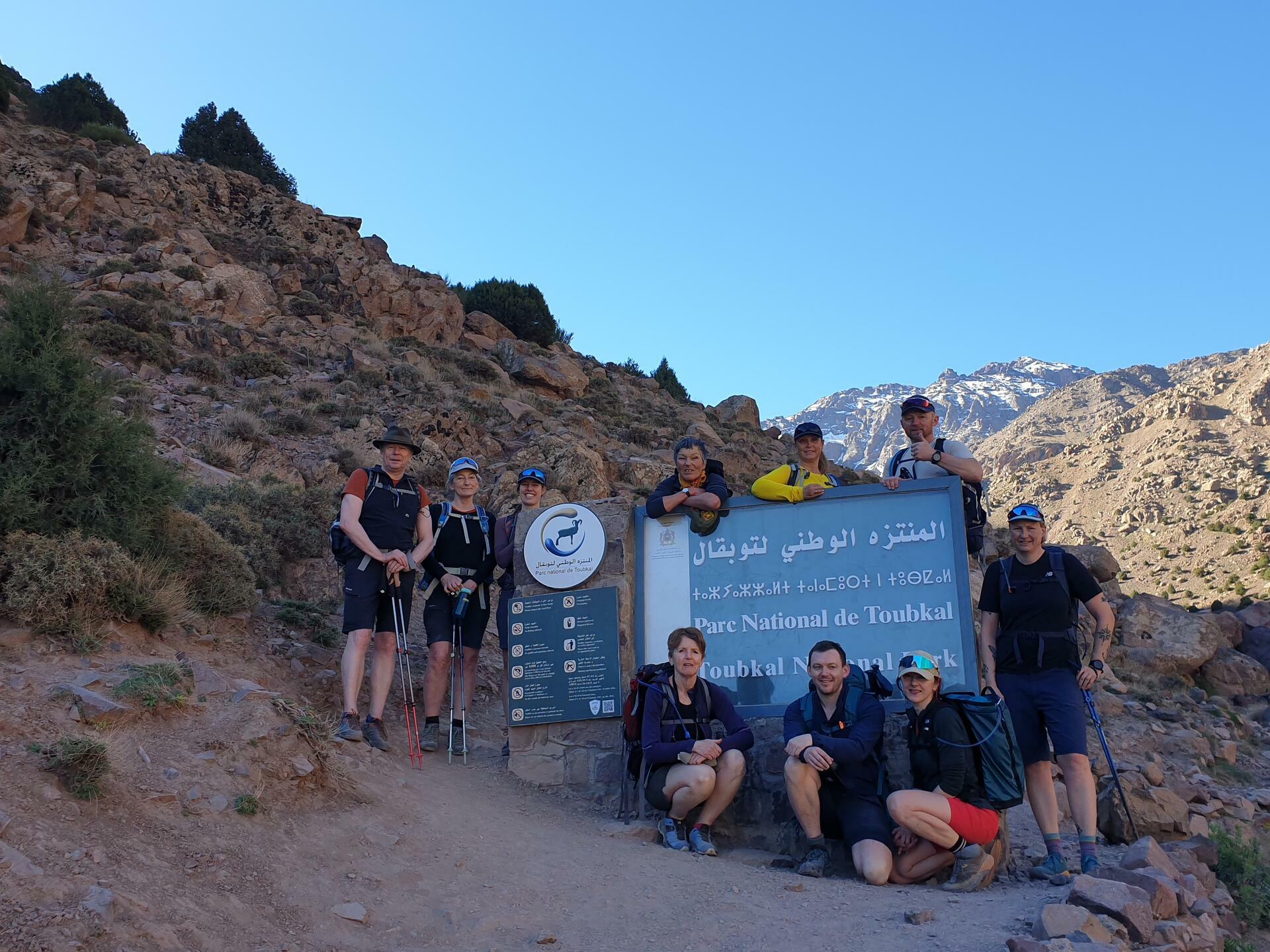
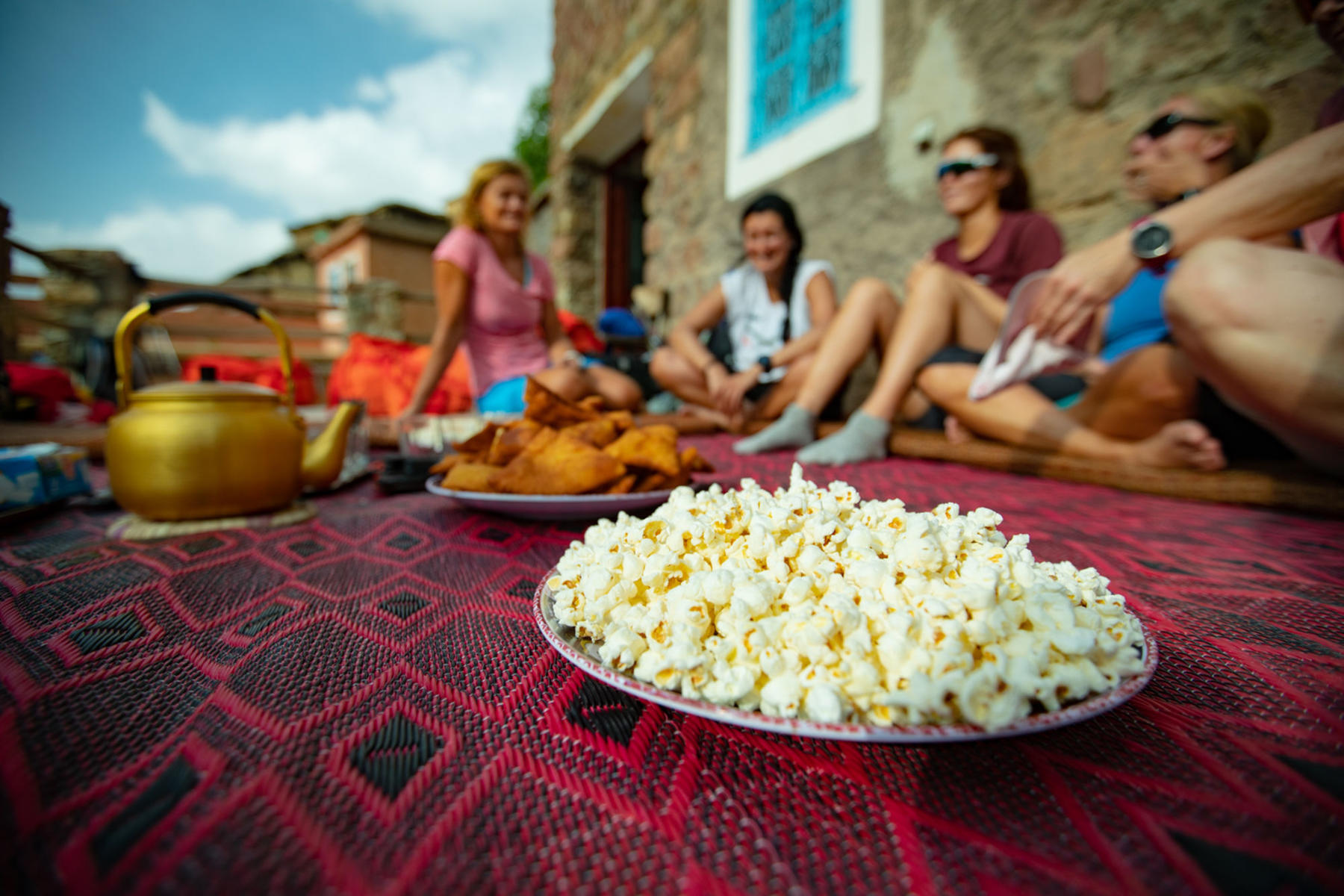
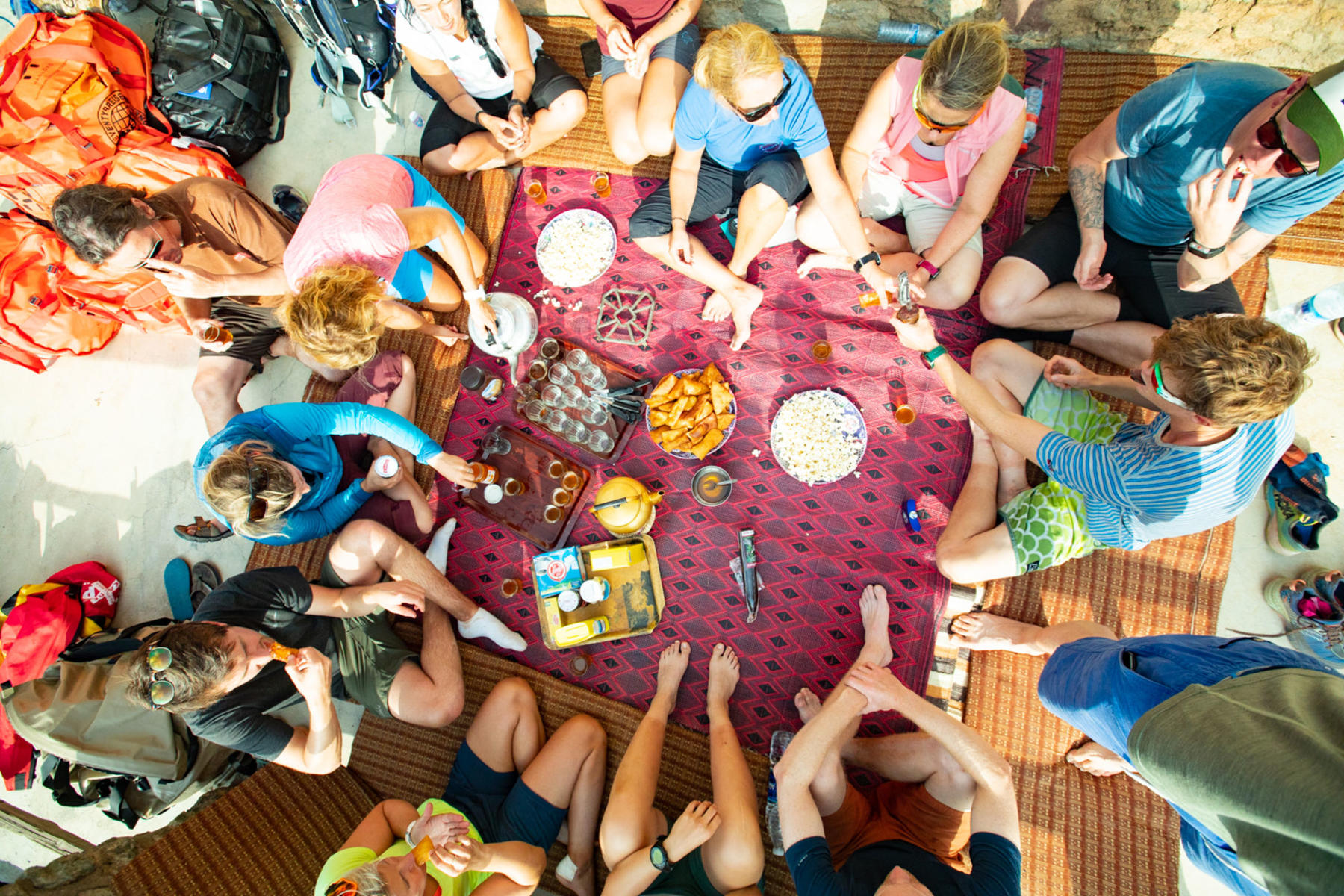
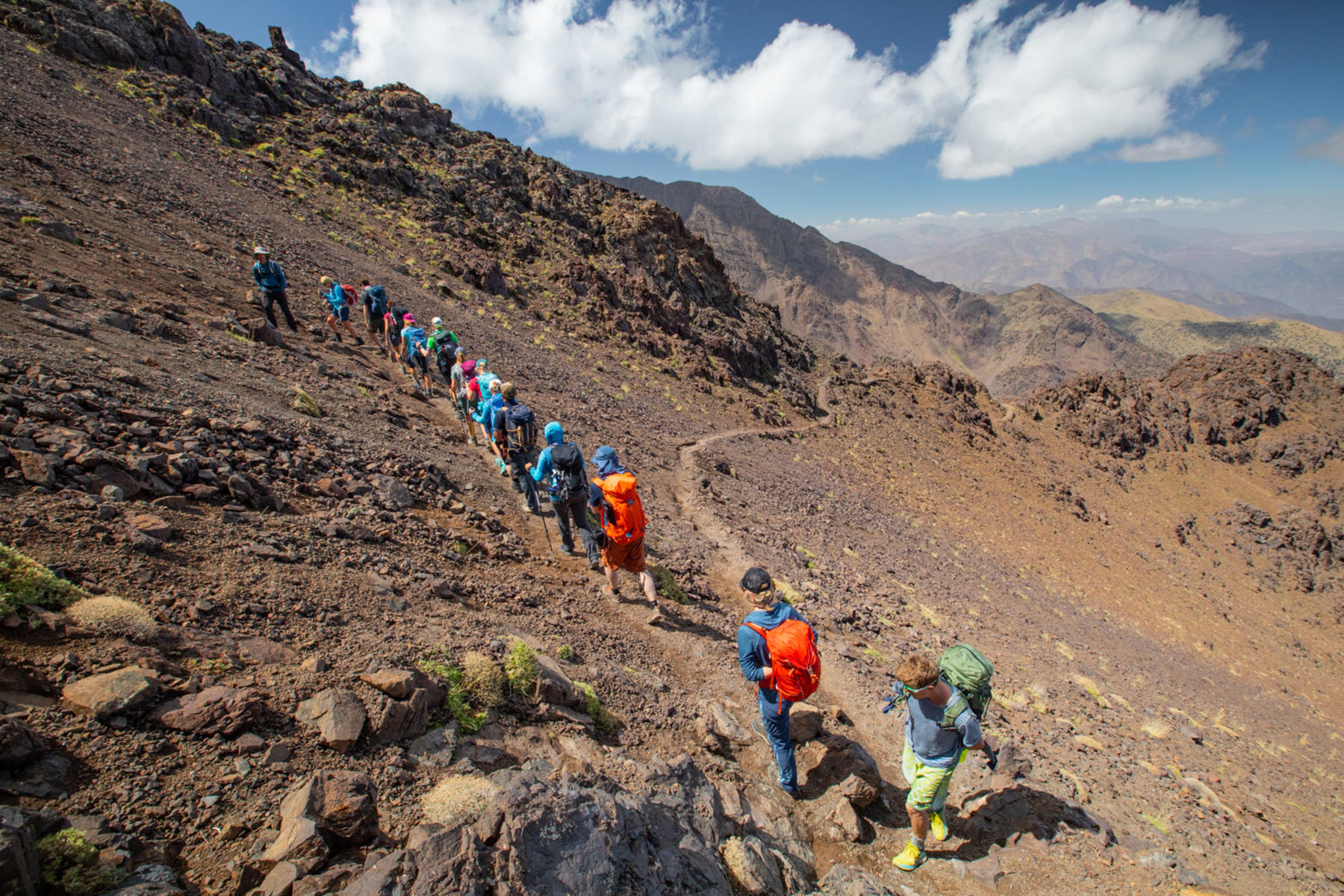
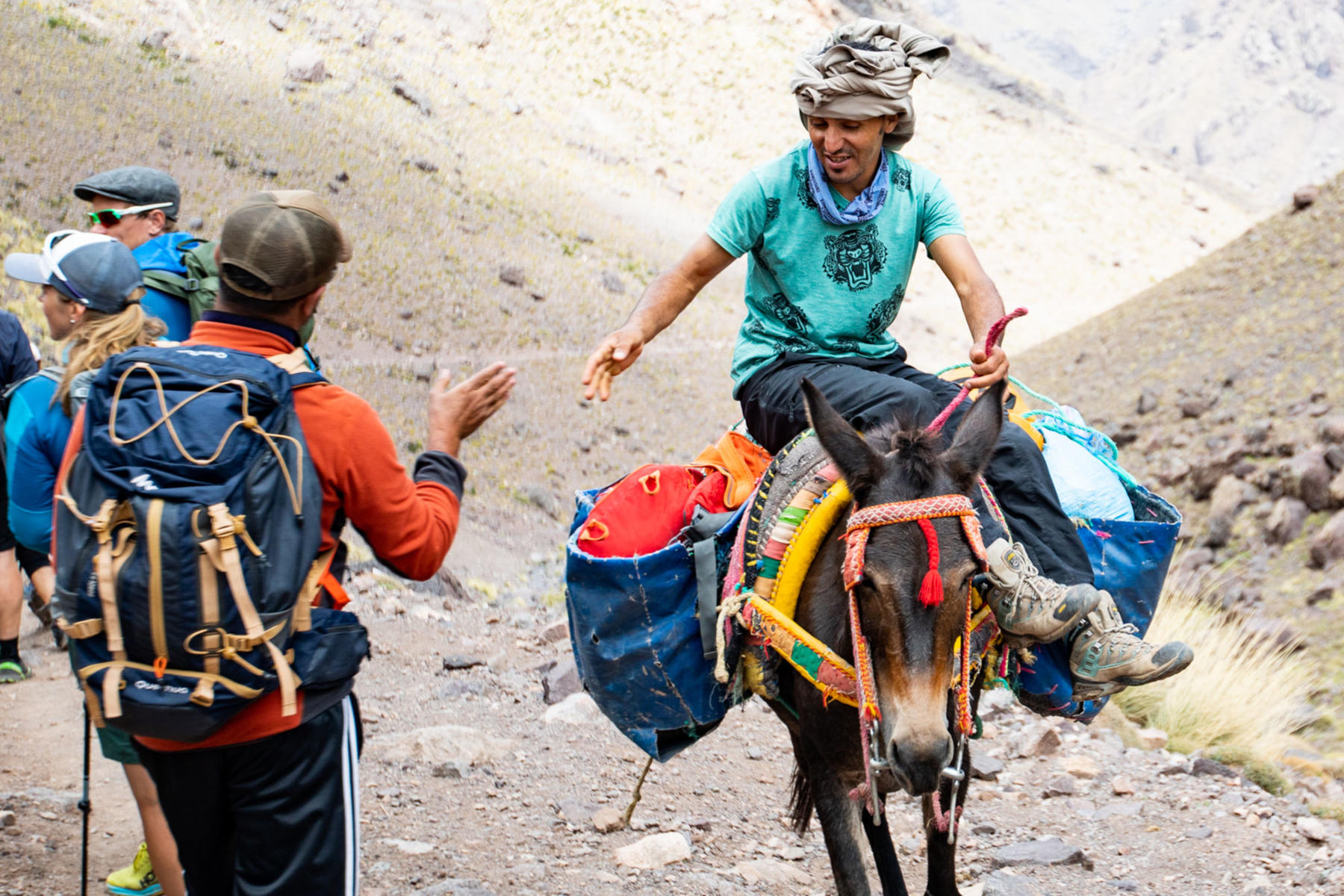
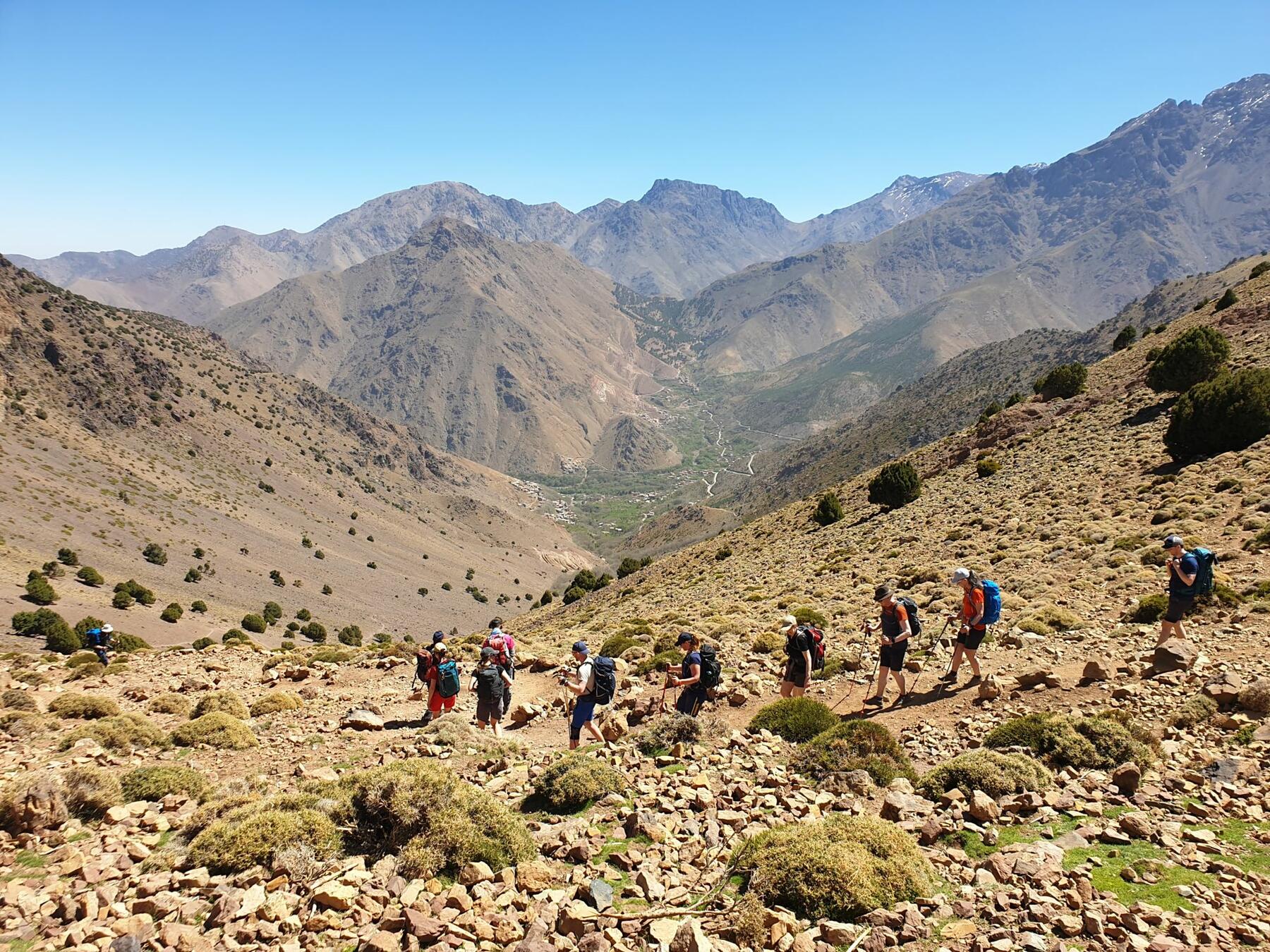
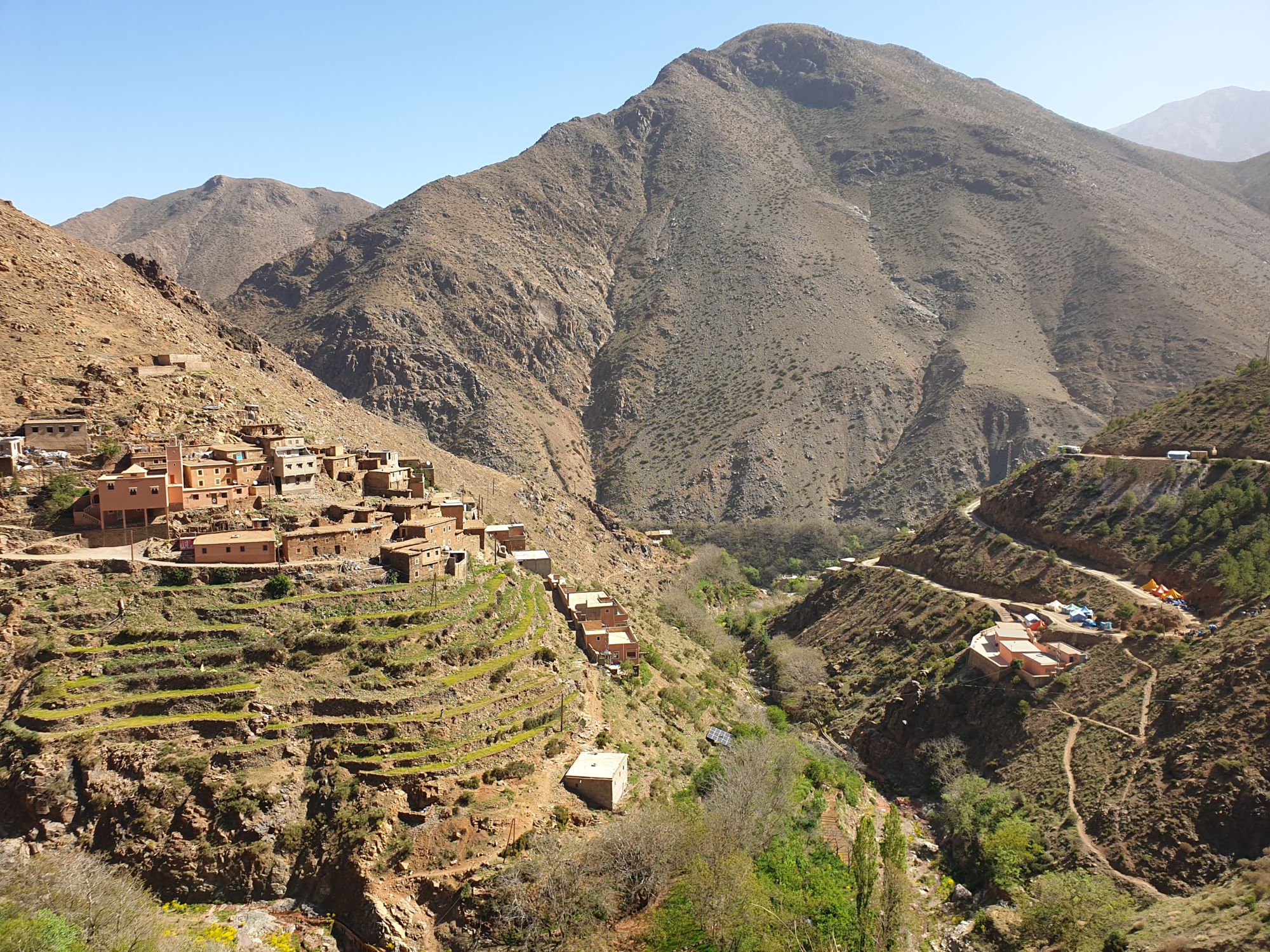
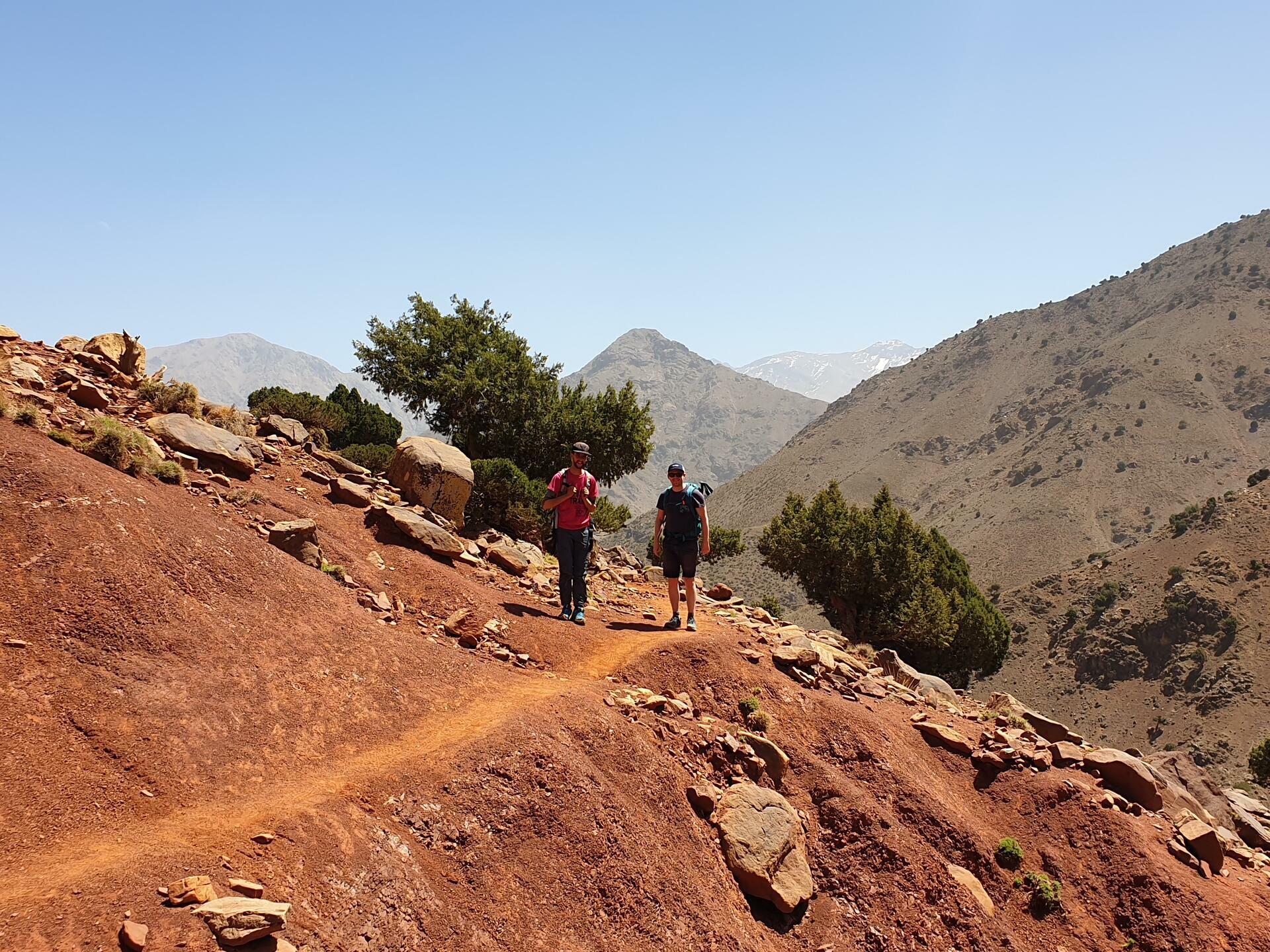
We start the day with an early breakfast at the hotel before boarding the minibus and heading south toward the towering peaks of the Atlas Mountains to begin our trek. Along the way, we pass a cluster of Berber villages. Upon arrival, we meet our support team for the week—our guides, cook, and mule handlers—before loading our bags onto the mules and setting off. The trek begins with a steady climb toward our first mountain pass, Tizi Oudite. From here, at over 2,200 meters, we are rewarded with breathtaking views in multiple directions and take a break to enjoy lunch. We then descend to the village of Id Aissa, following the irrigation channels that lead us to the final stretch of today's route. By late afternoon, we reach Tizi Oussem (1,850 m), where we will spend the night in a simple Berber house with shared rooms. We drink tea and have the chance to experience a local hammam, while our cook prepares a traditional Moroccan dinner. Today’s hike serves as a gentle and relaxed introduction to the trek ahead.

We start the day with an early breakfast at the hotel before boarding the minibus and heading south toward the towering peaks of the Atlas Mountains to begin our trek. Along the way, we pass a cluster of Berber villages. Upon arrival, we meet our support team for the week—our guides, cook, and mule handlers—before loading our bags onto the mules and setting off. The trek begins with a steady climb toward our first mountain pass, Tizi Oudite. From here, at over 2,200 meters, we are rewarded with breathtaking views in multiple directions and take a break to enjoy lunch. We then descend to the village of Id Aissa, following the irrigation channels that lead us to the final stretch of today's route. By late afternoon, we reach Tizi Oussem (1,850 m), where we will spend the night in a simple Berber house with shared rooms. We drink tea and have the chance to experience a local hammam, while our cook prepares a traditional Moroccan dinner. Today’s hike serves as a gentle and relaxed introduction to the trek ahead.

Berber House

B,L,D

1,5-2 hours

5-6 hours

750m/550m

11 km

Atlasfjellene-2019 @MaritVidnes
Atlasfjellene-2019@Bjørn Ankre (21)
FjellturiAtlasfjellene-2024@EliseKoren (15)

Day 3:Upward towards the mountain hut Lepiney (3000 m)

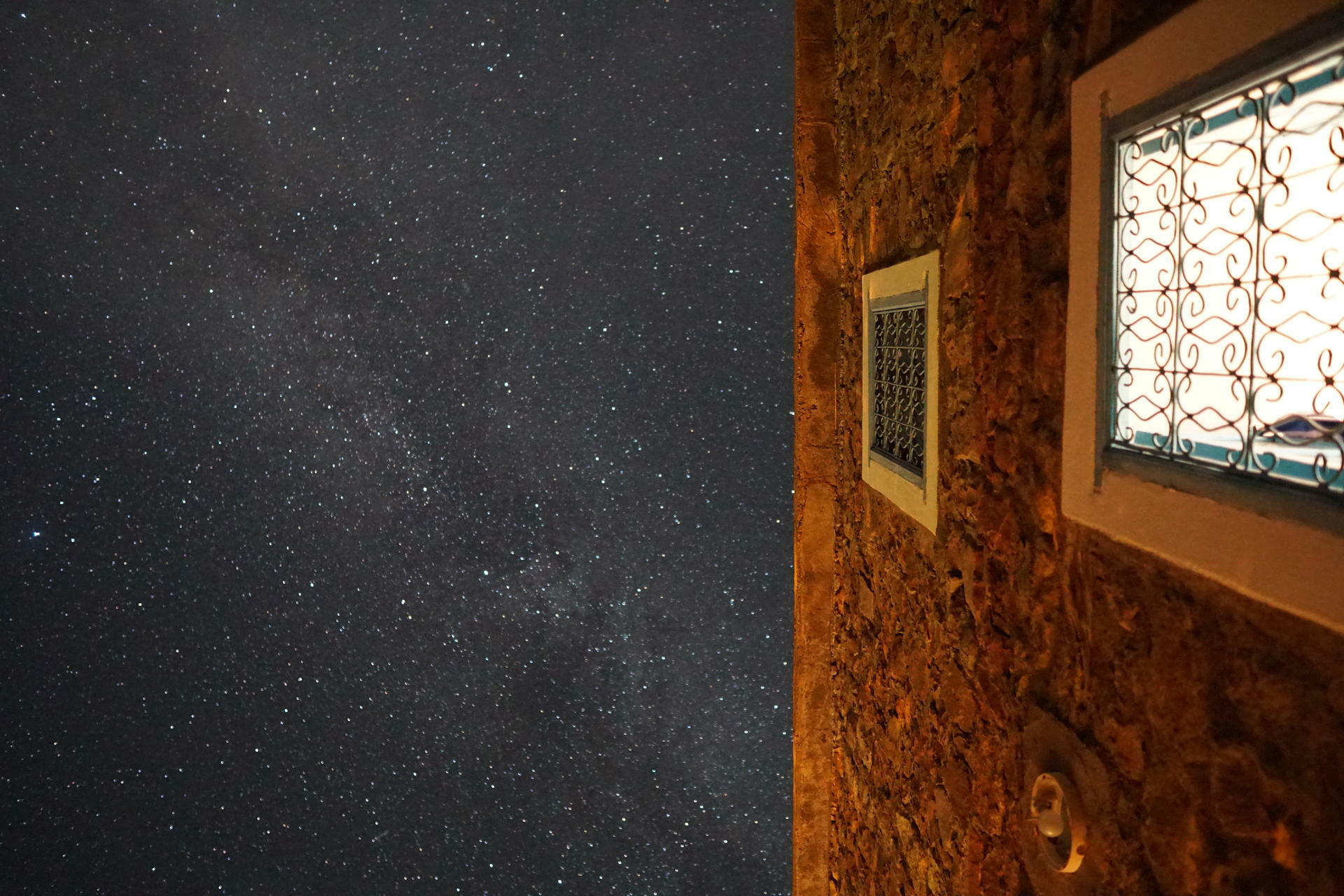
We have breakfast, load the mules again and follow a beautiful and spectacular trail through Azib Tamsoult (2250 m), a small village where mostly sheep herders make their homes. We continue on towards Lepiney at 3000 m and have lunch at a waterfall on the way. The Lepiney hut reveals itself as a small eagle's nest on a plateau, and although this is a very simple mountain hut, it makes up for it with a spectacular view. Here we spend the night in a common room inside the hut, or under the sparkling starry sky if the weather is good. Today's stage is mainly uphill, therefore end the day with slightly thinner air than when we started. (If the snow is still on the Aguelzim Pass, which we will cross on Day 4, we may take an alternative route and spend the night at Azib Tamsoult. This is more likely in spring than in autumn.)

We have breakfast, load the mules again and follow a beautiful and spectacular trail through Azib Tamsoult (2250 m), a small village where mostly sheep herders make their homes. We continue on towards Lepiney at 3000 m and have lunch at a waterfall on the way. The Lepiney hut reveals itself as a small eagle's nest on a plateau, and although this is a very simple mountain hut, it makes up for it with a spectacular view. Here we spend the night in a common room inside the hut, or under the sparkling starry sky if the weather is good. Today's stage is mainly uphill, therefore end the day with slightly thinner air than when we started. (If the snow is still on the Aguelzim Pass, which we will cross on Day 4, we may take an alternative route and spend the night at Azib Tamsoult. This is more likely in spring than in autumn.)

Mountain cabin

B,L,D

5-6 hours

+1200m

11 km

Atlasfjellene-2019@Bjørn Ankre (28)
Atlasfjellene-2019@Bjørn Ankre (30)
FjellturiAtlasfjellene-2024@EliseKoren (20)

Day 4:Toubkal Basecamp (3200 m)

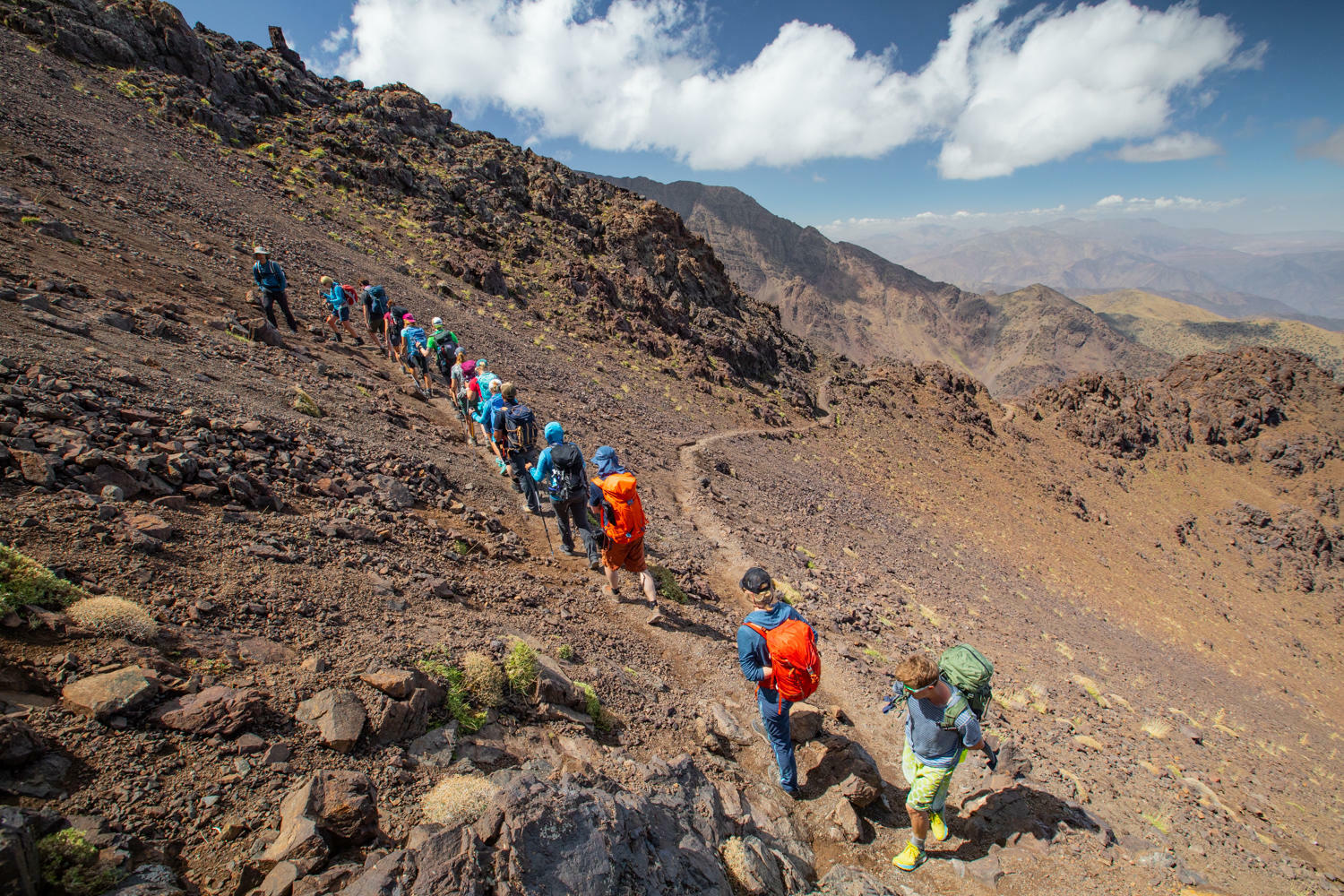
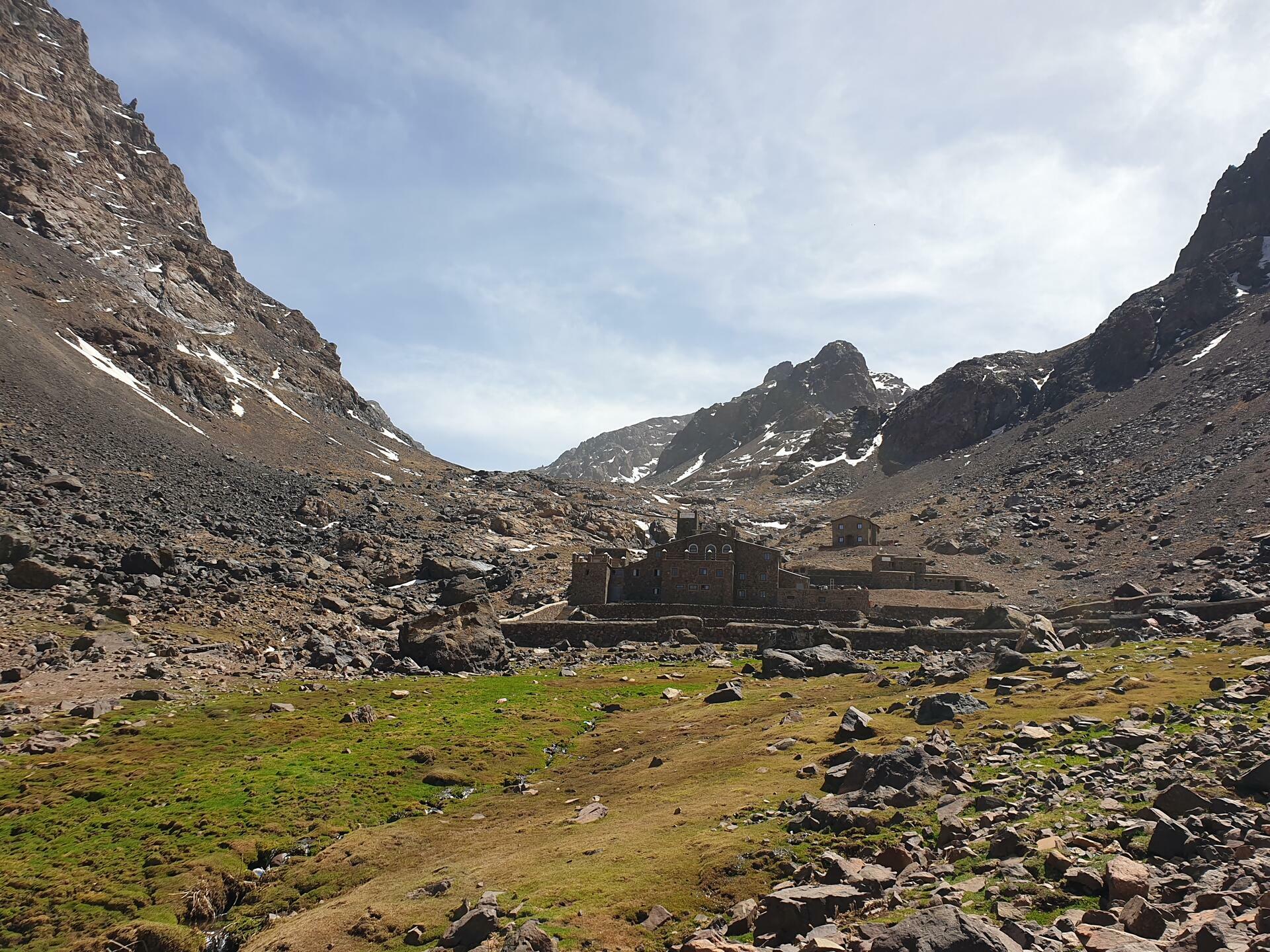
Today will be an intense day, as we will be climbing significantly higher, and you will probably notice that the air feels thinner. Ahead of us is the climb up to the Aguelzim Pass at 3650 m. It is long, tough and steep, but spectacular. From here, we get our first glimpse of tomorrow’s goal – the summit of Jebel Toubkal – before descending to Toubkal Basecamp (3,200 m). Here we have dinner and spend the night in a dormitory. This is a nice hike for acclimatization before tomorrow's summit push.

Today will be an intense day, as we will be climbing significantly higher, and you will probably notice that the air feels thinner. Ahead of us is the climb up to the Aguelzim Pass at 3650 m. It is long, tough and steep, but spectacular. From here, we get our first glimpse of tomorrow’s goal – the summit of Jebel Toubkal – before descending to Toubkal Basecamp (3,200 m). Here we have dinner and spend the night in a dormitory. This is a nice hike for acclimatization before tomorrow's summit push.

Mountain cabin

B,L,D

7 hours

750m/550m

14 km

Atlasfjellene-2019@Bjørn Ankre (50)
Atlasfjellene-2018@StianHovi (11)
Atlasfjellene-2019@Bjørn Ankre (59)

Day 5:Summit push for Jebel Toubkal (4167 m)

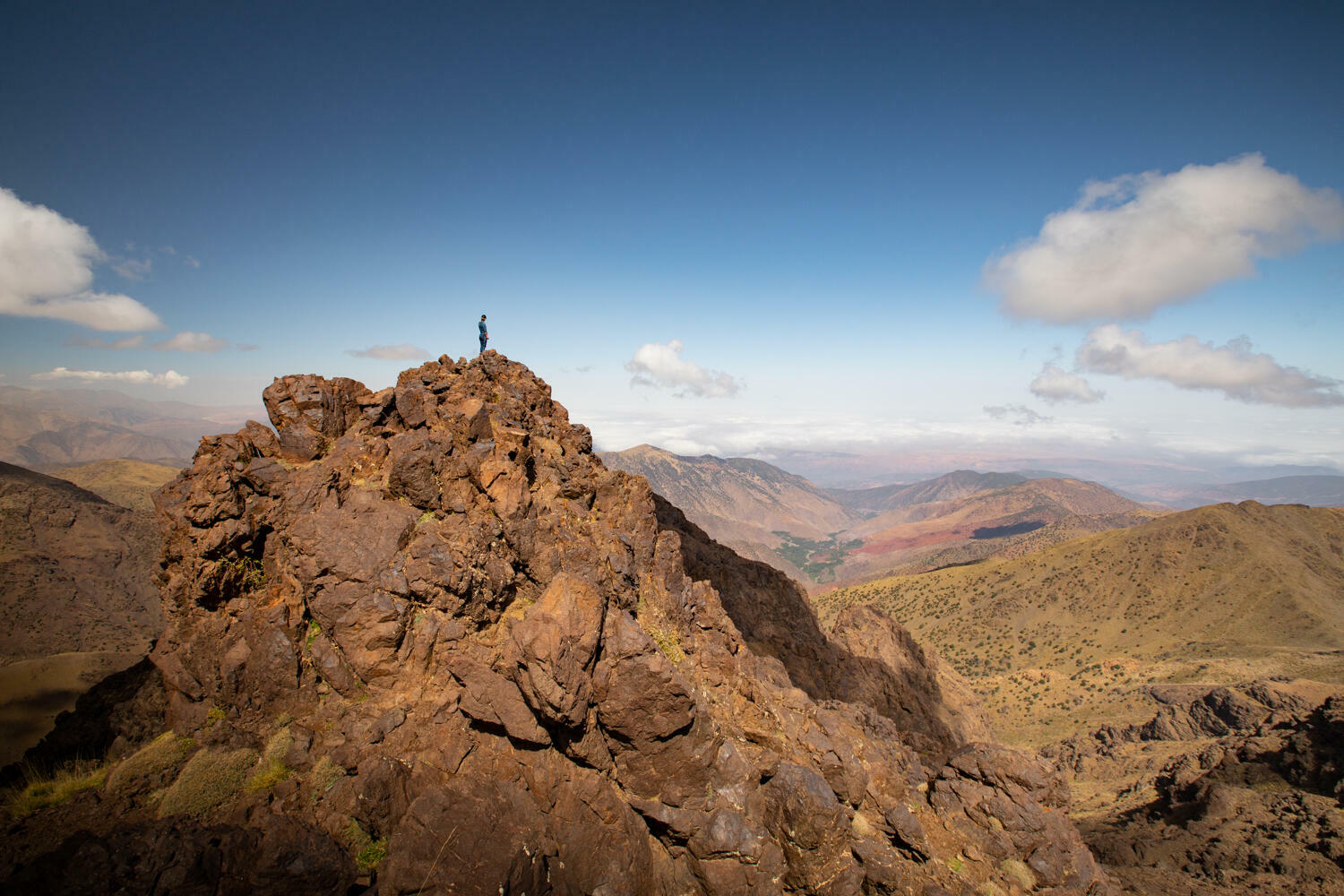
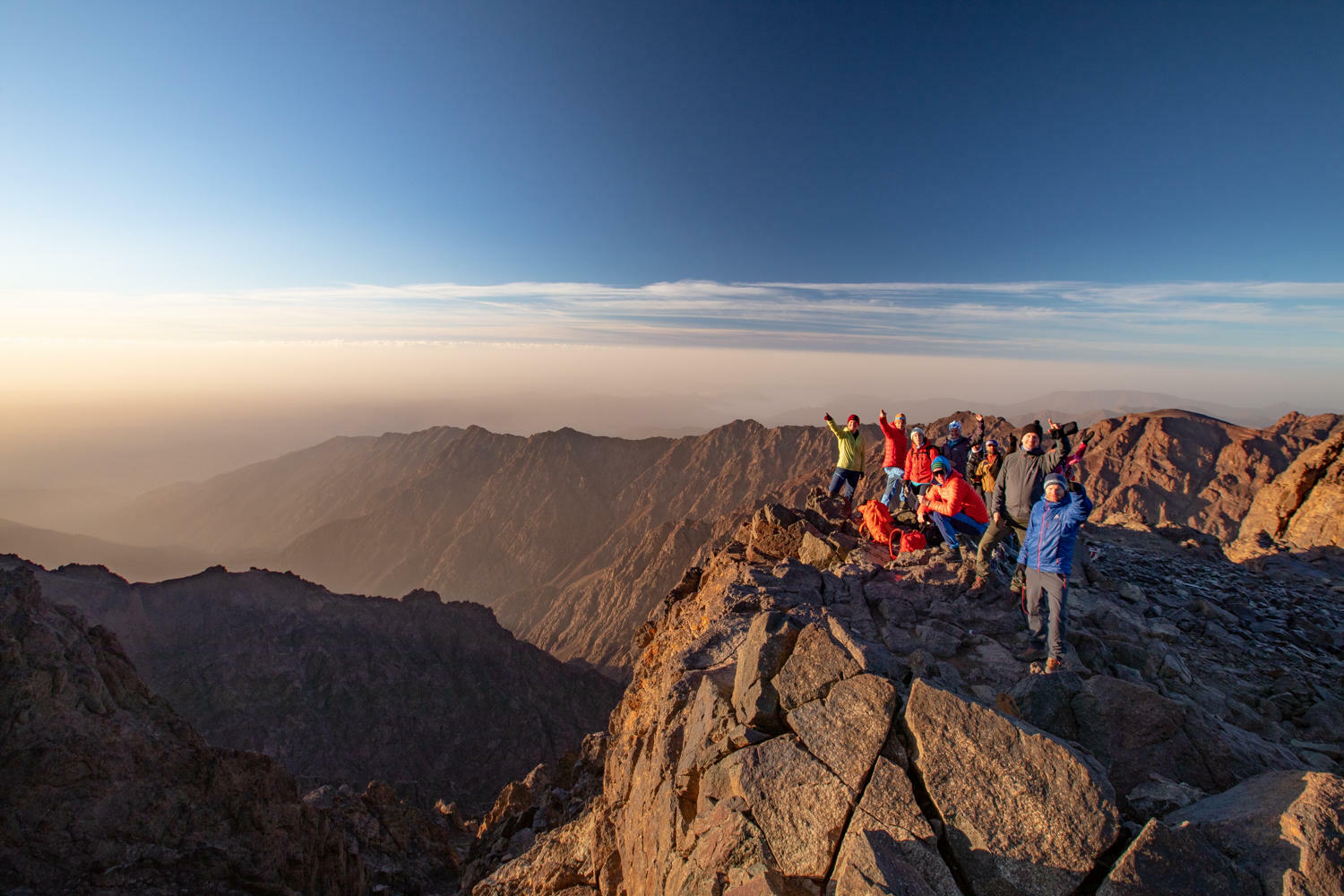
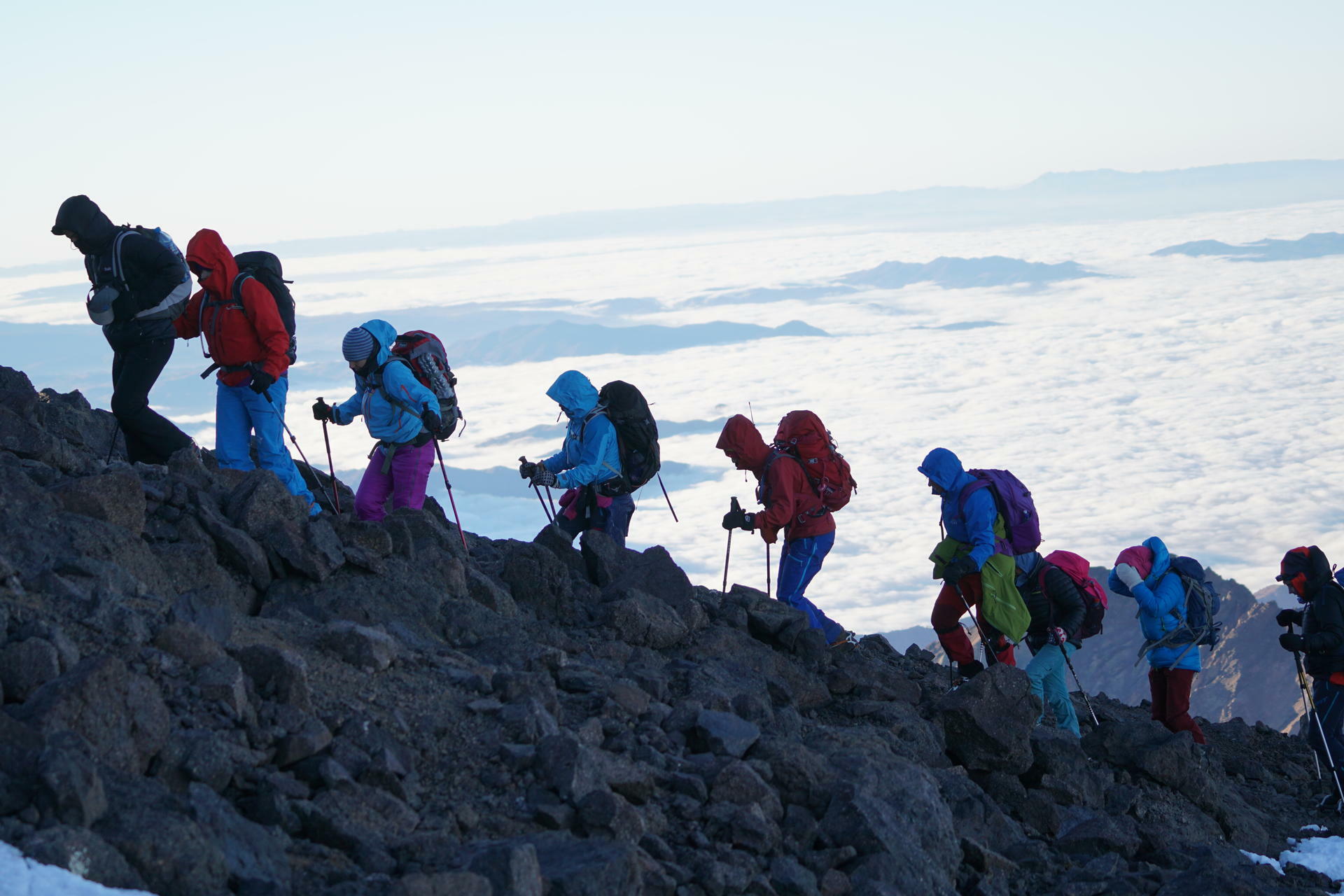
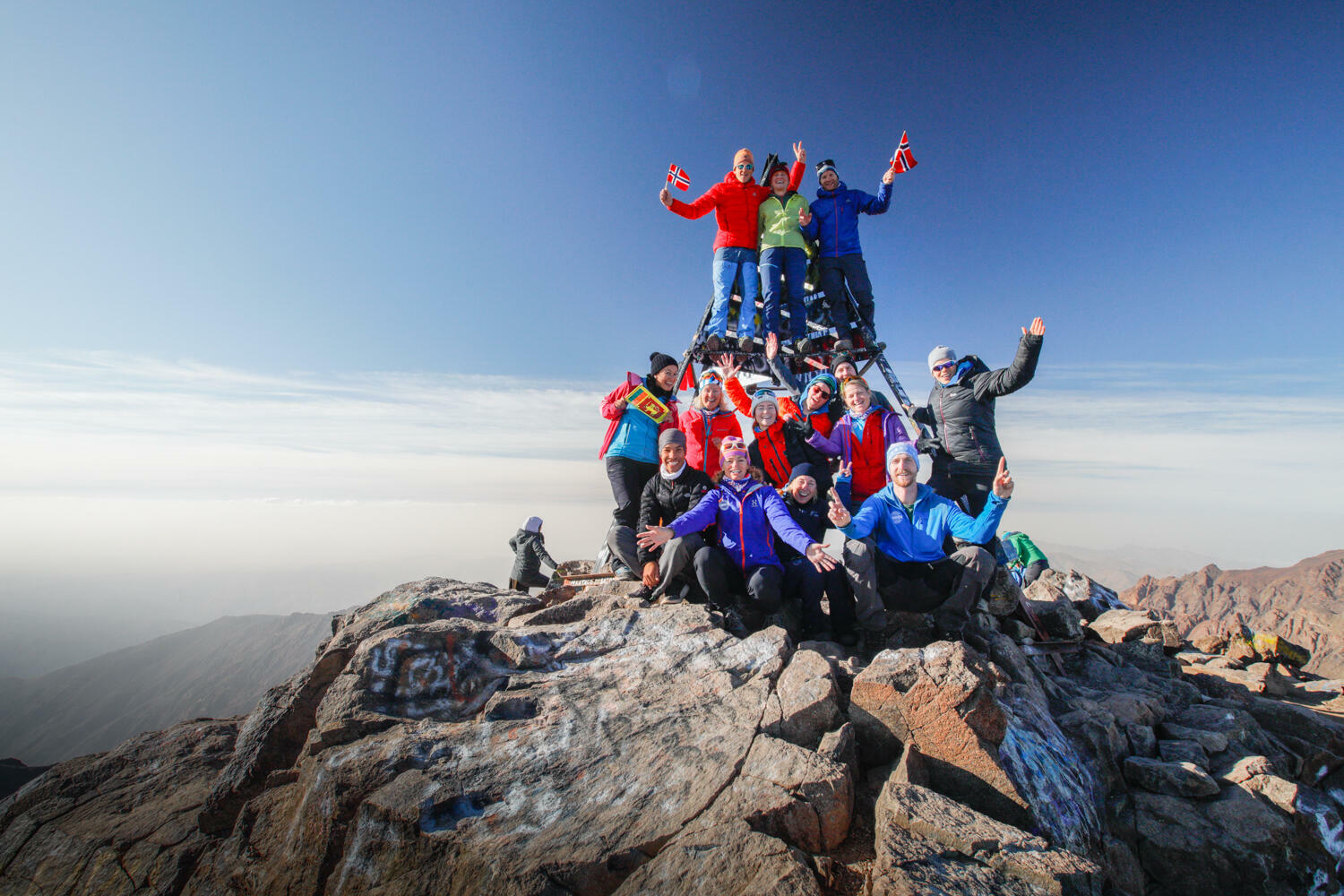
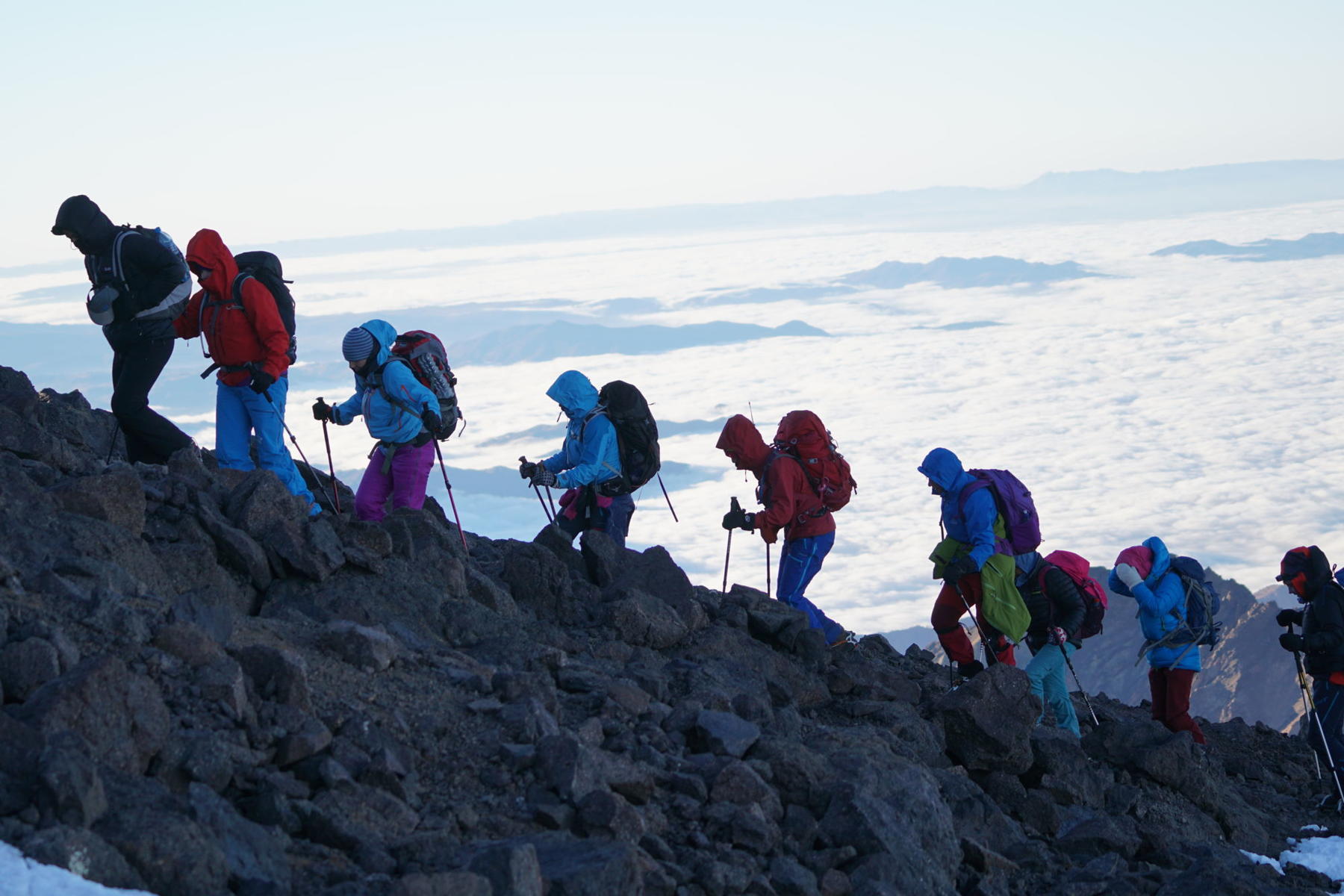
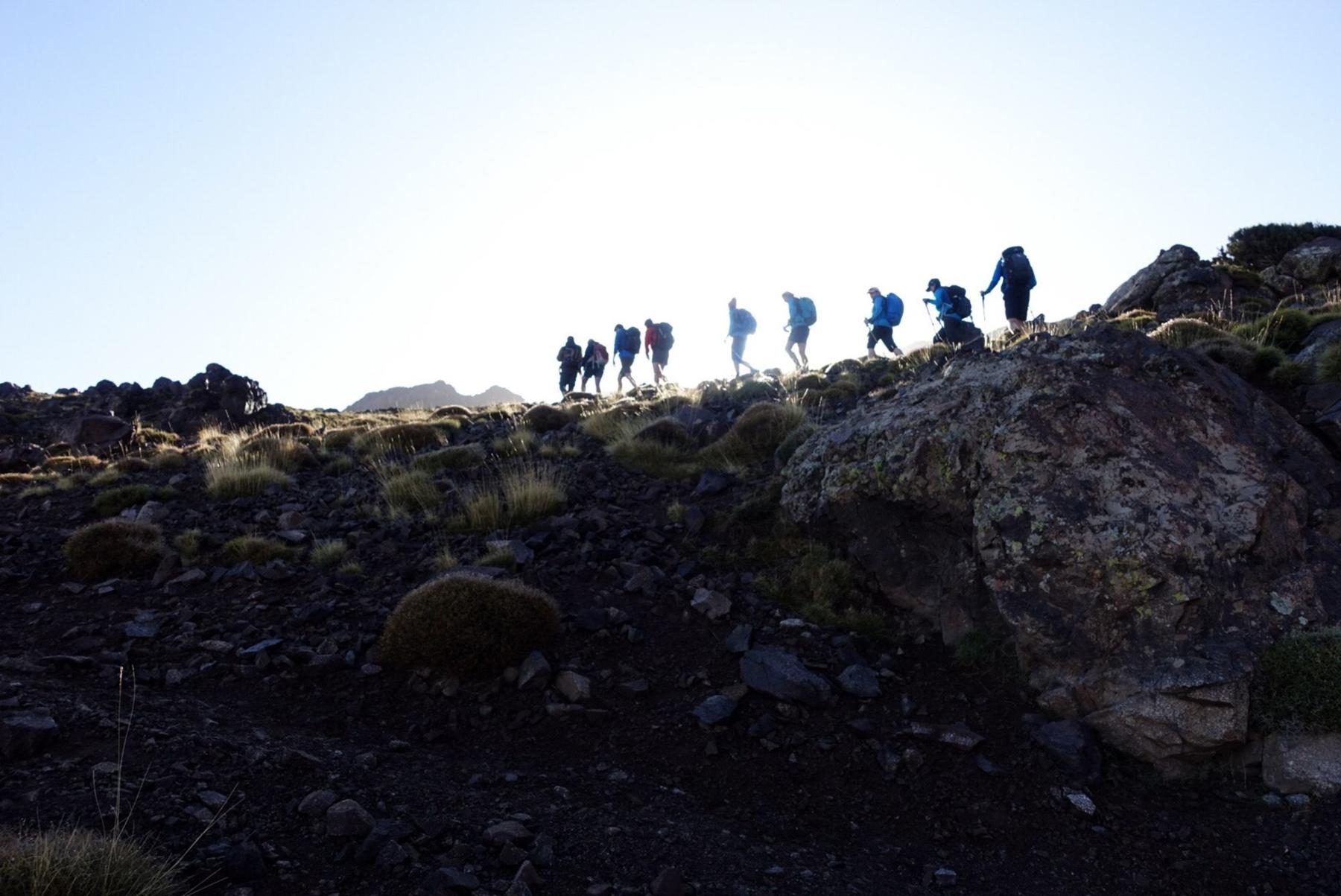
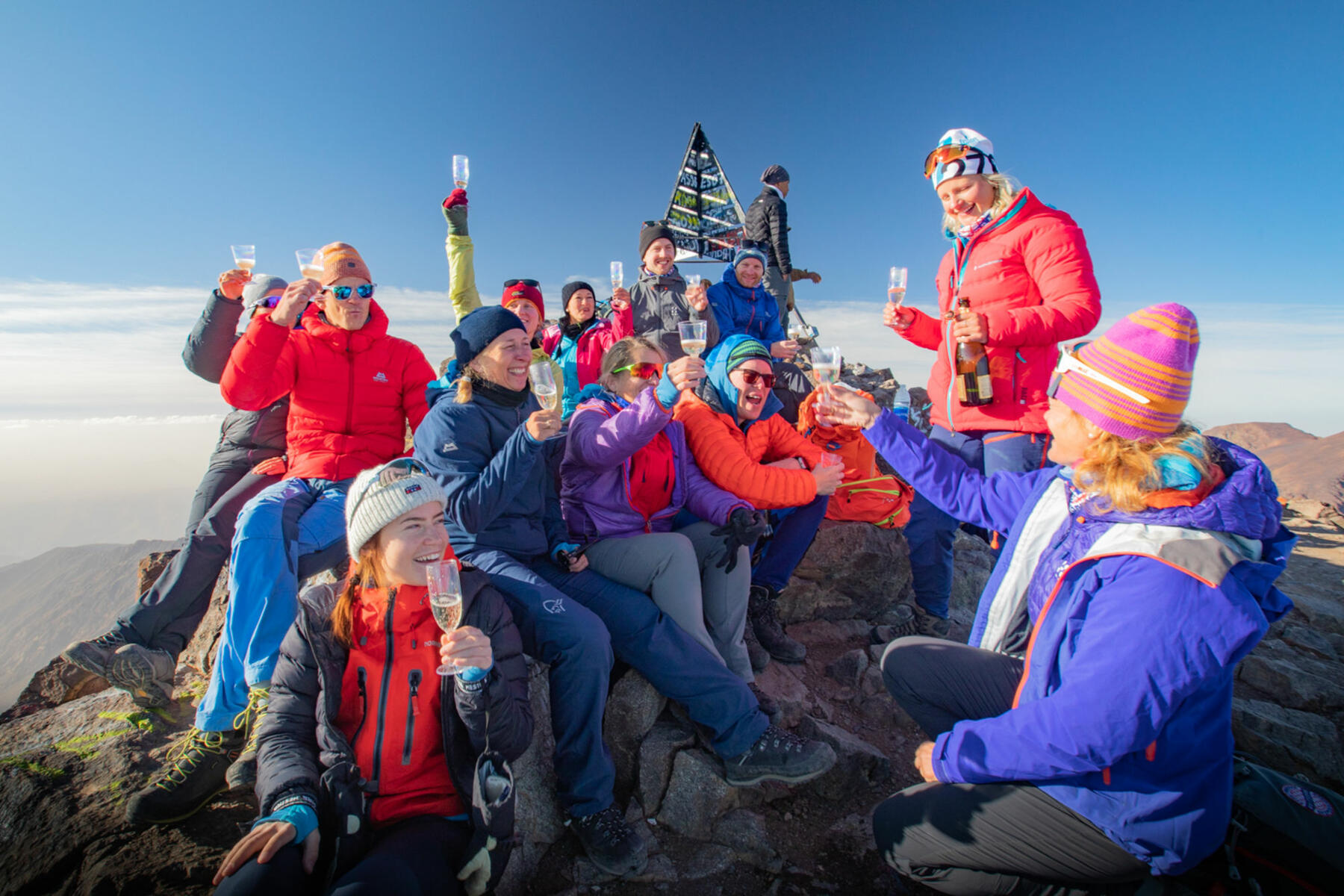
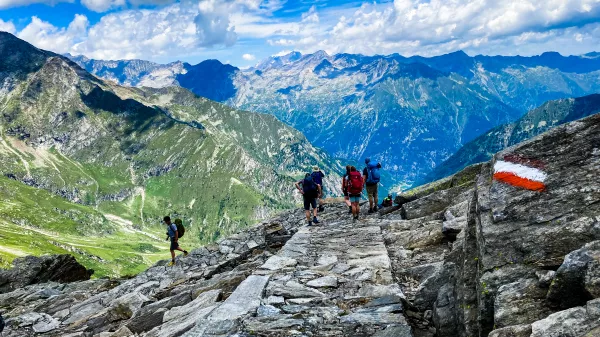
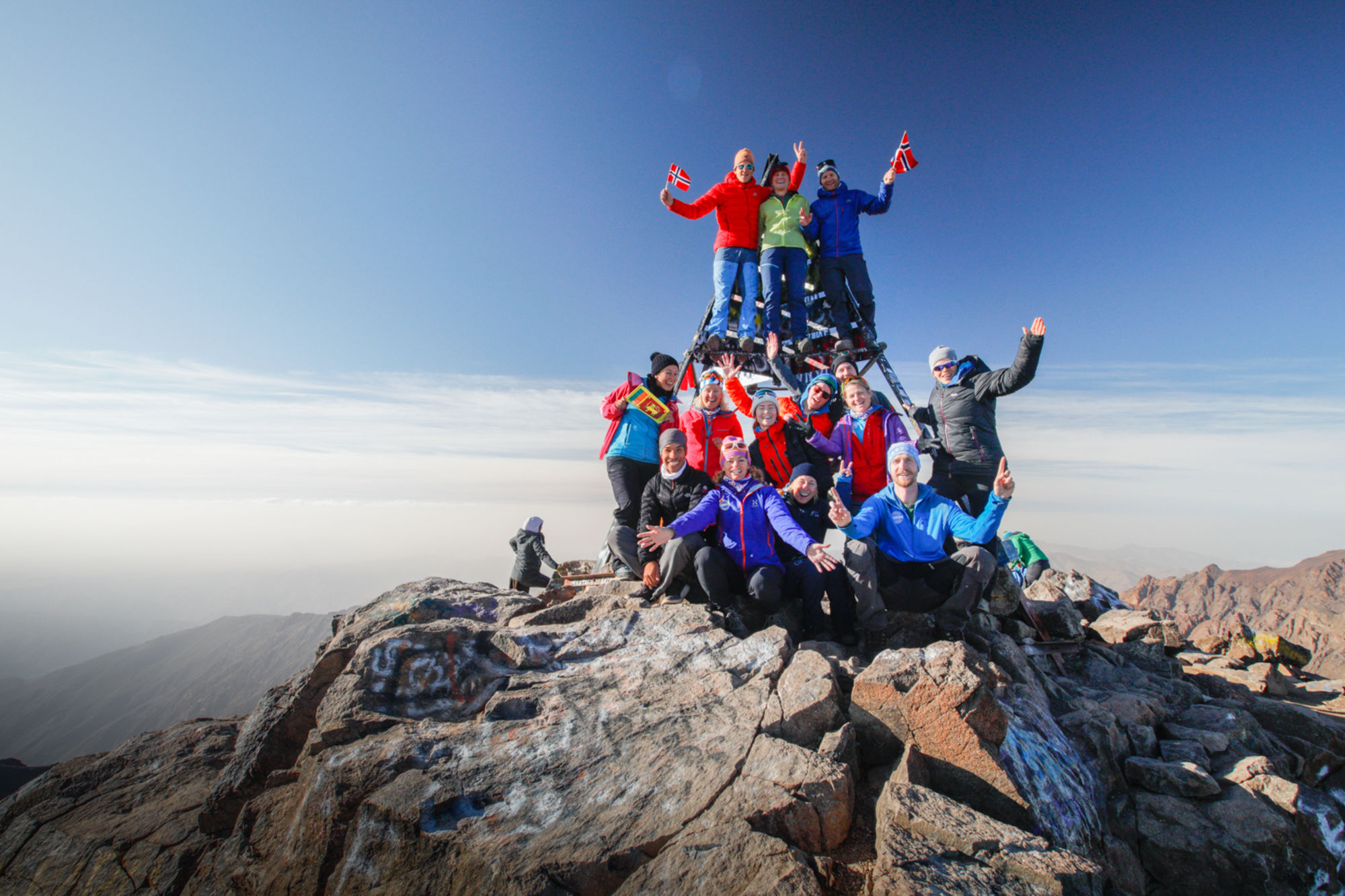
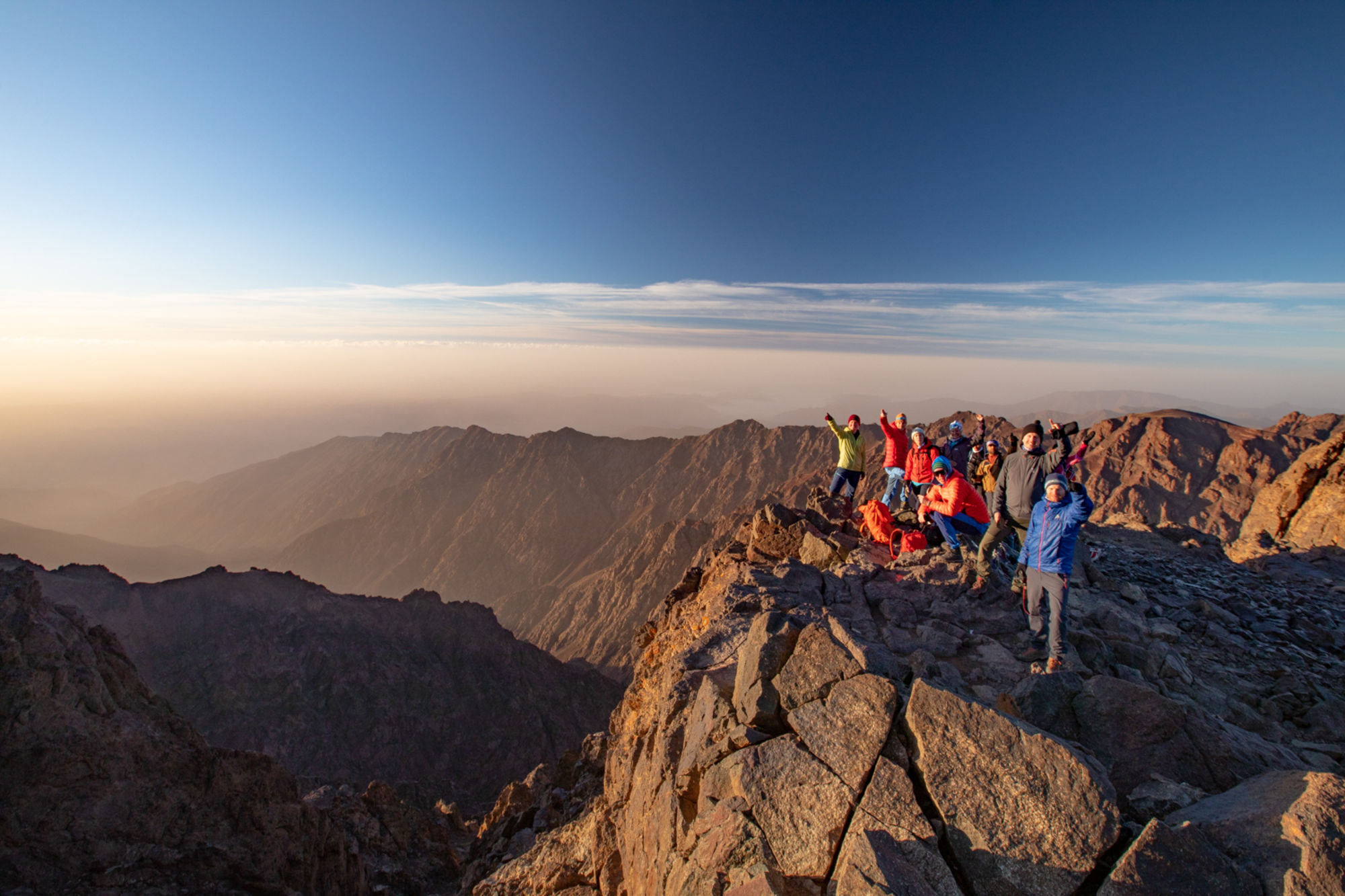
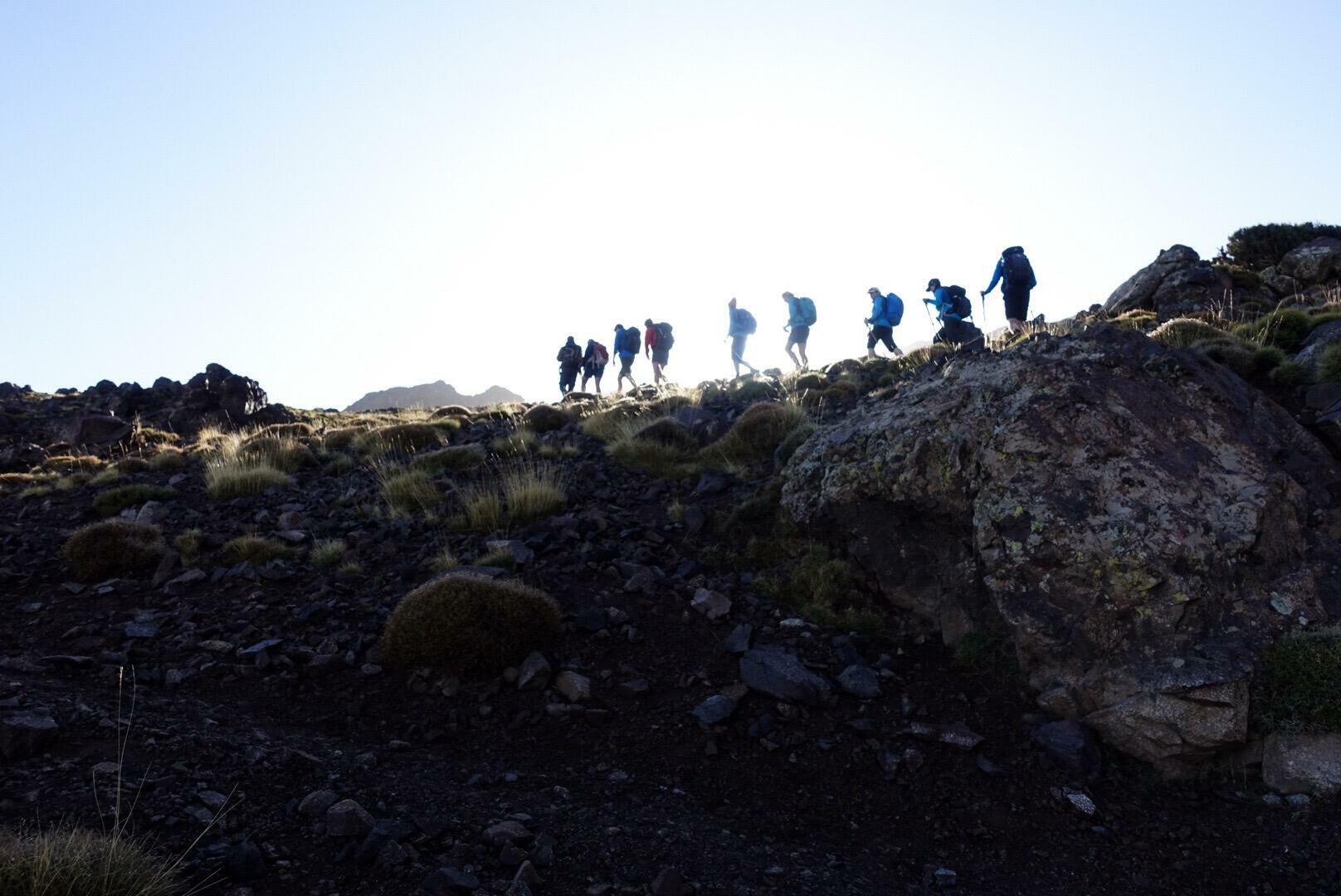
We have a very long day ahead of us and will start before sunrise to avoid the strongest heat as we make our way up to the summit of Toubkal. We begin the ascent in the dark, guided only by the light of the stars and headlamps slowly moving upwards. It’s wise to have a down jacket in your backpack— even in Africa, low temperatures can be experienced, especially above 4,000 meters. The first part of the trail consists of large stones, and with the steep climb, it can be a tough trek, but the reward waiting at the top makes it all worthwhile! After four days of hiking, we should be well-acclimatized to handle the altitude, and after about four hours of effort and a 1,000-meter ascent, we will reach the highest point in North Africa at 4,167 meters, where we can look out over everything surrounding us! We take in the view and celebrate the moment at the summit of Jebel Toubkal before descending back to basecamp for a late lunch. We then continue for about four hours down to the village of Imlil (1740 m). Here, we will stay in a cozy riad with comfortable beds and showers— a true luxury after a tough mountain trek.

We have a very long day ahead of us and will start before sunrise to avoid the strongest heat as we make our way up to the summit of Toubkal. We begin the ascent in the dark, guided only by the light of the stars and headlamps slowly moving upwards. It’s wise to have a down jacket in your backpack— even in Africa, low temperatures can be experienced, especially above 4,000 meters. The first part of the trail consists of large stones, and with the steep climb, it can be a tough trek, but the reward waiting at the top makes it all worthwhile! After four days of hiking, we should be well-acclimatized to handle the altitude, and after about four hours of effort and a 1,000-meter ascent, we will reach the highest point in North Africa at 4,167 meters, where we can look out over everything surrounding us! We take in the view and celebrate the moment at the summit of Jebel Toubkal before descending back to basecamp for a late lunch. We then continue for about four hours down to the village of Imlil (1740 m). Here, we will stay in a cozy riad with comfortable beds and showers— a true luxury after a tough mountain trek.

Riad

B,L,D

10-12 hours

1000m/2400m

20 km

504900936

Day 6:To the beach town of Essaouira

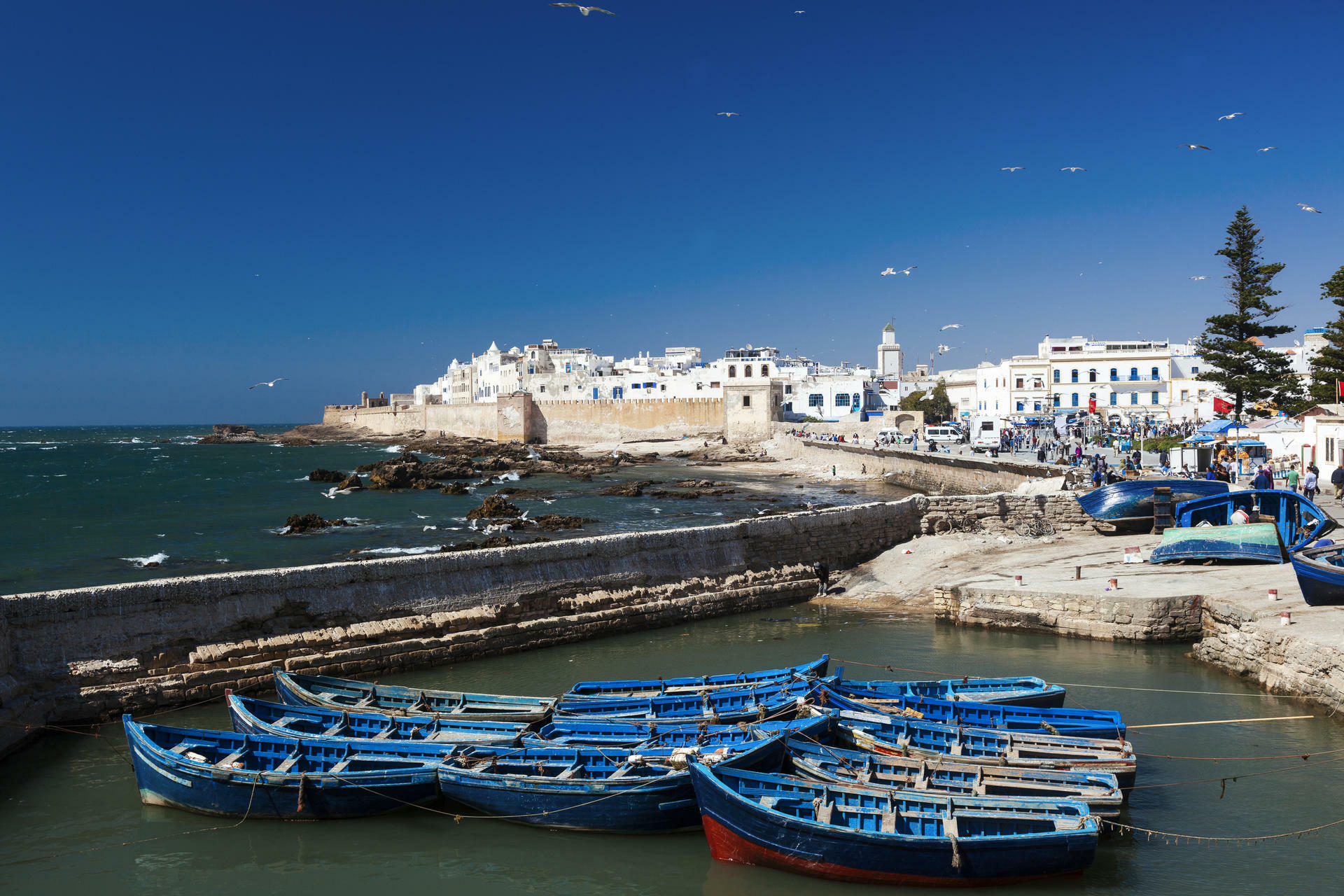
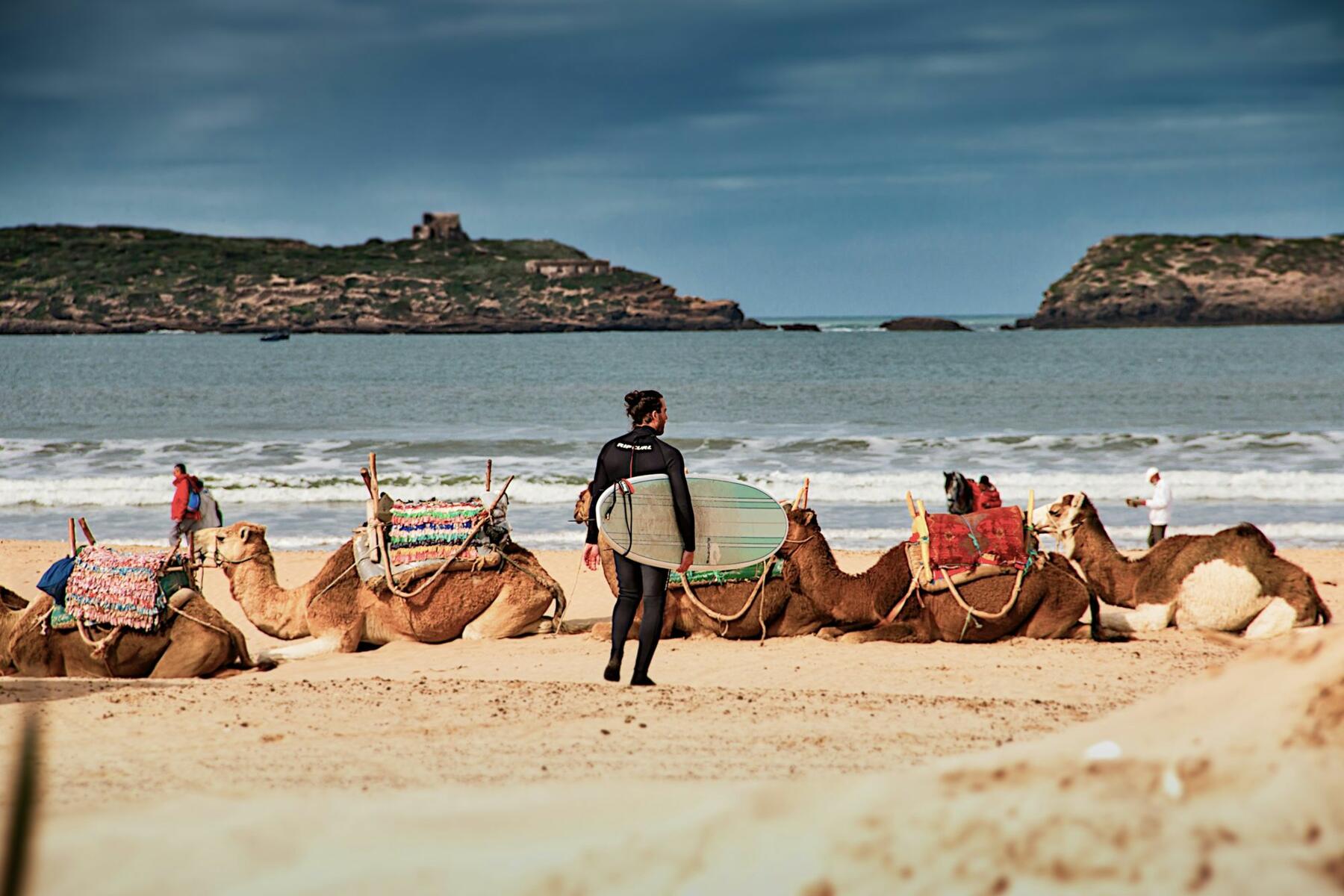
After breakfast, we say goodbye to our support team, hop onto the minibus, and head west toward Morocco's Atlantic coastline. By early afternoon, we arrive in the beautiful beach town of Essaouira, where the rest of the day is yours to enjoy. Here, you can relax on the beach, surf, swim, shop, or ride horses or camels. Compared to the hectic and overwhelming chaos that many associate with Moroccan cities, Essaouira is a peaceful and charming town where you can stroll freely through the streets and leisurely browse the bazaars. The city's medina is a UNESCO World Heritage site, and just below the center, miles of beautiful sandy beaches stretch south along a pleasant promenade lined with hotels and restaurants. We check into our riad, located in the old town.

After breakfast, we say goodbye to our support team, hop onto the minibus, and head west toward Morocco's Atlantic coastline. By early afternoon, we arrive in the beautiful beach town of Essaouira, where the rest of the day is yours to enjoy. Here, you can relax on the beach, surf, swim, shop, or ride horses or camels. Compared to the hectic and overwhelming chaos that many associate with Moroccan cities, Essaouira is a peaceful and charming town where you can stroll freely through the streets and leisurely browse the bazaars. The city's medina is a UNESCO World Heritage site, and just below the center, miles of beautiful sandy beaches stretch south along a pleasant promenade lined with hotels and restaurants. We check into our riad, located in the old town.

Riad

B,-,-

5 hours

Atlasfjellene-2024@peter-schulz--leOF2nzJQ8-unsplash

Day 7:A day in Cardamom City

Enjoy a leisurely day in Essaouira, a city known for its relaxed beach atmosphere and bohemian charm. Its hippie legacy is highlighted by famous visitors like Jimi Hendrix, Frank Zappa, and Janis Joplin, who vacationed here in the ’60s. Major films such as "Alexander" and "Kingdom Of Heaven" and parts of ''Game of Thrones" were filmed in and around Essaouira. It is said that Norwegian writer Thorbjørn Egner drew inspiration from Essaouira for Cardamom City in his children’s story 'When the Robbers Came to Cardamom Town' after visiting in 1949. Here you will find narrow streets, camels, city walls, people, robbers and the prayer tower of Tobias! A visit to the bazaars here is well worth it, and the opportunities for shopping are many! In the evening, we’ll gather for our final dinner together at one of the city's charming restaurants.

Enjoy a leisurely day in Essaouira, a city known for its relaxed beach atmosphere and bohemian charm. Its hippie legacy is highlighted by famous visitors like Jimi Hendrix, Frank Zappa, and Janis Joplin, who vacationed here in the ’60s. Major films such as "Alexander" and "Kingdom Of Heaven" and parts of ''Game of Thrones" were filmed in and around Essaouira. It is said that Norwegian writer Thorbjørn Egner drew inspiration from Essaouira for Cardamom City in his children’s story 'When the Robbers Came to Cardamom Town' after visiting in 1949. Here you will find narrow streets, camels, city walls, people, robbers and the prayer tower of Tobias! A visit to the bazaars here is well worth it, and the opportunities for shopping are many! In the evening, we’ll gather for our final dinner together at one of the city's charming restaurants.

Riad

B,L,D

Atlasfjellene-2018@StianHovi (3)

Day 8:Homeward or onward bound

After a late breakfast we are transferred back to Marrakesh Menara Airport. Unfortunately, our amazing adventure in Morocco comes to an end and we say goodbye to all the new friends we have made along the way. If you would like to stay longer in Marrakesh for a night or two, feel free to contact us, and we’ll check the possibilities for you.

After a late breakfast we are transferred back to Marrakesh Menara Airport. Unfortunately, our amazing adventure in Morocco comes to an end and we say goodbye to all the new friends we have made along the way. If you would like to stay longer in Marrakesh for a night or two, feel free to contact us, and we’ll check the possibilities for you.

B,-,-

3 hours

Airfare is not included in this tour, so you are responsible for arranging your own transportation to and from Morocco. The first day is unscheduled, allowing you to arrive in Marrakesh at your convenience. Our meeting point on the first day will be the the riad, a traditional Moroccan hotel, located in the heart of the city's medina (old town). In the evening, we will enjoy a welcome dinner at the riad and get to know each other better. Depending on flight times, there may not be much time to explore Marrakesh. If you'd like more time in this exciting city, you can request an additional program for an extra night or two at the end of the trip.
Riad

-,-,D

We start the day with an early breakfast at the hotel before boarding the minibus and heading south toward the towering peaks of the Atlas Mountains to begin our trek. Along the way, we pass a cluster of Berber villages. Upon arrival, we meet our support team for the week—our guides, cook, and mule handlers—before loading our bags onto the mules and setting off. The trek begins with a steady climb toward our first mountain pass, Tizi Oudite. From here, at over 2,200 meters, we are rewarded with breathtaking views in multiple directions and take a break to enjoy lunch. We then descend to the village of Id Aissa, following the irrigation channels that lead us to the final stretch of today's route. By late afternoon, we reach Tizi Oussem (1,850 m), where we will spend the night in a simple Berber house with shared rooms. We drink tea and have the chance to experience a local hammam, while our cook prepares a traditional Moroccan dinner. Today’s hike serves as a gentle and relaxed introduction to the trek ahead.

Berber House

B,L,D

1,5-2 hours

5-6 hours

750m/550m

11 km

We have breakfast, load the mules again and follow a beautiful and spectacular trail through Azib Tamsoult (2250 m), a small village where mostly sheep herders make their homes. We continue on towards Lepiney at 3000 m and have lunch at a waterfall on the way. The Lepiney hut reveals itself as a small eagle's nest on a plateau, and although this is a very simple mountain hut, it makes up for it with a spectacular view. Here we spend the night in a common room inside the hut, or under the sparkling starry sky if the weather is good. Today's stage is mainly uphill, therefore end the day with slightly thinner air than when we started. (If the snow is still on the Aguelzim Pass, which we will cross on Day 4, we may take an alternative route and spend the night at Azib Tamsoult. This is more likely in spring than in autumn.)

Mountain cabin

B,L,D

5-6 hours

+1200m

11 km

Today will be an intense day, as we will be climbing significantly higher, and you will probably notice that the air feels thinner. Ahead of us is the climb up to the Aguelzim Pass at 3650 m. It is long, tough and steep, but spectacular. From here, we get our first glimpse of tomorrow’s goal – the summit of Jebel Toubkal – before descending to Toubkal Basecamp (3,200 m). Here we have dinner and spend the night in a dormitory. This is a nice hike for acclimatization before tomorrow's summit push.

Mountain cabin

B,L,D

7 hours

750m/550m

14 km

We have a very long day ahead of us and will start before sunrise to avoid the strongest heat as we make our way up to the summit of Toubkal. We begin the ascent in the dark, guided only by the light of the stars and headlamps slowly moving upwards. It’s wise to have a down jacket in your backpack— even in Africa, low temperatures can be experienced, especially above 4,000 meters. The first part of the trail consists of large stones, and with the steep climb, it can be a tough trek, but the reward waiting at the top makes it all worthwhile! After four days of hiking, we should be well-acclimatized to handle the altitude, and after about four hours of effort and a 1,000-meter ascent, we will reach the highest point in North Africa at 4,167 meters, where we can look out over everything surrounding us! We take in the view and celebrate the moment at the summit of Jebel Toubkal before descending back to basecamp for a late lunch. We then continue for about four hours down to the village of Imlil (1740 m). Here, we will stay in a cozy riad with comfortable beds and showers— a true luxury after a tough mountain trek.

Riad

B,L,D

10-12 hours

1000m/2400m

20 km

After breakfast, we say goodbye to our support team, hop onto the minibus, and head west toward Morocco's Atlantic coastline. By early afternoon, we arrive in the beautiful beach town of Essaouira, where the rest of the day is yours to enjoy. Here, you can relax on the beach, surf, swim, shop, or ride horses or camels. Compared to the hectic and overwhelming chaos that many associate with Moroccan cities, Essaouira is a peaceful and charming town where you can stroll freely through the streets and leisurely browse the bazaars. The city's medina is a UNESCO World Heritage site, and just below the center, miles of beautiful sandy beaches stretch south along a pleasant promenade lined with hotels and restaurants. We check into our riad, located in the old town.

Riad

B,-,-

5 hours

Enjoy a leisurely day in Essaouira, a city known for its relaxed beach atmosphere and bohemian charm. Its hippie legacy is highlighted by famous visitors like Jimi Hendrix, Frank Zappa, and Janis Joplin, who vacationed here in the ’60s. Major films such as "Alexander" and "Kingdom Of Heaven" and parts of ''Game of Thrones" were filmed in and around Essaouira. It is said that Norwegian writer Thorbjørn Egner drew inspiration from Essaouira for Cardamom City in his children’s story 'When the Robbers Came to Cardamom Town' after visiting in 1949. Here you will find narrow streets, camels, city walls, people, robbers and the prayer tower of Tobias! A visit to the bazaars here is well worth it, and the opportunities for shopping are many! In the evening, we’ll gather for our final dinner together at one of the city's charming restaurants.

Riad

B,L,D

After a late breakfast we are transferred back to Marrakesh Menara Airport. Unfortunately, our amazing adventure in Morocco comes to an end and we say goodbye to all the new friends we have made along the way. If you would like to stay longer in Marrakesh for a night or two, feel free to contact us, and we’ll check the possibilities for you.

B,-,-

3 hours

What's included in the price

Included

English speaking

All transport as specified in the program.

In a shared double room in hotels/Riads, in dormitories during the trekking.

As described in the program.

The local guides are with us until the end of the mountain tour. In Essaouira there is only a Norrøna Adventure guide with the group.

Not Included

It is important to check whether the departure is guaranteed or not before you book your flight tickets for the journey. On each departure, we must have a minimum number of confirmed participants before we can guarantee the departure.

To local guides and helpers. Tips are a normal and expected part of being a tourist in many of the destinations we visit. These are given in cash to the local team and therefore cannot be included in the tour price.

If this is required, usually only for spring departures. 

Water is provided for lunch and dinner. During mountain hikes, you will need to purchase drinking water on route or at the accommodations.

On request and subject to availability. Available in Marrakech, Imlil, and Essaouira.

Disclaimer

We reserve the right to change prices. The day by day program is indicative and changes may occur. We also refer to our general travel conditions

Travel insurance

On all our trips, we require you to have full health and accident insurance which will also covers any transport home. read more about travel insurance.

Highlights

Reviews

Rated
-
- reviews
(-)
(-)
(-)
(-)
(-)

Safety & Grading

Read more


For departures with a Norrøna Adventure guide:

  • 24 hour emergency response
  • Guides trained in wilderness first aid
  • Basic medication and first aid kits available

Physical level

3/6 Physical

Some segments of the journey may prove challenging. It's essential to possess a solid level of fitness prior to departure. Persistence will be required in reaching the trip's goal.

Comfort level

3/6 Comfort

Simple accommodations, such as cabins or guesthouses, often with multi-bed rooms. Sometimes with bunk beds and often with a shared bathroom.

Risk level

3/6 Risk

Activities/trips with some risk. Certain incidents may occur, and they may be of such a nature that they may require professional help.

Training and Preparations

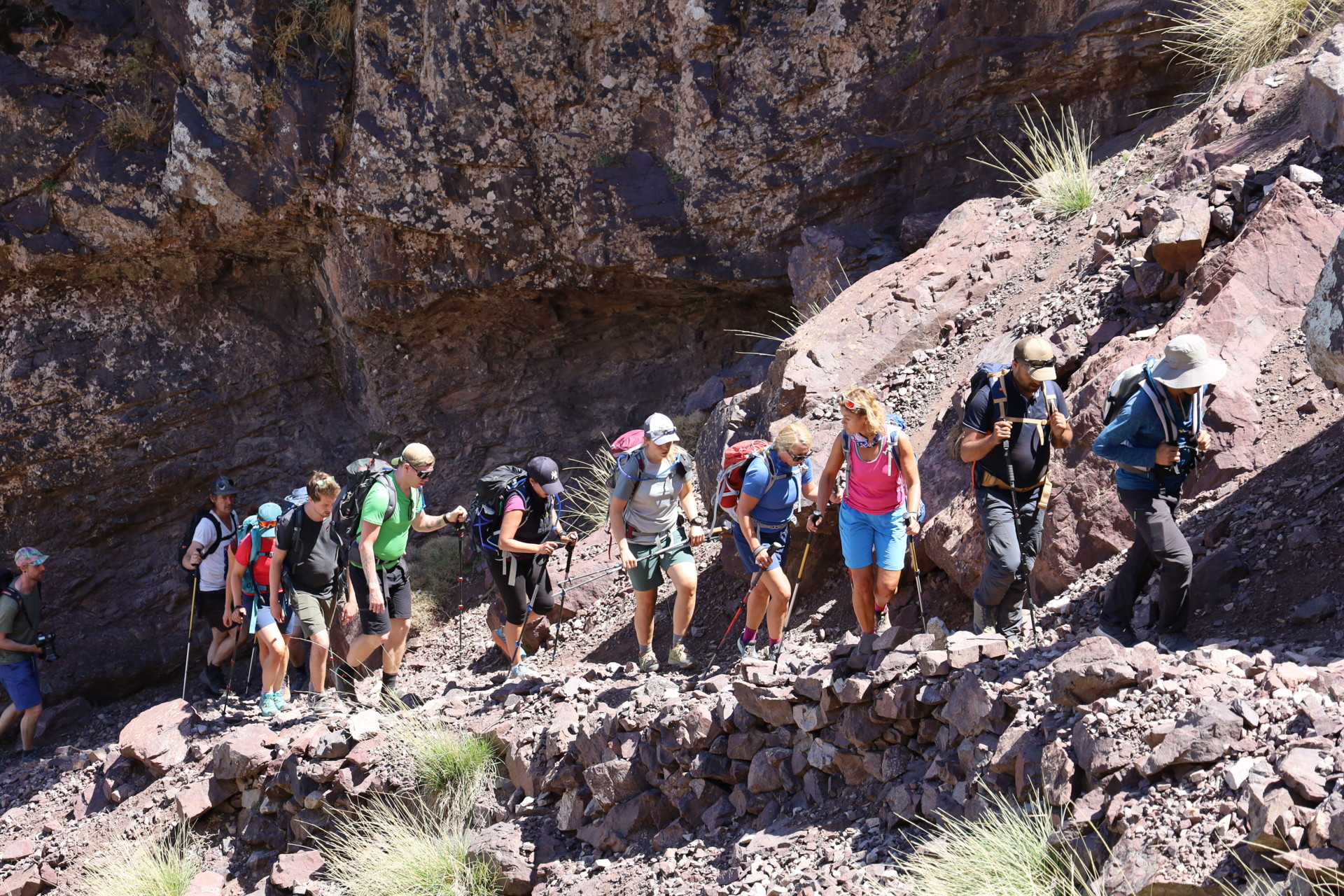
This is a great mountain hike that most people in good good shape can complete without major problems. If you have hiked a bit in the mountains before, you can do this. You only carry your own daypack on the hike, the rest is transported by mules from place to place.

We are going up to 4167m and the altitude should be taken seriously. However, after several days of hiking at altitude, most people will be acclimatized. The summit push is a physical effort, and on spring descents you may need crampons if there is still snow on the mountain. Parts of the trip are in steep terrain with some loose rock. A good preparation for this journey would include longer hikes in the mountains, for example, "cabin to cabin" with a backpack. 

Visas, Vaccinations and Health 

Before embarking on our journey together, we kindly remind all tour participants to check their respective country's visa status and vaccination requirements. Ensuring your travel documents are in order is a crucial step in guaranteeing a smooth and hassle-free adventure. 


If you are over 67, you should have a thorough medical check-up before your trip. Make your doctor aware that this is a trip involving physical exertion and moving off the beaten track.

It is important that you fill in all parts of the registration form (especially where we ask for information about health and allergies), and let us know if there is anything we need to be aware of before and during the trip. Relevant health information that may have an impact on the tour must also be communicated to the guide at the start of the tour. NOTE - If you are on regular medication, have known allergies or the like, you must always have your personal medication with you.
Other Information 

In Marrakech, Imlil and Essaouira we stay in riads, a traditional Moroccan hotel. On the mountain tour we stay in simple Berber houses and in dormitories in the  mountain huts.

It is not advised to drink tap water on this trip, and we do not boil water from the streams. Water must be purchased (except for lunch and dinner). Prices range from 7 dirhams in central areas (cities) to just over 15 dirhams (1.5 euros) higher up in the mountains. The price of water and snacks generally increases with altitude.

We will have a variety of Moroccan food on the trip. It is not always easy to get gluten-free wholemeal bread, lactose-free alternatives or to accommodate other food preferences. Write it in the registration form if you have allergies and we will try to accommodate as best we can. We would still recommend that anyone with special dietary needs bring some alternatives like a package of crispbread, energy bars or similar that you know you can eat.
Equipment list

This list is intended as a guideline, so that we have what we need regardless of the weather we get on the trip. Remember that you can also get used outdoor equipment that works perfectly. Get in touch if you have any questions. TIP: We recommend that you have the most important equipment in your hand luggage, for example hiking boots and gore-tex jacket/trousers.
Obligatory

Clothing

We recommend wool underwear for both men and women. Wool sportstop is recommended for women.

Not too thick, bring more layers if necessary. Top and bottom.

Wool, 2-3 paris.

2-3 pairs. Wool or synthetic material.

We recommend thin wool.

Fleece or wool. 

Down or synthetic insulation, featuring a hood and ideally long enough to cover the butt.

Gore-Tex or similar. Must have a decent hood, and hold out wind and rain. Should have space for midlayers underneath. Ventilation under the arms is recommended. 

Gore-Tex or similar. Must hold out wind and rain. Ventilation zippers along the legs is recommended.

Warm hat for cold days.

Warm mittens/gloves.

Footwear

Bring waterproof shoes/boots that you are familiar with.

Solid, with a solid sole. Such as approaches shoes.

Equipment

Avoid bringing a suitcase, they are more difficult to transport between hotels.

Needs to have space for everything you want to bring on the hikes.

Waterproof pack bags to keep your clothes and gear dry, organized, and help reduce volume. It is especially important to have dedicated waterproof bags for essential equipment on your trip, such as your sleeping bag, down jacket, and electronics.

They can be used in your backpack while hiking or skiing, in your sled bag on ski expeditions, or in your duffel bag on trips where the bag is carried by porters, mules, or similar.

Remember new/extra batteries.

Personal medicines and, for example, band-aids, blister plaster, sports tape, throat lozenges, nasal drops, Paracetamol/Ibuprofen, stomach regulators, etc.
We need to know about all medicines you are taking, in case something happens. 

Tooth brush, tooth paste, small towel, ear plugs, wet wipes, biodegradable soap, etc.

Toilet paper, antibac, and waste bags for the paper. Remember leave no trace.

You should be able to bring 2-3 litres of water.

High SPF, 30-50. Remember chapstick for lips and nose. 

A solid pair, with dark glass. 

Passport, tickets, bank card, proof of vaccination andproof of insurance. Remember to have a copy of important documents on your phone and/or somewhere in your bag. 

Recommended

Clothing
Footwear
Equipment

Inflatable, for extra comfort. 

Light. Have to be foldable or telescope.

Useful

Equipment

To increase the comfort temperature in your sleeping bag.

Nuts, chocolate, energy bars, etc.

Make sure they fit your ski boots. 

Packing tips

We recommend clothing that covers your shoulders and knees, as Morocco is a Muslim country. 

If we need crampons and ice axes, these can be rented in Marrakech. The crampons we rent here are universal crampons that fit all types of mountain boots, but they should be above the ankle and not low hiking shoes for the summit push. It's not certain that we will need them. It is probably more relevant on the April trips than on the October trips.

We sleep in huts, but it gets colder the higher we go. You should bring a sleeping bag that can handle a few degrees below freezing.

We sleep in beds along the way, but the standard is basic. Some prefer to bring an inflatable sleeping mat to put on top of the mattress for extra comfort. In some places, it may be possible to sleep outdoors on a terrace if the weather permits, but this would require a sleeping mat.

No Similar Trips

Testimonial

"The trip was a perfect mix of city, nature, mountains and culture with great people!"

– Liv, 2019